

P2280 on 2016-2017 Ram 2500: Air Flow Restriction Causes and Fixes
On 2016-2017 Ram 2500s with the 6.7L Cummins diesel, code P2280 is most often caused by an oil-soaked engine air filter due to the crankcase ventilation (CCV) system. The fix is usually a new air filter (around $50-$100) and inspecting the CCV system. On some models, a collapsed air intake snorkel inside the fender can also cause this code.
- For 6.7L Cummins owners, P2280 almost always starts with an oil-soaked air filter. Inspecting and replacing both the air filter and the CCV filter is the most effective first step.
- If the air filter is clean, the next most likely culprit is a collapsed air intake snorkel located inside the driver-side fender well, which requires removing the liner to inspect.
- While the code can appear on gasoline engines, the specific problem of the oil-saturated filter is unique to the 6.7L Cummins due to its closed crankcase ventilation (CCV) system design.
- Using high-quality, OEM-spec air filters is important, as some owners report that cheaper aftermarket filters can trigger this code prematurely.
What's Unique About the 2016-2017 Ram 2500

While P2280 can occur on gasoline models, it's a particularly well-documented issue on the 6.7L Cummins diesel engine in this truck. The factory Crankcase Ventilation (CCV) system is designed to vent gases (blow-by) from the engine crankcase back into the intake. Over time, the CCV filter can become saturated, allowing an oily mist to be drawn into the air intake, where it soaks the paper engine air filter. [Bulletin #9003821, 11] This oil-soaked filter restricts airflow and directly triggers the P2280 code. Additionally, some Ram trucks feature a corrugated, flexible air inlet snorkel inside the fender well that is prone to collapsing on its own, causing a significant restriction.
Diagnostic Flowchart

Tap your situation to follow the diagnostic path that matches what you're seeing on this vehicle.
Symptoms You May Notice
- Check Engine Light (MIL) illuminated
- Reduced engine power and acceleration
- Hesitation or stumbling during acceleration
- Rough or unstable idle
- Lower fuel economy (MPG)
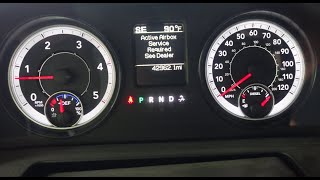
- For 6.7L Cummins, a 'Service Air Filter' message may appear on the dash
- Strange whistling noises from the engine bay
- Replacing the MAF sensor without checking the air filter first. The code points to an issue before the sensor, so the filter and ducting should always be the first things inspected.
- Replacing only the oil-soaked air filter without replacing the CCV filter. This is a temporary fix, as the root cause (clogged CCV) will just saturate the new air filter with oil again.
Most Likely Causes

- Oil-Saturated Engine Air Filter (6.7L Cummins) 🔴 High Probability As documented in TSB #9003821, the factory CCV system on the 6.7L Cummins routes oil vapor into the intake, which saturates the air filter. A clogged CCV filter itself, which has a recommended service interval of around 67,500 miles 🎬 Watch: How to replace your CCV filter to prevent oil soak., increases crankcase pressure and worsens the issue.
How to confirm: Open the air filter housing and visually inspect the air filter. An oil-soaked filter will have dark, greasy patches and feel oily to the touch. The filter may appear clean otherwise.
Typical fix: Replace the engine air filter. It is highly recommended to inspect and replace the CCV filter at the same time to address the root cause and prevent recurrence.
Est. part cost: $50-$100 for a quality air filter, $70-$120 for a CCV filter. - Clogged or Dirty Engine Air Filter 🔴 High Probability This is a standard maintenance item. Driving in dusty or dirty conditions can cause the filter to clog prematurely, restricting airflow. Some owners report that using non-OEM filters can trigger the code more frequently.
How to confirm: Visually inspect the air filter. If it is dark, full of debris, or you cannot see light through it, it needs replacement.
Typical fix: Replace the engine air filter with a quality OEM or equivalent part.
Est. part cost: $50-$100 - Air Leak in Intake Ducting 🟡 Medium Probability The plastic and rubber components of the intake system between the airbox and MAF sensor can crack, or clamps can loosen over time due to engine vibration and heat cycles. This allows unmetered air to enter, which the PCM interprets as a fault.
How to confirm: Visually inspect the intake hose, boots, and clamps for any visible cracks, splits, or loose connections. A smoke test is the most effective way to find small, hard-to-see leaks. A user on RamForum reported a persistent P2281 (a related code) was finally solved by finding a missing bolt under the heater grid, causing a leak.
Typical fix: Tighten loose clamps or replace the cracked/damaged portion of the intake duct.
Est. part cost: $20-$150 depending on the specific part that failed.
Rare But Worth Checking
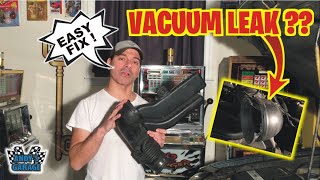
- Collapsed Air Intake Snorkel: On some Ram models, the flexible, corrugated snorkel that runs from the fender into the airbox can collapse on itself, causing a major restriction. This requires removing the fender liner to inspect. A YouTube video by 'MotorCity Mechanic' details this exact failure mode as a cause for P2280.
- Disconnected Airbox Linkage: The Ram 'Active Air' system uses a door inside the airbox to pull air from either the fender or the front of the truck. A YouTube video by 'American Diesel' showed a P2280 code on a Ram 5500 caused by the linkage for this door becoming disconnected inside the airbox, which was a simple fix of reconnecting it. 🎬 See this walkthrough on diagnosing and fixing the Active Air linkage.
- Faulty Mass Airflow (MAF) Sensor: This is less common because the code specifically points to a restriction *before* the MAF sensor. However, a contaminated or failing MAF sensor could send incorrect readings that the PCM misinterprets as a restriction.
- Blocked Air Intake Inlet: Debris like leaves, snow, a plastic bag, or even a bird's nest can get sucked into the air intake snorkel, causing a major restriction.
Diagnosis Steps
- Read the code with an OBD-II scanner to confirm P2280 is present.
- Open the air filter housing and perform a thorough visual inspection of the engine air filter. Look for excessive dirt, debris, and especially signs of oil saturation (on 6.7L Cummins models). [Bulletin #9003821]
- If the filter is dirty or oily, replace it. This is the most common fix. Also, plan to replace the CCV filter, as its failure is the likely root cause of the oil.
- While the airbox is open, inspect the internal 'Active Air' door and linkage to ensure it moves freely and is connected.
- Inspect the air intake snorkel inlet for any blockages like leaves or debris.
- If the filter is clean, the next most likely cause is a collapsed intake snorkel inside the fender. Remove the fender liner and inspect the flexible corrugated pipe for crushing or damage.
- Carefully inspect the entire intake tract between the air filter housing and the MAF sensor. Look for cracks in the plastic, tears in rubber boots, and loose or broken clamps.
- If no visible leaks are found, a smoke test can be performed to pressurize the intake system and reveal any small, hidden leaks.
- If the filter is clean and no leaks are found, inspect the MAF sensor wiring for damage and ensure the sensor is clean. If suspected, the sensor can be cleaned with dedicated MAF sensor cleaner.
- After any repair, clear the trouble code with the scanner and perform a test drive to ensure the code does not return.
Parts You'll Likely Need

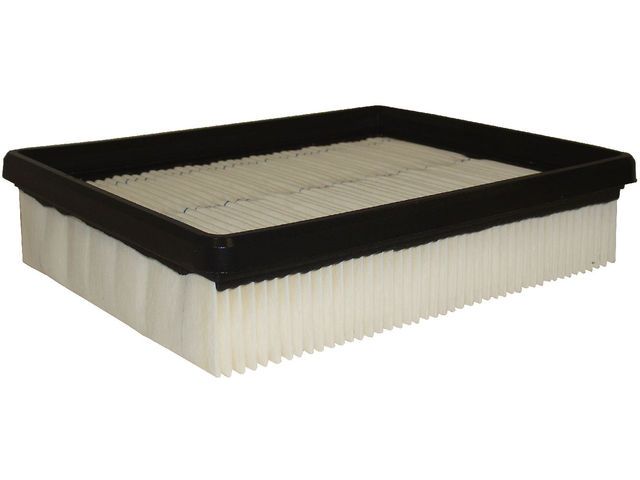
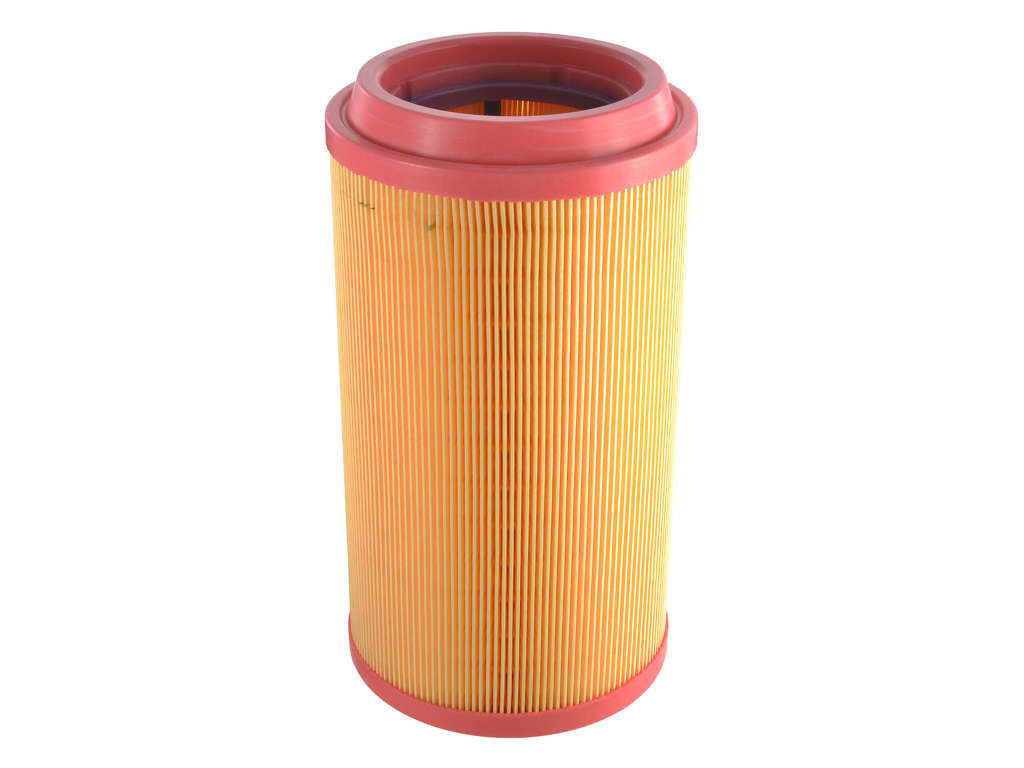
- Engine Air Filter (6.7L Cummins)
(OEM #53034051AB)— This is the most common cause of P2280 on the 6.7L Cummins, often becoming saturated with oil from the CCV system. [Bulletin #9003821] Note that Mopar has issued several part number updates over the years.
Trusted brands: Mopar, Fleetguard (AF27684), Wix (46930), Donaldson (P616743), Baldwin (PA4318)
OEM price range: $70-$100
Aftermarket price range: $45-$80 - Crankcase Ventilation (CCV) Filter (6.7L Cummins)
(OEM #CV52001 (Fleetguard/Cummins), 68002433AC (Mopar))— A clogged CCV filter is the root cause of the oil-soaked air filter. Replacing it is recommended to prevent the P2280 code from returning. Recommended change interval is ~67,500 miles.
Trusted brands: Cummins/Fleetguard, Mopar, Dorman (904-418)
OEM price range: $80-$120
Aftermarket price range: $60-$100
Technical Service Bulletins (TSBs) & Recalls
- 9003821: Links P2280 on 6.7L diesel engines directly to oil-soaked air filters.
- 1813022REVA: Notes a software update changing P2280 from a one-trip to a two-trip fault for the 6.7L diesel.
- 1802321: Notes a software update changing P2280 from a one-trip to a two-trip fault for gasoline fuel systems.
- 1801517: Notes a software update changing P2280 from a one-trip to a two-trip fault for gasoline fuel systems.
- 18-015-17 REV. A: Notes a software update changing P2280 from a one-trip to a two-trip fault.
Platform-Specific Known Issues
- TSB #9003821 specifically calls out an issue on 6.7L turbo diesel engines where customers experience a MIL with DTC P2280 due to oil-soaked air intake filters. This points directly to the CCV system as a primary cause on diesel models.
- A collapsed corrugated air intake snorkel inside the fender well is another known, specific failure point on these trucks that directly causes P2280.
Mechanic-Grade Diagnostic Values
- Mass Air Flow (MAF) Sensor Reading at Idle — expected: 5-10 g/s (grams per second). Failure: A reading consistently below 5 g/s at idle can indicate a restriction or a failing sensor. A technician on iATN noted a faulty MAF was under-reporting by 3-5 g/s at a stable idle compared to a known good truck.
- Mass Air Flow (MAF) Sensor Voltage at Idle — expected: 0.5–0.8 V. Failure: Voltage outside this range can indicate sensor contamination or failure.
- Mass Air Flow (MAF) Sensor Voltage at Wide-Open Throttle (WOT) — expected: 2.0–2.5 V. Failure: Values outside this range suggest sensor failure or contamination.
Scan Tool Commands That Help
- wiTECH (OEM Chrysler/Ram Tool): PCM Configuration Routine — This routine should be performed after a PCM software flash or replacement to ensure all modules are correctly configured.
- wiTECH (OEM Chrysler/Ram Tool): Active Airbox Actuator Calibration/Relearn — If the Active Air system components (actuator, linkage) have been serviced or replaced, this procedure ensures the PCM knows the correct vane positions.
- wiTECH (OEM Chrysler/Ram Tool): Fuel Pressure Override Test — While not directly for P2280, a software update mentioned in TSB 18-003-22 included improvements to this test, which can be useful for ruling out fuel system issues that might present with similar symptoms.
Wiring & Ground Locations
- MAF Sensor Connector — On the air intake tube, just after the air filter housing.. This is the primary sensor providing the data that triggers the code. A loose connection, corrosion, or damaged wiring at this connector can cause faulty readings.
- Engine/Chassis Grounds — Key grounds are located near the battery negative terminal, from the firewall to the back of the cylinder head, and on the fender near the battery.. A poor ground connection for the PCM or related sensors can cause erratic sensor readings, potentially leading to false codes like P2280.
- Ram-Active Air Actuator Connector — On the side of the air filter housing, near the bottom.. If the Active Air system is malfunctioning due to a bad connection, it can cause an airflow restriction by not opening the secondary air inlet door, triggering P2280.
Real Owner Repair Stories
- YouTube user 'Aaron S Rose' (2017 Ram 2500 6.7L Cummins) — Check engine light and a 'Service Air Filter' message on the EVIC, especially when towing or under heavy acceleration.
❌ Tried (didn't work) Initially thought the air filter was just dirty from normal use.
✅ What actually fixed it The user discovered a large bird's nest inside the Active Airbox assembly. When the secondary air door opened under load, it would suck the nest material towards the air filter, causing a restriction. Cleaning out the nest and performing an actuator calibration with a scan tool resolved the issue. - iATN (International Automotive Technicians Network) post (Ram Diesel (year not specified, but post from 2017)) — A multitude of seemingly unrelated codes, including multiple O2 sensor codes (P014D, P013b), DPF codes (P2463, P242F), and a NOx exceedance code (P2bac).
❌ Tried (didn't work) Standard diagnostic procedures for the O2 sensor and DPF codes, including replacing O2 sensor harnesses and cleaning sensors.
✅ What actually fixed it After extensive diagnosis, the root cause was a faulty Mass Air Flow (MAF) sensor that was under-reporting airflow by 3-5 g/s at idle. The PCM was not capable of blaming the MAF and instead faulted the downstream O2 and DPF systems. Replacing the MAF sensor resolved all the codes.
OEM Part Supersession History
53034051AB→68517554AA— Supplier or design change. The newer 68517554AA filter has more pleats and additional glue lines compared to the 53034051AB. This is likely to keep the pleats from collapsing under high vacuum, potentially improving airflow consistency for high-output applications.
Heads up: The parts are interchangeable, but the updated design (68517554AA) is considered the current standard replacement.
Model Year Variations Within This Range
- 2016-2017: There are no significant mechanical or system differences between the 2016 and 2017 Ram 2500 models with either the 6.7L Cummins or gasoline engines that would alter the diagnosis or common causes of code P2280. They are considered part of the same generation with only minor feature updates.
Helpful Videos

We Have This Part in Stock





The information in this article is provided for general reference and educational purposes only. Vehicle specifications, procedures, and part compatibility can vary by production date, trim level, and region. Always consult your vehicle's factory service manual and verify part numbers before purchasing or performing repairs. Safety-critical components such as airbags, seat belts, and braking systems should be installed by a qualified professional.
- Ram 2500:
- 🎬 Helpful Videos
- 🛍️ Shop This Part
- What's Unique About the 2016-2017 Ram 2500
- Diagnostic Flowchart
- Symptoms You May Notice
- Most Likely Causes
- Rare But Worth Checking
- Diagnosis Steps
- Parts You'll Likely Need
- Technical Service Bulletins (TSBs) & Recalls
- Platform-Specific Known Issues
- Mechanic-Grade Diagnostic Values
- Scan Tool Commands That Help
- Wiring & Ground Locations
- Real Owner Repair Stories
- OEM Part Supersession History
- Model Year Variations Within This Range
- 🎟️ Get 5% Off