

OBD-II Code P2275: O2 Sensor Signal Stuck Rich (Bank 1, Sensor 3)
An ASE-Certified Master Technician's Guide to P2275: What it means, why it triggers, and how to fix it
- P2275 indicates the Bank 1, Sensor 3 oxygen sensor (post-catalytic converter) is locked at a high voltage above 0.7V, signaling a constant rich exhaust.
- Replacing the O2 sensor fixes the issue 70% of the time, but melted wiring or exhaust leaks cause the exact same code.
- Perform a bias test by creating a vacuum leak while watching live scanner data to definitively prove if the sensor is dead before spending $150 on parts.
- Driving with P2275 drops fuel economy by up to 15% and destroys the catalytic converter within 6 months, turning a $200 repair into a $1,500 nightmare.
- Scan for companion codes: P0172 means the engine is actually running rich, while P0420 often triggers falsely due to this specific stuck sensor.
What Does P2275 Mean?
The Powertrain Control Module (PCM) receives a constant 'rich' signal (too much fuel, not enough air) from the third oxygen sensor on engine Bank 1. Located after the catalytic converter, this sensor monitors converter efficiency. A healthy sensor sees a clean, balanced exhaust; a locked rich signal means the sensor failed, its wiring is shorted, or the engine is dumping raw fuel into the exhaust.
Technical definition: SAE/OBD-II defines P2275 as 'O2 Sensor Signal Biased/Stuck Rich, Bank 1 Sensor 3'. The PCM detects the sensor's voltage remains above the normal calibrated range (typically over 0.7V to 0.8V) without fluctuating. The PCM expects slow voltage oscillation; a flatline high voltage indicates a persistent rich condition or a compromised sensor circuit.
Can I Drive With P2275?
Yes, But With Caution. You can drive with code P2275, but it is not recommended for extended periods. Continuing to drive is safe for up to a few hundred miles, but causes poor fuel economy and irreversible damage to the catalytic converter. A failing converter overheats, creating a fire risk in extreme cases, and adds $1,200 to $2,500 to the final repair bill.
Common Causes
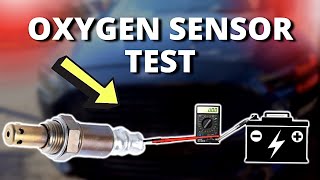
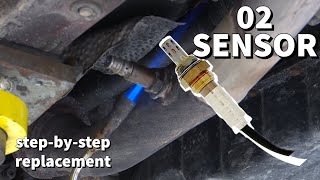
- Faulty Bank 1, Sensor 3 Oxygen Sensor (Very Common) — The sensor itself is the most frequent culprit. 🎬 Watch this guide to find sensor locations and replacement steps. Internal failure or contamination by engine oil, coolant, or excessive carbon causes the sensor to lock onto a fixed-rich voltage reading.
- Wiring or Connector Issues (Common) — The wiring harness is exposed to extreme exhaust heat and road debris. Melted insulation, frayed wires, or a short to a voltage source directly disrupts the signal to the PCM.
- Exhaust Leak Upstream of Sensor (Common) — A leak in the exhaust manifold or piping alters pressure and flow dynamics across the sensor. This tricks the sensor into reporting an incorrect rich reading to the PCM.
- Leaking Fuel Injectors or High Fuel Pressure (Less Common) — A failing fuel pressure regulator or leaking injectors force too much raw fuel into the combustion chamber. This creates a genuine rich condition that the O2 sensor accurately detects.
- Air/Fuel Mixture Imbalance (MAF or Air Filter) (Rare) — A contaminated Mass Airflow (MAF) sensor under-reports incoming air, or a severely clogged air filter physically chokes the engine. Both scenarios force the PCM to create a naturally rich air-fuel mixture.
- Faulty Powertrain Control Module (PCM) (Very Rare) — An internal hardware fault or outdated software calibration causes the computer to misinterpret a perfectly healthy signal from the O2 sensor.
Symptoms
- Check Engine Light is On — The primary and often only immediate symptom.
- Reduced Fuel Economy — Fuel efficiency drops by 5% to 15% because the computer incorrectly adjusts the fuel mixture based on the faulty sensor reading.
- Smell of Rotten Eggs or Raw Gasoline — A strong sulfur or fuel odor from the tailpipe indicates an overly rich mixture overwhelming the catalytic converter.
- Rough Idle or Stumbling Acceleration — The engine runs unevenly at a stop or hesitates briefly when pressing the gas pedal.
- Failed Emissions Test — The incorrect air-fuel ratio and illuminated check engine light guarantee an automatic failure during state inspections.
Diagnostic Flowchart
Tap your situation to follow the diagnostic path that matches what you're seeing on this code.
Common Fixes & Costs
- Replace Bank 1, Sensor 3 Oxygen Sensor — Parts: $50-$200, Labor: $100-$200, ~1.0 hr book time (Intermediate)
- Repair Damaged Wiring or Connector — Parts: $10-$50, Labor: $100-$200, ~1.5 hr book time (Advanced)
- Repair Exhaust Leak — Parts: $30-$200, Labor: $150-$400, ~2.5 hr book time (Professional)
- Replace Leaking Fuel Injector(s) — Parts: $50-$200 per injector, Labor: $150-$300, ~2.5 hr book time (Professional)
- Update or Reprogram PCM — Parts: $0, Labor: $150-$250, ~1.0 hr book time (Professional)
Used vs. New Parts: Buying Guide
When a used part is worth it: Never buy a used oxygen sensor. They are wear items with a finite lifespan, and the labor cost negates any parts savings. Used catalytic converters are only viable for vehicles over 150,000 miles on a strict budget.
Donor-vehicle mileage cap: roughly under 60000 miles for the part to have meaningful remaining life.
Donor quality checklist:
- Verify the donor vehicle was not scrapped for engine failure, which contaminates the exhaust.
- Avoid parts from rust-belt regions due to severe corrosion.
- Match OEM part numbers exactly; visual similarity guarantees nothing.
Decision logic:
- If The part is an oxygen sensor → Buy new. Used sensors fail rapidly and double your labor costs.
- If The part is a catalytic converter and the vehicle is > 150K miles → A used OEM part from a verified low-mileage donor saves money, but expect a shorter lifespan.
- If The vehicle is in a CARB-compliant state (e.g., California, New York) → Buy new, CARB-certified aftermarket or OEM parts to guarantee passing emissions.
Warranty tradeoff: Used parts carry a 30-day warranty that excludes labor. New aftermarket parts offer 1-3 years. OEM parts provide 1-year/12,000-mile guarantees.
Worst-case if a used part fails: $300-$600 if a used sensor fails, requiring a second replacement and duplicate labor charges.
What Happens If You Wait — Timeline
- 0-2 weeks: Check Engine Light illuminates. The PCM stores the code. No drivability symptoms are noticeable. (MPG impact: 0-5%% · Added cost: $0)
- 2 weeks - 3 months: Fuel economy drops as the PCM incorrectly commands a rich mixture. Minor hesitation on acceleration occurs. (MPG impact: 5-10%% · Added cost: $50-$150 in wasted fuel.)
- 3-8 months: The persistent rich condition overheats the catalytic converter. A P0420 code appears, accompanied by a sulfur smell. (MPG impact: 10-15%% · Added cost: Risk of catalytic converter damage increases significantly. Potential $1,200+ repair.)
- 8+ months: The catalytic converter substrate melts. The vehicle suffers severe power loss, fails emissions, and poses a fire hazard. (MPG impact: 15-25%% · Added cost: $1,200-$2,800 for catalytic converter replacement.)
Cost of Not Fixing It
- 0-1 month: Fuel economy drops by 5-15%. The vehicle automatically fails state emissions testing. (Added cost: $20-$60 per month in wasted fuel.)
- 1-6 months: The persistent rich condition overheats the catalytic converter, degrading its internal substrate. A P0420 code appears. (Added cost: Risk of major expense increases significantly.)
- 6+ months: Permanent destruction of the catalytic converter. The overheated converter restricts exhaust flow and creates a severe fire hazard. (Added cost: $1,200-$2,800 for catalytic converter replacement.)
Diagnosis Steps
- Read Codes and Freeze Frame Data
Use an OBD-II scanner to confirm P2275. Check for companion codes (like P0172 or P0420) that provide critical context. Record the freeze frame data to see the exact engine temperature, RPM, and load when the code triggered.
Tools: OBD-II Scanner (Beginner) - Analyze Live Sensor Data
Watch the live voltage of the Bank 1, Sensor 3 O2 sensor on a warm engine. A healthy downstream sensor holds steady between 0.5V and 0.7V. A voltage locked above 0.8V that refuses to fluctuate confirms the 'stuck rich' condition.
Tools: Advanced OBD-II Scanner (Intermediate) - Visually Inspect Sensor and Wiring
Examine the sensor and its harness for melted plastic, broken wires, or connector corrosion. Perform a 'wiggle test' on the wiring while watching live scanner data; if the voltage jumps, you have an intermittent connection.
Tools: Flashlight (Beginner) - Perform a Bias Test
Force a lean condition by creating a large vacuum leak (e.g., pulling the brake booster hose) while monitoring live voltage. A healthy sensor immediately drops below 0.4V. If the voltage stays high, the sensor is dead or the signal wire is shorted.
Tools: Advanced OBD-II Scanner, Pliers (Advanced) - Check for Exhaust Leaks
Listen for hissing or ticking sounds around the exhaust manifold and flex pipe while the engine runs. Use a smoke machine to pinpoint microscopic leaks upstream of the sensor that alter exhaust flow.
Tools: Mechanic's Stethoscope, Smoke Machine (Intermediate) - Test the Sensor Circuit
Disconnect the sensor and use a multimeter to verify the PCM is sending the correct 0.45V reference voltage and providing a solid ground. This isolates whether the fault is in the sensor or the vehicle's wiring.
Tools: Digital Multimeter (Advanced) - Check Fuel System for True Rich Condition
If the sensor and wiring pass all tests, check Long Term Fuel Trims (LTFT). Highly negative numbers (-15% or worse) mean the engine is actually running rich. Test fuel pressure against factory specs to rule out a bad regulator.
Tools: Advanced OBD-II Scanner, Fuel Pressure Gauge (Advanced) - Analyze with an Oscilloscope
For definitive proof, view the sensor's waveform. A sensor stuck rich shows a flat line near 0.9V instead of a lazy, slow-switching wave. This visual confirmation prevents replacing good parts.
Tools: Oscilloscope or Graphing Multimeter (Professional)
When This Code Triggers (Freeze-Frame Conditions)
- Engine Coolant Temp: 180-210°F (Engine at full operating temperature.)
- RPM: 1500-2500 (Steady cruise or light acceleration.)
- Engine Load: 20-50% (Maintaining speed on a flat road or slight incline.)
- Vehicle Speed: 40-60 mph (Highway or arterial road driving.)
Related Codes
- P0172 — System Too Rich (Bank 1). Set by the upstream sensor. If both codes are present, the engine is genuinely running rich (e.g., leaking injector). If P2275 is alone, the issue is isolated to the downstream sensor circuit.
- P0420 — Catalyst System Efficiency Below Threshold. A faulty downstream sensor stuck rich (P2275) tricks the PCM into setting a false P0420. Always diagnose and fix the P2275 sensor code before replacing a catalytic converter.
- P0136 — O2 Sensor Circuit Malfunction. P0136 is a generic electrical fault, while P2275 specifically means the signal is present but locked high. A broken wire causes P0136; a short to voltage causes P2275.
- P2277 — O2 Sensor Signal Stuck Lean. The exact opposite of P2275. Indicates a massive vacuum leak, low fuel pressure, or a sensor failed at a low voltage.
Climate & Environmental Factors
- Cold Climates / Road Salt: Winter road salt aggressively corrodes the sensor's external casing, connector pins, and wiring insulation, causing shorts or open circuits.
- High Humidity: Moisture seeps into poorly sealed connectors, creating electrical resistance that skews the sensor's delicate voltage signal.
- Extreme Heat: Wiring harnesses routed too close to exhaust components become brittle, crack, and melt. This is the leading cause of circuit-related P2275 codes on V8 engines.
- High Altitude: Operating consistently at high altitudes creates a naturally richer running condition due to lower air density, making the PCM hyper-sensitive to minor sensor degradation.
How to Talk to a Mechanic About This Code
Say this: "I have a P2275 code. Please check the live data from the Bank 1 Sensor 3 O2 sensor, inspect its wiring harness, and perform a smoke test for exhaust leaks before replacing any parts. If you recommend a new catalytic converter, I need to see the Mode 06 data supporting that diagnosis."
This proves you understand the diagnostic process. It forces the shop to check common, cheaper failures (wiring, leaks) first and demands objective data (Mode 06) before you authorize a $1,500 catalytic converter replacement.
Avoid saying:
- 'My check engine light is on, can you just fix it?'
- 'I think I need a new oxygen sensor.'
- 'Just do whatever you think is best.'
Questions to ask before authorizing the repair:
- Did you observe the sensor's live voltage data? Was it flatlined or fluctuating?
- Did you perform a smoke test to rule out exhaust leaks upstream of the sensor?
- If recommending a catalytic converter, can you show me the failed Mode $06 test results?
- What is the warranty on the parts and labor?
Where to Take It: Dealer vs Independent vs Chain
- Dealer:
Best for: Vehicles under an 8-year/80,000-mile emissions warranty, Complex electrical issues requiring PCM software updates, European brands requiring proprietary diagnostic procedures
Downsides: Highest labor rates (often double independent shops), Tendency to replace entire expensive wiring harnesses rather than repairing a single wire (Typical cost: +50% vs. baseline) - Independent Shop:
Best fit. A reputable independent shop easily diagnoses and repairs O2 sensors, wiring faults, and exhaust leaks at a reasonable cost.
Best for: Out-of-warranty vehicles, Common codes like P2275 where diagnostic paths are standardized, Owners seeking high-quality repairs at fair prices
Downsides: Diagnostic capabilities vary; ensure the shop employs ASE-certified technicians. (Typical cost: +0% vs. baseline) - Chain Shop:
Acceptable with caution. Fine for a basic sensor swap, but walk away if they recommend a catalytic converter without showing you live data.
Best for: Simple part replacements like batteries or brake pads
Downsides: Inconsistent technician skill levels., Corporate pressure to upsell often leads to premature recommendations for expensive catalytic converters. (Typical cost: -10% vs. baseline)
When to Walk Away From the Repair
If the estimated repair cost exceeds 40-50% of the car's private-party value, seriously consider selling the car as-is or trading it in.
- Car worth $4000, fix is $2000: Borderline. The repair is 50% of the car's value. Get a second opinion before proceeding.
- Car worth $12000, fix is $1800: Fix it. The repair cost is only 15% of the vehicle's value.
- Car worth $2500, fix is $1500: Walk away. The repair is 60% of the car's value. Do not invest this much into a low-value vehicle.
What Scan Tool You Need for This Code
Minimum: An OBD-II reader that displays live sensor data and accesses Mode $06 test results.
A $20 code reader only displays the P2275 code. It cannot show live voltage, which is mandatory to determine if the sensor is dead or accurately reporting a rich condition. Without live data, you are guessing.
Budget: BlueDriver Pro Scan Tool (~$100) — Connects to your smartphone to provide live O2 sensor graphing, freeze-frame data, and Mode $06 access. Perfect for DIYers differentiating between a bad sensor and a complex fuel issue.
Mid-range: Foxwell NT510 Elite (~$180) — Offers manufacturer-specific diagnostics, live data graphing, and bidirectional controls. Allows you to command system tests for deeper diagnostics.
Professional: Autel MaxiCOM MK808 (~$500) — Provides OE-level diagnostics, advanced live data analysis, and full bidirectional control. Accesses all functions a professional shop uses.
Rent vs buy: For a one-time repair, use the free 'Loan-A-Tool' program at auto parts stores like AutoZone. Only buy a scanner if you perform diagnostics multiple times a year.
How to Clear the Code After You Fix It
- Use an OBD-II scan tool to clear the P2275 code.
- Perform a complete drive cycle to allow readiness monitors to run.
Drive cycle (~30 minutes): A complete drive cycle requires a cold start, 3 minutes of idling, 15 minutes of mixed city/highway driving (maintaining steady speeds between 40-60 mph), and a full cool-down period.
Readiness monitors affected: Catalyst monitor, O2 sensor monitor, O2 sensor heater monitor
Before emissions retest: drive at least 100 miles to fully set monitors.
Watch out for:
- Clearing the code with a scanner resets readiness monitors to 'Not Ready', causing an automatic emissions test failure.
- The code returns immediately if an exhaust leak or wiring short was ignored.
- Driving exclusively at highway speeds prevents the monitors from running; varied stop-and-go driving is mandatory.
Will This Fail Emissions / State Inspection?
Yes — this code typically fails an OBD-II emissions inspection.
- California: An illuminated Check Engine Light is an automatic failure. All readiness monitors must read 'Ready'. A full drive cycle is mandatory after repairs.
- New York: NYS DMV inspections mandate an OBD-II scan. P2275 triggers an automatic failure.
- Texas: Vehicles fail instantly with an active Check Engine Light. You can pass with one 'Not Ready' monitor (two for 1996-2000 model years).
Most Commonly Affected Vehicles
- Ford F-150 (2009-2014) — Melted wiring harnesses and cracked exhaust manifolds are frequent triggers. The 5.0L V8 models are particularly noted for premature sensor failures.
- Chevrolet / GMC Silverado, Sierra (2007-2015) — Cracked exhaust manifolds on the 4.8L, 5.3L, and 6.0L V8 engines alter exhaust flow and trigger this code before the sensor actually fails.
- Dodge / Ram Ram 1500 (2009-2018) — Prone to the infamous 'Hemi tick' caused by broken exhaust manifold bolts. This exhaust leak is the primary cause of P2275 on these trucks.
- Jeep Grand Cherokee (2011-2016) — Frequently requires a PCM software update from the dealer to resolve overly sensitive diagnostic parameters that trigger false O2 codes.
- Hyundai Elantra, Sonata (2010-2016) — The 2011-2013 Elantra exhibits a high rate of downstream sensor failures due to internal element degradation.
- Volkswagen Jetta, Golf (2011-2017) — The 2.5L 5-cylinder engine suffers from downstream sensor harnesses becoming brittle and cracking due to poor heat shielding.
- Subaru Forester, Outback (2010-2015) — Exhaust leaks at the flange gaskets directly upstream of the sensor are the most common cause, mimicking a failed sensor.
- Nissan Altima, Titan (2007-2015) — On Titans, P2275 is often an early warning sign of catalytic converter inefficiency rather than a standalone sensor failure.
Manufacturer-Specific Notes
- Ford: F-150 wiring harnesses are frequently routed too close to the exhaust. Always inspect the harness for melted insulation before buying a new sensor.
- General Motors (GM): GM issued TSB 20-NA-065 recommending a specific high-pressure smoke machine test, as microscopic exhaust manifold cracks are the leading cause of false O2 codes on V8 engines.
- Chrysler/Dodge/Jeep: Dealership PCM software updates (re-flashes) frequently resolve false O2 sensor codes on 2011-2016 models. Check for TSBs before replacing hardware.
- Toyota/Lexus: Highly sensitive to aftermarket electronics. Using anything other than an OEM or Denso-branded oxygen sensor guarantees the code will return within a month.
- Federal Emissions Warranty: Oxygen sensors are major emissions components covered under Federal law for 8 years or 80,000 miles. Check your mileage; the dealer must fix this for free if you are under the limit.
Real Owner Stories
2012 Chevy Silverado 1500 at 130K miles
Check Engine Light illuminated with P2275. Fuel economy dropped slightly.
What they tried:
- Purchased a new OEM downstream O2 sensor.
- Discovered an aftermarket 'O2 sensor spacer' installed by the previous owner to hide a failing catalytic converter.
- Removed the spacer and installed the new sensor directly into the exhaust pipe.
Outcome: Removing the spacer and installing the new sensor permanently cleared the code. The spacer altered the exhaust flow, causing the false rich reading.
Lesson: Always inspect for non-standard modifications like spacers or 'foulers'. Previous owners use these to cheaply mask expensive catalytic converter failures.
2014 Jeep Grand Cherokee at 85K miles
P2275 appeared alongside a P0420 (Catalyst Efficiency) code.
What they tried:
- A chain shop quoted $1,800 for a new catalytic converter.
- Owner sought a second opinion. The independent mechanic checked live data and saw Sensor 3 flatlined at 0.9V.
- Mechanic verified the wiring was intact and replaced only the O2 sensor.
Outcome: Replacing the $150 sensor resolved both codes. The dead sensor sent a false signal that tricked the PCM into condemning the catalytic converter.
Lesson: A P0420 code paired with a sensor-specific code like P2275 is almost always a symptom of the bad sensor. Never authorize a catalytic converter replacement without verifying sensor live data first.
2013 VW GTI at 115K miles
Rough idle, poor MPG, and codes P2275 and P0145 (Slow Response).
What they tried:
- Owner replaced both upstream and downstream O2 sensors.
- Codes returned within 24 hours.
- A VW specialist performed a high-pressure smoke test on the exhaust.
Outcome: The smoke test revealed a cracked exhaust manifold weld upstream of the sensors. The leak altered exhaust pressure, causing false sensor readings. Welding the manifold ($450) fixed the issue permanently.
Lesson: Do not blindly replace sensors. Exhaust leaks perfectly mimic sensor failures. A $100 smoke test saves hundreds in unnecessary parts.
How to Prevent This Code From Triggering
- Use Top Tier certified gasoline (Every fill-up) — High detergent levels prevent fuel injector deposits. Clogged injectors cause poor fuel atomization, creating a rich mixture that permanently fouls O2 sensors.
- Replace engine air filter (Every 15,000 to 30,000 miles) — A clogged air filter chokes the engine, forcing a naturally rich air-fuel mixture that contaminates downstream emissions components.
- Replace upstream O2 sensors proactively (Every 80,000 to 100,000 miles) — Aging upstream sensors respond slowly, causing the PCM to miscalculate fuel mixtures. This damages the downstream sensor and the catalytic converter over time.
- Address engine misfires immediately (As soon as they occur) — Misfires dump raw fuel into the exhaust. This fuel superheats and destroys oxygen sensors and catalytic converters within days.
- Inspect exhaust for leaks (Annually) — Catching small manifold cracks or gasket leaks early prevents false O2 sensor codes and unnecessary parts replacement.
Frequently Asked Questions
What is Bank 1 and Sensor 3?
Bank 1 is the side of the engine containing cylinder #1. Sensor 3 is the third oxygen sensor in line on that bank's exhaust system, located downstream of the catalytic converter. Its primary job is monitoring the health and efficiency of the catalytic converter.
What is the most common mistake when fixing P2275?
The most common misdiagnosis is immediately replacing the oxygen sensor without checking the wiring. The code indicates a problem in the sensor's circuit, meaning a melted wire or exhaust leak triggers the exact same fault. Always inspect the harness and check for exhaust leaks before buying parts.
Can I clean the P2275 oxygen sensor instead of replacing it?
No, cleaning an oxygen sensor is not a reliable repair. Contaminants like oil, coolant, and carbon permanently damage the sensor's internal elements. Replacement with a quality OEM or Denso part is the only permanent solution.
Will the P2275 code clear itself?
The check engine light remains on until the underlying problem is fixed and the PCM verifies the repair. You must clear the code with an OBD-II scanner and complete a full drive cycle to reset the system.
How much does it cost to fix P2275?
A standard O2 sensor replacement costs between $150 and $400 for parts and labor. Repairing an exhaust leak ranges from $150 for a simple gasket to over $500 for a cracked manifold. Complex issues like leaking fuel injectors or PCM updates push costs higher.
Is it dangerous to drive with code P2275?
It is not immediately dangerous, but driving long-term causes permanent damage to the catalytic converter. Replacing a ruined catalytic converter easily exceeds $1,200, making prompt repair highly cost-effective.
Can a bad upstream O2 sensor cause a P2275 code?
Not directly, as P2275 isolates the Bank 1, Sensor 3 circuit. However, a faulty upstream sensor causes a true rich condition that the downstream sensor accurately reports. In this scenario, you will see companion codes like P0172 (System Too Rich) alongside P2275.
Key Takeaways
- P2275 indicates the Bank 1, Sensor 3 oxygen sensor (post-catalytic converter) is locked at a high voltage above 0.7V, signaling a constant rich exhaust.
- Replacing the O2 sensor fixes the issue 70% of the time, but melted wiring or exhaust leaks cause the exact same code.
- Perform a bias test by creating a vacuum leak while watching live scanner data to definitively prove if the sensor is dead before spending $150 on parts.
- Driving with P2275 drops fuel economy by up to 15% and destroys the catalytic converter within 6 months, turning a $200 repair into a $1,500 nightmare.
- Scan for companion codes: P0172 means the engine is actually running rich, while P0420 often triggers falsely due to this specific stuck sensor.
Helpful Videos


The information in this article is provided for general reference and educational purposes only. Vehicle specifications, procedures, and part compatibility can vary by production date, trim level, and region. Always consult your vehicle's factory service manual and verify part numbers before purchasing or performing repairs. Safety-critical components such as airbags, seat belts, and braking systems should be installed by a qualified professional.
- 🎬 Helpful Videos
- What Does P2275 Mean?
- Can I Drive With P2275?
- Common Causes
- Symptoms
- Diagnostic Flowchart
- Common Fixes & Costs
- Used vs. New Parts: Buying Guide
- What Happens If You Wait — Timeline
- Cost of Not Fixing It
- Diagnosis Steps
- When This Code Triggers (Freeze-Frame Conditions)
- Related Codes
- Climate & Environmental Factors
- How to Talk to a Mechanic About This Code
- Where to Take It: Dealer vs Independent vs Chain
- When to Walk Away From the Repair
- What Scan Tool You Need for This Code
- How to Clear the Code After You Fix It
- Will This Fail Emissions / State Inspection?
- Most Commonly Affected Vehicles
- Manufacturer-Specific Notes
- Real Owner Stories
- 2012 Chevy Silverado 1500 at 130K miles
- 2014 Jeep Grand Cherokee at 85K miles
- 2013 VW GTI at 115K miles
- How to Prevent This Code From Triggering
- Frequently Asked Questions
- What is Bank 1 and Sensor 3?
- What is the most common mistake when fixing P2275?
- Can I clean the P2275 oxygen sensor instead of replacing it?
- Will the P2275 code clear itself?
- How much does it cost to fix P2275?
- Is it dangerous to drive with code P2275?
- Can a bad upstream O2 sensor cause a P2275 code?
- Key Takeaways
- 🎟️ Get 5% Off