

P2269 on 2017-2018 Ford F-250 SD: Water in Fuel Causes and Fixes
This code indicates water in the fuel on your 6.7L Power Stroke. Stop driving immediately. The most common cause is either water that needs to be drained from the fuel/water separator or, more frequently on these specific models, water getting into the WIF sensor's electrical connector (C3080), a known issue covered by Ford TSB 18-2133.
- P2269 means water is detected in your fuel, which is critical for a 6.7L Power Stroke. **Stop driving immediately** to prevent severe fuel system damage.
- The first and easiest step is to drain the fuel/water separator located on the driver's side frame rail.
- For 2017-2018 models, a very common cause is moisture in the sensor's electrical connector, as noted in Ford TSB 18-2133.
- If draining the separator doesn't fix it, your next step is to inspect and clean the WIF sensor connector.
- Only replace the WIF sensor after you have ruled out actual water in the fuel and a contaminated connector.
What's Unique About the 2017-2018 Ford F-250 SD
On the 2017-2018 F-250 with the 6.7L Power Stroke engine, this code is frequently not caused by actual water in the fuel, but by a specific design vulnerability. Ford issued Technical Service Bulletin (TSB) 18-2133 because road spray and moisture can get into the WIF sensor's electrical connector (C3080), causing a short circuit and a false water-in-fuel signal. This makes checking the connector for corrosion or moisture a primary diagnostic step, unique to this platform. Some owners on forums have noted that even on 2019+ models where the TSB doesn't officially apply, chafed wiring in the same area can cause identical symptoms.
Diagnostic Flowchart
Tap your situation to follow the diagnostic path that matches what you're seeing on this vehicle.
Symptoms You May Notice
- "Water in Fuel" message on the instrument cluster
- Illuminated Malfunction Indicator Lamp (Check Engine Light)
- Reduced engine power or "limp mode"
- Engine may run rough, hesitate, or stall
- Engine may not start or dies after starting
- Engine choking or struggling for fuel
- Replacing the entire fuel filter housing (HFCM) when only the sensor, connector, or wiring is faulty.
- Replacing fuel injectors or the high-pressure fuel pump without first confirming water contamination and addressing the root cause.
- Repeatedly replacing the WIF sensor without cleaning and applying dielectric grease to the connector, leading to a quick return of the code.
Most Likely Causes
- Water Intrusion at WIF Sensor Connector (C3080) 🔴 High Probability As documented in Ford TSB 18-2133, vehicles built on or before March 15, 2018, are susceptible to moisture entering the WIF sensor connector, causing a short and a false reading. The connector is in a location prone to road spray.
How to confirm: Visually inspect the WIF sensor's electrical connector for signs of moisture, green or white corrosion, or damaged pins. A technician found that wiggling the harness near the connector caused the sensor voltage to jump around, confirming a bad connection.
Typical fix: Dry the connector with low-pressure air (under 25 psi), clean the terminals with electrical contact cleaner, apply dielectric grease to seal out moisture, and secure the connection. Per the TSB, the harness should also be taped with Coroplast electrical tape. If corrosion is severe, the connector pigtail must be replaced.
Est. part cost: $0-$50 - Water in Fuel/Water Separator 🔴 High Probability This is a normal occurrence for any diesel vehicle. Water can accumulate from condensation within the fuel tank or from contaminated fuel from a filling station.
How to confirm: Drain a sample from the fuel/water separator drain valve (6mm Allen plug on the HFCM) into a clear container. Water is heavier than diesel and will settle at the bottom as a distinct, clear layer.
Typical fix: Open the drain valve on the Horizontal Fuel Conditioning Module (HFCM) located on the driver-side frame rail and drain until only clean diesel fuel comes out. Afterwards, cycle the key on/off several times to prime the system before starting.
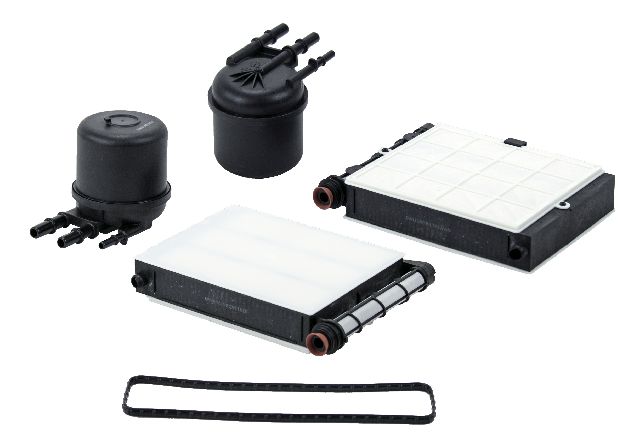
Est. part cost: $0 - Faulty Water in Fuel (WIF) Sensor 🟡 Medium Probability The sensor's probes can become corroded or fouled by sediment over time, or the sensor can fail internally, causing incorrect readings. This can also happen if the sensor is damaged during a fuel filter change. 🎬 Watch: Step-by-step guide to replacing your diesel fuel filters
How to confirm: After confirming the connector is dry and there is no water in the fuel, if the code persists, the sensor is the likely culprit. With the sensor unplugged, check for reference voltage at the harness connector; it should be around 5 volts. If voltage is present, the sensor is likely bad.
Typical fix: Replace the WIF sensor. It is located on the bottom of the fuel filter housing and typically twists out. On some models, a "Water in Fuel Counter" must be reset in the PCM using a capable scan tool after replacement.
Est. part cost: $40-$90 - Outdated PCM Software ⚪ Low Probability TSB 21-2368 notes that P2269, along with many other codes, can be triggered by software glitches in the PCM. This is more likely if multiple, seemingly unrelated codes are present.
How to confirm: A Ford dealership or a shop with a high-end scan tool (like Ford's IDS) can check the current PCM calibration against the latest available version.
Typical fix: Reprogram the Powertrain Control Module (PCM) to the latest software version.
Rare But Worth Checking
- Damaged Wiring Harness: The wiring harness leading to the WIF sensor can rub against the frame or the fuel tank shield, wearing through the insulation and causing a short circuit, especially when wet. One owner found the insulation worn through 3-4 inches away from the connector, requiring a section of wire to be replaced.
Diagnosis Steps
- Immediately stop the vehicle in a safe location.
- Check the instrument cluster for a "Water in Fuel, Drain Filter" message.
- Locate the Horizontal Fuel Conditioning Module (HFCM) on the driver-side frame rail.
- Place a clear container under the drain plug (a 6mm Allen plug).
- Open the drain and let the fluid run until you see clean diesel fuel. If a significant layer of water is present, this was the initial problem. Tighten the drain plug.
- Cycle the key to the 'On' position (without starting) 6-8 times to prime the fuel system.
- Clear the codes with a scan tool and start the engine. If the light and code do not return, the issue is resolved.
- If the code returns immediately, inspect the WIF sensor's electrical connector (C3080) for any signs of water, corrosion, or damage.
- If the connector is wet or corroded, disconnect the battery, clean the connector and sensor pins with electrical contact cleaner, dry it thoroughly with low-pressure air, apply dielectric grease to the connector pins, and reconnect securely.
- Inspect the wiring harness for several inches back from the connector for any signs of chafing or rubbing, especially against the fuel tank shield.
- If the connector and wiring are clean and dry and the code still persists, the WIF sensor itself is likely faulty and should be replaced.
- After replacing the sensor, some trucks may require a "Water in Fuel Counter" reset using a scan tool to extinguish the light.
Parts You'll Likely Need
- Water in Fuel (WIF) Sensor
(OEM #HC3Z-9T321-B)— This sensor fails either internally or due to contamination, causing a persistent code after water has been drained. The OEM part number HC3Z-9T321-B supersedes HC3Z-9T321-A.
Trusted brands: Motorcraft
OEM price range: $50-$95
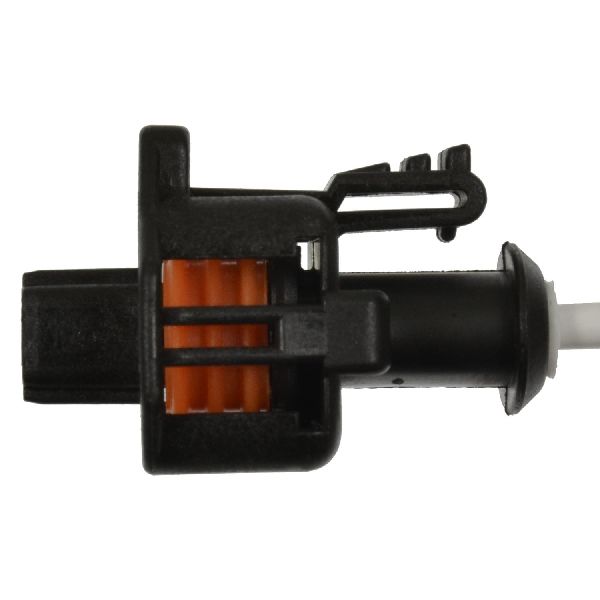
Aftermarket price range: $30-$60 - WIF Sensor Connector Pigtail
(OEM #WPT-1716 (Motorcraft))— Required if the original connector C3080 is heavily corroded from water intrusion and cannot be salvaged by cleaning. Aftermarket versions are also available, such as Fleece Performance FPE-HAR-FMC-WIF-PT-1116.
Trusted brands: Motorcraft, Fleece Performance
OEM price range: $30-$50
Aftermarket price range: $25-$40 - Dielectric Grease — Essential preventative measure. Used to seal the electrical connector from future moisture intrusion, which is a primary cause of this code on this truck.
Trusted brands: Permatex, Motorcraft
OEM price range: $5-$15
Aftermarket price range: $5-$10
Related Codes That Often Appear With This One
- P1140 — This is another Ford-specific code for "Water in Fuel Condition." TSB 18-2133 lists P1140 and P2269 as appearing together for the same connector issue.
- P2266 — A generic code for "Water in Fuel Sensor Circuit Low." It is also listed in TSB 18-2133 as a related code.
- P0088 — Indicates "Fuel Rail/System Pressure - Too High." This can sometimes occur as a secondary effect of the fuel system reacting to a water-in-fuel event or sensor malfunction. One owner on Reddit reported this code along with P2269 after their truck stalled.
- P2291 — Indicates "Injector Control Pressure Too Low - Engine Cranking." This can appear after the engine stalls due to a P2269 fault and fails to restart.
Technical Service Bulletins (TSBs) & Recalls
- TSB 18-2133: Illuminated Water In Fuel (WIF) Indicator with DTCs P1140, P2266 and/or P2269, due to water intrusion into the WIF sensor connector.
- TSB 21-2368: Malfunction Indicator Lamp (MIL) illuminated with various DTCs, including P2269, that may be resolved by a PCM software update.
Platform-Specific Known Issues
- TSB 18-2133: Ford identified that on 2017-2018 models built before March 15, 2018, water can enter the WIF sensor connector C3080, causing false P2269, P1140, and/or P2266 codes. The fix involves inspecting, drying, applying dielectric grease, and taping the harness with Coroplast tape.
- TSB 21-2368: A broader software-related bulletin that lists P2269 as one of over a dozen codes that may be resolved by a PCM software update for various software strategy issues.
Mechanic-Grade Diagnostic Values
- WIF Sensor Live Data Voltage (PID) — expected: ~3.25 Volts (when no water is present). Failure: Voltage drops significantly. Wiggling the harness near the connector or chafe point may cause the voltage to jump around.
- WIF Sensor Reference Voltage (at harness connector, unplugged, key on) — expected: ~5 Volts or ~2.7 Volts (depending on model/source). Failure: No voltage indicates a wiring issue between the PCM and the sensor.
- WIF Sensor Resistance (across sensor pins) — expected: Open / Infinite resistance (when dry). Failure: A closed circuit or low resistance reading indicates the sensor is internally shorted or water is present.
Scan Tool Commands That Help
- Ford IDS, Autel, FORScan, or similar: Water in Fuel Counter Reset — This function must be performed after replacing the WIF sensor or clearing a persistent water-in-fuel fault. Failure to reset the counter can cause the warning light and code to remain even after the physical fault is fixed.
- Ford IDS: Fuel System - Low Pressure Side — This is a service procedure specified in TSB 18-2133 to be run after addressing the WIF sensor/connector issue. It helps prime and test the low-pressure fuel system.
Wiring & Ground Locations
- C3080 — The electrical connector for the Water in Fuel (WIF) sensor, located on the bottom of the Horizontal Fuel Conditioning Module (HFCM) on the driver-side frame rail.. This connector is the subject of TSB 18-2133 due to its susceptibility to water intrusion, which causes a false P2269 code.
- WIF Sensor Wiring Harness — The harness runs from the C3080 connector along the frame rail. A common chafe point is where the harness can rub against the plastic fuel tank shield, a few inches away from the connector.. Vibration can cause the harness to rub through on the shield, exposing the wires. When wet, these exposed wires can short together, mimicking the signal of water in the fuel and triggering the code.
- C3080 Pinout — At the WIF sensor connector.. Pin 1 is the Yellow/Violet wire (Signal Return) and Pin 2 is the Blue/Brown wire (Reference Voltage). This is critical for accurate electrical testing.
Real Owner Repair Stories
- YouTube channel 'Shop Talk' (2019 Ford F-250 6.7L) — Repeated 'Water in Fuel' message, codes P1140 and P2269. Draining the separator showed no water.
❌ Tried (didn't work) Draining the fuel/water separator multiple times., Inspecting the sensor itself (it was just two probes and appeared fine).
✅ What actually fixed it The wiring harness had rubbed through on the fuel tank shield about 3-4 inches from the connector. The insulation was worn away, causing the wires to short when wet. The fix was to cut out the corroded section of wire, splice in new wire, and re-wrap the harness in new convolute loom. - YouTube channel 'Sweet or ?' (2019 Ford F-350 6.7L) — Intermittent 'Water in Fuel' light and reduced power, especially after rain or driving through puddles. Draining the separator with water paste confirmed no water in the fuel.
❌ Tried (didn't work) Draining the fuel separator., Drying out the sensor and connector with a hairdryer.
✅ What actually fixed it A yellow wire in the WIF sensor harness had rubbed raw against the edge of the plastic protective casing (fuel tank shield). The intermittent shorting when wet caused the false signal. The fix was to repair the damaged wire and re-route it to prevent future rubbing.
OEM Part Supersession History
HC3Z-9T321-A→HC3Z-9T321-B— Standard part revision by the manufacturer.
Heads up: None noted; HC3Z-9T321-B is the correct replacement for 'A'.WPT-1261→WPT-1716— Part number update. Some sources list WPT-1261 as the connector, while WPT-1716 is also specified for this application.
Heads up: WPT-1716 is listed for 2017-2025 Super Duty models for the WIF sensor application.
Model Year Variations Within This Range
- 2017 - Early 2018: Models built on or before March 15, 2018, are specifically called out in TSB 18-2133 for having a higher risk of water intrusion into the C3080 connector. Later models may have had a revised harness or connector seal from the factory.
Helpful Videos

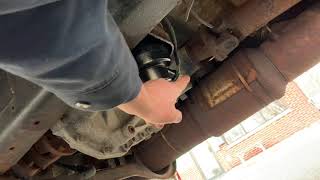
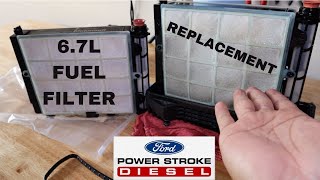
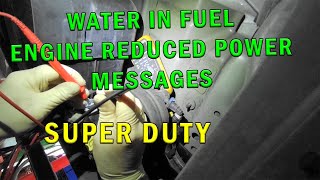
We Have This Part in Stock


The information in this article is provided for general reference and educational purposes only. Vehicle specifications, procedures, and part compatibility can vary by production date, trim level, and region. Always consult your vehicle's factory service manual and verify part numbers before purchasing or performing repairs. Safety-critical components such as airbags, seat belts, and braking systems should be installed by a qualified professional.
- Ford F-250 SD:
- 🎬 Helpful Videos
- 🛍️ Shop This Part
- What's Unique About the 2017-2018 Ford F-250 SD
- Diagnostic Flowchart
- Symptoms You May Notice
- Most Likely Causes
- Rare But Worth Checking
- Diagnosis Steps
- Parts You'll Likely Need
- Related Codes That Often Appear With This One
- Technical Service Bulletins (TSBs) & Recalls
- Platform-Specific Known Issues
- Mechanic-Grade Diagnostic Values
- Scan Tool Commands That Help
- Wiring & Ground Locations
- Real Owner Repair Stories
- OEM Part Supersession History
- Model Year Variations Within This Range
- 🎟️ Get 5% Off