

P2263 on 2011-2015 Chevrolet Express: Turbo Boost Performance Issues & Fixes
On a 2011-2015 Express with the 6.6L Duramax, this code often means the air filter is clogged with snow or ice, per a GM Technical Service Bulletin. Other common causes include a sticking variable geometry turbo (VGT) due to soot, a faulty boost pressure sensor, or a failing VGT position sensor. The fix can be as simple as a new air filter and installing a winter grille cover, or as complex as a turbo replacement.
- If you live in a cold climate, the first thing to check is the air filter for snow, ice, or water.
- This code will put your van into 'Reduced Engine Power' mode, so do not ignore it.
- The cause can range from a simple, inexpensive air filter to a very expensive turbocharger replacement.
- If the air filter is fine, the next most likely causes are a boost leak or a problem with the variable geometry turbocharger (VGT) system.
- Due to the complexity of the turbo system, professional diagnosis with a proper scan tool is highly recommended if the cause is not an obvious air filter issue.
What's Unique About the 2011-2015 Chevrolet EXPRESS
For the Duramax-powered Express van, this code is uniquely tied to two specific issues. First, as documented in GM Technical Service Bulletin #PI1164B, the air intake system is prone to ingesting snow and ice in cold climates, which directly restricts airflow and triggers P2263. Second, the LGH Duramax engine uses a Variable Geometry Turbocharger (VGT) that is known to develop soot and carbon buildup, which can cause the internal vanes or unison ring to stick, leading to incorrect boost levels and this performance code.
Diagnostic Flowchart
Tap your situation to follow the diagnostic path that matches what you're seeing on this vehicle.
Symptoms You May Notice
- "Reduced Engine Power" message on the instrument cluster.
- Check Engine Light is on.
- Poor acceleration and sluggish performance.
- Vehicle may not be able to maintain highway speeds, especially under load or while towing.
- Unusual noises from the turbocharger (whistling, whining, or surging).
- Black or white smoke from the exhaust.
- Decreased fuel economy.
- Replacing the entire turbocharger without first checking for a clogged air filter, especially in cold climates per TSB PI1164B.
- Replacing the turbocharger when the actual fault is a less expensive, serviceable component like the vane position sensor or boost pressure sensor.
- Replacing the vane position sensor without performing the required 'Turbocharger Learn Procedure' with a scan tool afterwards, causing the code to return.
Most Likely Causes
- Restricted Air Intake / Clogged Air Filter 🔴 High Probability Per TSB #PI1164B, the air intake design on Express and Savana vans can ingest snow and ice, which soaks and freezes the air filter element, causing a severe restriction.
How to confirm: Visually inspect the air filter for being packed with snow, ice, or being soaking wet.
Typical fix: Replace the air filter. GM also provides a radiator grille cover (P/N 20945968) for vehicles in cold climates to prevent this from recurring.
Est. part cost: $30-$70 - Sticking Variable Geometry Turbocharger (VGT) Vanes 🔴 High Probability The LGH Duramax engine, especially in vehicles that are not frequently driven under heavy load, is susceptible to soot and carbon buildup within the turbocharger. This buildup can cause the delicate VGT vanes or the unison ring to bind, preventing them from moving to the position commanded by the ECM.
How to confirm: A technician with a bi-directional scan tool can command the turbo vane position and watch live data to see if the actual position matches the desired position. In some cases, attempting to clean the turbo with an in-tank additive or by sustained heavy towing may help, but often the turbo must be removed for inspection or replacement.
Typical fix: In some cases, the turbo can be removed, disassembled, and cleaned. 🎬 Watch: See how to disassemble and clean a Duramax turbo. However, this is labor-intensive and not always successful. More often, the entire turbocharger assembly is replaced.
Est. part cost: $1500-$3000+ - Faulty Turbocharger Vane Position Sensor 🟡 Medium Probability This sensor is a moving part located in a high-heat environment. It can fail internally, get gummed up with soot, or suffer from wiring issues, leading to incorrect readings about the vane's actual position.
How to confirm: Using a scan tool, compare the 'Desired Vane Position' to the 'Actual Vane Position'. A sensor that is stuck on one value (e.g., 21% or 100%) regardless of engine operation is faulty. It can be removed and manually tested while watching live data.
Typical fix: Replace the vane position sensor. This often requires a special 1-inch sensor socket for removal. After replacement, a turbocharger learn procedure with a scan tool is required.
Est. part cost: $100-$500 - Faulty Boost Pressure Sensor (MAP Sensor) 🟡 Medium Probability Like other Duramax engines, the MAP sensor can become clogged with soot from the EGR system, leading to inaccurate pressure readings.
How to confirm: With the engine off, the boost pressure sensor reading on a scan tool should be close to atmospheric pressure. Its readings should change logically with engine RPM and load. The sensor can be removed and inspected for soot buildup.
Typical fix: Remove and clean the sensor with an appropriate cleaner. If cleaning doesn't resolve the issue or the sensor has failed electronically, it must be replaced.
Est. part cost: $50-$150 - Charge Air System Leaks 🟡 Medium Probability The rubber hoses in the charge air system can become soft, oil-soaked, or cracked over time, leading to leaks under boost. One common failure point is the hot-side charge air cooler hose, which can become spongy and suck shut under vacuum.
How to confirm: A smoke test is the most effective method. This involves pressurizing the intake and charge pipes with smoke and looking for leaks from cracked hoses, loose clamps, or a damaged intercooler. Visually inspect hoses for swelling or sponginess.
Typical fix: Tighten loose clamps or replace the leaking hose, pipe, or intercooler.
Est. part cost: $20-$800
Rare But Worth Checking
- Faulty Turbocharger Vane Control Solenoid/Actuator: The solenoid that uses oil pressure to move the vanes can fail. On some platforms, this is a separate component, while on others it's part of the turbo. It can stick due to contaminated oil or fail electrically.
- Exhaust Leaks (Pre-Turbo): A cracked exhaust manifold or a leaking up-pipe gasket can reduce the exhaust energy needed to spin the turbine, causing a low boost condition, especially under high load.
- Clogged Catalytic Converter/DPF: An exhaust restriction downstream of the turbo can create excessive backpressure, impeding the turbo's ability to spin freely and generate boost, which can trigger a performance code.
- Internal Turbocharger Failure: This involves mechanical failure of the turbo's bearings or turbine/compressor wheels. This is usually accompanied by loud, abnormal noises and is less common than VGT-related issues.
Diagnosis Steps
- Check for any Technical Service Bulletins (TSBs) related to P2263 for your vehicle. Note TSBs PI1164, PI1164A, and PI1164B.
- Scan for any other stored fault codes that could provide more clues, such as P003A, P2563, or P0299.
- Perform a thorough visual inspection of the air intake system, starting with the air filter. Look for signs of moisture, ice, snow, or debris as noted in TSB PI1164B.
- Inspect all charge air cooler pipes and hoses for cracks, loose connections, or signs of oil leaks (which can indicate a boost leak). Check for soft, spongy hoses.
- Connect a scan tool to view live data. Monitor 'Desired Boost Pressure' vs. 'Actual Boost Pressure' and 'Desired Vane Position' vs. 'Actual Vane Position' while driving under various loads.
- With the engine off, key on, check the MAP/Boost sensor reading. It should be close to atmospheric pressure (approx. 14.7 PSI at sea level).
- Perform a smoke test on the entire intake and charge air system to definitively check for leaks.
- If a bi-directional scan tool is available, perform the 'Turbocharger Learn Procedure' and actuator tests to check for proper mechanical response and sensor range of motion.
- If the vane position sensor is suspected, remove it and test its full range of motion manually while observing the live data percentage on the scan tool. A healthy sensor should read from ~0% to ~100%.
- If all other components check out, the issue likely lies with soot buildup in the turbocharger or an internal mechanical fault, requiring removal for cleaning, inspection, or replacement.
Parts You'll Likely Need
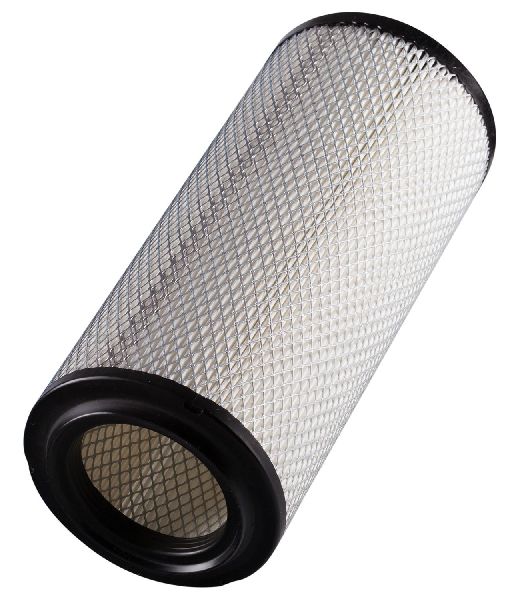
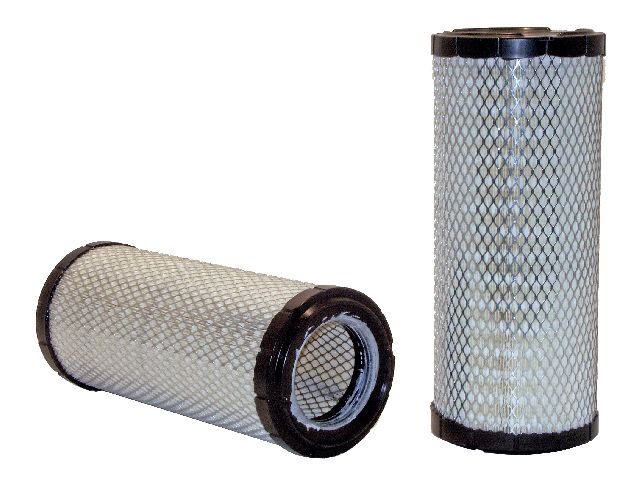
- Air Filter — Per TSB PI1164B, the filter can become clogged with snow or ice, restricting airflow and causing P2263.
Trusted brands: ACDelco, Wix, Donaldson
OEM price range: $50-$70
Aftermarket price range: $30-$50 - Radiator Grille Cover
(OEM #20945968)— Recommended by GM in TSB PI1164B to prevent snow/ice ingestion into the air intake in cold climates.
Trusted brands: ACDelco (OEM)
OEM price range: $50
Related Codes That Often Appear With This One
- P0299 — P0299 is 'Turbo Underboost Condition,' which is a very similar fault. P2263 is a general performance code, while P0299 is more specific to low boost, but they often share the same root causes.
- P003A — P003A is 'Turbocharger/Supercharger Boost Control 'A' Position Exceeded Learning Limit'. This code often points directly to sticking VGT vanes or a faulty vane position sensor, which are primary causes of P2263.
- P2563 — P2563 is 'Turbocharger Boost Control Position Sensor 'A' Circuit Performance'. This code specifically indicates a problem with the vane position sensor's performance, a common cause for the general P2263 code.
Technical Service Bulletins (TSBs) & Recalls
- PI1164B: 'Reduced Engine Power with Service engine message displayed and DTC P2263 Set' - This bulletin specifically identifies snow/ice ingestion into the air cleaner as a cause and recommends a winter grille cover (P/N 20945968). It covers 2011-2016 models.
- PI1164A / PI1164: Earlier versions of the same bulletin, superseded by PI1164B.
Platform-Specific Known Issues
- A primary issue for this vehicle is the ingestion of snow and ice into the air cleaner housing, leading to a frozen, blocked air filter and triggering P2263 with reduced engine power, as detailed in GM TSB #PI1164B.
- Owners towing heavy loads, especially up steep grades, may experience this code when the turbo fails to build or sustain the commanded boost under high stress. This can be an early sign of sticking VGT vanes.
Mechanic-Grade Diagnostic Values
- Turbocharger Vane Position Sensor 5V Reference — expected: ~5.0 Volts. Failure: Voltage significantly lower than 5.0V indicates a wiring or ECM issue.
- Turbocharger Vane Position Sensor Signal Voltage — expected: A smooth sweep from approximately 0.5V to 4.5V as the sensor plunger is moved through its range.. Failure: Voltage that is stuck, jumps erratically, or does not change smoothly indicates a faulty sensor.
- Turbocharger Vane Position Sensor Torque Specification — expected: 21 lb-ft. Failure: Improper torque can lead to damage or incorrect seating of the sensor.
- Scan Tool 'Desired Vane Position' vs 'Actual Vane Position' — expected: The 'Actual' PID should closely follow the 'Desired' PID as engine load and RPM change.. Failure: A large discrepancy between the two values, or an 'Actual' value that is stuck (e.g., at 21% or 100%) points to a sticking turbo mechanism or a faulty sensor/actuator.
Scan Tool Commands That Help
- GDS2 / Tech 2 / Professional Scan Tool: Turbocharger Learn / TC Learn (ON/OFF) — This procedure is required after replacing the turbocharger, vane position sensor, or vane control solenoid to calibrate the new component's position range to the ECM. Failure to perform this can cause codes P003A or P2563 to set.
- GDS2 / Bi-directional Scan Tool: Turbocharger Vane Control / Position Control — Used during diagnosis to command the turbo vanes to sweep through their full range of motion (e.g., 0% to 100%). This helps verify if the vanes are physically sticking or if the actuator and sensor are responding correctly across the entire range. The sound of the turbo will change (hissing/rumble) during this test.
Wiring & Ground Locations
- Engine Block Ground — A large cable running from the negative battery terminal directly to the engine block.. This is the primary ground for the starter, alternator, and many sensors, including those in the turbocharger control system. A poor connection here can cause erratic sensor readings and control module issues.
- G103, G108, G109 — These are key ground points on the engine/frame for diesel models. For a similar Silverado, G103 and G108 are located on the rear of the left cylinder head, and G109 is on the right front of the engine block. Exact locations on the Express may vary slightly but will be in similar positions.. The ECM and its related sensors rely on clean ground connections. A corroded or loose ground at these specific points can introduce resistance and voltage fluctuations, leading to false performance codes like P2263.
- Turbo Vane Position Sensor Connector — A 3-wire or 4-wire connector directly on the vane position sensor, located on top of the turbocharger.. The pigtail for this sensor is in a high-heat area and can become brittle or damaged, causing intermittent signal loss. Wires include a 5V reference, a ground, and a signal return to the ECM. Checking for voltage and continuity at these pins is a critical diagnostic step.
OEM Part Supersession History
12635324, 98061570, 12630145→12643471— Updated design for reliability.
Heads up: The OEM part 12643471 is the current replacement for a wide range of Duramax engines from 2006-2016, including the LGH.
Helpful Videos
Used OEM Parts in Stock



New Aftermarket Parts Available



The information in this article is provided for general reference and educational purposes only. Vehicle specifications, procedures, and part compatibility can vary by production date, trim level, and region. Always consult your vehicle's factory service manual and verify part numbers before purchasing or performing repairs. Safety-critical components such as airbags, seat belts, and braking systems should be installed by a qualified professional.
- Chevrolet EXPRESS:
- 🎬 Helpful Videos
- 🛍️ Shop This Part
- What's Unique About the 2011-2015 Chevrolet EXPRESS
- Diagnostic Flowchart
- Symptoms You May Notice
- Most Likely Causes
- Rare But Worth Checking
- Diagnosis Steps
- Parts You'll Likely Need
- Related Codes That Often Appear With This One
- Technical Service Bulletins (TSBs) & Recalls
- Platform-Specific Known Issues
- Mechanic-Grade Diagnostic Values
- Scan Tool Commands That Help
- Wiring & Ground Locations
- OEM Part Supersession History
- 🎟️ Get 5% Off