

OBD-II Code P2245: O2 Sensor Reference Voltage Circuit Low
What P2245 means, why it triggers, and how to fix it
- Code P2245 indicates the reference voltage for the Bank 1 upstream oxygen sensor has dropped below 0.9 volts, disabling accurate fuel control.
- Melted or shorted wiring near the hot exhaust causes 60% of P2245 codes, making visual harness inspection your mandatory first diagnostic step.
- Driving with an active P2245 code drops fuel economy by up to 15% and guarantees an automatic failure during state emissions testing.
- Ignoring this code for more than a few months forces the engine to run rich, destroying the catalytic converter and triggering a $1,500+ repair bill.
What Does P2245 Mean?

P2245 means the Powertrain Control Module (PCM) detects the reference voltage from the Bank 1 upstream oxygen sensor is too low. This sensor measures exhaust oxygen to maintain the correct air-fuel mixture.
Technical definition: The SAE/OBD-II definition is "O2 Sensor Reference Voltage Circuit Low (Bank 1, Sensor 1)". This indicates the PCM detects the reference voltage circuit for the upstream oxygen sensor falls below 0.9 volts for a set period (e.g., 60 seconds) while battery voltage exceeds 10.4 volts.
Can I Drive With P2245?
Yes, But With Caution. Yes, but only for a few days. Ignoring this code causes poor fuel economy, increased emissions, and destroys your catalytic converter. Driving long-term with this code guarantees a catalytic converter failure, costing $800 to $2,500.
Common Causes

- Damaged, shorted, or corroded wiring/connectors (Very Common) — The wiring harness is exposed to extreme exhaust heat, road debris, and moisture. Melted insulation, frayed wires shorting to ground, or corroded connector pins are the most frequent causes of a low voltage reading.
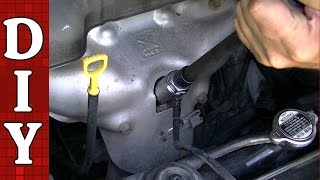
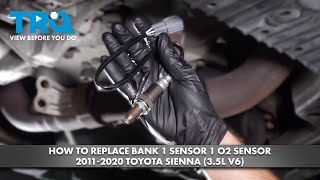
- Faulty Bank 1, Sensor 1 Oxygen Sensor (Common) — The sensor fails internally. The internal heating element or reference voltage circuit shorts out, 🎬 See this walkthrough on how to replace an upstream sensor. or the sensing element becomes contaminated by oil ash or coolant, sending incorrect voltage signals.
- Blown fuse for the sensor circuit (Common) — The O2 sensor heater and reference voltage circuits are protected by a fuse. A blown fuse cuts power to the sensor, resulting in an immediate low voltage code.
- A short in another O2 sensor on a shared circuit (Less Common) — On Chrysler, Dodge, and Jeep vehicles, multiple O2 sensors share the same reference voltage circuit. A short to ground in any sensor on that circuit pulls the voltage down for all of them.
- Use of incorrect or low-quality aftermarket O2 sensor (Less Common) — Japanese and German vehicles are highly sensitive to oxygen sensor calibration and resistance. Generic or low-quality aftermarket sensors provide incorrect voltage readings and trigger this code immediately upon installation.
- Exhaust or large vacuum leaks (Less Common) — Cracks in the exhaust manifold or a massive vacuum leak introduce unmetered air into the engine. This drastically leans out the air-fuel mixture, forcing the O2 sensor to report values the PCM interprets as a fault.
- Faulty Powertrain Control Module (PCM) (Rare) — The internal driver circuit supplying the reference voltage to the O2 sensor fails. This is rare; rule out all wiring and sensor issues before condemning the PCM.
Symptoms

- Check Engine Light is on — The PCM illuminates the light immediately upon detecting the fault.
- Rough idle or engine hesitation — The engine runs poorly, stumbles during acceleration, or idles erratically due to the incorrect air-fuel ratio.
- Failed emissions test — Improper air-fuel mixtures increase emissions, guaranteeing a smog check failure.
- Black smoke or rotten egg smell from exhaust — The PCM defaults to a rich fuel mixture as a fail-safe. Unburnt fuel exits as black smoke, and a sulfur smell indicates an overworked catalytic converter.
- Decreased fuel economy (also visible on scanner) — The PCM cannot accurately control the air-fuel mixture, forcing the engine to run rich and waste fuel.
Diagnostic Flowchart
Tap your situation to follow the diagnostic path that matches what you're seeing on this code.
Common Fixes & Costs
- Repair or replace the O2 sensor wiring harness or connector — Parts: $20-$60, Labor: $100-$250, ~1.5 hr book time (Intermediate)
- Replace the Bank 1, Sensor 1 Oxygen Sensor
— Parts: $50-$250, Labor: $100-$350, ~1.2 hr book time
(DIY)
Honda Accord (2018-2022 1.5T): OEM
Jeep Grand Cherokee (2017-2021 3.6L): OEM
Chevrolet Silverado 1500 (2014-2018 5.3L): OEM - Replace a blown fuse — Parts: $1-$5, Labor: $0-$50, ~0.2 hr book time (Beginner)
- Repair an exhaust leak — Parts: $20-$100, Labor: $150-$300, ~2.5 hr book time (Intermediate)
- Replace the Powertrain Control Module (PCM) — Parts: $500-$1200, Labor: $150-$300, ~1.5 hr book time (Professional)
DIY vs Professional
- Replace a blown fuse — Beginner:
Tools: Fuse puller or small pliers, owner's manual. - Replace the Bank 1, Sensor 1 Oxygen Sensor — Beginner:
Tools: Jack and jack stands, penetrating oil, O2 sensor socket, ratchet, torque wrench, anti-seize compound. - Repair or replace the O2 sensor wiring harness or connector — Beginner:
Tools: Multimeter, wire strippers, crimpers, heat shrink tubing, soldering iron (recommended), service manual. - Replace the Powertrain Control Module (PCM) — Beginner:
Tools: Socket set, service manual, professional scan tool for programming.
Used vs. New Parts: Buying Guide
When a used part is worth it: Buying a used oxygen sensor is almost never recommended. It is a wear-and-tear part with a finite lifespan. The savings are minimal compared to the risk of installing a part that is already near the end of its life or incompatible.
Donor-vehicle mileage cap: roughly under 20000 miles for the part to have meaningful remaining life.
Donor quality checklist:
- Only consider a used sensor from a very low-mileage vehicle that was wrecked.
- Ensure the part number is an exact match for your vehicle's required OEM sensor.
- Avoid sensors from vehicles in the Rust Belt, as corrosion damages the sensor body and threads.
Decision logic:
- If The cost of a new OEM-quality aftermarket sensor (e.g., Denso, Bosch, NTK) is under $150 → Always buy new. The warranty and assurance of a correct part outweigh any potential savings from a used one.
- If The vehicle is very old and has low value → A used sensor is a temporary, budget-conscious fix, but expect it fails again soon.
- If The part is an O2 sensor → Strongly favor buying a new part from an OEM supplier to avoid compatibility issues and premature failure.
Warranty tradeoff: Used parts from a salvage yard typically have a 30-90 day warranty at best. New aftermarket sensors carry a 1-year to limited lifetime warranty. An OEM sensor has a 1-year/12,000-mile warranty.
Worst-case if a used part fails: $150-$250 if a used sensor fails after installation, requiring repeat labor costs plus the cost of another (new) sensor.
What Happens If You Wait — Timeline
- 0-2 weeks: Check Engine Light is on. The PCM defaults to a pre-set 'safe' rich fuel map. No other symptoms are noticeable. (MPG impact: 0-5%% · Added cost: $0-20 in wasted fuel)
- 2 weeks - 2 months: Fuel economy drop becomes obvious (5-15%). You experience slight engine hesitation or a rough idle, especially when cold. (MPG impact: 5-15%% · Added cost: $20-80 in wasted fuel)
- 2-6 months: Sustained rich condition overheats the catalytic converter. You smell sulfur ('rotten eggs') from the exhaust after a long drive. The converter's efficiency degrades. (MPG impact: 10-20%% · Added cost: $500-1200 (Catalytic converter is damaged and requires replacement))
- 6+ months: Catalytic converter substrate melts or breaks apart, causing a severe exhaust restriction. Engine power is drastically reduced, and a P0420 (Catalyst Inefficiency) code sets. The blockage causes engine damage. (MPG impact: 15-30%% · Added cost: $1500-3000 (Full catalytic converter replacement is mandatory for the vehicle to run properly))
Cost of Not Fixing It
- 0-1 month: Noticeable drop in fuel economy (5-15%) and guaranteed failure of an emissions test. (Added cost: $20-$60 per month in extra fuel costs.)
- 1-6 months: The engine running rich causes the catalytic converter to overheat, leading to internal damage and reduced efficiency. You notice a sulfur or 'rotten egg' smell from the exhaust. (Added cost: Negligible unless converter damage begins.)
- 6+ months: Complete failure of the catalytic converter is likely. The internal honeycomb structure melts or breaks apart, causing a P0420 code and a major exhaust blockage that severely reduces engine power. (Added cost: $1,000-$3,000 for catalytic converter replacement.)
Diagnosis Steps

- Scan for All Trouble Codes
Use an OBD-II scanner to read the codes. Confirm P2245 is present and look for related codes (like P0135, P2237, or P0171). Write down the freeze frame data, which shows the engine's condition when the code was set.
Tools: OBD-II Scanner (Beginner) - Analyze Live Data with a Scan Tool
Using a scan tool with live data capabilities, monitor the PIDs for 'O2 Voltage B1S1', 'Short Term Fuel Trim B1' (STFT1), and 'Long Term Fuel Trim B1' (LTFT1). With a P2245 fault, you see the O2 voltage flatlined near zero. In response, the PCM adds fuel, causing STFT1 and LTFT1 values to be highly positive (e.g., > +10%). This confirms the PCM sees a lean signal and is trying to compensate.
Tools: OBD-II Scanner (with live data) (Advanced) - Visually Inspect Wiring and Connectors
Carefully inspect the entire wiring harness for the Bank 1, Sensor 1 O2 sensor, from the sensor itself to where it connects to the main engine harness. Look for melting, chafing, corrosion, or loose pins in the connectors. Pay close attention to areas where the wiring is close to the hot exhaust pipes.
Tools: Flashlight, Inspection Mirror (Beginner) - Check for Blown Fuses
Consult your owner's manual or a service manual to locate the fuse for the O2 sensor circuit (often labeled 'O2 HTR' or 'A/F Heater'). Visually inspect the fuse to see if it is blown and replace it if necessary.
Tools: Fuse Puller or Pliers (Beginner) - Test Reference Voltage at the Sensor
Disconnect the O2 sensor and turn the ignition to 'On' (engine off). Use a multimeter to probe the reference voltage wire on the harness-side connector. Consult a service manual for your vehicle's exact specification (often 0.45V, 2.5V, or 5V). A reading near 0V confirms the low voltage condition. If voltage is normal here, the sensor is internally shorted. If voltage is low, proceed to test at the PCM.
Tools: Multimeter, Service Manual (Intermediate) - Check for a Short to Ground
Turn the ignition off. Disconnect the PCM harness connector and the O2 sensor connector. Set your multimeter to resistance (Ohms) and check for continuity between the reference voltage wire at the sensor connector and a known good chassis ground. The reading should be infinite (OL); if you have continuity (resistance below 10k Ohms), it confirms the wire is shorted to ground.
Tools: Multimeter, Service Manual (Advanced) - Pro Tip: Isolate a Shorted Sensor on Shared Circuits
On Chrysler/Dodge/Jeep vehicles, all O2 sensors share a reference circuit. A short in one triggers a code for another. With the engine running and live data on your scan tool, unplug each O2 sensor one at a time. If unplugging a different sensor causes the reference voltage for Bank 1 Sensor 1 to return to normal, you found the sensor with the internal short.
Tools: OBD-II Scanner (with live data) (Advanced) - Test Heater Circuit Resistance
A short in the sensor's internal heater pulls down the reference circuit. With the sensor disconnected, use a multimeter set to Ohms to measure the resistance between the two heater circuit pins on the sensor side. A normal reading is typically between 2 and 30 Ohms. A reading of OL (infinite) or near zero indicates a failed heater requiring sensor replacement.
Tools: Multimeter, Service Manual (Advanced) - Test or Substitute the Oxygen Sensor
If all wiring, fuses, and voltage checks are normal, the sensor itself is the culprit. You can test the internal resistance of the heater circuit with a multimeter or, if you have a known-good sensor, swap it in, clear the codes, and perform a drive cycle to see if the code returns.
Tools: Multimeter, Oxygen Sensor Socket, Ratchet (Intermediate) - Pro Tip: Analyze with an Oscilloscope
For definitive diagnosis, use an oscilloscope to graph the O2 sensor's voltage signal with the engine running. A healthy sensor shows a fluctuating waveform. For P2245, look for a signal that is biased low, flatlined near zero, or has significant noise or dropouts corresponding with the low reference voltage, confirming a circuit or sensor fault.
Tools: Oscilloscope, Service Manual (Professional)
When This Code Triggers (Freeze-Frame Conditions)
- Engine Coolant Temp: 180-210°F (82-99°C) (Fully warmed up and operating in closed loop.)
- Engine RPM: 1500-2500 RPM (Steady cruise or light acceleration.)
- Engine Load: 30-60% (Vehicle is under a moderate, steady load, not idling or at full throttle.)
- Vehicle Speed: 40-60 mph (64-97 kph) (Sustained highway or expressway driving.)
Related Codes
- P0135 — This code indicates a malfunction in the O2 sensor's heater circuit. A short in the heater circuit pulls the reference voltage down, triggering P2245 simultaneously. Diagnose P0135 first; fixing a shorted heater circuit resolves both codes.
- P2237 — This code is for 'O2 Sensor Positive Current Control Circuit/Open'. It appears with P2245 on vehicles with wideband O2 sensors. A wiring failure affects both circuits. A scan tool showing no signal activity suggests an open circuit (P2237), while a signal biased low points toward P2245.
- P0171 — This code means 'System Too Lean (Bank 1)'. P2245 is a potential cause for P0171. The faulty low voltage signal from the O2 sensor tricks the PCM into believing the engine is running lean. The PCM adds excessive fuel to compensate. Diagnose and fix P2245 first to resolve the P0171 code.
- P2246 — This is the opposite code, 'O2 Sensor Reference Voltage Circuit High'. Diagnostically, they are twins. For P2245, you look for a short to ground pulling voltage down. For P2246, you look for a short to a power source pulling voltage up. The same wire is tested, but the fault condition is different.
Climate & Environmental Factors
- Cold Climates / Salt Belt: Regions that use road salt in winter see a much higher incidence of P2245. Salt and moisture accelerate the corrosion of the O2 sensor's connector pins and wiring harness, leading to shorts or high resistance that trigger the code.
- High Humidity: Sustained high humidity promotes water ingress into connectors and wiring looms that become brittle or cracked with age, leading to intermittent shorts and low voltage readings.
How to Talk to a Mechanic About This Code
Say this: "I have a P2245 code for the Bank 1 upstream O2 sensor. I'd like a diagnosis that tests the wiring harness and reference voltage before we assume the sensor needs replacement."
This signals you understand that a wiring fault is a common cause for this code. It encourages the technician to perform a proper electrical diagnosis instead of just replacing the most likely part, saving you money if the sensor isn't the problem.
Avoid saying:
- 'Just fix whatever's wrong'
- 'My check engine light is on, can you look at it?' (too vague — invites upsell)
- 'Whatever you recommend'
Questions to ask before authorizing the repair:
- Did you test the reference voltage at the sensor connector and at the PCM?
- Did you perform a continuity test and find a short-to-ground in the wiring harness?
- If you're recommending a sensor replacement, what were the results of the electrical tests that ruled out a wiring problem?
- What is the warranty on this repair and the part itself?
Where to Take It: Dealer vs Independent vs Chain
- Dealer:
Best for: Vehicles still under powertrain or emissions warranty, Complex electrical diagnostics, especially if a PCM failure is suspected, Known manufacturer-specific quirks (e.g., Honda, Chrysler, GM TSBs)
Downsides: Higher labor rates, often 1.5-2x more than an independent shop., Recommends replacing an entire assembly when a smaller component repair is possible. (Typical cost: +50% vs. baseline) - Independent Shop:
Best fit. A reputable independent shop is perfectly equipped to diagnose the wiring, sensor, and fuse issues that typically cause P2245 at a more reasonable cost than the dealer.
Best for: Out-of-warranty vehicles where cost is a factor., Diagnosing common codes like P2245 that require standard electrical testing skills.
Downsides: Quality and expertise vary widely; it's important to find a shop with good reviews and ASE-certified technicians. (Typical cost: +0% vs. baseline) - Chain Shop:
Use with caution. Acceptable if you have already diagnosed the problem and know for certain that only a sensor replacement is needed. Avoid for initial diagnosis of this code.
Best for: Simple, clear-cut part replacements like brakes or an oil change.
Downsides: Technician skill is inconsistent., Business model incentivizes replacing parts over performing time-consuming electrical diagnostics, which is the wrong approach for P2245. (Typical cost: -10% vs. baseline)
When to Walk Away From the Repair
If the estimated repair cost for the worst-case scenario (e.g., PCM replacement) exceeds 40-50% of your car's private-party value (via Kelley Blue Book or similar), you should pause and consider your alternatives.
- Car worth $4000, fix is $2000: Borderline. Get a second opinion before authorizing a high-cost repair. The fix might be much cheaper (wiring), but if it's not, the repair cost is half the car's value.
- Car worth $12000, fix is $1800: Fix it. This is well below the threshold and a reasonable cost to keep a more valuable car running properly.
- Car worth $2500, fix is $1500: Walk away. The repair cost is too high relative to the vehicle's value. It's time to stop investing in this car.
What Scan Tool You Need for This Code

Minimum: An OBD2 scanner with live data streaming and graphing.
A basic $20 code reader only tells you that code P2245 exists. It cannot show you the live O2 sensor voltage, which is critical. Seeing the voltage flatlined near zero on a graph is the key diagnostic step to confirm the fault before you start testing wires or replacing parts.
Budget: BlueDriver Pro or Topdon TopScan (~$100) — These Bluetooth scanners pair with your smartphone to provide live data graphing for the O2 sensor voltage and fuel trims. They also read freeze-frame data, which is essential for diagnosis.
Mid-range: Foxwell NT510 Elite or Autel MaxiCOM MK808 (~$180) — Provides all the functions of the budget picks but with a dedicated screen, faster processing, and access to manufacturer-specific codes and data. Some tools in this range offer limited bidirectional controls to test components.
Professional: Autel MaxiSys MS906Pro or Foxwell GT60 (~$500-1200) — Offers full bidirectional control to command modules and run tests, advanced coding and programming functions (for potential PCM replacement), and detailed graphing capabilities akin to an oscilloscope. These are professional-grade tools.
Rent vs buy: If this is a one-time repair, many auto parts stores like AutoZone or O'Reilly offer a free tool loaner program with a refundable deposit. This is a great way to get a capable scanner without purchasing one.
How to Clear the Code After You Fix It
- Use an OBD-II scan tool to erase the diagnostic trouble codes.
- Disconnecting the battery for 15 minutes also clears codes but resets all vehicle memory.
- Perform a complete OBD-II drive cycle to allow readiness monitors to run.
Drive cycle (~30 minutes): A complete drive cycle is needed to reset the O2 sensor and catalyst monitors. Start with a cold engine. Idle for 2-3 minutes with electrical loads on (like A/C and rear defroster). Accelerate to 55 mph and hold a steady speed for 3-5 minutes. Decelerate to 20 mph without using the brakes. Accelerate again to 55-60 mph and hold for 5-10 minutes. Finish with some city/suburban driving.
Readiness monitors affected: Catalyst monitor, O2 sensor monitor, O2 sensor heater monitor
Before emissions retest: drive at least 100 miles to fully set monitors.
Watch out for:
- Simply clearing the code does not fix the underlying mechanical or electrical fault, and the code returns.
- Disconnecting the battery erases all readiness monitors, guaranteeing an emissions test failure until a full drive cycle is completed.
- Not completing the specific drive cycle phases (cold start, steady cruise, deceleration) prevents the O2 and catalyst monitors from becoming 'Ready'.
Will This Fail Emissions / State Inspection?
Yes — this code typically fails an OBD-II emissions inspection.
- California: An active P2245 code is an automatic failure of the smog check. Additionally, all OBD readiness monitors must be set to 'Ready'. After a repair, you drive 50-100 miles to complete the drive cycle before a retest.
- New York: The NYS DMV vehicle inspection includes an OBD-II scan. An illuminated Check Engine Light and a P2245 code result in an automatic failure. The O2 sensor and catalyst readiness monitors must also be in a 'Ready' state to pass.
- Texas: In counties requiring emissions testing, an illuminated Check Engine Light from code P2245 is an automatic failure. After clearing the code, you cannot have more than one readiness monitor set to 'Not Ready' (or two for vehicles model year 1996-2000).
Most Commonly Affected Vehicles
- Honda Accord, Civic, Pilot (2016-2023) — These models have issues where the Air/Fuel ratio sensor's VCENT circuit shorts or fails, triggering P2245. For 2016-2021 Civics, a voltage reading below 0.2V at the sensor connector points to an internal PCM fault.
- Chrysler/Dodge/Jeep Town & Country, Grand Caravan, 200, Ram 1500/2500 (2011-2020) — Vehicles with the 3.6L Pentastar V6 commonly report this code. Service information states the most likely cause is the O2 sensor return circuit being shorted to ground. A short in any of the four O2 sensors causes this code.
- Chevrolet/GMC Silverado, Sierra, Tahoe, Suburban (2014-2021) — Commonly found on V8 models, due to wiring harness damage near the exhaust manifold. In some cases, an ECM software update per TSB 23-NA-045 addresses diagnostic sensitivity if no physical fault is found.
- Hyundai/Kia Elantra, Sonata, Optima, Sorento (2012-2020) — This code is frequently reported, with the primary causes being either a failed sensor or a short in the connecting wiring harness.
- BMW 3-Series (E90), 5-Series (F10), X3, X5 (2008-2017) — On BMWs, P2245 is caused by an aging original O2 sensor or oil leaks from the valve cover gasket dripping onto and damaging the sensor connector and wiring.
- Subaru Outback, Forester, Impreza (2010-2019) — Subaru models, particularly with the 2.5L engine, are prone to this code. It's critical to inspect for exhaust leaks from the manifold gaskets or pipe flanges before replacing the sensor.
- Toyota Camry, Corolla, RAV4 (2007-2018) — Aging oxygen sensors on these high-volume models fail and produce this code. Using the correct OEM-brand sensor (Denso) is critical for a lasting repair, as these vehicles are sensitive to aftermarket parts.
- Ford F-150, Focus, Ranger (2011-2020) — Wiring damage from heat is a common cause on these vehicles, leading to shorts in the O2 sensor circuit and triggering P2245. Always inspect the harness loom where it runs near the exhaust.
- Volkswagen Jetta, Golf, Passat (2011-2019) — Often appears on TSI engines. The cause is typically a failed front O2 sensor, but wiring must be thoroughly checked for shorts near the turbocharger and exhaust components where heat is most intense.
Manufacturer-Specific Notes
- Honda: On modern Hondas, this code is specifically for the 'VCENT' circuit of the Air/Fuel ratio sensor. Diagnosis points directly to a shorted wire or a failed sensor. Service info suggests checking for voltage below 0.2V to condemn the PCM.
- Chrysler/Dodge/Jeep: Service information for vehicles with the 3.6L engine states the most likely cause for P2245 is the O2 sensor return circuit being shorted to ground. A pro technique is to unplug each O2 sensor one-by-one to see if the reference voltage returns to normal, isolating the internally shorted sensor.
- Chevrolet/GM: For some models, GM issued TSB 23-NA-045, a service calibration update to improve the diagnostic sensitivity of the ECM. If no physical fault is found, checking for available software updates is a valid diagnostic step.
- Toyota/Lexus: These vehicles are notoriously sensitive to aftermarket oxygen sensors. It is highly recommended to use an OEM (Denso) sensor to ensure a proper, long-lasting fix and avoid recurring codes.
- All: The Federal Emissions 'Design and Defect' Warranty covers emissions-related parts like O2 sensors for 2 years or 24,000 miles. Major components like the PCM/ECU are covered for 8 years or 80,000 miles. If your vehicle is within these limits, the repair is covered by the manufacturer.
Real Owner Stories
2011 Jeep JKU Rubicon at 44K miles
Check Engine Light came on during a long trip. Scanned code P2245 for Bank 1, Sensor 1.
What they tried:
- Swapped the left and right upstream O2 sensors to see if the code would move to the other bank. The code returned for Bank 1, Sensor 1 within 3 minutes.
- Checked for loose electrical connections at the battery, finding and tightening a loose positive connection to a Voltage Sensitive Relay (VSR) from a dual-battery system.
Outcome: The owner suspected the wiring harness was the issue since swapping sensors didn't change the code's location. The investigation pointed toward an electrical fault rather than a sensor failure.
Lesson: If swapping sensors doesn't move the fault code, the problem is in the wiring or the PCM. Always check for simple electrical issues like loose connections before condemning expensive parts.
2009 Ford Flex LTD AWD
Check Engine Light appeared with code P0130 (related to O2 sensor inactivity). After a shop replaced the sensor, the code was gone but fuel consumption became noticeably worse.
What they tried:
- Had a reliable shop replace the upstream O2 sensor.
- Monitored fuel consumption over several tanks of gas.
Outcome: Fuel economy was worse initially after the repair. The old, failing sensor caused a lean condition (using less fuel incorrectly), and the new, correct sensor returned the engine to its proper, richer air-fuel ratio, thus appearing to decrease MPG.
Lesson: A new O2 sensor sometimes causes fuel economy to decrease. This happens if the old sensor failed in a way that made the engine run lean. The 'worse' MPG is actually the correct, safe operating mixture.
2001 Chevy Blazer 4.3L at 200K miles
Vehicle had P0171 (Bank 1 Lean) and P0300 (Random Misfire) codes, with stumbling, hesitation, and a flashing CEL. Live data showed Bank 1 O2 sensor voltage was stuck at a constant 0.1V.
What they tried:
- Inspected for vacuum leaks around the intake manifold.
- Checked spark plugs, which were sooty (indicating a rich condition, contrary to the lean code).
- Analyzed live data showing the Bank 1 sensor was not cycling, while the Bank 2 sensor was.
Outcome: The owner correctly identified that the O2 sensor was the cause of the lean code, not the victim. The sensor sent a false 'lean' signal (0.1V), causing the computer to dump extra fuel, which created the rich running condition and misfires.
Lesson: An O2 sensor stuck at a low voltage causes a P0171 lean code, but the engine actually runs rich as the computer tries to compensate. Trust live data; a non-cycling sensor is a failed sensor.
2005 Ford F-150 5.4L
After catalytic converters were stolen, the truck was driven for a year with straight pipes. This caused it to run poorly with multiple misfires. After installing new cats and all four O2 sensors, a P0301 misfire code on cylinder #1 persisted.
What they tried:
- Replaced catalytic converters and all four O2 sensors.
- Planned to replace spark plugs and the coil pack for the misfiring cylinder.
Outcome: Driving for an extended period with no O2 sensor feedback and misfires caused underlying issues. The immediate next step recommended was to swap the coil from cylinder #1 with another cylinder to see if the misfire follows the coil, isolating the problem before replacing more parts.
Lesson: Fixing one problem reveals others that were masked. When dealing with a persistent misfire after a major repair, use simple diagnostic swaps (like moving a coil) to pinpoint the root cause without firing the 'parts cannon'.
How to Prevent This Code From Triggering
- Replace upstream O2 sensors proactively (Every 100,000 miles) — O2 sensors are wear items. As they age, their response time slows, leading to less accurate fuel control, reduced fuel economy, and increased strain on the catalytic converter. Replacing them prevents codes and maintains efficiency.
- Use Top Tier certified gasoline (Every fill-up) — Top Tier fuels contain a higher concentration of detergents that prevent carbon buildup on injectors and valves. This ensures cleaner combustion, reducing the amount of soot and contaminants that foul the O2 sensor's sensing element.
- Perform regular engine maintenance (Per manufacturer's schedule) — Replacing spark plugs and air filters on time and fixing oil or coolant leaks prevents contamination. A misfiring spark plug or a leaking valve cover gasket sends unburned fuel, oil, or antifreeze into the exhaust, quickly destroying an O2 sensor.
- Apply dielectric grease to connectors (When replacing a sensor or working near the connector) — Applying a small amount of dielectric grease to the inside of the O2 sensor's electrical connector seals out moisture and prevents the corrosion that leads to short circuits and low voltage faults.
- Inspect wiring during underbody service (During every oil change or tire rotation) — A quick visual inspection of the O2 sensor wiring for signs of contact with the exhaust, chafing, or damage from road debris catches a problem before it causes a short circuit and triggers a code.
Frequently Asked Questions
What is Bank 1, Sensor 1?
Bank 1 is the side of the engine containing cylinder #1. Sensor 1 is the 'upstream' oxygen sensor, located in the exhaust manifold before the catalytic converter. It monitors the raw exhaust gases.
What is the most common misdiagnosis for P2245?
The most common mistake is replacing the oxygen sensor without performing electrical checks. Damaged wiring is a frequent cause of this code. Always test the reference voltage and check for shorts to ground first.
What does the O2 sensor reference voltage do?
The reference voltage is a stable 5V (or similar) baseline sent from the PCM to the sensor. The sensor uses this to generate its own signal voltage based on exhaust oxygen content. A low reference voltage indicates a circuit problem.
Is an O2 sensor covered under the emissions warranty?
Emissions-related parts like oxygen sensors are typically covered for 2 years or 24,000 miles under federal warranty. The 8-year/80,000-mile warranty applies only to major components like the catalytic converter and PCM. Check your specific warranty manual.
Does it matter if I use an OEM or aftermarket O2 sensor?
Yes, it matters significantly. Vehicles from Honda, Toyota, and BMW require sensors with specific internal resistances. Generic aftermarket sensors often fail to resolve the code; always use an OEM or OEM-supplier part like Denso or Bosch.
How much does it cost to fix code P2245?
A simple fuse replacement costs under $20, while a wiring repair ranges from $120 to $310. Replacing the oxygen sensor professionally costs between $150 and $600. A PCM replacement is the most expensive fix, often exceeding $1,500.
Will clearing the code make it go away?
Clearing the code turns the check engine light off temporarily. It returns as soon as the PCM runs its diagnostic test and detects the fault again. You must repair the underlying problem.
Can a bad battery or alternator cause P2245?
Yes. The PCM and sensors require a stable voltage above 10.4 volts to operate correctly. A failing battery or alternator provides insufficient power, causing incorrect readings and triggering electrical codes like P2245.
Key Takeaways
- Code P2245 indicates the reference voltage for the Bank 1 upstream oxygen sensor has dropped below 0.9 volts, disabling accurate fuel control.
- Melted or shorted wiring near the hot exhaust causes 60% of P2245 codes, making visual harness inspection your mandatory first diagnostic step.
- Driving with an active P2245 code drops fuel economy by up to 15% and guarantees an automatic failure during state emissions testing.
- Ignoring this code for more than a few months forces the engine to run rich, destroying the catalytic converter and triggering a $1,500+ repair bill.
Helpful Videos



The information in this article is provided for general reference and educational purposes only. Vehicle specifications, procedures, and part compatibility can vary by production date, trim level, and region. Always consult your vehicle's factory service manual and verify part numbers before purchasing or performing repairs. Safety-critical components such as airbags, seat belts, and braking systems should be installed by a qualified professional.
- 🎬 Helpful Videos
- What Does P2245 Mean?
- Can I Drive With P2245?
- Common Causes
- Symptoms
- Diagnostic Flowchart
- Common Fixes & Costs
- DIY vs Professional
- Used vs. New Parts: Buying Guide
- What Happens If You Wait — Timeline
- Cost of Not Fixing It
- Diagnosis Steps
- When This Code Triggers (Freeze-Frame Conditions)
- Related Codes
- Climate & Environmental Factors
- How to Talk to a Mechanic About This Code
- Where to Take It: Dealer vs Independent vs Chain
- When to Walk Away From the Repair
- What Scan Tool You Need for This Code
- How to Clear the Code After You Fix It
- Will This Fail Emissions / State Inspection?
- Most Commonly Affected Vehicles
- Manufacturer-Specific Notes
- Real Owner Stories
- 2011 Jeep JKU Rubicon at 44K miles
- 2009 Ford Flex LTD AWD
- 2001 Chevy Blazer 4.3L at 200K miles
- 2005 Ford F-150 5.4L
- How to Prevent This Code From Triggering
- Frequently Asked Questions
- What is Bank 1, Sensor 1?
- What is the most common misdiagnosis for P2245?
- What does the O2 sensor reference voltage do?
- Is an O2 sensor covered under the emissions warranty?
- Does it matter if I use an OEM or aftermarket O2 sensor?
- How much does it cost to fix code P2245?
- Will clearing the code make it go away?
- Can a bad battery or alternator cause P2245?
- Key Takeaways
- 🎟️ Get 5% Off