

OBD-II Code P2241: Oxygen Sensor Positive Current Control Circuit Low (Bank 2, Sensor 1)
What P2241 means, why it triggers, and how to fix it like a pro
- Replacing the Bank 2, Sensor 1 oxygen sensor fixes P2241 in 80% of cases, but always verify the 12V heater circuit fuse isn't blown before buying parts.
- Ignoring P2241 drops fuel economy by 1-3 MPG immediately and destroys the catalytic converter within 6 months, turning a $200 repair into a $2,500 nightmare.
- P2241 isolates the fault to the upstream sensor (Sensor 1) located on Bank 2, which is the engine side opposite of cylinder #1.
- Owners of 2004-2005 Toyota V6 models must check TSB EG009-05, as fixing P2241 on these vehicles requires a dealer-level PCM software update alongside the sensor replacement.
What Does P2241 Mean?

P2241 means the Powertrain Control Module (PCM) detects abnormally low voltage (typically under 2.5V) in the positive current control circuit of the Bank 2, Sensor 1 oxygen sensor. This upstream sensor measures exhaust oxygen to fine-tune the air-fuel mixture. When voltage drops below the expected range, the PCM triggers P2241 and illuminates the Check Engine Light.
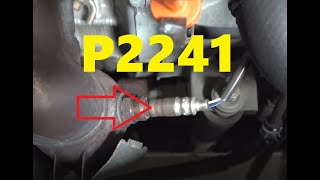
🎬 Watch: A breakdown of P2241 causes and potential fixes.Technical definition: O2 Sensor Positive Current Control Circuit Low Bank 2 Sensor 1. This diagnostic trouble code (DTC) indicates the powertrain control module (PCM) detects the positive current control circuit for the upstream oxygen sensor on engine bank 2 is below its specified range. The PCM continuously monitors this circuit and sets the code if a low voltage condition persists after the engine warms up.
Can I Drive With P2241?
Yes, But With Caution. Yes, you can drive, but limit trips. The car will not leave you stranded or enter limp mode, but the incorrect air-fuel mixture ruins fuel economy. Ignoring P2241 long-term destroys the catalytic converter, turning a $200 sensor replacement into a $2,500 repair.
Common Causes

- Defective Bank 2, Sensor 1 Oxygen (A/F) Sensor (Very Common) — Internal failure of the heater circuit or sensing element is the most frequent cause. Sensors degrade over time, becoming slow to respond or developing internal shorts.
- Damaged, Burnt, or Corroded Wiring/Connectors (Common) — Exposed to extreme heat and road debris, the O2 sensor wiring harness frequently frays, melts, or shorts to ground. Corroded connector pins introduce high resistance, dropping the signal voltage.
- Blown Heater Circuit Fuse or Faulty Relay (Common) — The sensor's internal heater requires a dedicated fuse and relay. A blown fuse cuts power, preventing the sensor from operating and forcing the PCM to flag a circuit issue.
- Exhaust Leak (Less Common) — Cracks in the exhaust manifold before the sensor introduce unmetered oxygen. This skews readings, tricking the PCM into registering a circuit fault.
- Engine Running Lean (e.g., Vacuum Leak) (Less Common) — Unmetered air from a cracked vacuum hose or failing intake gasket creates a lean mixture. The PCM sets P2241 as it maxes out its compensation limits.
- Sensor Contamination (Less Common) — Engine oil or coolant leaking onto the sensor tip ruins its ability to read oxygen levels, generating incorrect signals.
- Faulty Powertrain Control Module (PCM) or Software (Rare) — Water intrusion or hardware failure in the PCM's sensor driver circuit causes false codes. Certain vehicles also suffer from outdated software calibrations requiring a dealer reflash.
Symptoms
- Check Engine Light is On — This is the first and often only symptom. The light stays illuminated as long as the fault remains active.
- Failed Emissions Test — An active Check Engine Light and unbalanced air-fuel ratio trigger an automatic failure during state emissions inspections.
- Poor Fuel Economy (also visible on scanner) — The engine computer defaults to a rich fuel mixture to protect the engine, causing a noticeable drop of 1-3 MPG.
- Rough Idle or Engine Hesitation (also visible on scanner) — The engine runs unevenly during idle or light acceleration, producing a noticeable stumble or misfire.
Diagnostic Flowchart
Tap your situation to follow the diagnostic path that matches what you're seeing on this code.
Common Fixes & Costs
- Replace Bank 2, Sensor 1 Oxygen Sensor — Parts: $50-$250, Labor: $100-$150, ~1.2 hr book time (DIY)
- Repair Damaged Wiring or Connector — Parts: $10-$50, Labor: $100-$250, ~1.5 hr book time (Intermediate)
- Replace Blown Fuse or Relay — Parts: $5-$30, Labor: $50-$100, ~0.3 hr book time (DIY)
- Repair Exhaust Leak — Parts: $20-$100, Labor: $150-$300, ~2.5 hr book time (Intermediate)
- Reprogram or Replace Powertrain Control Module (PCM) — Parts: $150-$900, Labor: $150-$300, ~1.5 hr book time (Professional)
DIY vs Professional
- Replace Oxygen Sensor — Beginner: Yes, with the right tools.
Tools: Ratchet, 22mm O2 sensor socket, penetrating oil, safety glasses. - Repair Damaged Wiring — Beginner: No. Recommended for intermediate DIYers.
Tools: Multimeter, wire strippers, crimpers, heat shrink tubing, soldering iron. - Replace Blown Fuse/Relay — Beginner: Yes.
Tools: Fuse puller, owner's manual. - Repair Exhaust Leak — Beginner: No. Recommended for intermediate DIYers.
Tools: Wrenches/sockets, new gasket, high-temp sealant. - Reprogram or Replace PCM — Beginner: No. Professional only.
Tools: Dealer-level scan tools, programming subscription services.
Used vs. New Parts: Buying Guide
When a used part is worth it: Never buy a used oxygen sensor. O2 sensors are wear-and-tear items with a finite lifespan. The small cost savings do not justify the risk of installing a part nearing the end of its life.
Donor-vehicle mileage cap: roughly under 20000 miles for the part to have meaningful remaining life.
Donor quality checklist:
- Avoid sensors from high-mileage vehicles or regions with heavy road salt use.
- Reject sensors showing physical damage, oil/coolant contamination, or heavy carbon deposits.
- There is no reliable way to test the remaining life of a used O2 sensor off the vehicle.
Decision logic:
- If The part is an oxygen (O2) / Air-Fuel (A/F) sensor. → Buy a new OEM or high-quality aftermarket (e.g., Denso, NTK) part. Reliability and warranty far outweigh the minimal savings of a used sensor.
- If The cost of a new sensor is prohibitive and the vehicle has very low value. → A used sensor from a low-mileage, accident-damaged vehicle is a last-resort option, but expect a high risk of premature failure.
Warranty tradeoff: Used sensors from salvage yards offer a 30-day warranty at best. New aftermarket sensors provide a 1-year to limited lifetime warranty. OEM parts offer a 12-month/12,000-mile warranty.
Worst-case if a used part fails: $150-$300 if a used part fails shortly after installation, requiring repeat labor costs.
What Happens If You Wait — Timeline
- 0-1 month: Check Engine Light is on. The PCM uses default fuel maps, causing a rich or lean condition. A subtle drop in fuel economy begins. (MPG impact: 5-10%% · Added cost: $20-$50 in wasted fuel.)
- 1-4 months: Fuel economy loss is noticeable (1-3 MPG). The catalytic converter operates outside its ideal temperature range, accelerating internal degradation. (MPG impact: 10-15%% · Added cost: $50-$200 in wasted fuel; early stage catalytic converter stress.)
- 4-9 months: Sustained high temperatures melt the precious metals inside the catalytic converter's ceramic honeycomb. A rotten egg smell emits from the exhaust after hard acceleration. (MPG impact: 15-25%% · Added cost: $800-$2500, as catalytic converter replacement is now required.)
- 9+ months: The catalytic converter becomes severely clogged, causing major loss of power, severe hesitation, and stalling. The engine runs extremely hot, risking damage to exhaust valves. (MPG impact: 25-40%% · Added cost: $2500+ for a new catalytic converter plus engine repairs.)
Cost of Not Fixing It
- 0-1 Month: Noticeable decrease in fuel economy by 5-15% (1-3 MPG loss). You spend more on gas, but mechanical damage is unlikely. (Added cost: $20-$60 in wasted fuel per month.)
- 1-6 Months: The engine runs a consistently incorrect air/fuel ratio, causing the catalytic converter to overheat. This reduces its efficiency and accelerates internal degradation. (Added cost: $800-$2500 for catalytic converter replacement.)
- 6+ Months: Sustained poor combustion causes carbon buildup on spark plugs and melts the catalytic converter. Extreme lean mixtures burn exhaust valves. (Added cost: $2500+ for combined catalytic converter and engine repairs.)
Diagnosis Steps

- Read Codes and Review Freeze Frame Data
Use an OBD-II scanner to confirm P2241 is active. Note related codes (e.g., P0051, P2197) and review freeze frame data to see engine conditions (RPM, load, temp) when the code triggered. Do not clear codes yet.
Tools: OBD-II Scanner (Beginner) - Perform a Thorough Visual Inspection
Inspect the Bank 2, Sensor 1 oxygen sensor and wiring harness. Look for burnt wires, loose connections, or connector corrosion. Check the exhaust manifold for black soot marks indicating an exhaust leak.
Tools: Flashlight, Safety Glasses, Inspection Mirror (Beginner) - Check for Technical Service Bulletins (TSBs)
Search online for P2241 TSBs specific to your vehicle's make, model, and year. Manufacturers occasionally issue software updates to fix this code, preventing unnecessary sensor replacements.
Tools: Internet Access (Beginner) - Analyze Live Sensor Data
Watch the Bank 2, Sensor 1 voltage using a live data scanner. A healthy upstream sensor switches rapidly between 0.1 and 1.0 volts. A voltage stuck below 0.2V confirms a bad sensor or wiring fault.
Tools: Advanced OBD-II Scanner (Intermediate) - Check for Voltage and Ground at the Connector
With the key on and engine off, use a multimeter to verify 12V battery voltage at the heater power wire and a solid ground on the vehicle-side connector. Missing voltage indicates a blown fuse or bad relay.
Tools: Multimeter, Vehicle Wiring Diagram (Advanced) - Test the Sensor's Heater Circuit Resistance
Unplug the O2 sensor and measure resistance across the two heater circuit pins (usually the same-colored wires) using a multimeter. A reading outside the 2-30 ohm range, or an open circuit (OL), confirms a dead sensor.
Tools: Multimeter, Vehicle Service Manual (Intermediate) - Perform a Voltage Drop Test on the Circuit
Connect one multimeter lead to the battery positive and the other to the sensor's power supply pin with the engine running. A reading above 0.5 volts proves excessive resistance in the power feed wiring.
Tools: Multimeter (Advanced) - Check for Shorts to Ground
With the sensor unplugged and key off, check for continuity between the positive current control signal wire and a known good ground. Continuity indicates a short to ground in the harness requiring repair.
Tools: Multimeter, Vehicle Wiring Diagram (Advanced) - Verify PCM Circuit Voltage
Back-probe the ECM connector to verify voltage on the positive-current circuit. The ECM expects 2.5V or higher. If wiring is intact but ECM output is below this threshold, the ECM's internal power-control circuit has failed.
Tools: Advanced Scan Tool, Multimeter, Wiring Diagram (Advanced)
When This Code Triggers (Freeze-Frame Conditions)
- Engine Coolant Temp: 175-210°F (80-99°C) (The PCM runs the O2 sensor circuit test only after the engine is fully warmed up and enters closed-loop operation.)
- Engine RPM: 1200-2500 RPM (The fault sets during steady-state driving, such as light cruising, rather than heavy acceleration or deceleration.)
- Engine Load: 20-50% (Triggers under moderate engine load, consistent with normal driving conditions.)
- Fuel System Status: Closed Loop (The vehicle must be actively using O2 sensor data to adjust the fuel mixture when the fault is detected.)
Related Codes
- P2240 — The identical circuit fault for Bank 1, Sensor 1. If both codes appear together, suspect a systemic issue like a shared power/ground problem or a blown A/F fuse.
- P2242 — Indicates the circuit voltage is too high for Bank 2, Sensor 1. P2241 requires looking for a short to ground or open circuit, whereas P2242 requires finding a short to power.
- P0051 — Indicates 'Heater Control Circuit Low' for Bank 2, Sensor 1. Seeing P0051 and P2241 together strongly confirms the O2 sensor has failed internally and requires replacement.
- P2197 — Means 'O2 Sensor Signal Stuck Lean Bank 2 Sensor 1'. A low current fault (P2241) prevents the sensor from generating proper voltage, causing the PCM to see a perpetually lean condition. Fix P2241 first.
Climate & Environmental Factors
- Road Salt (Winter Climates): Corrosive road salt and brine seep into connectors and wire insulation, causing high resistance, shorts, and intermittent signals that trigger P2241.
- High Humidity / Heavy Rain: Moisture penetrates aging wiring harnesses and connectors, leading to corrosion and electrical faults over time.
How to Talk to a Mechanic About This Code
Say this: "I have a P2241 code for the Bank 2, Sensor 1 oxygen sensor. Please test the sensor circuit, including wiring and connectors, before recommending a sensor replacement."
This directs the mechanic to perform a proper diagnosis rather than blindly replacing the most likely part, saving you money on unnecessary parts.
Avoid saying:
- 'My check engine light is on, can you look at it?'
- 'Just replace the O2 sensor.'
- 'Do whatever you think is best.'
Questions to ask before authorizing the repair:
- Did you test the sensor's wiring and connector for voltage, ground, and continuity?
- If the sensor needs replacement, what brand are you using?
- Can you provide me with the old part?
- What is the warranty on this repair, including both parts and labor?
Where to Take It: Dealer vs Independent vs Chain
- Dealer:
Mandatory if TSB EG009-05 applies or the vehicle is under warranty. Otherwise, skip to avoid 50% labor markups.
Best for: Vehicles still under powertrain or emissions warranty., Vehicles with known TSBs (like specific Toyota models) requiring a PCM reflash., Complex electrical issues where an independent shop failed.
Downsides: Highest labor rates., Recommends expensive OEM parts when high-quality aftermarket options suffice. (Typical cost: +50% vs. baseline) - Independent Shop:
Best fit for 90% of situations. A qualified independent shop easily diagnoses sensor, wiring, or fuse faults at a reasonable rate.
Best for: Most out-of-warranty vehicles., Straightforward diagnosis and repair of common codes like P2241., Building a long-term relationship with a trusted mechanic.
Downsides: Quality and diagnostic skill vary widely., Lacks specialized tools for PCM reprogramming. (Typical cost: +0% vs. baseline) - Chain Shop:
Avoid for initial diagnosis. Acceptable only if you are 100% certain you need an O2 sensor replacement and have a fixed quote.
Best for: Simple, clear-cut part replacements when you are certain of the diagnosis.
Downsides: Technician skill and experience are inconsistent., Business model pressures technicians to upsell unnecessary services. (Typical cost: -10% vs. baseline)
When to Walk Away From the Repair
If the estimated repair cost exceeds 40-50% of your car's private-party value, sell or trade it in.
- Car worth $4000, fix is $2000: Borderline. This repair costs 50% of the car's value. Get a second opinion before proceeding.
- Car worth $12000, fix is $1800: Fix it. The repair is only 15% of the vehicle's value and is a worthwhile investment.
- Car worth $2500, fix is $1500: Walk away. The repair is 60% of the car's value. The money is better put toward a replacement vehicle.
What Scan Tool You Need for This Code

Minimum: A scanner that reads and clears codes, shows freeze frame data, and displays live O2 sensor voltage data.
A cheap code reader only gives you the P2241 code. Watching the sensor's voltage in real-time is mandatory to confirm if the sensor is dead or if the problem is in the wiring.
Budget: BlueDriver Pro (~$120) — Connects to your smartphone, provides live data graphing for O2 sensors, reads freeze frame data, and offers verified repair reports.
Mid-range: Innova 5610 / Foxwell NT680 Pro (~$350) — Offers bidirectional controls to actively test the O2 sensor's heater circuit by commanding it on and off, pinpointing a heater failure without manual wiring tests.
Professional: Autel MaxiCOM MK808 / Launch X431 (~$500-1200) — Provides full bidirectional control, advanced data graphing, and OEM-level diagnostics essential for PCM reprogramming.
Rent vs buy: AutoZone's 'Loan-A-Tool' program offers free basic OBD-II scanners with a refundable deposit. However, these lack the live data function needed for P2241 diagnosis. Buy a $120 BlueDriver to view live voltage and confirm the fix.
How to Clear the Code After You Fix It
- Fix the underlying issue (e.g., replace sensor, repair wiring).
- Use an OBD-II scan tool to clear the diagnostic trouble codes (DTCs).
- Perform a complete OBD-II drive cycle to allow readiness monitors to run.
Drive cycle (~20 minutes): 1) Cold start and idle for 3 minutes. 2) Drive at a steady 55 mph for 7 minutes. 3) Vary speed by accelerating moderately and coasting down for 10 minutes in city driving. 4) Let the vehicle cool down completely and repeat if monitors are not set.
Readiness monitors affected: Oxygen Sensor Monitor, Catalyst Monitor, Oxygen Sensor Heater Monitor
Before emissions retest: drive at least 50 miles to fully set monitors.
Watch out for:
- Clearing the code without performing a full drive cycle leaves readiness monitors 'Not Ready,' causing an automatic emissions test failure.
- Disconnecting the battery clears codes but resets all vehicle adaptations, creating temporary drivability issues.
- If the root cause remains unfixed, P2241 returns within the first 20-50 miles of driving.
Will This Fail Emissions / State Inspection?
Yes — this code typically fails an OBD-II emissions inspection.
- California: An active P2241 code is an automatic failure. All applicable readiness monitors must be set to 'Ready.' After repair, a complete drive cycle is required before re-testing.
- New York: Fails the NYVIP3 OBD-II inspection if the Check Engine Light is on. For 2001+ vehicles, only one readiness monitor can be 'Not Ready' to pass.
- Texas: An illuminated Check Engine Light is an automatic failure. After clearing the code, the vehicle must be driven 50-100 miles to set readiness monitors.
Most Commonly Affected Vehicles

- Toyota Camry (V6) (2004-2005) — TSB EG009-05 addresses this issue. The fix requires replacing the A/F sensor and reprogramming the ECM with updated software. The Bank 2 sensor is on the rear manifold.
- Toyota Highlander (V6) (2004-2007) — Frequently caused by the original Bank 2, Sensor 1 A/F sensor failing on the rear exhaust manifold. Using a Denso-branded sensor is highly recommended.
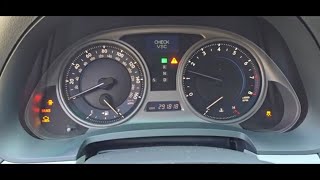
- Lexus IS250 (2006-2013) — Commonly points to a failed Bank 2, Sensor 1 A/F sensor. A dead sensor disables the vehicle's stability control (VSC).
- Honda Accord (V6) (2008-2012) — Associated with a failed upstream oxygen sensor on the Bank 2 (front) cylinder bank. Use an OEM-spec Denso sensor for a lasting repair.
- Hyundai Santa Fe (V6) (2007-2012) — A known issue resolved by replacing the Bank 2 upstream oxygen sensor. Visual inspection for corroded connectors is a crucial first step.
- Chevrolet Equinox / GMC Terrain (3.6L V6) (2013-2017) — Points to a failed Bank 2 (front, radiator side) upstream O2 sensor. Appears alongside other codes if an exhaust leak is present at the manifold.
- Ford F-150 (3.5L EcoBoost) (2011-2012) — Triggers alongside misfire codes, often related to moisture in the charge air cooler, vacuum leaks, or a contaminated sensor.
- Audi / Volkswagen Various (e.g., A4, Jetta) (2005-2012) — Highly sensitive to vacuum leaks from the PCV system or cracked breather hoses, which trigger lean conditions and this code. Perform a smoke test if a new sensor fails to fix the issue.
Manufacturer-Specific Notes
- Toyota/Lexus: TSB EG009-05 acknowledges P2241 is set by faulty ECM logic on 2004-2005 V6 models. The official repair requires reprogramming the ECM and replacing the Air/Fuel ratio sensor.
- Subaru: Extremely sensitive to aftermarket oxygen sensors. Use an OEM-equivalent sensor (Denso) to avoid persistent codes after replacement.
- Honda: V6 models perform best with OEM-spec (Denso) oxygen sensors. Generic aftermarket sensors cause P2241 to return immediately.
- BMW: P2241 is frequently triggered by oil leaking from the valve cover gasket directly onto the O2 sensor connector, causing contamination and electrical shorts.
- General (USA): The Federal Emissions Warranty covers the Engine Control Module (ECM/PCM) for 8 years or 80,000 miles. If the PCM is the root cause, it is replaced for free under this mandate.
Real Owner Stories
2008 Lexus IS250 with recurring P2241
Check Engine Light and VSC light were on. Code P2241 was present. A visual inspection revealed the root cause.
What they tried:
- Initial thought was a bad sensor or wiring.
Outcome: A leaking valve cover gasket dripped engine oil directly onto the O2 sensor's harness connector, causing a short. The fix required replacing the valve cover gasket to stop the leak and installing a new oxygen sensor.
Lesson: Always perform a thorough visual inspection. An external factor, like an oil leak, is frequently the true cause of an electrical code.
2007 Toyota Camry V6 with multiple codes
Initially had a P2197 (O2 Sensor Signal Stuck Lean) code. Replacing the Bank 2 Sensor 1 oxygen sensor resolved P2197, but a new P2241 code appeared.
What they tried:
- Replaced Bank 2, Sensor 1 O2 sensor to fix P2197.
- Cleared the new P2241 code, but it returned within 5km of driving.
Outcome: The appearance of a circuit code after replacing the sensor proved a wiring issue was disturbed during the repair. Re-seating the connector and repairing a frayed wire fixed the issue.
Lesson: When a new code appears after a repair, re-check your work. Ensure the connector is fully seated and no wires were damaged during installation.
2004 Lexus RX330 with intermittent P2241
Check Engine and VSC lights turned on for 1-2 days, disappeared, then returned. The stored code was P2241.
What they tried:
- Disconnected the battery, clearing the light temporarily.
- Cleaned carbon deposition off the sensor tip.
Outcome: Cleaning the sensor failed to provide a permanent fix. The intermittent fault, combined with the vehicle's 150K km mileage, confirmed a failing sensor nearing the end of its service life. Replacing the sensor permanently resolved the code.
Lesson: Intermittent electrical faults are the hardest to diagnose. Simply cleaning the sensor tip is never a permanent solution for an internal circuit code.
How to Prevent This Code From Triggering
- Replace upstream O2 sensors as a maintenance item (Every 80,000 - 100,000 miles) — O2 sensors become slow and 'lazy' with age, reducing fuel economy by 10-15% and straining the catalytic converter. Proactive replacement pays for itself in fuel savings.
- Use Top Tier certified gasoline (Every fill-up) — Top Tier fuels contain higher detergent concentrations that prevent carbon buildup. A cleaner engine burn reduces contaminants that foul O2 sensors.
- Address engine oil and coolant leaks immediately (As needed) — Oil and coolant destroy oxygen sensors. Leaks seep into wiring connectors, causing shorts and circuit faults like P2241.
- Avoid aggressive driving habits (Daily habit) — Smooth acceleration reduces stress on the powertrain. Rapid changes in engine load shorten the lifespan of the sensitive ceramic element inside the O2 sensor.
- Perform regular engine maintenance (Per vehicle manufacturer schedule) — Replacing spark plugs and air filters ensures efficient combustion, preventing unburned fuel from overheating the catalytic converter and damaging O2 sensors.
Frequently Asked Questions
Where is the Bank 2, Sensor 1 oxygen sensor located?
On a V-style engine, 'Bank 2' is the side that does NOT contain cylinder #1. 'Sensor 1' is the upstream sensor located before the catalytic converter. For example, on many transverse V6 engines, Bank 2 is the cylinder bank closest to the radiator.
What are the most common mistakes when diagnosing P2241?
The most common mistake is replacing the oxygen sensor without inspecting the wiring and connector for damage first. Another pitfall is clearing the code before reading freeze frame data, erasing valuable diagnostic clues. Always check for exhaust or vacuum leaks that trigger false sensor codes.
I replaced the O2 sensor but the P2241 code came back. What now?
If a new, high-quality sensor fails to clear the code, the fault lies in the wiring, a blown fuse, or the PCM. Re-inspect the harness and use a multimeter to confirm proper voltage and ground at the connector. On specific models like 2004-2005 Toyotas, the PCM requires a dealer software update.
What's the difference between the 'positive current control circuit' and the 'heater circuit'?
The 'heater circuit' (P0051) acts like a toaster element to warm the sensor quickly for accurate readings. The 'positive current control circuit' (P2241) is the sensing mechanism generating the signal sent to the PCM. While housed in the same physical part, they are separate circuits.
What happens if I ignore the P2241 code?
Ignoring this code wastes money on gas due to a 1-3 MPG drop in fuel efficiency. Over time, the incorrect air-fuel mixture causes the engine to run hotter, destroying the catalytic converter. Replacing a melted catalytic converter costs between $800 and $2,500.
Will a P2241 code cause me to fail an emissions test?
Yes. A P2241 code illuminates the Check Engine Light, resulting in an automatic emissions test failure in all 50 states.
Can a bad battery or alternator cause a P2241 code?
A failing charging system creates widespread low voltage issues throughout the vehicle's electrical system. While this contributes to a low voltage reading on a sensor circuit, it is always accompanied by systemic electrical codes like P0562.
Key Takeaways
- Replacing the Bank 2, Sensor 1 oxygen sensor fixes P2241 in 80% of cases, but always verify the 12V heater circuit fuse isn't blown before buying parts.
- Ignoring P2241 drops fuel economy by 1-3 MPG immediately and destroys the catalytic converter within 6 months, turning a $200 repair into a $2,500 nightmare.
- P2241 isolates the fault to the upstream sensor (Sensor 1) located on Bank 2, which is the engine side opposite of cylinder #1.
- Owners of 2004-2005 Toyota V6 models must check TSB EG009-05, as fixing P2241 on these vehicles requires a dealer-level PCM software update alongside the sensor replacement.
Helpful Videos

The information in this article is provided for general reference and educational purposes only. Vehicle specifications, procedures, and part compatibility can vary by production date, trim level, and region. Always consult your vehicle's factory service manual and verify part numbers before purchasing or performing repairs. Safety-critical components such as airbags, seat belts, and braking systems should be installed by a qualified professional.
- 🎬 Helpful Videos
- What Does P2241 Mean?
- Can I Drive With P2241?
- Common Causes
- Symptoms
- Diagnostic Flowchart
- Common Fixes & Costs
- DIY vs Professional
- Used vs. New Parts: Buying Guide
- What Happens If You Wait — Timeline
- Cost of Not Fixing It
- Diagnosis Steps
- When This Code Triggers (Freeze-Frame Conditions)
- Related Codes
- Climate & Environmental Factors
- How to Talk to a Mechanic About This Code
- Where to Take It: Dealer vs Independent vs Chain
- When to Walk Away From the Repair
- What Scan Tool You Need for This Code
- How to Clear the Code After You Fix It
- Will This Fail Emissions / State Inspection?
- Most Commonly Affected Vehicles
- Manufacturer-Specific Notes
- Real Owner Stories
- 2008 Lexus IS250 with recurring P2241
- 2007 Toyota Camry V6 with multiple codes
- 2004 Lexus RX330 with intermittent P2241
- How to Prevent This Code From Triggering
- Frequently Asked Questions
- Where is the Bank 2, Sensor 1 oxygen sensor located?
- What are the most common mistakes when diagnosing P2241?
- I replaced the O2 sensor but the P2241 code came back. What now?
- What's the difference between the 'positive current control circuit' and the 'heater circuit'?
- What happens if I ignore the P2241 code?
- Will a P2241 code cause me to fail an emissions test?
- Can a bad battery or alternator cause a P2241 code?
- Key Takeaways
- 🎟️ Get 5% Off