

OBD-II Code P2240: O2 Sensor Positive Current Control Circuit / Open (Bank 2, Sensor 1)
What P2240 means, why it triggers, and how to fix it
- P2240 indicates a complete electrical break in the Bank 2, Sensor 1 oxygen sensor circuit, requiring immediate multimeter testing before replacing parts.
- Driving with an active P2240 code for more than 3 months forces the engine to run rich, risking a $1,500 to $4,000 catalytic converter replacement.
- Always test the 15-amp O2 heater fuse and visually inspect the wiring harness for burnt or chewed sections before spending $200 on a new sensor.
- Professional replacement of the Bank 2, Sensor 1 oxygen sensor typically costs between $350 and $600, but vehicles under 8 years or 80,000 miles qualify for free federal emissions warranty repairs.
What Does P2240 Mean?

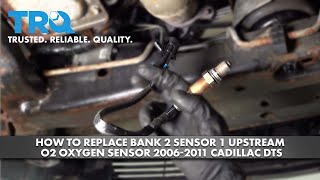
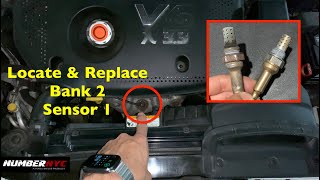
The P2240 code indicates the Powertrain Control Module (PCM) detects a complete electrical break ('open') in the positive current control circuit for the Bank 2, Sensor 1 oxygen sensor. Bank 2 is the side of the engine opposite cylinder #1, and Sensor 1 is the upstream sensor located before the catalytic converter. 🎬 Watch: How to locate and replace Bank 2 Sensor 1 easily. This sensor measures exhaust oxygen levels so the PCM can adjust the fuel mixture. An 'open' circuit means the PCM receives zero signal due to a severed wire, blown fuse, unplugged connector, or a completely failed internal sensor component.
Technical definition: The SAE/OBD-II definition for P2240 is 'O2 Sensor Positive Current Control Circuit/Open Bank 2 Sensor 1'. The PCM monitors the current flow to the sensor's internal heater and sensing elements. If the PCM detects infinite resistance or zero current flow—deviating more than 10% from the expected baseline—it triggers this circuit-specific fault.
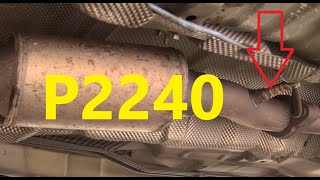
🎬 Watch: A breakdown of P2240 causes and how to fix them.Can I Drive With P2240?
Yes, But With Caution. Yes, you can drive with this code, but prolonged driving damages your vehicle. Your car runs inefficiently, leading to poor fuel economy and a rough idle. Ignoring it for months forces the engine to run excessively rich, destroying the catalytic converter—a repair costing between $1,500 and $4,000. Diagnose and repair the issue within two weeks.
Common Causes

- Faulty Bank 2, Sensor 1 Oxygen Sensor (Very Common) — The sensor's internal components, particularly the sensing element or heater, wear out over time (typically 80,000-100,000 miles) or fail due to thermal shock. This creates an internal open circuit.
- Damaged or Corroded Wiring or Connectors (Common) — The wiring harness operates in a harsh environment. Wires burn against the hot exhaust, fray from vibration, or suffer rodent damage. Connectors fill with moisture and road salt, causing corrosion that severs the electrical connection.
- Blown Fuse for the Sensor Heater Circuit (Less Common) — Oxygen sensors use an internal heater on a fused circuit to reach operating temperature quickly. If this fuse blows due to a short circuit, the PCM loses communication and reports an open circuit code.
- Poor Engine Ground Connection (Rare) — A corroded or loose engine ground strap causes widespread electrical resistance. The sensor requires a stable ground reference; without it, voltage readings drop to zero, mimicking an open circuit.
- Exhaust Leak (Rare) — A severe crack or leaking gasket in the exhaust manifold introduces outside air into the exhaust stream. This creates an abnormal reading that some vehicle software misinterprets as a circuit fault.
- Faulty Powertrain Control Module (PCM) (Very Rare) — The internal driver circuit in the PCM that sends and receives signals from the O2 sensor fails. Rule out all wiring, fuse, and sensor possibilities before condemning the PCM.
Symptoms

- Check Engine Light is On — The light illuminates immediately and remains on as long as the electrical fault is active.
- Worse Fuel Economy — With no signal from the sensor, the PCM defaults to a safe, rich fuel mixture, causing your car to use 5-15% more gas.
- Rough Idle or Engine Hesitation — An incorrect air-fuel ratio disrupts smooth combustion, leading to a shaky idle, stumbling on acceleration, or misfires.
- Smell of Raw Gas or Increased Emissions — The rich fuel mixture causes a strong smell of unburnt gasoline from the exhaust. The vehicle automatically fails emissions testing.
- Stuck Fuel Trim or O2 Sensor Voltage (scan-tool only — no driver-felt sign) — On a scan tool, the Short-Term Fuel Trim for Bank 2 sticks at 0%, and the live O2 sensor voltage remains flat at a default value (often 0V or 0.45V).
Diagnostic Flowchart
Tap your situation to follow the diagnostic path that matches what you're seeing on this code.
Common Fixes & Costs
- Replace the Bank 2, Sensor 1 Oxygen (A/F) Sensor
— Parts: $60 - $300, Labor: $100 - $200, ~1.2 hr book time
(DIY)
2009 Toyota Camry (2.4L): OEM 89467-33180 (Alt: {"brand": "Denso", "part_number": "234-9058"})
2017 Ford F-150 (3.5L EcoBoost): OEM GL3Z-9G444-B (Alt: {"brand": "Bosch", "part_number": "17323"}) - Repair Damaged Wiring or Clean Connector — Parts: $5 - $30, Labor: $100 - $250, ~2.0 hr book time (Intermediate)
- Replace Blown O2 Sensor Fuse — Parts: $1 - $5, Labor: $0 - $50, ~0.5 hr book time (DIY)
- Repair Engine Ground Connection — Parts: $10 - $50, Labor: $75 - $150, ~0.8 hr book time (Intermediate)
- Repair Exhaust Leak — Parts: $20 - $100, Labor: $150 - $350, ~2.5 hr book time (Intermediate)
- Replace the Powertrain Control Module (PCM) — Parts: $800 - $1500, Labor: $150 - $300, ~2.0 hr book time (Professional)
DIY vs Professional
- Replace O2 Sensor — Beginner: True
- Replace Blown Fuse — Beginner: True
- Repair Wiring/Connector — Beginner: False
- Repair Engine Ground — Beginner: True
- Repair Exhaust Leak — Beginner: False
- Replace PCM — Beginner: False
Used vs. New Parts: Buying Guide
When a used part is worth it: Almost never. Oxygen sensors are wear-and-tear items with a finite lifespan of 80,000-100,000 miles. A used sensor has an unknown history and fails quickly, forcing you to pay for labor twice.
Donor-vehicle mileage cap: roughly under 20000 miles for the part to have meaningful remaining life.
Donor quality checklist:
- Only consider a used sensor from a very low-mileage wrecked vehicle.
- Ensure the part number is an exact match.
- Avoid sensors from Rust Belt vehicles, as the sensor body seizes or suffers thread damage.
Decision logic:
- If The cost of a new OEM or reputable aftermarket (Denso, Bosch, NTK) sensor is under $200. → Always buy new. The reliability and warranty justify the cost.
- If You are selling the car immediately and need the cheapest possible fix. → A used sensor is a short-term gamble, but disclose the repair to the buyer.
- If The part is an integrated Air/Fuel Ratio sensor on a high-end European car costing over $400 new. → A used part from a guaranteed low-mileage donor is a calculated risk.
Warranty tradeoff: Salvage yard parts carry a 30-90 day warranty. New aftermarket sensors carry a 1-year or 12,000-mile warranty. OEM parts carry a 1-2 year warranty.
Worst-case if a used part fails: $200 - $400. If the used sensor fails outside its short warranty, you pay for a new sensor and installation labor again.
What Happens If You Wait — Timeline
- 0-2 Weeks: Check Engine Light illuminates. The PCM logs the P2240 fault and defaults to a pre-programmed 'limp mode' fuel map for Bank 2. No other symptoms are noticeable. (MPG impact: 0-2%% · Added cost: $0)
- 2 Weeks - 3 Months: A consistent drop in fuel economy occurs. The engine exhibits a rough or unstable idle on cold starts because the default fuel map is inefficient. (MPG impact: 3-8%% · Added cost: $30 - $90 in wasted fuel)
- 3 - 8 Months: The default rich fuel mixture causes the catalytic converter to operate above 1600°F. The internal ceramic substrate develops thermal cracks. Hesitation during acceleration occurs. (MPG impact: 7-15%% · Added cost: $400 - $1,200 (Risk of initial catalytic converter damage is high))
- 8+ Months: Catastrophic catalytic converter failure. The internal substrate melts down, creating an exhaust blockage. This results in severe power loss and P0430 codes. (MPG impact: 15-25%% · Added cost: $1,500 - $4,000 (Guaranteed cost of catalytic converter replacement))
Cost of Not Fixing It
- 0-1 Month: Noticeable drop in fuel economy (5-15%). Potential for rough idle and hesitation. (Added cost: $20 - $60 in wasted fuel per month.)
- 1-6 Months: The engine runs in a default rich condition, causing the catalytic converter to operate at excessively high temperatures. The internal ceramic substrate begins to melt. (Added cost: High risk of catalytic converter damage. Cost: $1,200 - $2,800.)
- 6+ Months: Guaranteed catalytic converter failure. The melted converter creates an exhaust blockage, causing severe power loss and triggering P0420 or P0430 codes. (Added cost: $1,500 - $4,000 for catalytic converter replacement, plus the original O2 sensor repair.)
Diagnosis Steps

- Read Codes and Review Freeze Frame Data
Use an OBD-II scanner to confirm P2240 is active. Look for related codes like P2241 (circuit low) or P0051 (heater circuit) to pinpoint shared electrical faults. Review freeze frame data to identify engine conditions when the code set.
Tools: OBD-II Scanner (Beginner) - Perform a Thorough Visual Inspection
Inspect the Bank 2, Sensor 1 O2 sensor wiring harness. Look for burnt spots touching the exhaust, chafed sections, or rodent damage. Unplug the connector and check for bent pins, green corrosion, or moisture.
Tools: Flashlight, Mechanic's Mirror (Beginner) - Check for Blown Fuses
Consult your owner's manual to locate the fuse box. Inspect the fuse labeled 'O2 Heater', 'A/F Sensor', or similar. A blown fuse confirms a short circuit that must be traced and repaired before replacing the fuse.
Tools: Owner's Manual, Fuse Puller (Beginner) - Test Circuit Voltage and Ground at the Connector
With the sensor unplugged and the key in the 'On' position (engine off), test the vehicle-side harness connector. Use a multimeter to verify battery voltage (approx. 12V) on the heater power supply wire. A lack of voltage confirms an upstream wiring problem or blown fuse.
Tools: Digital Multimeter, Vehicle Service Manual (Intermediate) - Test the Sensor's Heater Circuit Resistance
Unplug the sensor and set a multimeter to Ohms (Ω). Measure resistance between the two heater pins on the sensor side of the connector (often two same-colored wires). A good sensor reads between 2 and 30 Ohms. An 'OL' (infinite) reading confirms the internal heater is broken and the sensor requires replacement.
Tools: Digital Multimeter, Vehicle Service Manual (Intermediate) - Analyze Live Data Stream
Use an advanced scanner to view live data. For a traditional zirconia sensor, voltage fluctuates rapidly between 0.1V and 0.9V. A flat line at 0V confirms an open circuit. Check Short-Term Fuel Trim (STFT) for Bank 2; if stuck at 0%, the PCM is ignoring the sensor.
Tools: Advanced OBD-II Scanner (Intermediate) - Perform a Ground Circuit Voltage Drop Test
With the engine running and accessories on, set your multimeter to a low DC Volts scale. Connect the black lead to the negative battery terminal and back-probe the red lead to the sensor's ground pin. A reading above 0.2V indicates excessive resistance in the ground circuit requiring repair.
Tools: Digital Multimeter with Back-Probes (Advanced) - Analyze Sensor Waveform with an Oscilloscope
Connect a lab scope to the sensor's signal wire. A healthy upstream sensor produces a clean sine wave oscillating between 0.1V and 0.9V at 2500 RPM. A flat line at a fixed voltage definitively confirms an open circuit or failed sensor.
Tools: Automotive Oscilloscope (Lab Scope) (Professional)
When This Code Triggers (Freeze-Frame Conditions)
- Engine Coolant Temp: 180-200°F (82-93°C) (The engine has reached full operating temperature and is in closed-loop fuel control.)
- RPM: 1500-2500 RPM (The fault is detected during steady-state cruising, not during heavy acceleration or deceleration.)
- Engine Load: 20-50% (Light to moderate engine load, consistent with highway or city cruising speeds.)
- Vehicle Speed: 30-60 mph (The PCM continuously monitors the circuit, registering the fault during steady driving.)
Related Codes
- P2241 — Indicates 'O2 Sensor Positive Current Control Circuit Low' for the same sensor. While P2240 implies a total break, P2241 indicates voltage is present but below the expected level, suggesting high resistance or a partial short.
- P0051 — Indicates 'HO2S Heater Control Circuit Low (Bank 2 Sensor 1)'. P2240 relates to the sensing circuit, while P0051 relates to the heater circuit. Seeing both confirms a shared problem like a damaged connector, compromised ground, or blown fuse.
- P0174 — Indicates 'System Too Lean (Bank 2)'. This is a symptom code caused by P2240. Because the O2 sensor provides no data, the PCM cannot add the correct amount of fuel. Fixing the P2240 electrical fault resolves P0174.
- P2237 — The identical fault ('O2 Sensor Positive Current Control Circuit/Open') but for Bank 1, Sensor 1. The diagnostic procedure is identical, just performed on the opposite engine bank.
Climate & Environmental Factors
- Road Salt / High Humidity: In regions with heavy road salt use or high coastal humidity, moisture penetrates connectors and wire insulation. This accelerates corrosion on copper wiring and connector pins, leading to high resistance or a complete open circuit.
- Extreme Cold: Extreme cold makes wires and plastic connectors brittle, increasing the likelihood of cracking during engine vibration on startup. The O2 sensor heater circuit is most critical during cold starts, exposing pre-existing circuit weaknesses.
- High Altitude: Lower air density at altitude naturally creates a richer air-fuel mixture. A failed O2 sensor prevents the PCM from leaning out the mixture to compensate, making symptoms like black smoke and poor fuel economy more severe than at sea level.
How to Talk to a Mechanic About This Code
Say this: "I have a P2240 code for the Bank 2, Sensor 1 O2 sensor. I want to confirm if the issue is the sensor itself or a problem in the wiring or connector before replacing parts. Please check for power, ground, and signal at the sensor connector."
This signals to the shop that you require a proper electrical diagnosis rather than immediately replacing the most common part, saving you money if the sensor isn't the problem.
Avoid saying:
- 'My check engine light is on, can you just look at it?' (Invites a broad, expensive diagnostic process).
- 'Just replace the O2 sensor.' (Assumes the diagnosis without proof, leading to paying for unneeded parts).
- 'Do whatever you think is best.' (Gives up all control and leads to being oversold on services).
Questions to ask before authorizing the repair:
- What were the results of the electrical tests on the sensor circuit (voltage and resistance)?
- Did you find any damage to the wiring or corrosion in the connector?
- Can you provide me with the part number for the new sensor you are recommending?
- What is the warranty on both the part and your labor for this repair?
Where to Take It: Dealer vs Independent vs Chain
- Dealer:
Best for: Vehicles still under the 8-year/80,000-mile federal emissions warranty., Complex electrical issues on German brands (BMW, Audi) requiring specific software resets., Cases where a known Technical Service Bulletin (TSB) applies.
Downsides: Highest labor rates., Defaults to expensive harness or module replacements rather than repairing wires. (Typical cost: +50% vs. baseline) - Independent Shop:
Best fit for most situations. P2240 is a common electrical code that a competent independent shop handles effectively and affordably.
Best for: Out-of-warranty vehicles where cost is a factor., Shops with ASE-certified technicians specializing in electrical diagnostics., Most common vehicle makes (Toyota, Ford, Chevy).
Downsides: Diagnostic capabilities vary widely., May lack the latest manufacturer-specific software for European models. (Typical cost: +0% vs. baseline) - Chain Shop:
Avoid for initial diagnosis of an electrical fault like P2240. Acceptable only if you have already diagnosed the problem and need a simple sensor replacement.
Best for: Getting a free initial code scan to confirm the P2240 code.
Downsides: Technician skill varies dramatically., High pressure to sell parts, leading to replacing the sensor without proper diagnosis., Lacks advanced diagnostic tools for in-depth electrical troubleshooting. (Typical cost: -10% vs. baseline)
When to Walk Away From the Repair
If the estimated repair cost exceeds 40-50% of your car's private-party value, seriously consider replacing the vehicle.
- Car worth $4000, fix is $2000: Borderline. The repair cost is 50% of the car's value. Get a second opinion before proceeding.
- Car worth $12000, fix is $600: Fix it. The repair cost is only 5% of the vehicle's value and is well below the threshold.
- Car worth $2500, fix is $1500: Walk away. The repair cost is 60% of the car's value. It is not a financially sound repair.
What Scan Tool You Need for This Code
Minimum: A code reader that reads codes, clears codes, and displays live data for the O2 sensor voltage or current. This confirms if the sensor is dead or providing a bad signal.
A basic $20 code reader only tells you the P2240 code exists. It cannot show the live data stream, which is essential for determining if the fault is with the sensor or the wiring.
Budget: BlueDriver Pro (~$119) — Connects to your smartphone to read codes, view freeze frame data, and graph live O2 sensor data to verify functionality. Provides access to Mode 6 data.
Mid-range: Foxwell NT510 Elite (~$150) — A handheld scanner offering full system diagnostics and live O2 sensor data. Features bidirectional control to actively test vehicle components during complex electrical diagnoses.
Professional: Autel MaxiCOM MK808 / Launch X431 Series (~$500-1200) — Offers full bidirectional control, advanced ECU coding functions, and detailed live data graphing. Performs OEM-level diagnostics essential for brands like BMW requiring adaptation resets.
Rent vs buy: AutoZone reads codes for free, but diagnosis requires live data. AutoZone's Loan-A-Tool program allows you to borrow an advanced scanner with a deposit. Buy a scanner only if you perform diagnostics more than once a year.
How to Clear the Code After You Fix It
- Ensure all wiring is reconnected and secure.
- Use an OBD-II scan tool to formally clear the P2240 and related fault codes from the PCM's memory.
- Perform a complete OBD-II drive cycle to allow the readiness monitors to run and complete.
Drive cycle (~20 minutes): Start the engine cold (below 122°F), idle for 3 minutes, drive 10 minutes in mixed city traffic, and finish with 10 minutes of steady highway driving at 55-60 mph. Let the vehicle cool down completely.
Readiness monitors affected: Catalyst Monitor, O2 Sensor Monitor, O2 Sensor Heater Monitor
Before emissions retest: drive at least 50 miles to fully set monitors.
Watch out for:
- Disconnecting the battery clears the code but resets all readiness monitors to 'Not Ready', guaranteeing an emissions test failure.
- The code returns within two drive cycles if the underlying electrical fault was not properly repaired.
- BMWs require a specific 'reset adaptations' function with a factory-level scan tool for the new sensor to be recognized.
Will This Fail Emissions / State Inspection?
Yes — this code typically fails an OBD-II emissions inspection.
- California: An active P2240 code is an automatic failure. After repair, all OBD readiness monitors must be set to 'Ready'. Driving 100-200 miles over several trips is required to complete the drive cycle before a re-test.
- New York: NYS DMV inspection connects directly to the OBD-II port; P2240 causes an immediate failure. For 2001+ vehicles, only one readiness monitor can be 'Not Ready'. A full drive cycle is mandatory after the fix.
- Texas: In the 17 counties requiring emissions testing, an illuminated Check Engine Light from a P2240 code results in an automatic failure.
Most Commonly Affected Vehicles
- Toyota Camry (2008-2009) — Covered by TSB T-SB-0278-08 for 2GR-FE and 2AZ-FE engines. The fault is a defective engine wiring harness, not the sensor. The official fix requires replacing the entire harness.
- Toyota Avalon (2008) — Included in Toyota's TSB T-SB-0278-08 for a faulty engine wiring harness causing this code. Sensor replacement does not fix the issue.
- Ford F-150 (3.5L EcoBoost) (2017-2018) — Bank 2 is the driver's side. The issue is frequently a poor connection; unplugging the connector, cleaning it, and reconnecting temporarily resolves the code.
- Toyota Tacoma (V6) (2012-2015) — A highly common code on this platform. The fix is replacing the Bank 2 Sensor 1, located on the driver's side of the engine.
- BMW X5 (F15) (2014-2018) — Points to the pre-catalyst oxygen sensor on Bank 2. After replacement, you must use diagnostic software (ISTA) to delete adaptations for the O2 sensor, forcing the DME to relearn parameters.
- Audi A4, A6, Q7 (2005-2009) — Covered under TSB 2014825. P2240 is caused by high resistance in the sensor's electrical contacts. The prescribed fix is cutting the connector off and soldering the wires directly to the engine harness.
- Mercedes-Benz CLS550 (2007-2011) — Recurring P2240 codes after sensor replacement point to underlying wiring harness issues or a faulty thermostat causing incorrect engine operating temperatures.
- Ford Bronco (2022-2023) — Triggers on low-mileage vehicles (under 1,000 miles) due to a defective factory sensor. Resolved by dealer replacement under warranty.
Manufacturer-Specific Notes
- Toyota/Lexus: For 2008 Avalon and 2008-2009 Camry models, TSB T-SB-0278-08 identifies a faulty engine wiring harness as the cause, not the sensor. On transverse V6 engines, Bank 2 is the cylinder bank closer to the radiator.
- Audi/VW: TSB #2014825 states high contact resistance is a common cause. The official repair solders the contacts on the engine harness side to ensure a permanent connection, rather than replacing the sensor.
- BMW: After replacing an O2 sensor, you must use diagnostic software to 'delete adaptations' for the oxygen sensor. This forces the engine computer to re-learn the values. Simply clearing fault codes causes the code to return.
- Ford: On V-engines, including the EcoBoost and Coyote V8, Bank 2 is consistently the driver's side of the engine. Bank 1 is the passenger's side.
- General/Federal Law: Under the Federal Emissions Warranty, major emissions components are covered for 8 years or 80,000 miles. O2 sensors are often considered part of the 'air/fuel feedback control system' and qualify for free dealership replacement.
Real Owner Stories
2007 Lexus GX470 at 125K miles - The Misleading Sensor
Owner bought the vehicle knowing it had a P2240 code, assuming it was a simple sensor replacement.
What they tried:
- Replaced the Bank 2 Sensor 1 with a new OEM Denso sensor.
- Cleared the code, but it returned in less than a mile.
- Took it to a shop, which confirmed power was getting to the sensor, but no signal was returning to the ECU.
Outcome: The shop discovered a short in the engine wiring harness caused by previous poor-quality repair work, including pinched wires from overly tight zip ties. The ultimate fix was repairing the damaged wiring harness.
Lesson: If a new sensor doesn't fix the code, the problem is in the wiring or connector. Always perform a full circuit diagnosis before and after replacing parts.
2011 Ford F-150 5.0L - A Cascade of Codes
Check Engine Light appeared while towing. Initial codes were P2197 (O2 Sensor Stuck Lean) and P2240. The truck ran rich, and spark plugs on Bank 2 fouled.
What they tried:
- Replaced the Bank 2 Sensor 1 O2 sensor, but the codes returned.
- Misfire codes (P0306, P0308) appeared, indicating bad coils.
- Even after fixing the misfires, the O2 sensor codes persisted.
Outcome: The owner chased a persistent electrical fault in the Bank 2 O2 sensor circuit. The initial wiring issue caused the P2240, leading to the rich condition (P2197) and fouled plugs/coils.
Lesson: P2240 is an electrical circuit code and must be the primary focus. Related codes like 'stuck lean' or misfires are symptoms of the electrical problem.
2022 Ford Bronco at 600 miles - Premature Failure
The Check Engine Light came on in a brand-new vehicle with only 600 miles, displaying code P2240.
What they tried:
- Owner posted on a forum asking if recent bolt-on modifications caused the issue.
Outcome: The issue was a faulty O2 sensor from the factory. The dealership replaced it under the new car warranty.
Lesson: If your vehicle is under warranty, do not attempt a DIY repair. A P2240 code on a low-mileage car is a defective part the dealer must fix for free.
How to Prevent This Code From Triggering
- Use Top Tier Certified Gasoline (Every fill-up) — Higher levels of detergents prevent carbon deposits from forming on the O2 sensor tip, ensuring cleaner combustion and accurate exhaust gas readings.
- Replace Engine Air Filter at Recommended Intervals (Per owner's manual (typically 15,000-30,000 miles)) — A dirty air filter restricts airflow, forcing the engine to run rich. Excess unburnt fuel fouls the O2 sensor's sensing element and overheats the catalytic converter.
- Fix Oil and Coolant Leaks Promptly (As needed) — Engine fluids leaking onto the exhaust contaminate the oxygen sensor. Oil creates an ash coating and coolant creates a silicate glaze, insulating the sensor and causing failure.
- Proactively Replace Upstream O2 Sensors (Every 100,000 miles) — O2 sensors are wear items. Their response time slows with age, leading to less efficient fuel control and increased emissions long before a fault code triggers.
- Periodically Inspect Wiring Harnesses (During oil changes) — Visually verify the O2 sensor's wiring is secured, not rubbing on moving parts, and not resting on the hot exhaust manifold to prevent physical wire damage.
Frequently Asked Questions
Which sensor is Bank 2, Sensor 1?
Bank 2 is the side of the engine that does NOT contain cylinder #1. On most V6/V8 engines, it is the driver's side or the bank closer to the radiator. Sensor 1 is the 'upstream' sensor located before the catalytic converter.
What does 'Open Circuit' actually mean for P2240?
An 'open circuit' is a complete break in the electrical current path. The PCM detects that no electricity is flowing to or from the sensor. This is caused by a broken wire, disconnected plug, blown fuse, or a failed internal sensor component.
How much does it cost to fix code P2240?
Professional sensor replacement costs between $350 and $600 for most domestic and Japanese vehicles. European luxury cars often cost $700 to $900 due to expensive parts and complex labor. DIY replacement drops the cost to just the $60-$300 part.
I replaced the O2 sensor, but the P2240 code came back. What now?
If the code returns immediately, the sensor was not the root cause. The problem is almost certainly a broken wire, corroded connector, or blown fuse. Perform a full electrical diagnosis using a multimeter to test for power, ground, and continuity.
Can a bad engine ground cause a P2240 code?
Yes. The O2 sensor circuit relies on a clean, stable ground to provide an accurate signal to the PCM. A corroded main engine ground strap introduces high resistance, causing the PCM to receive no signal and trigger an open circuit code.
What is the most common misdiagnosis for P2240?
The biggest mistake is replacing the oxygen sensor without performing any electrical testing. Drivers often buy a new sensor based solely on the code definition. The actual fault is frequently a simple broken wire or blown fuse, meaning the new sensor will not fix the problem.
Can I fix P2240 myself?
Replacing the sensor is a manageable DIY job requiring a specialized O2 sensor socket and basic hand tools. However, diagnosing the root cause requires a multimeter and the ability to test voltage and resistance. Stop DIY and consult a shop if you cannot confidently test electrical circuits.
Will a fuel additive or 'catalytic converter cleaner' fix this code?
No. P2240 is a strictly electrical fault indicating a broken circuit. No chemical additive can repair a severed wire, blown fuse, or failed internal sensor component.
Key Takeaways
- P2240 indicates a complete electrical break in the Bank 2, Sensor 1 oxygen sensor circuit, requiring immediate multimeter testing before replacing parts.
- Driving with an active P2240 code for more than 3 months forces the engine to run rich, risking a $1,500 to $4,000 catalytic converter replacement.
- Always test the 15-amp O2 heater fuse and visually inspect the wiring harness for burnt or chewed sections before spending $200 on a new sensor.
- Professional replacement of the Bank 2, Sensor 1 oxygen sensor typically costs between $350 and $600, but vehicles under 8 years or 80,000 miles qualify for free federal emissions warranty repairs.
Helpful Videos

The information in this article is provided for general reference and educational purposes only. Vehicle specifications, procedures, and part compatibility can vary by production date, trim level, and region. Always consult your vehicle's factory service manual and verify part numbers before purchasing or performing repairs. Safety-critical components such as airbags, seat belts, and braking systems should be installed by a qualified professional.
- 🎬 Helpful Videos
- What Does P2240 Mean?
- Can I Drive With P2240?
- Common Causes
- Symptoms
- Diagnostic Flowchart
- Common Fixes & Costs
- DIY vs Professional
- Used vs. New Parts: Buying Guide
- What Happens If You Wait — Timeline
- Cost of Not Fixing It
- Diagnosis Steps
- When This Code Triggers (Freeze-Frame Conditions)
- Related Codes
- Climate & Environmental Factors
- How to Talk to a Mechanic About This Code
- Where to Take It: Dealer vs Independent vs Chain
- When to Walk Away From the Repair
- What Scan Tool You Need for This Code
- How to Clear the Code After You Fix It
- Will This Fail Emissions / State Inspection?
- Most Commonly Affected Vehicles
- Manufacturer-Specific Notes
- Real Owner Stories
- 2007 Lexus GX470 at 125K miles - The Misleading Sensor
- 2011 Ford F-150 5.0L - A Cascade of Codes
- 2022 Ford Bronco at 600 miles - Premature Failure
- How to Prevent This Code From Triggering
- Frequently Asked Questions
- Which sensor is Bank 2, Sensor 1?
- What does 'Open Circuit' actually mean for P2240?
- How much does it cost to fix code P2240?
- I replaced the O2 sensor, but the P2240 code came back. What now?
- Can a bad engine ground cause a P2240 code?
- What is the most common misdiagnosis for P2240?
- Can I fix P2240 myself?
- Will a fuel additive or 'catalytic converter cleaner' fix this code?
- Key Takeaways
- 🎟️ Get 5% Off