

P2229 on 2018-2020 Mazda MAZDA6: BARO Sensor Circuit High Causes and Fixes
On 2018-2020 Mazda6 models with the 2.5L Turbo engine, code P2229 is almost always caused by a blocked breather hole on the Powertrain Control Module (PCM). This is often due to aftermarket wax application in the engine bay. The fix requires replacing the PCM and its bracket with a modified version. This issue is also common on other Mazda models with the same engine, like the CX-5 and CX-9.
- For a 2018-2020 Mazda6 2.5T, P2229 is almost certainly caused by a blocked breather hole on the engine computer (PCM), not a typical sensor failure.
- The issue is often triggered by a heat-soaked condition (driving, then sitting for a short period before restarting).
- Check for aftermarket wax or undercoating on the bottom of the PCM in the engine bay.
- Do not attempt to clean the breather hole, as the internal filter is not serviceable.
- The official fix requires replacing the PCM (PYL9-18-881S) and its bracket (PYF4-18-88X) with an updated design, a job best left to a professional dealership or qualified shop due to programming requirements.
- Do not waste money replacing the MAP or MAF sensors, as they are not the cause of this specific code on this vehicle.
- This problem also affects other Mazda models with the SKYACTIV-G 2.5T engine, such as the CX-5 and CX-9.
What's Unique About the 2018-2020 Mazda MAZDA6
For the 2018-2020 Mazda6 with the 2.5T engine, this code has a very specific and well-documented cause. The barometric pressure sensor is integrated directly into the PCM. A small breather hole on the bottom of the PCM allows the sensor to read outside air pressure. Mazda issued a Technical Service Bulletin (TSB 01-008/20) noting that aftermarket wax or rust-proofing applied in the engine bay can clog this hole. When the PCM heats up during operation, the trapped air inside expands, creating a high-pressure reading that the sensor interprets as a high voltage signal, triggering the P2229 code. This typically happens after the car has been driven, parked for a short time (heat-soaked), and then restarted. The TSB applies to vehicles with VINs lower than JM1GL**521425 (produced before December 27, 2019).
Diagnostic Flowchart
Tap your situation to follow the diagnostic path that matches what you're seeing on this vehicle.
Symptoms You May Notice
- Check Engine Light is on. 🎬 Watch: A quick breakdown of P2229 causes and symptoms.
- Slightly reduced fuel efficiency.
- Occasional rough idle.
- Vehicle may enter 'limp mode' with reduced power.
- Multiple other warning lights may appear simultaneously, such as for Smart Brake Support and Front Radar systems, which often clear after restarting the vehicle.
- Replacing the Mass Airflow (MAF) sensor. Some vehicles integrate the BARO sensor with the MAF, but on the 2.5T Mazda6, it is in the PCM.
- Replacing the Manifold Absolute Pressure (MAP) sensor. The MAP sensor measures pressure inside the intake manifold, not atmospheric pressure.
- Attempting to clean the PCM breather hole. The TSB explicitly states the internal filter cannot be cleaned and attempting to do so is ineffective.
Most Likely Causes
- Clogged PCM Breather Hole 🔴 High Probability The BARO sensor is inside the PCM, and a breather hole on the PCM case is susceptible to being clogged by aftermarket wax or debris, as documented in TSB #01-008-20-3694. The original PCM bracket design could trap wax against the hole.
How to confirm: Visually inspect the bottom of the PCM in the engine bay. Look for a small hole that may be covered in wax, dirt, or other residue. The TSB notes that if the hole is clogged, it is impossible to clean the internal filter and the PCM must not be disassembled. 🎬 See these common methods for troubleshooting the P2229 error code.
Typical fix: According to Mazda's TSB, the official repair is to replace the PCM and its lower bracket with modified parts designed to prevent this issue. The new PCM must be programmed to the vehicle. The updated PCM part number is PYL9-18-881S (or newer revision), and the modified bracket is part number PYF4-18-88X.
Est. part cost: $800-$1200
Rare But Worth Checking
- Faulty Barometric Pressure Sensor: While the sensor itself can fail, it is far less common on this specific vehicle than the clogged breather hole. On these models, since the sensor is integrated into the PCM, a sensor failure also requires PCM replacement.
- Wiring Harness Issue: A short or poor connection in the wiring leading to the PCM could theoretically cause this code, but it is not a commonly reported issue for this specific problem on the Mazda6.
Diagnosis Steps
- Verify the Check Engine Light is on and code P2229 is stored in the PCM using an OBD-II scanner. Note if P061B is also present.
- Locate the Powertrain Control Module (PCM) in the engine compartment.
- Carefully inspect the bottom of the PCM for a small breather hole. Check for any signs of blockage from wax, undercoating, dirt, or other debris.
- Check the vehicle's VIN to see if it was produced before December 27, 2019, making it susceptible per TSB 01-008/20.
- According to Mazda TSB #01-008-20-3694, if the breather hole is clogged, the internal filter cannot be cleaned, and the PCM must be replaced. Do not attempt to disassemble the PCM.
- If no blockage is visible, the issue could be an internal PCM failure, though this is less likely. The TSB notes to investigate other causes if the hole is clean.
- The official repair procedure involves replacing the PCM and its bracket with updated parts (PYL9-18-881S PCM, PYF4-18-88X Bracket) and programming the new module to the vehicle. This step requires a professional technician with Mazda-specific diagnostic tools.
Parts You'll Likely Need
- Powertrain Control Module (PCM)
(OEM #PYL9-18-881S (or latest revision))— The barometric pressure sensor is integrated into the PCM. The most common cause for code P2229 on this vehicle is a blocked breather hole on the PCM case, and Mazda's official fix is to replace the entire module with a redesigned bracket.
Trusted brands: Mazda (OEM)
OEM price range: $800-$1200
Aftermarket price range: Not Recommended - PCM Lower Bracket
(OEM #PYF4-18-88X)— The TSB requires replacing the original lower bracket with a modified version that is designed to prevent wax or debris from clogging the PCM's breather hole.
Trusted brands: Mazda (OEM)
OEM price range: $50-$100
Aftermarket price range: Not Available
Related Codes That Often Appear With This One
- P061B - Internal Control Module Torque Calculation Performance. This code often appears alongside P2229 as a secondary fault resulting from the incorrect barometric pressure reading.
Technical Service Bulletins (TSBs) & Recalls
- 01-008-20-3694: CHECK ENGINE LIGHT ON WITH DTC P2229:00. This TSB is the primary source, explaining the unique cause related to the PCM breather hole being clogged by aftermarket wax. It provides affected VIN ranges, part numbers for the new PCM and bracket, and the full repair procedure.
Platform-Specific Known Issues
- Mazda Technical Service Bulletin #01-008-20-3694 specifically addresses code P2229 on 2018-2020 Mazda6 2.5T models. It identifies the cause as aftermarket wax clogging the PCM's breather hole, leading to a false high-pressure reading.
- The issue is known to occur after the engine bay is detailed or rust-proofed, or on cars where the dealer applied a cosmetic wax coating to the engine compartment.
- Owners report the issue is most likely to occur after a drive, when the car is shut off and sits for a short period (heat soak), and then is restarted.
Mechanic-Grade Diagnostic Values
- Barometric Pressure (BARO) Sensor Voltage — expected: 0.5V (high altitude) to 4.5V (sea level) with Key On, Engine Off.. Failure: A voltage reading consistently above 4.5V, often near 4.8V - 5.0V.
- PCM Ground Circuit Resistance — expected: Less than 1.0 Ohm between the PCM ground pins and a clean chassis ground.. Failure: High resistance, indicating a poor ground connection which can cause various electrical issues.
- CAN Bus Network Integrity at DLC — expected: 58-62 Ohms of resistance between Pin 6 (CAN-H) and Pin 14 (CAN-L) of the Data Link Connector with the battery disconnected.. Failure: A reading of ~120 Ohms can indicate one of the two terminating resistors (e.g., in the PCM or Instrument Cluster) is not communicating. 0 Ohms indicates a short.
Hidden / Shadow Codes Worth Checking
- P2229:00: The ':00' is a Failure Type Code (FTC) used by Mazda. In the context of TSB 01-008/20, it specifies a 'BARO sensor circuit high input' fault condition. (see via Professional scan tools like the Mazda Modular Diagnostic System (M-MDS) will display the code with its FTC.)
Scan Tool Commands That Help
- Mazda Modular Diagnostic System (M-MDS) / MDARS: PCM Configuration & Immobilizer System Programming — This function is mandatory after replacing the PCM. It programs the new module to the vehicle's VIN and syncs it with the immobilizer system 🎬 Watch: An example of programming a new Mazda PCM. to allow the engine to start.
- Mazda Modular Diagnostic System (M-MDS) / MDARS: Software Update -> PCM — This function is used to load the latest calibration file onto a new or existing PCM. For this issue, it ensures the new PCM has the correct software to work with the redesigned bracket.
- Mazda Modular Diagnostic System (M-MDS) / MDARS: Deactivating and activating Advanced key / Replacing Immobilizer Related Module — These are specific sub-menus within the immobilizer programming function used when a new PCM is installed to register the existing keys to the new module.
Wiring & Ground Locations
- WD63395 / 00G-1a — Engine room, specific to the SKYACTIV-G 2.5T engine.. This is a primary ground point for the engine control system. A poor or corroded ground here could potentially cause erratic voltage readings for sensors managed by the PCM, although the TSB is the primary cause for P2229.
- G7 / G15 — G7 is located behind the left end of the dash. G15 is in the main fuse & relay box in the engine compartment.. These are key ground distribution points. Verifying their integrity is a fundamental step in diagnosing any complex electrical fault, including persistent PCM codes where the primary cause is not obvious.
Real Owner Repair Stories
- Reddit user LA3R9 (2018 Mazda6 Grand Touring Reserve, 48k miles) — Car went into limp mode with strange acceleration. Check Engine Light came on with codes P2229 and P061B. Multiple dash warnings also appeared: 'Forward Smart City Brake Support Malfunction' and 'Front Radar Sensor System Malfunction'.
❌ Tried (didn't work) Restarting the car did not clear the Check Engine Light.
✅ What actually fixed it The dealership replaced the Powertrain Control Module (PCM) under warranty, which resolved all issues. Another user in the same thread confirmed an identical fix for the same problem. - Reddit user from r/mazda6 (2018 Mazda6 Grand Touring, 70k miles) — After a 100+ mile drive, car entered limp mode. Check Engine Light on with codes P2229 and P061B, plus multiple brake and radar system malfunction warnings.
❌ Tried (didn't work) A user in the comments mentioned cleaning battery terminals fixed a similar issue for them, but this was not the confirmed fix for the original poster.
✅ What actually fixed it The dealership cleaned the barometric pressure sensor hole on the PCM. The user reported this resolved the issue for the short term, but they had not yet performed another long drive to fully confirm. This represents a common temporary fix attempt rather than the official permanent repair.
OEM Part Supersession History
Undocumented in TSB→PYL9-18-881S (PCM), PYF4-18-88X (Bracket)— The original PCM and bracket design was susceptible to having the BARO sensor breather hole clogged by aftermarket wax. The new parts consist of a revised lower bracket that prevents blockage and a corresponding PCM.
Heads up: The new bracket (PYF4-18-88X) must be installed along with the new PCM; do not reuse the old bracket with a new PCM.
Model Year Variations Within This Range
- 2018-2020 (pre-fix): Vehicles produced before December 27, 2019 (VINs lower than JM1GL**521425 for US spec) were built with the original PCM bracket design that is prone to causing the P2229 issue. Vehicles produced after this date have the modified bracket from the factory.
Helpful Videos
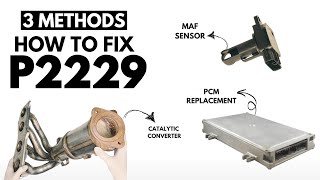
![What is P2229 Engine Code [Quick Guide]](https://img.youtube.com/vi/9bVVbS9DNAU/mqdefault.jpg)
We Have This Part in Stock



The information in this article is provided for general reference and educational purposes only. Vehicle specifications, procedures, and part compatibility can vary by production date, trim level, and region. Always consult your vehicle's factory service manual and verify part numbers before purchasing or performing repairs. Safety-critical components such as airbags, seat belts, and braking systems should be installed by a qualified professional.
- Mazda MAZDA6:
- 🎬 Helpful Videos
- 🛍️ Shop This Part
- What's Unique About the 2018-2020 Mazda MAZDA6
- Diagnostic Flowchart
- Symptoms You May Notice
- Most Likely Causes
- Rare But Worth Checking
- Diagnosis Steps
- Parts You'll Likely Need
- Related Codes That Often Appear With This One
- Technical Service Bulletins (TSBs) & Recalls
- Platform-Specific Known Issues
- Mechanic-Grade Diagnostic Values
- Hidden / Shadow Codes Worth Checking
- Scan Tool Commands That Help
- Wiring & Ground Locations
- Real Owner Repair Stories
- OEM Part Supersession History
- Model Year Variations Within This Range
- 🎟️ Get 5% Off