

OBD-II Code P2229: Barometric Pressure Sensor 'A' Circuit High
What P2229 means, why it triggers, and how to fix it
- Code P2229 indicates the barometric pressure sensor signal is maxed out near 5 volts, signaling a hard electrical fault rather than a weather change.
- Over 80% of P2229 codes stem from a broken ground wire or a shorted signal wire, not a failed sensor.
- Driving with this code forces a rich fuel mixture, dropping fuel economy by up to 30% and risking a $1,500 catalytic converter failure within months.
- Before buying parts, verify your vehicle's setup; many modern Honda, Subaru, and Mazda models integrate the BAP sensor directly into the MAP sensor, MAF sensor, or the PCM itself.
- Perform the 'unplug test' with a live data scanner before replacing any parts to instantly isolate whether the short is inside the sensor or the wiring harness.
What Does P2229 Mean?

Your car's Powertrain Control Module (PCM) is receiving a maxed-out voltage signal (typically near 5 volts) from the Barometric Pressure (BAP) sensor. This sensor measures atmospheric pressure to adjust the air-fuel mixture for different altitudes. A 'Circuit High' fault means the PCM receives an invalid reading, confusing its fuel delivery calculations and forcing the engine into a less efficient fail-safe mode.
Technical definition: The official SAE/OBD-II definition is "Barometric Pressure Sensor 'A' Circuit High 🎬 Watch: Diagnostic walkthrough for P2229 on a Honda Civic". This indicates the powertrain control module (PCM) detects the voltage from the BAP sensor 'A' is above the specified maximum range (typically over 4.8V) for a continuous set period.
Can I Drive With P2229?

Yes, But With Caution. Drive only short distances to a repair shop. Avoid long trips, heavy towing, or hard acceleration. Continuing to drive forces the engine to run on a rich fuel mixture, causing poor fuel economy, reduced power, and black smoke. Over time, this overheats and destroys the catalytic converter, a repair costing between $900 and $3,500.
Common Causes

- Open in the Ground Circuit (Very Common) — The sensor's ground wire is broken or has a high-resistance connection. Without a proper path to ground, the circuit's voltage defaults to its maximum, making this the primary cause of the P2229 code.
- Wiring Harness Short to Power (Common) — The sensor's signal wire is damaged, melted, or chafed, allowing it to touch a 5V reference or 12V power wire. This sends a continuous high voltage directly to the PCM.
- Faulty Barometric Pressure (BAP) Sensor (Common) — The sensor's internal electronics short out, sending a constant high-voltage signal. This frequently occurs when the BAP is integrated into a failing MAP or MAF sensor. 🎬 See how to test a MAP sensor for internal shorts
- Corroded Electrical Connector (Less Common) — Moisture or dirt inside the sensor's connector creates a bridge between the power and signal pins, causing a short circuit and a false high voltage reading.
- Plugged PCM Breather Port (Mazda Specific) (Rare) — On 2018-2020 Mazda6 2.5T models, the BAP sensor is inside the PCM. If the PCM's breather hole clogs (often from aftermarket rustproofing), internal heat builds pressure, forcing the sensor to read artificially high.
- Faulty PCM or Software Calibration (Very Rare) — The PCM suffers an internal hardware failure on the BAP circuit, or its software calibration map corrupts. Consider this only after exhaustively testing the wiring and sensor.
Symptoms
- Check Engine Light is On — The Malfunction Indicator Lamp (MIL) illuminates immediately. This is the first and most obvious symptom.
- Reduced Engine Performance — The engine feels sluggish, hesitates during acceleration, and lacks power, especially when climbing hills or changing altitude.
- Rough Idle or Stalling — The engine runs unevenly, surges, or stumbles at idle. In severe cases, the vehicle stalls when coming to a stop.
- Poor Fuel Economy & Black Smoke (also visible on scanner) — The engine runs on an overly rich air-fuel mixture based on bad sensor data. Fuel consumption spikes, and unburned fuel exits the tailpipe as black smoke.
Diagnostic Flowchart
Tap your situation to follow the diagnostic path that matches what you're seeing on this code.
Common Fixes & Costs
- Repairing Damaged Wiring or Connector — Parts: $5-$25, Labor: $150-$250, ~1.5 hr book time (Intermediate)
- Replacing the MAP or MAF Sensor (if BAP is integrated) — Parts: $100-$250, Labor: $150-$200, ~1.0 hr book time (DIY)
- Replacing the standalone BAP Sensor — Parts: $40-$100, Labor: $120-$180, ~0.7 hr book time (DIY)
- Cleaning PCM Breather Port (Specific Mazda Models) — Parts: $0-$5, Labor: $100-$150, ~1.0 hr book time (Intermediate)
- Diagnostic Service (if unable to find the fault) — Parts: $0, Labor: $150-$200, ~1.5 hr book time (Professional)
DIY vs Professional
- Replacing an integrated MAP/MAF Sensor — Beginner:
- Repairing Damaged Wiring — Beginner:
- Testing Circuits (Voltage/Ground) — Beginner:
Used vs. New Parts: Buying Guide
When a used part is worth it: For an integrated MAP or MAF sensor, a used part makes sense if the vehicle is over 10 years old, the budget is tight, and the new OEM part is over $150.
Donor-vehicle mileage cap: roughly under 80000 miles for the part to have meaningful remaining life.
Donor quality checklist:
- Verify the donor vehicle was in an accident and not scrapped for engine or electrical failure.
- Match the OEM part number exactly; visual similarities are not enough.
- Purchase from a salvage yard offering at least a 30-day functional warranty.
Decision logic:
- If The new aftermarket sensor costs less than $100. → Always buy new. The small savings from a used part are not worth the risk of premature failure and repeated labor costs.
- If Vehicle is older (>10 years) and the OEM-only new part is very expensive (>$250). → A used part from a low-mileage donor is a reasonable choice to save money.
- If The sensor is a known high-failure item for your specific vehicle model. → Favor a new OEM or high-quality aftermarket part, as even used ones have a short lifespan.
Warranty tradeoff: Used parts typically come with a 30-90 day warranty. New aftermarket parts offer a 1-year to limited lifetime warranty. New OEM parts usually carry a 1-year warranty.
Worst-case if a used part fails: $150-$250
What Happens If You Wait — Timeline
- 0-1 month: Check Engine Light is on. A 2-5% drop in fuel economy occurs. Performance remains near-normal under light loads. (MPG impact: 2-5%% · Added cost: $10-$50)
- 1-3 months: Fuel economy drop becomes significant (15-30%). Black smoke appears during acceleration. Engine feels sluggish and idles roughly. The rich mixture stresses the catalytic converter. (MPG impact: 15-30%% · Added cost: $50-$200)
- 3-6 months: The catalytic converter's internal substrate overheats and melts from the constant rich exhaust. It is permanently damaged and triggers catalyst inefficiency codes (P0420). (MPG impact: 15-30%+% · Added cost: $900-$3,500)
- 6+ months: Continued driving leads to a complete exhaust blockage. Spark plugs foul with carbon, and oxygen sensors fail. Severe engine performance loss and stalling occur. (MPG impact: 30%+% · Added cost: $1,200-$4,000+)
Cost of Not Fixing It
- 0-1 Month: Significant drop in fuel economy (up to 30%), sluggish performance, and black smoke from the exhaust. The immediate cost is wasted fuel. (Added cost: $50-$150)
- 1-6 Months: The continuous rich fuel mixture overheats and destroys the catalytic converter, a critical and expensive emissions component. (Added cost: $900-$3,500)
- 6+ Months: In addition to a failed catalytic converter, the engine suffers fouled spark plugs and damaged oxygen sensors due to heavy carbon buildup. (Added cost: $1,200-$4,000+)
Diagnosis Steps
- Check for Other Codes
Scan for additional codes. Codes related to the MAF sensor (P0100-P0104), MAP sensor (P0105-P0109), or 5V reference voltage (P0641, P0651) provide critical diagnostic direction. Address reference voltage codes first.
Tools: OBD-II Scanner (Beginner) - Visual Inspection
Locate the BAP sensor (standalone, or integrated into the MAP/MAF sensor). Inspect the connector and wiring harness for melted plastic, frayed wires, rodent damage, or green corrosion on the pins.
Tools: Flashlight (Beginner) - Analyze Live Data & Altitude
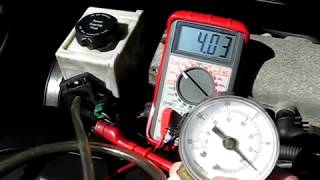
View the live data stream for the 'BARO' PID with the Key On, Engine Off (KOEO). A healthy sensor reads ~4.0V (101 kPa) at sea level and drops at higher altitudes. A reading stuck near 5.0V (or >114 kPa) confirms the 'Circuit High' fault.
Tools: OBD-II Scanner with Live Data (Intermediate) - Perform the 'Unplug Test'
While watching live data, disconnect the BAP sensor. If the voltage drops to 0V, the wiring is intact and the sensor is internally shorted. If the voltage remains at 5V, the short circuit is in the wiring harness.
Tools: OBD-II Scanner with Live Data (Intermediate) - Test Connector Voltage
With the key on and sensor unplugged, probe the harness connector. You should find one 5V reference pin, one ground pin (~0V), and one signal pin. If the signal pin shows voltage, it is shorted to power in the harness.
Tools: Digital Multimeter (Intermediate) - Perform Ground-Side Voltage Drop Test
Connect the positive multimeter lead to the sensor's ground pin (plugged in, key on) and the negative lead to the battery negative. A reading above 0.1 volts (100mV) indicates excessive resistance or a broken ground wire, requiring immediate repair.
Tools: Digital Multimeter (with back-probe pins) (Advanced) - Analyze Signal with an Oscilloscope
Connect an oscilloscope to the signal wire and ground. A healthy sensor shows a steady DC voltage. A 'Circuit High' fault flatlines near 5V. Wiggle the harness; sharp voltage spikes reveal intermittent shorts.
Tools: Oscilloscope (Professional)
When This Code Triggers (Freeze-Frame Conditions)
- Engine Coolant Temp: 180-200°F (82-93°C) (The engine was fully warmed up and operating in closed loop.)
- RPM: 1500-2500 RPM (The fault registered during steady-state cruise, not during idle or heavy acceleration.)
- Engine Load: 30-60% (The engine was under a moderate, consistent load, typical of highway driving.)
- BARO Sensor Voltage: 4.8V - 5.0V (The key fault data; the sensor voltage hit the maximum allowable threshold, confirming the 'Circuit High' condition.)
Related Codes
- P2228 — The direct opposite code: 'Barometric Pressure Sensor 'A' Circuit Low'. P2229 is caused by a short to power or open ground (stuck near 5V), while P2228 is caused by an open signal wire or short to ground (stuck near 0V).
- P2227 — Indicates the sensor's reading is erratic or implausible compared to other sensors. P2229 is a continuous electrical fault (stuck high), while P2227 points to a signal that is illogical but not necessarily stuck.
- P0106 — A 'rationality' code meaning the PCM compared the BAP reading to the MAP reading and found a mismatch. A faulty BAP sensor causing P2229 almost always triggers a P0106 simultaneously.
- P0108 — A broader code for 'Manifold Absolute Pressure/Barometric Pressure Circuit High'. It points to the exact same type of high-voltage electrical fault and shares identical diagnostic steps with P2229.
Climate & Environmental Factors
- High Humidity / Coastal Regions: High humidity significantly increases the likelihood of P2229 by promoting corrosion on wiring connectors, pins, and ground points. Moisture penetrates non-sealed connectors, leading to shorts or high resistance faults.
- High Altitude: Altitude does not cause the electrical fault, but it makes the symptoms far more pronounced. The PCM's incorrect 'sea level' fuel calculations become excessively rich in low-density air, leading to severe performance loss and black smoke.
How to Talk to a Mechanic About This Code
Say this: "I have an OBD-II code P2229, which is 'Barometric Pressure Sensor Circuit High'. I'd like to schedule a diagnostic to test the sensor's circuit, specifically the wiring harness and ground connection, before we consider replacing any parts."
This signals to the shop that you understand P2229 is an electrical fault and that simply replacing the sensor without testing the wiring is a common misdiagnosis. It encourages a proper diagnostic process.
Avoid saying:
- 'Just fix whatever's wrong'
- 'My check engine light is on, can you look at it?'
- 'Whatever you recommend'
Questions to ask before authorizing the repair:
- What was the sensor voltage on the live data scan, both with the sensor plugged in and unplugged?
- Did you perform a resistance or voltage drop test on the ground wire? What were the results?
- If the wiring is the issue, can you show me where the damage is?
- What is the warranty on the proposed repair, including both parts and labor?
Where to Take It: Dealer vs Independent vs Chain
- Dealer:
Recommended if your car is under warranty or is a model with a known TSB (like the 2018-2020 Mazda6). Otherwise, a qualified independent shop is more cost-effective.
Best for: Vehicles still under powertrain or emissions warranty, Manufacturer-specific quirks, like the Mazda TSB for P2229., Complex electrical issues where factory diagnostic tools are a significant advantage.
Downsides: Higher labor rates, often 1.5-2x more than an independent shop., More likely to replace a whole assembly rather than repair a specific wire. (Typical cost: +50% vs. baseline) - Independent Shop:
Best fit for most out-of-warranty vehicles. P2229 is a classic electrical fault that a competent independent technician diagnoses effectively, often with more flexible repair options than a dealer.
Best for: Out-of-warranty vehicles where cost is a factor., Standard electrical diagnostics like tracing shorts or open circuits., Building a long-term relationship with a technician who knows your vehicle.
Downsides: Diagnostic capabilities and technician skill vary widely; look for ASE certification and positive reviews for electrical work. (Typical cost: +0% vs. baseline) - Chain Shop:
AVOID for diagnosis. A chain shop replaces a sensor if you have already diagnosed it yourself, but they are not the right choice for tracing the electrical fault that is the root cause of a P2229 code.
Best for: Simple, routine services like oil changes or tire rotations.
Downsides: Technicians lack the advanced diagnostic training for complex electrical faults., Business model creates high pressure to upsell parts, leading to replacing a sensor when the wiring is the actual problem. (Typical cost: -10% vs. baseline)
When to Walk Away From the Repair
If the estimated repair cost exceeds 50% of the car's current private-party value, it's time to seriously consider selling or trading it in.
- Car worth $4000, fix is $350: Fix it. A wiring or sensor replacement is a small fraction of the car's value.
- Car worth $12000, fix is $1200: Fix it. Even a more expensive PCM replacement is well below the threshold.
- Car worth $2500, fix is $1300: Walk away. The repair cost is over 50% of the vehicle's value, making it a poor investment.
What Scan Tool You Need for This Code

Minimum: An OBD-II scanner that reads and displays live sensor data, specifically the voltage PID for the barometric pressure sensor.
A basic $20 code reader only tells you the P2229 code is present. It cannot show live voltage data, which is essential for performing the 'unplug test' to determine if the fault is in the sensor or the wiring.
Budget: BlueDriver Pro (~$99) — Connects to your smartphone and provides live data for the BARO sensor voltage, allowing you to perform critical diagnostic tests. It reads freeze-frame data and manufacturer-specific codes.
Mid-range: Foxwell NT510 Elite (~$180) — A handheld scanner offering live data graphing, useful for spotting intermittent voltage spikes. It provides access to more vehicle systems beyond the engine computer.
Professional: Autel MaxiCOM MK808S (~$499) — A professional-grade tablet scanner with advanced features like bidirectional control and a more intuitive interface for graphing and analyzing live data from multiple sensors at once.
Rent vs buy: If this is a one-time repair, auto parts stores like AutoZone offer a loaner tool program. You borrow a scanner capable of reading live data for free with a refundable deposit. Buy a scanner only if you plan to perform your own diagnostics regularly.
How to Clear the Code After You Fix It
- Use an OBD-II scan tool to erase the P2229 trouble code from the PCM's memory.
- Perform a complete OBD-II drive cycle to allow the vehicle's readiness monitors to run.
- Check for pending codes after the drive cycle to confirm the fix was successful.
Drive cycle (~30 minutes): A generic drive cycle includes: 1) A cold start (coolant temp below 122°F). 2) 5-10 minutes of idling. 3) 10-15 minutes of mixed city driving with several stop-and-go cycles. 4) 5-10 minutes of steady highway speed (55-60 mph). 5) Allow the vehicle to cool down completely.
Readiness monitors affected: Catalyst (CAT) monitor, Oxygen (O2) Sensor monitor, Evaporative System (EVAP) monitor
Before emissions retest: drive at least 100 miles to fully set monitors.
Watch out for:
- Clearing the code does not fix the problem; P2229 is a hard electrical fault and returns immediately if the root cause remains.
- Disconnecting the battery clears the code but resets all readiness monitors, guaranteeing an emissions test failure until a full drive cycle completes.
Will This Fail Emissions / State Inspection?
Yes — this code typically fails an OBD-II emissions inspection.
- California: An illuminated Check Engine Light results in an automatic smog check failure. After repairs, a full drive cycle must be completed to set all readiness monitors before a retest.
- New York: The NYS vehicle inspection includes an OBD-II scan. An active P2229 code is an automatic failure. Most readiness monitors must be in the 'Ready' state to pass.
- Texas: In the 17 counties requiring emissions testing, a vehicle with an active Check Engine Light for a code like P2229 fails the OBD-II portion of the inspection.
Most Commonly Affected Vehicles
- Mazda Mazda6 (with 2.5T engine) (2018-2020) — TSB 01-008/20 addresses aftermarket engine wax clogging a breather hole on the PCM, trapping pressure and causing code P2229. The fix involves cleaning or replacing the PCM and bracket.
- Ford F-150, Expedition, Taurus (2011-2020) — On many EcoBoost engines, the BAP function is integrated into the MAP sensor located on the intake manifold. On naturally aspirated engines, it is often part of the MAF sensor.
- Subaru Forester, Outback, Impreza (2008-2018) — The barometric pressure sensor is frequently located inside the passenger compartment, integrated directly into the PCM itself, requiring specialized diagnosis.
- Chevrolet / GMC Silverado, Sierra, Malibu (2007-2018) — On many V8 trucks, the BAP is integrated into the MAP sensor, located on the top-front of the intake manifold for easy access.
- Honda Civic, Accord, CR-V (2005-2015) — The BAP sensor is often integrated directly into the ECU/PCM located inside the cabin. A P2229 code frequently points to a fault within the main computer itself.
- Hyundai / Kia Sonata, Optima, Santa Fe, Sorento (2011-2019) — This code is frequently associated with a failed MAP sensor, which houses the integrated BAP sensor on the intake manifold.
- Ram (Cummins Diesel) 2500, 3500, Commercial Trucks (2007-2017) — The standalone barometric pressure sensor used on Cummins engines is a known failure point, located on the side of the engine block.
Manufacturer-Specific Notes

- Mazda: Per TSB 01-008/20, on 2018-2020 Mazda6 2.5T models, applying aftermarket engine wax clogs the PCM's breather port, leading directly to a P2229 code as heat builds internal pressure.
- Honda / Acura: Many models from the 2000s and 2010s integrate the BAP sensor directly into the Engine Control Unit (ECU/PCM) under the dash. A P2229 code requires checking if the ECU itself is faulty.
- Subaru: The BAP sensor is rarely in the engine bay. It is located inside the main computer (PCM/ECM), often found under the carpet on the passenger side floor.
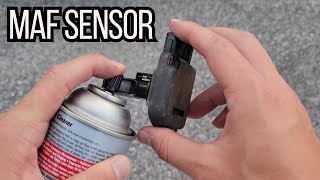
- Most Manufacturers: The barometric pressure sensor is rarely a standalone part. It is almost always built into the Mass Airflow (MAF) sensor or the Manifold Absolute Pressure (MAP) sensor.
Real Owner Stories
Chevy Cobalt with persistent P2229 after multiple sensor replacements
Owner experienced a persistent P2229 code even after replacing the MAP/BARO sensor multiple times with both aftermarket and new GM parts. All sensors consistently read ~4.7V, triggering the code.
What they tried:
- Replaced the sensor multiple times.
- Checked wiring for shorts to ground and power; checked continuity to the PCM.
- Bypassed the connector with no change.
- Swapped the PCM with another unit, which also did not resolve the issue.
Outcome: The owner eventually traded the P2229 code for a P0069 (Baro/Map correlation) code after trying a different sensor, indicating progress but not a final solution. The root cause remained elusive, pointing towards a complex wiring harness issue.
Lesson: If multiple new sensors don't fix a circuit voltage code, the problem is almost certainly in the wiring or the PCM. Thoroughly testing the ground circuit under load is critical before spending money on a replacement PCM.
2016 Mazda CX-5 with P2229 and P061B at startup
A new owner saw a Check Engine Light with codes P2229 and P061B immediately after purchase. The BARO reading on the scanner was stuck at 114-115 kPa at startup.
What they tried:
- Took it to a shop that followed a TSB to update the PCM software, but the codes returned.
- The owner cleaned the MAF and MAP sensor and their connectors.
- The next planned step was to inspect and clean the PCM electrical connections.
Outcome: The issue was intermittent, clearing after a restart but returning on the next cold start. The owner systematically worked through possibilities to avoid a costly PCM replacement.
Lesson: Always check for Technical Service Bulletins (TSBs) first. On modern cars, software updates resolve many sensor-related codes. When a TSB doesn't work, it points away from a simple part failure and towards a complex diagnostic path.
2018-2020 Mazda6 with P2229 caused by aftermarket rustproofing
The owner had the Check Engine Light come on with code P2229. The vehicle had recently received an aftermarket wax spray for rust prevention in the engine bay.
What they tried:
- A dealership technician identified the cause based on Mazda TSB 01-008/20.
Outcome: The aftermarket wax clogged a tiny breather hole on the PCM itself. When the PCM got hot, trapped air expanded, causing the internal BAP sensor to read high and trigger the code. The fix required replacing the PCM and its bracket.
Lesson: Be aware of manufacturer-specific quirks. Before assuming a major component has failed, check TSBs for unusual causes, especially if any recent work (even non-electrical work like rustproofing) has been performed.
How to Prevent This Code From Triggering
- Apply dielectric grease to sensor connectors (When replacing a sensor or if a connector is unplugged for service.) — Dielectric grease is a non-conductive, silicone-based grease that seals electrical connectors from moisture, dirt, and salt. This prevents the corrosion that causes shorts or high-resistance faults.
- Secure and protect wiring harnesses (During any engine bay work.) — Ensuring wiring harnesses are properly secured in their clips prevents wires from chafing, melting, and shorting to power or ground.
- Perform regular visual inspections of engine bay wiring (Every oil change.) — A quick visual scan for rodent damage, brittle plastic conduit, and loose connectors catches potential electrical issues before they cause a fault code.
- Clean main chassis and engine ground points (Every 30,000 miles or if electrical issues are suspected.) — Corrosion at main ground points creates high resistance for the entire electrical system. Cleaning to bare metal ensures a solid ground path for all sensors.
Frequently Asked Questions
What does 'Circuit High' actually mean?
It means the computer receives a voltage from the sensor at or near the maximum possible value, typically close to 5 volts. This indicates a hard electrical fault, not a measurement of high atmospheric pressure.
Can a dirty air filter cause code P2229?
No. A severely clogged air filter causes performance issues and MAF codes, but it cannot cause a 'Circuit High' electrical fault like P2229.
What is the most common misdiagnosis for P2229?
The most common mistake is replacing the MAP or MAF sensor without testing the wiring first. Technicians frequently find the root cause is a broken ground wire or a short in the harness. Performing the 'unplug test' prevents wasting money on unneeded parts.
Will clearing the code fix the problem?
No. P2229 is a hard fault caused by a persistent electrical issue. The moment you restart the vehicle, the PCM detects the high voltage and immediately triggers the Check Engine Light again.
Is a BAP sensor the same as a MAP sensor?
No, but they work similarly and are frequently integrated into a single unit. A BAP sensor measures atmospheric pressure outside the engine, while a MAP sensor measures pressure inside the intake manifold. The computer uses both to calculate engine load.
Do I need to reprogram the PCM after replacing the sensor?
No, replacing a BAP, MAP, or MAF sensor does not require reprogramming. However, you must reset the engine's adaptive fuel trims with a scan tool so the PCM immediately relearns the new sensor values.
What's the difference between P2229 and P0108?
P2229 specifically refers to the Barometric Pressure Sensor 'A' Circuit High. P0108 is a broader code for Manifold Absolute Pressure/Barometric Pressure Circuit High. Both point to a high-voltage electrical fault and share identical diagnostic steps.
Key Takeaways
- Code P2229 indicates the barometric pressure sensor signal is maxed out near 5 volts, signaling a hard electrical fault rather than a weather change.
- Over 80% of P2229 codes stem from a broken ground wire or a shorted signal wire, not a failed sensor.
- Driving with this code forces a rich fuel mixture, dropping fuel economy by up to 30% and risking a $1,500 catalytic converter failure within months.
- Before buying parts, verify your vehicle's setup; many modern Honda, Subaru, and Mazda models integrate the BAP sensor directly into the MAP sensor, MAF sensor, or the PCM itself.
- Perform the 'unplug test' with a live data scanner before replacing any parts to instantly isolate whether the short is inside the sensor or the wiring harness.
Helpful Videos



The information in this article is provided for general reference and educational purposes only. Vehicle specifications, procedures, and part compatibility can vary by production date, trim level, and region. Always consult your vehicle's factory service manual and verify part numbers before purchasing or performing repairs. Safety-critical components such as airbags, seat belts, and braking systems should be installed by a qualified professional.
- 🎬 Helpful Videos
- What Does P2229 Mean?
- Can I Drive With P2229?
- Common Causes
- Symptoms
- Diagnostic Flowchart
- Common Fixes & Costs
- DIY vs Professional
- Used vs. New Parts: Buying Guide
- What Happens If You Wait — Timeline
- Cost of Not Fixing It
- Diagnosis Steps
- When This Code Triggers (Freeze-Frame Conditions)
- Related Codes
- Climate & Environmental Factors
- How to Talk to a Mechanic About This Code
- Where to Take It: Dealer vs Independent vs Chain
- When to Walk Away From the Repair
- What Scan Tool You Need for This Code
- How to Clear the Code After You Fix It
- Will This Fail Emissions / State Inspection?
- Most Commonly Affected Vehicles
- Manufacturer-Specific Notes
- Real Owner Stories
- Chevy Cobalt with persistent P2229 after multiple sensor replacements
- 2016 Mazda CX-5 with P2229 and P061B at startup
- 2018-2020 Mazda6 with P2229 caused by aftermarket rustproofing
- How to Prevent This Code From Triggering
- Frequently Asked Questions
- What does 'Circuit High' actually mean?
- Can a dirty air filter cause code P2229?
- What is the most common misdiagnosis for P2229?
- Will clearing the code fix the problem?
- Is a BAP sensor the same as a MAP sensor?
- Do I need to reprogram the PCM after replacing the sensor?
- What's the difference between P2229 and P0108?
- Key Takeaways
- 🎟️ Get 5% Off