

P2227 on 2022 GMC Terrain: BARO Sensor, Charge Air Cooler, and Fixes
On a 2022 GMC Terrain, code P2227 is almost always caused by moisture collecting and freezing inside the charge air cooler (CAC), not a bad sensor. This creates an airflow restriction that causes an implausible pressure reading. The fix, per multiple revisions of GM TSB #18-NA-020, is to replace the charge air cooler with an updated part and potentially add a grille shutter or perform an ECM update. Expect costs to range from $400 to $1300 at a shop.
- For a 2022 GMC Terrain, P2227 is almost certainly caused by a faulty Charge Air Cooler (CAC), not a bad sensor.
- Look for companion codes P0299 (Turbo Underboost) and P0300 (Misfire), which strongly support the CAC diagnosis.
- The official fix is detailed in GM TSB #18-NA-020 and involves replacing the CAC, and potentially adding a shutter or reprogramming the ECM depending on build date and climate.
- Do not replace the BARO/MAP sensor or turbocharger before ruling out the well-documented CAC moisture/icing issue.
What's Unique About the 2022-2022 Gmc TERRAIN NA
For this specific generation of GMC Terrain and its platform mates (like the Chevrolet Equinox), P2227 is rarely about the sensor itself. It's a well-documented issue where the charge air cooler (CAC) design allows moisture from humidity, rain, or the PCV system to accumulate inside. In cold weather (consistently below 20°F/-7°C), this moisture can freeze, creating a blockage that severely restricts airflow. This restriction causes an abnormal pressure differential in the intake tract, which the BARO/MAP sensor system flags as an implausible reading, triggering the P2227 code. This is why the code is frequently seen with P0299 (Turbo Underboost).
Diagnostic Flowchart
Tap your situation to follow the diagnostic path that matches what you're seeing on this vehicle.
Generation note: This issue, documented in TSB 18-NA-020, affects the second generation of GMC Terrain (2018-2024) and its platform mates equipped with the 1.5L (LYX, LSD) and 2.0L (LTG) turbocharged engines. For the 2022 model year, only the 1.5L LYX engine was offered.
Symptoms You May Notice
- Check Engine Light illuminated
- Reduced engine power or "limp mode" message on dash
- Sluggish or poor acceleration, especially uphill
- Engine hesitation or stumbling
- Rough or erratic idle
- Increased fuel consumption
- Stalling at low speeds after climbing in altitude
- Replacing the barometric pressure (BARO) or manifold absolute pressure (MAP) sensor without first investigating the charge air cooler. On this vehicle, the sensor is usually reporting a real problem, not failing itself.
- Replacing the turbocharger without confirming the cause of the underboost condition (P0299). The restriction in the CAC is often the root cause of the underboost.
Most Likely Causes
- Moisture Buildup/Icing in Charge Air Cooler (CAC) 🔴 High Probability A known design issue allows moisture from humidity and the PCV system to collect in the CAC. In cold climates (below 20°F/-7°C), this can freeze, causing a restriction. This is documented in multiple revisions of GM Technical Service Bulletin #18-NA-020, which has been updated over 20 times since 2018.
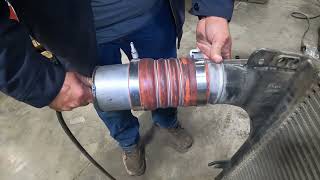
How to confirm: Check for the presence of codes P0299 and/or P0300. Disconnect the lower air duct from the CAC and check for any signs of water, ice, or an oily, milky residue. A smoke test using a tool like the GE-52250 Power Smoke machine is the GM-recommended procedure to check for leaks. 🎬 Watch: How to test a charge air cooler using a homemade tool.
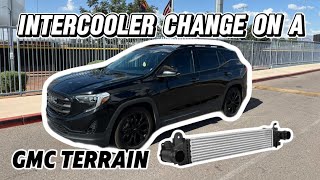
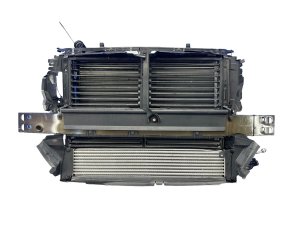
Typical fix: The fix has evolved. For vehicles built before March 1, 2018, the CAC is replaced with an updated, larger design. For later models or for persistent issues, fixes include installing a grille shutter, a soft grille cover, and/or an ECM reprogram to change transmission shift patterns in cold weather to keep engine RPMs higher and reduce moisture buildup. In some cases, the CAC is simply removed, thawed, cleaned out, and reinstalled. 🎬 See these quick steps for a GMC Terrain intercooler change.
Est. part cost: $190-$450 - Faulty Barometric Pressure (BARO) Sensor ⚪ Low Probability
How to confirm: Using a scan tool, monitor the BARO sensor's live data with the key on, engine off. The reading should match the atmospheric pressure for your altitude. If it's incorrect or doesn't change with altitude, the sensor is likely faulty. Also, visually inspect the sensor tip for oil or moisture contamination.
Typical fix: Replace the barometric pressure sensor. It is often integrated with one of the MAP sensors on this engine. The sensor is GM part number 55573249.
Est. part cost: $40-$70 - Wiring or Connector Issue ⚪ Low Probability
How to confirm: Visually inspect the wiring harness and connector for the BARO/MAP sensor for any signs of damage, corrosion, or looseness. Use a multimeter to check for proper voltage and ground at the sensor connector.
Typical fix: Repair the damaged wiring or clean/replace the connector.
Est. part cost: $5-$50
Rare But Worth Checking
- Faulty Powertrain Control Module (PCM): This is extremely rare. The PCM should only be considered after all other possibilities, especially the TSB-related CAC issue, have been exhaustively ruled out.
- Clogged Catalytic Converter: A severely clogged exhaust can create backpressure that skews sensor readings. This would typically be accompanied by other exhaust-related codes and more severe performance issues. One owner of a 2019 Equinox with P0299 reported the ultimate fix was a new catalytic converter.
Diagnosis Steps
- Scan the ECM for all stored trouble codes. Note if P0299, P0300, or P0234 are present alongside P2227, as this strongly points to the charge air cooler issue.
- Research the latest version of Technical Service Bulletin #18-NA-020. This bulletin is the primary diagnostic guide for this specific issue and has many revisions. Note your vehicle's build date to follow the correct repair path.
- Perform a visual inspection of the entire air intake system, including the charge air cooler and its ducts, looking for cracks, loose connections, or oil contamination.
- As recommended by the TSB, disconnect the lower CAC duct and inspect for water, ice, or a milky oil/water emulsion. Even a small amount can cause the problem.
- Perform a smoke test on the charge air system to check for leaks, as recommended by GM.
- If no leaks are found and symptoms match the TSB, follow the TSB's correction steps based on build date and climate. This may involve replacing the CAC, installing a shutter/cover, or reprogramming the ECM.
- If the CAC is not the suspected cause, use a scan tool to monitor live data from the BARO sensor. Verify its reading against the actual atmospheric pressure.
- Inspect the BARO sensor's electrical connector and wiring for damage or corrosion. If the sensor reading is incorrect and the wiring is intact, replace the BARO/MAP sensor.
Parts You'll Likely Need
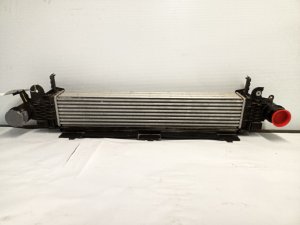
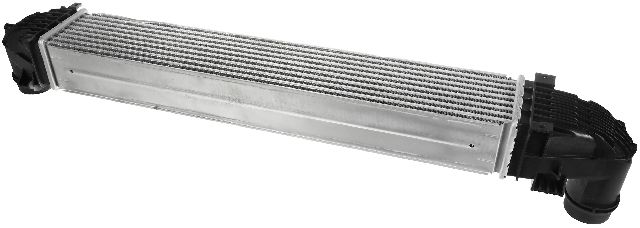
- Charge Air Cooler
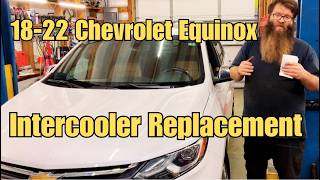
(OEM #85046823)— This is the most common cause of P2227 on this vehicle due to a known issue with moisture accumulation, as documented in TSB 18-NA-020. The part number listed is the updated design. 🎬 Watch this step-by-step walkthrough for replacing the intercooler.
Trusted brands: ACDelco (GM Genuine)
OEM price range: $190-$300
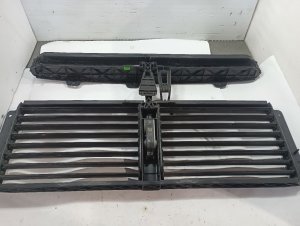
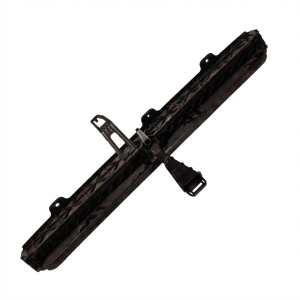
Aftermarket price range: $150-$250 - Charge Air Cooler Shutter Kit — For vehicles in cold climates, later versions of TSB 18-NA-020 recommend installing a shutter in front of the CAC to prevent freezing. This is a permanent installation.
Trusted brands: ACDelco (GM Genuine)
OEM price range: $50-$100
Related Codes That Often Appear With This One
- P0299 — This Turbocharger Underboost code is frequently set with P2227 because moisture or ice in the charge air cooler restricts airflow, preventing the turbo from building the required boost pressure.
- P0300 — This Random/Multiple Cylinder Misfire code can occur when a slug of water that has accumulated in the charge air cooler is suddenly drawn into the engine during acceleration.
- P0234 — This Turbocharger Overboost code is also mentioned in later versions of TSB 18-NA-020, potentially caused by frozen components like the Turbocharger Wastegate Regulator Solenoid Valve, which can occur under the same conditions as CAC icing.
Technical Service Bulletins (TSBs) & Recalls
- 18-NA-020: Malfunction Indicator Lamp Illuminated with DTC P0300 and/or P0299/P2227 Set. This bulletin, with numerous updates through at least January 2023, confirms moisture buildup in the charge air cooler as the root cause and provides an evolving set of diagnostic and repair procedures based on vehicle build date and climate.
Platform-Specific Known Issues
- GM Technical Service Bulletin #18-NA-020, in its many revisions, is the definitive document for this issue. It confirms that moisture from humidity and the PCV system builds up in the charge air cooler. In cold weather, this moisture freezes, restricting airflow and causing codes P2227 and P0299. A sudden ingestion of this water can cause P0300 (misfire). The official fix has evolved over time, starting with replacing the CAC on early models (pre-March 2018) and later adding solutions like grille shutters, grille covers, and ECM reprogramming for newer models or persistent problems.
Mechanic-Grade Diagnostic Values
- MAP/BARO Sensor 5V Reference Voltage — expected: Approximately 5.0 Volts. Failure: Voltage significantly lower than 5.0V suggests a wiring or ECM problem.
- MAP/BARO Sensor Signal Voltage (Key On, Engine Off) — expected: Approximately 2.0 - 4.5 Volts, corresponding to atmospheric pressure.. Failure: A reading outside this range, or one that doesn't match local barometric pressure, points to a faulty sensor or circuit issue.
- MAP/BARO Sensor Signal Voltage (Engine Idling) — expected: Voltage should drop to approximately 1.0 - 2.0 Volts for a turbo engine due to vacuum.. Failure: Voltage that doesn't drop or is erratic can indicate a sensor or vacuum leak issue.
- MAP/BARO Sensor Ground Circuit Voltage — expected: Less than 100 millivolts (0.1V).. Failure: Any significant voltage reading indicates a bad ground connection.
- DTC P2227 Set Condition — expected: The ECM sets the code when the difference between the BARO signal and a calculated BARO value is greater than a specified amount (e.g., 15 kPa or 2.17 psi).. Failure: This indicates the sensor's reading is considered irrational by the ECM.
Scan Tool Commands That Help
- GDS2 (GM Dealer Tool): ECM Reprogramming / Software Calibration Update — For 1.5L (LYX) engines, a specific calibration update is a key part of the TSB 18-NA-020 fix. It changes transmission shift patterns in cold weather to keep engine RPMs higher, reducing the chance of moisture freezing in the CAC.
- GDS2 (GM Dealer Tool): Turbocharger Learn — This function should be performed after replacing the turbocharger or related components to reset learned values. While not directly for P2227, it's relevant if the turbo is replaced during diagnosis of accompanying codes like P0299.
- GE-52250 Power Smoke Diagnostic Leak Detector: Charge Air Cooler System Leak Test — This is the GM-specified essential tool for performing a smoke test on the charge air cooler system to check for leaks, which is the first diagnostic step in TSB 18-NA-020.
Real Owner Repair Stories
- Reddit user on r/MechanicAdvice (2019 Chevrolet Equinox (platform mate), 167,000 miles) — Codes P0299 and P2227 with 'Engine Power Reduced' message in very cold weather, significantly limited power when driving uphill.
❌ Tried (didn't work) Initial diagnosis pointed towards the common charge air cooler (CAC) issue.
✅ What actually fixed it The final repair was replacing a faulty Manifold Absolute Pressure (MAP) sensor.
"I Checked Everything" — The Actual Cause
- According to multiple versions of TSB 18-NA-020, even if a smoke test on the charge air cooler (CAC) passes (shows no leaks), the CAC should still be replaced on vehicles built on or before a specific date (e.g., January 5, 2019) if codes P2227 and P0299 are present. This indicates the problem is internal moisture/icing, not an external leak.
OEM Part Supersession History
23278445→84498030— This part is the Charge Air Cooler Inlet Air Tube for the 2.0L LTG engine. The supersession likely represents a design update, though specific reasons are not documented in the search results.
Model Year Variations Within This Range
- 2022: The 2022 model year was a mid-cycle refresh for the Terrain. The optional 2.0L LTG turbo engine was discontinued, leaving the 1.5L LYX turbo as the only engine option. The TSB for P2227 still fully applies to this engine.
- 2023+: For the 2023 model year, the engine was updated from the 1.5L LYX to the 1.5L LSD. While the P2227 issue may persist, this new engine has its own unique issues, such as a reported problem with the anti-abrasion sleeve on the charge air inlet pipe splitting and causing leaks.
Helpful Videos
Used OEM Parts in Stock

New Aftermarket Parts Available


The information in this article is provided for general reference and educational purposes only. Vehicle specifications, procedures, and part compatibility can vary by production date, trim level, and region. Always consult your vehicle's factory service manual and verify part numbers before purchasing or performing repairs. Safety-critical components such as airbags, seat belts, and braking systems should be installed by a qualified professional.
- Gmc TERRAIN NA:
- 🎬 Helpful Videos
- 🛍️ Shop This Part
- What's Unique About the 2022-2022 Gmc TERRAIN NA
- Diagnostic Flowchart
- Symptoms You May Notice
- Most Likely Causes
- Rare But Worth Checking
- Diagnosis Steps
- Parts You'll Likely Need
- Related Codes That Often Appear With This One
- Technical Service Bulletins (TSBs) & Recalls
- Platform-Specific Known Issues
- Mechanic-Grade Diagnostic Values
- Scan Tool Commands That Help
- Real Owner Repair Stories
- "I Checked Everything" — The Actual Cause
- OEM Part Supersession History
- Model Year Variations Within This Range
- 🎟️ Get 5% Off