

P2227 on 2015 Chrysler 300 6.2L/6.4L: Barometric Pressure Fault Causes and Fixes
On a 2015 Chrysler 300 with a 6.2L or 6.4L V8 engine, code P2227 is most often caused by a software glitch in the Powertrain Control Module (PCM). The official fix, per Chrysler's Technical Service Bulletin #18-035-15 and its revisions, is a PCM software update performed by a dealership using a wiTECH scan tool. Replacing the MAP sensor without this update is a common misdiagnosis.
- For a 2015 Chrysler 300 (6.2L/6.4L), P2227 is most likely a software issue, not a bad part. Check for TSB #18-035-15 before replacing anything.
- The primary symptom, besides the Check Engine Light, can be a noticeable lack of power or the inability to reach top speed.
- The barometric pressure sensor is built into the MAP sensor, which is located on the engine's intake manifold.
- If the software is up-to-date, the next most likely cause is a failed MAP sensor, which is a relatively inexpensive and accessible part to replace.
What's Unique About the 2015-2015 Chrysler 300
For the 2015 Chrysler 300 (LX platform), particularly models with the 6.2L and 6.4L V8 engines, this code has a well-documented and specific cause that differs from generic advice. Chrysler released Technical Service Bulletin 18-035-15 and its revisions (A and B) specifically for this issue on vehicles built on or before June 6, 2015. This TSB indicates that a PCM software update is the required fix. This means that unlike in many other vehicles where the first step would be to replace the sensor, the primary cause here is a logic error in the factory software that needs to be corrected by a dealer reflash using a proprietary wiTECH scan tool.
Diagnostic Flowchart
Tap your situation to follow the diagnostic path that matches what you're seeing on this vehicle.
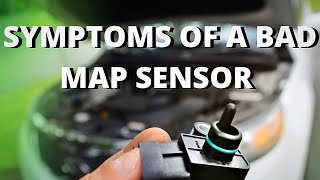
Symptoms You May Notice 🎬 Watch: Common symptoms of a failing MAP sensor
- Check Engine Light (Malfunction Indicator Lamp) is on.
- Vehicle may not be able to achieve its maximum top speed.
- Reduced engine performance, including hesitation or sluggish acceleration.
- Rough or erratic idle.
- Decreased fuel economy.
- Engine may stall at low speeds.
- Vehicle may enter a 'limp mode', sometimes instantly upon setting the code.
- Replacing the MAP sensor without first checking if the PCM software update from TSB 18-035-15 has been performed. On this specific vehicle, the software is the most likely culprit and should be the first step in diagnosis.
Most Likely Causes
- Powertrain Control Module (PCM) Software Needs Updating 🔴 High Probability Chrysler issued TSB #18-035-15 specifically to address this code on 2015 models with 6.2L/6.4L engines, indicating a known software logic issue from the factory for vehicles built before mid-2015.
How to confirm: A Chrysler dealership or a properly equipped independent shop can check the current PCM software calibration ID against the latest version specified in the TSB using a wiTECH scan tool.
Typical fix: Reprogramming (flashing) the PCM with the updated software version provided by Chrysler. This is not a DIY repair and requires specific dealer tools. 🎬 See how a PCM is reflashed using the WiTech tool
Est. part cost: $0 - Faulty Manifold Absolute Pressure (MAP) Sensor 🟡 Medium Probability The BARO sensor is integrated into the MAP sensor. These sensors can fail over time due to heat, vibration, or internal electronic faults. This should only be considered after the TSB software update has been performed.
How to confirm: Using a scan tool, compare the BARO reading (KOEO - Key On, Engine Off) to the actual atmospheric pressure for your altitude. If the reading is stuck or inaccurate and the software is up to date, the sensor is likely faulty.
Typical fix: Replace the MAP sensor. It is typically mounted on the intake manifold and secured with one bolt.
Est. part cost: $30-$70 - Wiring Harness or Connector Issue ⚪ Low Probability Engine vibration and heat can cause wires to fray or the connector to the MAP sensor to become loose or corroded over time.
How to confirm: Visually inspect the wiring going to the MAP sensor for any signs of damage, chafing, or melting. Check that the connector is secure and free of corrosion. Use a multimeter to test for proper voltage (typically 5V reference), ground, and signal continuity at the connector.
Typical fix: Repair the damaged section of wiring or clean/replace the connector pigtail.
Est. part cost: $10-$40
Rare But Worth Checking
- Faulty Powertrain Control Module (PCM):
Diagnosis Steps
- Check for Technical Service Bulletins (TSBs): The first and most critical step for this specific vehicle and code is to verify if TSB #18-035-15 or its revisions have been performed. A dealership can confirm this with your VIN. This is the most probable fix.
- Scan Tool Data Analysis: Connect an OBD-II scanner. With the Key On and Engine Off (KOEO), observe the live data for the Barometric Pressure (BARO) PID. Compare this reading to a known good source for your current altitude (e.g., a local weather station). A significant discrepancy points to a problem. The sensor voltage should be between 0.5V and 4.5V.
- Visual Inspection: Locate the MAP sensor on the intake manifold. Inspect its connector for a secure fit, corrosion, or pushed-out pins. Examine the wiring harness leading to the sensor for any signs of physical damage, melting, or chafing.
- Circuit Test: If the visual inspection is clear and the PCM software is confirmed to be up-to-date, use a multimeter to test the sensor's circuit. Check for the correct reference voltage (typically 5V) and a good ground at the connector. Then, check the signal wire for a steady, rational voltage.
- Sensor Replacement: If the PCM software is up-to-date and the wiring circuit tests good, the MAP/BARO sensor itself is the likely point of failure and should be replaced.
Parts You'll Likely Need
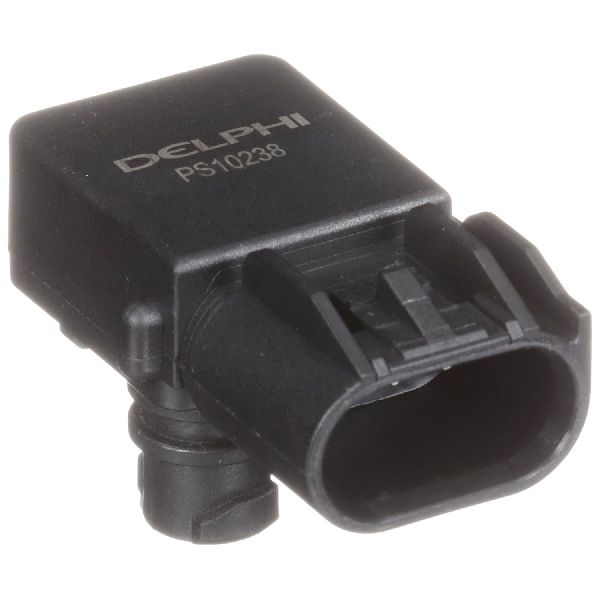
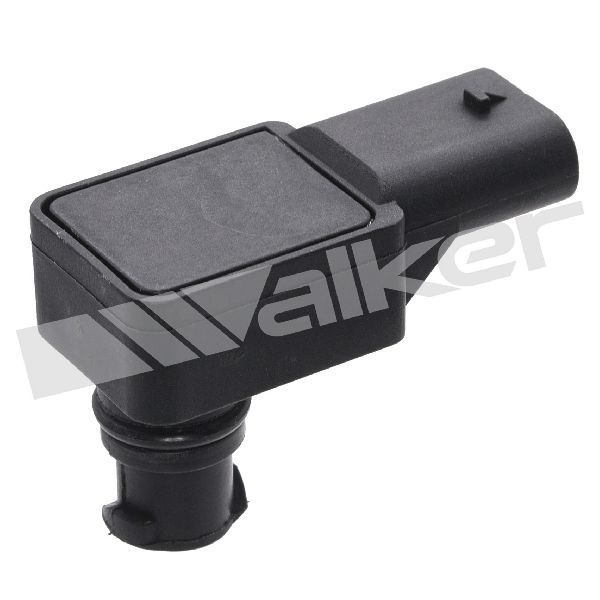
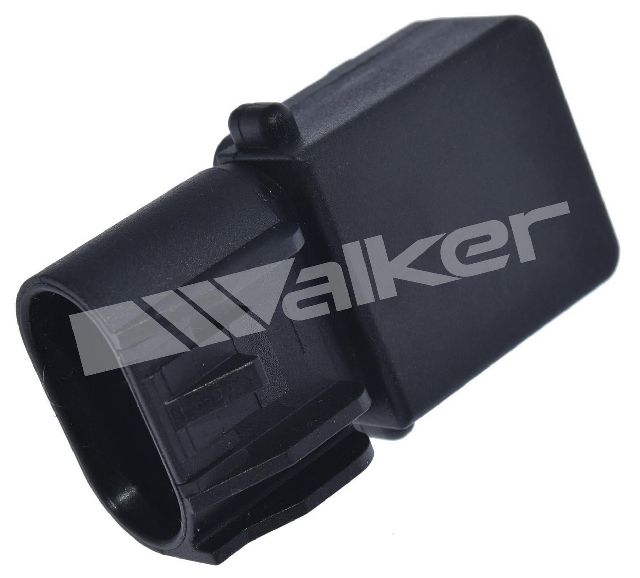
- Manifold Absolute Pressure (MAP) Sensor
(OEM #68199324AB (supersedes 5033310AC))— This sensor contains the barometric pressure sensor. If it fails electronically or mechanically after a software update has been ruled out, it must be replaced.
Trusted brands: Mopar, Bosch, NTK, Standard Motor Products
OEM price range: $50-$85
Aftermarket price range: $25-$60
Related Codes That Often Appear With This One
- P1217 — TSB #18-035-15 REVA lists this code for 'Active Exhaust Valve 1 Performance' alongside P2227, suggesting the faulty barometric pressure reading can affect the logic for controlling the active exhaust system.
- P121B — TSB #18-035-15 REVA also lists this code for 'Active Exhaust Valve 2 Performance', indicating a link between the BARO sensor input and the active exhaust system's operation, which can impact top-end performance.
Technical Service Bulletins (TSBs) & Recalls
- 18-035-15 REVA / REVB: 'Flash: 6.2L / 6.4L Diagnostic And System Improvements' - Explicitly lists P2227, P1217, and P121B as being fixed by a PCM software update on 2015 Chrysler 300 (LX), Dodge Charger (LD), and Dodge Challenger (LA) models.
- 18-062-17: 'Flash: Powertrain Diagnostic and System Improvements' - A later TSB for 2016 models which also includes P2227 in a list of codes fixed by a PCM software update, showing a pattern of software-related BARO sensor faults.
Platform-Specific Known Issues
- A known software issue documented in TSB #18-035-15 and its revision #18-035-15 REVA is the primary cause for P2227 on 2015 models with 6.2L and 6.4L engines. The fix requires a PCM reflash at a dealership.
Mechanic-Grade Diagnostic Values
- MAP Sensor 5V Reference Wire — expected: 4.8V to 5.2V with Key On, Engine Off (KOEO).. Failure: Voltage below 4.8V or above 5.2V indicates a problem with the PCM or wiring.
- MAP Sensor Ground Wire — expected: Less than 0.1V (100 millivolts) when tested against a known good ground.. Failure: Voltage higher than 0.1V indicates a poor ground connection, which can cause incorrect sensor readings.
- MAP Sensor Signal Wire (KOEO) — expected: Approximately 4.5V at sea level. This voltage decreases with increasing altitude.. Failure: A signal voltage that is stuck, does not match the expected voltage for the altitude, or is outside the 0.5V-4.5V range.
- MAP Sensor Signal Wire (Engine Idling) — expected: Approximately 1.0V to 1.5V at sea level with the engine idling (high vacuum).. Failure: Voltage does not decrease from the KOEO reading or does not change when the throttle is snapped, indicating a non-responsive sensor.
Scan Tool Commands That Help
- wiTECH: MAP/BARO Rationality Test — This is a PCM-initiated self-test that compares the MAP sensor's reading at KOEO against a plausible range. A failure in this test is what sets the P2227 'Performance' code. While not a user-run command, understanding this internal logic is key to diagnosis.
- wiTECH: PCM Flash/Reprogram — This is the primary repair step for this code on vehicles built on or before June 6, 2015, as specified by TSB 18-035-15. It updates the faulty logic that causes the code to be set erroneously.
Wiring & Ground Locations
- MAP Sensor Connector — Mounted on the top, rear of the intake manifold on both 6.4L and 6.2L V8 engines.. This is the primary connection point for testing the sensor's power, ground, and signal circuits. It is a 4-pin connector, though one pin may be for the integrated Intake Air Temperature (IAT) sensor.
- Engine Block Ground — There are multiple ground points on the engine block and cylinder heads. A key ground strap often connects the passenger side of the block or motor mount to the chassis frame rail.. A poor engine-to-chassis ground can create voltage offsets and electrical noise, potentially affecting the sensor's ground reference and causing erratic readings.
- Chassis Ground Stud (Underhood) — A dedicated grounding stud is located on the passenger side shock tower, near the underhood fuse box/positive jump post.. This is a primary grounding point for many underhood components and can be used as a reliable reference point when testing sensor circuits with a multimeter.
OEM Part Supersession History
5033310AC→68199324AA, then 68199324AB— Part has been updated and revised by the manufacturer over time.
Heads up: Part number 68199324AB is the latest revision and is specified for 2015+ V8 models. Using older stock or incorrect part numbers could lead to persistent issues.
Model Year Variations Within This Range
- 2015 (Early Production): Vehicles built on or before June 6, 2015, are subject to TSB #18-035-15, which calls for a mandatory PCM software update to fix the logic that triggers code P2227. Vehicles built after this date should have the updated software from the factory, making a faulty sensor or wiring a more likely cause.
Helpful Videos
We Have This Part in Stock


The information in this article is provided for general reference and educational purposes only. Vehicle specifications, procedures, and part compatibility can vary by production date, trim level, and region. Always consult your vehicle's factory service manual and verify part numbers before purchasing or performing repairs. Safety-critical components such as airbags, seat belts, and braking systems should be installed by a qualified professional.
- Chrysler 300:
- 🎬 Helpful Videos
- 🛍️ Shop This Part
- What's Unique About the 2015-2015 Chrysler 300
- Diagnostic Flowchart
- Symptoms You May Notice
- Most Likely Causes
- Rare But Worth Checking
- Diagnosis Steps
- Parts You'll Likely Need
- Related Codes That Often Appear With This One
- Technical Service Bulletins (TSBs) & Recalls
- Platform-Specific Known Issues
- Mechanic-Grade Diagnostic Values
- Scan Tool Commands That Help
- Wiring & Ground Locations
- OEM Part Supersession History
- Model Year Variations Within This Range
- 🎟️ Get 5% Off