

P2227 on 2018-2024 Chevrolet Equinox: Causes and Fixes for Barometric Pressure Sensor Issues
On 2018-2024 Equinox models, code P2227 is most often caused by moisture or ice buildup in the charge air cooler (CAC), which affects sensor readings. The primary fix, outlined in GM Technical Service Bulletin 18-NA-020, is to replace the charge air cooler with an updated part (GM P/N 85046823), not necessarily the sensor itself. This issue is often accompanied by code P0299 (Turbo Underboost).
- P2227 on a 2018-2024 Equinox is most likely not a bad sensor, but a symptom of a problem with the Charge Air Cooler (CAC).
- Check for GM Technical Service Bulletin 18-NA-020, which details how moisture buildup in the CAC causes this code, often with P0299 (Turbo Underboost).
- The most probable fix is replacing the charge air cooler, not just the sensor.
- Symptoms include a Check Engine Light and a "Reduced Engine Power" warning.
- Always check for associated codes like P0299 and P0300, as they strongly support the CAC diagnosis.
What's Unique About the 2018-2024 Chevrolet EQUINOX

For this generation of Chevrolet Equinox and its platform mates (GMC Terrain, Buick Envision), P2227 is frequently a secondary code triggered by a well-documented platform issue. General Motors issued Technical Service Bulletin (TSB) 18-NA-020, which states that moisture from humidity or rain can collect and even freeze inside the charge air cooler (CAC). This restriction in the intake airflow path causes incorrect pressure readings, leading the ECM to flag the BARO sensor. This problem is so common that it often sets a P0299 (Turbo Underboost) code simultaneously.
Diagnostic Flowchart

Tap your situation to follow the diagnostic path that matches what you're seeing on this vehicle.
Symptoms You May Notice

- Check Engine Light is on
- "Engine Power Reduced" message on the dashboard
- Sluggish acceleration and lack of power
- Poor fuel economy
- Rough or erratic idle
- Difficulty accelerating uphill
- Replacing the MAP/BARO sensor without first inspecting the charge air cooler. Many owners replace the sensor only to have the code return because the root cause is moisture/icing in the CAC, as documented in TSB 18-NA-020.
Most Likely Causes

- Moisture or Ice in Charge Air Cooler (CAC) 🔴 High Probability Per GM TSB 18-NA-020, the design allows moisture from humidity or rain to collect in the CAC. In cold weather (below 20°F/-7°C), this moisture can freeze, severely restricting airflow and causing pressure reading anomalies. A heavy acceleration can also draw a slug of collected water into the engine, causing misfires (P0300).
How to confirm: Inspect the charge air cooler and its piping for moisture, oily residue, or signs of freezing. A smoke test using a tool like the GE-52250 Power Smoke machine is the GM-recommended procedure to check for leaks. Physically removing the CAC and draining it is a definitive confirmation if water is present.
Typical fix: For vehicles built on or before January 5, 2019, the TSB recommends replacing the charge air cooler with the updated part design (GM P/N 85046823) even if no leak is found. For cold climates, installing a grille cover or a permanently installed thermostatic shutter is also recommended to prevent recurrence.
Est. part cost: $150-$400 - Failed Manifold Absolute Pressure (MAP) / Barometric Pressure (BARO) Sensor 🟡 Medium Probability On these engines, the BARO sensor is integrated into the MAP sensor. While less common than the CAC issue, the sensor itself can fail or become contaminated by oil or moisture drawn from a faulty CAC. The TSB for the 2.0L engine specifically advises removing and wiping the boost sensor clean of moisture during the CAC repair.
How to confirm: With a scan tool, compare the MAP/BARO sensor's reading (with the engine off) to the current local atmospheric pressure. The readings should be nearly identical. If not, the sensor is likely faulty. A Reddit user with a 2019 Equinox confirmed this was their ultimate fix.
Typical fix: Replace the MAP sensor. It is often located on the intake manifold.
Est. part cost: $40-$100 - Damaged Wiring or Poor Connection ⚪ Low Probability
How to confirm: Visually inspect the wiring harness and connector going to the MAP sensor for any signs of corrosion, damage, or loose pins. Use a multimeter to check for proper voltage and ground at the connector.
Typical fix: Repair the damaged section of the wiring harness or clean/replace the connector.
Est. part cost: $5-$50 - Disconnected Charge Air Cooler Outlet Duct ⚪ Low Probability A separate GM voluntary emissions recall for some 2019 models notes that the CAC outlet duct can become disconnected from the throttle body under boost. This creates a massive air leak, triggering reduced power and multiple codes, including P0299.
How to confirm: Visually inspect the large air duct connecting the charge air cooler to the engine's throttle body. Ensure the connection is secure and the clamp is tight. One owner of a 2022 model reported this was their issue.
Typical fix: Reconnect the duct and secure the clamp. If the duct or clamp is damaged, it will need to be replaced.
Est. part cost: $0-$75
Rare But Worth Checking
- Clogged Catalytic Converter: A severely clogged catalytic converter can create excessive backpressure, affecting the entire intake and exhaust flow and potentially skewing pressure sensor readings. This would usually be accompanied by other codes and more severe performance loss. One owner on a forum reported this as the final fix for a P0299 code.
- Frozen Turbocharger Wastegate Regulator Solenoid Valve (TCV): TSB PIP5812C (referenced by TSB 18-NA-020) notes that the same conditions causing CAC freezing can also cause oil/water condensate to freeze in the TCV, which can set a P0234 (Turbo Overboost) code but is related to the same root environmental cause.
Diagnosis Steps
- Scan the ECM for all stored trouble codes. Note if P0299 or P0300 are present alongside P2227, as this strongly points to the TSB-documented CAC issue.
- With the engine off, use a scan tool to observe the live data for the Barometric Pressure sensor. Compare this value to the actual atmospheric pressure for your location and altitude. They should match closely.
- Inspect all charge air cooler piping, especially the connection at the throttle body, to ensure they are secure and not disconnected.
- Following the guidance in TSB 18-NA-020, perform a smoke test on the entire charge air system to check for leaks.
- If no leaks are found, but codes P2227/P0299/P0300 are present and the vehicle was built on or before January 5, 2019, the TSB directs to replace the charge air cooler.
- If the CAC is confirmed to be clean, leak-free, and the vehicle is a later build, inspect the MAP/BARO sensor connector and wiring for damage.
- For 2.0L engines, remove the boost sensor and wipe it clean of any oil or moisture residue before reinstalling.
- If wiring is intact and the sensor is clean but still reads incorrectly, replace the MAP/BARO sensor.
Parts You'll Likely Need
- Charge Air Cooler
(OEM #85046823)— This is the most common failure point leading to code P2227 on this vehicle, due to a design that allows moisture accumulation, as identified in GM TSB 18-NA-020. The updated part is designed to mitigate this issue.
Trusted brands: ACDelco, GM Genuine Parts
OEM price range: $250-$400
Aftermarket price range: $150-$250 - Manifold Absolute Pressure (MAP) Sensor
(OEM #25203651)— This sensor includes the barometric pressure function and can fail or become contaminated, though it is a less frequent cause than the CAC. One owner on Reddit reported a bad MAP sensor was the ultimate fix for their P2227/P0299 codes.
Trusted brands: ACDelco, Bosch, Delphi
OEM price range: $55-$80
Aftermarket price range: $30-$60
Related Codes That Often Appear With This One
- P0299 — Turbocharger/Supercharger Underboost. This code is frequently set with P2227 because a restriction in the charge air cooler (from ice or moisture) prevents the turbo from building the expected amount of boost.
- P0300 — Random/Multiple Cylinder Misfire. TSB 18-NA-020 notes that a sudden gulp of water from the charge air cooler during acceleration can be drawn into the engine, causing misfires.
- P0101 — Mass Air Flow (MAF) Sensor Performance. 🎬 See how to service the MAF sensor and air filter. A major leak in the charge air system, such as a disconnected duct, can cause this code alongside P0299.
Technical Service Bulletins (TSBs) & Recalls
- 18-NA-020: Malfunction Indicator Lamp Illuminated with DTC P0300 and/or P0299/P2227 Set. This TSB is the primary source identifying the charge air cooler moisture issue as the root cause and provides detailed diagnostic flowcharts based on build date and symptoms.
Platform-Specific Known Issues
- GM Technical Service Bulletin 18-NA-020 (and its revisions) is the definitive document for this issue. It identifies moisture collecting and freezing in the charge air cooler as the root cause for P2227, P0299, and P0300. For vehicles built before specific dates (e.g., Jan 5, 2019), it recommends replacing the CAC with an updated part. For cold climates, it also details the installation of a grille cover or a more permanent thermostatic shutter, with strict instructions to remove the cover when towing or in temperatures above 32-40°F (0-4°C) to prevent overheating.
Mechanic-Grade Diagnostic Values
- MAP/BARO Sensor 5V Reference Wire Voltage — expected: ~5.0 Volts. Failure: Voltage significantly lower than 5.0V or 0V indicates a wiring issue or faulty ECM.
- MAP/BARO Sensor Ground Wire Voltage — expected: 0 Volts. Failure: Any voltage reading indicates a bad ground connection.
- MAP/BARO Sensor Signal Wire Voltage (Key On, Engine Off) — expected: 2.0 to 3.0 Volts for turbocharged models. Should correspond to local atmospheric pressure.. Failure: Voltage outside this range, or a reading that doesn't match local barometric pressure, points to a faulty sensor.
- MAP/BARO Sensor Signal Wire Voltage (Engine at Idle) — expected: 0.5 to 1.5 Volts (non-turbo) or 1.0 to 2.0 Volts (turbo). Voltage will be lower than KOEO due to engine vacuum.. Failure: Voltage does not drop after starting the engine, or is stuck high/low.
- DTC P2227 Set Condition — expected: Difference between BARO signal and calculated BARO is less than 15 kPa (2.17 psi).. Failure: A difference greater than 15 kPa (2.17 psi) will trigger the code.
Scan Tool Commands That Help
- GDS2 / Professional Scan Tool: Active Test / Bidirectional Control — To isolate related systems. For example, a technician can command vacuum solenoids (like for the turbo wastegate) to activate and observe the MAP sensor's live data response. This helps confirm if the sensor is reacting correctly to pressure changes, separating a sensor failure from a mechanical issue.
Wiring & Ground Locations
- MAP/BARO Sensor Connector Wires — On the intake manifold, just to the left of the throttle body.. Knowing the wire functions is critical for testing. On some models, the wires are: Light Green (Signal), Gray (5V Reference), and Orange with Black Tracer (Ground). A poor connection or damaged wire here directly causes the code.
- G103 / G105 — Engine compartment grounds. G103 is often located on the cowl, above the brake booster. G105 can be at the lower right rear of the engine.. The MAP/BARO sensor circuit requires a clean ground to provide an accurate signal. A corroded or loose engine ground at G103 or G105 can introduce electrical noise or incorrect reference points, causing sensor readings to be erratic and triggering P2227.
Real Owner Repair Stories
- Reddit user /u/B_randen (2019 Chevrolet Equinox AWD 1.5LT, 167,000 miles) — Check Engine Light with codes P0299 and P2227, "Engine Power Reduced" message. Occurred in extremely cold New England weather.
❌ Tried (didn't work) Initial diagnosis was uncertain, considering it could be a minor sensor issue related to the cold.
✅ What actually fixed it A bad MAP sensor was the confirmed final repair. - Equinox Forum user JA Freud (2019 Chevrolet Equinox 1.5L, 80,000 miles (salvage title)) — Chasing code P0299 (often paired with P2227).
❌ Tried (didn't work) Pulled and inspected the charge air cooler, which was found to be okay.
✅ What actually fixed it The final fix was replacing a clogged catalytic converter.
"I Checked Everything" — The Actual Cause
- Per TSB 18-NA-020, if a smoke test on the charge air system reveals no leaks, but P2227/P0299 are present on a vehicle built before the specified cutoff dates (e.g., Jan 5, 2019), the cause is still considered to be the Charge Air Cooler. The failure mechanism is internal moisture/ice accumulation, not an external leak, so the CAC must be replaced with the updated part.
- In one documented case on a 2019 Equinox, after inspecting the charge air cooler and finding no issues, the actual cause of the related P0299 code was a clogged catalytic converter. This creates backpressure that can affect sensor readings even when the charge air system itself is sealed.
When the Usual Fixes Don't Work
- While the overwhelming majority of P2227/P0299 issues are caused by the Charge Air Cooler as per TSB 18-NA-020, there are confirmed owner reports where the standard fix did not work. In one case involving a 2019 Equinox with 167,000 miles, the ultimate cause was a failed MAP sensor itself, which was resolved by replacing the sensor. In another case on a 2019 model, the root cause was a clogged catalytic converter, which was diagnosed after inspecting the CAC and finding no faults. These cases highlight that while the CAC should be the primary suspect, especially on lower-mileage vehicles in cold/humid climates, technicians should not rule out sensor failure or exhaust restrictions if the TSB procedure does not resolve the issue.
OEM Part Supersession History
23270538, 84454110, 85163204, 87830393, 87863765→85046823— The original Charge Air Cooler design was prone to moisture and ice accumulation. The updated part (85046823) is designed to mitigate this issue.
Model Year Variations Within This Range
- 2018-2021: These model years were available with both the 1.5L LYX and 2.0L LTG turbocharged engines. The TSB applies to both, but has specific instructions for the 2.0L to wipe the boost sensor clean of moisture.
- 2022-2024: Following the 2022 model year refresh, the 2.0L LTG engine was discontinued. Only the 1.5L LYX engine was offered. The TSB and its associated problems still apply to the 1.5L engine in these years.
- Vehicles built on or before Jan 5, 2019: TSB 18-NA-020 directs technicians to replace the charge air cooler on these vehicles if codes P2227/P0299 are present, even if a smoke test shows no leaks.
- Vehicles built after Jan 5, 2019: If no leak is found during a smoke test, the TSB directs the technician to refer to standard SI (Service Information) for further diagnosis, rather than automatically replacing the CAC.
Helpful Videos
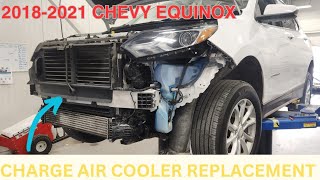
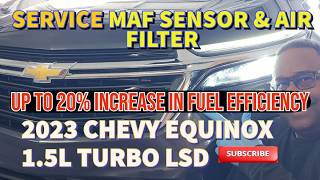
Used OEM Parts in Stock
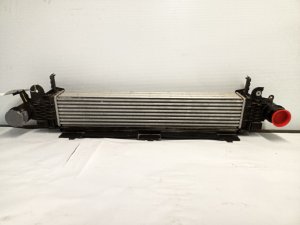
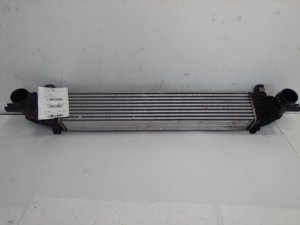
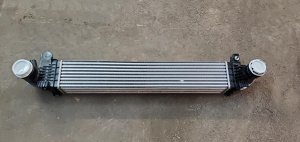

New Aftermarket Parts Available


The information in this article is provided for general reference and educational purposes only. Vehicle specifications, procedures, and part compatibility can vary by production date, trim level, and region. Always consult your vehicle's factory service manual and verify part numbers before purchasing or performing repairs. Safety-critical components such as airbags, seat belts, and braking systems should be installed by a qualified professional.
- Chevrolet EQUINOX:
- 🎬 Helpful Videos
- 🛍️ Shop This Part
- What's Unique About the 2018-2024 Chevrolet EQUINOX
- Diagnostic Flowchart
- Symptoms You May Notice
- Most Likely Causes
- Rare But Worth Checking
- Diagnosis Steps
- Parts You'll Likely Need
- Related Codes That Often Appear With This One
- Technical Service Bulletins (TSBs) & Recalls
- Platform-Specific Known Issues
- Mechanic-Grade Diagnostic Values
- Scan Tool Commands That Help
- Wiring & Ground Locations
- Real Owner Repair Stories
- "I Checked Everything" — The Actual Cause
- When the Usual Fixes Don't Work
- OEM Part Supersession History
- Model Year Variations Within This Range
- 🎟️ Get 5% Off