

P2227 on 2013-2015 Buick LaCrosse: BARO Sensor Fault Causes and Fixes
On the 3.6L V6, this code is almost always caused by a software glitch requiring a dealer update, per GM TSB PI1445. On the 2.4L, it's more likely a faulty MAP/Barometric Pressure sensor. Do not replace parts on the 3.6L without checking for the software update first.
- For the 3.6L V6, your first step should be to inquire about a software update from a GM dealer, as per TSB PI1445.
- Do not replace the Mass Air Flow (MAF) sensor; it is a common misdiagnosis for this specific code and vehicle.
- For the 2.4L I4, the most likely culprit is a faulty Manifold Absolute Pressure (MAP) sensor, ACDelco P/N 213-4681.
- The repair can be a simple sensor replacement, which is accessible on top of the intake manifold.
What's Unique About the 2013-2015 Buick LACROSSE
For the 2013-2015 LaCrosse with the 3.6L V6 engine, this code has a very specific and well-documented cause. General Motors issued a Technical Service Bulletin (TSB PI1445) identifying a 'software anomaly' as the root problem. This makes it a unique case where the most probable fix isn't a faulty part, but rather a software update for the Engine Control Module (ECM). The TSB explicitly warns technicians not to replace the mass air flow or other sensors for this condition on the 3.6L engine.
Diagnostic Flowchart
Tap your situation to follow the diagnostic path that matches what you're seeing on this vehicle.
Symptoms You May Notice
- Check Engine Light is on
- Reduced engine performance or sluggish acceleration
- Rough or erratic idle
- Decreased fuel economy
- Hesitation or stalling, particularly at different altitudes or on inclines
- Vehicle may enter 'limp mode' or 'reduced power' mode
- Replacing the Mass Air Flow (MAF) sensor. TSB PI1445 specifically warns against this, as it will not fix the issue on the 3.6L engine.
- Replacing the MAP/BARO sensor on a 3.6L V6 without first checking for the required software update.
Most Likely Causes
- ECM Software Anomaly (3.6L V6 Engine Only) 🔴 High Probability A documented issue acknowledged by GM in Technical Service Bulletin PI1445, which states a 'software anomaly' can cause P2227 to set.
How to confirm: A GM dealer or a shop with access to GM's service information can check if the vehicle's ECM has the latest software calibration installed and if TSB PI1445 applies. The bulletin was issued in March 2015.
Typical fix: Reprogramming the Engine Control Module (ECM) with updated software. This must be done by a dealer or qualified repair shop with access to GM's programming tools.
Est. part cost: $0 - Faulty Manifold Absolute Pressure (MAP) / Barometric Sensor (2.4L Engine) 🔴 High Probability This is the most common hardware failure for this code when a software issue is not the cause, making it the primary suspect for the 2.4L engine.
How to confirm: Using a scan tool, compare the BARO reading (with key on, engine off) to the current local atmospheric pressure (you can find this on a weather website). The values should be nearly identical (within 1-2 kPa). If they differ significantly, the sensor is likely faulty.
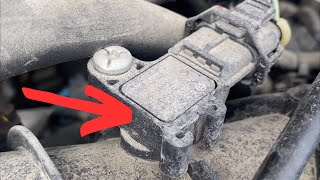
Typical fix: Replace the Manifold Absolute Pressure (MAP) sensor. It is located on the intake manifold.
Est. part cost: $30-$80 - Damaged Wiring or Loose Connector 🟡 Medium Probability Wiring harnesses in the engine bay are subject to heat and vibration, which can lead to chafing, breaks, or loose connections over time.
How to confirm: Visually inspect the wiring harness and connector for the MAP sensor for any signs of damage, corrosion, or looseness. Use a multimeter to check for proper voltage (typically a 5V reference), ground, and signal continuity back to the ECM.
Typical fix: Repair the damaged section of wiring or clean/replace the connector.
Est. part cost: $5-$25
Rare But Worth Checking
- Clogged Engine Air Filter: A severely restricted air filter can alter intake pressures enough to confuse the sensor. It's a simple and inexpensive item to check before proceeding to more complex diagnostics.
- Faulty Engine Control Module (ECM): This is rare. The ECM should only be considered after all other possibilities, including the software update for the 3.6L V6, have been exhausted.
- Aftermarket Cold Air Intake: Installing an aftermarket cold air intake can sometimes change the airflow characteristics in a way that triggers this code. Some owners report this code appearing immediately after installation.
Diagnosis Steps
- Scan the vehicle for any other stored trouble codes. Address other codes, especially for MAF or IAT sensors, first.
- For 3.6L V6 engines: Your first and most important step is to contact a GM dealer or qualified shop to check if TSB PI1445 applies and if an ECM software update is available. This is the most likely fix and should be done before replacing any parts.
- For 2.4L I4 engines (or if software update is not applicable): With the key on and engine off, use a scan tool to view the live data for the BARO sensor. Compare this reading to the actual atmospheric pressure for your location (available from a local weather report). If the reading is inaccurate by more than a few kPa, the sensor is suspect.
- Inspect the MAP/BARO sensor's electrical connector and wiring for any visible damage, corrosion, or loose connections. Ensure the connector is fully seated.
- If wiring appears intact, test the circuit. Using a multimeter, check for a 5-volt reference signal on one wire, a good ground on another, and a fluctuating signal voltage on the third wire as engine conditions change.
- Check the engine air filter to ensure it is not clogged or excessively dirty, as this can affect pressure readings.
- If the sensor is determined to be faulty, replace the Manifold Absolute Pressure (MAP) sensor.
- After any repair, clear the code and perform a drive cycle, ideally including changes in altitude and engine load, to ensure the fault does not return.
Parts You'll Likely Need
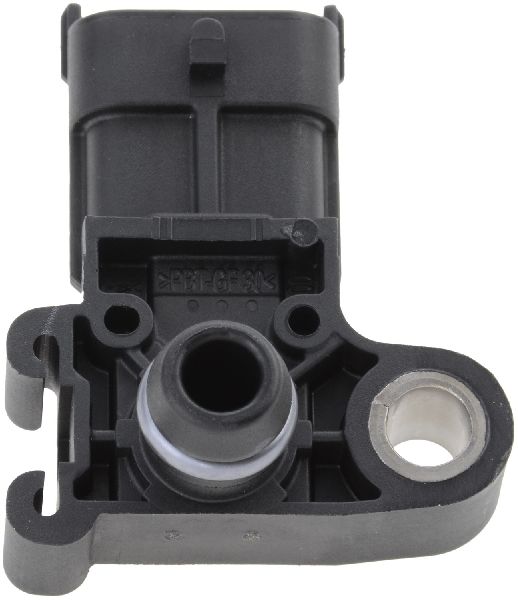
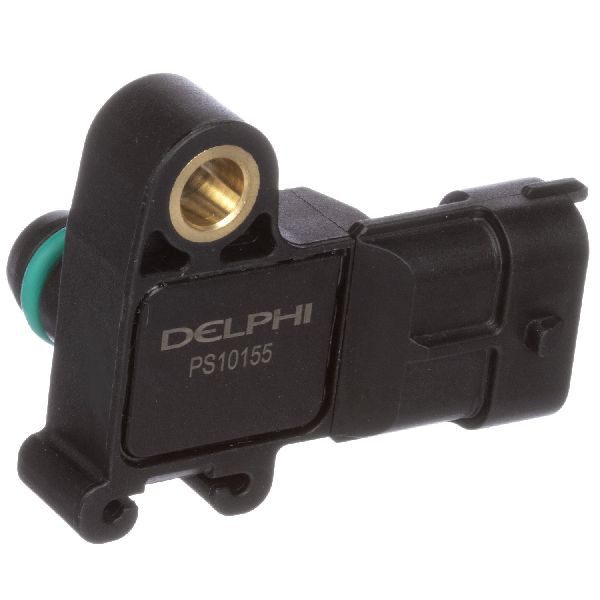
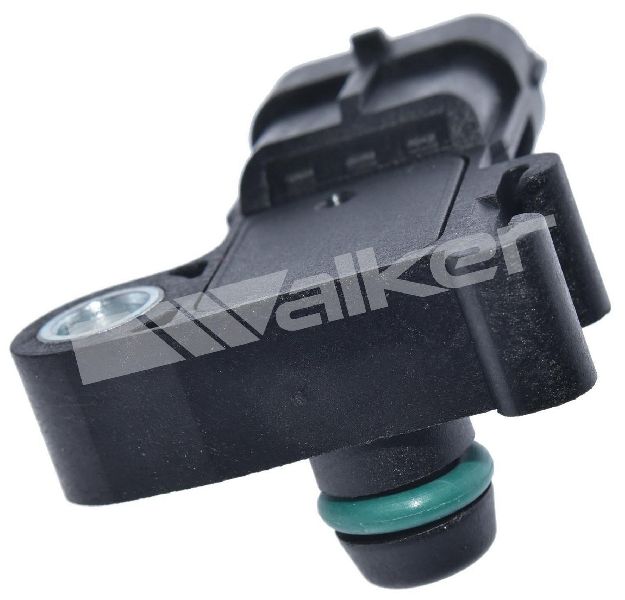
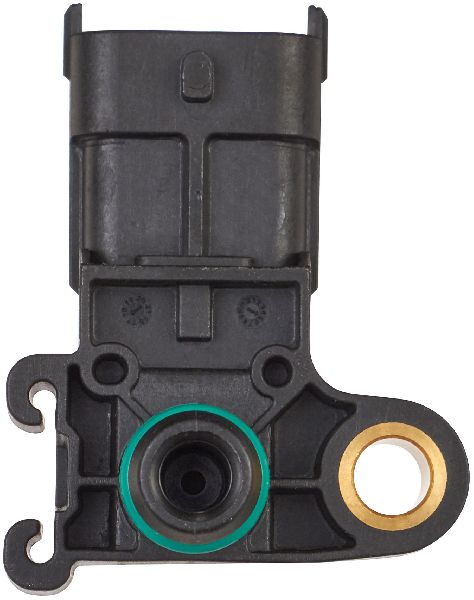
- Manifold Absolute Pressure (MAP) Sensor
(OEM #ACDelco 213-4681 (GM 55573248))— This sensor provides the barometric pressure reading. It is the most likely hardware component to fail for this code, especially on the 2.4L engine.
Trusted brands: ACDelco, Bosch, Hitachi, Spectra Premium
OEM price range: $50-$90
Aftermarket price range: $30-$70
Related Codes That Often Appear With This One
- P0106: Manifold Absolute Pressure/Barometric Pressure Circuit Range/Performance Problem
- P2228: Barometric Pressure Circuit Low
- P0113: Intake Air Temperature Sensor Circuit High
Technical Service Bulletins (TSBs) & Recalls
- PI1445: Malfunction Indication Lamp (MIL) On, P2227 DTC Set - States the cause may be a software anomaly on 3.6L engines and advises against replacing the MAF sensor. The bulletin notes that engineering is aware and working on a resolution, which was later released as an ECM update.
Platform-Specific Known Issues
- On 2013-2015 models with the 3.6L LFX engine, a 'software anomaly' is a known cause for DTC P2227, addressed by GM Technical Service Bulletin #PI1445. The bulletin explicitly states not to replace the MAF sensor for this issue.
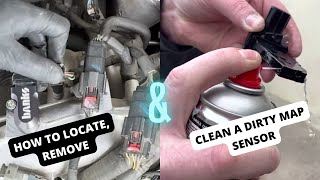
- The MAP sensor on the 2.4L engine is located on the intake manifold and can become dirty, leading to incorrect readings. Cleaning the sensor with a dedicated MAF/MAP sensor cleaner can sometimes resolve the issue without replacement. 🎬 See how to safely locate and clean a dirty sensor
Mechanic-Grade Diagnostic Values
- ECM Fault Threshold — expected: Difference between BARO sensor reading and ECM's calculated barometric pressure should be less than 15 kPa.. Failure: A difference greater than 15 kPa (2.17 psi) will set DTC P2227.
- MAP Sensor 5V Reference — expected: 4.9V - 5.1V. Failure: Voltage significantly lower than 5.0V or absent points to a wiring or ECM problem.
- MAP Sensor Ground Circuit — expected: Less than 100 millivolts (0.1V). Failure: Voltage higher than 0.1V indicates a poor ground connection, which can skew sensor readings.
- MAP Sensor Signal (Key On, Engine Off) — expected: ~4.5V at sea level, corresponding to atmospheric pressure.. Failure: Voltage is outside the typical 0.5V - 4.5V operating range, or does not match local atmospheric pressure.
- MAP Sensor Signal (Engine Idling) — expected: 1.0V - 1.8V at sea level.. Failure: Voltage is too high (indicating low vacuum) or does not drop significantly from the KOEO reading.
Scan Tool Commands That Help
- GM GDS2 / Tech2: Reset Intake System Learned Values — After replacing the MAP sensor, the vehicle may not run correctly until the ECM's learned values are reset. This function speeds up the recalibration process.
Wiring & Ground Locations
- MAP Sensor Connector — On the MAP sensor, which is located on the top of the intake manifold for both the 2.4L and 3.6L engines.. This 3-pin connector provides power, ground, and signal return for the sensor. Corrosion or a loose connection here is a common cause of failure. The pins are typically: 5V Reference, Ground, and Signal.
- G103 (Example Ground) — On some GM platforms, this ground is located on the cowl, above the brake booster.. This ground point often serves the Data Link Connector (DLC) and Body Control Module (BCM). A poor connection here can cause various electrical issues, including erratic sensor readings.
- Engine Block / Bell Housing Ground — A primary engine ground is often located on a bell housing bolt that is a stud with a nut, or on the lower front of the engine block.. This is a main power ground for the engine and its sensors. A loose or corroded connection here can affect the stability of the entire sensor ground network.
OEM Part Supersession History
12591290, 93192107→GM 55573248 (also sold as ACDelco 213-4681)— GM regularly updates service parts to integrate new materials or technologies.
Heads up: The current part (55573248) replaces a previous 'red label' sensor that has been discontinued. Ensure the replacement part is the current OEM number or a direct cross-reference.
Model Year Variations Within This Range
- 2013-2015: No significant variations have been identified for the MAP sensor, its wiring, or the common causes of P2227 within this specific model year range. The primary distinction remains the engine type (2.4L vs 3.6L).
Helpful Videos
We Have This Part in Stock


The information in this article is provided for general reference and educational purposes only. Vehicle specifications, procedures, and part compatibility can vary by production date, trim level, and region. Always consult your vehicle's factory service manual and verify part numbers before purchasing or performing repairs. Safety-critical components such as airbags, seat belts, and braking systems should be installed by a qualified professional.
- Buick LACROSSE:
- 🎬 Helpful Videos
- 🛍️ Shop This Part
- What's Unique About the 2013-2015 Buick LACROSSE
- Diagnostic Flowchart
- Symptoms You May Notice
- Most Likely Causes
- Rare But Worth Checking
- Diagnosis Steps
- Parts You'll Likely Need
- Related Codes That Often Appear With This One
- Technical Service Bulletins (TSBs) & Recalls
- Platform-Specific Known Issues
- Mechanic-Grade Diagnostic Values
- Scan Tool Commands That Help
- Wiring & Ground Locations
- OEM Part Supersession History
- Model Year Variations Within This Range
- 🎟️ Get 5% Off