

P2227 on 2016-2020 Buick Envision: BARO Sensor and Charge Air Cooler Causes
On the 2.0L Turbo Buick Envision, code P2227 is most often caused by a failing charge air cooler (CAC) collecting moisture, not a bad sensor. This is documented in GM Technical Service Bulletin #21NA074. In cold weather, this moisture can freeze, causing a restriction. In humid weather, it can be ingested during acceleration, causing a misfire. The fix is to replace the CAC with an updated part, which can cost between $800 and $1400 at a shop.
- For a 2016-2020 Buick Envision with the 2.0L Turbo engine, P2227 is almost always a symptom of moisture collecting or freezing in the Charge Air Cooler (CAC), not a primary sensor failure.
- This issue is well-documented by GM in TSBs 21-NA-074 and 18-NA-020.
- Look for accompanying codes P0299 (Underboost) and P0300 (Misfire), which make the CAC diagnosis almost certain.
- The correct repair is to replace the CAC with an updated part (GM P/N 84794901) and the corresponding lower baffle (GM P/N 84277250).
- Do not replace the BARO/Boost sensor without first thoroughly inspecting the charge air system for moisture, ice, or leaks as per the TSB.
What's Unique About the 2016-2020 Buick ENVISION

For the 2016-2020 Buick Envision with the 2.0L Turbo (LTG) engine, P2227 is frequently a symptom of a different problem. GM has issued multiple Technical Service Bulletins (TSBs) stating that moisture from high humidity, rainy conditions, and the PCV system can build up inside the charge air cooler (CAC). This moisture can be ingested by the engine, especially during heavy acceleration, causing erratic pressure readings that make the ECM believe the BARO sensor has failed. In cold temperatures (below 20°F / -7°C), this collected moisture can freeze, creating a physical restriction in the intake tract. This issue is so specific that it often triggers codes P0299 (Engine Underboost) and P0300 (Engine Misfire) alongside P2227.
Diagnostic Flowchart

Tap your situation to follow the diagnostic path that matches what you're seeing on this vehicle.
Symptoms You May Notice
- Check Engine Light is on
- Reduced engine power or 'reduced power' message on the dash
- Engine hesitation or stumbling on acceleration
- Rough idle
- Decreased fuel economy
- Engine misfires (especially if P0300 is also present)
- Sluggish acceleration, especially in cold or humid weather.
- Replacing the BARO/Boost sensor without first inspecting the charge air cooler for moisture. Due to the known TSB, the CAC is a more likely root cause than the sensor itself on this specific vehicle.
Most Likely Causes

- Failing or Leaking Charge Air Cooler (CAC) 🔴 High Probability As documented in GM TSBs #21NA074 and #18-NA-020, the design allows moisture from humidity and the PCV system to collect in the CAC. In cold weather, this can freeze and cause a restriction, or be ingested as water during acceleration, skewing sensor readings. The TSBs state that even if no leak is found, vehicles built before a certain date (e.g., March 1, 2018) should have the CAC replaced if these codes are present.
How to confirm: Perform a smoke test on the charge air cooler and intake system to check for leaks, as recommended by the TSB. A technician may also remove the boost sensor or a low-side charge pipe to physically check for excessive moisture, oil, or ice. If moisture is found, the CAC is the confirmed cause.
Typical fix: Replace the charge air cooler with the updated, wider part as specified by GM. The TSB notes that the new CAC is not compatible with the existing lower baffle, so the baffle must also be replaced. The updated CAC is designed to mitigate the moisture collection issue.
Est. part cost: $350-$600 - Faulty Barometric Pressure (BARO) Sensor 🟡 Medium Probability On the 2.0L LTG engine, the BARO function is integrated into the 'Throttle Inlet Air Pressure and Temperature Sensor' (also called a Boost Sensor). It can fail electrically or become contaminated by moisture and oil residue ingested from a faulty CAC.
How to confirm: With the Key On, Engine Off, use a scan tool to compare the BARO reading to the local atmospheric pressure. If it's significantly different and the CAC is confirmed to be dry and clean, the sensor is likely faulty. The TSBs specifically instruct technicians to remove and wipe the boost sensor with a clean rag to remove any moisture during service.
Typical fix: Replace the sensor. It is typically located on the intake pipe just before the throttle body and secured with a single Torx bolt.
Est. part cost: $30-$60 - Damaged Wiring or Loose Connector ⚪ Low Probability
How to confirm: Inspect the wiring harness and connector for the BARO/Boost sensor for any signs of damage, corrosion, or looseness. Test the circuit for proper voltage, ground, and signal continuity back to the ECM.
Typical fix: Repair the damaged section of the wiring harness or replace the connector pigtail.
Est. part cost: $15-$40
Rare But Worth Checking
- Faulty Engine Control Module (ECM): This is very rare. The ECM should only be considered after all other possibilities, including the CAC, sensor, and wiring, have been thoroughly ruled out.
Diagnosis Steps
- Scan the ECM for trouble codes. Note if P2227 is present with P0299 and/or P0300, which strongly points to the TSB issue.
- With the key on and engine off, check the BARO sensor reading on your scan tool. It should closely match the atmospheric pressure for your altitude. A significant deviation points to a sensor or circuit issue.
- Visually inspect the BARO/Boost sensor connector and wiring for any obvious damage, corrosion, or loose connections.
- Following the guidance in TSB #21NA074, perform a smoke test on the entire charge air system, including the charge air cooler, to check for leaks.
- As per the TSB, remove the boost sensor from the intake pipe and wipe it with a clean, dry rag to remove any oil or moisture contamination. Do not use chemical cleaners.
- Inspect the inside of the charge air piping for any signs of excessive moisture or oil contamination. If moisture is present, the CAC is the likely culprit.
- Check the vehicle's build date. Per TSB #18-NA-020, if the vehicle was built on or before March 1, 2018, and has codes P2227/P0299/P0300, the CAC should be replaced even if no leak is found.
- If the charge air system is clean, dry, and free of leaks, and the BARO reading is incorrect, test the sensor's electrical circuit for correct voltage, ground, and signal.
- If the circuit is good but the sensor reading is incorrect, replace the BARO/Boost sensor.
- If the charge air cooler is found to be leaking, internally contaminated with moisture, or if the vehicle meets the TSB replacement criteria, replace it along with the required lower air baffle.
Parts You'll Likely Need
- Charge Air Cooler
(OEM #84794901)— This is the most common root cause of P2227 on the 2.0L Turbo Envision, as documented in multiple GM service bulletins. The original design is prone to moisture collection.
Trusted brands: ACDelco, GM Genuine Parts
OEM price range: $400-$600
Aftermarket price range: $200-$400 - Charge Air Cooler Lower Baffle
(OEM #84277250)— TSB 18-NA-020 states that the newly designed, wider charge air cooler is not compatible with the existing lower baffle and requires this new part for proper fitment.
Trusted brands: GM Genuine Parts
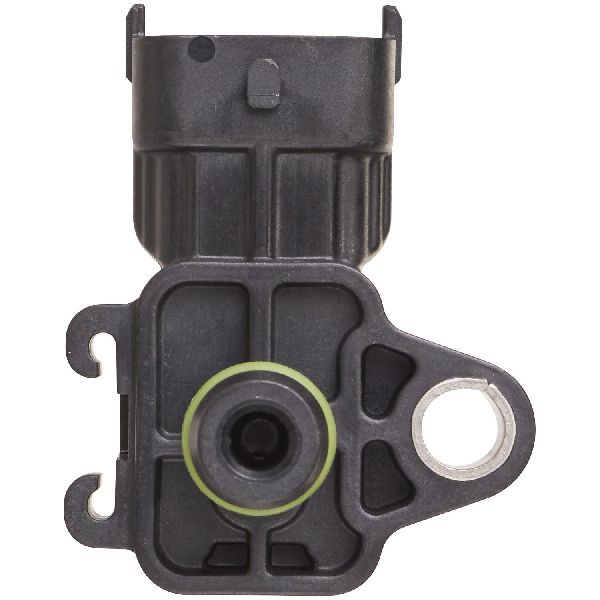
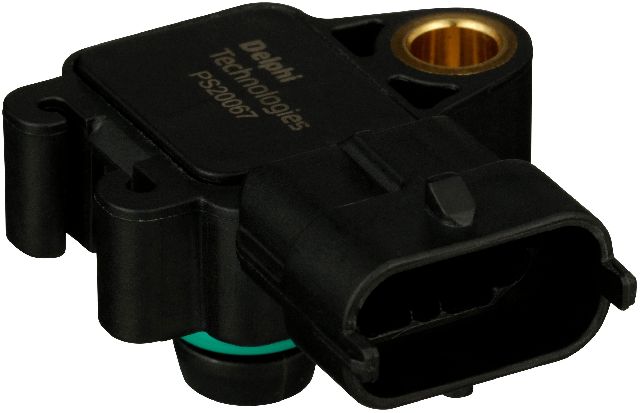
OEM price range: $50-$80 - Manifold Absolute Pressure (MAP) Sensor / Boost Sensor
(OEM #55493530)— This sensor contains the barometric pressure reading function. It may fail on its own or be fouled by moisture from the charge air cooler.
Trusted brands: ACDelco, Bosch, Delphi
OEM price range: $40-$60
Aftermarket price range: $25-$45
Related Codes That Often Appear With This One
- P0299 — Engine Underboost. A leaking or moisture-restricted/frozen charge air cooler can cause the turbo to not build the commanded boost pressure.
- P0300 — Engine Misfire Detected. Water being ingested from the charge air cooler during acceleration can cause random misfires.
- P2229 — Barometric Pressure Sensor 'A' Circuit High. This often appears with P2227 and can be caused by a vacuum leak or sensor issue.
Technical Service Bulletins (TSBs) & Recalls

- 21-NA-074: Malfunction Indicator Lamp Illuminated On Driver Information Center (DIC) with DTC P0300 and/or P0299/P2227 Set. This is the most current TSB, which details the CAC moisture issue and provides diagnostic steps like smoke testing and wiping the boost sensor.
- 18-NA-020: An earlier, but more detailed, version of the TSB also describing the charge air cooler moisture issue. It specifies vehicle build dates for mandatory CAC replacement and mentions the need for a new, wider lower baffle to accommodate the updated CAC part.
Platform-Specific Known Issues
- Charge Air Cooler Moisture/Icing: A known issue, documented in TSB #21NA074 and #18-NA-020, involves moisture collecting inside the charge air cooler. In humid conditions, this water can be ingested during acceleration, causing misfires (P0300). In cold weather, it can freeze, restricting airflow and causing underboost (P0299) and incorrect BARO readings (P2227). The official fix involves replacing the charge air cooler with an updated design and a new lower baffle.
Mechanic-Grade Diagnostic Values
- BARO/MAP Sensor Signal Voltage — expected: Approximately 4.5-4.8V at Key On, Engine Off (KOEO) at sea level, decreasing with altitude. Should not be below 0.5V or above 4.9V.. Failure: Voltage is stuck high (near 5V), low (near 0V), or does not correlate with MAP sensor reading at KOEO.
- BARO/MAP Sensor 5V Reference Voltage — expected: 4.8V to 5.2V at the sensor connector with key on.. Failure: Voltage significantly lower than 4.8V or absent, indicating a wiring or ECM issue.
- BARO/MAP Sensor Ground Circuit — expected: Less than 100mV on the ground pin.. Failure: High voltage on the ground pin indicates a poor ground connection, which can skew sensor readings.
Scan Tool Commands That Help
- GDS2 / Tech2: Freeze Frame / Failure Records — To view the engine operating conditions (load, RPM, temperature) at the exact moment the P2227 code was set. This can help determine if the fault occurred during high-load acceleration (water ingestion) or cold start (icing).
Wiring & Ground Locations
- G103 / G107 — Typically located on the rear or side of the cylinder head on the driver's side of the engine.. These are primary engine control grounds. A loose or corroded connection at these points can cause erratic voltage and faulty readings for multiple sensors, including the BARO/MAP sensor, leading to a P2227 code.
- BARO/MAP Sensor Connector — On the intake pipe just before the throttle body.. This connector is the direct interface for the sensor. Check for pin corrosion from moisture, backed-out pins, or harness damage. The typical pinout is Pin 1: Signal, Pin 2: Ground, Pin 3: 5V Reference.
Real Owner Repair Stories
- Reddit user on r/chevymalibu (2022 Chevrolet Malibu with 2.0L LTG engine) — Reduced Engine Power message, car would not accelerate quickly, codes P0299 and P2227 present.
❌ Tried (didn't work) Replacing the engine air filter.
✅ What actually fixed it The user was advised by the dealership that the issue was related to the turbocharger and barometric pressure sensor, consistent with the known CAC TSB issue. While the final repair wasn't posted by the original author, the symptoms and codes directly match the TSB where replacing the Charge Air Cooler is the definitive fix. - Chevy Equinox Forum user (2020 Chevrolet Equinox with 1.5L Turbo (similar CAC issue)) — Codes P0299 and P2227 with reduced engine power after a front-end collision.
❌ Tried (didn't work) Initial visual inspection.
✅ What actually fixed it Another user in the thread with the same P0299 code confirmed their ultimate fix was replacing a clogged catalytic converter, which can be a secondary, though less common, cause for these pressure-related codes if the CAC checks out.
"I Checked Everything" — The Actual Cause
- The core issue documented in TSB 18-NA-020 is not always a physical leak in the charge air cooler that a smoke test would find. The primary failure is the CAC's internal design allowing moisture from the PCV system and humid air to pool at the bottom. This collected water then either freezes in the cold, causing a restriction (P0299/P2227), or gets ingested by the engine during acceleration, causing a misfire (P0300). Therefore, a smoke test can pass, but the CAC is still the root cause. The definitive confirmation is physically checking for moisture inside the cooler or its piping.
OEM Part Supersession History
Varies by model year prior to 2019→84794901 (CAC) and 84277250 (Baffle)— The original charge air cooler design was susceptible to internal moisture accumulation. The updated part (84794901) has a revised internal design to prevent this. It is physically wider, which necessitates the replacement of the lower air baffle (84277250) for proper fitment.
Heads up: The new charge air cooler Part #84794901 WILL NOT fit with the original lower air baffle. The new baffle Part #84277250 must be used.
Model Year Variations Within This Range
- 2016-2018: Vehicles built on or before March 1, 2018, are explicitly called out in TSB 18-NA-020 as requiring CAC replacement if codes P0299/P2227 are present, even if no leak is found, due to the original problematic CAC design.
Used OEM Parts in Stock

New Aftermarket Parts Available


The information in this article is provided for general reference and educational purposes only. Vehicle specifications, procedures, and part compatibility can vary by production date, trim level, and region. Always consult your vehicle's factory service manual and verify part numbers before purchasing or performing repairs. Safety-critical components such as airbags, seat belts, and braking systems should be installed by a qualified professional.
- Buick ENVISION:
- 🛍️ Shop This Part
- What's Unique About the 2016-2020 Buick ENVISION
- Diagnostic Flowchart
- Symptoms You May Notice
- Most Likely Causes
- Rare But Worth Checking
- Diagnosis Steps
- Parts You'll Likely Need
- Related Codes That Often Appear With This One
- Technical Service Bulletins (TSBs) & Recalls
- Platform-Specific Known Issues
- Mechanic-Grade Diagnostic Values
- Scan Tool Commands That Help
- Wiring & Ground Locations
- Real Owner Repair Stories
- "I Checked Everything" — The Actual Cause
- OEM Part Supersession History
- Model Year Variations Within This Range
- 🎟️ Get 5% Off