

OBD-II Code P2222: NOx Sensor Heater Sense Circuit Range/Performance (Bank 2)
The Ultimate 2026 Guide: What P2222 Means, Why It Triggers, and How to Fix It
- Code P2222 indicates an electrical failure in the Bank 2 NOx sensor's internal heater, preventing it from reaching its required 1,000°F operating temperature.
- This fault occurs almost exclusively on 2010 and newer diesel vehicles equipped with Selective Catalytic Reduction (SCR) and DEF systems.
- Replacing the $400-$800 NOx sensor assembly fixes P2222 in 80% of cases, but always verify wiring and check for PCM software updates first.
- Driving with an active P2222 code for more than 1-2 months accelerates soot buildup, risking a $2,000+ Diesel Particulate Filter (DPF) replacement.
- A successful DIY repair requires a mid-range ($200+) bidirectional scan tool to perform the mandatory NOx sensor relearn procedure after installation.
What Does P2222 Mean?
The Powertrain Control Module (PCM) detected a problem with the heater circuit inside the Nitrogen Oxide (NOx) sensor on engine Bank 2. This internal heater brings the sensor to its required 1,000°F operating temperature quickly. When the heater fails, the sensor cannot measure exhaust gases, disabling the Selective Catalytic Reduction (SCR) and Diesel Particulate Filter (DPF) systems.
Technical definition: The official SAE/OBD-II definition is "NOx Sensor Heater Sense Circuit Range/Performance Bank 2". This means the PCM detected that the voltage, resistance, or warm-up time of the heater's dedicated monitoring circuit for the Bank 2 NOx sensor is outside the manufacturer's programmed parameters.
Can I Drive With P2222?
Yes, But With Caution. You can drive for a few days, but immediate attention is required. Ignoring this code triggers a speed-limited 'limp mode' or a strict mileage countdown to a no-start condition. Continued driving with a faulty sensor clogs the DPF and damages the SCR catalyst, turning a $500 sensor repair into a $3,000+ exhaust system overhaul.
Common Causes
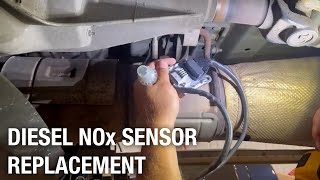
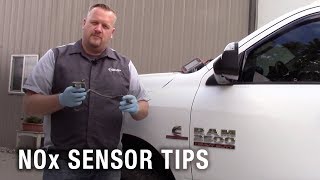
- Faulty NOx Sensor or Control Module (Very Common) — The internal heating element or the sensor's integrated 'smart' control module fails from thermal shock, vibration, and age. 🎬 Watch: Pro tips for handling and maintaining your NOx sensors. This is the root cause in 80% of cases, typically occurring between 80,000 and 120,000 miles.
- Damaged Wiring or Connectors (Common) — The sensor's wiring harness sits exposed to extreme exhaust heat and road debris. Wires melt, break, or connectors corrode, causing a complete loss of signal or power to the heater circuit.
- DEF System Malfunction or Contamination (Common) — A failing Diesel Exhaust Fluid (DEF) injector or the use of poor-quality DEF causes fluid to crystallize. This thermally shocks and contaminates the NOx sensor probe, destroying the sensitive internal heater.
- Soot or Oil Contamination on the Sensor (Less Common) — Excessive soot from leaking fuel injectors, or oil from a failing turbocharger, coats the sensor probe. This insulates the sensor, forcing the heater to overwork and eventually burn out.
- Exhaust System Leaks (Less Common) — Cracks or failed gaskets in the exhaust manifold upstream of the sensor allow outside oxygen into the exhaust stream. This alters the sensor's thermal environment, causing the PCM to flag a false heater performance issue.
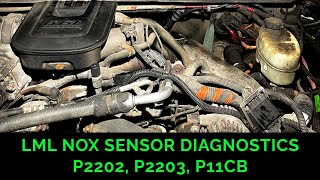
- Faulty Powertrain Control Module (PCM) (Rare) — The vehicle's main computer fails to process the sensor's signals correctly. This is extremely rare and is only considered after ruling out the sensor, wiring, and applying all OEM software updates. 🎬 Watch: Professional diagnostic tips for troubleshooting diesel NOx sensors.
Symptoms
- Check Engine Light and DEF Warning — The Check Engine Light illuminates immediately. On most diesels, this is accompanied by an AdBlue/DEF warning message and a mileage countdown to a forced no-start condition.
- Reduced Engine Performance (Limp Mode) — The PCM restricts engine power, turbo boost, and vehicle speed to prevent catastrophic damage to the emissions system.
- Decreased Fuel Economy — Fuel efficiency drops by 10-15% as the PCM defaults to a richer, less efficient fuel strategy to protect engine components.
- Black Smoke from Exhaust — During heavy acceleration, black soot exits the tailpipe because the PCM cannot accurately manage the air/fuel mixture without NOx feedback.
- Failed Emissions Test (also visible on scanner) — A malfunctioning NOx sensor heater disables the emissions control monitors, guaranteeing an automatic failure on any state OBD-II inspection.
Diagnostic Flowchart
Tap your situation to follow the diagnostic path that matches what you're seeing on this code.
Common Fixes & Costs
- Replace the Bank 2 NOx Sensor
— Parts: $350-$800, Labor: $150-$300, ~1.5 hr book time
(Intermediate)
Ford F-250/F-350 (6.7L Powerstroke): OEM Motorcraft: HC3Z-5L248-A (Upstream), PC3Z-5E145-A (Rear) (Alt: Dorman 904-6018, Standard Motor Products NOX010)
GMC/Chevrolet 2500/3500 (6.6L L5P Duramax): OEM ACDelco: 12695882, 12718742 (Alt: Bosch, Denso)
Ram 2500/3500 (6.7L Cummins): OEM Mopar: 68210084AA (Upstream), 68227486AA (Downstream) (Alt: Dorman 904-6029, Bostech NX0317304) - Perform PCM/ECM Software Update — Parts: $0, Labor: $100-$250, ~1.0 hr book time (Professional)
- Repair Damaged Wiring or Connector — Parts: $20-$100, Labor: $150-$400, ~2.5 hr book time (Advanced)
- Repair Exhaust Leak — Parts: $20-$150, Labor: $200-$500, ~3.0 hr book time (Intermediate)
- Professional Diagnosis — Parts: $0, Labor: $150-$300, ~1.5 hr book time (Professional)
DIY vs Professional
- Replace the Bank 2 NOx Sensor — Beginner: No.
Tools: Jack/stands, penetrating oil, 22mm (7/8") NOx/O2 sensor socket, torque wrench, bidirectional scan tool. - Repair Damaged Wiring or Connector — Beginner: No.
Tools: Multimeter, wiring diagrams, wire strippers, soldering iron, heat shrink tubing. - Perform PCM/ECM Software Update — Beginner: No.
Tools: Manufacturer-specific scan tool (e.g., Ford IDS, GM MDI) and OEM subscription.
Used vs. New Parts: Buying Guide
When a used part is worth it: Never. NOx sensors have a finite lifespan and a high failure rate. Buying a used sensor guarantees you will repeat this repair shortly.
Donor quality checklist:
- Verify the exact OEM part number matches; superseded numbers are often incompatible.
- Avoid cheap, no-name Amazon/eBay sensors; they fail within weeks.
Decision logic:
- If Vehicle has under 100,000 miles → Buy a new OEM sensor from a dealership. The reliability justifies the premium price.
- If Vehicle has over 150,000 miles and budget is tight → Buy a premium aftermarket sensor (Bosch, Denso, Standard Motor Products) with a 1-year warranty.
Warranty tradeoff: OEM parts carry a 1-2 year warranty. Premium aftermarket parts offer 1 year. Used parts offer 30 days at best.
Worst-case if a used part fails: $500+ if a cheap aftermarket part fails, requiring repeat labor and a second replacement part.
What Happens If You Wait — Timeline
- 0-1 month: Code P2222 is stored, Check Engine Light is on. The vehicle exhibits a slight drop in fuel economy but drives normally. Emissions are out of compliance. (MPG impact: 5-10%% · Added cost: $50 - $100 in wasted fuel)
- 1-4 months: The faulty sensor prevents the DPF from regenerating. Soot accumulates rapidly. Fuel economy worsens, and the DEF/AdBlue light illuminates. (MPG impact: 10-15%% · Added cost: $100 - $400 in wasted fuel)
- 4-8 months: The DPF becomes severely clogged, causing high exhaust backpressure. The vehicle enters 'limp mode' with severely reduced power. The DPF requires professional off-vehicle cleaning. (MPG impact: 15-25%% · Added cost: $500 - $2,500 for DPF cleaning or replacement)
- 8+ months: Catastrophic failure. The DPF is completely blocked, and extreme heat damages the SCR catalyst. The vehicle is in a permanent no-start condition. (MPG impact: >25%% · Added cost: $4,000 - $8,000+ for complete aftertreatment system overhaul)
Cost of Not Fixing It
- 0-1 month: Reduced fuel economy (10-15% drop), illuminated Check Engine Light, and automatic failure on emissions tests. (Added cost: $50-$150 in wasted fuel)
- 1-6 months: Incorrect NOx readings prevent DPF regeneration. The Diesel Particulate Filter clogs with soot, and the SCR catalyst becomes contaminated. (Added cost: $2,000-$5,000 for DPF/SCR system replacement)
- 6+ months: Catastrophic aftertreatment failure. The vehicle enters a permanent low-power limp mode or a hard no-start condition. Extreme exhaust backpressure damages the turbocharger. (Added cost: $4,000-$8,000+ for complete exhaust and turbo overhaul)
Diagnosis Steps
- Read Codes and Review Freeze Frame Data
Use an OBD-II scanner to confirm P2222 is active. Check for related DEF or DPF codes. Analyze the freeze-frame data to pinpoint the exact engine temperature and load when the heater circuit failed.
Tools: OBD-II Scanner (Beginner) - Check for TSBs and Software Updates
Search for manufacturer Technical Service Bulletins (TSBs). Many NOx sensor codes on GM, Ford, and Ram trucks are caused by overly sensitive PCM logic and are permanently fixed with a dealer software reflash.
Tools: TSB Database Access, OEM Scan Tool (Professional) - Visually Inspect the Sensor and Wiring
Locate the Bank 2 NOx sensor. Inspect the sensor body, pigtail, and main harness for melted insulation, frayed wires, or green corrosion inside the connector pins. Look for black soot around the sensor bung indicating an exhaust leak.
Tools: Flashlight, Inspection Mirror, Safety Glasses (Beginner) - Test the Heater Circuit Power and Ground
Disconnect the sensor. Using a multimeter and wiring diagram, check for battery voltage (12V-14.5V) at the heater power supply pin with the ignition ON. Verify continuity to ground (less than 1 Ohm) on the ground pin. Zero voltage indicates a blown fuse or broken wire, not a bad sensor.
Tools: Multimeter, Vehicle-Specific Wiring Diagram (Intermediate) - Check Heater Circuit Resistance
With the sensor disconnected and at room temperature, measure the resistance (Ohms) across the heater circuit pins on the sensor itself. A reading of 'OL' (open circuit) or infinite resistance confirms the internal heater is burned out and the sensor requires replacement.
Tools: Multimeter, Service Manual (Intermediate) - PRO TIP: Check the Sense Circuit Voltage
Back-probe the heater sense circuit wire at the connector. With the key ON, verify the manufacturer-specified reference voltage or Pulse Width Modulated (PWM) signal. A static 0V or 12V reading indicates a short in the harness.
Tools: Multimeter, Wiring Diagram, Back-Probes (Advanced) - PRO TIP: Analyze Live Sensor Data
Monitor live data for the Bank 2 NOx sensor's heater status and temperature. Start a cold engine. The heater status must change to 'On' immediately, and the sensor must show plausible NOx readings (under 20 ppm in ambient air) within 3 minutes. Stuck readings confirm a performance failure.
Tools: Advanced Bidirectional Scan Tool (Advanced) - Clear Codes and Perform Relearn/Initialization
After replacing the sensor, clear the P2222 code. You must perform the manufacturer-specific 'NOx Sensor Adaptation' or 'SCR System Relearn' using a bidirectional scan tool. Skipping this step causes the new sensor to fail instantly.
Tools: Bidirectional Scan Tool (Professional)
When This Code Triggers (Freeze-Frame Conditions)
- Engine Coolant Temp: 180-205°F (Engine at full operating temperature)
- Engine RPM: 1500-2500 RPM (Steady-state cruise)
- Engine Load: 30-60% (Constant load, not accelerating or decelerating)
- Vehicle Speed: 45-65 mph (Highway or steady arterial driving)
Related Codes
- P2201 — Indicates a general performance issue with the NOx sensor on Bank 1. Seeing both P2222 and P2201 suggests a systemic issue like contaminated DEF or a shared wiring harness fault.
- P2223 — Indicates a 'Low' input in the Bank 2 NOx sensor heater sense circuit. P2222 is a general performance fault, while P2223 points specifically to a short to ground in the wiring.
- P20EE — 'SCR NOx Catalyst Efficiency Below Threshold'. A faulty NOx sensor (P2222) provides incorrect readings, triggering this efficiency code. Always fix the sensor before replacing the expensive SCR catalyst.
Climate & Environmental Factors
- Cold Climates and Short Trips: Short drives in freezing weather prevent the exhaust from reaching the 302°F (150°C) required to decompose DEF. The fluid crystallizes on the sensor tip, insulating it and destroying the heater circuit.
- Rapid Temperature Changes (Thermal Shock): Driving through deep puddles or snow splashes freezing water onto a 1,000°F NOx sensor. This rapid cooling cracks the fragile internal ceramic element, causing instant heater failure.
- High Humidity and Road Salt: Saltwater intrusion corrodes the NOx sensor's electrical connector pins. This creates unwanted resistance that disrupts the sensitive heater monitoring circuit.
How to Talk to a Mechanic About This Code
Say this: "I have a P2222 code for the NOx sensor heater on Bank 2. Please check for TSBs, test the sensor's heater circuit for power, ground, and resistance, and inspect the wiring before recommending a sensor replacement."
This directs the technician to perform a thorough electrical diagnosis, preventing a quick, expensive, and potentially incorrect parts swap.
Avoid saying:
- 'My check engine light is on.' (Too vague, invites a broad, expensive diagnostic process.)
- 'Just replace the NOx sensor.' (Tells them to skip diagnosing cheaper wiring or software issues.)
- 'I think it's an emissions thing, just fix it.' (Shows a lack of knowledge, making you vulnerable to upselling.)
Questions to ask before authorizing the repair:
- Did you find a specific failure in the sensor's heater circuit, like an open or short?
- Did you check for any available software updates for the ECM?
- Does my vehicle require a 'NOx sensor adaptation' procedure afterward, and do you have the tool to do it?
Where to Take It: Dealer vs Independent vs Chain
- Dealer:
Recommended if you suspect a software issue, own a European brand, or are covered by an emissions warranty.
Best for: Vehicles under emissions warranty., Complex cases on German brands (Mercedes, BMW, VW)., Verifying and performing manufacturer-specific software updates.
Downsides: Highest labor rates, typically $180-$250/hour., Defaults to replacing expensive parts rather than performing detailed wiring repairs. (Typical cost: +40% vs. baseline) - Independent Shop:
Best overall fit for out-of-warranty vehicles, provided you find a reputable diesel specialist.
Best for: Out-of-warranty domestic trucks (Ford, Ram, GM)., Shops that specialize exclusively in diesel and emissions systems., Cost-effective diagnosis and wiring repairs.
Downsides: Must verify they own a bidirectional scan tool capable of performing the NOx relearn., May lack access to the latest dealer-only software flashes. (Typical cost: +0% vs. baseline) - Chain Shop:
AVOID. The complexity of the NOx sensor system and the need for specific software relearns make it a poor fit for chain shops.
Best for: Oil changes and tire rotations.
Downsides: Technicians lack specialized training for modern diesel emissions systems., High pressure to upsell and misdiagnose complex issues., Unlikely to have the tools for required post-repair relearn procedures. (Typical cost: -10% vs. baseline)
When to Walk Away From the Repair
If the total estimated repair cost for the P2222 fault and related issues (like a clogged DPF) exceeds 40% of your vehicle's current market value, consider selling the vehicle as-is.
- Car worth $18000, fix is $800: Fix it. The repair cost is well below the threshold and is a necessary part of maintaining a modern diesel.
- Car worth $9000, fix is $4500: Walk away. The repair cost includes a new NOx sensor and a replacement DPF, which is half the truck's value.
- Car worth $5000, fix is $2200: Borderline. The repair is almost 50% of the vehicle's value. Get a second opinion to confirm no cheaper wiring fix is possible.
What Scan Tool You Need for This Code
Minimum: A bidirectional scanner that reads manufacturer-specific diesel codes, views live data for NOx sensor heater status, and performs a 'NOx sensor relearn' after the repair.
A $20 code reader only shows the P2222 code. It cannot perform the critical post-repair reset procedure required by most manufacturers. Skipping the relearn causes the new sensor to fail immediately.
Budget: BlueDriver Pro (~$100) — Reads the P2222 code and displays live data for initial diagnosis. However, it lacks the bidirectional capability to perform the mandatory NOx sensor relearn procedure.
Mid-range: Foxwell NT510 Elite (~$200) — The entry point for true DIY repair. With vehicle-specific software, it reads codes, views live data, and performs the mandatory 'NOx Sensor Reset' adaptation.
Professional: Autel MaxiCOM MK808BT (~$500) — Offers full bidirectional control. Reliably performs NOx sensor resets, adaptations, and SCR system checks across a wide range of manufacturers, including complex German brands.
Rent vs buy: For a one-time P2222 fix, paying $150 for professional diagnosis is more cost-effective than buying a mid-range scanner. Buy the $200 scanner only if you plan to perform future advanced maintenance.
How to Clear the Code After You Fix It
- Use a bidirectional scan tool to clear active and pending codes.
- Execute the manufacturer-specific 'NOx Sensor Adaptation' or 'SCR Reset' function.
- Complete a full drive cycle to allow readiness monitors to run.
Drive cycle (~30 minutes): Cold start and idle for 5 minutes. Drive for 20 minutes at mixed speeds, including 10 minutes of steady highway driving at 55-65 mph. Perform three long coast-downs from 60 mph to 20 mph without touching the brake pedal. Let the vehicle cool completely.
Readiness monitors affected: NOx Aftertreatment, Catalyst Monitor, Exhaust Gas Sensor Monitor
Before emissions retest: drive at least 100 miles to fully set monitors.
Watch out for:
- Clearing the code without performing the scan-tool adaptation guarantees the code returns immediately.
- Disconnecting the battery does not clear Permanent DTCs (PDTCs) on 2010+ vehicles; the ECU must clear them after a successful self-test.
- Failing to perform the coast-down portion of the drive cycle leaves emissions monitors in a 'Not Ready' state.
Will This Fail Emissions / State Inspection?
Yes — this code typically fails an OBD-II emissions inspection.
- California: An active P2222 is an automatic failure. CARB requires all readiness monitors to be set. Permanent DTCs must be cleared by the vehicle's own diagnostic cycle before passing.
- New York: The NYS DMV emissions inspection includes an OBD-II scan; an active P2222 code results in an automatic failure.
- Texas: In emissions-testing counties (Harris, Dallas, Tarrant, Travis), an illuminated Check Engine Light from P2222 is an automatic failure.
Most Commonly Affected Vehicles
- Ford F-250 / F-350 Super Duty (6.7L Powerstroke) (2011-2022) — Highly susceptible. Ford issued multiple PCM software updates and extended warranty programs (21N02/21N05) specifically for NOx sensor failures.
- GMC / Chevrolet Sierra / Silverado 2500/3500 HD (6.6L L5P) (2017-2023) — GM released multiple service bulletins (e.g., TSB 20-NA-195) and recalls addressing erroneous NOx codes caused by ECM software logic.
- Ram 2500 / 3500 (6.7L Cummins) (2013-2020) — Frequent failures on both upstream and downstream sensors. Often requires a Cummins INSITE software reset after replacement.
- Mercedes-Benz Sprinter, E-Class, GL/GLS-Class (BlueTEC) (2010-2018) — Notorious for NOx sensor failures that trigger strict mileage countdowns to a no-start condition. Sensors must often be replaced in pairs.
- Volkswagen / Audi Jetta, Golf, Passat, Q7 (TDI) (2009-2016) — NOx sensors are a primary failure point in the TDI emissions system, frequently cascading into DPF and SCR catalyst codes.
- Mack / Volvo Trucks Pinnacle, Anthem, VNL Series (2013-2024) — Heavy-duty 'smart' sensors communicate over a J1939 data link. They cannot be swapped between inlet and outlet positions and require Premium Tech Tool software for diagnosis.
Manufacturer-Specific Notes
- Mercedes-Benz: On older models (e.g., 2002 CLK-Class), P2222 is completely unrelated to emissions. It refers to an implausible signal from the transmission oil temperature sensor. Always verify the code definition for your specific chassis.
- General Motors (Chevrolet/GMC): Recall N212351211 addressed an ECM issue on 2022 Duramax models that falsely triggered NOx sensor faults. The fix is a dealer software update, which must be checked before replacing hardware.
- Toyota / Honda / Hyundai (Gasoline Engines): P2222 is extremely rare on gasoline vehicles. It is almost always a misreading of code P0222 (Throttle Position Sensor Circuit Low). Double-check the code with a high-quality scanner.
- Heavy-Duty Trucks (Mack/Volvo/Cummins): NOx sensors are smart modules that communicate over a J1939 network. A failure requires diagnosis with proprietary software, and sensors are strictly position-dependent (inlet vs. outlet).
Real Owner Stories
2013 VW Passat TDI at 110,000 miles - The Wiring Fix
Check engine light illuminated with NOx sensor codes. No drivability symptoms were present.
What they tried:
- Tested the power supply wire to the sensor's connector with a multimeter.
- Found the voltage jumping erratically instead of holding a steady 12V.
Outcome: The issue was a loose connection at the main harness plug. Cleaning the pins and securing the connector stabilized the voltage. The codes cleared and did not return.
Lesson: Never assume the expensive sensor failed. A 5-minute voltage test at the connector identifies cheap wiring problems and prevents a $500 parts cannon mistake.
2015 Mercedes Sprinter 2500 at 83,000 miles - The Countdown
Engine light appeared with a NOx code, followed by a 477-mile countdown to a no-start condition.
What they tried:
- The dealer diagnosed a faulty NOx sensor and replaced it for $900.
- Two weeks later, the light returned, and the dealer stated the second sensor also failed.
Outcome: After proving a full service history, the dealer replaced the second sensor under goodwill. The countdown reset successfully.
Lesson: On Mercedes BlueTEC models, NOx sensors often fail in pairs. Always ask the dealer about replacing both simultaneously and inquire about goodwill warranty extensions.
2014 Ram 2500 Cummins at 130,000 miles - The Software Glitch
P2222 appeared immediately after a routine dealer software update. The truck ran perfectly.
What they tried:
- Attempted to clear the code with a scan tool, but it returned instantly.
- A technician used Cummins INSITE software to check the ECM configuration.
Outcome: The software update wiped the multiplexing configuration for the network, causing a communication error the ECM interpreted as P2222. Restoring the ECM template cleared the code.
Lesson: If a fault code appears immediately after a software flash, the root cause is a programming error, not a physical part failure. Return to the shop to verify the ECM configuration.
How to Prevent This Code From Triggering
- Use high-quality, ISO 22241 certified Diesel Exhaust Fluid (DEF) (Every fill-up) — Prevents crystallization in the tank and injector nozzle. Low-quality DEF forms crystals that contaminate and destroy the NOx sensor tip.
- Perform regular long-distance drives at highway speeds (At least once every 2 weeks) — Ensures the exhaust system reaches temperatures high enough to burn off moisture and soot accumulation on the sensor probe.
- Avoid prolonged idling (Daily habit) — Extended idling lowers exhaust temperatures, leading to incomplete combustion and massive soot buildup that fouls the NOx sensor's delicate ceramic element.
Frequently Asked Questions
What is 'Bank 2'?
Bank 2 refers to the side of the engine that does not contain cylinder #1. On a V-shaped engine, it's the opposite bank from cylinder #1. Inline engines (like a Cummins I6) only have Bank 1, making P2222 impossible on those specific layouts.
What is the difference between the upstream and downstream NOx sensor?
A diesel exhaust system typically uses two NOx sensors per bank. The 'upstream' (Sensor 1) sits before the SCR catalyst, and the 'downstream' (Sensor 2) sits after. P2222 applies to either sensor, depending on the manufacturer's Bank 2 designation.
Will P2222 clear itself?
No. P2222 indicates a hard electrical failure in the heater circuit. The PCM will not clear the code until the underlying issue is repaired and a specific system relearn procedure is completed with a scan tool.
Can a DPF regeneration fix a P2222 code?
No. A DPF regeneration burns soot out of the filter, but P2222 is an electrical fault with the NOx sensor's internal heater. A regeneration cannot fix an electrical circuit, and a faulty NOx sensor actually prevents the regeneration process from starting.
Why is the NOx sensor so expensive?
NOx sensors are highly complex components containing multiple sensing chambers, integrated control modules, and precious metals like platinum. They are engineered to survive extreme exhaust temperatures while measuring specific gases in parts-per-million, driving up manufacturing costs.
Can I clean a NOx sensor to fix P2222?
No. While cleaning external soot helps with some performance issues, P2222 specifically points to an electrical fault within the internal heater circuit. Cleaning the exterior cannot repair a burned-out internal heating element or failed control electronics.
What are the most common mistakes when diagnosing P2222?
The costliest mistake is replacing the $500 NOx sensor without testing the wiring first. Always verify power, ground, and resistance on the heater circuit, and check for OEM software updates. Finally, failing to perform the mandatory scan-tool relearn procedure after replacement guarantees the code will return.
Key Takeaways
- Code P2222 indicates an electrical failure in the Bank 2 NOx sensor's internal heater, preventing it from reaching its required 1,000°F operating temperature.
- This fault occurs almost exclusively on 2010 and newer diesel vehicles equipped with Selective Catalytic Reduction (SCR) and DEF systems.
- Replacing the $400-$800 NOx sensor assembly fixes P2222 in 80% of cases, but always verify wiring and check for PCM software updates first.
- Driving with an active P2222 code for more than 1-2 months accelerates soot buildup, risking a $2,000+ Diesel Particulate Filter (DPF) replacement.
- A successful DIY repair requires a mid-range ($200+) bidirectional scan tool to perform the mandatory NOx sensor relearn procedure after installation.
Helpful Videos

The information in this article is provided for general reference and educational purposes only. Vehicle specifications, procedures, and part compatibility can vary by production date, trim level, and region. Always consult your vehicle's factory service manual and verify part numbers before purchasing or performing repairs. Safety-critical components such as airbags, seat belts, and braking systems should be installed by a qualified professional.
- 🎬 Helpful Videos
- What Does P2222 Mean?
- Can I Drive With P2222?
- Common Causes
- Symptoms
- Diagnostic Flowchart
- Common Fixes & Costs
- DIY vs Professional
- Used vs. New Parts: Buying Guide
- What Happens If You Wait — Timeline
- Cost of Not Fixing It
- Diagnosis Steps
- When This Code Triggers (Freeze-Frame Conditions)
- Related Codes
- Climate & Environmental Factors
- How to Talk to a Mechanic About This Code
- Where to Take It: Dealer vs Independent vs Chain
- When to Walk Away From the Repair
- What Scan Tool You Need for This Code
- How to Clear the Code After You Fix It
- Will This Fail Emissions / State Inspection?
- Most Commonly Affected Vehicles
- Manufacturer-Specific Notes
- Real Owner Stories
- 2013 VW Passat TDI at 110,000 miles - The Wiring Fix
- 2015 Mercedes Sprinter 2500 at 83,000 miles - The Countdown
- 2014 Ram 2500 Cummins at 130,000 miles - The Software Glitch
- How to Prevent This Code From Triggering
- Frequently Asked Questions
- What is 'Bank 2'?
- What is the difference between the upstream and downstream NOx sensor?
- Will P2222 clear itself?
- Can a DPF regeneration fix a P2222 code?
- Why is the NOx sensor so expensive?
- Can I clean a NOx sensor to fix P2222?
- What are the most common mistakes when diagnosing P2222?
- Key Takeaways
- 🎟️ Get 5% Off