

P2209 on 2017-2021 Ford F-350 SD 6.7L: NOx Sensor Heater Circuit Causes and Fixes
On a 2017-2021 F-350 with the 6.7L Power Stroke, code P2209 is most often caused by water intrusion into the upstream NOx sensor's electrical connector, a known issue cited in multiple Ford Technical Service Bulletins (TSBs). This connector is located on the passenger-side frame rail. Before replacing the expensive sensor, inspect and dry the connector and apply dielectric grease. On 2020-2021 models, a PCM software update may also be required per TSB 24-2136, which also involves replacing the s
- For a P2209 code on a 6.7L Power Stroke, always inspect the upstream NOx sensor connector for water damage before buying any parts.
- If you own a 2020-2021 model, be aware that a PCM software update (TSB 24-2136) may be the required fix.
- This code is often paired with U029D, which strongly points towards a connector or wiring issue.
- Do not immediately assume the expensive NOx sensor has failed. The root cause is frequently a simpler, cheaper fix related to wiring or software.
What's Unique About the 2017-2021 Ford F-350 SD

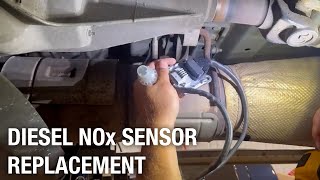
The 6.7L Power Stroke engine in this generation of Super Duty trucks is well-documented by Ford to have issues with water getting into the NOx sensor connectors, triggering code P2209. The NOx sensor module and its main electrical connection are mounted to the passenger-side frame rail, making them vulnerable to road spray from the front tire. 🎬 Watch: How to diagnose and fix common Powerstroke NOx wiring faults. Multiple Technical Service Bulletins have been released specifically addressing this water intrusion problem, making it a much more common cause on this platform than on other vehicles where the sensor itself might be the immediate suspect. For later models in this range (2020-2022), PCM software glitches can also be the root cause, requiring a dealer reflash and sensor replacement as a pair per TSB 24-2136.
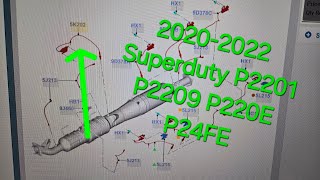
🎬 See this walkthrough for fixing P2209 codes on 2020-2022 models.Diagnostic Flowchart

Tap your situation to follow the diagnostic path that matches what you're seeing on this vehicle.
Symptoms You May Notice
- Check Engine Light (Malfunction Indicator Lamp) is on
- Message on the dashboard regarding the exhaust or emission system, such as a "DEF Fault"
- Vehicle may enter a reduced engine power mode ('limp mode')
- Failed emissions test.
- Noticeable decrease in fuel economy.
- Replacing the NOx sensor without first inspecting the electrical connector for water intrusion. This is the most common mistake and leads to the new sensor failing to fix the code.
- Replacing the NOx sensor on a 2020-2021 model without checking for the required PCM software update per TSB 24-2136.
- Assuming the sensor is bad when the issue is a blown fuse (F18) due to a chafed harness.
Most Likely Causes

- Water Intrusion in NOx Sensor Connector 🔴 High Probability The location of the NOx sensor module connector on the passenger-side frame rail makes it highly susceptible to moisture and road spray. This is a widely known issue, as documented by Ford in TSBs 17-0022, 18-2100, 18-2365, and 20-2067. Forum users on ford-trucks.com and powerstroke.org frequently report this as the primary cause.
How to confirm: Visually inspect the Bank 1 Sensor 1 (upstream) NOx sensor connector, which is attached to a module on the passenger-side frame rail. Look for any signs of moisture, white or green corrosion on the pins, or a damaged seal.
Typical fix: Disconnect the battery. Thoroughly clean the connector pins and harness plug with an electrical contact cleaner and a small brush or pick. Dry completely, apply a liberal amount of dielectric grease to the seal and around the pins to prevent future intrusion, and reconnect. If corrosion is severe, the connector pigtail or the entire harness (part number varies by VIN) may need replacement.
Est. part cost: $5-$20 for cleaner and grease; $30-$100 for a new pigtail; $200+ for a new harness section. - Outdated Powertrain Control Module (PCM) Software 🟡 Medium Probability Specifically for 2020-2022 models built on or before Oct 31, 2022, Ford issued TSB 24-2136 indicating that software glitches can incorrectly set NOx sensor codes, including P2209. This TSB is the official remedy for these model years.
How to confirm: A Ford dealer or a shop with a Ford-specific scan tool (like FDRS) can check if TSB 24-2136 is applicable and has been performed on your vehicle's VIN.
Typical fix: The dealer will reprogram the PCM and Transmission Control Module (TCM) to the latest calibration. The TSB also mandates replacing the NOx sensor (Bank 1 Sensor 1) at the same time with part number LC3Z-5L248-A. After the repair, a DPF regeneration is also performed.
Est. part cost: $0 if covered under emissions warranty (typically 5yr/100k miles on diesels); otherwise, dealer labor rates apply for programming (~1-2 hours) plus the cost of the sensor. - Failed NOx Sensor (Bank 1, Sensor 1) 🟡 Medium Probability The sensor's internal heater element can fail from thermal stress and exhaust contamination. This is often the case if water intrusion and software issues have been ruled out. In many TSBs, Ford recommends replacing the sensor and harness together, as it can be difficult to determine which component is the ultimate cause.
How to confirm: After confirming the connector is clean and the PCM software is up-to-date, the sensor itself is the likely culprit. A scan tool can be used to monitor the sensor's heater data, but replacement is often the final diagnostic step. A resistance test across the heater terminals should yield a value between 1.5-3 Ω.
Typical fix: Replace the Bank 1, Sensor 1 (upstream) NOx sensor and its integrated module. The sensor threads into the exhaust pipe, and the module is bolted to the frame rail.
Est. part cost: $250-$500. - Chafed Wiring Harness ⚪ Low Probability On some trucks, including 2023 models under SSM 51750, the wiring harness (part 14406) can rub against the EGR cooler on the right side of the engine, causing a short circuit. This can blow the associated fuse for the NOx sensors.
How to confirm: Visually inspect the wiring harness leading from the NOx sensor, paying close attention to where it runs near the EGR cooler. Check fuse F18 (20A) in the engine bay fuse box (Battery Junction Box) for an open condition.
Typical fix: Repair the damaged wires using solder and heat shrink, and re-route or secure the harness away from the point of contact with abrasion-resistant tape or loom. Replace the blown fuse.
Est. part cost: $5-$25 for wiring repair supplies.
Diagnosis Steps
- Read the Diagnostic Trouble Codes (DTCs) with an OBD-II scanner. Note if P2209 appears with U029D or P2201.
- Locate the upstream NOx sensor (Bank 1, Sensor 1) on the passenger side exhaust, before the DPF/SCR assembly. Follow its wire to the module connector on the outside of the passenger-side frame rail.
- Carefully disconnect the electrical connector. Inspect both the sensor side and the harness side for any signs of moisture, corrosion (green or white powder), or bent pins.
- If moisture or corrosion is found, clean the terminals with electrical contact cleaner and a small brush. Dry thoroughly with compressed air and apply a thin layer of dielectric grease to the connector seal before reconnecting. Clear codes and re-test.
- If the connector is clean, check fuse F18 (20A) in the under-hood fuse box (BJB). If blown, inspect the 14406 harness for chafing near the EGR cooler.
- If the fuse is good and the connector is clean, check for applicable TSBs with a Ford dealer, especially TSB 24-2136 for 2020-2022 models.
- If the connector, wiring, and software are all confirmed to be good, the NOx sensor assembly is the most likely cause of the fault. Proceed with replacement.
- After any repair, clear the DTCs with the scanner and perform a drive cycle, which may include a forced DPF regeneration, to ensure the code does not return.
Parts You'll Likely Need

- NOx Sensor (Bank 1, Sensor 1 - Upstream)
(OEM #HC3Z-5L248-A / LC3Z-5L248-A)— This is the sensor whose heater circuit is reporting a fault. The part number may vary by build date. TSB 18-2365 for 2017-2019 models specifies HC3Z-5L248-A. TSB 24-2136 for 2020-2022 models specifies LC3Z-5L248-A. Always verify the correct part for your VIN.
Trusted brands: Motorcraft, Bosch, Dorman, NGK/NTK
OEM price range: $400-$550.
Aftermarket price range: $150-$425. - Dielectric Grease
(OEM #XG-12 (Motorcraft))— Essential for preventing future water intrusion into the electrical connector after cleaning, which is the most common cause of this code.
Trusted brands: Permatex, CRC
OEM price range: $10-$20
Aftermarket price range: $5-$10 - NOx Sensor Connector Pigtail — If the connector pins are too corroded to be cleaned, the pigtail on the main harness side must be replaced. Finding the exact OEM pigtail can be difficult; aftermarket versions like Alliant Power AP0066 may be compatible for splicing.
Trusted brands: Alliant Power, Dorman
Related Codes That Often Appear With This One
- U029D — Stands for "Lost Communication With NOx Sensor 'A'". This code is frequently seen with P2209 because the same water intrusion that damages the heater sense circuit can also disrupt the communication lines within the same connector. Multiple TSBs, including 17-0022, 18-2100 and 18-2365, list these two codes together as the primary symptom of water intrusion.
- P2201 — Stands for "NOx Sensor Circuit Range/Performance Bank 1". This is a more general performance code for the same sensor. TSB 24-2136 lists it as one of the codes that can be caused by the PCM software issue, alongside P2209.
Technical Service Bulletins (TSBs) & Recalls
- TSB 24-2136: Addresses MIL with DTCs P2201, P2209, P220E, P24FE due to PCM software and NOx sensor 11 on 2020-2022 models. Requires PCM/TCM reprogram and sensor replacement.
- TSB 20-2067: Cites water intrusion into NOx connectors as the cause for DTCs U029D, U029E, P22A7, and/or P2209 on models built on or before 10-Jun-2020.
- TSB 18-2365: Supersedes 18-2100. Addresses MIL with DTCs U029D and/or P2209 on 2017-2019 models due to water intrusion. Recommends replacing NOx sensor module and wiring harness.
- TSB 18-2100: Supersedes 17-0022. Addresses MIL with DTCs U029D and/or P2209 on 2017 models due to water intrusion.
- TSB 17-0022: For 2017 models built on or before 19-Dec-2016 with DTCs U029D and/or P2209, citing water intrusion.
- SSM 46268: Early notification for 2017 models about water intrusion through the 14406 harness into the NOx sensor module 11 connector.
- SSM 51750: For 2023 models, notes that a chafed 14406 harness near the EGR cooler can cause P2209 and other codes.
Platform-Specific Known Issues
- A series of Ford Technical Service Bulletins (TSB 17-0022, TSB 18-2100, TSB 18-2365, TSB 20-2067) consistently point to water intrusion in the NOx sensor connectors as the primary cause for P2209 on 2017-2020 models.
- TSB 24-2136 identifies a PCM software issue on 2020-2022 models that requires reprogramming and sensor replacement to resolve P2209 and related codes.
- SSM 51750 notes that on some 2023 models, the 14406 harness can chafe on the EGR cooler, blowing fuse F18 and causing P2209 among other codes.
Mechanic-Grade Diagnostic Values
- NOx sensor heater element resistance — expected: 1.5 - 3.0 Ω. Failure: A reading of infinity (open circuit) or near zero (short circuit) indicates a failed heater element.
- NOx sensor module connector voltage (KOEO) — expected: Approximately 12V on the power supply pin.. Failure: Significantly lower voltage (e.g., 7.5V as seen in one case) under KOEO conditions points to high resistance in the wiring harness, even if the connection appears clean.
- NOx sensor module ground circuit resistance — expected: < 1.0 Ω to a clean frame ground.. Failure: Higher resistance indicates a poor ground connection at G400 or elsewhere in the harness.
- CAN Bus resistance at NOx module connector (Ignition Off) — expected: ~60 Ω between CAN-H and CAN-L pins.. Failure: A reading of ~120 Ω indicates a break in one of the CAN wires or a missing terminating resistor. A reading near 0 Ω indicates a short between the CAN lines.
Hidden / Shadow Codes Worth Checking
- P2209 Fault Trigger Condition: According to a Ford technical document, the P2209 code can be set when the PCM detects that the NOx/O2 sensor data is not valid for more than 9 seconds during a drive cycle. This provides a specific, time-based threshold for the fault. (see via This is an internal PCM logic parameter, not a readable code. It is detailed in Ford's OBD System Operation Summary documents.)
Scan Tool Commands That Help
- Ford IDS/FDRS or equivalent professional scan tool: SCR System Parameter Reset — This function should be used after replacing a major SCR component like the catalyst or a NOx sensor to clear learned values and reset the system.
- Ford IDS/FDRS: PCM/TCM Reprogramming — Mandatory for 2020-2022 models when replacing the upstream NOx sensor per TSB 24-2136 to resolve software-related false triggers of P2209.
- Ford IDS/FDRS, FORScan, or other advanced scan tools: SCR System Learning / Reinitialization — After replacing a NOx sensor or other SCR component, this procedure forces the ECU to relearn system parameters, calibrate DEF dosing, and verify NOx sensor signals to ensure correct operation.
Wiring & Ground Locations
- G400 — On the frame rail, typically on the passenger side.. A forum post from a technician identified this as the main ground point for the NOx sensor circuits. A poor connection at G400 can cause high resistance, leading to intermittent voltage drops and triggering codes like P2209 and U029D.
- 14406 Harness — The main wiring harness assembly that includes the NOx sensor connector.. Multiple TSBs (e.g., 18-2100) identify this harness as the causal part for water intrusion issues and mandate its replacement along with the NOx sensor module if corrosion is found. It is also the harness that can chafe against the EGR cooler.
- NOx Sensor Module Connector — Bolted to the outside of the passenger-side frame rail, typically vulnerable to road spray from the front wheel.. This is the primary location for the well-documented water intrusion issue. The connector's position is the reason this platform is so prone to P2209.
Real Owner Repair Stories
- Diesel Technician Society forum post (Two new 2017 Ford F-550 trucks) — One truck had a heater circuit fault (like P2209), the other had communication errors (like U029D).
❌ Tried (didn't work) Initial diagnosis was complicated as the trucks were new.
✅ What actually fixed it The technician found water had intruded into the NOx 1-1 module connector on both trucks, causing corrosion on the terminals and into the module itself. The fix was to address the water intrusion and replace the corroded components. - Ford Truck Enthusiasts forum user 'BDWSD22' (2022 Ford Super Duty 6.7L) — Check Engine Light with code P2209.
✅ What actually fixed it The user took the truck to the dealer, who stated the issue was a PCM programming issue and serviced it accordingly, likely referencing TSB 24-2136 which covers 2020-2022 models.
OEM Part Supersession History
HC3Z-5L248-A→LC3Z-5L248-A— Part revision for newer model years and software calibrations. The 'H' prefix corresponds to 2017 model year parts, while the 'L' prefix corresponds to 2020.
Heads up: While the sensors may be physically interchangeable, using the wrong part for your vehicle's PCM calibration can cause persistent codes. TSB 18-2365 (2017-2019) specifies the HC3Z part, while TSB 24-2136 (2020-2022) requires the LC3Z part along with a software update.LC3A-5L248-AC (Engineering Number)→LC3Z-5L248-A (Service Part Number)— Distinction between the number printed on the component at the factory versus the official replacement part number in the service catalog.
Heads up: This can cause confusion when ordering. Always use the vehicle's VIN to verify the correct 'Z'-suffixed service part number, not the number found on the old module.
Model Year Variations Within This Range
- 2017-2019: The primary documented cause for P2209 is water intrusion into the NOx sensor connector, addressed by TSBs like 18-2100 and 18-2365. The specified replacement sensor is typically part number HC3Z-5L248-A.
- 2020-2021 (and 2022 models built before 10/31/2022): While water intrusion can still occur, a known PCM software issue is a very common cause. TSB 24-2136 is the specific fix, which requires reprogramming the PCM/TCM *and* replacing the upstream NOx sensor with part number LC3Z-5L248-A.
Helpful Videos
We Have This Part in Stock


The information in this article is provided for general reference and educational purposes only. Vehicle specifications, procedures, and part compatibility can vary by production date, trim level, and region. Always consult your vehicle's factory service manual and verify part numbers before purchasing or performing repairs. Safety-critical components such as airbags, seat belts, and braking systems should be installed by a qualified professional.
- Ford F-350 SD:
- 🎬 Helpful Videos
- 🛍️ Shop This Part
- What's Unique About the 2017-2021 Ford F-350 SD
- Diagnostic Flowchart
- Symptoms You May Notice
- Most Likely Causes
- Diagnosis Steps
- Parts You'll Likely Need
- Related Codes That Often Appear With This One
- Technical Service Bulletins (TSBs) & Recalls
- Platform-Specific Known Issues
- Mechanic-Grade Diagnostic Values
- Hidden / Shadow Codes Worth Checking
- Scan Tool Commands That Help
- Wiring & Ground Locations
- Real Owner Repair Stories
- OEM Part Supersession History
- Model Year Variations Within This Range
- 🎟️ Get 5% Off