

OBD-II Code P2206: NOx Sensor Heater Control Circuit Low (Bank 1)
The Ultimate Guide to What P2206 Means, Why It Triggers, and How to Fix It for Good
- Code P2206 indicates a low voltage or open circuit in the upstream (Bank 1) NOx sensor heater, preventing the sensor from reaching the extreme temperatures required to measure emissions.
- A burnt-out internal heating element inside the NOx sensor causes 80% of P2206 codes, with melted wiring harnesses accounting for most remaining cases.
- Test the sensor connector for 12V power and ground before spending $500+ on a replacement part to rule out a simple blown fuse or broken wire.
- Driving with an active P2206 code forces the engine into limp mode and causes incorrect DEF injection, risking a $3,000+ DPF or SCR catalyst replacement within 6 months.
What Does P2206 Mean?
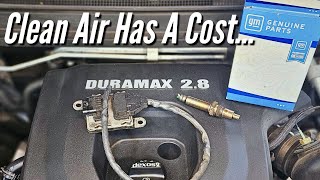
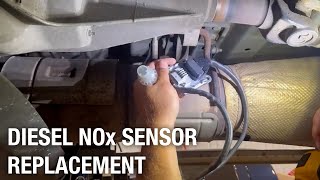
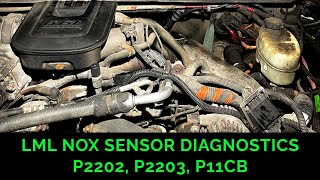
The Powertrain Control Module (PCM) detects a problem with the heater inside the upstream Nitrogen Oxide (NOx) sensor (Bank 1). This sensor requires extreme heat to accurately measure exhaust pollutants, and the internal heater ensures instant warm-up. Code P2206 means 🎬 Watch: How SCR systems work and how to diagnose NOx sensors. the PCM reads lower-than-normal voltage in this heater circuit, indicating an open circuit (broken wire or burnt-out element) or a short to ground.
Technical definition: SAE/OBD-II defines P2206 as "NOx Sensor Heater Control Circuit Low Bank 1". The Powertrain Control Module (PCM) registers a voltage in the Bank 1 NOx sensor heater control circuit below the specified range or detects an open circuit. The PCM actively monitors this circuit and triggers the fault when feedback voltage drops below the expected threshold during commanded heater operation.
Can I Drive With P2206?
Yes, But With Caution. Yes, but driving for extended periods is strongly discouraged. Your vehicle enters a reduced power 'limp mode' to protect the emissions system. Continuing to drive overloads the Diesel Particulate Filter (DPF) with soot and damages the Selective Catalytic Reduction (SCR) system due to incorrect Diesel Exhaust Fluid (DEF) injection. Diagnose the issue within 100 miles to prevent a $3,000+ SCR catalyst replacement.
Common Causes
- Failed NOx Sensor (Very Common) — The internal heating element within the sensor burns out like a lightbulb filament, creating an open circuit and triggering the code.
- Wiring or Connector Damage (Common) — The sensor's wiring harness sits near the hot exhaust, making it susceptible to melting, chafing, or breaking. Corrosion from road salt inside the connector also causes circuit failure.
- Blown Fuse or Faulty Relay (Common) — A dedicated fuse and relay power the NOx sensor heater circuit. A blown fuse cuts power to the heater, resulting in the low voltage reading.
- Faulty NOx Sensor Control Module (Less Common) — Many NOx sensors pair with an external control module. This module fails internally, causing a loss of power to the heater circuit even if the sensor element functions properly.
- Excessive Soot on the Sensor (Less Common) — On diesel engines with performance tunes or frequent short trips, excessive soot builds up, insulates, and damages the sensor element or its heater.
- Water Intrusion into Control Modules (Rare) — Water leaking into the cabin or engine bay damages the PCM or the NOx sensor's control module, causing shorts or corrosion on the heater control circuit board.
- Powertrain Control Module (PCM) Failure (Rare) — The driver transistor within the PCM that provides voltage to the sensor heater fails. Consider this only after exhaustively ruling out the sensor, wiring, and fuses.
Symptoms
- Reduced Engine Power (Limp Mode) — The vehicle's computer intentionally limits engine speed and power to protect the aftertreatment system, accompanied by a dashboard warning message.
- Failed Emissions Test — A non-functional NOx sensor heater prevents accurate readings, causing the vehicle to automatically fail a smog check.
- Increased DEF (Diesel Exhaust Fluid) Consumption — The PCM defaults to a richer DEF injection strategy as a failsafe when it loses NOx sensor input, noticeably increasing DEF usage.
- Black Smoke from Exhaust — Incorrect NOx readings cause improper air-fuel mixture calculations, resulting in visible black smoke during acceleration.
- Check Engine Light is On (also visible on scanner) — The Malfunction Indicator Lamp (MIL) illuminates immediately when the PCM logs the P2206 fault.
Diagnostic Flowchart
Tap your situation to follow the diagnostic path that matches what you're seeing on this code.
Common Fixes & Costs
- Replace the NOx Sensor
— Parts: $300-$900, Labor: $100-$250, ~1.5 hr book time
(Intermediate)
Ram 2500/3500 (2013-2018): OEM Mopar 68210084AA (Alt: Dorman 904-6030, Bosch NX0317305)
Ford F-250/F-350 (2017-2022): OEM Motorcraft HC3Z-5L248-A (Alt: Dorman 904-6018, Bosch 0281008667)
Chevy/GMC 2500HD/3500HD (2018-2019 L5P): OEM ACDelco 12718742 (Alt: Dorman 904-421) - Repair Wiring Harness or Connector — Parts: $20-$100, Labor: $150-$400, ~2.5 hr book time (Intermediate)
- Replace Blown Fuse — Parts: $1-$5, Labor: $0-$50, ~0.1 hr book time (DIY)
- PCM Reprogramming/Software Update — Parts: $0, Labor: $100-$250, ~1.0 hr book time (Professional)
- Replace the Powertrain Control Module (PCM) — Parts: $600-$1200, Labor: $200-$300, ~1.5 hr book time (Professional)
Used vs. New Parts: Buying Guide
When a used part is worth it: Buying a used NOx sensor is never recommended. These sensitive electronic components fail frequently from age, heat, and contamination. The risk of installing a failing part outweighs any cost savings.
Donor-vehicle mileage cap: roughly under 40000 miles for the part to have meaningful remaining life.
Donor quality checklist:
- Verify the donor vehicle was not scrapped for emissions failures.
- Match the part number exactly to ensure internal software compatibility.
- Avoid sensors from regions with heavy road salt use.
Decision logic:
- If The cost of a new OEM sensor is less than $500 → Buy new. Savings from a used part do not justify the risk of repeat labor costs.
- If The vehicle has over 200K miles and is nearing end-of-life → A used part from a low-mileage wreck serves as a budget fix, but expect a short lifespan.
Warranty tradeoff: Used parts offer 30-90 day warranties that exclude labor. Reputable aftermarket and OEM brands provide 1-year to lifetime warranties.
Worst-case if a used part fails: $600 for repeat labor and purchasing a new sensor after the used one fails.
What Happens If You Wait — Timeline
- 0-1 month: Check Engine Light illuminates. The NOx sensor heater fails, preventing accurate readings. The vehicle fails emissions testing and experiences intermittent limp mode. (MPG impact: 0-5%% · Added cost: $0)
- 1-3 months: The PCM defaults to a rich DEF injection strategy. DEF consumption increases noticeably, and fuel economy drops due to incomplete engine management data. (MPG impact: 5-10%% · Added cost: $50-$150 in wasted DEF and fuel)
- 3-8 months: Incorrect DEF mixtures and failed DPF regeneration cycles overload the Diesel Particulate Filter (DPF) with soot, severely reducing power. (MPG impact: 10-15%% · Added cost: $1,500-$4,000 for DPF cleaning or replacement)
- 8+ months: Continued operation permanently damages the SCR catalyst via DEF crystallization or overheating during forced regenerations. (MPG impact: 15-25%% · Added cost: $2,000-$5,000+ for SCR catalyst replacement)
Cost of Not Fixing It
- 0-1 month: Failed emissions test, active Check Engine Light, and limp mode activation reducing engine power. (Added cost: $0)
- 1-6 months: Incorrect DEF injection prematurely clogs the Diesel Particulate Filter (DPF) with soot. (Added cost: $1,500-$4,000 for DPF cleaning or replacement.)
- 6+ months: Prolonged incorrect DEF injection permanently damages the Selective Catalytic Reduction (SCR) catalyst, requiring a full emissions system overhaul. (Added cost: $2,000-$5,000+ for SCR catalyst replacement.)
Diagnosis Steps
- Read the Code and Freeze Frame Data
Verify P2206 is the active code using an OBD-II scanner. Analyze the freeze frame data to identify the engine speed, temperature, and load when the fault triggered.
Tools: OBD-II Scanner (Beginner) - Check Fuses and Relays
Test the dedicated NOx sensor circuit fuse and relay in the power distribution box. A blown fuse is a common, easily fixable root cause.
Tools: Multimeter, Fuse Puller (Beginner) - Visually Inspect Wiring and Connectors
Inspect the entire Bank 1 NOx sensor wiring harness. Look for melted plastic near the exhaust, chafed wires, and connector corrosion or backed-out pins.
Tools: Flashlight, Mirror (Beginner) - Test the Circuit for Power and Ground
With the sensor unplugged and the key on (engine off), use a multimeter to verify 12V battery voltage and a solid ground at the sensor's electrical connector pins. Lack of power indicates an upstream wiring or fuse issue.
Tools: Multimeter, Wiring Diagram (Intermediate) - Test the Sensor's Internal Heater Resistance
With the sensor unplugged, measure the resistance between the two heater circuit pins on the sensor. A typical good reading is 3 to 15 Ohms. An infinite reading (OL) means the heater is burnt out; 0 Ohms indicates a short. Both require sensor replacement.
Tools: Multimeter, Service Manual (Intermediate) - Check for Technical Service Bulletins (TSBs)
Search for manufacturer TSBs related to P2206 for your specific vehicle. Known issues often require a PCM software update before replacing parts.
Tools: Internet Access, Manufacturer Service Website (Beginner) - Command Heater On with a Bi-Directional Scanner
Use a professional scan tool to command the NOx heater circuit on. Check for voltage at the power supply pin. If the PCM sends the command but no voltage appears, suspect a wiring or PCM driver issue.
Tools: Bi-Directional Scan Tool, Multimeter (Professional) - Analyze Live Data PIDs
Monitor 'NOx Sensor Heater Duty Cycle' and 'NOx Sensor Heater Temperature'. When commanded on, the duty cycle must be >0% and temperature must rise steadily. If duty cycle is active but temperature remains flat, the heater circuit or sensor has failed.
Tools: Advanced Bi-Directional Scan Tool (Advanced) - Verify Heater Voltage Thresholds
With the engine running, back-probe the PCM's heater-output pin. The PCM supplies a Pulse-Width Modulated (PWM) voltage (typically 5V-12V). Voltage consistently below 5V confirms a low-circuit condition.
Tools: Multimeter, Back-probe Pins, Wiring Diagram (Advanced) - Analyze Heater Circuit with an Oscilloscope
Connect an oscilloscope to the heater control circuit. A clean square wave confirms the PCM and wiring function correctly, isolating the fault to an internal sensor failure. A flat line at 0V indicates an open or short to ground.
Tools: Oscilloscope, Back-probe Pins (Professional)
When This Code Triggers (Freeze-Frame Conditions)
- Engine Coolant Temp: 180-210°F (82-99°C) (The fault logs when the engine reaches full operating temperature and runs in closed-loop emissions mode.)
- RPM: 1500-2500 (Occurs during steady-state cruising or light acceleration.)
- Engine Load: 30-60% (The heater circuit is actively monitored under moderate engine load.)
- Vehicle Speed: 45-65 mph (72-105 kph) (Consistent highway driving provides the stable conditions required to run the NOx heater diagnostic monitor.)
Related Codes
- P2207 — Indicates 'NOx Sensor Heater Control Circuit High'. Points to a short to power, whereas P2206 indicates an open circuit or short to ground.
- P2201 — A 'Range/Performance' code indicating the PCM receives a signal, but the reading is implausible. You can have a perfect electrical circuit (no P2206) but a sensor giving bad data (P2201).
- P229F — Indicates a fault in 'Sensor 2', the downstream sensor located after the SCR catalyst. P2206 refers exclusively to the upstream 'Sensor 1'.
- P220C — Indicates a problem with the main power supply to the NOx sensor module, affecting multiple functions. P2206 isolates the fault to the heater control line.
Climate & Environmental Factors
- Cold Climates / Road Salt: Road salt accelerates corrosion on the NOx sensor's electrical connector, causing open or shorted circuits. This is the leading cause of P2206 in northern regions.
- Rapid Temperature Changes: Driving through deep puddles causes thermal shock to the hot sensor element, cracking the internal ceramic plate and destroying the heater.
- High Humidity / Water Intrusion: Moisture from condensation corrodes the sensor internals and electrical plugs, leading to circuit failure.
How to Talk to a Mechanic About This Code
Say this: "I have a P2206 code for the NOx sensor heater circuit on Bank 1. Before replacing the sensor, please check for 12V power and ground at the connector, and test the resistance of the heater element on the sensor itself."
This prevents a shop from immediately replacing an expensive sensor without confirming it's the actual point of failure, saving you from paying for unnecessary parts.
Avoid saying:
- 'Just fix my check engine light'
- 'My truck is in limp mode, can you look at it?'
- 'I think I need a new NOx sensor'
Questions to ask before authorizing the repair:
- What was the resistance reading on the sensor's heater pins? Was it open (OL) or shorted?
- Did you confirm 12-volt power and ground at the sensor connector with the key on?
- If the wiring is the problem, can you show me the damaged section?
- What is the warranty on the new part and your labor?
Where to Take It: Dealer vs Independent vs Chain
- Dealer:
Recommended only if you suspect a software issue or have warranty coverage.
Best for: Vehicles under an emissions warranty (VW Dieselgate or Ram EcoDiesel)., When a known TSB requires a specific PCM software update., Complex diagnostics on German brands requiring proprietary tools.
Downsides: Highest labor rates ($150-$250/hour)., More likely to suggest a full harness replacement rather than a wiring repair. (Typical cost: +50% vs. baseline) - Independent Shop:
Best all-around choice for cost and capability. Find a shop with strong reviews for diesel electrical diagnostics.
Best for: Out-of-warranty vehicles., Diagnosing and repairing common wiring issues., Sensor replacement on common domestic trucks.
Downsides: Quality varies; ensure the shop specializes in modern diesel emissions systems. (Typical cost: +0% vs. baseline) - Chain Shop:
AVOID for P2206 diagnosis. The risk of misdiagnosis is extremely high.
Best for: Simple maintenance like oil changes or tires.
Downsides: Technicians lack specialized training for complex diesel emissions diagnostics., High pressure to upsell parts without proper circuit testing. (Typical cost: -10% vs. baseline)
When to Walk Away From the Repair
If the total estimated repair cost for the P2206 fault and related DPF/SCR damage exceeds 40-50% of your vehicle's private-party value, evaluate your options.
- Car worth $15000, fix is $1200: Fix it. This standard repair cost falls well below the threshold.
- Car worth $8000, fix is $3500: Walk away. The repair cost approaches half the vehicle's value, indicating a major system failure.
- Car worth $25000, fix is $800: Fix it without hesitation. The repair cost is a small fraction of the vehicle's value.
What Scan Tool You Need for This Code
Minimum: A scan tool that reads and graphs live data for the emissions system. Basic code readers are insufficient.
Diagnosing P2206 requires viewing real-time circuit data. Basic readers cannot show if the PCM commands the heater duty cycle or if the sensor's temperature responds.
Budget: BlueDriver Pro (~$100) — Connects to a smartphone to display and graph live data PIDs, allowing you to verify if the PCM attempts to control the heater.
Mid-range: Foxwell NT510 Elite (~$150) — Offers robust live data and bi-directional control for specific makes, allowing you to command the NOx heater on/off to test the circuit.
Professional: Autel MaxiCOM MK808 (~$500) — Provides full bi-directional control and performs the manufacturer-specific relearn procedures required after sensor replacement.
Rent vs buy: Buy a mid-range scanner. Free loaner tools from auto parts stores lack the live data and bi-directional features required to properly diagnose P2206.
How to Clear the Code After You Fix It
- Clear the P2206 fault code using an OBD-II scan tool.
- Perform the manufacturer-specific drive cycle to run emissions self-tests.
- Verify the NOx and catalyst readiness monitors show 'Complete' on the scan tool.
Drive cycle (~30 minutes): Start the engine cold (below 122°F/50°C), idle for 3 minutes, drive 15 minutes combining city and steady 55 mph highway speeds, and include several coast-down periods without braking.
Readiness monitors affected: NOx/SCR Aftertreatment, Catalyst monitor, Exhaust Gas Sensor
Before emissions retest: drive at least 100 miles to fully set monitors.
Watch out for:
- Disconnecting the battery resets all readiness monitors to 'Not Ready', guaranteeing an emissions test failure.
- The code returns immediately if the burnt-out sensor or broken wire remains unfixed.
- Failing to drive at steady highway speeds prevents the NOx monitor from running to completion.
Will This Fail Emissions / State Inspection?
Yes — this code typically fails an OBD-II emissions inspection.
- California: An active P2206 code triggers an automatic smog check failure. After repair, all OBD readiness monitors must read 'Ready' before retesting.
- New York: The NYS DMV inspection fails any vehicle with an illuminated Check Engine Light and active P2206 code.
- Texas: Vehicles 2001 and newer fail if more than one readiness monitor reads 'Not Ready'. You must complete a full drive cycle after clearing the code.
Most Commonly Affected Vehicles
- Ram 2500/3500 (2013-2022) — Extremely common on 6.7L Cummins engines. For 2013-2018 models, inspect the wiring harness for chafing near the transmission crossmember.
- Ford F-250/F-350 (2011-2022) — 6.7L Power Stroke engines frequently log this code. Ensure you purchase the latest superseded sensor part number to avoid repeat failures.
- Chevrolet / GMC Silverado/Sierra 2500HD/3500HD (2011-2022) — On LML engines, check the harness connector at the firewall for corrosion. L5P engines suffer from MAP sensor clogging that contributes to emissions faults.
- Volkswagen Jetta, Golf, Passat (2009-2015) — Common on TDI diesel models. Failures trace to corrosion at the NOx sensor module connector or internal sensor burnout.
- Mercedes-Benz Sprinter, GLK, E-Class (2010-2021) — BlueTEC diesel engines frequently require replacing both upstream and downstream sensors as a pair. Always check for ECU software updates first.
Manufacturer-Specific Notes
- Ram / Stellantis: Emissions Recall 67A provides an extended warranty covering NOx sensors on many 2013-2018 Cummins trucks for 10 years/120,000 miles.
- Ford: Replacing a NOx sensor on a 6.7L Power Stroke requires resetting the 'NOx sensor adaptive learn tables' using a Ford IDS scan tool to integrate the new sensor.
- GM (Duramax): After replacement, you must perform a 'Reductant System Malfunction Warning Service Bay test' with a GDS2 scan tool to clear limp mode.
- Volkswagen / Audi: The 'Dieselgate' settlement provides an extended warranty covering NOx sensors for up to 11 years or 162,000 miles. Always check coverage before paying.
Real Owner Stories
2015 GMC Sierra 2500HD (LML Duramax) at 110K miles
Check Engine Light and 'Service Exhaust Fluid System' message appeared. Truck entered limp mode with a 50 MPH max speed warning.
What they tried:
- Suspected a bad DEF heater, but codes pointed to the NOx sensor.
- Tested the wiring harness from the sensor module to the PCM, finding no breaks.
- Measured resistance on the NOx sensor's heater pins, revealing an open circuit (infinite resistance).
Outcome: Replaced the upstream NOx sensor (Bank 1 Sensor 1). The technician used a GDS2 scan tool to perform the 'Reductant System Malfunction Warning Service Bay test' to clear limp mode. Total cost: $750.
Lesson: Perform a resistance test on the specific component named by the code to confirm internal failure before replacing parts.
2014 Ram 3500 6.7L Cummins at 95K miles
P2206 code appeared intermittently, eventually staying on permanently.
What they tried:
- Visually inspected the wiring harness and found a section near the transmission crossmember rubbed through its protective loom.
- Attempted a simple electrical tape repair, but the code returned in 50 miles.
Outcome: A mechanic soldered a new section of wire, sealed it with heat-shrink tubing, and secured it away from the sharp edge. The code cleared permanently. Total cost: $220.
Lesson: Electrical tape cannot withstand the heat and moisture under a vehicle. Wiring repairs require soldering and heat-shrink tubing to prevent recurring faults.
2013 VW Jetta TDI at 88K miles
Check Engine Light illuminated with P2206. Vehicle was covered under the VW 'Dieselgate' Extended Emissions Warranty.
What they tried:
- Dealership performed a required TSB software update.
- The code returned the next day.
Outcome: Dealership diagnosed a failed NOx sensor. The extended warranty covered the part, labor, and diagnostic fees entirely. Out-of-pocket cost: $0.
Lesson: Always verify extended emissions warranty coverage for VW, Audi, and Ram vehicles before authorizing paid repairs.
2018 Ford F-250 6.7L Power Stroke at 60K miles
P2206 code triggered immediately after driving through a deep puddle.
What they tried:
- Cleared the code, but it returned on the next drive cycle.
- Multimeter test of the sensor's heater pins showed 0.5 Ohms, indicating an internal short.
Outcome: Replaced the NOx sensor. Thermal shock from cold water hitting the hot sensor cracked the internal ceramic element. Total cost: $580.
Lesson: Rapid temperature changes cause immediate sensor failure. A resistance reading near zero confirms an internal short requiring replacement.
How to Prevent This Code From Triggering
- Use high-quality diesel fuel from high-volume stations (Every fill-up) — Prevents incomplete combustion and excessive soot production that fouls the NOx sensor.
- Perform regular highway drives (At least once a month) — Maintains high exhaust temperatures to burn off soot accumulation and evaporate condensed water, preventing corrosion and thermal shock.
- Adhere to strict oil and filter change intervals (Per manufacturer schedule) — Clean oil prevents blow-by, which contaminates and damages sensitive exhaust sensors.
- Avoid extended idling (Daily habit) — Prolonged idling creates low exhaust temperatures, accelerating soot accumulation and moisture buildup.
Frequently Asked Questions
What is the most common mistake when fixing P2206?
The most common and costly mistake is immediately replacing the expensive NOx sensor without testing the circuit first. Always use a multimeter to confirm the sensor has power and ground at its connector before condemning the part. Failing to check for software updates (TSBs) or extended warranties also wastes money.
What happens if you don't fix P2206?
Ignoring P2206 guarantees an emissions test failure and forces the engine into limp mode. Over time, incorrect DEF injection causes severe damage to the DPF and SCR catalyst. This turns a $500 sensor replacement into a $3,000+ exhaust system overhaul.
Can I clean a NOx sensor?
No. Code P2206 indicates an internal electrical failure of the heater circuit, not a soot contamination issue. Cleaning cannot restore a burnt-out heating element, so the sensor requires replacement.
Will P2206 clear itself?
No, this code indicates a hard electrical fault that requires physical repair. The code remains active until the underlying circuit or sensor issue is fixed and cleared with an OBD-II scanner.
Can a bad battery cause code P2206?
While a failing battery triggers unpredictable electrical faults, it rarely causes P2206 directly. This code points to a fault within the sensor's dedicated heater circuit, which the PCM monitors independently of general system voltage.
Is replacing a NOx sensor a DIY job?
Replacing a NOx sensor is difficult because the threads frequently seize in the exhaust pipe due to extreme heat cycles. Removing it without stripping the threads requires penetrating oil, specialized sockets, and a torch. If the sensor is stuck fast, take the vehicle to an exhaust shop to prevent damaging the exhaust pipe.
What is 'Bank 1'?
On a V-shaped engine, 'Bank 1' is the side containing the number one cylinder. On an inline engine (like most diesel trucks), there is only one bank, so 'Bank 1' refers to the entire engine.
Key Takeaways
- Code P2206 indicates a low voltage or open circuit in the upstream (Bank 1) NOx sensor heater, preventing the sensor from reaching the extreme temperatures required to measure emissions.
- A burnt-out internal heating element inside the NOx sensor causes 80% of P2206 codes, with melted wiring harnesses accounting for most remaining cases.
- Test the sensor connector for 12V power and ground before spending $500+ on a replacement part to rule out a simple blown fuse or broken wire.
- Driving with an active P2206 code forces the engine into limp mode and causes incorrect DEF injection, risking a $3,000+ DPF or SCR catalyst replacement within 6 months.
Helpful Videos


The information in this article is provided for general reference and educational purposes only. Vehicle specifications, procedures, and part compatibility can vary by production date, trim level, and region. Always consult your vehicle's factory service manual and verify part numbers before purchasing or performing repairs. Safety-critical components such as airbags, seat belts, and braking systems should be installed by a qualified professional.
- 🎬 Helpful Videos
- What Does P2206 Mean?
- Can I Drive With P2206?
- Common Causes
- Symptoms
- Diagnostic Flowchart
- Common Fixes & Costs
- Used vs. New Parts: Buying Guide
- What Happens If You Wait — Timeline
- Cost of Not Fixing It
- Diagnosis Steps
- When This Code Triggers (Freeze-Frame Conditions)
- Related Codes
- Climate & Environmental Factors
- How to Talk to a Mechanic About This Code
- Where to Take It: Dealer vs Independent vs Chain
- When to Walk Away From the Repair
- What Scan Tool You Need for This Code
- How to Clear the Code After You Fix It
- Will This Fail Emissions / State Inspection?
- Most Commonly Affected Vehicles
- Manufacturer-Specific Notes
- Real Owner Stories
- 2015 GMC Sierra 2500HD (LML Duramax) at 110K miles
- 2014 Ram 3500 6.7L Cummins at 95K miles
- 2013 VW Jetta TDI at 88K miles
- 2018 Ford F-250 6.7L Power Stroke at 60K miles
- How to Prevent This Code From Triggering
- Frequently Asked Questions
- What is the most common mistake when fixing P2206?
- What happens if you don't fix P2206?
- Can I clean a NOx sensor?
- Will P2206 clear itself?
- Can a bad battery cause code P2206?
- Is replacing a NOx sensor a DIY job?
- What is 'Bank 1'?
- Key Takeaways
- 🎟️ Get 5% Off