

P2201 on 2014-2019 Ram 3500 6.7L Cummins: NOx Sensor Performance Causes and Fixes
On a 2014-2019 Ram 3500 with the 6.7L Cummins, P2201 almost always points to a failed upstream NOx sensor (Bank 1, Sensor 1). Before replacing the expensive sensor, check for PCM software updates with a dealer, as TSBs like #18-057-15 Rev. A and #18-042-20 exist to fix false codes. A quality replacement sensor costs $400-$800, with OEM parts being higher. Owners strongly advise against cheap aftermarket sensors due to extremely high failure rates.
- P2201 on a 6.7L Cummins points to the upstream NOx sensor, located at the turbo outlet.
- Before buying parts, contact a dealer with your VIN to check for software updates or recalls, as a PCM reflash might be the fix.
- If the sensor has failed, it is the most likely fix. It is an expensive part; avoid cheap aftermarket versions as they have a high failure rate.
- Always inspect the wiring harness for melting or physical damage before replacing the sensor.
- Consider checking related components like the EGR valve and CCV filter if a new sensor does not solve the problem.
What's Unique About the 2014-2019 Ram 3500

For this generation of Ram HD trucks, the P2201 code is frequently linked to both high sensor failure rates and software logic issues. Ram and Cummins have released multiple Technical Service Bulletins (TSBs), such as #18-131-22 and #18-130-22 REV. A, that involve reprogramming the PCM to prevent a false P2201 code from being set when no hardware fault exists. The complexity of the 6.7L Cummins aftertreatment system means that issues with other components, like a clogged CCV filter or a dirty EGR valve, can sometimes manifest as a NOx sensor code, making diagnosis tricky. Furthermore, a significant emissions recall known as "67A" was issued for 2013-2018 models, which involves a software update that adjusts DEF dosing rates to lower NOx emissions.
Diagnostic Flowchart
Tap your situation to follow the diagnostic path that matches what you're seeing on this vehicle.
Generation note: This range covers the end of the fourth generation (2014-2018) and the first year of the fifth generation (2019) Ram 3500. While the 6.7L Cummins engine is used in both, there can be differences in the aftertreatment system components, wiring, and part numbers. For early 2014 models, the NOx sensor module might be in a higher-heat area behind the oil filter, while later models moved it to the frame rail. The emissions system was significantly updated for 2013 with the addition of the SCR/DEF system, making it more complex than the 2007.5-2012 models. Diagnosis and parts should be verified for the specific model year.
Symptoms You May Notice
- Check Engine Light (MIL) is on
- "Service DEF System See Dealer" or similar message on the instrument cluster, sometimes with a countdown to limp mode
- Vehicle may enter limp mode with reduced engine power, potentially limited to 5 MPH
- Failed emissions test
- Excessive smoke from the exhaust
- Inconsistent fuel economy
- Erratic idle
- Increased DEF consumption
- Replacing the NOx sensor without first checking for required PCM software updates, which could be a no-cost fix under a recall or TSB.
- Installing a cheap, low-quality aftermarket NOx sensor. Owners and technicians widely report these parts failing immediately or within a few hundred miles, with failure rates estimated as high as 40-50%.
- Replacing the downstream NOx sensor (Bank 1, Sensor 2) when P2201 specifically refers to the upstream sensor (Bank 1, Sensor 1) located at the turbo outlet.
Most Likely Causes

- Failed Upstream NOx Sensor (Bank 1, Sensor 1) 🔴 High Probability These sensors are exposed to extreme heat and corrosive exhaust gases, leading to a high failure rate. The assembly includes the sensor probe and a control module, both of which can fail. The old sensor probe often seizes in the exhaust bung, making removal difficult.
How to confirm: Using a capable scan tool, monitor live data from the NOx sensor. If the reading is stuck (e.g., at 0 or 65535 ppm), provides erratic readings, or doesn't change with engine RPM, the sensor has likely failed. The presence of codes like U059E ('Invalid Data Received From NOx Sensor') or P1C55 ('NOx Sensor Intermittent') strongly confirms a failed sensor assembly.
Typical fix: Replace the entire upstream NOx sensor assembly (probe and module). Access often requires removing the passenger side front wheel and fender liner. A 22mm or 7/8" oxygen sensor wrench is needed. The module is typically on the frame rail behind a protective cover.
Est. part cost: $400-$1600+ - PCM Software Requires Update 🟡 Medium Probability Stellantis (formerly FCA) has issued multiple TSBs (e.g., #18-057-15 Rev. A, #18-042-20, #18-131-22) to update PCM software that could cause false P2201 codes due to overly sensitive diagnostic logic. TSB #18-057-15 Rev. A specifically changed the fault from a one-trip to a two-trip fault to reduce sensitivity.
How to confirm: Contact a Ram dealer with your vehicle's VIN to check for open recalls or applicable TSBs related to emissions system software updates. This should be the first step before replacing any parts. The "67A" emissions recall is a key software update for 2013-2018 models.
Typical fix: The dealer will reprogram or 'flash' the Powertrain Control Module (PCM) with the latest software calibration using a tool like wiTECH.
Est. part cost: $0-$200 - Damaged Wiring or Connectors ⚪ Low Probability The sensor harness runs under the truck and is exposed to heat, moisture, and road debris, which can cause chafing, melting, or corrosion. The harness must be routed correctly in its plastic retainers to prevent damage.
How to confirm: Visually inspect the entire wiring harness for the upstream NOx sensor, from the probe in the exhaust to the module connector on the frame rail. Look for any signs of physical damage, melting near the exhaust, or corrosion in the connectors. Ensure the main engine block ground straps are clean and tight.
Typical fix: Repair the damaged section of wiring or replace the connector pigtail. If damage is integral to the sensor's pigtail, the entire assembly must be replaced.
Est. part cost: $20-$100 - Exhaust System Leaks ⚪ Low Probability Gaskets and pipe connections, particularly at the turbo outlet flange, can degrade over time, allowing outside air to enter the exhaust stream and skew sensor readings.
How to confirm: Inspect the exhaust system for leaks between the turbocharger outlet and the NOx sensor. Listen for hissing sounds and look for black soot trails at joints and gaskets.
Typical fix: Replace the leaking gasket or tighten the loose connection.
Est. part cost: $10-$50
Rare But Worth Checking
- Clogged Crankcase Ventilation (CCV) Filter: A clogged CCV filter, due for service around 67,500 miles, can alter crankcase pressure. Multiple owners on forums like RamForum.com and Turbo Diesel Register report that replacing a past-due filter (Part No. CV52001 / 68002433AB) resolved a persistent P2201 code that kept returning after being cleared.
- Heavily Fouled EGR Valve: In some cases, a heavily carbon-fouled EGR valve was the root cause of a P2201 that persisted even after sensor replacement. The theory is that a stuck EGR alters exhaust composition, fooling the NOx sensor. Cleaning the EGR valve resolved the issue for at least one owner who documented their experience on YouTube.
- Crystallized or Clogged DEF Injector: The DEF injector nozzle can become clogged with crystallized DEF, especially with short-trip driving. This can disrupt the SCR system's ability to function, potentially leading to cascading codes like P2201. The injector can often be removed and cleaned with warm water.
Diagnosis Steps

- Connect a capable OBD-II scanner and confirm P2201 is the active code. Note all other codes present, especially P1C55 or U059E.
- CRITICAL: Contact a Ram dealer with your VIN to check for open recalls or applicable TSBs (e.g., 18-131-22, 18-057-15) for PCM software updates. This may be the entire fix and should be done before buying parts.
- Perform a thorough visual inspection of the upstream NOx sensor's wiring harness. It is located on the passenger side, with the probe in the exhaust pipe at the turbo outlet. Check for melting, chafing, corrosion, or loose connections from the probe to its module on the frame rail.
- Inspect the exhaust system for any signs of leaks (soot trails, audible hissing) between the engine and the NOx sensor.
- Using a scan tool with live data (like AlfaOBD), monitor the 'NOx Sensor 1/1' reading. Observe the value at idle, during acceleration, and on a 10-second coasting deceleration. A healthy sensor should show a changing value, dropping towards zero on decel.
- If the reading is stuck, erratic, or does not respond to changing engine conditions, and the wiring is confirmed to be good, the NOx sensor assembly is faulty.
- If the sensor appears to be working but the code persists, investigate related systems. Check the service interval for the CCV filter (due at 67,500 miles) and consider replacing it if overdue. Also, consider inspecting the EGR valve for heavy carbon buildup and the DEF injector for crystallization.
Parts You'll Likely Need

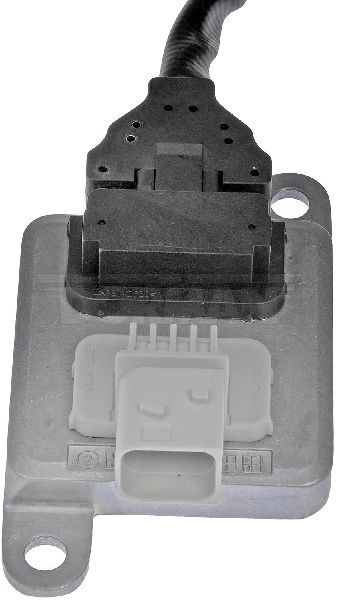
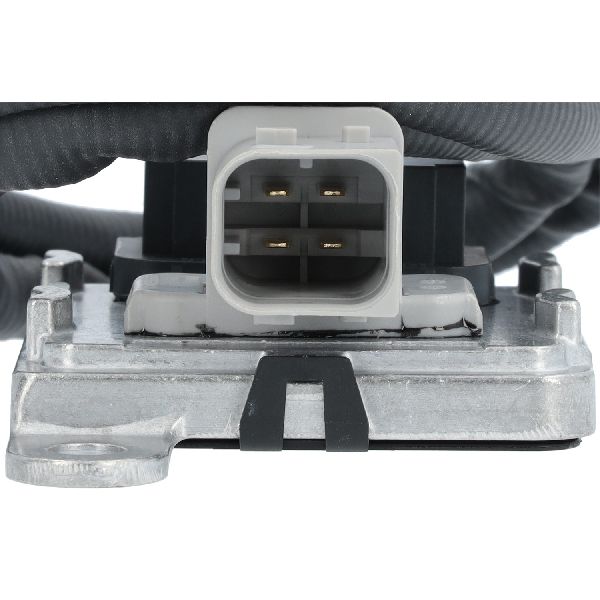
- Upstream Nitrogen Oxide (NOx) Sensor
(OEM #68447681AA (Note: Part numbers are frequently superseded; always verify with VIN))— This is the most common cause for code P2201. The sensor assembly (probe and module) fails due to heat and contamination.
Related Codes That Often Appear With This One
- P1C55 — This is a manufacturer-specific code for 'NOx Sensor Intermittent - Bank 1 Sensor 1'. Seeing it with P2201 strongly confirms a fault with the upstream NOx sensor assembly itself.
- U059E — This code means 'Invalid Data Received From NOx Sensor B'. While the naming can be confusing, TSBs and repair videos indicate this is related to the upstream sensor and points to a communication failure, often within the sensor's own control module.
- P2002 — This code indicates 'Diesel Particulate Filter Efficiency Below Threshold'. A faulty NOx sensor can't provide correct data for DPF regeneration, leading to DPF problems. TSB #18-130-22 REV. A lists P2201 and P2002 together as codes addressed by a software update.
- P0128 — This code for 'Thermostat Rationality' indicates the engine isn't reaching proper operating temperature. The aftertreatment system requires specific temperatures to work, and a thermostat issue can cause cascading emissions codes. TSB #18-131-22 lists P0128 and P2201 as being resolved by the same PCM flash.
Technical Service Bulletins (TSBs) & Recalls
- 18-131-22: Flash: Powertrain Control Module (PCM) Updates for 2018 models, addresses P2201 among other codes.
- 18-130-22 REV. A: Flash: PCM Updates for 2016 models, addresses P2201, P2002, and others.
- 18-057-15 Rev. A: Software update to change P2201 from a one-trip to a two-trip fault to reduce sensitivity.
- 18-042-20: Software update to address false P2201 codes.
- 18-007-22: Flash update for various DTCs including P2201 and P1C55.
- 18-066-23: Flash update for various DTCs including P2201.
Platform-Specific Known Issues
- Multiple TSBs have been issued by the manufacturer for software updates to the PCM to address false or overly sensitive P2201 codes. TSBs #18-057-15 Rev. A, #18-042-20, and #18-131-22 are well-documented examples.
- There is a very strong consensus in owner forums against using cheap, unbranded aftermarket NOx sensors. Many report immediate or premature failure, sometimes within 1,000 miles, making the repair a waste of time and money.
- Accessing the sensor module can vary by model year. On some early 2014 trucks, the module is mounted in a very tight, high-heat area behind the oil filter, making replacement more difficult than on later models where it was moved to the passenger-side frame rail.
Mechanic-Grade Diagnostic Values

- NOx Concentration (Live Data) — expected: Fluctuates with engine load, should drop to near 0 ppm during a 10-second fuel cut-off deceleration.. Failure: Reading is stuck at a specific value (e.g., 0 or 65535 ppm), is erratic, or does not drop to zero on deceleration.
- NOx Sensor 1/1 Temperature (Live Data) — expected: Must be above 150°C (302°F) for the PCM to run the diagnostic monitor.. Failure: Temperature does not rise, which could indicate a fault in the sensor's internal heater.
- Zero Fueling Deceleration Test — expected: The NOx Sensor 1/1 reading should be zero during a decel condition with zero fueling.. Failure: The PCM detects that the NOx Sensor 1/1 reading is not zero during a decel condition for two consecutive trips.
- CAN Bus Resistance at NOx Module Connector — expected: Approximately 60 Ohms with the ignition off.. Failure: Reading is significantly different (e.g., 120 Ohms or open circuit), indicating a wiring or terminating resistor issue.
Scan Tool Commands That Help
- wiTECH (Dealer Tool) or capable aftermarket (e.g., AlfaOBD): NOx Storage Catalyst Learning Value Reset / Reset all learned values for the SCR system — This function should be performed after replacing a NOx sensor to clear old learned values and force the PCM to adapt to the new sensor's readings. Failing to do so can cause the new sensor to be flagged as faulty.
- wiTECH (Dealer Tool): SCR System Test — This is a comprehensive guided test that verifies the operation of the entire Selective Catalytic Reduction system, including heaters, pumps, and sensors, to isolate a fault.
Wiring & Ground Locations
- Upstream NOx Sensor Module — Mounted to the passenger side frame rail, outboard (towards the door), protected by a metal cover held on by two 10mm nuts.. This is the control module for the sensor and the primary connection point to the main vehicle harness. Accessing this module is required for replacement and for testing the main connector for power, ground, and CAN bus signals.
- Upstream NOx Sensor Probe — Screwed into the turbocharger exhaust elbow/downpipe, just after the turbo on the passenger side.. This is the sensing element. Its location makes it prone to heat damage and seizing in the exhaust bung. Access often requires removing the passenger-side inner fender liner.
Real Owner Repair Stories
- YouTube user @RedRabbitVlogs (2014 Ram 2500 6.7L Cummins) — Persistent P2201 check engine light, even after replacing the NOx sensor with both an aftermarket (Napa) and an OEM dealer part.
❌ Tried (didn't work) Cleaning the original NOx sensor., Replacing the NOx sensor with a new aftermarket part from Napa., Replacing the aftermarket sensor with a new OEM sensor from the dealer.
✅ What actually fixed it The root cause was a heavily caked EGR valve. After removing the EGR valve, soaking it in degreaser and hot water for an hour, and cleaning off the carbon buildup, the P2201 code was cleared and did not return, allowing the truck to pass a smog test. - Turbo Diesel Register forum user (2014-era Ram 6.7L Cummins with 64k miles) — Recurring P2201 code that would come back after being cleared.
❌ Tried (didn't work) Clearing the code multiple times.
✅ What actually fixed it The owner was approaching the 67,500-mile service interval for the CCV filter. After discussing with another member, they replaced the clogged CCV filter, which resolved the P2201 code. The systems eventually cleared their 'Not Ready' status for emissions testing after driving. - YouTube user @4mranch (Ram 2500 6.7L Cummins) — Codes P2201, P2202, P2209
❌ Tried (didn't work) Replacing the NOx sensor with a cheap ($60) aftermarket sensor from Amazon. This took one code away but added two new codes for the NOx sensor heater.
✅ What actually fixed it The owner had to remove the cheap aftermarket sensor and replace it with a genuine Cummins NOx sensor (PN 5295473RX), which cost around $390. This resolved the codes.
OEM Part Supersession History
Unknown/Varies by year→68447681AA— Standard part evolution and updates.
Heads up: Part number 68447681AA is listed for 2019-2024 models, but is often used as the replacement for earlier years in the 2014-2018 range. Always confirm the correct, most current part number with a dealer using the vehicle's VIN.
Model Year Variations Within This Range
- 2013-Early 2014: The upstream NOx sensor module was mounted on the hot side of the engine block, behind the oil filter, in a high-heat area.
- Mid-2014-2019: The upstream NOx sensor module was relocated to the passenger-side frame rail behind a protective metal cover, reducing heat exposure.
- 2013-2018: These model years are covered by Emissions Recall 67A, a software update that increases DEF dosing to lower NOx emissions. This changes the operating parameters of the SCR system.
Helpful Videos


We Have This Part in Stock


The information in this article is provided for general reference and educational purposes only. Vehicle specifications, procedures, and part compatibility can vary by production date, trim level, and region. Always consult your vehicle's factory service manual and verify part numbers before purchasing or performing repairs. Safety-critical components such as airbags, seat belts, and braking systems should be installed by a qualified professional.
- Ram 3500:
- 🎬 Helpful Videos
- 🛍️ Shop This Part
- What's Unique About the 2014-2019 Ram 3500
- Diagnostic Flowchart
- Symptoms You May Notice
- Most Likely Causes
- Rare But Worth Checking
- Diagnosis Steps
- Parts You'll Likely Need
- Related Codes That Often Appear With This One
- Technical Service Bulletins (TSBs) & Recalls
- Platform-Specific Known Issues
- Mechanic-Grade Diagnostic Values
- Scan Tool Commands That Help
- Wiring & Ground Locations
- Real Owner Repair Stories
- OEM Part Supersession History
- Model Year Variations Within This Range
- 🎟️ Get 5% Off