

P2201 on 2014-2019 Ram 2500 6.7L Cummins: NOx Sensor Performance Causes and Fixes
On a 2014-2019 Ram 2500 with the 6.7L Cummins, code P2201 almost always means the upstream NOx sensor (Bank 1, Sensor 1) has failed. This sensor is located in the exhaust elbow right after the turbo. Before replacing this expensive part, it is critical to contact a Ram dealer with your VIN to check for software updates, as several TSBs (e.g., 18-057-15 Rev. A, 18-042-20) were issued to correct false P2201 codes. If replacement is necessary, expect to pay $400-$800 for a quality aftermarket senso
- P2201 on a 6.7L Cummins almost always points to a faulty upstream NOx sensor, located at the turbo outlet.
- Before buying parts, call a Ram dealer with your VIN to check for crucial software updates that might fix the issue.
- The OEM Mopar/Cummins sensor is very expensive ($1500+). If you choose an aftermarket part, use a reputable brand like Bosch, as cheap sensors are known to fail quickly.
- Do not waste time or money cleaning the old sensor; this rarely provides a lasting solution.
- The replacement can be done by a DIYer with moderate skills, but it requires removing the passenger side wheel and fender liner for access.
What's Unique About the 2014-2019 Ram 2500

The 6.7L Cummins aftertreatment system in this generation of Ram trucks is notoriously complex and a frequent source of trouble codes for owners. The P2201 code is extremely common, and owner experiences overwhelmingly point to a high failure rate of the upstream NOx sensor assembly itself. Ram has issued numerous Technical Service Bulletins (TSBs) that involve software updates to the PCM to address emissions system issues, which can sometimes cause false P2201 codes. For example, TSB #18-057-15 Rev. A specifically changed the P2201 fault from a one-trip to a two-trip fault to reduce its sensitivity.
Diagnostic Flowchart

Tap your situation to follow the diagnostic path that matches what you're seeing on this vehicle.
Symptoms You May Notice

- Check Engine Light (Malfunction Indicator Lamp) is on
- Message on the instrument cluster regarding exhaust system service or fault, such as "Service DEF System See Dealer".
- Vehicle may enter a reduced engine power mode, also known as 'limp mode'
- Potential for the vehicle to be speed-limited to as low as 5 MPH after a restart.
- Failed emissions test
- Excessive smoke from the exhaust.
- Audible chimes or alerts from the instrument cluster.
- Replacing the downstream NOx sensor (Bank 1, Sensor 2) when P2201 specifically refers to the upstream sensor (Sensor 1) located at the turbo outlet.
- Replacing the sensor with a cheap, unbranded aftermarket part. These have a very high premature failure rate, with some owners reporting failures in under 1,000 miles or immediately after installation. Forums suggest the failure rate is as high as 40-50%.
- Cleaning the NOx sensor probe. This is almost always a temporary fix at best, with the code returning shortly after. Replacement is the only reliable solution.
Most Likely Causes

- Failed Upstream NOx Sensor (Bank 1, Sensor 1) 🔴 High Probability The sensor is exposed to extreme heat and vibration at the turbo outlet, leading to a high failure rate. Forum and mechanic discussions confirm this is the most common failure part for this code. The sensor and its integrated module are sold as a single assembly.
How to confirm: After verifying wiring is intact, use a scan tool to monitor live data from 'NOx Sensor 1/1'. The reading should change with engine RPM and load once the exhaust is warm (over 302°F/150°C). A key test is to perform a 10-second deceleration with no throttle; the reading should drop to near zero. If readings are stuck (e.g., at 0 or 65,535 ppm), erratic, or don't zero out, the sensor is faulty.
Typical fix: Replace the entire upstream NOx sensor assembly, which includes the sensor probe, wire harness, and control module. The sensor requires a 22mm or 7/8" oxygen sensor wrench for removal.
Est. part cost: $400-$2400 - PCM Software Requires Update 🟡 Medium Probability Ram has released multiple TSBs for the 2014-2019 model years to correct software logic that could falsely trigger NOx sensor codes. TSBs like 18-057-15 Rev. A, 18-042-20, and 18-037-16 Rev. A were released to improve NOx sensor calibration and reduce sensitivity.
How to confirm: Contact a Ram dealership with your vehicle's VIN to check for any open recalls or applicable TSBs related to the emissions system or P2201. This is a critical first step before replacing any parts.
Typical fix: The dealership will perform a PCM reflash with the updated software using a tool like wiTECH.
Est. part cost: $0-$200 - Damaged Wiring or Corroded Connector ⚪ Low Probability The wiring harness is routed near hot exhaust components and can be susceptible to melting or chafing. The sensor's control module is mounted to the frame rail behind the passenger fender liner, where debris and moisture can cause corrosion at the connector.
How to confirm: Visually inspect the entire wiring harness from the sensor probe at the turbo elbow down to the control module on the frame. Look for melted plastic, chafed wires, or green/white corrosion on the connector pins.
Typical fix: Repair the damaged section of the wire or clean/replace the corroded connector.
Est. part cost: $10-$100 - Exhaust Leaks Upstream of the Sensor ⚪ Low Probability Leaks at the exhaust manifold or turbo gaskets can introduce outside oxygen into the exhaust stream, skewing the sensor's readings and causing a performance code.
How to confirm: Visually inspect for black soot trails around exhaust connections from the cylinder head to the turbo. A smoke test can also be performed to pinpoint small leaks.
Typical fix: Replace the leaking gasket or tighten the loose connection.
Est. part cost: $20-$150
Rare But Worth Checking
- Clogged Crankcase Ventilation (CCV) Filter: A clogged CCV filter, due for service at 67,500 miles, can alter crankcase pressure and cause oil to contaminate the exhaust, fouling the NOx sensor. Multiple owners on Turbo Diesel Register have confirmed that replacing a past-due CCV filter (p/n CV52001 / 68002433AB) resolved a persistent P2201 code.
- Heavily Caked EGR Valve: Though uncommon, a severely carbon-fouled EGR valve can alter exhaust gas composition enough to trigger a P2201 code. At least one owner reported that cleaning a heavily caked EGR valve resolved the code after a new NOx sensor did not.
Diagnosis Steps
- Verify code P2201 is present using an OBD-II scanner. Note any other codes, especially U059E or P1C55. 🎬 Watch: Understanding the relationship between P2201 and U059E codes.
- CRITICAL STEP: Contact a Ram dealer with your VIN to check for any applicable TSBs (e.g., 18-057-15, 18-042-20) or software updates before purchasing parts. A reflash may be the only fix needed.
- Visually inspect the upstream NOx sensor, located on the passenger side in the exhaust pipe at the turbocharger outlet. Access requires removing the front passenger wheel and inner fender liner.
- Carefully inspect the sensor's wiring harness for signs of melting, chafing, or corrosion, especially near the exhaust and where the control module mounts to the frame rail.
- Check for exhaust leaks between the engine and the NOx sensor. Look for soot trails at gaskets.
- If the truck is near or past its 67,500-mile service interval, inspect the CCV filter. A clogged filter is a known, though rare, cause.
- Using a scan tool with live data, monitor the 'NOx Sensor 1/1' reading. A healthy sensor should show changing values with engine RPM and load and drop to near zero on deceleration. A stuck or erratic reading points to a bad sensor.
- If wiring, software, and exhaust are all good, the NOx sensor assembly is the likely culprit and should be replaced.
Parts You'll Likely Need
- Upstream NOx Sensor (Bank 1, Sensor 1)
(OEM #68210084AA)— This is the most common failure point for code P2201 on this vehicle due to high heat exposure and system complexity. This part number fits 2013-2018 models.
Trusted brands: Mopar (OEM), Bosch (often the OEM supplier), Standard Motor Products
OEM price range: $740-$2400
Aftermarket price range: $400-$800 - Crankcase Ventilation (CCV) Filter
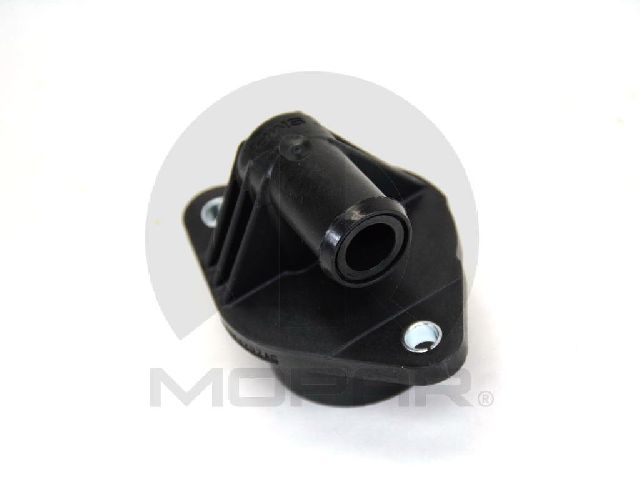
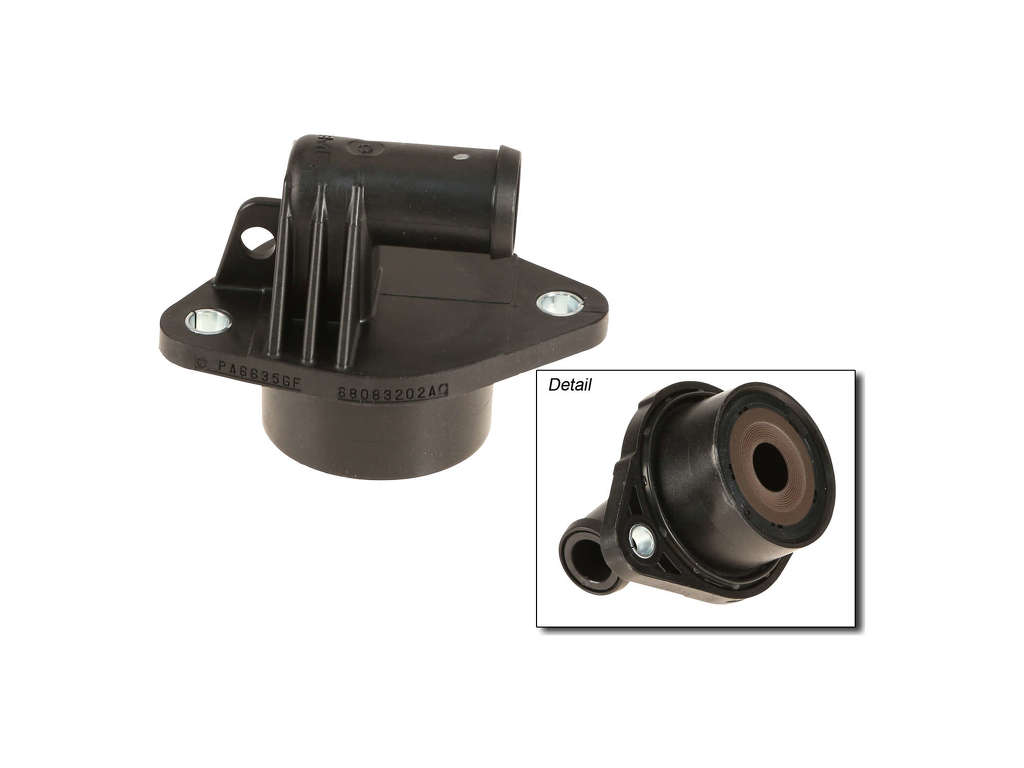
(OEM #68002433AB or Fleetguard CV52001)— If the filter is past its 67,500-mile service interval, it can become clogged and lead to a false P2201 code.
Related Codes That Often Appear With This One
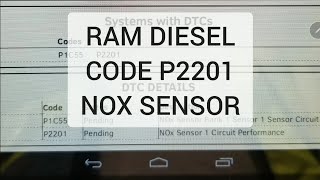
- P1C55 — NOx Sensor 1/1 Intermittent. This code often appears alongside P2201 and further points to a fault with the upstream NOx sensor assembly.
- U059E — Implausible Data Received From NOx Sensor Module 1. This communication code, when paired with P2201, strongly indicates a failure of the integrated sensor and module assembly.
- P20EE — SCR NOx Catalyst Efficiency Below Threshold. A faulty upstream NOx sensor provides incorrect data, causing the PCM to misjudge the catalyst's performance. This code is specifically mentioned in TSBs related to P2201.
- P207F — Reductant Quality Performance. Issues with the NOx sensor can cause the PCM to misinterpret the effectiveness of the SCR system.
- P202E — Reductant Injector Performance. This is another code related to the SCR system that can appear when the primary NOx sensor is not reading correctly.
- P2002 — Diesel Particulate Filter Efficiency Below Threshold. A faulty NOx sensor can disrupt the DPF regeneration process, leading to this code.
Technical Service Bulletins (TSBs) & Recalls
- TSB 18-057-15 Rev. A: Specifically addresses a possible false P2201 code by changing the diagnostic from a one-trip to a two-trip fault to reduce sensitivity.
- TSB 18-042-20: A software update released to improve system logic and prevent false check engine lights for code P2201.
- TSB 18-037-16 Rev. A: A PCM flash for 2015 models that includes "NOx sensor calibration improvements" among other system enhancements.
- TSB 18-023-21: A PCM flash for 2016 models that lists P2201 as one of the DTCs addressed by the new software.
Platform-Specific Known Issues
- Multiple TSBs exist for PCM software updates that can resolve this code without replacing parts. Always check with a dealer first.
- Owners and mechanics strongly advise against using cheap, unbranded aftermarket NOx sensors due to an extremely high rate of premature failure, often within a few hundred miles. Sticking with Mopar or a known OEM supplier like Bosch is highly recommended.
- Accessing the sensor and its module requires removing the passenger side front wheel and inner fender liner. The module is mounted to the frame rail, sometimes in a tight spot near the oil filter on earlier models.
Mechanic-Grade Diagnostic Values
- NOx Sensor 1/1 Live Data (PPM) during Deceleration — expected: Near 0 PPM. Failure: The reading does not drop to zero during a 10-second, zero-fueling deceleration event (foot off the pedal).
- NOx Sensor 1/1 Diagnostic Monitor Temperature Threshold — expected: Above 150°C (302°F). Failure: The PCM will not run the diagnostic self-test for P2201 until the sensor's temperature exceeds this threshold. If it never warms up, the sensor's internal heater may be faulty.
- NOx Sensor Module CAN Bus Resistance — expected: 50-70 Ohms (measured between the two CAN line pins at the harness connector). Failure: Resistance outside this range indicates a problem with the CAN bus wiring or the terminating resistors in the circuit.
- NOx Sensor Module Supply Voltage — expected: Greater than 11.5 Volts (Key On, Engine Off). Failure: Voltage below 11.5V indicates a problem with the power supply wire or ground wire for the module.
Hidden / Shadow Codes Worth Checking
- U059E: Invalid Data Received From NOx Sensor 'A' (Bank 1 Sensor 1). This is a communication code indicating the data from the upstream NOx sensor module is irrational or missing. (see via A standard professional OBD-II scanner. When this code is present with P2201, it almost guarantees the entire sensor and module assembly has failed.)
- P1C55: NOx Sensor Intermittent – Bank 1 Sensor 1. This code indicates the fault with the upstream NOx sensor is not constant, which can point to a wiring issue or the beginning of a sensor failure. (see via A standard professional OBD-II scanner. It is listed alongside P2201 in official Stellantis diagnostic documents.)
- U029D: Lost Communication With NOx Sensor 'A'. This indicates a complete loss of communication with the upstream NOx sensor module, often due to a wiring failure (power, ground, or CAN bus) or a dead module. (see via A standard professional OBD-II scanner. It is part of the upstream NOx sensor code family.)
Scan Tool Commands That Help
- wiTECH or equivalent professional scan tool: Reset NOx Sensor Adaptive Learn Tables — After replacing the NOx sensor, the PCM's learned values for the old sensor must be cleared to allow it to adapt to the new sensor correctly. This function is typically found in the PCM's 'Special Functions' or 'System Tests' menu.
- wiTECH or equivalent professional scan tool: Forced Regeneration / DPF Service Regeneration — While not a direct fix for P2201, if the NOx sensor has been malfunctioning for a long time, the DPF may be excessively loaded with soot. A forced regeneration may be necessary after the sensor is replaced to clear out the system and prevent other codes from appearing.
Wiring & Ground Locations
- Upstream NOx Sensor Control Module — Mounted to the outside of the passenger-side frame rail, behind a protective metal cover held by two 10mm nuts. Access requires removing the passenger front wheel and fender liner.. This is the physical location of the sensor's 'brain'. The main vehicle harness connects here, and the location is exposed to road spray and debris, making the connector a potential point of corrosion or damage.
- NOx Sensor Module Connector — A 4-pin connector that plugs into the control module on the frame rail. It contains pins for power, ground, and two CAN bus data lines.. This is the primary electrical connection to check for corrosion, backed-out pins, or damage after inspecting the sensor harness itself.
- NOx Sensor Harness Routing — The harness runs from the sensor in the turbo elbow, along the passenger side of the transmission, and then to the module on the frame rail. It is secured by several plastic clips on the frame.. Ensuring the harness is properly secured in its factory routing clips is critical to prevent it from chafing against the frame or melting on hot exhaust components.
Real Owner Repair Stories
- YouTube channel 'MotorCityMechanic' (2014 Ram 6.7L Cummins) — Check engine light with codes P2201 and U059E.
❌ Tried (didn't work) The video implies direct diagnosis; the presence of the U059E code alongside P2201 made troubleshooting minimal as it strongly pointed to a failed module.
✅ What actually fixed it Replacement of the entire upstream NOx sensor assembly (sensor, harness, and module). The video details the replacement process, including the location of the module on the passenger frame rail. - YouTube channel '4M Ranch' (Ram 2500 6.7L Cummins) — Check engine light with codes P2201, P2202, and P2209.
❌ Tried (didn't work) Installed a cheap (~$60) NOx sensor from Amazon. This did not fix the issue; it cleared one code but introduced two new codes related to the NOx sensor heater.
✅ What actually fixed it The owner removed the cheap sensor and installed a genuine Cummins NOx sensor (p/n 5295473RX, costing ~$390). This resolved all the codes. - YouTube channel 'Fix it Angel' (2014 Ram 2500 6.7L Cummins) — Check engine light with codes P2201 and P1C55.
❌ Tried (didn't work) The owner researched parts and decided against buying cheap, Chinese-made sensors due to reading about a 40-50% failure rate.
✅ What actually fixed it Purchased and installed an OEM Mopar NOx sensor for approximately $740. The replacement resolved the codes. The video shows the location and replacement process.
OEM Part Supersession History
68210084AA→N/A, still active for its model years— This is the correct part for 2013-2018 models.
Heads up: This part is for the 4th generation trucks and should not be used on 2019+ models.N/A→68447681AA— This is the correct part for the refreshed 2019+ models (5th generation).
Heads up: This part is for 2019+ models and is not backward compatible with the 2014-2018 trucks.
Model Year Variations Within This Range
- 2014-2018: These models use the upstream NOx sensor part number 68210084AA.
- 2019: The 2019 model year marks a generation change. These trucks use the updated upstream NOx sensor part number 68447681AA. It is critical to verify the correct part number with the vehicle's VIN.
Helpful Videos


We Have This Part in Stock



The information in this article is provided for general reference and educational purposes only. Vehicle specifications, procedures, and part compatibility can vary by production date, trim level, and region. Always consult your vehicle's factory service manual and verify part numbers before purchasing or performing repairs. Safety-critical components such as airbags, seat belts, and braking systems should be installed by a qualified professional.
- Ram 2500:
- 🎬 Helpful Videos
- 🛍️ Shop This Part
- What's Unique About the 2014-2019 Ram 2500
- Diagnostic Flowchart
- Symptoms You May Notice
- Most Likely Causes
- Rare But Worth Checking
- Diagnosis Steps
- Parts You'll Likely Need
- Related Codes That Often Appear With This One
- Technical Service Bulletins (TSBs) & Recalls
- Platform-Specific Known Issues
- Mechanic-Grade Diagnostic Values
- Hidden / Shadow Codes Worth Checking
- Scan Tool Commands That Help
- Wiring & Ground Locations
- Real Owner Repair Stories
- OEM Part Supersession History
- Model Year Variations Within This Range
- 🎟️ Get 5% Off