

P2201 on 2015-2019 Ford Transit 3.2L Diesel: NOx Sensor Circuit Causes and Fixes
On a 2015-2019 Ford Transit with the 3.2L diesel, code P2201 most often points to a failed front (Bank 1, Sensor 1) NOx sensor. It can also be triggered by a PCM software issue, the use of aftermarket EGR cleaning agents, or wiring damage. A replacement sensor costs between $150 and $300, and Ford has a warranty extension program (21N02) that may cover the repair.
- P2201 on a 3.2L Transit almost always points to the front (upstream) NOx sensor.
- Before paying for a repair, check if your vehicle is covered by Ford's Customer Satisfaction Program 21N02, which provides a one-time free replacement.
- Do not use aftermarket cleaning chemicals on the EGR system, as Ford has warned this can directly cause this code. [SSM 49065, SSM 47641]
- If you replace the sensor yourself, you may need a capable scan tool to reset the PCM's learned values to fully clear the code.
What's Unique About the 2015-2019 Ford TRANSIT

For this generation of Ford Transit with the 3.2L Power Stroke engine, the P2201 code is specifically addressed by several Ford Technical Service Bulletins (TSBs). One major issue is that a PCM software update (under recall 21E01) made the system more sensitive, revealing pre-existing but previously undetected NOx sensor faults, prompting Ford to create Customer Satisfaction Program 21N02 to cover replacements. Additionally, Ford explicitly warns in TSBs SSM 49065 and SSM 47641 that using aftermarket cleaning liquids for the EGR cooler can cause sodium poisoning of the NOx sensor and trigger this code, indicating a specific sensitivity in the emissions system design.
Diagnostic Flowchart

Tap your situation to follow the diagnostic path that matches what you're seeing on this vehicle.
Symptoms You May Notice

- Check Engine Light (Malfunction Indicator Lamp) is on.
- Message on the dash regarding emissions system fault or AdBlue system fault.
- Reduced engine power or 'limp mode', which may limit vehicle speed.
- Increased fuel consumption.
- Increased AdBlue (DEF) consumption.
- Erratic or rough idle.
- Excessive or unusual smelling smoke from the exhaust.
- Replacing the rear (downstream) NOx sensor (Sensor 2) when the code is for Bank 1, Sensor 1 (upstream).
- Replacing the Diesel Particulate Filter (DPF) when the root cause is the sensor itself or a wiring issue.
- Clearing the code without resetting the NOx sensor adaptive tables in the PCM, leading to the code returning quickly.
Most Likely Causes

- Faulty Front NOx Sensor (Bank 1, Sensor 1) 🔴 High Probability Ford issued a customer satisfaction program (21N02) specifically to address high failure rates of this sensor after a PCM software update (21E01), which made the system better at detecting sensor faults.
How to confirm: Use a diagnostic scan tool (like FORScan) to monitor live data from the NOx sensor. If readings are stuck, erratic, or do not change with engine load, the sensor is likely bad. 🎬 See how to monitor live sensor data using FORScan. Visually inspect the sensor for heavy soot buildup, contamination, or physical damage. The sensor is located upstream, before the DPF/SCR components.
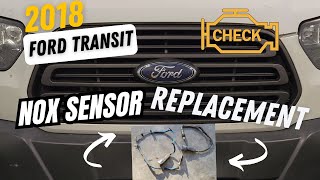
Typical fix: Replace the front (upstream) NOx sensor and its associated module. The sensor often requires a 22mm or 7/8" oxygen sensor socket for rem 🎬 Watch: Step-by-step guide to replacing the 3.2L NOx sensor yourself.oval. After replacement, the NOx sensor adaptive learn tables in the PCM must be reset using a capable scan tool like FORScan or the Ford IDS.
Est. part cost: $150-$350 - Damaged Wiring or Connectors 🟡 Medium Probability The sensor wiring is routed along the vehicle's underbody and is exposed to heat, moisture, and road debris, making it susceptible to frayed wires, melted insulation, and corrosion in the connectors. 🎬 Watch: Pro tips for diagnosing diesel NOx sensor wiring issues.
How to confirm: Visually inspect the entire wiring harness for the NOx sensor, from the sensor itself to the control module. Look for frayed wires, melted insulation, corrosion in the connectors, or loose pins. A multimeter can be used to check for continuity and proper voltage at the connector according to the service manual.
Typical fix: Repair the damaged section of wiring or replace the connector pigtail. Ensure the repair is sealed against moisture to prevent future corrosion.
Est. part cost: $20-$50 - Use of Aftermarket EGR Cleaning Agents ⚪ Low Probability Ford issued TSBs SSM 49065 and SSM 47641 specifically warning that aftermarket cleaning liquids used on the EGR cooler or intake can cause this code on the 3.2L engine by causing 'sodium poisoning' of the sensor.
How to confirm: If the code appeared shortly after performing an EGR cleaning service with non-Ford-approved chemicals, this is the likely cause. This is a diagnosis by exclusion if the sensor and wiring test good.
Typical fix: The fix requires replacing the NOx sensor, as the chemical contamination is often permanent. Ensure the intake and EGR system are free of residual cleaning agents before installing a new sensor.
Est. part cost: $150-$350 - Powertrain Control Module (PCM) Software Issue ⚪ Low Probability Multiple TSBs, including the precursor to program 21N02, mention the need to reprogram the PCM to correctly diagnose NOx sensor faults or to resolve software-related triggers for the code.
How to confirm: A Ford dealership or a qualified shop with access to Ford's diagnostic tools (IDS) can check the current software calibration of the PCM against the latest available version.
Typical fix: Reprogram the PCM to the latest software version. This is often done in conjunction with replacing a faulty sensor under program 21N02.
Est. part cost: $0-$200 (Labor for reprogramming)
Rare But Worth Checking
- Exhaust Leaks: An exhaust leak upstream of the NOx sensor can introduce oxygen into the exhaust stream, causing the sensor to report inaccurate readings and trigger the code. Check for soot trails or listen for hissing noises near exhaust flanges and gaskets, especially around the turbo and DPF connections.
- Cracked or Failing Diesel Particulate Filter (DPF): While less common, a failing DPF can allow excessive soot to pass through and contaminate the NOx sensor, causing it to fail and report erratic readings. A visual inspection of the tailpipe for black soot is a key indicator.
Diagnosis Steps
- Read the code with an OBD-II scanner to confirm P2201 is present and check for any other related codes.
- Check for any applicable TSBs or Recalls for your vehicle's VIN. Specifically, check eligibility for Customer Satisfaction Program 21N02, which extends the warranty for the front NOx sensor.
- Perform a thorough visual inspection of the Bank 1 Sensor 1 (front, upstream) NOx sensor, its connector, and wiring harness. Look for any signs of melting, corrosion, or physical damage.
- Inspect the exhaust system for any leaks between the engine and the NOx sensor. Look for black soot trails at flanges and connections.
- Use a capable scan tool (like FORScan) to view the live data stream for the NOx sensor. Check if the readings are stable, responsive, and within the manufacturer's specified range (e.g., 0-500 ppm).
- If the sensor readings are stuck or erratic, test the sensor's circuit for proper voltage and ground at the connector. Compare readings to the vehicle's service manual wiring diagram.
- If the wiring and connections are good, the NOx sensor itself is the most likely culprit.
- After replacing the sensor, clear the codes and perform a drive cycle. It is critical to have a shop or use a tool like FORScan to reset the NOx sensor adaptive values in the PCM to prevent the code from returning.
Parts You'll Likely Need
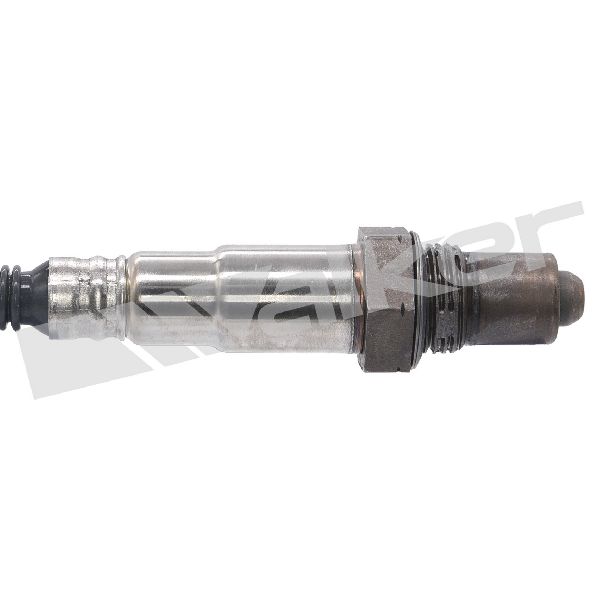
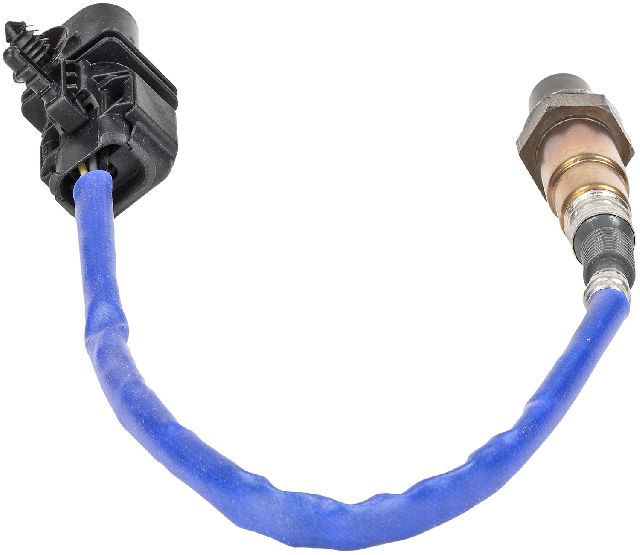
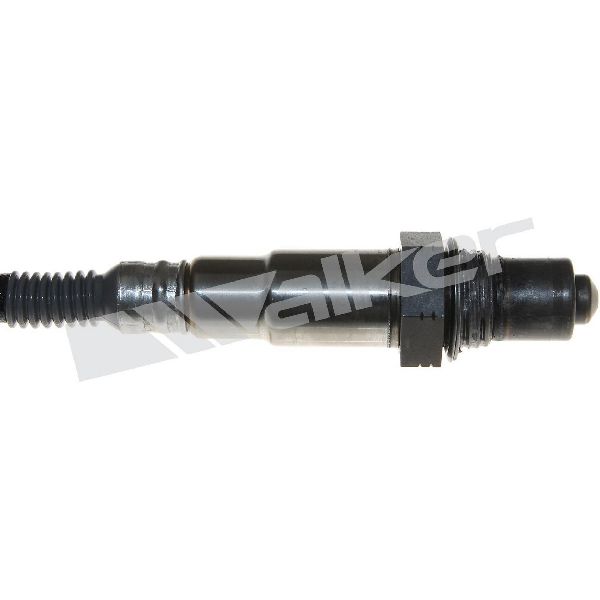
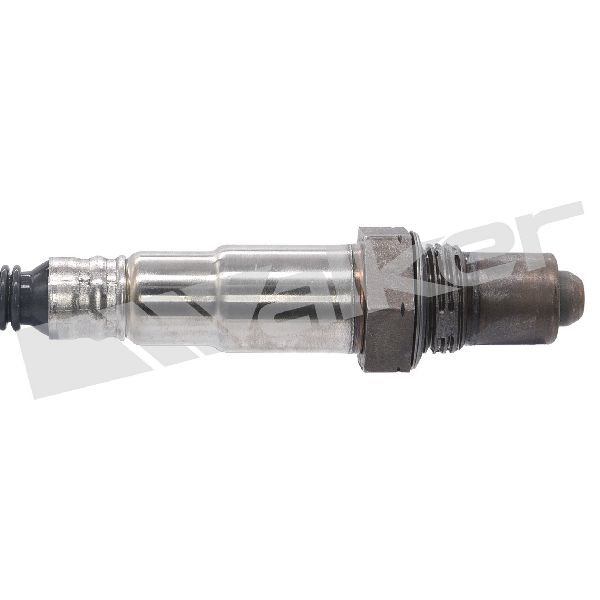
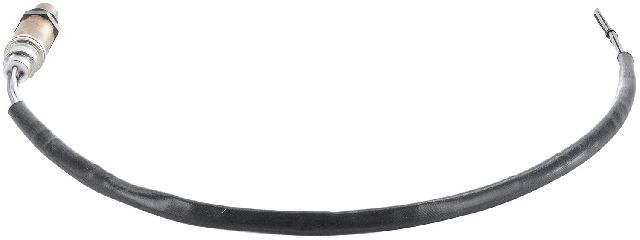
- Front Nitrogen Oxide (NOx) Sensor
(OEM #CK4Z-5J213-B (also listed as CK4Z12B591B))— This is the most common failure point for code P2201 on this vehicle, as documented by Ford's own service bulletins and customer satisfaction programs.
Trusted brands: Motorcraft, Bosch, Dorman, NTK
OEM price range: $250-$350
Aftermarket price range: $150-$250
Related Codes That Often Appear With This One
- P20EE — This code relates to SCR NOx Catalyst Efficiency. Both codes are part of the same emissions system and can be triggered by a faulty NOx sensor or related issues like EGR cleaning agents.
- P229F — This code points to the NOx Sensor Circuit Range/Performance for Bank 1, Sensor 2 (the downstream sensor). It's common to see codes for both sensors if there is a systemic issue or widespread contamination.
- P207F — This code relates to SCR Reductant (DEF) Quality Performance. A faulty NOx sensor can provide bad data, leading the PCM to misinterpret the performance of the DEF system.
- P246D — This code indicates a DPF pressure sensor issue. A user on a Reddit forum reported seeing this code alongside P2201, suggesting a potential link in complex exhaust system faults.
Technical Service Bulletins (TSBs) & Recalls
- 21N02: Customer Satisfaction Program for front NOx sensor replacement after recall 21E01 is performed, specifically for DTC P2201.
- SSM 49065: Warns that aftermarket EGR/intake cleaning can cause DTCs P207F, P20EE, P229F, P2201, and/or P24AE.
- SSM 47641: An earlier version of the bulletin warning against aftermarket EGR/intake cleaning causing the same set of DTCs.
- SSM 46066: Directly identifies DTC P2201 (NOX Sensor Circuit Range/Performance Bank 1 Sensor 1) on 2015-2017 diesel Transits and directs technicians to online repair manuals.
Platform-Specific Known Issues
- Customer Satisfaction Program 21N02: Ford extended the warranty for the front NOx sensor on some 2015-2019 Transits. This was because a prior emissions recall (21E01) updated the PCM software, which then became capable of detecting a previously hidden sensor fault, leading to code P2201. This program is a one-time repair and expires 12 months after 21E01 is completed or Dec 31, 2024, whichever comes first.
- TSB SSM 49065 & SSM 47641: These bulletins explicitly warn technicians that using aftermarket cleaning liquids or tools for the EGR cooler or intake system can cause P2201 and other related emissions codes due to chemical contamination of the sensor.
- Customer Satisfaction Program 23N04: On some 2015-2019 Transits, Ford also issued a program to replace the Exhaust Gas Temperature (EGT) sensor, which is par
Mechanic-Grade Diagnostic Values
- PCM Internal NOx Sensor Slope Test — expected: >= 72%. Failure: A self-diagnostic test result for the slope of the NOx sensor is less than 72%.
- PCM Adaptive NOx Value During Tip-Out — expected: <= 50 ppm. Failure: The measured adaptive NOx value during deceleration (tip-out) is greater than 50 ppm.
- NOx Sensor Module CAN Bus Voltage — expected: CAN High and CAN Low signal voltages should sum to approximately 5V.. Failure: The sum of the two CAN signal voltages is significantly different from 5V, or the traces on an oscilloscope are not clean mirror images of each other, indicating a communication circuit fault.
- NOx Sensor Module Power Supply — expected: 12V (Battery Voltage). Failure: Voltage at the module's power pin is significantly less than 12V, indicating a wiring or fuse issue.
- Live Data - NOx Concentration (ppm) — expected: 0-500 ppm, fluctuating with engine load and temperature.. Failure: Reading is stuck at a specific value, does not change, or is pegged at the maximum, even after a drive cycle.
Scan Tool Commands That Help
- FORScan / Ford IDS: Reset the NOx sensor adaptations — This is a critical step required after replacing a NOx sensor. The PCM stores learned values for the old sensor, and failing to reset them will cause the P2201 code to return quickly with the new sensor installed.
- FORScan / Ford IDS: Operator Commanded Regeneration (OCR) Enable — While not a direct fix for P2201, this function is useful for vehicles with frequent low-speed use that may have soot-fouled sensors or DPFs. Enabling OCR allows the operator to perform a stationary, thorough DPF regeneration, which can sometimes clean a lightly fouled sensor and is good practice for overall emissions system health.
Wiring & Ground Locations
- NOx 11 Sensor Module — Under the vehicle, mounted to the frame rail.. This is the control module for the upstream NOx sensor. Its location makes it vulnerable to water intrusion and physical damage to its connector and wiring harness, which can directly cause P2201.
- NOx 11 Sensor Module CAN Wires — In the harness running from the NOx 11 module to the Powertrain Control Module (PCM).. These wires transmit the sensor data. Per wiring diagrams, the CAN2+ wire is typically Gray/Blue (GRY/BLU) and the CAN2- wire is Green/Orange (GRN/ORG). Damage to these specific wires will cause a loss of signal and trigger P2201.
- NOx Sensor Power Fuse — Likely Fuse F14 (15A) in the Battery Junction Box / underhood fuse box.. The NOx sensor modules require a 12V power supply to operate. A blown or non-powered fuse will cause the modules to be offline, resulting in communication-related fault codes like P2201.
- Frame Ground Point — On the frame rail near the NOx sensor module.. The NOx sensor module requires a clean, solid ground connection to the chassis. Corrosion or looseness at the ground point can cause erratic sensor readings or complete loss of communication, triggering P2201.
"I Checked Everything" — The Actual Cause
- A common diagnostic trap is assuming the NOx sensor or its wiring is faulty when communication is lost. In one documented case on a Ford Transit, the P2201 code (and a code for the downstream sensor) was caused by a lack of 12V power to the sensor modules. The technician found that the 15A fuse responsible for the sensors in the battery junction box was not receiving power, despite the fuse itself being good. The root cause was an issue within the fuse box itself, not the sensor or its harness. This highlights the need to confirm 12V power and ground at the sensor module connector before condemning the sensor.
OEM Part Supersession History
CK4Z-9D378-B, CK4Z-9D378-E→CK4Z-9D378-F— Part revision and improvement.
Heads up: This part number trail is for the REAR (downstream) NOx sensor but illustrates that Ford has revised these components. It is critical to verify the latest part number for the FRONT (upstream) sensor using the vehicle's VIN, as using an incorrect or outdated part can lead to persistent issues.
Helpful Videos
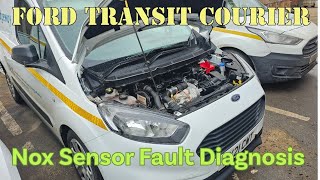
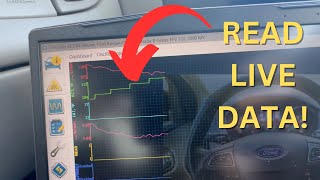
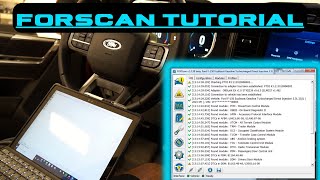
We Have This Part in Stock

The information in this article is provided for general reference and educational purposes only. Vehicle specifications, procedures, and part compatibility can vary by production date, trim level, and region. Always consult your vehicle's factory service manual and verify part numbers before purchasing or performing repairs. Safety-critical components such as airbags, seat belts, and braking systems should be installed by a qualified professional.
- Ford TRANSIT:
- 🎬 Helpful Videos
- 🛍️ Shop This Part
- What's Unique About the 2015-2019 Ford TRANSIT
- Diagnostic Flowchart
- Symptoms You May Notice
- Most Likely Causes
- Rare But Worth Checking
- Diagnosis Steps
- Parts You'll Likely Need
- Related Codes That Often Appear With This One
- Technical Service Bulletins (TSBs) & Recalls
- Platform-Specific Known Issues
- Mechanic-Grade Diagnostic Values
- Scan Tool Commands That Help
- Wiring & Ground Locations
- "I Checked Everything" — The Actual Cause
- OEM Part Supersession History
- 🎟️ Get 5% Off