

P2201 on 2016-2020 Ford F-350 SD 6.7L: NOx Sensor Causes and Fixes
On a 2016-2020 F-350 with the 6.7L Power Stroke engine, code P2201 is most often caused by a faulty upstream NOx sensor (Bank 1, Sensor 1) or outdated PCM software. Before replacing the sensor (Part No. LC3Z-5L248-A, approx. $150-$500), check for Ford Technical Service Bulletins (TSBs) like TSB 24-2136 or TSB 20-2044, which may recommend a simple software update as the primary or partial fix.
- P2201 on a 6.7L Power Stroke almost always points to the upstream (Bank 1, Sensor 1) NOx sensor or the PCM software.
- Before buying any parts, have a dealer or qualified shop check if your truck needs a PCM software update, as this is a very common and less expensive fix.
- If the sensor needs replacement, ensure you are buying the correct one (upstream). The OEM part number is often LC3Z-5L248-A for later models, but always verify for your specific VIN.
- Inspect the sensor's wiring harness for damage, as this can mimic the symptoms of a failed sensor.
- This code will cause an emissions test failure and can lead to reduced engine power, so it should be addressed promptly.
What's Unique About the 2016-2020 Ford F-350 SD

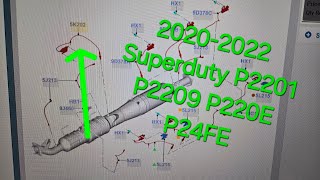
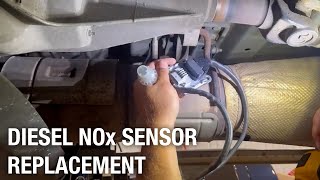
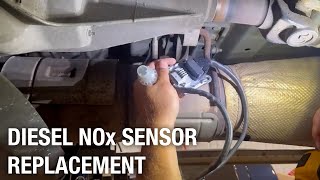
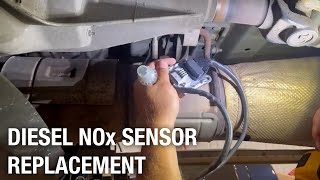
The 6.7L Power Stroke diesel engine in this generation of Super Duty trucks has a well-documented history of issues related to the NOx sensors. Ford has released numerous Technical Service Bulletins (TSBs) addressing this specific code. These issues range from PCM software glitches that misinterpret sensor data to the sensors themselves failing, sometimes due to water intrusion into the wiring harness or module connector. This makes it critical for owners to check for applicable TSBs before assuming a part needs replacement, as a dealer reflash of the PCM 🎬 Watch: How to fix P2201 and P2209 codes on your Powerstroke is often the first, and sometimes only, step required.
Diagnostic Flowchart

Tap your situation to follow the diagnostic path that matches what you're seeing on this vehicle.
Generation note: The 2016 model year is the end of the third generation (P473), while 2017-2020 models are the fourth generation (P558). The P2201 code is common to both generations, particularly on the 6.7L Power Stroke engine. However, specific TSBs often have build-date ranges, so it's important to verify which TSBs apply to your specific model year. For example, TSB 17-2234 applies to 2015-2016 models, while TSB 24-2136 is for 2020-2022 models.
Symptoms You May Notice
- Check Engine Light (Malfunction Indicator Lamp) is on.
- Reduced engine power or forced idle condition, sometimes referred to as 'limp mode'.
- Excessive or unusual smoke from the exhaust.
- Increased fuel consumption.
- Failed emissions test.
- Increased AdBlue/DEF consumption as the ECM may over-inject to compensate for faulty sensor data.
- Replacing the NOx sensor when the actual problem is an outdated PCM software version that could be fixed with a reflash.
- Replacing the wrong NOx sensor. The code specifically points to Bank 1, Sensor 1 (upstream), not the downstream sensor (Sensor 2).
- Assuming the sensor is bad when a wiring issue, like water intrusion at the module connector or an intermittent open/short in the harness, is the root cause.
- Clearing the code after sensor replacement without performing a module reset, which can cause the code to return.
Most Likely Causes

- Outdated Powertrain Control Module (PCM) Software 🔴 High Probability Ford has issued multiple TSBs indicating that software errors can cause the PCM to incorrectly flag the P2201 code. TSB 24-2136 addresses this for 2020-2022 models, TSB 17-2234 for 2015-2016 models, and TSB 17-0054 for 2017 models. Often, a simple reprogram is the only fix needed.
How to confirm: A Ford dealer or a qualified shop with access to Ford's service information (OASIS) can check your vehicle's VIN against the database of TSBs to see if a software update is available.
Typical fix: Reprogramming the PCM to the latest software version using Ford's IDS or FDRS tool.
Est. part cost: $0 - Faulty Upstream (Bank 1, Sensor 1) NOx Sensor 🔴 High Probability These sensors operate in a harsh exhaust environment and are a common failure point. Ford has issued a customer satisfaction program (21N02) extending the warranty on the front NOx sensor for certain 2013-2016 models if code P2201 appears after emissions recall 21E01 was performed. More recent TSBs, like 24-2136, explicitly require replacing the sensor in conjunction with a software update for 2020-2022 models.
How to confirm: After confirming the PCM software is up-to-date and inspecting the wiring, a scan tool can be used to monitor the sensor's live data. Implausible or unresponsive readings (e.g., reading too low compared to the downstream sensor) point to a failed sensor.
Typical fix: Replace the upstream NOx sensor and its associated module. After replacement, a module reset using a tool like FORScan or Ford's IDS may be required.
Est. part cost: $150-$500 - Wiring or Connector Issues 🟡 Medium Probability The sensor's wiring harness is routed along the vehicle's frame and is susceptible to damage from road debris, heat, or corrosion. TSB 18-2365 specifically notes water intrusion into the NOx sensor module connector as a cause for related codes (U029D and P2209) and mandates replacement of the sensor module and harness if moisture is found. Technicians have reported finding corroded terminals in the module connector on new trucks.
How to confirm: Visually inspect the entire wiring harness from the NOx sensor to the control module and PCM for any signs of chafing, melting, corrosion, or loose pins in the connectors. Pay close attention to the module connector for signs of water entry. Check for KOEO voltage at the module's power pin; a reading significantly below battery voltage (e.g., 7.5V instead of 12V+) indicates a wiring fault.
Typical fix: Repair the damaged section of the wiring harness or replace the connector. In cases of water intrusion, the NOx sensor module and harness assembly are replaced.
Est. part cost: $20-$250 - Exhaust System Leaks ⚪ Low Probability Leaks in the exhaust system upstream of the NOx sensor can allow fresh air to enter, skewing the sensor's readings and causing the PCM to set a performance code. While less common than sensor or software issues, it's a possibility on any vehicle.
How to confirm: Inspect the exhaust manifolds, gaskets, and piping for soot trails or audible leaks. A smoke test can be performed to pinpoint the exact location of a leak.
Typical fix: Replace the leaking gasket or repair the damaged exhaust component.
Est. part cost: $50-$250
Rare But Worth Checking
- Faulty Powertrain Control Module (PCM): This is extremely rare. All other possibilities, especially software updates and sensor failure, should be exhausted before considering PCM replacement. A faulty PCM can sometimes cause false codes for sensors that are working correctly.
Diagnosis Steps
- Check for all stored DTCs with a capable OBD-II scanner.
- Check for applicable Technical Service Bulletins (TSBs) and recalls for your vehicle's VIN. Prioritize any recommended PCM software updates before replacing parts. This is the most critical first step.
- Perform a thorough visual inspection of the Bank 1 Sensor 1 (upstream) NOx sensor, its control module, and the entire wiring harness for any signs of physical damage, melting, or corrosion. Per TSB 18-2365, specifically check the module connector for water intrusion.
- With the Key On, Engine Off (KOEO), unplug the NOx sensor module connector and test for battery voltage (approx. 12V) at the power supply pin (Pin 1). A low reading (e.g., 7.5V) indicates a wiring problem upstream of the module.
- Check resistance to ground on the ground pins at the module connector. It should be very low (e.g., <1 ohm). A forum post identified G400 on the frame as a relevant ground point.
- Inspect the exhaust system for any leaks between the engine and the NOx sensor.
- Using a scan tool, monitor the live data stream for the NOx sensor 1/1. Check if the readings are plausible and change with engine load. Compare its readings to the downstream NOx sensor (1/2); a large discrepancy where the upstream sensor reads significantly lower than the downstream one can indicate a failed upstream sensor.
- If other codes related to the DPF are present (like P2463), investigate the DPF system's health and consider performing a manual regeneration as per TSB SSM 47402.
- If the PCM software is current, the wiring is intact, and no exhaust leaks are found, the NOx sensor itself is the most likely culprit. After replacement, perform a module reset if required.
Parts You'll Likely Need

- Upstream Nitrogen Oxide (NOx) Sensor (Bank 1, Sensor 1)
(OEM #LC3Z-5L248-A)— This sensor is the most common hardware failure for code P2201. It includes the sensor probe and the attached control module. TSB 24-2136 explicitly calls for replacing this part along with a PCM update for certain vehicles. Note that for some 2017-2019 models, TSB 18-2365 calls for part number HC3Z-5L248-A. Always verify the correct part for your VIN.
Trusted brands: Motorcraft, Bosch, Standard Motor Products (SMP), DENSO PowerEdge
OEM price range: $117-$250
Aftermarket price range: $150-$350
Related Codes That Often Appear With This One
- P2209 — Relates to the NOx sensor heater sense circuit. TSB 24-2136 and TSB 18-2365 both group P2209 with P2201, indicating a common cause like a faulty sensor, wiring, or software.
- P20EE — Indicates an issue with SCR NOx catalyst efficiency. A faulty upstream NOx sensor (P2201) can provide bad data, leading the PCM to misjudge catalyst performance. Several TSBs list these codes together. A sensor failing by reading too low can also trigger this code.
- P2463 — This code means 'Diesel Particulate Filter (DPF) Soot Accumulation - Not Performing Regeneration'. DPF and NOx sensor issues are often linked, as noted in TSB 18-2005, TSB 17-2234, and SSM 47402.
- P220E — Relates to the NOx sensor heater control circuit. TSB 24-2136 links it with P2201, pointing to a software or sensor electrical fault.
- P24FE — This is another NOx sensor-related code that TSB 24-2136 links with P2201, pointing to a combined software and sensor issue.
Technical Service Bulletins (TSBs) & Recalls
- TSB 24-2136
- SSM 47402
- 21N02
- TSB 21-2248
- TSB18-2005
- 17-2234
- TSB 21-2055
- TSB17-0054
- TSB 20-2044
- TSB 18-2365
- TSB 17-0021
Platform-Specific Known Issues
- TSB 24-2136: For some 2020-2022 models built on or before 31-Oct-2022, DTCs P2201, P2209, P220E, and/or P24FE may be caused by a combination of a software issue and the NOx sensor itself. The fix requires replacing the NOx sensor 11 (upstream) and reprogramming both the PCM and TCM.
- Customer Satisfaction Program 21N02: Extends the warranty on the front NOx sensor for some 2013-2016 models for 12 months after emissions recall 21E01 was performed. This program only applies if code P2201 appears after the recall work is done and expires Dec 31, 2024.
- TSB 20-2044: On some 2020 models built before Feb 5, 2020, P2201 (along with P203B and P274B) can be caused by PCM software and is fixed by reprogramming the module. No parts replacement is indicated.
- TSB 18-2365: For 2017-2019 models, this TSB addresses codes U029D and/or P2209 (often seen with P2201) caused by water intrusion into the NOx sensor module connector. The fix is to inspect for moisture and, if found, replace the NOx sensor module and the associated wiring harness.
- TSB 17-2234 (Supersedes 17-0021): For 2015-2016 models, this TSB addresses P2201 appearing with DPF-related codes (P2459, P2463, P246C). The sole fix prescribed is to reprogram the PCM to the latest calibration.
Mechanic-Grade Diagnostic Values
- NOx Sensor Module Power Supply Voltage — expected: >12V with Key On, Engine Off (KOEO). Failure: A reading significantly below battery voltage (e.g., 7.5V) points to a wiring harness or fuse block issue, not a faulty sensor module.
- NOx Sensor Module Ground Circuit Resistance — expected: < 5 ohms (ideally < 1 ohm). Failure: High resistance (e.g., 37 ohms as seen in one case) indicates a poor ground connection at a location like G400 on the frame.
- NOx Sensor Heater Circuit Resistance — expected: 2 to 8 ohms (general value, not specific to Ford). Failure: An open circuit (infinite resistance) or short circuit (near zero ohms) indicates a failed heater element within the sensor.
- Live Data: Upstream vs. Downstream NOx Sensor (PPM) — expected: Upstream (Sensor 1) reading should be higher than the Downstream (Sensor 2) reading after the SCR catalyst is working.. Failure: If the upstream sensor consistently reads much lower than the downstream sensor (e.g., NOx1 at 107ppm and NOx2 at 434ppm), it indicates a faulty upstream sensor that is failing by reading too low.
Scan Tool Commands That Help
- Ford IDS/FDRS: Module Reprogramming — This is the first step when a TSB indicates a software update is available to fix a false P2201 code. It should be performed before replacing any hardware.
- Ford IDS or FORScan: NOx Module Reset / Clear Specified Function — After replacing a NOx sensor, the PCM may need to have its learned values for the old sensor cleared. Failing to do this can cause the P2201 code to return even with a new part.
- Advanced OBD-II Scanner: Module Self-Test — As a final diagnostic step, if a scan tool supports it, initiating a PCM self-test can help determine if the control module itself has internal hardware or firmware issues, though this is a very rare cause.
Wiring & Ground Locations
- G400 — On the frame rail, near the NOx sensor modules.. This is a primary ground point for the NOx sensor modules. Corrosion or a loose connection at G400 can cause high resistance in the ground circuit, leading to erratic sensor behavior and triggering P2201 or related codes.
- NOx Sensor Module Connector — Attached to the NOx sensor module, which is mounted on the outside of the frame rail.. This connector is a common point of failure due to water intrusion and corrosion. Technicians perform voltage and resistance checks here. Pin 1 is Power, Pin 4 is Ground, Pin 2 is CAN High, and Pin 3 is CAN Low.
- C1581 — Described as an in-line connector on the right side frame rail, between the underhood fuse block and the sensor harness.. This connector represents another potential point of failure (corrosion, loose pins) in the power supply circuit to the NOx sensor module. An issue here could cause the low voltage reading seen in some diagnoses.
Real Owner Repair Stories
- Reddit user NotAlpharius_XX (2017 Ford F-350 6.7L) — Check Engine Light with code P2201 immediately after purchasing the truck.
❌ Tried (didn't work) The dealership first followed TSB 18-2005 and flashed the PCM.
✅ What actually fixed it About a week after the PCM flash, different codes appeared. The ultimate fix was replacing the NOx sensor (Bank 1, Sensor 1). - Ford Truck Enthusiasts forum user btmansfi (2017 Ford F-350 6.7L) — Check Engine Light with code P2201.
❌ Tried (didn't work) Replacing the NOx sensor and clearing the codes with a standard scanner did not resolve the issue; the code returned.
✅ What actually fixed it The suggested fix, though not confirmed by the original poster, was to use a more advanced tool (like FORScan) to perform a specific module reset for the NOx sensor. This implies that simply swapping the part is not enough; the PCM's adaptive values must be reset for the new sensor.
"I Checked Everything" — The Actual Cause
- The electrical equivalent of a 'smoke test clean' scenario involves intermittent wiring faults. A technician on a forum reported diagnosing a P229E (related NOx code) where the module power supply read a healthy 12.5V one day, but an insufficient 7.5V the next. A single spot check would have missed the fault, leading to misdiagnosis of the sensor module. The actual cause was an intermittent open/short in the wiring harness that was difficult to pinpoint with a wiggle test.
OEM Part Supersession History
HC3Z-5L248-A→LC3Z-5L248-A— Likely a revision for improved reliability or to align with software updates in newer model years or TSBs.
Heads up: While the parts may be physically interchangeable, using the incorrect revision for your vehicle's specific software calibration could lead to persistent codes. Always verify the correct part number for your VIN with a Ford dealer, especially when a TSB is being performed.
Model Year Variations Within This Range
- 2016 vs. 2017-2020: The 2016 model is the final year of the steel-bodied P473 platform, while 2017 marks the beginning of the aluminum-bodied P558 platform. The 6.7L engine in 2017 received a power increase to 440 hp and 925 lb-ft of torque. While the P2201 fault is common to both, the specific TSBs and diagnostic procedures can differ, making it crucial to use the correct service information for the specific model year.
- 2020: The 2020 model year introduced another power increase (475 hp, 1,050 lb-ft), a new 10-speed automatic transmission, and more complex engine and transmission control unit software. This makes adherence to TSBs like 24-2136, which requires reprogramming both the PCM and TCM, especially critical for this model year.
Helpful Videos

The information in this article is provided for general reference and educational purposes only. Vehicle specifications, procedures, and part compatibility can vary by production date, trim level, and region. Always consult your vehicle's factory service manual and verify part numbers before purchasing or performing repairs. Safety-critical components such as airbags, seat belts, and braking systems should be installed by a qualified professional.
- Ford F-350 SD:
- 🎬 Helpful Videos
- What's Unique About the 2016-2020 Ford F-350 SD
- Diagnostic Flowchart
- Symptoms You May Notice
- Most Likely Causes
- Rare But Worth Checking
- Diagnosis Steps
- Parts You'll Likely Need
- Related Codes That Often Appear With This One
- Technical Service Bulletins (TSBs) & Recalls
- Platform-Specific Known Issues
- Mechanic-Grade Diagnostic Values
- Scan Tool Commands That Help
- Wiring & Ground Locations
- Real Owner Repair Stories
- "I Checked Everything" — The Actual Cause
- OEM Part Supersession History
- Model Year Variations Within This Range
- 🎟️ Get 5% Off