

P2201 on 2011-2015 Ford F-350 SD 6.7L: NOx Sensor Causes and Fixes
On a 2011-2015 F-350 with the 6.7L Power Stroke, code P2201 almost always points to a faulty upstream NOx sensor (Bank 1, Sensor 1). A PCM software update may also be required, as noted in several Ford TSBs. The sensor is located on the passenger side of the exhaust, before the SCR catalyst. Replacement involves the sensor probe and its attached module, which is mounted on the outside of the frame rail.
- P2201 on a 6.7L Power Stroke means there's a performance issue with the upstream NOx sensor (Bank 1, Sensor 1).
- The most common fix is replacing the NOx sensor assembly, but don't skip diagnosis.
- Always check for Technical Service Bulletins (TSBs). A simple PCM software update at the dealer might be the required fix, saving you the cost of a new sensor.
- Do not use aftermarket chemical cleaners on the EGR or intake systems, as Ford has warned this can cause this specific code.
- Before buying a new sensor, perform a thorough visual inspection of the wiring and connectors for any damage.
What's Unique About the 2011-2015 Ford F-350 SD

For the 6.7L Power Stroke engine in this generation of Super Duty trucks, Ford has issued multiple Technical Service Bulletins (TSBs) related to code P2201. These bulletins highlight that the cause can be a faulty sensor, but also point to the need for PCM software updates to correct overly sensitive diagnostics. Specifically, TSB 17-2234 addresses the need for a PCM reprogram on 2015-2016 models. Furthermore, Ford specifically warns against using aftermarket cleaning liquids for the EGR system, as this can damage components and trigger this code.
Diagnostic Flowchart

Tap your situation to follow the diagnostic path that matches what you're seeing on this vehicle.
Symptoms You May Notice
- Check Engine Light (Malfunction Indicator Lamp) is on
- Vehicle may enter a reduced engine power mode ('limp mode')
- Increased exhaust emissions, possibly with visible smoke
- Failure to pass a state emissions inspection
- Inconsistent fuel economy
- Increased consumption of Diesel Exhaust Fluid (AdBlue)
- Replacing the downstream (Bank 1, Sensor 2) NOx sensor when the code is for Sensor 1.
- Replacing the sensor without first checking if a simple PCM reflash is the correct fix as per TSB #17-2234 for applicable model years.
- Replacing other emissions components like the DPF or EGR valve without diagnosing the NOx sensor circuit first.
- Clearing the code and assuming the problem is fixed. The code often becomes a 'Historical' or 'Pending' code and may return after a few drive cycles.
Most Likely Causes

- Faulty NOx Sensor (Bank 1, Sensor 1) 🔴 High Probability These sensors operate in a harsh exhaust environment and are a common failure point. The sensor probe can become contaminated with soot or fail internally, and the integrated module can fail. Multiple TSBs address sensor faults or software misinterpretations of sensor data.
How to confirm: After checking wiring, the most common diagnostic step is to replace the sensor. A scan tool can monitor the sensor's live data (PID) to see if it is providing erratic, stuck, or no readings. A healthy sensor's readings should change with engine RPM and load. In some cases, a faulty sensor can cause a fuse in the Battery Junction Box (BJB) to blow, leading to multiple sensor codes. A quick functional test involves removing the sensor, turning the key on, and spraying the sensor tip with an ammonia-based glass cleaner; a change in NOx ppm readings on a scan tool indicates the sensor is at least partially functional.
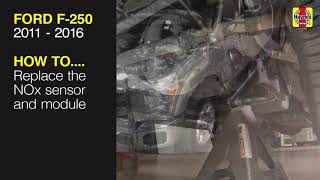
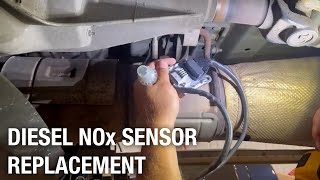
Typical fix: Replace the upstream NOx sensor (Bank 1, Sensor 1) and its associated module. The sensor probe requires a 7/8" or 22mm wrench and may require penetrating lubricant to remove. The module is typically attached to the outside of the frame rail with push-pin clips. 🎬 Watch: Step-by-step guide to replacing the NOx sensor and module. After replacement, it is recommended to clear the codes and perform a DPF regeneration cycle. Some scan tools, like FORScan, have a specific function to reset the NOx sensor module adaptations, which may be required for the new sensor to be recognized correctly.
Est. part cost: $280-$450 - Powertrain Control Module (PCM) Software Out of Date 🟡 Medium Probability Ford has released multiple TSBs (e.g., #17-2234 for 2015-2016 models) advising a PCM reprogram to fix this code, indicating the original software was too sensitive or had logic errors that could falsely trigger P2201.
How to confirm: A Ford dealership or a qualified shop with a Ford diagnostic tool (IDS) can check the current software calibration level against the latest available version. The TSBs often apply to specific build dates and VIN ranges.
Typical fix: Reprogram the PCM to the latest calibration using IDS or FJDS software. This must be done by a dealer or a properly equipped independent shop. Per Ford's TSBs, this may also reset the adaptive transmission strategy, leading to firmer shifts for a few days.
Est. part cost: $0 - Damaged Wiring or Connectors 🟡 Medium Probability The sensor wiring runs along the truck's undercarriage and is exposed to heat, moisture, and physical damage. The harness runs over the frame rail, and the connector on the module is susceptible to water intrusion and corrosion. TSBs also mention checking for damaged ground connections (G400).
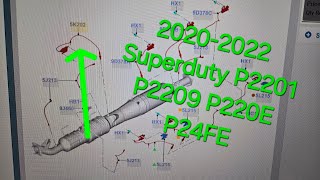
How to confirm: Visually inspect the entire wiring harness for the NOx sensor, from the sensor itself to the control module and its connection to the main harness. Look for melted, chafed, or broken wires and corroded pins in connectors. Pay close attention to the connector at the module on the frame rail and the G400 ground on the frame rail near the rear axle. 🎬 See this video for a critical ground wire maintenance tip.
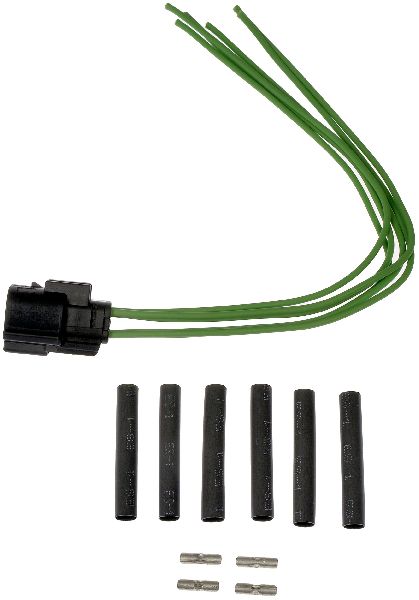
Typical fix: Repair the damaged section of the wiring harness or replace the connector pigtail. Ensure connectors are clean and free of dirt or moisture before reconnecting.
Est. part cost: $20-$100
Rare But Worth Checking
- Use of Aftermarket EGR/Intake Cleaning Products: Ford issued specific warnings (TSBs #SSM 49065 & #SSM 47641) stating that using aftermarket cleaning liquids or tools for the EGR cooler or intake on the 6.7L engine can trigger P2201 and other codes. These cleaners can damage sensitive downstream components like the NOx sensor.
- Exhaust Leaks: A leak in the exhaust system upstream of the NOx sensor can allow fresh air to enter, skewing the sensor's readings and causing it to report an out-of-range value. Check the downpipe connection and any flanges before the sensor.
- Faulty Powertrain Control Module (PCM): While rare, the PCM itself can fail. This should only be considered after all other possibilities, including sensor replacement and reprogramming, have been exhausted.
Diagnosis Steps
- Read the DTCs with an OBD-II scanner to confirm P2201 and note any other codes present.
- Visually inspect the NOx sensor (Bank 1, Sensor 1, the upstream sensor before the SCR catalyst, located on the passenger side exhaust) and its wiring harness for any signs of damage, melting, or corrosion.
- Check for any applicable TSBs for your vehicle's specific year and build date. TSBs #17-2234, #SSM 49065, and #21N02 are particularly relevant.
- If a TSB indicates a PCM reflash is needed for your VIN and build date, have this performed by a dealer or qualified shop before replacing parts.
- If no TSB applies or the reflash doesn't solve the issue, use a scan tool to monitor live data from the NOx sensor. Look for readings that are stuck, erratic, or do not change with engine RPM. A reading of -40F for an associated temperature sensor can also indicate a sensor fault.
- Check for exhaust leaks between the engine and the NOx sensor.
- If the sensor is providing no data or irrational data and the wiring is confirmed to be good, replace the NOx sensor and its module. The sensor requires a torque of 37 lb-ft (50 Nm). 🎬 Watch: Quick fix for common NOx sensor codes on Powerstroke engines.
- After replacement, clear the DTCs and perform a drive cycle, including a DPF regeneration if possible, to ensure the code does not return. Some owners report needing to use a tool like FORScan to perform a 'NOx Sensor Replacement' or 'SCR Parameter' reset.
Parts You'll Likely Need
- Upstream NOx Sensor (Bank 1 Sensor 1)
(OEM #DC3Z-9D378-A)— This is the most common component to fail, triggering the P2201 code. It includes the sensor probe and the attached control module. The original part DC3Z-9D378-A has been superseded by DC3Z-9D378-D.
Trusted brands: Motorcraft, Bosch, Dorman, Standard Motor Products
OEM price range: $340-$480
Aftermarket price range: $280-$400
Related Codes That Often Appear With This One
- P2200 — This is a general circuit fault for the same NOx sensor, while P2201 is a range/performance issue. They often appear together.
- P2209 — This code relates to the NOx sensor heater sense circuit. A fault in the sensor or its wiring can trigger both codes, and TSBs often list them together.
- P20EE — This code indicates 'SCR NOx Catalyst Efficiency Below Threshold'. A faulty NOx sensor providing incorrect data can lead the PCM to believe the catalyst isn't working properly.
- P2463 — This code for 'Diesel Particulate Filter Soot Accumulation' is mentioned alongside P2201 in TSB 17-2234, suggesting a PCM software update addresses logic for both systems.
Technical Service Bulletins (TSBs) & Recalls

- 21N02
- SSM 49065
- SSM 47641
- 17-2234
- SSM-45871
- 17-0021
Platform-Specific Known Issues
- TSB #17-2234: For 2015-2016 models, instructs technicians to reprogram the PCM to the latest calibration to fix P2201. This TSB supersedes TSB 17-0021.
- TSB #21N02: Notes that P2201 can be identified after emissions recall 21E01 is performed, pointing to a front NOx sensor fault.
- TSB #SSM 49065 & #SSM 47641: Warn that using aftermarket cleaning liquids for the EGR cooler or intake on the 6.7L engine can cause P2201.
- TSB #SSM-45871: Specifically calls out P2201 as a known issue on 2015-2016 F-Super Duty 6.7L trucks.
- Owner Experience: On forums, owners frequently ask for the location of Bank 1 Sensor 1, confirming it's the upstream sensor on the passenger side. Some owners have successfully replaced the sensor themselves, noting access is tight and requires removing the passenger front fender liner.
Mechanic-Grade Diagnostic Values
- NOx Sensor 1/1 Plausibility Check — expected: During an intrusive EGR shutoff test at idle, the measured NOx value should be within 50% of the expected calculated value.. Failure: Code P2201 can be set if the measured maximum NOx is less than 50% of the expected value during the test.
- NOx Sensor Heater Resistance — expected: Typically 2 to 8 ohms, depending on ambient temperature.. Failure: A reading outside this range indicates a faulty heater element within the sensor.
- NOx Sensor Supply Voltage — expected: Between 10V and 17V.. Failure: A voltage outside this range will set a supply voltage DTC (like P220A) and indicates a wiring or power supply issue, not necessarily a sensor failure.
Scan Tool Commands That Help
- FORScan: Reset of the NOx sensor adaptations — After replacing a NOx sensor, this function should be performed to clear the learned values from the old sensor. Some owners report the P2201 code will not clear permanently until this reset is performed.
- Ford IDS: Selective Catalytic Reduction (SCR) System Procedure — This is a comprehensive service function used after component replacement (like a NOx sensor) or PCM reprogramming. It can involve resetting various learned parameters for the entire aftertreatment system.
- FORScan: Diesel Particulate Filter (DPF) Static Regeneration — While not a direct fix for P2201, performing a static regeneration after a sensor replacement helps ensure the entire emissions system is operating under correct parameters and can help verify the repair.
Wiring & Ground Locations

- G400 — On the left (driver's side) frame rail, in the vicinity of the rear axle or above the spare tire.. Ford has issued communications (SSM 4990) stating that a loose, missing, or corroded G400 ground is a known cause for multiple emissions-related DTCs, including those for the SCR and NOx system. This is especially common on upfitted or modified vehicles.
- NOx Sensor 1 Module Connector — The module is mounted to the outside of the passenger-side frame rail, often near the oil filter area. Access typically requires removing the passenger front fender liner.. This connector is a primary point for inspection. Its location makes it vulnerable to moisture and corrosion, which can disrupt the sensor signal and trigger a P2201 range/performance code.
Real Owner Repair Stories
- Reddit user NotAlpharius_XX (2017 F-350 6.7L (Note: This is slightly newer than the target range, but the system is very similar and the story is highly relevant)) — Check Engine Light with code P2201 came on shortly after purchasing the truck.
❌ Tried (didn't work) The dealership first attempted to fix the issue by flashing the PCM, as suggested by a TSB. This did not resolve the problem.
✅ What actually fixed it About a week after the PCM flash, different codes appeared. The ultimate fix was replacing the NOx sensor (Bank 1, Sensor 1). - Ford Truck Enthusiasts Forum user btmansfi (2017 F-350 6.7L) — P2201 code appeared shortly after purchase.
❌ Tried (didn't work) Replaced the NOx sensor, cleared codes, and disconnected both batteries. The code still returned.
✅ What actually fixed it The solution was to use FORScan software to specifically reset the NOx module after the new sensor was installed. This cleared the code permanently.
OEM Part Supersession History
DC3Z-9D378-A→DC3Z-9D378-D— Standard part revision and improvement by the manufacturer.
Model Year Variations Within This Range
- 2011-2014: These early 6.7L engines used a Garrett GT32 Single Sequential Turbocharger (SST) which had two compressor wheels. While not directly related to the NOx sensor, early turbo failures were more common and could potentially lead to oil contamination downstream, affecting emissions sensors.
- 2015-2016: The 2015 model year introduced a significant update, including a larger, more conventional Garrett GT37 single VGT turbo, an improved Bosch CP4.2 fuel pump, and revised fuel injectors. This resulted in a power increase to 440 hp and 860 lb-ft of torque. TSB #17-2234, which specifically calls for a PCM reflash for P2201, applies to these updated 2015-2016 models, suggesting the software logic was adjusted for the new hardware.
Helpful Videos

We Have This Part in Stock


The information in this article is provided for general reference and educational purposes only. Vehicle specifications, procedures, and part compatibility can vary by production date, trim level, and region. Always consult your vehicle's factory service manual and verify part numbers before purchasing or performing repairs. Safety-critical components such as airbags, seat belts, and braking systems should be installed by a qualified professional.
- Ford F-350 SD:
- 🎬 Helpful Videos
- 🛍️ Shop This Part
- What's Unique About the 2011-2015 Ford F-350 SD
- Diagnostic Flowchart
- Symptoms You May Notice
- Most Likely Causes
- Rare But Worth Checking
- Diagnosis Steps
- Parts You'll Likely Need
- Related Codes That Often Appear With This One
- Technical Service Bulletins (TSBs) & Recalls
- Platform-Specific Known Issues
- Mechanic-Grade Diagnostic Values
- Scan Tool Commands That Help
- Wiring & Ground Locations
- Real Owner Repair Stories
- OEM Part Supersession History
- Model Year Variations Within This Range
- 🎟️ Get 5% Off