

P2201 on 2011-2015 Ford F-250 SD: NOx Sensor Causes and Fixes
This code indicates a fault with the upstream NOx (Nitrogen Oxide) sensor on Bank 1. The most common fix is replacing the sensor and its control module, which can cost between $250 and $500 for the part. In many cases, a simple PCM software update at a dealership is required, either as the sole fix or in conjunction with the sensor replacement. Check for eligibility under Ford's warranty extension program 21N02 before paying for repairs.
- P2201 on a 2011-2015 F-250 almost always points to the upstream NOx sensor on Bank 1 (passenger side).
- Before replacing any parts, check if your truck is eligible for any open recalls or warranty extensions, like 21E01 and 21N02.
- The fix is often two-fold: replacing the faulty NOx sensor and ensuring the truck's computer (PCM) has the latest software from Ford.
- Do not use aftermarket EGR or intake cleaning products, as Ford has warned they can trigger this code.
- While you can continue driving with this code, addressing it promptly prevents potential damage to the more expensive DPF and SCR emissions components.
What's Unique About the 2011-2015 Ford F-250 SD

The 6.7L Power Stroke diesel engine in the 2011-2015 F-250 uses a complex emissions system to meet standards. NOx sensors were a particularly common failure point on early 6.7L engines. Ford has issued numerous Technical Service Bulletins (TSBs) and even a warranty extension program related to P2201. Specifically, Emissions Recall 21E01 was a software update intended to properly detect NOx sensor faults that were previously being missed. Subsequently, Customer Satisfaction Program 21N02 was created to provide a one-time, free replacement of the front NOx sensor if it failed with code P2201 within 12 months *after* the 21E01 recall was performed. This indicates the problem is well-documented and often more nuanced than simply a bad sensor.
Diagnostic Flowchart

Tap your situation to follow the diagnostic path that matches what you're seeing on this vehicle.
Symptoms You May Notice
- Check Engine Light (Malfunction Indicator Lamp) is on
- Increased emissions or a noticeable smell from the exhaust
- Reduced engine performance or 'limp mode', especially under load
- Erratic or decreased fuel economy
- Excessive smoke from the exhaust
- Replacing the NOx sensor without checking for required PCM software updates. TSBs indicate that a reprogram is often necessary for the new sensor to work correctly or as the sole fix.
- Replacing the sensor but failing to perform the 'NOx sensor adaptive learn tables' reset with a tool like FORScan or IDS, which can cause the code to return immediately.
- Replacing other emissions components like the DPF or EGT sensors before properly diagnosing the NOx sensor circuit.
Most Likely Causes

- Faulty Upstream (Bank 1, Sensor 1) NOx Sensor 🔴 High Probability Early 6.7L Power Stroke engines had a high rate of NOx sensor failures, prompting Ford to issue customer satisfaction programs and warranty extensions like 21N02.
How to confirm: Use a diagnostic scan tool to monitor live data from the NOx sensor. If the readings are stuck, erratic, or don't respond to changes in engine RPM, the sensor is likely bad. The sensor and its module are a single unit; the module is typically bolted to the outside of the frame rail.
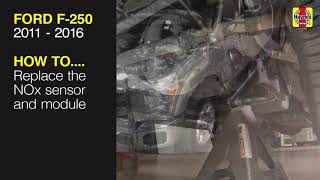
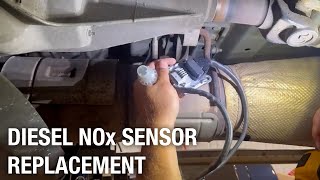
Typical fix: Replace the NOx sensor and its integrated control module. 🎬 Watch this helpful walkthrough of the NOx sensor installation process They are sold as a single unit. The sensor is threaded into the exhaust pipe, and the module is attached to the frame.
Est. part cost: $250-$550 - Outdated Powertrain Control Module (PCM) Software 🔴 High Probability Ford TSB 17-2234 directly states that P2201 on 2015-2016 models can be caused by a software issue. TSB 13-6-24 addresses similar issues for 2011-2012 models. Emissions Recall 21E01 was created because the original software could not properly detect certain NOx sensor faults.
How to confirm: A Ford dealership or a qualified shop with access to Ford's diagnostic software (IDS) can check the current software calibration against available updates referenced in TSBs.
Typical fix: Reprogram the PCM to the latest calibration. This is often done in conjunction with a sensor replacement and is a required first step for the 21N02 warranty extension.
Est. part cost: $0-$200 (Labor for reprogramming) - Damaged Wiring or Connectors 🟡 Medium Probability The sensor wiring is routed along the truck's undercarriage and over the frame rail, where it is exposed to heat, moisture, and potential physical damage from road debris or chafing.
How to confirm: Visually inspect the entire wiring harness from the NOx sensor to its control module and the main connector for any signs of melting, chafing, corrosion, or broken wires. Pay close attention to where the harness goes over the top of the frame rail.
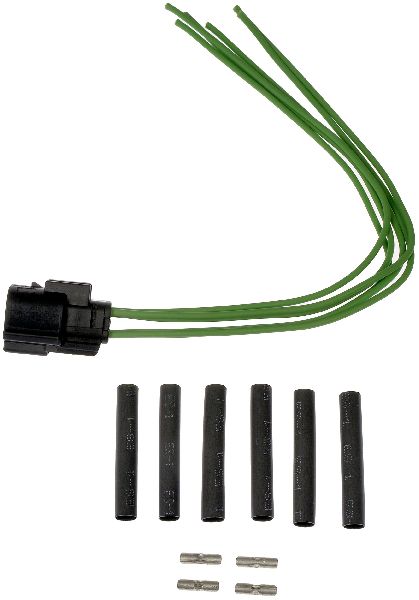
Typical fix: Repair the damaged section of the wiring harness or replace the connector pigtail. Ford dealerships can look up specific connector part numbers.
Est. part cost: $20-$150 - Exhaust Leaks ⚪ Low Probability Exhaust components can develop leaks at gaskets or pipe welds over time due to heat cycles and corrosion. An upstream leak can introduce oxygen, skewing the NOx sensor's readings.
How to confirm: Inspect the exhaust system for soot trails or listen for hissing sounds, especially when the engine is cold. A smoke test is the most definitive way to identify leaks upstream of the sensor.
Typical fix: Replace the leaking gasket or repair the cracked pipe.
Rare But Worth Checking
- Contamination from Aftermarket Intake/EGR Cleaners: TSBs #SSM 49065 and #SSM 47641 explicitly warn that using aftermarket cleaning liquids or foams for the EGR cooler or intake can cause 'sodium poisoning' of the NOx sensors, leading to permanent damage and codes like P2201. Use of these products may void emissions warranty.
Diagnosis Steps
- Read the code with an OBD-II scanner and record any other codes present.
- Check for applicable TSBs and Recalls. Specifically, check if Emissions Recall 21E01 has been performed. If it has, check eligibility for Customer Satisfaction Program 21N02, which extends the front NOx sensor warranty for 12 months post-recall.
- Perform a thorough visual inspection of the Bank 1 upstream NOx sensor (NOx11), its wiring harness, and connector. The sensor is in the exhaust, and the module is on the frame rail. Look for melting, corrosion, or physical damage, especially where the harness crosses the frame.
- Inspect the exhaust system for any leaks between the engine and the NOx sensor.
- Use a capable scan tool (like FORScan or IDS) to monitor the live data stream for the Bank 1 NOx sensor. Check if the readings are logical and change with engine speed and load.
- If TSB 17-2234 (2015-2016 models) or TSB 13-6-24 (2011-2012 models) applies, the first step should be to have a dealer reprogram the PCM.
- If the sensor readings are stuck or irrational, and the wiring is intact, the NOx sensor/module assembly is the primary suspect.
- After replacing the sensor, clear all codes. It is highly recommended to perform the 'Reset/Clear Specified Function - Nitrogen Oxide selection' using IDS or a similar function in FORScan to reset the NOx adaptive learn tables. Some technicians also recommend performing a manual DPF regeneration.
Parts You'll Likely Need
- Upstream Nitrogen Oxide (NOx) Sensor
(OEM #BC3Z-5J213-B)— This is the sensor identified by the P2201 code. It is the most common point of failure for this specific DTC on this vehicle. It is sold as an assembly with the control module.
Trusted brands: Motorcraft, Bosch, Dorman, Standard Motor Products
OEM price range: $350-$550
Aftermarket price range: $250-$450
Related Codes That Often Appear With This One
- P2459 — Often cited with P2201 in TSB 17-2234, related to Diesel Particulate Filter (DPF) regeneration frequency.
- P2463 — Often cited with P2201 in TSB 17-2234, indicating the DPF is restricted.
- P246C — Often cited with P2201 in TSB 17-2234, indicating the DPF restriction is forcing limited power mode.
- P207F — Mentioned in TSBs #SSM 49065 and #SSM 47641 alongside P2201, related to SCR system performance, often after using aftermarket cleaners.
- P229F — This code points to the downstream (Bank 1, Sensor 2) NOx sensor and can appear with P2201, indicating a wider issue in the SCR system or a related software problem.
Technical Service Bulletins (TSBs) & Recalls

- 21N02: Front NOx Sensor Warranty Extension after recall 21E01.
- SSM 49065: Warns against aftermarket cleaning liquids causing P2201.
- SSM 47402: Recommends manual DPF regeneration during diagnosis.
- SSM 47641: Repeats warning against aftermarket cleaning liquids.
- 17-2234: Recommends PCM reprogram for P2201 on 2015-2016 models.
- 21E01: Emissions recall to reprogram PCM to properly detect NOx sensor faults.
- 13-6-24: Recommends PCM reprogram and NOx adaptive reset for 2011-2012 models.
Platform-Specific Known Issues
- TSB 17-2234: For 2015-2016 models, this bulletin advises that DTC P2201 (along with DPF codes) can be triggered by a software issue and recommends reprogramming the PCM as the primary fix.
- Emissions Recall 21E01 / Customer Program 21N02: Recall 21E01 was a mandatory PCM reprogram to correctly detect NOx sensor faults that were previously masked by a software error. Program 21N02 then provided a 12-month/unlimited mile warranty extension for the front NOx sensor if it failed with code P2201 *after* the 21E01 recall was performed. This program expired for all vehicles on Dec 31, 2024.
- TSB 13-6-24: For early 2011-2012 models (built on or before 10/11/2011), this TSB addresses P2201 and other codes, recommending a PCM reprogram and a specific reset of the NOx sensor adaptive learn tables.
- TSB SSM 49065 & 47641: Warns owners that using aftermarket cleaning agents in the EGR or intake system can cause this code by chemically damaging ('sodium poisoning') the NOx sensors.
Mechanic-Grade Diagnostic Values
- NOx Sensor Signal Voltage — expected: 0.1V - 5.0V. Failure: Voltage is stuck, erratic, or does not respond to changes in engine load.
- NOx Sensor Heater Resistance — expected: 2 to 8 ohms, depending on temperature. Failure: Resistance is outside of the expected range, indicating a faulty heater element within the sensor.
Scan Tool Commands That Help
- FORScan: Reset the NOx sensor module — This function should be used after replacing the NOx sensor to clear adaptive tables and prevent the code from immediately returning. It is a necessary step that basic code clearing does not perform.
- Ford IDS (Integrated Diagnostic System): Reset/Clear Specified Function - Nitrogen Oxide selection — This is the dealership-level command to reset the NOx adaptive learn tables after a sensor replacement. It is required to make the PCM recognize the new sensor correctly and is often mentioned in official TSBs.
- Ford IDS (Integrated Diagnostic System): Selective Catalytic Reduction (SCR) System Procedure — This procedure is used to clear SCR system messages and exit a speed-limited 'limp mode' caused by persistent emissions faults, which can be related to P2201.
Wiring & Ground Locations
- Main Engine Ground — A main ground cable runs from the battery to the engine block. A secondary strap often connects the back of the head to the body/firewall on the passenger side.. A poor main engine ground can cause a variety of intermittent electrical issues and sensor faults, including P2201, due to unstable voltage and reference signals. Ensuring this connection is clean and tight is a crucial preliminary step in diagnosing any electrical DTC.
- C175B — This is the main 50-pin connector for the Powertrain Control Module (PCM).. The NOx sensor circuit wiring terminates at this connector. Diagnostic procedures may require checking for continuity or shorts at specific pins within this connector, such as Pin 50 (PWR GND).
Real Owner Repair Stories
- Reddit user in /r/FordDiesels (2017 Ford F-350 6.7L (Note: slightly newer than target range, but the system is very similar)) — Check Engine Light came on shortly after purchasing the truck, with code P2201 stored.
❌ Tried (didn't work) A PCM flash/reprogram was performed by the dealership first, as suggested by a TSB.
✅ What actually fixed it About a week after the PCM flash, different codes appeared, and the ultimate fix was replacing the NOx sensor (Bank 1, Sensor 1).
OEM Part Supersession History
BC3Z-5J213-B→AC3Z-12B591-C— Part number consolidation and revision by Ford.
Heads up: The original part number BC3Z-5J213-B was an EGT sensor part number that was also associated with NOx sensor issues in some catalogs. It has been superseded multiple times. The final, correct part is AC3Z-12B591-C, which now covers the application. Using old stock or incorrect superseded numbers can lead to compatibility issues.
Model Year Variations Within This Range
- 2011-2014: These models used a Single-Sequential Turbocharger (SST) which was more prone to failure. They also had a different oil pan and oil cooler design compared to later models.
- 2015-2016: Ford switched to a more reliable Garrett GT37 VGT turbocharger. The fuel injection system was also upgraded with a higher-flow CP4.2 pump and improved injector nozzles, resulting in a power increase. These changes can affect diagnostic paths as the intake and fuel delivery systems differ from earlier models.
- 2013+: An additional NOx sensor and module were added to the exhaust system to monitor SCR effectiveness more closely, making the system more complex than on 2011-2012 models.
Helpful Videos
We Have This Part in Stock


The information in this article is provided for general reference and educational purposes only. Vehicle specifications, procedures, and part compatibility can vary by production date, trim level, and region. Always consult your vehicle's factory service manual and verify part numbers before purchasing or performing repairs. Safety-critical components such as airbags, seat belts, and braking systems should be installed by a qualified professional.
- Ford F-250 SD:
- 🎬 Helpful Videos
- 🛍️ Shop This Part
- What's Unique About the 2011-2015 Ford F-250 SD
- Diagnostic Flowchart
- Symptoms You May Notice
- Most Likely Causes
- Rare But Worth Checking
- Diagnosis Steps
- Parts You'll Likely Need
- Related Codes That Often Appear With This One
- Technical Service Bulletins (TSBs) & Recalls
- Platform-Specific Known Issues
- Mechanic-Grade Diagnostic Values
- Scan Tool Commands That Help
- Wiring & Ground Locations
- Real Owner Repair Stories
- OEM Part Supersession History
- Model Year Variations Within This Range
- 🎟️ Get 5% Off