

P2201 on 2015-2020 Ford F-150 3.0L Diesel: NOx Sensor Causes and Fixes
On a 2018-2019 F-150 with the 3.0L Power Stroke diesel, code P2201 is frequently caused by outdated powertrain software. Before replacing any parts, check if your truck's build date falls under Ford TSB 19-2018 or TSB 18-2326. A simple PCM reflash at the dealer often resolves the issue. If software is not the cause, the upstream NOx sensor (Bank 1) is the next most likely failure.
- For 2018-2019 F-150s with the 3.0L diesel, always check for applicable TSBs before replacing parts. A PCM reflash is a very common and prescribed fix.
- If a software update doesn't apply or doesn't solve the problem, the upstream (Bank 1) NOx sensor is the most likely part to have failed.
- Avoid using aftermarket chemical cleaners in the intake or EGR system, as Ford has directly linked this practice to NOx sensor failure and code P2201.
- Symptoms are usually limited to the check engine light, but ignoring the code can lead to failed emissions tests and potential long-term issues with the SCR system.
What's Unique About the 2015-2020 Ford F-150
For the F-150, this code is almost exclusively an issue for the 3.0L Power Stroke diesel engine, available from 2018-2021. What's unique is that Ford has issued multiple Technical Service Bulletins (TSBs) indicating the cause is often not the sensor itself, but rather a software logic issue within the PCM for trucks built before specific dates. In these cases, simply replacing the sensor will not fix the problem. The service procedure in the TSBs is to reprogram the PCM. Additionally, Ford has warned in Special Service Messages (SSMs) that using aftermarket cleaning liquids for the EGR cooler or intake can contaminate the NOx sensors and trigger this code. [SSM 49065, SSM 47641]
Diagnostic Flowchart
Tap your situation to follow the diagnostic path that matches what you're seeing on this vehicle.
Symptoms You May Notice
- Check Engine Light (Malfunction Indicator Lamp) is on.
- DEF system fault message on the dashboard.
- Potential for reduced engine power or sluggish acceleration.
- Increased fuel consumption.
- Excessive smoke from the exhaust in some cases.
- Erratic idle.
- Replacing the NOx sensor without first checking if a PCM software update (reflash) is available and required per a TSB. This is a very common mistake on 2018-2019 models and leads to unnecessary expense as the code will return with the new sensor if the software is the root cause.
Most Likely Causes
- Outdated Powertrain Control Module (PCM) Software 🔴 High Probability Ford released TSB 19-2018 and TSB 18-2326 to address software logic that can incorrectly flag a P2201 code on 3.0L diesel models built before specific dates. This is the most common cause for 2018-2019 models.
How to confirm: A Ford dealer or a shop with a Ford-specific scan tool can check the vehicle's build date and current PCM calibration against the latest version specified in the TSBs. TSB 19-2018 applies to trucks built on or before January 25, 2019.
Typical fix: Reprogramming (reflashing) the PCM to the latest software version. This is a dealer-level repair, often performed under labor operation code 192018A, which takes approximately 0.4 hours. 🎬 Watch: How to fix these codes with TSB 19-2018
Est. part cost: $0 - Faulty Upstream NOx Sensor (Bank 1) 🔴 High Probability NOx sensors are exposed to extreme heat and corrosive exhaust gases, making them a common failure item. Soot buildup can also affect sensor performance. On this truck, the Bank 1 upstream sensor is located on the passenger side exhaust pipe, before the SCR catalyst.
How to confirm: Use a capable scan tool to monitor live data from the Bank 1 NOx sensor. Look for readings that are stuck, slow to respond, or do not change with engine RPM. 🎬 See this guide on diagnosing and testing NOx sensors A technician can also check the sensor's internal heater circuit for proper resistance. Visually inspect the sensor for physical damage or heavy soot.
Typical fix: Replace the Bank 1 upstream NOx sensor and its associated module. After replacement, some scan tools may require a reset procedure for the new sensor.
Est. part cost: $350-$500 - Contamination from Aftermarket Intake/EGR Cleaners 🟡 Medium Probability Ford explicitly warns against using aftermarket cleaning liquids or tools for the EGR cooler or intake in TSBs SSM 49065 and SSM 47641, as these can contaminate the emissions sensors and cause codes like P2201.
How to confirm: This is diagnosed based on recent service history. If the code appeared shortly after using an intake or EGR cleaning product, this is the likely cause.
Typical fix: The contaminated NOx sensor must be replaced. Cleaning is not recommended by the manufacturer.
Est. part cost: $350-$500 - Damaged Wiring or Connectors ⚪ Low Probability The wiring harness runs along the vehicle's underbody and can be susceptible to heat damage from the exhaust or physical damage from road debris. The connector itself can also accumulate moisture and corrode.
How to confirm: Perform a thorough visual inspection of the NOx sensor's wiring harness and connector, from the sensor to the control module, looking for breaks, melting, chafing, or corrosion. Check for continuity and shorts with a multimeter.
Typical fix: Repair the damaged section of the wiring harness or replace the connector.
Est. part cost: $20-$100 - Exhaust System Leaks ⚪ Low Probability Cracked exhaust components or failed gaskets upstream of the NOx sensor can allow fresh air to enter the exhaust stream. This skews the sensor readings and can trigger a performance code because the oxygen level is different than expected.
How to confirm: Visually inspect for soot trails near exhaust flanges and gaskets. A smoke test of the exhaust system is the most effective way to pinpoint a leak.
Typical fix: Replace the leaking gasket or repair the cracked exhaust component.
Est. part cost: $20-$150
Rare But Worth Checking
- Faulty Powertrain Control Module (PCM): This is extremely rare and expensive, with replacement costs potentially exceeding $1,300. All other possibilities, especially software updates and sensor failure, should be exhausted before considering PCM replacement.
Diagnosis Steps
- Scan for Codes: Use an OBD-II scanner to confirm P2201 is present and check for any other related codes.
- Check for TSBs: This is the most critical first step. For 2018-2019 models, check for TSB 19-2018 (for trucks built on or before Jan 25, 2019) and TSB 18-2326 (for trucks built on or before Oct 10, 2018). If a PCM reflash is indicated, this must be performed before any parts are replaced.
- Analyze Live Data: Use a high-quality scan tool to monitor the Bank 1 NOx sensor's readings (in ppm) and its readiness status. Compare its behavior to the Bank 2 sensor if possible. Look for signals that are stuck, slow to respond, or do not change with engine speed and load.
- Inspect Wiring: Carefully inspect the entire wiring harness for the NOx sensor, from the sensor itself (passenger side, pre-catalyst) to its control module and to the main engine harness. Look for signs of melting, chafing, or corrosion at the connectors.
- Check for Exhaust Leaks: Visually inspect the exhaust system for signs of leaks (black soot) upstream of the NOx sensor. A smoke test is the most definitive way to find small leaks.
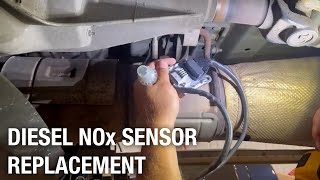
- Test the Sensor: If software, wiring, and exhaust integrity are confirmed good, the sensor itself is the most likely culprit. Test the sensor's heater circuit for correct resistance if your scan tool supports it. Replacement is the final diagnostic step. 🎬 Watch: Step-by-step walkthrough for replacing a diesel NOx sensor
- Clear Codes and Drive: After repair, clear the DTCs and perform a complete drive cycle, including highway driving, to allow the emissions monitors to run and confirm the fault does not return.
Parts You'll Likely Need
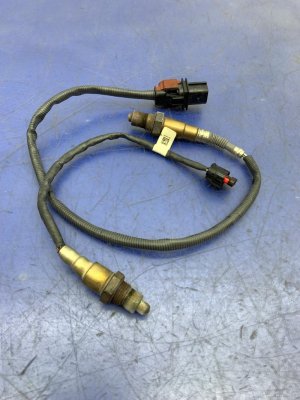
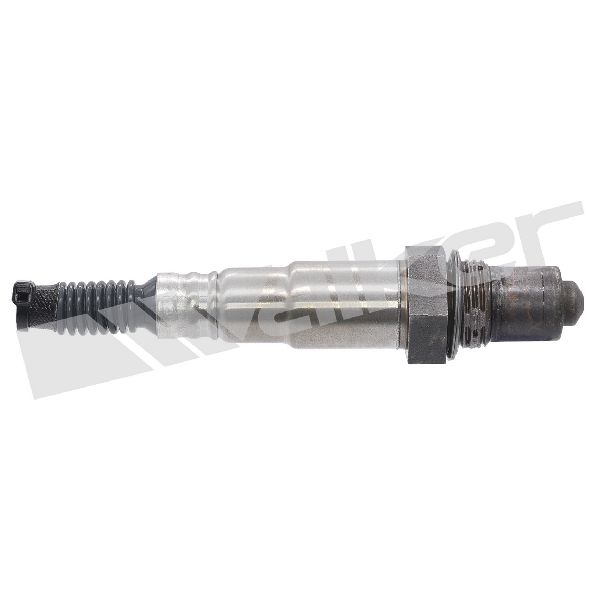
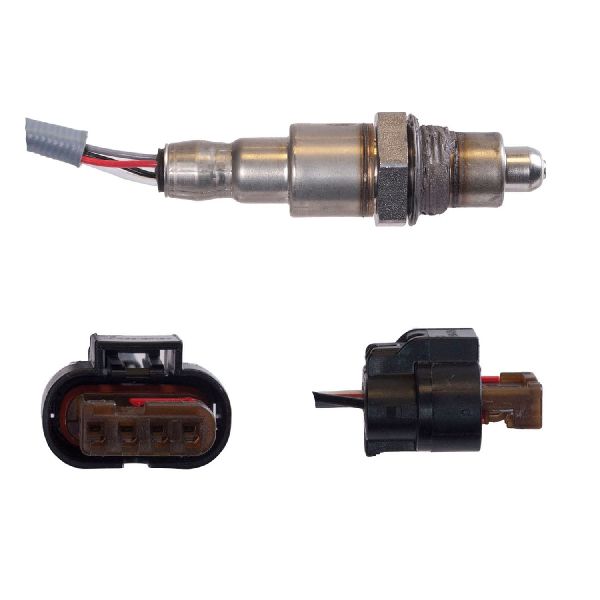
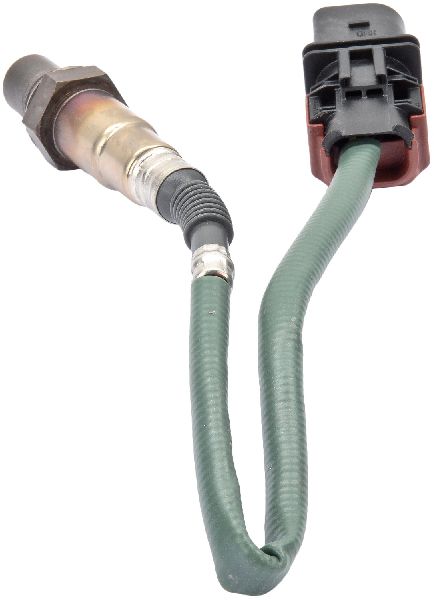
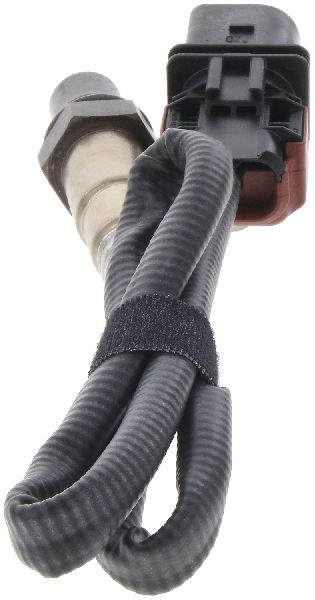
- NOx Sensor (Bank 1, Upstream)
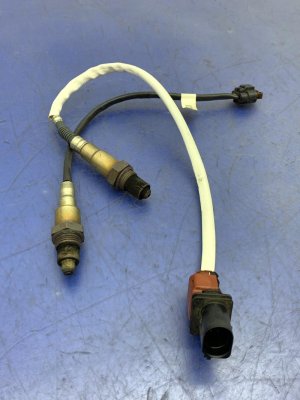
(OEM #JL3Z-5L248-B)— This sensor is the most common hardware failure for this code. It is sold as an assembly including the sensor probe and the control module. The part number JL3Z-5L248-B supersedes the earlier JL3A-5L248-BC and JL3Z-5L248-A.
Trusted brands: Motorcraft, Bosch, Dorman
OEM price range: $400-$900
Aftermarket price range: $250-$450
Related Codes That Often Appear With This One
- P20EE — Relates to SCR NOx Catalyst Efficiency. Often appears with other NOx sensor codes as the system's overall performance is monitored together.
- P207F — Relates to Reductant (DEF) Quality Performance. The system may flag this if it cannot achieve target NOx reduction, which could be due to a faulty sensor reading.
- P0234 — Turbocharger Overboost Condition. TSB 19-2018 links this code with P2201, suggesting a PCM software issue affects multiple engine management parameters.
- P208E — Reductant (DEF) Injector Stuck Closed. Also linked with P2201 in TSB 19-2018, indicating a related software problem.
- P0401 — EGR Flow Insufficient. TSB 18-2326 groups this with P2201, pointing to a broader PCM calibration issue on some 3.0L diesel engines.
Technical Service Bulletins (TSBs) & Recalls
- SSM 49065: Warns against aftermarket cleaning liquids causing P2201 on 2020 3.0L engines.
- TSB 19-2018: Recommends PCM reprogram for P2201 on 2018-2019 3.0L engines built before 25-Jan-2019.
- 17-2234: Notes PCM reprogram as a fix for P2201 on 6.7L Super Duty, showing a pattern for Ford diesels.
- SSM 47641: Warns against aftermarket cleaning liquids causing P2201 on 2018 3.0L engines.
- TSB 18-2326: Recommends service procedure for P2201 on 2018 3.0L engines built before 10-Oct-2018.
Platform-Specific Known Issues
- TSB 19-2018: Affects 2018-2019 F-150s with the 3.0L diesel built on or before January 25, 2019. Recommends a PCM reprogram for code P2201, often accompanied by P0234 or P208E.
- TSB 18-2326: For 2018 F-150s with the 3.0L diesel built on or before October 10, 2018. Also recommends a service procedure (PCM reprogram) for P2201 among a list of other potential codes.
- SSM 49065 & SSM 47641: Warns service technicians that using aftermarket chemical cleaners for the EGR or intake can cause sodium poisoning of the NOx and particulate matter (PM) sensors, leading to codes like P2201.
Mechanic-Grade Diagnostic Values
- NOx Sensor Module Power Supply Voltage — expected: 12 Volts (Key On). Failure: No voltage or significantly low voltage indicates a power supply issue to the module.
- CAN Bus Resistance at NOx Sensor Connector — expected: ~60 Ohms (Ignition Off). Failure: A reading of 120 Ohms may indicate a break in one of the CAN lines or a faulty terminating resistor. A reading near 0 Ohms indicates a short between CAN High and CAN Low.
- CAN Bus Voltage (Key On) — expected: CAN High: ~2.5V to 3.5V; CAN Low: ~2.5V to 1.5V. Failure: Voltages that are stuck, shorted to ground (0V), or shorted to power indicate a wiring fault.
- Live Data NOx PPM (Clean Air/Bench Test) — expected: Below 20 ppm. Failure: A sensor that fails to drop to a low ppm reading in clean air after its heating cycle is complete is likely faulty.
Scan Tool Commands That Help
- Ford IDS (or equivalent J2534/FORScan): Reset Learned Engine Data / Reset NOx Sensor Adaptations — This function is required after replacing a NOx sensor. It resets the learned values and calibration data for the sensor in the PCM, ensuring the new sensor's readings are interpreted correctly. Failure to perform this reset can cause the new sensor to be flagged as faulty.
- Ford IDS (or equivalent J2534/FORScan): SCR System Drain — While not directly for P2201, this command is used when servicing the SCR system. If other codes like P208E are present, this function may be needed to drain the DEF system for component replacement.
- Ford IDS (or equivalent J2534/FORScan): Data Logger (Live Data Recording) — To diagnose an intermittent P2201, a technician can record live data PIDs for NOx sensor ppm, heater status, and voltage while driving. This helps capture the fault condition as it happens.
Wiring & Ground Locations
- Passenger Footwell Ground Stud — Located behind the kick panel in the passenger side footwell, near the Body Control Module (BCM).. This is a major grounding point for many interior electronics and harnesses that pass through the firewall to the engine bay. A corroded or loose ground here can cause a host of intermittent electrical issues, including erratic sensor readings for modules that reference this ground.
- NOx Sensor Module Connector — The module is mounted to the outside of the passenger side frame rail, with the harness running over the frame to the sensor in the exhaust.. This connector is the primary interface for power, ground, and CAN communication to the sensor assembly. It is exposed to the elements and should be checked for corrosion or pushed-out pins. The module itself is held on by plastic push pins.
Real Owner Repair Stories
- Ford Truck Enthusiasts Forums (2020 Ford F-Series Super Duty 6.7L (similar emissions system)) — Check Engine Light (MIL) with code P2201 while out of town.
❌ Tried (didn't work) The first dealer visit did not fix the issue.
✅ What actually fixed it The owner reported the dealer required two trips. The first attempt failed because they either replaced the wrong sensor or used an obsolete/incorrect part number. The issue was resolved on the second visit when the correct part was used.
OEM Part Supersession History
JL3A-5L248-BB / JL3A-5L248-BC→JL3Z-5L248-A— Standard part revision and improvement.JL3Z-5L248-A→JL3Z-5L248-B— Latest revision of the part. This is the currently recommended service part.
Heads up: Using older stock (like -A or the original JL3A parts) may lead to repeat failures, as seen in some owner repair stories where an 'obsolete' part was used. Always use the latest available part number.
Model Year Variations Within This Range
- 2018-2019 (specific build dates): Vehicles built on or before January 25, 2019 (per TSB 19-2018) or October 10, 2018 (per TSB 18-2326) are prone to setting P2201 due to PCM software logic, not necessarily a hardware fault. Later models received updated software from the factory.
Helpful Videos

Used OEM Parts in Stock
New Aftermarket Parts Available

The information in this article is provided for general reference and educational purposes only. Vehicle specifications, procedures, and part compatibility can vary by production date, trim level, and region. Always consult your vehicle's factory service manual and verify part numbers before purchasing or performing repairs. Safety-critical components such as airbags, seat belts, and braking systems should be installed by a qualified professional.
- Ford F-150:
- 🎬 Helpful Videos
- 🛍️ Shop This Part
- What's Unique About the 2015-2020 Ford F-150
- Diagnostic Flowchart
- Symptoms You May Notice
- Most Likely Causes
- Rare But Worth Checking
- Diagnosis Steps
- Parts You'll Likely Need
- Related Codes That Often Appear With This One
- Technical Service Bulletins (TSBs) & Recalls
- Platform-Specific Known Issues
- Mechanic-Grade Diagnostic Values
- Scan Tool Commands That Help
- Wiring & Ground Locations
- Real Owner Repair Stories
- OEM Part Supersession History
- Model Year Variations Within This Range
- 🎟️ Get 5% Off