

P2198 on 2018-2020 Ford F-150: O2 Sensor Stuck Rich (Bank 2) Causes and Fixes
This code means the engine is running rich on the driver's side (Bank 2). The most common causes are a faulty upstream oxygen sensor, a leaking fuel injector, or a stuck-open EVAP purge valve. For 2.7L EcoBoost engines specifically, multiple Ford TSBs point to faulty fuel injectors requiring replacement and a PCM update. An O2 sensor or EVAP valve replacement is a common DIY fix, but injector issues often require professional service.
- P2198 means your F-150's engine is running too rich on the driver's side bank.
- The most likely cause is a failing upstream O2 sensor, which is a straightforward DIY replacement.
- Before replacing the sensor, check the EVAP purge valve; a stuck-open valve is a common Ford issue that can cause this code.
- On EcoBoost engines, a leaking fuel injector is another possible cause.
- Check with a dealer for any available PCM updates, as software fixes have been issued for this code.
What's Unique About the 2018-2020 Ford F-150

On the 2018-2020 F-150, particularly with the 2.7L and 3.5L EcoBoost engines, this code is well-documented by Ford. Multiple Technical Service Bulletins (TSBs) have been issued that link P2198 directly to leaking direct injection fuel injectors and sensitive PCM calibration. TSB 20-2324 for the 2018 2.7L specifically instructs technicians to check for leaking injectors and replace them, often as a full bank set, followed by a PCM reprogram. TSB 21-2045 addresses the 2019-2020 🎬 Watch: How these codes cause cruise control issues 2.7L models, where the code may appear with an intermittent deceleration while using cruise control, pointing to a PCM software glitch as the primary cause requiring a reflash. These bulletins show that Ford acknowledges the issue often goes beyond a simple bad sensor.
Diagnostic Flowchart

Tap your situation to follow the diagnostic path that matches what you're seeing on this vehicle.
Symptoms You May Notice
- Check Engine Light is on
- Decreased fuel economy
- Smell of gasoline from the exhaust
- Black soot on the tailpipe
- Rough idle or hesitation
- In some cases, no noticeable symptoms other than the Check Engine Light [SSM 48957]
- Intermittent brief deceleration when cruise control is active (per TSB 21-2045)
- Hard starting after refueling (symptom of a bad EVAP purge valve)
- Replacing the catalytic converter. The converter's health is monitored by the downstream (Sensor 2) O2 sensor. P2198 is an upstream sensor code related to the air/fuel mixture entering the engine, not the converter's efficiency.
- Replacing the Mass Airflow (MAF) sensor. While a faulty MAF sensor can cause fuel trim issues, it typically affects both engine banks and would likely set P2196 and P2198 together.
Most Likely Causes


- Faulty Bank 2, Sensor 1 Oxygen Sensor 🔴 High Probability O2 sensors are wear-and-tear items that degrade over time from heat and contaminants. They are a very common failure point leading to this code, though they can also be fouled by an underlying rich condition.
How to confirm: Use a scan tool to monitor the live voltage data for the B2S1 O2 sensor. A healthy sensor's voltage should fluctuate rapidly between approximately 0.1V and 0.9V. If it is stuck high (above 0.45V), it has likely failed or is being saturated by excess fuel. Swapping the upstream sensors from Bank 1 and Bank 2 is a definitive test; if the code follows the sensor and changes to P2196, the sensor is bad.
Typical fix: Replace the Bank 2, Sensor 1 (driver's side, upstream) oxygen sensor. A special 22mm (or 7/8") slotted s 🎬 Watch: Diagnosing and fixing the Bank 2 Sensor 1 codeocket is recommended for removal.
Est. part cost: $50-$120 - Leaking Fuel Injector(s) on Bank 2 🟡 Medium Probability Direct injection (GDI) fuel injectors on EcoBoost engines operate under very high pressure. Ford TSB 20-2324 and TSB 18-2310 specifically call out leaking direct injectors as a cause for P2198 on the 2018 2.7L F-150. The failure causes excess fuel to enter one or more cylinders on Bank 2.
How to confirm: A mechanic can perform a fuel injector balance test or a leak-down test as described in TSB 20-2324. This involves monitoring fuel rail pressure with the engine off to see if it drops, indicating a leak. Highly negative fuel trims on Bank 2 are also a strong indicator.
Typical fix: Replace the faulty fuel injector(s) on Bank 2 (cylinders 4, 5, and 6). TSBs often recommend replacing all injectors on the affected bank and then reprogramming the PCM.
Est. part cost: $40-$100 per injector - Stuck-Open EVAP Purge Valve 🟡 Medium Probability The EVAP canister purge valve is a known failure point on many Ford vehicles. If it sticks open, it allows un-metered fuel vapor from the gas tank to be constantly drawn into the intake manifold, creating a rich condition that can trigger P2198 and often P2196 simultaneously, especially at idle.
How to confirm: Remove the purge valve (usually mounted on the intake manifold) and try to blow through it. When not powered, it should be completely closed, and no air should pass through. If you can blow through it, it's stuck open and needs replacement.
Typical fix: Replace the EVAP canister purge valve. This is a quick repair, often taking only a few minutes with basic tools.
Est. part cost: $30-$60 - PCM Software/Calibration Issue ⚪ Low Probability Ford has issued multiple TSBs for this code on EcoBoost engines, indicating that the PCM's logic is sometimes the root cause. TSB 21-2045 for 2019-2020 models explicitly states a PCM reprogram is the fix for the code, especially if it appears with cruise control issues. In other cases, a reprogram is required after replacing injectors.
How to confirm: A Ford dealership or a qualified shop with access to Ford's diagnostic software (like FDRS) can check if a PCM software update is available for your vehicle's VIN by referencing the relevant TSBs.
Typical fix: Reprogram the Powertrain Control Module (PCM) with the latest calibration. This is a dealer-level fix.
Est. part cost: $100-$250 (may be covered under the 8-year/80,000-mile federal emissions warranty)
Rare But Worth Checking
- High Fuel Pressure: A failing fuel pressure regulator or sensor could cause system-wide high fuel pressure, leading to a rich condition on both banks. This would typically set codes P2196 and P2198 together.
- Wiring Harness Damage: A damaged wire or corroded connector in the O2 sensor circuit can cause an incorrect voltage reading, mimicking a failed sensor. A visual inspection of the harness near the hot exhaust is always a good idea.
- Incorrect Fuel Composition (Flex Fuel Vehicles): In some rare cases, particularly on Flex Fuel models, the PCM's adaptive learning for ethanol content can become skewed, causing it to command a rich mixture even with regular gasoline. A reset of the adaptive fuel tables may be required.
Diagnosis Steps
- Scan for Codes: Use an OBD-II scanner to confirm P2198 and check for any other accompanying codes. Note if P2196 is also present, as this points to a shared cause like the EVAP purge valve.
- Analyze Live Data: Use the scanner's live data function to view short-term and long-term fuel trims for both banks. On Bank 2, expect to see highly negative numbers as the PCM tries to pull fuel. Graph the voltage for the Bank 2 Sensor 1 O2 sensor. It should switch rapidly from below 0.2V to above 0.8V. If it's stuck high (e.g., >0.8V), the sensor is either bad or there's a severe rich condition.
- Test the EVAP Purge Valve: Locate the purge valve on the intake manifold. Disconnect the electrical connector and hoses. Attempt to blow through it. If any air passes, it has failed and needs to be replaced. This is a very common and easy test.
- Inspect for Leaks: Visually inspect the intake system for any vacuum leaks and the exhaust manifold/downpipe for any exhaust leaks before the O2 sensor.
- Test the O2 Sensor: If the purge valve is good, the O2 sensor itself is a likely culprit. The most definitive test is to swap the Bank 1 and Bank 2 upstream sensors. Clear the codes and drive the vehicle. If the code changes to P2196 (Bank 1 Rich), you've confirmed the sensor is faulty.
- Check for TSBs and PCM Updates: If the sensor tests good, contact a Ford dealer with your VIN. Ask them to check for TSBs 21-2045, 20-2324, or others. The fix may be a simple PCM reflash, especially on 2019-2020 models.
- Investigate Fuel Injectors: If all else fails, the issue is likely a leaking fuel injector on Bank 2, as outlined in TSB 20-2324. This requires professional diagnosis, which involves a fuel rail pressure leak-down test.
Parts You'll Likely Need
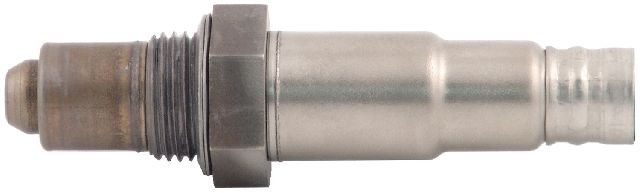
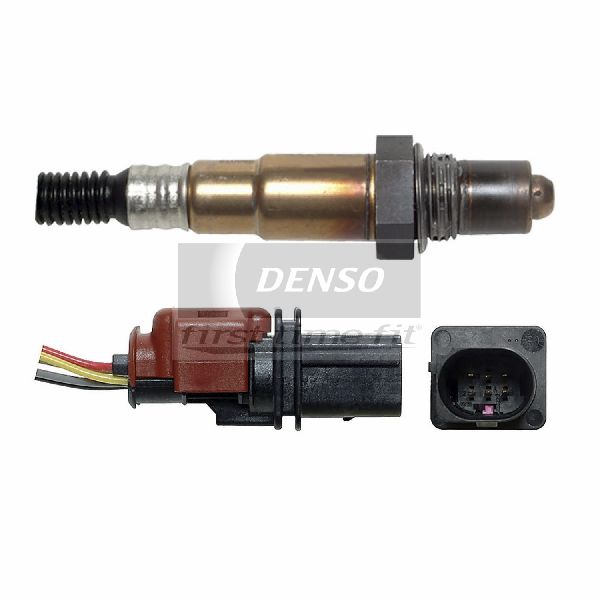
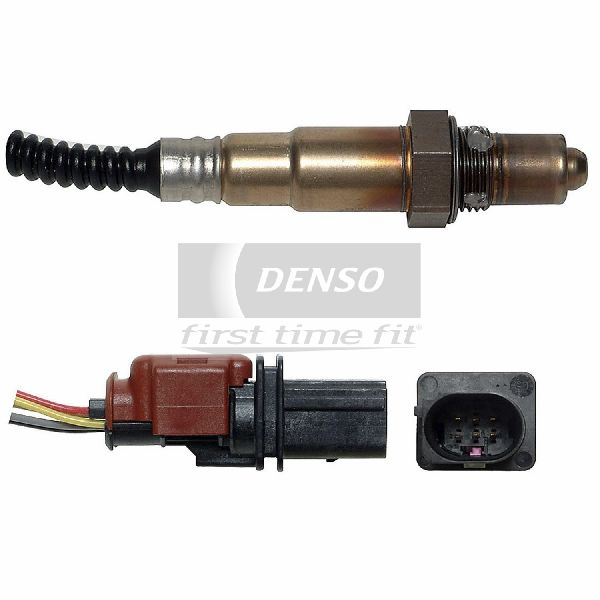
- Upstream Oxygen Sensor (Bank 2, Sensor 1)
(OEM #DY-1303 (Motorcraft))— This is the sensor that directly reports the fault. It is a common wear item and the most frequent cause of the P2198 code.
Trusted brands: Motorcraft, Bosch, Denso, NTK
OEM price range: $70-$120
Aftermarket price range: $50-$90 - EVAP Canister Purge Valve
(OEM #CX-2695 (Motorcraft))— A very common failure on Ford vehicles that causes a rich condition by allowing un-metered fuel vapor into the intake, often setting P2198 and P2196 together.
Trusted brands: Motorcraft, Standard Motor Products (SMP), Dorman
OEM price range: $40-$60
Aftermarket price range: $25-$45 - Fuel Injector (Bank 2)
(OEM #JT4Z-9F593-C (Motorcraft, for 2.7L per TSB 18-2310))— A leaking direct injector is a documented cause of P2198 on these engines per multiple Ford TSBs. The TSB procedure often calls for replacing all three on the affected bank.
Trusted brands: Motorcraft, Bosch
OEM price range: $70-$110 per injector
Aftermarket price range: $40-$80 per injector
Related Codes That Often Appear With This One
- P2196 — This is the identical code for Bank 1 (passenger side). When both appear together, it points to a common issue affecting both banks, such as a faulty EVAP purge valve, incorrect fuel pressure, or a MAF sensor problem.
- P0175 — This code means "System Too Rich (Bank 2)". It is a more general code confirming the condition that P2198 is specifically reporting from the O2 sensor. TSB 20-2324 lists this code alongside P2198.
- P0300, P0304, P0305, P0306 — These are misfire codes for Bank 2 cylinders (4, 5, 6). A severely leaking fuel injector can foul the spark plug and cause misfires on the affected cylinder(s), a condition also noted in TSB 20-2324.
- P1450 — This code indicates an inability to bleed up fuel tank vacuum and often accompanies a failed EVAP purge valve. A Ford technician on a forum noted that a stuck purge valve can cause rich codes and even oil contamination from excessive fuel.
Technical Service Bulletins (TSBs) & Recalls
- For 2019-2020 F-150s with 2.7L EcoBoost, addresses P2196/P2198 accompanied by intermittent deceleration with cruise control. The specified fix is a PCM reprogram.
- For 2018 F-150s with 2.7L EcoBoost, this supersedes earlier TSBs and points to either a PCM software issue or leaking direct fuel injectors as the cause for a wide range of codes including P2198. The procedure involves testing for injector leaks and replacing them if necessary, followed by a PCM reprogram.
- Special Service Messages for 2019-2020 F-150s with the 2.7L engine acknowledging the P2196/P2198 codes may appear with no drivability concerns, indicating Ford's awareness of a potential software sensitivity issue while a permanent fix was being developed. [SSM 48957, SSM 48789]
Platform-Specific Known Issues
- TSB 21-2045: Notes that 2018-2020 F-150s with 2.7L or 3.5L EcoBoost engines may exhibit P2198 along with a host of other codes, indicating a known complex issue.
- SSM 48957 & SSM 48789: Specifically for the 2.7L EcoBoost, Ford acknowledged that P2196 and/or P2198 could be stored in the PCM with no drivability concerns and that engineering was investigating a solution. The interim advice was to clear the codes.
- TSB 20-2324 & TSB 18-2310: Also list P2198 among many potential DTCs for 2.7L and 3.5L EcoBoost engines, pointing to a pattern of fuel control issues on these platforms.
Mechanic-Grade Diagnostic Values
- High-Pressure Fuel System (Direct Injection) — expected: 150 bar / 2175 psi (OEM Specification). Failure: Significant deviation from specified pressure could indicate a pump or sensor issue, though TSBs point more to injectors.
- Upstream O2 Sensor (HO2S) Heater Element Resistance — expected: 3 to 30 Ohms. Failure: A reading of OL (Open Loop) or a value outside the specified range indicates a failed heater element within the sensor, requiring sensor replacement.
- Upstream O2 Sensor (HO2S) Voltage — expected: Rapidly fluctuating between ~0.1V (lean) and ~0.9V (rich) during closed-loop operation.. Failure: Voltage stuck high, typically above 0.45V and often pegged near 0.98V, triggers the P2198 code.
Hidden / Shadow Codes Worth Checking
- Mode 6, TID $81: This refers to the Oxygen Sensor Monitor test for Bank 2, Sensor 1. While not a separate DTC, advanced scan tools can view Mode 6 data to see the raw test results and limits for the O2 sensor's response, which can help confirm a sensor is failing before it sets a hard code. (see via An advanced OBD-II scanner capable of displaying Mode $06 test results.)
Scan Tool Commands That Help
- FORScan: Clear Transmission Adaptive Tables — While not a direct fix for P2198, owners use this function to reset the powertrain's learned behavior, which can be beneficial after a major repair like replacing fuel injectors or fixing a vacuum leak. It forces the PCM to relearn fuel trims and shift strategies from a clean slate.
- FORScan / Ford IDS: PCM Service Procedure - Reset All Adaptations — This is a more comprehensive reset than just the transmission tables. It should be performed after replacing components like fuel injectors to clear the learned fuel trim values that were compensating for the old, faulty parts.
- Ford IDS: Power Balance Test — This dealer-level tool can be used to identify which specific cylinder is contributing less power, helping to pinpoint a single leaking or clogged injector on Bank 2 that is causing the rich condition.
Wiring & Ground Locations
- Firewall Ground Strap (Driver's Side) — On the driver's side firewall, often near the brake fluid reservoir. It connects the body/cab to the engine block.. A corroded or loose main ground strap can cause a host of bizarre electrical issues, including incorrect sensor readings. An owner of a 2019 F-150 found this specific ground strap completely disconnected and corroded, which could lead to floating ground issues and affect sensor signals like the O2 sensor.
- Bank 2 Upstream O2 Sensor Connector — On the driver's side of the engine, follow the wiring from the O2 sensor located in the exhaust manifold/downpipe before the catalytic converter. The connector is typically mounted to the transmission bell housing or a nearby bracket to keep it away from heat.. This is the primary connection point for testing the sensor's resistance and voltage. Damage to the connector or wiring harness from heat or debris is a common cause of sensor signal faults.
Real Owner Repair Stories
- f150forum.com user (2018 F-150 2.7L EcoBoost) — Check engine light with codes P2198, P0300, P0304, P0305, P0306 (misfires on all of Bank 2).
❌ Tried (didn't work) Replacing spark plugs, Swapping ignition coils
✅ What actually fixed it The owner took it to a dealer who, following a TSB, replaced all three fuel injectors on Bank 2 and also replaced the Bank 2, Sensor 1 oxygen sensor. This combination of parts finally resolved all the codes. - f150forum.com user (2018 F-150 5.0L (Note: different engine, but same codes)) — P2196 and P2198, running very rich, strong gas smell, black soot on tailpipe.
❌ Tried (didn't work) Replacing MAF sensor, Cleaning throttle body, Replacing purge valve, Replacing EGR valve, Replacing fuel injector gaskets and seals
✅ What actually fixed it After trying many other parts, the user finally replaced both upstream O2 sensors. The old sensors were found to be completely fouled and clogged with soot. Replacing them resolved the rich condition and rough idle. This highlights that even if another component causes the initial rich condition, the O2 sensors can become permanently fouled and require replacement as well.
"I Checked Everything" — The Actual Cause
- In many documented cases for the 2018-2020 F-150, a smoke test for vacuum leaks will come back clean. This is because the root cause is not an unmetered air leak (which causes a lean condition), but rather an excess of un-commanded fuel. The actual cause is frequently a leaking direct fuel injector or a faulty EVAP purge valve allowing fuel vapors into the intake, neither of which would be found with a smoke test of the intake manifold.
OEM Part Supersession History
FT4Z-9F593-A→JL3Z-9F593-A, then JL3Z-9F593-B— These are the fuel injectors for the 2.7L EcoBoost. Part numbers are frequently superseded to address design flaws or manufacturing improvements. Given the TSBs related to leaking injectors, it's highly likely these revisions were intended to improve reliability.
Heads up: Always use a VIN to confirm the correct part number. It is often recommended to replace all injectors on a bank with the same part number to ensure consistent flow rates.
Model Year Variations Within This Range
- 2018-2020: The 2018 model year marked the introduction of the second-generation 2.7L EcoBoost. A key change was the addition of a port fuel injection system to supplement the direct injection system (becoming a dual-injection setup). This helps reduce carbon buildup on intake valves, a common issue with GDI-only engines. This change also affects the engine's control strategy and potential failure points.
- 2018 vs. 2019-2020: Ford issued separate TSBs for these year groups for code P2198. TSB 20-2324 focuses on 2018 models, pointing to either injectors or a PCM update. TSB 21-2045 focuses on 2019-2020 models, primarily identifying a PCM software glitch as the cause, especially when accompanied by cruise control issues.
Helpful Videos

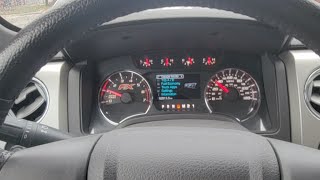
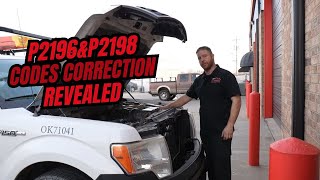
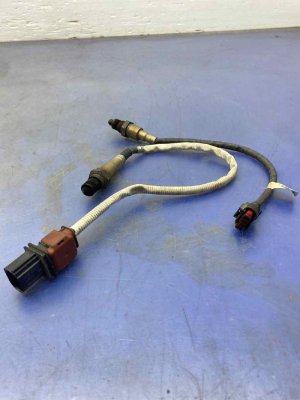
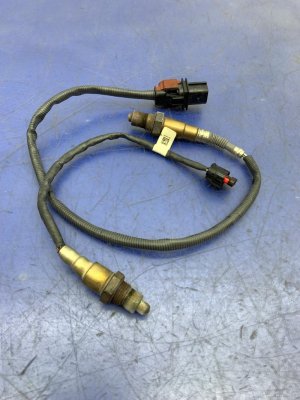
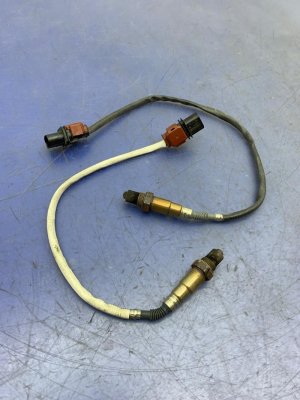
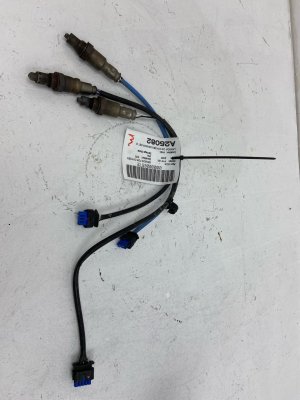
Used OEM Parts in Stock
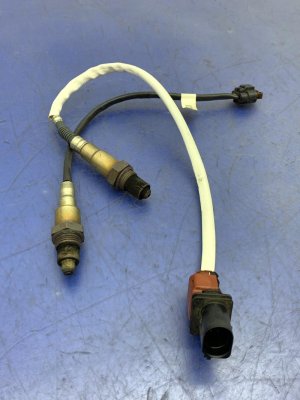
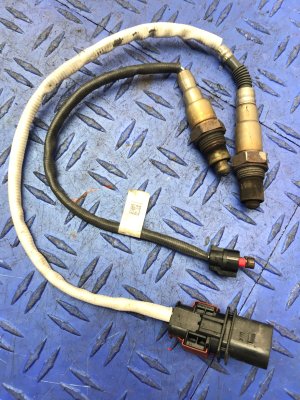
New Aftermarket Parts Available



The information in this article is provided for general reference and educational purposes only. Vehicle specifications, procedures, and part compatibility can vary by production date, trim level, and region. Always consult your vehicle's factory service manual and verify part numbers before purchasing or performing repairs. Safety-critical components such as airbags, seat belts, and braking systems should be installed by a qualified professional.
- Ford F-150:
- 🎬 Helpful Videos
- 🛍️ Shop This Part
- What's Unique About the 2018-2020 Ford F-150
- Diagnostic Flowchart
- Symptoms You May Notice
- Most Likely Causes
- Rare But Worth Checking
- Diagnosis Steps
- Parts You'll Likely Need
- Related Codes That Often Appear With This One
- Technical Service Bulletins (TSBs) & Recalls
- Platform-Specific Known Issues
- Mechanic-Grade Diagnostic Values
- Hidden / Shadow Codes Worth Checking
- Scan Tool Commands That Help
- Wiring & Ground Locations
- Real Owner Repair Stories
- "I Checked Everything" — The Actual Cause
- OEM Part Supersession History
- Model Year Variations Within This Range
- 🎟️ Get 5% Off