

P2197 on 2015-2018 Ford Transit: Causes and Fixes for O2 Sensor Stuck Lean (Bank 2)
This code means the driver's side upstream O2 sensor is stuck lean. The most common fixes are replacing the Bank 2, Sensor 1 O2 sensor itself (around $50-$150 for the part), fixing a vacuum leak (like a cracked PCV hose), or addressing a known water intrusion issue covered by Ford Technical Service Bulletin TSB 19-2091, which requires installing a water deflector kit.
- P2197 on a 2015-2018 Transit means the driver's side upstream O2 sensor is reading lean.
- Before replacing any parts, check the air filter for dampness. A known water leak issue on these vans (per TSB 19-2091) is a likely cause.
- The most common fixes are replacing the O2 sensor itself or finding and repairing a vacuum leak with a smoke test.
- Driving for extended periods with this code can cause expensive damage to your engine or catalytic converter.
What's Unique About the 2015-2018 Ford TRANSIT

While a bad sensor or vacuum leak is a common cause for P2197 on any vehicle, the 2015-2018 Transit is subject to a unique issue documented by Ford. Technical Service Bulletins (TSB 19-2091) describe how water can enter the engine bay from the cowl area, drip onto powertrain components, and cause a variety of electrical issues and drivability problems, including the P2197 code. This makes checking for signs of a damp or saturated air filter and water tracks near the airbox and wiring harnesses a critical, platform-specific diagnostic step.
Diagnostic Flowchart
Tap your situation to follow the diagnostic path that matches what you're seeing on this vehicle.
Symptoms You May Notice
- Check Engine Light is on
- Rough or unstable idle, especially at a stop
- Engine hesitation or stumbling on acceleration
- Reduced fuel economy
- Engine misfires
- Difficulty starting
- Engine stalling at low speeds or when coming to a stop
- Replacing the catalytic converter. This code points to an upstream sensor issue or a problem with the air-fuel mixture itself, not the converter's efficiency.
- Replacing the O2 sensor without checking for vacuum leaks or the TSB-related water intrusion first. The sensor may be reporting the lean condition accurately, making it a symptom, not the cause. 🎬 Watch: Understanding the causes and fixes for P2197
Most Likely Causes

- Faulty Bank 2, Sensor 1 Oxygen Sensor 🔴 High Probability O2 sensors are wear-and-tear items that degrade over time. Their constant exposure to high heat and exhaust gases causes them to fail, making them a frequent cause for this code.
How to confirm: Use a scan tool to monitor the live voltage of the B2S1 O2 sensor. A healthy sensor fluctuates rapidly between approximately 0.1V and 0.9V. A sensor stuck lean will have a steady low voltage, typically below 0.45V.
Typical fix: Replace the Bank 2, Sensor 1 (driver's side, upstream) oxygen sensor. A specialized O2 sensor socket (often 22mm) is recommended. 🎬 See this walkthrough for replacing the O2 sensor
Est. part cost: $50-$150 - Water Intrusion into Engine Compartment 🔴 High Probability Per Ford TSB 19-2091 and 17-0014, models built before July 24, 2018, can allow water to enter the engine bay directly over the air intake and other powertrain components, leading to this and other codes.
How to confirm: Inspect the air filter element for dampness, water, or ice. Look for water tracks or corrosion on wiring harnesses and connectors near the airbox and on the driver's side of the engine.
Typical fix: Install updated water management hardware as outlined in TSB 19-2091. This includes a water deflector (CK4Z-6102408-AA), mastic patch, seals, and potentially a revised air cleaner cover specific to the engine. 🎬 Watch: How to fix a wet engine air filter Dry or replace affected components.
Est. part cost: $75-$200 - Vacuum Leak 🟡 Medium Probability Hoses and gaskets can crack and degrade over time, allowing unmetered air to enter the intake manifold. The PCV hose is a particularly common failure point on many Ford engines, where it can crack or melt due to heat, causing lean codes.
How to confirm: Perform a smoke test on the intake system. Smoke will escape from any cracks in hoses or leaking gaskets, revealing the source of the leak. Alternatively, carefully spraying carburetor cleaner or unlit propane near suspected leak points may cause a momentary change in engine idle speed.
Typical fix: Replace the leaking vacuum hose (e.g., PCV hose), intake manifold gasket, or other failed component.
Est. part cost: $10-$100 - Exhaust Leak ⚪ Low Probability Corrosion can cause leaks at exhaust manifold gaskets or pipe flanges. A leak before the O2 sensor allows outside oxygen to be pulled into the exhaust stream, causing a false lean reading.
How to confirm: Visually inspect the exhaust manifold and downpipe on the driver's side for black soot marks or cracks. Listen for a ticking or hissing sound from the exhaust, which is often more pronounced when the engine is cold.
Typical fix: Replace the leaking exhaust gasket or repair/replace the cracked component.
Est. part cost: $20-$150 - Low Fuel Pressure ⚪ Low Probability A failing fuel pump or clogged fuel filter can starve the engine of fuel, causing a true lean condition across all cylinders, but it can sometimes manifest as a code on one bank first.
How to confirm: Connect a fuel pressure gauge to the fuel rail and check that the pressure is within the manufacturer's specified range at idle and under load.
Typical fix: Replace the weak fuel pump or clogged fuel filter.
Est. part cost: $50-$400
Rare But Worth Checking
- Dirty or Faulty Mass Air Flow (MAF) Sensor: A MAF sensor that is dirty or failing may under-report the amount of air entering the engine, causing the PCM to command less fuel than necessary. This can result in a lean condition. In one documented case on an F-150, a new MAF sensor resolved a P2197 code after other parts were replaced.
- Clogged Fuel Injector on Bank 2: If one or more injectors on the driver's side are restricted, that bank will run lean, which can trigger the P2197 code. This can sometimes be diagnosed by swapping injectors between banks to see if the code follows.
- Faulty Powertrain Control Module (PCM): In very rare cases, the PCM itself can be the source of the problem, misinterpreting a correct sensor signal. This should only be considered after all other possibilities, including wiring, have been exhaustively ruled out.
Diagnosis Steps
- Scan for all DTCs. Note if other codes are present, as they can provide valuable clues (e.g., P0174 confirms a lean condition on Bank 2).
- Inspect the engine bay for signs of water intrusion, especially around the air filter housing and driver's side wiring, per TSB 19-2091. Check if the air filter is damp or saturated.
- Using a scan tool with live data, monitor the voltage for the Bank 2 Sensor 1 O2 sensor. Confirm if it is stuck at a low voltage (under 0.45V) and not oscillating.
- Check the long-term and short-term fuel trims (LTFT and STFT) for Bank 2. High positive numbers (e.g., >15-25%) confirm the PCM is adding fuel to correct a perceived lean condition.
- Visually inspect all vacuum hoses connected to the intake manifold for cracks or disconnection, paying close attention to the PCV hose and its connections. Inspect the exhaust manifold on the driver's side for soot trails indicating a leak.
- If a vacuum leak is suspected but not visible, perform a smoke test to pinpoint the source.
- If no leaks are found and the sensor voltage is stuck low while fuel trims are high, the O2 sensor is the most likely culprit and should be replaced.
- If the cause is still unclear, test fuel pressure to rule out a fuel delivery problem and consider cleaning or testing the MAF sensor.
Parts You'll Likely Need

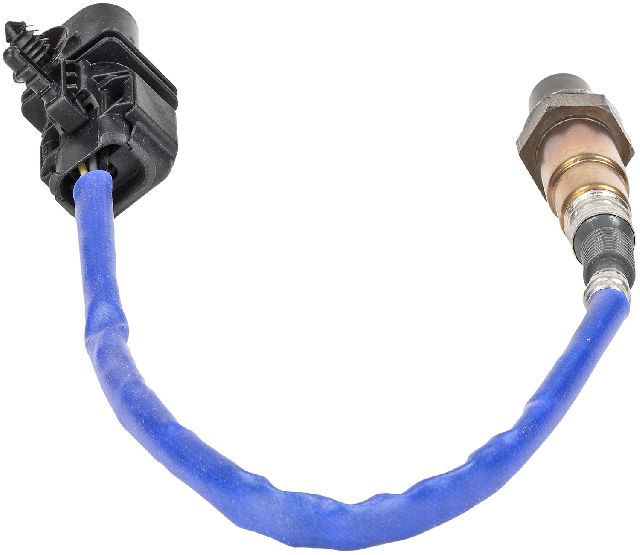
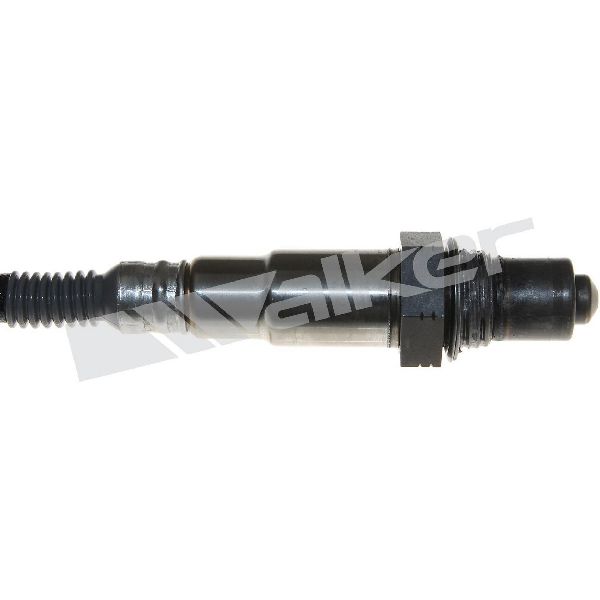
- Oxygen Sensor (Bank 2, Sensor 1)
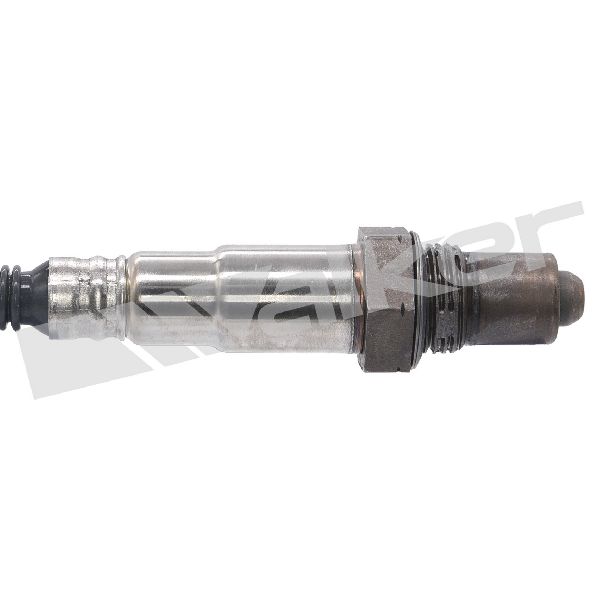
(OEM #Motorcraft DY-1163 (for 3.5L EcoBoost/3.7L Ti-VCT))— This is the sensor reporting the fault. It is a common failure point and is often the direct cause of the code.
Trusted brands: Motorcraft, Bosch, Denso, NTK
OEM price range: $100-$180
Aftermarket price range: $50-$120 - Water Deflector Kit
(OEM #CK4Z-6102408-AA)— If diagnostics point to the water intrusion issue documented in TSB 19-2091, this kit is part of the official Ford fix to prevent recurrence. The full TSB repair may also include a mastic patch, seals, and a new air cleaner cover.
Trusted brands: Motorcraft
OEM price range: $15-$30 for deflector only - PCV Hose — If a smoke test or visual inspection reveals a vacuum leak from a cracked or melted PCV hose, it will need to be replaced. This is a common failure point on many Ford engines.
Trusted brands: Motorcraft, Dorman
OEM price range: $30-$80
Aftermarket price range: $20-$50
Related Codes That Often Appear With This One
- P0174 — System Too Lean (Bank 2). This is a more general code that often accompanies P2197, as both indicate a lean condition on the same engine bank.
- P2195 — O2 Sensor Signal Stuck Lean (Bank 1, Sensor 1). If both P2195 and P2197 appear together, it points to a problem affecting both engine banks, such as a major vacuum leak, a MAF sensor issue, or low fuel pressure.
- P00BD, P1247, P0171, P0172, etc. — These codes are listed alongside P2197 in TSB 19-2091 as being potential results of the water intrusion issue on the Ford Transit.
Technical Service Bulletins (TSBs) & Recalls
- TSB 19-2091: Addresses various drivability concerns, including P2197, caused by water entry into the engine compartment on 2015-2018 Transits.
- TSB 17-0014: An earlier version of the bulletin above, also citing water entry as the cause for P2197 and other codes.
- TSB 17-2124: Pertains to the 3.5L GTDI engine and advises replacing the upstream O2 sensor to fix codes P2195 or P2197.
Platform-Specific Known Issues
- A primary vehicle-specific issue is documented in Ford TSB 19-2091 and TSB 17-0014. These bulletins apply to 2015-2018 Transits built on or before July 24, 2018. They describe a condition where water can enter from the cowl area and saturate the air filter or drip onto other powertrain components, causing a host of DTCs, including P2197. The official fix involves installing a water deflector, seals, and sometimes a new air cleaner cover.
Mechanic-Grade Diagnostic Values

- O2 Sensor Heater Circuit Resistance — expected: 3 to 25 Ohms. Should not be an open circuit (infinite resistance).. Failure: A reading of OL (Over Limit/Open) or significantly outside the typical range indicates a failed heater element within the sensor.
- Long Term Fuel Trim (LTFT) for Bank 2 — expected: Ideally within +/- 10%.. Failure: Sustained positive values greater than +25% strongly indicate the PCM is compensating for a significant lean condition.
- Upstream O2 Sensor (B2S1) Voltage — expected: Rapidly fluctuating between ~0.1V (lean) and ~0.9V (rich) on a warm engine in closed loop.. Failure: Voltage is stuck low, consistently below 0.45V, indicating a biased or failed sensor, or a true lean condition.
Hidden / Shadow Codes Worth Checking
- Mode $06: While not a 'shadow code,' Mode $06 provides results from the PCM's non-continuous self-tests. For Ford, this can include O2 sensor and misfire monitor data. A technician can view the raw test data for a specific Test ID (TID) and Component ID (CID), comparing the measured value against the minimum and maximum thresholds stored by the manufacturer. A value that is close to the limit, even if it passes, can indicate a marginal component that may soon fail and set a DTC. (see via A professional scan tool with Mode $06 capability is required. Some advanced tools will translate the TIDs and CIDs into plain English descriptions (e.g., 'O2 Sensor Monitor Bank 2 Sensor 1').)
Scan Tool Commands That Help
- Ford IDS, FORScan, high-end bidirectional scanners: Fuel Trim Adjustment / Manual Rich/Lean Command — This is used to verify if the O2 sensor is responsive. A technician can command the fuel mixture to go rich; if the sensor is working, its voltage should immediately rise towards 0.9V. If there is no response, it confirms the sensor or its wiring is faulty.
- Ford IDS, FORScan, high-end bidirectional scanners: Reset KAM (Keep Alive Memory) — After a repair is completed (like fixing a vacuum leak or replacing a sensor), the KAM should be reset. This clears the old, learned fuel trim adjustments and forces the PCM to relearn the fuel strategy with the new, correct parameters, preventing the code from returning due to old data.
Wiring & Ground Locations
- C175B — This is one of the main connectors at the Powertrain Control Module (PCM), which is typically located in the engine bay, often near the firewall or battery.. The wiring for the Bank 2, Sensor 1 O2 sensor (signal, ground, and heater circuits) terminates at this connector. A technician would use a vehicle-specific wiring diagram to identify the exact pin numbers at C175B to perform continuity and voltage checks between the PCM and the sensor connector, ruling out a wiring fault.
Real Owner Repair Stories
- Ford Truck Enthusiasts Forums (2004 Lincoln Navigator (similar Ford V8 engine architecture)) — Engine running very rough immediately after a valve cover gasket replacement, with code P2197 present.
❌ Tried (didn't work) Replaced front O2 sensors, Replaced PCV valve, Replaced intake gaskets, Checked for vacuum leaks
✅ What actually fixed it The diagnosis pointed towards a wiring issue. The strong implication from forum advice was that the O2 sensor wiring harness on the driver's side was likely damaged, disconnected, or stressed during the valve cover gasket job, causing the fault. The fix is to inspect and repair the harness.
"I Checked Everything" — The Actual Cause
- A common cause for fuel mixture codes on Ford vehicles that can be missed by a standard intake smoke test is a stuck-open EVAP canister purge valve. While more commonly associated with rich codes (P2196), a malfunctioning purge valve can introduce unmetered air or fuel vapors at the wrong time, disrupting the air/fuel ratio and potentially causing a lean code. A technician focused only on intake manifold leaks might overlook testing the EVAP system's components.
OEM Part Supersession History
CK4Z-6102409-A→CK4Z-6102409-AA— Part revision or supplier change for the driver's side water deflector, related to the TSB fix.
Model Year Variations Within This Range
- 2017-2018: For the 3.5L EcoBoost engine, the 2017 model year introduced the 'Gen 2' version. This engine features a dual-injection system (both port and direct injection). This differs from the 2015-2016 direct-injection-only models and can influence fuel-related diagnostics, as issues like carbon buildup on intake valves are less common.
- 2015-Mid 2018: Models built before July 24, 2018, are specifically called out in TSB 19-2091 as being prone to the water intrusion issue. Vehicles built after this date likely have the updated cowl/deflector design from the factory.
Helpful Videos

Used OEM Parts in Stock

New Aftermarket Parts Available


The information in this article is provided for general reference and educational purposes only. Vehicle specifications, procedures, and part compatibility can vary by production date, trim level, and region. Always consult your vehicle's factory service manual and verify part numbers before purchasing or performing repairs. Safety-critical components such as airbags, seat belts, and braking systems should be installed by a qualified professional.
- Ford TRANSIT:
- 🎬 Helpful Videos
- 🛍️ Shop This Part
- What's Unique About the 2015-2018 Ford TRANSIT
- Diagnostic Flowchart
- Symptoms You May Notice
- Most Likely Causes
- Rare But Worth Checking
- Diagnosis Steps
- Parts You'll Likely Need
- Related Codes That Often Appear With This One
- Technical Service Bulletins (TSBs) & Recalls
- Platform-Specific Known Issues
- Mechanic-Grade Diagnostic Values
- Hidden / Shadow Codes Worth Checking
- Scan Tool Commands That Help
- Wiring & Ground Locations
- Real Owner Repair Stories
- "I Checked Everything" — The Actual Cause
- OEM Part Supersession History
- Model Year Variations Within This Range
- 🎟️ Get 5% Off