

P2196 on 2012-2015 Ford Focus: Causes of Stuck Rich O2 Sensor and Fixes
On a 2012-2015 Ford Focus, code P2196 almost always points to a faulty canister purge valve, not the oxygen sensor itself. This is a common, inexpensive fix (around $30-$60 for the part) and is an easy DIY replacement that can prevent stalling, rough idle, and further damage to the fuel tank or catalytic converter. This issue is so prevalent that Ford issued TSBs for it.
- For a P2196 code on a 2012-2015 Focus, always suspect the canister purge valve first.
- The presence of code P1450 alongside P2196 makes it almost certain the purge valve is the culprit.
- Do not replace the expensive oxygen sensor until you have tested the inexpensive purge valve.
- Symptoms like stalling after refueling or an erratic fuel gauge are strong indicators of this specific purge valve issue.
- Failing to replace a faulty purge valve can lead to a deformed fuel tank, a much more expensive repair.
What's Unique About the 2012-2015 Ford FOCUS

On this specific generation of Ford Focus, P2196 is very frequently a 'symptom' code, not the root problem. The actual culprit is most often a faulty EVAP canister purge valve that gets stuck open. This allows unmetered fuel vapors from the gas tank to be constantly drawn into the engine, tricking the O2 sensor into correctly reporting a rich condition. This issue is so common that Ford issued Technical Service Bulletins (TSBs 16-0062 and 15-0034) about it. Many owners mistakenly replace the O2 sensor first, only for the code to return, as confirmed in multiple owner forums.
Diagnostic Flowchart

Tap your situation to follow the diagnostic path that matches what you're seeing on this vehicle.
Symptoms You May Notice
- Check Engine Light is on
- Engine stalls or struggles to start, especially right after filling the fuel tank
- Rough idle or stumbling
- Reduced fuel economy
- Hissing sound from the gas cap when opened
- Inaccurate or erratic fuel gauge reading or 'Distance to Empty' display.
- Excessive popping from the exhaust on deceleration
- Replacing the upstream O2 sensor without first testing the canister purge valve. The O2 sensor is often correctly reporting the rich condition caused by the faulty valve.
Most Likely Causes

- Faulty EVAP Canister Purge Valve 🔴 High Probability This is a widely documented failure part on this platform, as acknowledged by Ford's own TSBs (16-0062, 15-0034). The valve sticks open, causing a constant vacuum pull on the fuel tank and feeding vapors into the intake manifold, creating a rich condition.
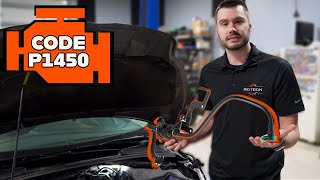
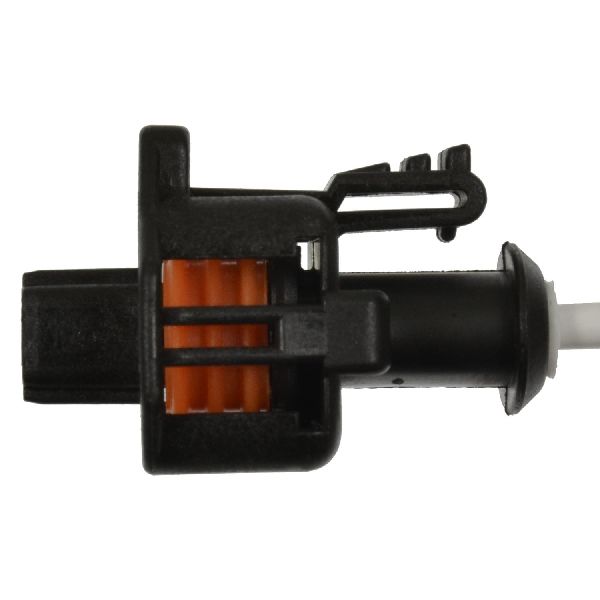
How to confirm: With the engine off, unplug the electrical connector from the purge valve. Then, disconnect the vapor line running to the intake manifold. Try to blow through the valve; if air passes through, it is stuck open and faulty. Alternatively, with the engine running and the electrical connector unplugged, feel for vacuum at the port; there should be none. A YouTube video by 'Fixing it with Friends' demonstrates this test clearly.
Typical fix: Replace the canister purge valve and hose assembly. This is a straightforward DIY job, often taking less than 30 minutes.
Est. part cost: $30-$75 - Faulty Upstream Oxygen Sensor (Bank 1, Sensor 1) 🟡 Medium Probability While less common than the purge valve, the sensor itself can fail. Owners sometimes replace this part first, only to find the P2196 code returns because the underlying purge valve issue was not addressed.
How to confirm: Use a scan tool to monitor the live data for the B1S1 O2 sensor. The voltage should fluctuate rapidly between approximately 0.1V and 0.9V. If it is stuck at a high voltage (e.g., >0.8V) and does not switch, the sensor is likely faulty. This should only be done after confirming the purge valve is working correctly.
Typical fix: Replace the upstream oxygen sensor. This requires an O2 sensor socket. 🎬 See this walkthrough on how to replace the O2 sensor.
Est. part cost: $50-$120 - Deformed Fuel Tank ⚪ Low Probability This is a secondary effect of a long-term faulty purge valve. The constant vacuum can physically suck in and deform the plastic fuel tank, which can damage the fuel pump module and sending unit, leading to inaccurate fuel gauge readings.
How to confirm: Visually inspect the bottom of the fuel tank. TSB 16-0062 specifies looking for upward deformation of more than 1 inch (25mm). This is often accompanied by an inaccurate fuel gauge and code P0460.
Typical fix: The fuel tank must be replaced. This is a serious consequence of not fixing the purge valve sooner.
Est. part cost: $400-$800
Rare But Worth Checking
- Leaking Fuel Injector: A fuel injector stuck open can dump excess fuel into a cylinder, causing a rich condition. This would typically be accompanied by a specific cylinder misfire code.
- High Fuel Pressure: A failing fuel pressure regulator or high-pressure fuel pump issue could cause system-wide high pressure, leading to a rich condition. This is less common than the purge valve issue.
- MAF Sensor Fault: A dirty or faulty Mass Airflow (MAF) sensor can send incorrect airflow readings to the PCM, leading to an improper fuel mixture and potentially a P2196 code.
Diagnosis Steps

- Scan for all DTCs. If P1450 is present with P2196, the canister purge valve is the primary and most likely suspect.
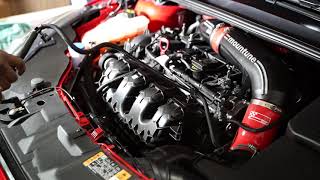
- Locate the canister purge valve on the 2.0L engine. It's part of a hose assembly near the intake manifold, under the engine cover.
- Perform a functional test on the purge valve. With the engine off and electrical connector unplugged, attempt to blow air through the valve from the intake side. If air passes, it is stuck open and must be replaced.
- If the purge valve test passes, use a scan tool to observe the live data from the Bank 1 Sensor 1 O2 sensor. If the voltage is fixed high (above 0.8V) and doesn't switch, the sensor itself is likely faulty.
- If both the purge valve and O2 sensor appear to be working, inspect the fuel tank for physical deformation from underneath the vehicle, as detailed in TSB 16-0062.
- As a final, less common check, test fuel pressure to ensure it is within specification and inspect for leaking fuel injectors or a contaminated MAF sensor.
Parts You'll Likely Need
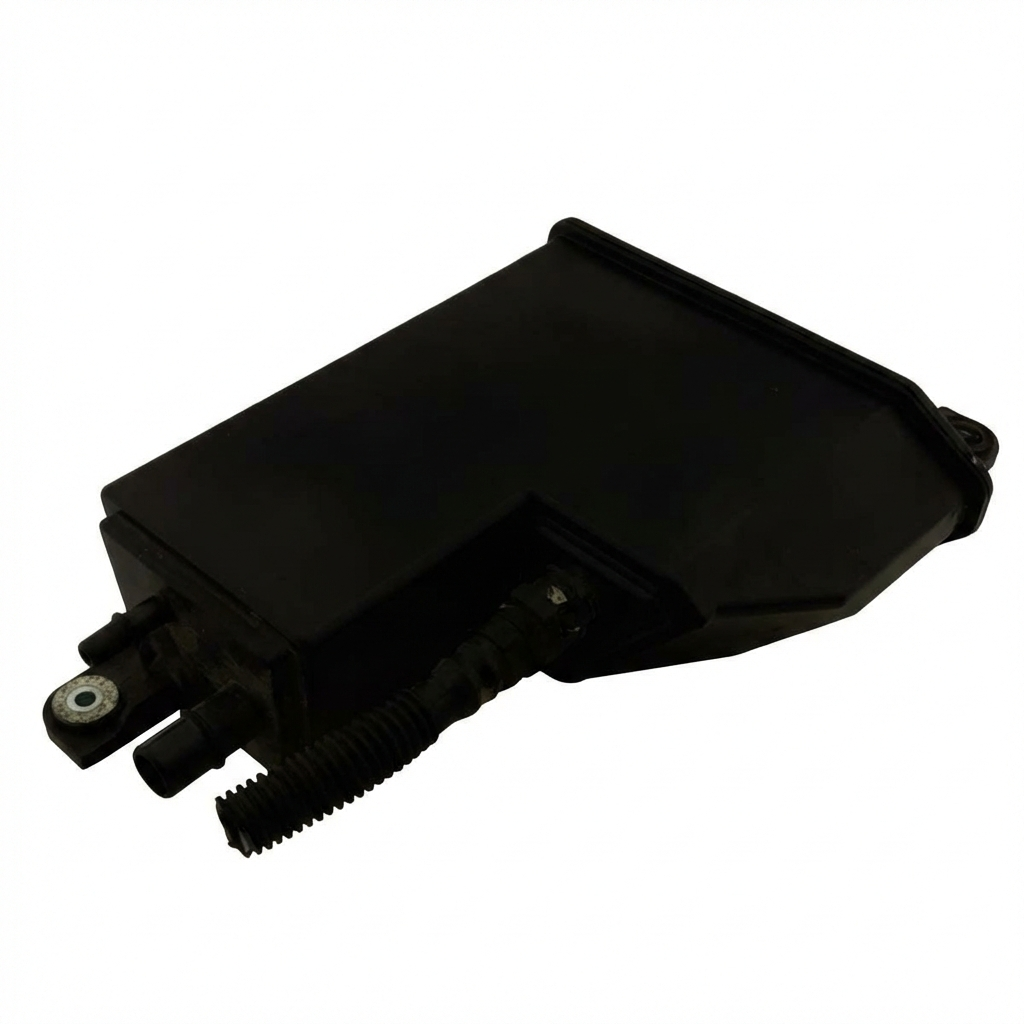
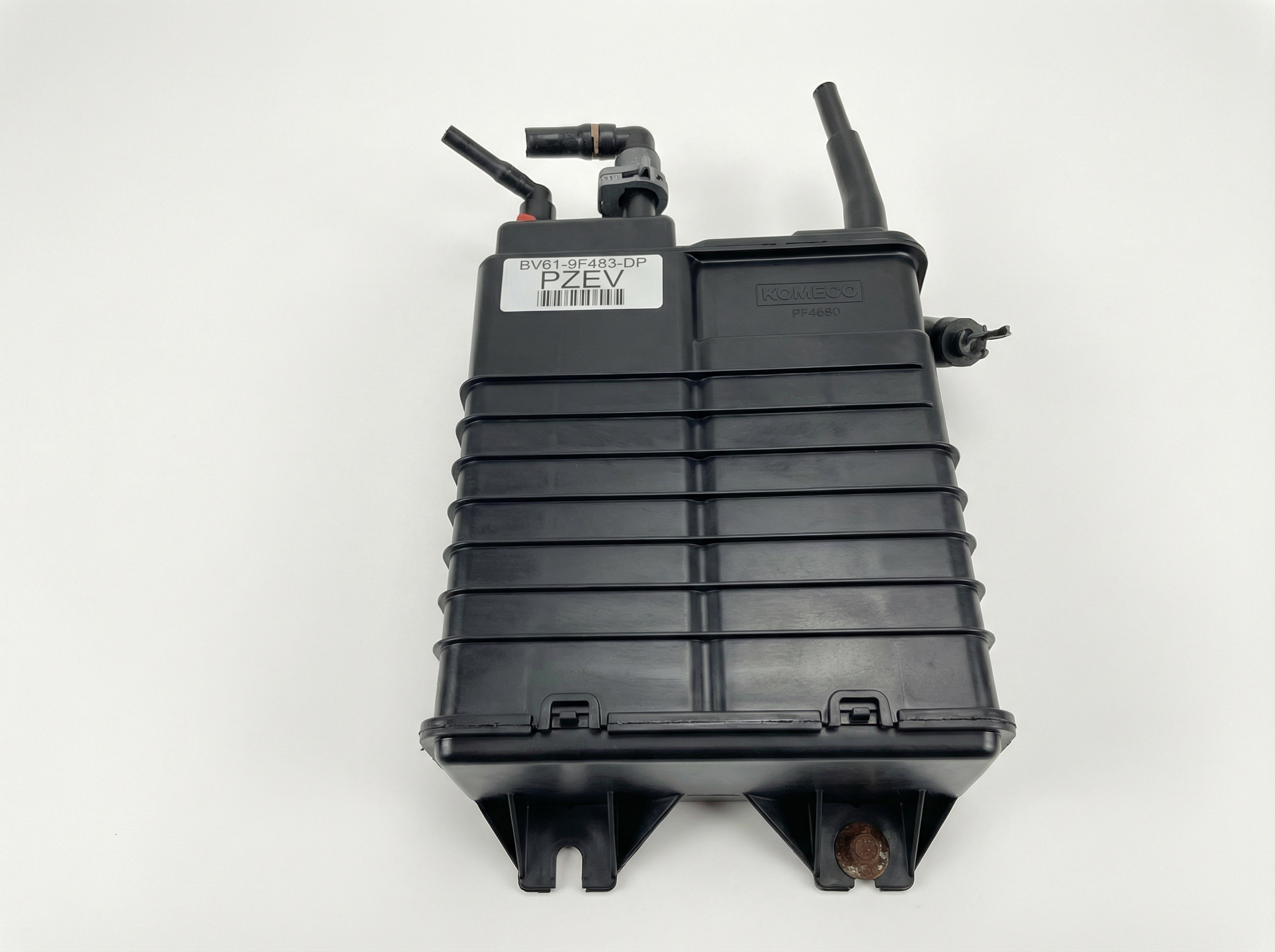
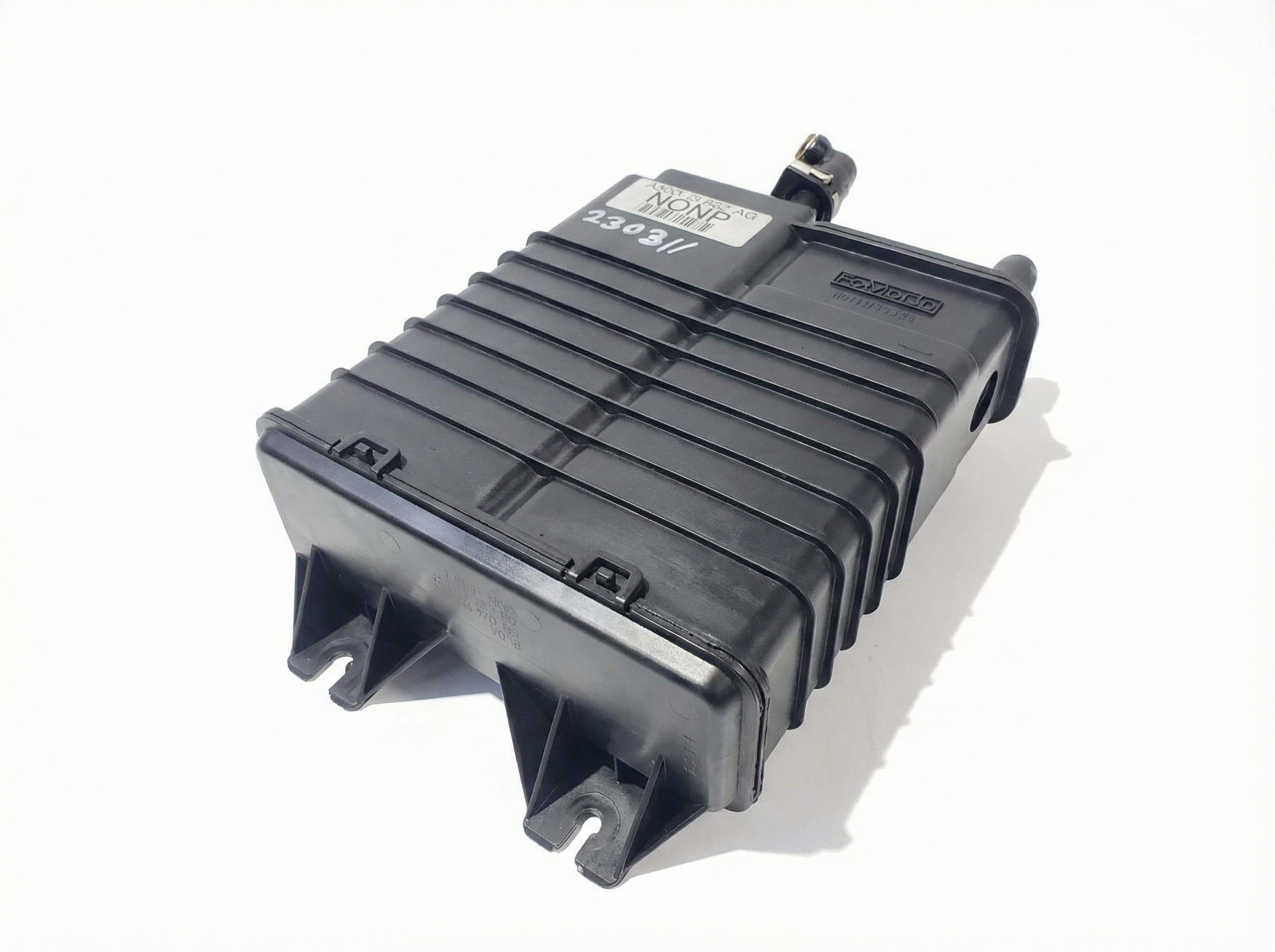
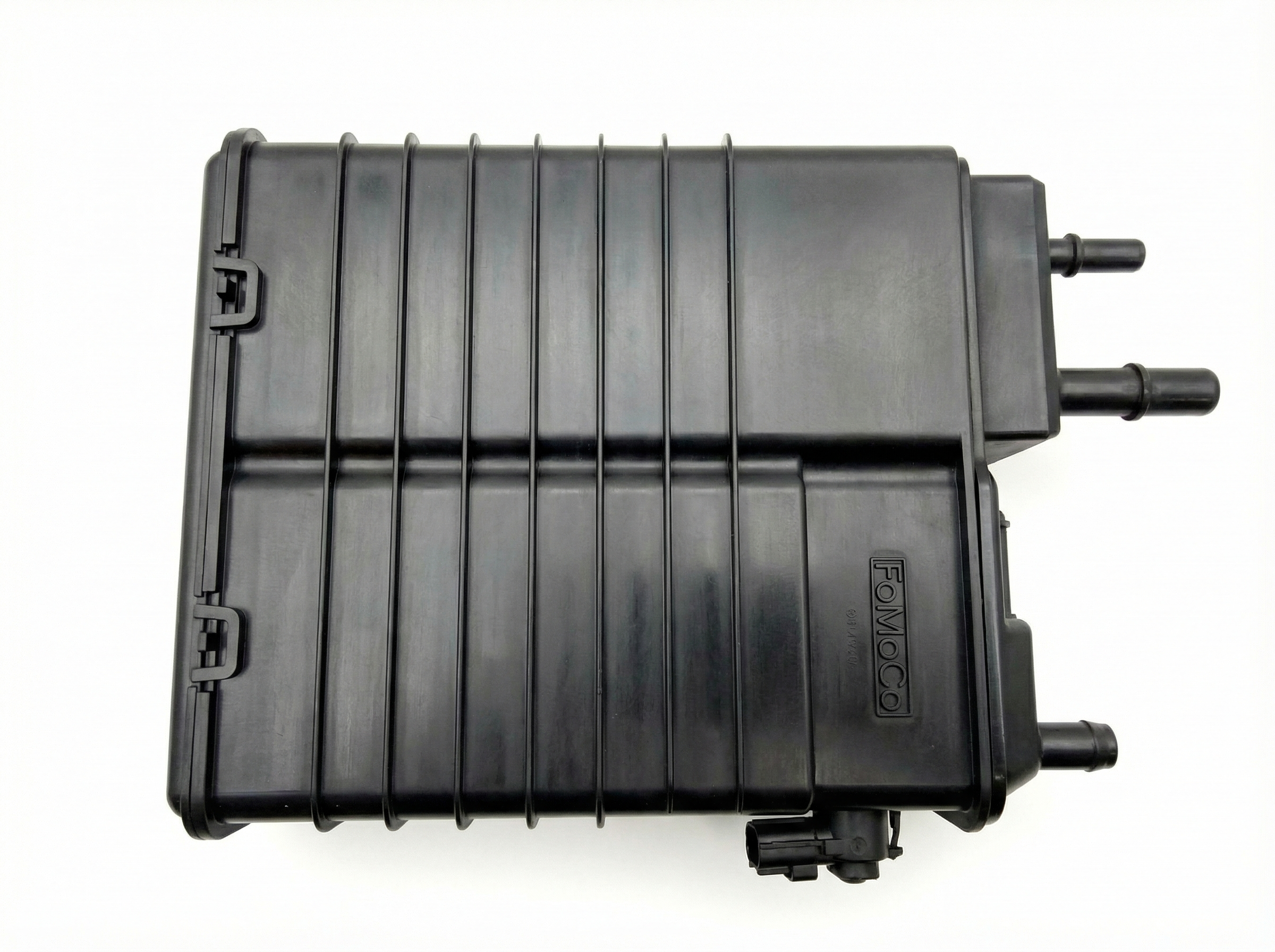
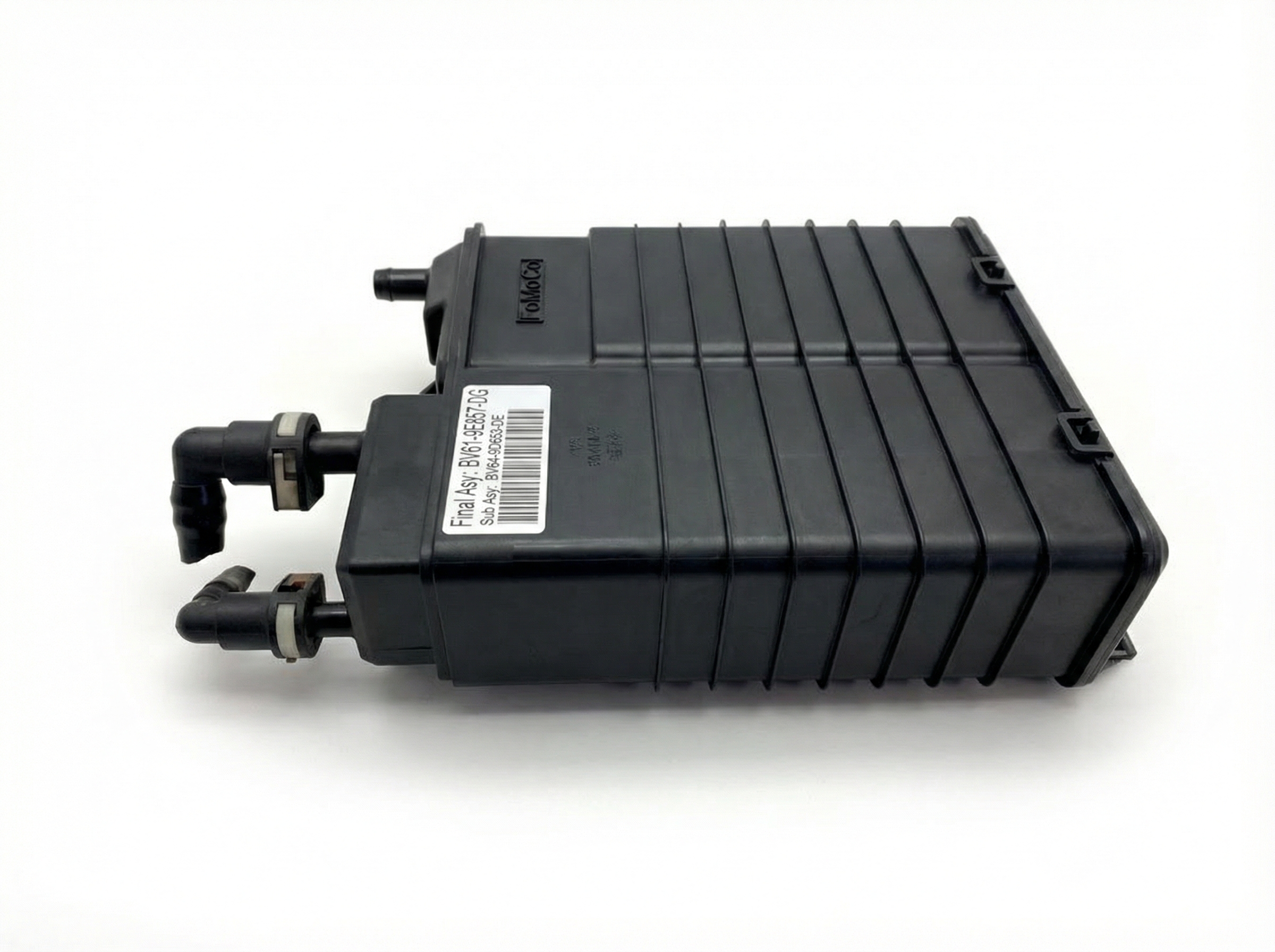
- Vapor Canister Purge Valve / Solenoid
(OEM #BV6Z-9D289-R)— This is the most frequent cause of P2196 on this vehicle. It fails by sticking open, allowing uncommanded fuel vapor into the engine. The part number BV6Z-9D289-R supersedes older versions like BV6Z-9D289-A and BV6Z-9D289-B.
Trusted brands: Motorcraft, Dorman (PV964), Bosch (0280142431)
OEM price range: $50-$75
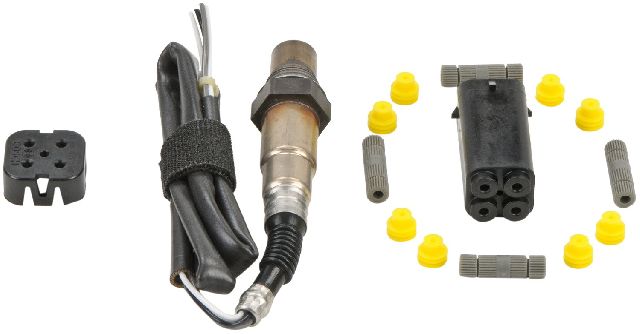
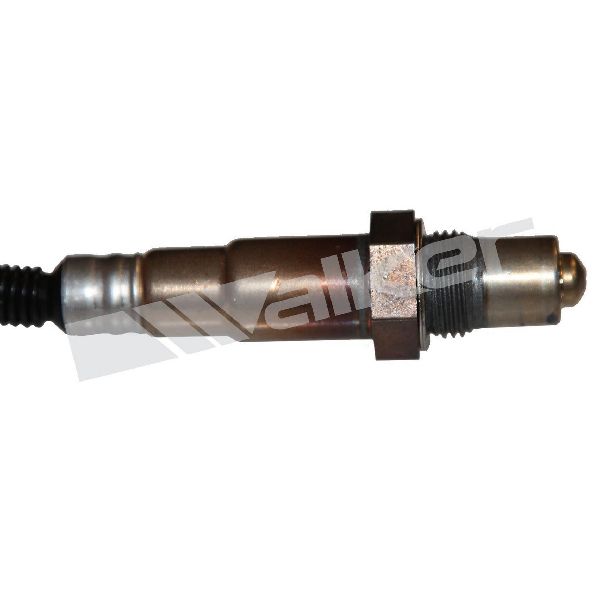
Aftermarket price range: $30-$60 - Upstream Oxygen Sensor (B1S1)
(OEM #CJ5Z-9F472-A (Motorcraft DY-1260))— This is the second most likely cause if the purge valve is confirmed to be working correctly. The sensor itself can fail and produce a fixed rich signal.
Trusted brands: Bosch, NGK/NTK, Motorcraft
OEM price range: $100-$150
Aftermarket price range: $50-$120
Related Codes That Often Appear With This One
- P1450 — Stands for 'Unable To Bleed Up Fuel Tank Vacuum'. This code is frequently triggered alongside P2196 because a stuck-open purge valve is the root cause for both conditions.
- P0456 — Indicates a small EVAP system leak. This can be triggered by the same faulty purge valve.
- P0460 — Relates to the 'Fuel Level Sensor Circuit'. A deformed fuel tank caused by the vacuum from a bad purge valve can damage the fuel level sender, triggering this code.
- P0420 — Indicates 'Catalyst System Efficiency Below Threshold'. A long-term rich condition can overwhelm and eventually damage the catalytic converter, causing this code to appear.
Technical Service Bulletins (TSBs) & Recalls

- 16-0062: Addresses inaccurate fuel gauge/DTE, MIL illumination with DTCs P0420, P1450, P0443, P0452, P0456, P0460 and/or P2196, pointing to the purge valve and potential tank deformation.
- 15-0034: Supersedes an earlier TSB, also linking incorrect fuel gauge indication with DTCs including P2196.
Platform-Specific Known Issues
- Ford Technical Service Bulletin 16-0062 directly addresses P2196 along with other codes like P1450. It instructs technicians to first replace the canister purge valve, then inspect for fuel in the EVAP canister, and finally check for fuel tank deformation. If the tank is deformed by more than an inch, it requires replacement.
- Ford TSB 15-0034 also lists P2196 in a group of codes related to incorrect fuel gauge indication, pointing to the same EVAP system issue.
- Owner complaints frequently mention the cluster of symptoms: P2196, stalling after refueling, and erratic fuel gauge readings, which were ultimately resolved by replacing the purge valve. [NHTSA ODI #11530969, NHTSA ODI #11443669]
- A real-world repair story from a Focus ST owner on Reddit (r/FocusST) confirms that even after a dealer performed a recall reflash for the EVAP system, the P2196 and P1450 codes persisted. Replacing the purge valve assembly himself for about $40 ultimately fixed the issue.
Mechanic-Grade Diagnostic Values
- Canister Purge Valve (Solenoid) Coil Resistance — expected: 20 to 30 ohms. Failure: A reading significantly outside this range, especially an open circuit (infinite resistance) or a dead short, indicates a failed solenoid coil.
- Canister Purge Valve Connector Voltage (Key On, Engine Off) — expected: Approximately 11 to 12 volts DC. Failure: No voltage at the harness connector suggests a wiring or fuse issue upstream of the valve.
- Fuel Tank Pressure (FTP) Sensor Voltage (KOEO, atmospheric pressure) — expected: Approximately 2.6 to 2.65 volts. Failure: A voltage significantly different from this at atmospheric pressure can indicate a sensor or wiring fault.
- Short Term Fuel Trim (STFT) with P2196 — expected: Should fluctuate around 0%. Failure: A jump to and holding at a high negative value (e.g., -29%) indicates the PCM is attempting to remove a large amount of fuel to compensate for a rich condition.
Scan Tool Commands That Help
- Ford IDS / FORScan / High-End Scan Tool: Keep Alive Memory (KAM) Reset — After replacing a component like the purge valve or O2 sensor, resetting the KAM clears the learned fuel trim adaptations. This forces the PCM to relearn the new parameters immediately, which can resolve persistent issues and confirm the fix. A manual procedure involves disconnecting the battery and shorting the terminals (with the battery disconnected) for 5-10 minutes to discharge capacitors.
- Ford IDS / High-End Scan Tool: EVAP System Test / Purge Valve Duty Cycle Command — This bidirectional control allows a technician to command the purge valve to open and close while monitoring fuel trims and O2 sensor data. It's a definitive way to test if the valve is physically sticking or has an intermittent electrical fault, without having to remove it first.
Wiring & Ground Locations
- G104 — Left side of the engine compartment.. This is a primary ground location for the Powertrain Control Module (PCM). A poor connection at G104 can cause erratic sensor readings and unpredictable PCM behavior, potentially leading to incorrect fuel mixture calculations and codes like P2196.
- PCM Connector C175B, Pins 3, 4, 5, 6 — At the Powertrain Control Module (PCM).. These are the main ground pins (GND HCP) for the PCM. Verifying a solid ground connection here is a critical step in diagnosing any engine control issues, including persistent rich codes.
- Upstream O2 Sensor (HO2S11) Connector — On the exhaust manifold before the catalytic converter.. The wiring harness to the upstream O2 sensor can be damaged by heat or abrasion. A short in the signal wire or heater circuit can cause the sensor to send a fixed rich signal to the PCM, directly causing a P2196 code.
Real Owner Repair Stories
- Reddit r/FocusST (Ford Focus ST (specific year not mentioned, but within the 2013-2018 range)) — Check engine light with codes P2196 and P1450, stalling after filling the fuel tank.
❌ Tried (didn't work) Took the car to a Ford dealership for a software reflash related to an EVAP system recall.
✅ What actually fixed it The owner personally replaced the canister purge valve assembly. The cost for the part from a Ford dealership was approximately $40 Canadian. - Reddit r/FocusST (Ford Focus ST (FoST), year not specified.) — Error code P2196, excessive popping from the exhaust on deceleration.
❌ Tried (didn't work) The user did not list other attempted fixes, but directly addressed the code's definition.
✅ What actually fixed it Replacement of the upstream oxygen sensor (Bank 1, Sensor 1). The user noted this was a difficult part to access, requiring removal of the air intake, battery, battery box, and windshield cowl. - YouTube - Duraguy (Ford Focus ST) — Codes P1450 and P2196.
❌ Tried (didn't work) The upstream O2 sensor had been replaced just a few days prior, but the code returned.
✅ What actually fixed it The video demonstrates the replacement of the canister purge valve assembly, which resolved the codes.
When the Usual Fixes Don't Work
- While the vast majority of P2196 cases on this platform are caused by the canister purge valve, there are confirmed instances where the code was resolved only by replacing the upstream O2 sensor (Bank 1, Sensor 1). One owner reported experiencing excessive exhaust popping on deceleration, which accompanied the P2196 code. After replacing the O2 sensor, the issue was fixed and did not return for over 5 years and 40,000 miles, indicating the sensor itself was the true point of failure in that case.
OEM Part Supersession History
BV6Z-9D289-A, BV6Z-9D289-B→BV6Z-9D289-R— Part revision and improvement by the manufacturer to address the common failure mode (sticking open).
Heads up: The newer -R revision is the correct and most reliable replacement for the earlier versions.
Model Year Variations Within This Range
- 2015: The 2015 model year marked a significant facelift for the Focus in North America. While the 2.0L GDI engine remained the primary engine, a 1.0L EcoBoost I3 became available as an option. The exterior and interior were substantially redesigned, including the center console and infotainment system. However, the underlying EVAP system issue causing P2196 with the 2.0L engine remained consistent with the pre-facelift 2012-2014 models.
Helpful Videos


Used OEM Parts in Stock

New Aftermarket Parts Available


The information in this article is provided for general reference and educational purposes only. Vehicle specifications, procedures, and part compatibility can vary by production date, trim level, and region. Always consult your vehicle's factory service manual and verify part numbers before purchasing or performing repairs. Safety-critical components such as airbags, seat belts, and braking systems should be installed by a qualified professional.
- Ford FOCUS:
- 🎬 Helpful Videos
- 🛍️ Shop This Part
- What's Unique About the 2012-2015 Ford FOCUS
- Diagnostic Flowchart
- Symptoms You May Notice
- Most Likely Causes
- Rare But Worth Checking
- Diagnosis Steps
- Parts You'll Likely Need
- Related Codes That Often Appear With This One
- Technical Service Bulletins (TSBs) & Recalls
- Platform-Specific Known Issues
- Mechanic-Grade Diagnostic Values
- Scan Tool Commands That Help
- Wiring & Ground Locations
- Real Owner Repair Stories
- When the Usual Fixes Don't Work
- OEM Part Supersession History
- Model Year Variations Within This Range
- 🎟️ Get 5% Off