

P2196 on 2018-2020 Ford F-150: Stuck Rich O2 Sensor Causes and Fixes
On a 2018-2020 F-150 with the 2.7L EcoBoost, code P2196 is most often caused by leaking direct fuel injectors or a faulty upstream oxygen sensor. Ford issued multiple Technical Service Bulletins (TSBs) for this issue, which may also require a PCM software update.
- For the 2018-2020 F-150 with a 2.7L EcoBoost, P2196 is very likely caused by leaking fuel injectors, as documented by Ford in TSB 20-2324.
- Do not immediately replace the O2 sensor. Perform diagnostic checks on the fuel system first, especially the injectors and the EVAP purge valve.
- A common symptom of a failing purge valve is difficulty starting the truck immediately after filling the gas tank.
- The official Ford repair may involve both replacing the direct injectors and reprogramming the main computer (PCM).
- If you smell raw fuel, stop driving and have the vehicle inspected immediately, as it could be a fire hazard.
What's Unique About the 2018-2020 Ford F-150

For the 2018-2020 F-150 with the 2.7L EcoBoost, this code is exceptionally well-documented by Ford. The manufacturer's response evolved over time. Early bulletins like SSM 48789 and SSM 48957 from 2020 acknowledged the code but initially advised dealers to simply clear it while engineers worked on a solution. Later, more comprehensive TSBs like 20-2324 and 21-2045 were released, identifying the primary culprits as either leaking direct fuel injectors or a PCM software calibration issue. TSB 20-2324 specifically outlines a procedure to test for leaking injectors by monitoring fuel rail pressure after engine shutdown. This makes it critical for owners to check for TSBs rather than immediately replacing the O2 sensor.
Diagnostic Flowchart

Tap your situation to follow the diagnostic path that matches what you're seeing on this vehicle.
Symptoms You May Notice

- Check Engine Light (MIL) illuminated
- Reduced fuel economy
- Rough or uneven idle
- Hard starting, especially after refueling (often points to EVAP purge valve)
- Smell of raw gasoline from the exhaust
- Black smoke from the exhaust
- Intermittent brief deceleration with cruise control enabled
- Replacing the oxygen sensor without checking for leaking fuel injectors. On the 2.7L EcoBoost, the O2 sensor is often correctly reporting a problem that originates with the injectors, as outlined in TSB 20-2324.
- Ignoring the PCM's adaptive fuel trim values. In some cases, particularly on Flex Fuel vehicles, the PCM can 'learn' an incorrect ethanol percentage in the fuel, causing it to command a rich mixture. A reset of the adaptive learning tables may be required.
Most Likely Causes

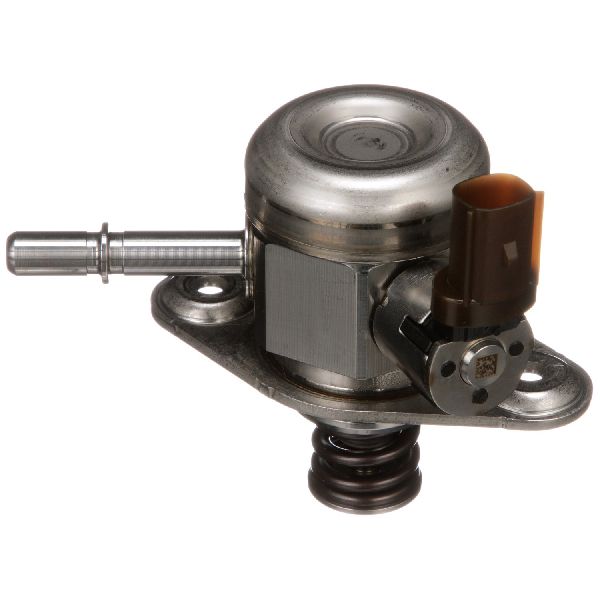
- Leaking Direct Fuel Injectors 🔴 High Probability This is a widely documented issue for the 2.7L EcoBoost engine, as confirmed by Ford's TSB 20-2324 and TSB 21-2045. The direct injection system operates under very high pressure, and injector internals can fail, causing them to leak fuel into the cylinders even when the engine is off.
How to confirm: Follow the procedure in TSB 20-2324: use a diagnostic scan tool to monitor fuel rail pressure. After running the engine, shut it off and watch the pressure. If it drops more than 6.9 kPa (10 psi) within 30 seconds, it indicates a leak. A borescope can also be used to visually inspect for pooled fuel on piston tops.
Typical fix: Replace the faulty direct fuel injectors on the affected bank. It is highly recommended to replace all injectors on that bank as a set. The updated OEM part is HL3Z-9F593-B, which supersedes the original CM-5311. The PCM must also be reprogrammed to the latest calibration as part of the TSB procedure.
Est. part cost: $75-$150 per injector - Faulty Bank 1, Sensor 1 Oxygen Sensor 🟡 Medium Probability Oxygen sensors are wear items that can fail or become contaminated. However, on this specific platform, the sensor is often correctly reporting a rich condition caused by another component. It should not be the first part replaced without further diagnosis.
How to confirm: Use an OBD-II scanner to monitor the live data for the Bank 1 Sensor 1 O2 sensor. The voltage should fluctuate rapidly between approximately 0.1 and 0.9 volts. If it is stuck at a high value (e.g., >0.8V), the sensor is either reading a true rich condition or it has failed. Swap the Bank 1 and Bank 2 upstream sensors; if the code moves to P2198 (Bank 2), the sensor is bad.
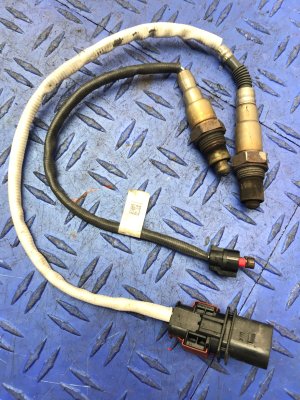
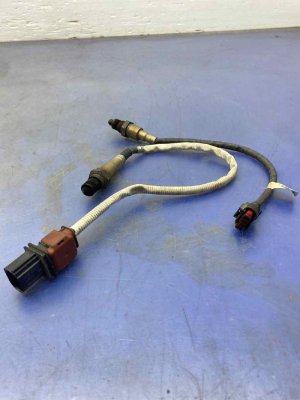
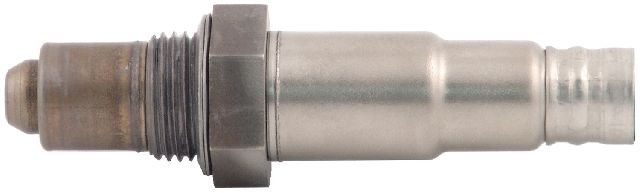
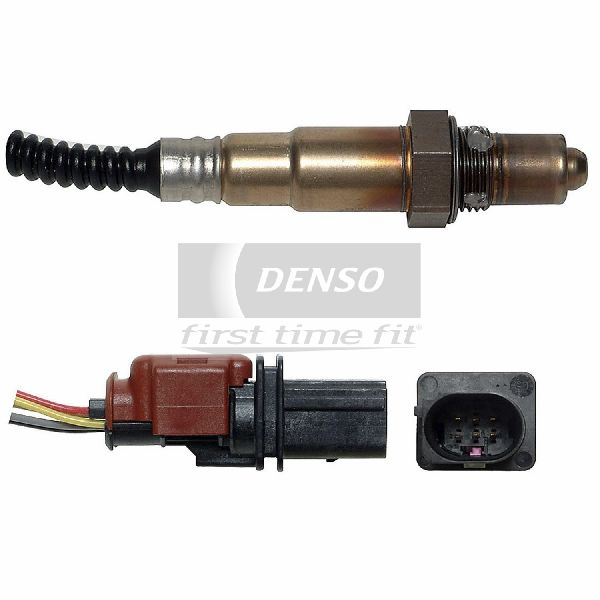
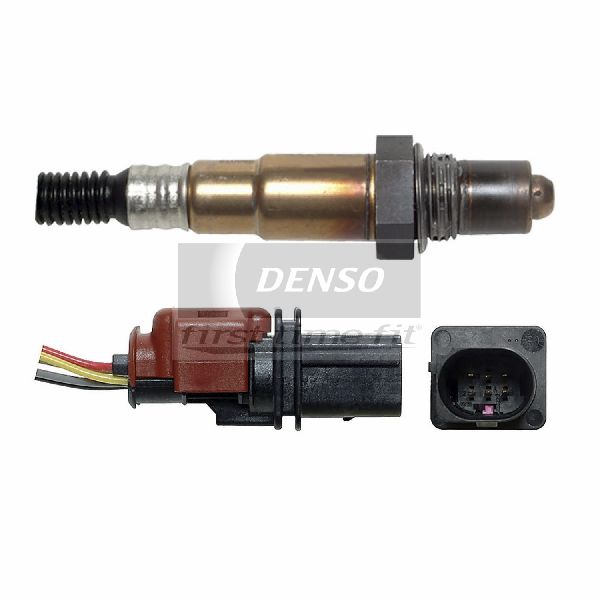
Typical fix: Replace the Bank 1, Sensor 1 (upstream) oxygen sensor. The Motorcraft part number is often DY-1153.
Est. part cost: $50-$100 - Stuck-Open EVAP Purge Valve 🟡 Medium Probability A stuck-open purge valve is a common failure on many Ford vehicles. It allows un-metered fuel vapors from the charcoal canister to be drawn into the engine at idle, creating a rich condition that can trigger P2196 and P2198. A classic symptom is difficulty starting immediately after refueling.
How to confirm: Disconnect the vapor line from the purge valve itself. With the engine running at idle, place your finger over the port on the valve. There should be no vacuum. If you feel suction, the valve is stuck open and needs replacement.
Typical fix: Replace the EVAP canister purge valve. The Motorcraft part is often CX2695.
Est. part cost: $40-$70 - PCM Software Issue ⚪ Low Probability TSB 21-2045 directly states that on some 2019-2020 models, the P2196 code and an intermittent deceleration with cruise control can be caused solely by a software glitch. Early TSBs also pointed to a software solution before the injector issue was fully addressed.
How to confirm: A Ford dealership or a qualified shop with access to Ford's diagnostic software (FDRS) can check the vehicle's PCM calibration level against the latest version specified in TSB 21-2045 or TSB 20-2324.
Typical fix: Reprogram the Powertrain Control Module (PCM) to the latest calibration. This is a required step even when replacing injectors under TSB 20-2324.
Est. part cost: $0 (if under warranty) or $100-$250 for labor
Rare But Worth Checking
- Faulty Fuel Pressure Regulator: A failed regulator can cause excessive fuel pressure, leading to a rich condition.
- Clogged Air Filter or Intake Obstruction: Restricting airflow while fuel delivery remains the same will cause the engine to run rich.
- Clogged Catalytic Converter: In rare cases, a clogged or failing catalytic converter can create back pressure and strange sensor readings, leading to a P2196 code. One owner diagnosed this by removing the O2 sensor; the engine's performance immediately improved, indicating a downstream restriction.
Diagnosis Steps
- Scan the PCM for all stored trouble codes. Note any other codes that appear alongside P2196, such as P2198, P0172, or misfire codes (P030X).
- Check for applicable TSBs. For this vehicle, TSB 21-2045 and TSB 20-2324 are critical. Review their specific conditions and procedures.
- Use a scan tool to view live data for the Bank 1 and Bank 2 upstream O2 sensors. Compare their voltage readings. If Bank 1 is stuck high (>0.8V) while Bank 2 is fluctuating normally, it confirms the issue is isolated to Bank 1.
- Test the EVAP Purge Valve. Disconnect the vapor line and check for vacuum at the valve's port with the engine at idle. There should be none. If vacuum is present, the valve is stuck open and must be replaced.
- Perform a fuel pressure leak-down test as described in TSB 20-2324. Shut off the engine and monitor fuel rail pressure via the scan tool. If the pressure drops more than 10 psi in 30 seconds, one or more injectors are leaking.
- If injectors are confirmed to be leaking, replace them as a set for the affected bank. The updated part is HL3Z-9F593-B. Ensure the PCM is reprogrammed to the latest software version as part of the repair.
- If no fuel system issues are found and the purge valve is good, consider the O2 sensor itself. Test its wiring for damage. If the wiring is intact, the sensor may be faulty and require replacement.
Parts You'll Likely Need
- Direct Fuel Injector (Lower)
(OEM #HL3Z-9F593-B (supersedes CM-5311))— This is the most common cause for P2196 on the 2.7L EcoBoost, as documented in Ford TSB 20-2324.
Trusted brands: Motorcraft
OEM price range: $75-$150
Aftermarket price range: $60-$110 - Upstream Oxygen Sensor (Bank 1, Sensor 1)
(OEM #DY-1153)— If the fuel system is confirmed to be working correctly, the sensor itself may have failed. It is a common misdiagnosis if not properly tested first.
Trusted brands: Motorcraft, Bosch, NGK, Denso
OEM price range: $70-$110
Aftermarket price range: $45-$80 - EVAP Canister Purge Valve
(OEM #CX2695)— A common failure point on Ford vehicles that can cause a rich condition and is relatively easy to diagnose and replace.
Trusted brands: Motorcraft
OEM price range: $45-$60
Aftermarket price range: $25-$40
Related Codes That Often Appear With This One
- P2198 — This is the identical 'Stuck Rich' code for Bank 2. If both banks are running rich due to a systemic issue like a faulty purge valve, incorrect fuel pressure, or a PCM software issue, both codes may appear together.
- P0172 — This code means 'System Too Rich (Bank 1)'. P2196 is more specific, indicating the sensor is 'stuck', but they both point to the same underlying problem of excess fuel.
- P0300-P0306 — These are misfire codes. A leaking fuel injector can foul the spark plug in its cylinder, leading to misfires on that specific cylinder (e.g., P0301 for cylinder 1). TSB 20-2324 lists these codes as related symptoms.
- P1450 — This code for 'Unable To Bleed Up Fuel Tank Vacuum' often appears with EVAP-related rich conditions. If seen with P2196/P2198, it strongly points to a faulty EVAP purge valve.
Technical Service Bulletins (TSBs) & Recalls
- TSB 21-2045: Notes that 2019-2020 F-150s with the 2.7L EcoBoost may exhibit P2196 and other codes due to a PCM software issue, also causing cruise control problems. The fix is a PCM reprogram.
- TSB 20-2324: Supersedes earlier TSBs for the 2018 model year. It identifies leaking direct injectors as a primary cause and provides a specific fuel pressure leak-down test. The fix is injector replacement and a PCM reprogram.
- SSM 48957 & SSM 48789: Early bulletins from 2020 where Ford acknowledged P2196/P2198 on 2019-2020 models but had not yet released a permanent fix, advising dealers to clear codes and wait for an engineering solution.
Platform-Specific Known Issues
- TSB 20-2324: For 2018 F-150s, this bulletin directly addresses P2196 by providing a diagnostic procedure for leaking direct fuel injectors (fuel pressure leak-down test) and mandates replacing the injectors and reprogramming the PCM if the test fails.
- TSB 21-2045: For 2019-2020 F-150s built on or before July 4, 2020, this bulletin identifies a PCM software issue that can cause P2196 and an intermittent deceleration with cruise control. The specified fix is a PCM reprogram.
Mechanic-Grade Diagnostic Values
- Long Term Fuel Trim (LONGFT1) — expected: Should be close to 0%, typically within +/- 10%.. Failure: A deeply negative value, such as -20% or lower, indicates the PCM is aggressively trying to remove fuel to compensate for a rich condition.
- Upstream O2 Sensor (Bank 1, Sensor 1) Voltage — expected: Rapidly fluctuating between ~0.1V (lean) and ~0.9V (rich).. Failure: Stuck at a high voltage, consistently above 0.8V, confirming the 'Stuck Rich' condition.
- Fuel Rail Pressure Leak-Down Test — expected: Pressure should remain stable after engine shutdown.. Failure: A pressure drop of more than 6.9 kPa (10 psi) within 30 seconds of engine shutdown, as specified in TSB 20-2324, points to leaking fuel injectors.
Hidden / Shadow Codes Worth Checking
- P2BF0, P2BF2, P2BF1, P2BF3: These codes relate to injector circuit performance and fuel adaptation limits for specific cylinders. For example, P2BF0 can indicate a Cylinder 1 Injector Circuit Range/Performance issue. They often appear with P2196/P2198 and provide more granular detail about the fuel control system reaching its limit. (see via These codes are stored in the PCM and are readable with a standard OBD-II scanner, but are often seen alongside the more generic P2196, pointing technicians toward a fuel delivery issue.)
- P2BEC, P2BED, P2BEE, P2BEF: These are additional manufacturer-specific codes indicating the adaptive fuel control system has reached its limit for an overly rich or lean condition on a specific bank. Their presence strongly supports a systemic fuel control problem rather than just a faulty O2 sensor. (see via Visible with most modern OBD-II scan tools and dealer-level software like Ford IDS.)
Scan Tool Commands That Help
- FORScan or Ford IDS: Reset All Adaptations / Clear Keep Alive Memory (KAM) — This should be performed after a repair (like replacing injectors or an O2 sensor) to force the PCM to erase its learned fuel trim tables and start fresh. A failure to do so can cause the old, incorrect adjustments to persist.
- FORScan or Ford IDS: Reset inferred ethanol percentage / Reset Fuel Alcohol Content — Use this if a rich condition persists with no other obvious cause. The PCM can incorrectly 'learn' a high ethanol content in the fuel, causing it to command more fuel and trigger a rich code. Resetting this value to a baseline (e.g., 10%) can resolve the issue instantly.
- Ford IDS: Key On Engine Running (KOER) Self-Test — After a repair, running the KOER self-test commands the PCM to check all its sensors and actuators. A successful pass with no codes detected is a strong confirmation that the fix was effective.
Wiring & Ground Locations
- Bank 1, Sensor 1 O2 Sensor — On the passenger side of the engine, in the exhaust manifold or downpipe before the catalytic converter.. This is the specific sensor that is reporting the 'Stuck Rich' condition. Its connector is often tucked away and zip-tied to other harnesses, making access difficult.
- G104 — A primary engine-to-chassis ground point, often located on the engine block, sometimes under the intake manifold area.. A poor ground at this location can cause erratic voltage signals from various engine sensors, including the O2 sensors. While not a primary cause, checking major grounds is a crucial step in diagnosing any persistent electronic issue.
Real Owner Repair Stories
- f150forum.com user 'redsun' (2019 F-150 with a Whipple supercharged 5.0L engine (different engine, but relevant codes)) — Check Engine Light with codes P2BF0 (Cylinder #1 Injector Range/Performance) and P0172 (System Too Rich Bank 1).
❌ Tried (didn't work) Swapping spark plugs, Swapping O2 sensors, Checking for vacuum leaks, Cleaning the MAP sensor
✅ What actually fixed it Replacing the fuel injectors (upgraded to Injector Dynamics 1050x) resolved the codes and restored smooth operation. This supports the diagnosis that injector issues are a root cause for rich conditions and related codes. - YouTube channel 'NZ DIAGNOSTICS' (2012 Ford F-150 3.7L V6 (different engine, but relevant principle)) — Codes P2196 and P2198 (both banks stuck rich), extended cranking, no-start condition.
❌ Tried (didn't work) Initial diagnosis pointed away from hardware as fuel pressure and MAF sensor readings were normal.
✅ What actually fixed it The technician found the PCM had incorrectly learned a fuel ethanol percentage of 64% when the tank only contained 10% ethanol fuel. This caused the PCM to command a much richer mixture, flooding the engine. The fix was to use a scan tool to reset the 'Fuel Ethanol Percentage' parameter, which immediately corrected the fuel trims and resolved the codes.
"I Checked Everything" — The Actual Cause
- A common scenario where a smoke test for vacuum leaks comes back clean is when the rich condition is caused by a faulty EVAP purge valve stuck open. This introduces un-metered fuel vapors into the intake manifold, which a smoke test may not reveal as a typical intake leak. The fix is replacing the purge valve.
- Another case is when the PCM has incorrectly learned the ethanol content of the fuel. The system has no physical leaks, but the computer is commanding an overly rich mixture based on faulty adaptive data. The fix is a software reset of the fuel composition value, not a mechanical repair.
OEM Part Supersession History
CM-5311→HL3Z-9F593-B— Updated design to address the leaking issue identified in TSBs.
Model Year Variations Within This Range
- 2018-2020: The 2018 model year introduced the 2nd Generation 2.7L EcoBoost. Unlike the 1st Gen (2015-2017), this engine features a dual fuel injection system with both port and direct injectors. This change was made to improve efficiency and mitigate carbon buildup on intake valves.
- 2019-2020: TSB 21-2045 specifically addresses P2196 on 2019-2020 models with a PCM software update, indicating a potential calibration difference compared to the 2018 model year for certain issues.
Helpful Videos



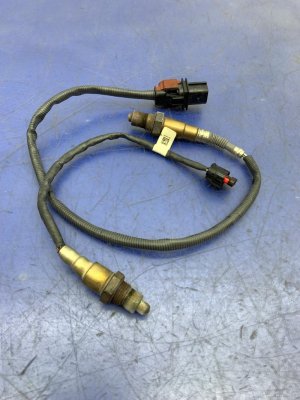
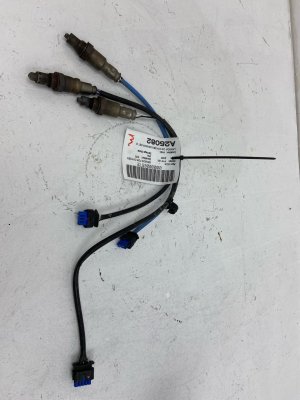
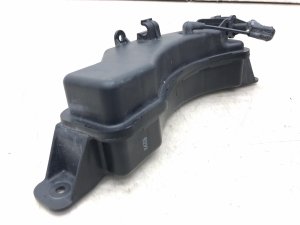
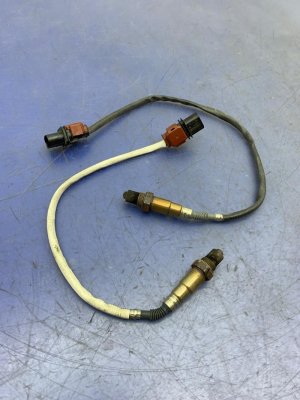
Used OEM Parts in Stock
New Aftermarket Parts Available



The information in this article is provided for general reference and educational purposes only. Vehicle specifications, procedures, and part compatibility can vary by production date, trim level, and region. Always consult your vehicle's factory service manual and verify part numbers before purchasing or performing repairs. Safety-critical components such as airbags, seat belts, and braking systems should be installed by a qualified professional.
- Ford F-150:
- 🎬 Helpful Videos
- 🛍️ Shop This Part
- What's Unique About the 2018-2020 Ford F-150
- Diagnostic Flowchart
- Symptoms You May Notice
- Most Likely Causes
- Rare But Worth Checking
- Diagnosis Steps
- Parts You'll Likely Need
- Related Codes That Often Appear With This One
- Technical Service Bulletins (TSBs) & Recalls
- Platform-Specific Known Issues
- Mechanic-Grade Diagnostic Values
- Hidden / Shadow Codes Worth Checking
- Scan Tool Commands That Help
- Wiring & Ground Locations
- Real Owner Repair Stories
- "I Checked Everything" — The Actual Cause
- OEM Part Supersession History
- Model Year Variations Within This Range
- 🎟️ Get 5% Off