

P2196 on 2019-2020 Ford Edge: Causes for O2 Sensor Stuck Rich
On a 2019-2020 Ford Edge, code P2196 is frequently caused by a leaking EGR cooler or a PCM software issue, both covered by Technical Service Bulletins (TSBs). Before replacing the O2 sensor, have a dealer check for these specific issues, as the sensor itself is rarely the root cause.
- For a 2019-2020 Ford Edge, P2196 is not a simple sensor issue. Always check for TSBs first.
- The two most likely causes are a leaking EGR cooler (TSB SSM 48345) or the need for a PCM software update (TSB 19-2046).
- Do not replace the oxygen sensor until you have ruled out the TSB-related issues and tested the EVAP purge valve.
- Driving for an extended period with this code can cause expensive damage to your catalytic converter.
What's Unique About the 2019-2020 Ford EDGE

For the 2019-2020 Ford Edge, P2196 is not just a generic fuel system or sensor problem. Ford has issued specific Technical Service Bulletins (TSBs) that point to unique platform issues. One bulletin (SSM 48345) identifies that coolant from a leaking EGR cooler can enter the intake and exhaust, causing this rich code and sometimes white smoke. Another bulletin (TSB 19-2046) notes that the code can be triggered by a software glitch, which requires a PCM update. These vehicle-specific problems are often the root cause, making it critical to check for TSBs before assuming a bad sensor or fuel injector.
Diagnostic Flowchart
Tap your situation to follow the diagnostic path that matches what you're seeing on this vehicle.
Symptoms You May Notice
- Check Engine Light is on
- Poor fuel economy
- Black or white smoke from the exhaust
- Rough idle or engine running rough
- Engine misfires
- Reduced engine power
- Strong fuel odor
- High-temperature warning light (if related to EGR cooler leak)
- Noticeable coolant loss (if related to EGR cooler leak)
- Replacing the oxygen sensor without first checking for TSBs related to the EGR cooler and PCM software. On this specific vehicle, the sensor itself is often not the root cause, but a victim of another failure (like a coolant leak).
Most Likely Causes

- Leaking EGR Cooler 🔴 High Probability A known issue documented in Ford TSBs SSM 48345 and 20-2234. The cooler can leak coolant internally into the intake and exhaust systems, which contaminates the O2 sensor and tricks it into reading a rich condition.
How to confirm: A technician will need to perform a cooling system pressure test and visually inspect the EGR cooler system for signs of coolant loss or leakage into the intake, as specified in the TSBs.
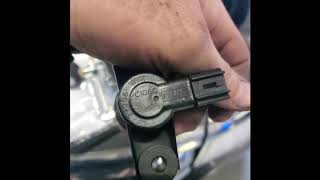
Typical fix: Replacement of the EGR cooler assembly 🎬 Watch: Step-by-step 2019 Edge EGR cooler replacement walkthrough. and associated gaskets.
Est. part cost: $400-$700 - Powertrain Control Module (PCM) Software Update Needed 🔴 High Probability Ford TSB 19-2046 explicitly states that various PCM software settings can incorrectly trigger a P2196 code on 2019 models built before Jan 23, 2019.
How to confirm: A Ford dealership or qualified shop must check the current PCM software version against the latest available updates using a diagnostic scan tool.
Typical fix: Update the PCM software to the newest version. This is a simple re-flash that takes under an hour.
Est. part cost: $0 (if under warranty) - $200 - Stuck-Open EVAP Purge Valve 🟡 Medium Probability This is a very common failure on many Ford vehicles. A stuck-open purge valve allows un-metered fuel vapors from the gas tank to enter the engine, creating a rich condition that the O2 sensor detects.
How to confirm: With the engine running, disconnect the vapor line from the purge valve. If you can feel vacuum suction from the valve port with the valve electrically unplugged, it is stuck open and needs to be replaced.
Typical fix: Replace the EVAP purge valve.
Est. part cost: $30-$80 - Leaking Fuel Injector(s) 🟡 Medium Probability For the 2.7L EcoBoost, TSB 20-2324 (issued for the F-150) indicates that leaking direct fuel injectors can be a cause for P2196. This is a known issue with some Ford direct injection (GDI) engines.
How to confirm: Perform a fuel pressure leak-down test or have injectors professionally cleaned and flow-tested. A technician can also monitor fuel trims and misfire data.
Typical fix: Replace the faulty fuel injector(s).
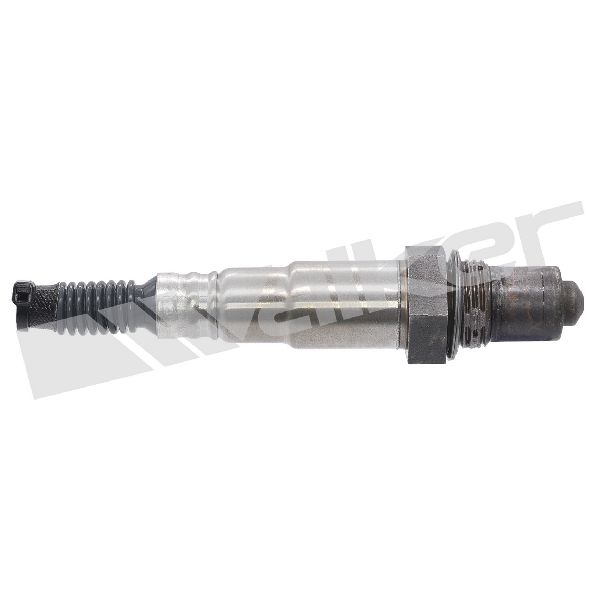
Est. part cost: $70-$150 per injector - Faulty Upstream Oxygen Sensor (Bank 1, Sensor 1) ⚪ Low Probability
How to confirm: Monitor the O2 sensor voltage with a scan tool. If it remains high (above 0.8V) and does not fluctuate, and all other causes (especially TSBs) have been ruled out, the sensor is likely faulty.
Typical fix: Replace the Bank 1, Sensor 1 oxygen sensor.
Est. part cost: $60-$150
Rare But Worth Checking
- High Fuel Pressure: A faulty fuel pressure regulator or high-pressure fuel pump can cause excessive fuel delivery, leading to a rich condition. This should be tested if injectors and other common causes are ruled out.
- Faulty Mass Air Flow (MAF) Sensor: A dirty or failing MAF sensor can under-report the amount of air entering the engine, causing the PCM to inject too much fuel. Cleaning the sensor with a dedicated MAF sensor cleaner is a good first step before replacement.
Diagnosis Steps

- Connect an OBD-II scanner and verify that P2196 is the primary code. Note any other codes present, as they can provide critical clues (e.g., P0217, P1299, P2198).
- Crucial Step: Check for applicable Technical Service Bulletins (TSBs). Specifically, ask a dealer or use a professional database to check for TSB SSM 48345 (EGR Cooler Leak), TSB 19-2046 (PCM Update), and TSB 20-2234 (EGR Cooler Inspection Procedure).
- If TSB 19-2046 is open for your vehicle's VIN and build date, have the PCM software updated by a dealership. This may resolve the issue on its own.
- If TSBs for the EGR cooler apply, have the system inspected. This involves a cooling system pressure test to check for internal leaks as described in TSB 20-2234. Look for signs of coolant loss or white exhaust smoke.
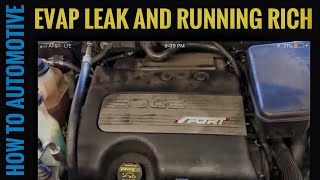
- Test the EVAP purge valve. 🎬 See how to diagnose rich codes and EVAP leaks. Disconnect the electrical connector and the hose leading from the canister to the valve. Check for vacuum at the valve's port at idle. If suction is present, the valve is stuck open and must be replaced.
- For 2.7L engines, consider the possibility of leaking fuel injectors as per TSB 20-2324 (F-150). This may require a fuel pressure leak-down test.
- Test the fuel pressure to ensure it is within the manufacturer's specified range.
- If all other possibilities have been exhausted, test the Bank 1 Sensor 1 oxygen sensor's operation using a scan tool. A healthy sensor's voltage should fluctuate rapidly between approximately 0.1V and 0.9V. If it's stuck high, replace the sensor.
Parts You'll Likely Need

- EGR Cooler
(OEM #K2GZ-9Y456-A (Verify with VIN))— A documented common failure point on this platform causing P2196, as cited in Ford TSBs SSM 48345 and 20-2234.
Trusted brands: Motorcraft
OEM price range: $500-$700
Aftermarket price range: $400-$600 - EVAP Canister Purge Valve
(OEM #F2GZ-9D289-A (Verify with VIN))— A common failure on Ford vehicles that allows excess fuel vapors into the engine, causing a rich condition.
Trusted brands: Motorcraft, Bosch, Dorman
OEM price range: $50-$80
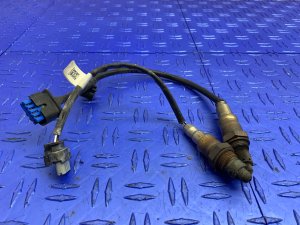
Aftermarket price range: $30-$60 - Upstream Oxygen Sensor (Bank 1) — While often misdiagnosed, the sensor can fail and send a false rich signal. It should only be replaced after ruling out TSBs and other common causes.
Trusted brands: Motorcraft, Denso, NTK
OEM price range: $100-$180
Aftermarket price range: $60-$120
Related Codes That Often Appear With This One
- P0401 — Insufficient EGR Flow, often appears with a faulty EGR cooler as per TSB SSM 48345.
- P1299 — Cylinder Head Overtemperature Protection Active, can be triggered by coolant loss from a leaking EGR cooler as per TSBs SSM 48345 and 19-2046.
- P0217 — Engine Coolant Overtemperature Condition, also related to the EGR cooler issue mentioned in TSBs SSM 48345 and 19-2046.
- P2198 — O2 Sensor Signal Stuck Rich (Bank 2, Sensor 1). If the cause (like a purge valve or fuel pressure issue) affects both cylinder banks, you may see both codes together. This is common on V6 models.
Technical Service Bulletins (TSBs) & Recalls
- SSM 48345: EGR Cooler
- TSB 19-2046: PCM Software
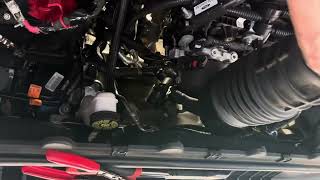
- TSB 20-2234: EGR Cooler Inspection 🎬 Watch: Follow-up on the TSB 20-2234 EGR leak inspection.
Platform-Specific Known Issues
- TSB SSM 48345: Some 2019-2020 Edge vehicles may exhibit an illuminated MIL with DTC P2196 (among others) due to an EGR Cooler that is leaking coolant into the engine intake and exhaust system.
- TSB 19-2046: Some 2019 Edge vehicles built before January 23, 2019 may illuminate the MIL with P2196 due to various settings in the PCM software, requiring a software update to resolve.
- TSB 20-2234: Provides a detailed service procedure for 2019-2020 Edge/Nautilus vehicles with the 2.0L engine that may have low coolant, white smoke, and various DTCs. It instructs technicians to pressure test the cooling system and inspect the EGR cooler for leaks.
Mechanic-Grade Diagnostic Values
- High-Pressure Fuel System (2.7L EcoBoost) — expected: OEM system operates at a maximum of 150 bar (2175 PSI).. Failure: Significantly lower pressure under load could indicate a weak high-pressure fuel pump (HPFP). Pressure that fails to hold during a leak-down test could indicate a leaking injector.
- Upstream O2 Sensor (Bank 1, Sensor 1) Voltage — expected: Should fluctuate rapidly between approximately 0.1V (lean) and 0.9V (rich) in closed-loop operation.. Failure: Voltage is biased or stuck high, near 0.9V, indicating a persistent rich reading.
- Long-Term Fuel Trim (LTFT) — expected: Should be close to 0%, ideally within +/- 10%.. Failure: With a P2196 code, the LTFT will likely be at its maximum negative limit (e.g., -25% to -35%) as the PCM tries to remove fuel to compensate for the perceived rich condition.
Scan Tool Commands That Help
- Ford IDS (Integrated Diagnostic System) or equivalent professional scanner: EVAP Purge Solenoid On/Off Command — This bidirectional control allows a technician to command the purge valve open and closed while monitoring fuel trims. It can confirm if the valve is physically stuck or not responding to PCM commands, which is a common cause of P2196 on Fords.
- Ford IDS (Integrated Diagnostic System): PCM Reprogramming / Software Update — This is required to perform the fix for TSB 19-2046. Standard OBD-II scanners cannot perform this function.
- Ford IDS (Integrated Diagnostic System): Power Balance Test — This test can help identify if a single cylinder is contributing less power than others, which can point towards a leaking or clogged fuel injector causing the rich condition on Bank 1.
Wiring & Ground Locations
- PCM Location — For 2019 models, the Powertrain Control Module (PCM) is located in the cowl panel area at the back of the engine bay.. Technicians may need to access the PCM to test wiring continuity for sensors (like the O2 sensor) or to replace the module if it is faulty.
- PCM Main Grounds — On some Ford Edge models, wiring diagrams show main PCM grounds located at pins 1, 2, and 4 of a PCM connector.. A poor ground connection at the PCM can cause erratic sensor readings and incorrect calculations, potentially leading to false rich codes. Verifying ground integrity is a key electrical diagnostic step.
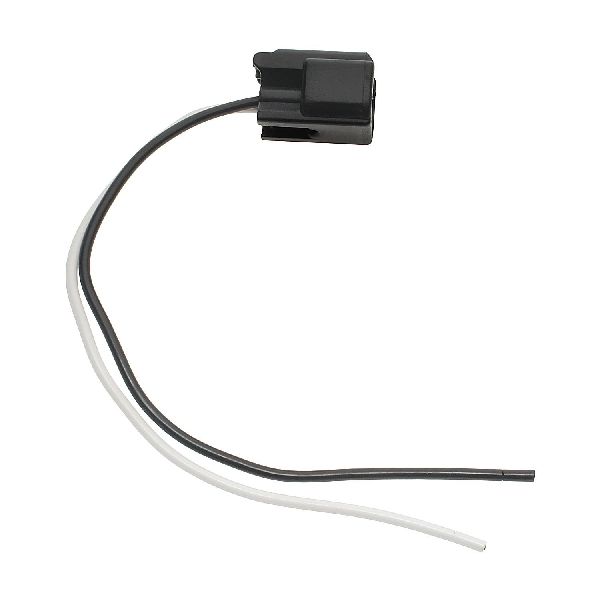
- O2 Sensor Connectors (2.0L) — The connectors for the upstream (Sensor 1) and downstream (Sensor 2) oxygen sensors are located behind the high-pressure mechanical fuel pump on the engine.. Knowing the physical location is necessary for testing the sensor's wiring harness for opens, shorts, or corrosion, which could mimic a failed sensor.
Real Owner Repair Stories
- YouTube video by 'g automotive' (2013 Ford Mustang V6 (demonstrates a common Ford issue)) — Check engine light with codes P2196 and P2198 (Stuck Rich on both banks).
❌ Tried (didn't work) The video focuses on direct diagnosis rather than failed attempts.
✅ What actually fixed it The EVAP purge valve was stuck open. The mechanic confirmed this by unplugging the valve's electrical connector and feeling for vacuum suction on the inlet port with the engine running. The presence of suction confirmed it was stuck open, pulling un-metered fuel vapors into the intake. Replacing the valve resolved the rich condition. - Ford Edge Forum user 'Kleber' (Ford Edge 3.5L (different engine, but same platform and codes)) — P2196 and P2198 codes appeared after an oil change.
❌ Tried (didn't work) Initial diagnosis was uncertain.
✅ What actually fixed it The owner took the vehicle to a dealership, which performed a PCM software update. The codes did not return after the update, suggesting the root cause was a software calibration issue.
"I Checked Everything" — The Actual Cause
- A common diagnostic path for a suspected vacuum leak causing a fuel trim issue is to perform a smoke test on the intake manifold. However, for code P2196 on a Ford, the cause is frequently a stuck-open EVAP purge valve. A smoke test may not identify this fault. The definitive test is to disconnect the valve electrically, start the engine, and physically check for vacuum at the valve's inlet port. If vacuum is present, the valve is internally stuck open, allowing fuel vapors to be drawn into the engine when they should not be.
OEM Part Supersession History
F2GZ-9D289-A→F2GZ-9D289-B— Part revision by the manufacturer. This is common for parts with known failure modes.
Heads up: The new part number is a direct replacement for the old one.
Model Year Variations Within This Range
- 2019: TSB 19-2046, which addresses a software issue causing P2196, is specific to 2019 Edge models built before January 23, 2019.
- 2019 vs 2020: The 2.0L EcoBoost engine had a slightly different torque rating: 280 lb-ft in 2019 vs. 275 lb-ft in 2020. This is unlikely to affect the diagnosis of P2196 but is a known difference.
- 2019 vs 2020: Dual-zone automatic climate control was an available upgrade on some 2019 trims but became a standard feature on all 2020 models. This is unrelated to the trouble code.
Helpful Videos


Used OEM Parts in Stock
New Aftermarket Parts Available


The information in this article is provided for general reference and educational purposes only. Vehicle specifications, procedures, and part compatibility can vary by production date, trim level, and region. Always consult your vehicle's factory service manual and verify part numbers before purchasing or performing repairs. Safety-critical components such as airbags, seat belts, and braking systems should be installed by a qualified professional.
- Ford EDGE:
- 🎬 Helpful Videos
- 🛍️ Shop This Part
- What's Unique About the 2019-2020 Ford EDGE
- Diagnostic Flowchart
- Symptoms You May Notice
- Most Likely Causes
- Rare But Worth Checking
- Diagnosis Steps
- Parts You'll Likely Need
- Related Codes That Often Appear With This One
- Technical Service Bulletins (TSBs) & Recalls
- Platform-Specific Known Issues
- Mechanic-Grade Diagnostic Values
- Scan Tool Commands That Help
- Wiring & Ground Locations
- Real Owner Repair Stories
- "I Checked Everything" — The Actual Cause
- OEM Part Supersession History
- Model Year Variations Within This Range
- 🎟️ Get 5% Off