

OBD-II Code P2192: System Too Rich at Higher Load (Bank 1)
What P2192 means, why it triggers, and how to fix it
- P2192 indicates a rich air-fuel mixture under heavy engine load, causing up to a 25% drop in fuel economy and sluggish acceleration.
- For 2012-2014 Kia and Hyundai 1.6L models, check for dealer Technical Service Bulletins (TSBs) first, as a $150 ECM software update is the most common fix.
- Inspect the EVAP purge valve and clean the Mass Airflow (MAF) sensor before replacing expensive fuel system components.
- Fix this code within 2 weeks to prevent unburnt fuel from melting your catalytic converter, which turns a minor repair into a $2,000 replacement.
What Does P2192 Mean?

P2192 means the Powertrain Control Module (PCM) detects too much fuel and not enough air in Bank 1's exhaust during heavy engine load. This occurs when accelerating quickly, climbing hills, or towing. Your engine cannot 'breathe' correctly when demanding power, causing it to run inefficiently and bog down.
Technical definition: System Too Rich at Higher Load Bank 1. The PCM sets this code when the long-term fuel trim (LTFT) correction value exceeds a pre-set negative limit (typically -25%) for a sustained period under high engine load conditions.
Can I Drive With P2192?

Yes, But With Caution. You can drive short distances, but fix it promptly. Ignoring P2192 causes poor fuel economy, sluggish acceleration, and catastrophic catalytic converter failure. A rich condition overheats the converter, melting its internal structure and turning a minor repair into a $1,500 to $2,500 replacement.
Common Causes

- Outdated Engine Control Module (ECM) Software (Common For Specific Models) — On 2012-2014 Kia and Hyundai 1.6L GDI models, flawed factory software incorrectly triggers P2192. A dealer ECM update is the required fix.
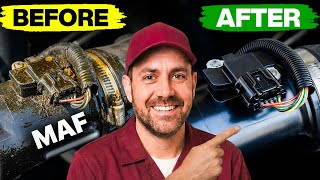
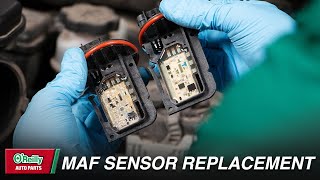
- Malfunctioning or Dirty Mass Airflow (MAF) Sensor (Very Common) — The MAF sensor measures incoming air. A dirty sensor under-reports airflow during acceleration, causing the PCM to inject excess fuel.
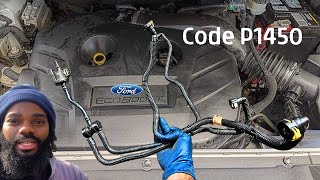
- Faulty EVAP Purge Valve (Common) — This valve routes fuel vapors into the intake. A stuck-open valve allows unmetered fuel vapor into the engine, creating a rich condition under load. This is highly common on Ford models. 🎬 See how to replace a faulty Ford EVAP purge valve.
- Leaking Fuel Injector(s) (Common) — A stuck-open or leaking injector dumps excess fuel into the cylinder. This becomes highly apparent under high load when fuel demand peaks.
- Failing High-Pressure Fuel Pump (GDI Engines) (Rare But Known Issue) — On Gasoline Direct Injection (GDI) engines, internal HPFP seals fail, leaking raw fuel directly into the engine oil. This causes a severe rich condition and oil contamination.
- Failing Upstream Oxygen (O2) Sensor (Common) — The O2 sensor measures unburnt exhaust oxygen. A contaminated or lazy sensor sends false 'lean' signals, prompting the computer to overcompensate by dumping fuel.
- PCV System Malfunction (Less Common) — A stuck-open Positive Crankcase Ventilation (PCV) valve or cracked hose alters intake vacuum, contributing to a rich condition on VW and GM models.
- Failing Fuel Pressure Regulator (Less Common) — If the regulator fails and allows excessive fuel pressure, it forces too much fuel through the injectors.
- Faulty Fuel Rail Pressure Sensor (Rare) — If this sensor reports inaccurately low pressure, the PCM commands the fuel pump to over-pressurize the system.
Symptoms

- Poor Acceleration / Engine Bogs Down — The vehicle feels sluggish, hesitates, or bogs down when pressing the gas pedal hard.
- Decreased Fuel Economy — You get significantly fewer miles per gallon and must fill up more often.
- Black Smoke from Exhaust — Under hard acceleration, puffs of black smoke exit the tailpipe, indicating unburnt fuel.
- Smell of Gasoline — A strong smell of raw fuel comes from the exhaust, especially after accelerating hard.
- Check Engine Light is On (also visible on scanner) — The Malfunction Indicator Lamp (MIL) illuminates on your dashboard.
- Failed Emissions Test (also visible on scanner) — The vehicle fails a smog check due to high levels of hydrocarbons in the exhaust.
Diagnostic Flowchart

Tap your situation to follow the diagnostic path that matches what you're seeing on this code.
Common Fixes & Costs
- Update Engine Control Module (ECM) Software — Parts: $0, Labor: $125-$200, ~1.0 hr book time (Professional)
- Clean or Replace Mass Airflow (MAF) Sensor
— Parts: $10-$200, Labor: $50-$100, ~0.5 hr book time
(DIY)
Ford Focus (2012-2018): OEM - Replace EVAP Purge Valve
— Parts: $30-$100, Labor: $50-$100, ~0.7 hr book time
(DIY)
Ford F-150 (2015-2020): OEM - Replace High-Pressure Fuel Pump (GDI)
— Parts: $300-$800, Labor: $200-$400, ~2.5 hr book time
(Professional)
Kia Rio / Hyundai Accent (2012-2015): OEM - Replace Leaking Fuel Injector(s) — Parts: $100-$400, Labor: $200-$500, ~3.5 hr book time (Professional)
- Replace Upstream Oxygen (O2) Sensor
— Parts: $60-$200, Labor: $100-$200, ~1.0 hr book time
(Intermediate)
Hyundai Accent / Kia Rio (2012-2017): OEM
DIY vs Professional
- Update Engine Control Module (ECM) Software — Beginner:
Tools: Proprietary dealership software and hardware. - Clean or Replace Mass Airflow (MAF) Sensor — Beginner:
Tools: MAF sensor cleaner spray, screwdriver or Torx bit set. - Replace EVAP Purge Valve — Beginner:
Tools: Pliers, screwdriver, pick for connectors. - Replace Upstream Oxygen (O2) Sensor — Beginner:
Tools: O2 sensor socket, ratchet, penetrating oil, anti-seize. - Replace Leaking Fuel Injector(s) — Beginner:
Tools: Fuel line disconnect tools, socket set, torque wrench, new injector seals. - Replace High-Pressure Fuel Pump (GDI) — Beginner:
Tools: Specialized fuel line tools, torque wrench, service manual.
Used vs. New Parts: Buying Guide
When a used part is worth it: Only if the budget is extremely tight and the part is from a verified low-mileage donor. Avoid used electronic sensors.
Donor-vehicle mileage cap: roughly under 50000 miles for the part to have meaningful remaining life.
Donor quality checklist:
- Verify exact part number match.
- Source from a reputable recycler with a warranty.
- Avoid flood-damaged donors.
Decision logic:
- If The part is a sensor (MAF, O2) or electronic valve (EVAP). → Buy new. The risk of premature failure outweighs the savings.
- If The part is a high-pressure fuel pump (HPFP). → Buy new. A used HPFP carries a high risk of leaking fuel into the oil.
- If The vehicle is over 10 years old and the budget is the primary concern. → A low-mileage used part is viable, but accept the shorter lifespan risk.
Warranty tradeoff: Used parts offer 30-90 day warranties. New parts offer 1-year to lifetime warranties.
Worst-case if a used part fails: 300-800
What Happens If You Wait — Timeline
- 0-2 weeks: Check Engine Light illuminates. Fuel economy drops slightly. The vehicle remains drivable. (MPG impact: 5-10%% · Added cost: $20-50)
- 2 weeks - 2 months: Noticeable hesitation during hard acceleration. Unburnt fuel consistently overheats the catalytic converter, beginning the degradation process. (MPG impact: 10-15%% · Added cost: $50-150)
- 2-6 months: The catalytic converter's internal honeycomb structure cracks and melts. P0420 triggers. Power loss becomes significant. (MPG impact: 15-25%% · Added cost: $1500-2500)
- 6+ months: Catastrophic catalytic converter failure creates a major exhaust blockage. The engine stalls, and backpressure causes internal damage. On GDI engines, fuel-diluted oil destroys bearings. (MPG impact: 25-50%% · Added cost: $3000-5000)
Cost of Not Fixing It
- 0-1 month: Noticeable drop in fuel economy (5-15%), sluggish acceleration, and a persistent Check Engine Light. The vehicle automatically fails an emissions test. (Added cost: 50-100)
- 1-6 months: The constant rich mixture overheats the catalytic converter, causing its internal ceramic honeycomb structure to degrade or melt. This leads to a permanent loss of efficiency. (Added cost: 1500-2800)
- 6+ months: Catastrophic catalytic converter failure creates a severe exhaust restriction. The engine stalls, and backpressure causes internal damage. On GDI engines, fuel-diluted oil destroys bearings. (Added cost: 3000-5000)
Diagnosis Steps
- Check for Technical Service Bulletins (TSBs)
Before any diagnosis, check for TSBs related to P2192. For 2012-2014 Kia and Hyundai models, an ECM software update is the required fix and must be your first step.
Tools: Internet access, Phone (Beginner) - Scan for Codes and Review Live Data
Use an OBD-II scanner to confirm P2192. Observe live data, focusing on Long-Term Fuel Trim (LTFT) for Bank 1. A strong negative percentage (-15% to -25%) under load confirms the PCM is subtracting fuel to combat a rich condition.
Tools: OBD-II Scanner with Live Data (Beginner) - Inspect EVAP Purge Valve
Check the EVAP purge valve to ensure it is not stuck open. Disconnect the electrical connector and feel for vacuum on the intake side at idle; there should be zero suction.
Tools: Hand tools, vacuum pump (optional) (Intermediate) - Inspect and Clean MAF Sensor
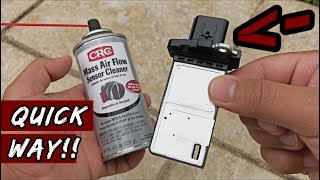
Check the engine air filter for clogs. Carefully remove the Mass Airflow (MAF) sensor and clean its sensitive wires with a dedicated MAF sensor cleaner spray. Do not touch the wires.
Tools: Basic hand tools, MAF sensor cleaner (Beginner) - Check Oil for Fuel Contamination (GDI Engines)
Pull the oil dipstick and smell it. If the oil smells strongly of raw gasoline and the level is high, the high-pressure fuel pump (HPFP) has failed internally and is leaking fuel into the crankcase.
Tools: Your nose (Beginner) - [PRO TIP] Test Fuel Pressure and Bleed-Off Rate
Connect a fuel pressure gauge. Turn the engine off and watch the gauge. The pressure should not drop more than 5-10 PSI over five minutes. A rapid drop indicates a leak from a fuel injector or pressure regulator.
Tools: Fuel pressure gauge kit (Intermediate) - Test Fuel Injectors
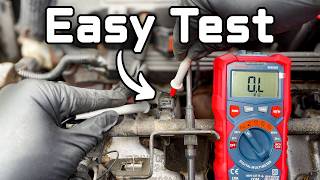
Use a professional scan tool to perform a power balance test, disabling one injector at a time. Alternatively, measure the resistance of each injector with a multimeter. All injectors should be within 0.5-1.0 ohm of each other.
Tools: Professional scan tool, multimeter (Advanced) - [PRO TIP] Analyze O2 Sensor Waveform
Use an oscilloscope on the Bank 1 upstream O2 sensor. If the sensor's voltage is stuck high (>0.8V) even when you create a lean condition, the sensor is faulty and sending a false rich signal.
Tools: Oscilloscope, back-probe pins (Advanced) - [ADVANCED] Analyze MAF Sensor Live Data
Monitor the MAF sensor's output in grams per second (g/s). If the reading is abnormally low during acceleration despite a clean sensor and no intake restrictions, the sensor is under-reporting airflow.
Tools: OBD-II Scanner with Live Data (Advanced)
When This Code Triggers (Freeze-Frame Conditions)
- Engine Coolant Temp: 170-220°F (77-104°C) (The engine must be fully warmed up to enter closed-loop fuel control.)
- Engine RPM: 2000-4000 RPM (The fault occurs during acceleration or sustained cruising, not at idle.)
- Calculated Engine Load: 40-80% (Confirms the engine was under significant demand when the rich condition was detected.)
- Vehicle Speed: 40-70 mph (Sets during city or highway driving under acceleration.)
- Long Term Fuel Trim (Bank 1): -15% to -25% (The PCM is subtracting large amounts of fuel to compensate for a rich condition under load.)
Related Codes
- P2188 — System Too Rich at Idle. If you see both P2188 and P2192, the engine runs rich at all times. This points to a constant fuel delivery issue, such as a leaking injector or failed HPFP.
- P0172 — System Too Rich (Bank 1). P2192 is a specific version of P0172 that isolates the problem to high-load conditions, narrowing the diagnosis toward load-dependent components.
- P0101 — MAF Circuit Range/Performance. Often appears with P2192 because a faulty MAF sensor under-reports airflow under load, causing the PCM to inject excess fuel. Inspect the MAF sensor first.
- P0191 — Fuel Rail Pressure Sensor Circuit. If this sensor inaccurately reports low pressure, the PCM commands the HPFP to over-pressurize the system, causing a rich condition.
Climate & Environmental Factors
- High Altitude: Less dense air means fewer oxygen molecules. A borderline MAF sensor under-reports airflow, causing the PCM to inject excess fuel.
- Extreme Cold: Cold temperatures cause borderline injector seals to contract and leak, contributing to a rich condition.
- High Humidity: Water vapor displaces oxygen. A failing sensor struggles to account for this, triggering the code.
How to Talk to a Mechanic About This Code
Say this: "I have code P2192. Please check the long-term fuel trims under load and inspect the MAF sensor and EVAP purge valve. Also, confirm my ECM software is up to date."
Signals you are informed. Directs the technician to likely causes, saving diagnostic time and preventing unnecessary O2 sensor replacements.
Avoid saying:
- 'My check engine light is on.'
- 'Just fix whatever is wrong.'
- 'The internet said it's the O2 sensor.'
Questions to ask before authorizing the repair:
- What were the LTFT readings under load?
- Did you test the MAF sensor in grams/second?
- Can you show me the failed part?
Where to Take It: Dealer vs Independent vs Chain
- Dealer:
Best for: Vehicles with TSBs for this code (Kia/Hyundai)., Vehicles under warranty.
Downsides: Higher labor rates., Quick to recommend expensive part replacements. (Typical cost: +50% vs. baseline) - Independent Shop:
Best for most vehicles, unless you need a manufacturer software update.
Best for: Out-of-warranty vehicles., Common issues like faulty MAF sensors or EVAP valves.
Downsides: Variable diagnostic capabilities., May lack manufacturer software updates. (Typical cost: +0% vs. baseline) - Chain Shop:
Acceptable for a pre-diagnosed MAF sensor swap. Avoid for initial P2192 diagnosis.
Best for: Simple, pre-diagnosed part replacements.
Downsides: Inconsistent skills., High-pressure upsells. (Typical cost: -10% vs. baseline)
When to Walk Away From the Repair
If the repair exceeds 40-50% of the vehicle's private-party value, consider selling.
- Car worth $4500, fix is $2500: Walk away. The repair cost is over 55% of the car's value.
- Car worth $12000, fix is $1800: Fix it. The repair cost is only 15% of the vehicle's value.
- Car worth $3000, fix is $1600: Walk away. The repair cost is more than half the car's value.
What Scan Tool You Need for This Code
Minimum: A scanner that reads and graphs live Long-Term and Short-Term Fuel Trims (LTFT/STFT).
A $20 reader only shows the code. Live data is essential to confirm the rich condition occurs specifically under load.
Budget: BlueDriver Pro (~$100) — Graphs live fuel trims and MAF readings via smartphone. Provides freeze-frame data.
Mid-range: Foxwell NT510 Elite (~$180) — Offers bidirectional controls to actively test the EVAP purge valve.
Professional: Autel MaxiCOM MK808 (~$500) — Comprehensive OE-level diagnostics with full bidirectional control for fuel pumps and injectors.
Rent vs buy: Auto parts stores read codes for free but lack live data. Buy the budget pick for DIY diagnosis.
How to Clear the Code After You Fix It
- Use an OBD-II scan tool to clear the diagnostic trouble codes (DTCs).
- Perform a complete OBD-II drive cycle to allow the vehicle's readiness monitors to run.
- Rescan the vehicle to ensure P2192 has not returned and that the relevant monitors are 'Ready'.
Drive cycle (~30 minutes): A generic drive cycle includes a cold start, 3 minutes of idling, 15 minutes of mixed driving (25-55 mph), followed by steady highway cruising for 10 minutes.
Readiness monitors affected: Oxygen (O2) Sensor Monitor, Catalyst Monitor, Fuel System Monitor
Before emissions retest: drive at least 100 miles to fully set monitors.
Watch out for:
- Disconnecting the battery resets monitors to 'Not Ready', guaranteeing an emissions failure.
- The code returns immediately if the mechanical issue remains.
- Failing to complete the specific drive cycle leaves monitors 'Not Ready'.
Will This Fail Emissions / State Inspection?
Yes — this code typically fails an OBD-II emissions inspection.
- California: Active P2192 is an automatic failure. Permanent DTCs require a specific drive cycle of up to 200 miles and 15 warm-up cycles to clear.
- New York: An illuminated Check Engine Light fails the OBD-II inspection. Readiness monitors must be set before re-inspection.
- Texas: Active code causes automatic failure in testing counties. 2001+ vehicles allow one 'Not Ready' monitor.
Most Commonly Affected Vehicles
- Kia Rio, Soul (2012-2014) — Most common cause is outdated ECM software requiring an update per TSBs ENG146R1 & ENG118R2. The second most common cause is a failing high-pressure fuel pump leaking fuel into the oil.
- Hyundai Accent, Elantra, Veloster (2012-2014) — Shares the same 1.6L GDI engine and ECM software issue as Kia. Check for TSB 12-FL-010 or 13-FL-004 for a required software update before replacing parts.
- Ford F-150, Focus, Fusion, Escape (2011-2018) — A stuck-open EVAP purge valve is a highly frequent cause of rich codes on these models. The purge valve is located on the intake manifold and is a common DIY replacement.
- Mazda 3, 6, CX-7 (2.3L Turbo) (2007-2013) — Prone to high-pressure fuel pump (HPFP) failure and leaking fuel injectors, both of which cause a P2192 code.
- Chevrolet / GMC Silverado, Sierra, Tahoe, Suburban (2007-2014) — Rich codes are often caused by a faulty fuel pressure regulator, leaking injectors, or PCV system issues. Sensitive to aftermarket air intakes.
- Volkswagen / Audi Jetta, Golf, A4 (TSI/TFSI) (2010-2017) — Often related to a failing PCV valve (oil separator) which creates a significant vacuum disruption. HPFP failure is another well-documented issue.
- Subaru WRX (2015-2021) — Common causes include leaking fuel injectors, HPFP issues, or a contaminated MAF sensor. The issue is most noticeable during boost.
- BMW 335i, 535i (N54/N55) (2007-2015) — Highly susceptible to HPFP failure and leaking fuel injectors. A P2192 equivalent code is a classic symptom on this platform.
Manufacturer-Specific Notes
- Kia / Hyundai: For 2012-2014 1.6L GDI models, always check for an ECM software update first. TSBs ENG146R1, ENG118R2, and 12-FL-010 fix a logic flaw causing this code. Do not replace parts before checking this.
- Ford: On many Ford trucks and cars, rich codes trace back to a failed EVAP purge valve stuck open, not a primary fuel system component. It is an inexpensive part and the first thing technicians check.
- General Motors (Chevy/GMC): These trucks are sensitive to non-OEM parts. Aftermarket oxygen sensors or high-flow air filters trigger rich codes because they operate outside GM's precise software parameters.
- Volkswagen / Audi: On TSI/TFSI engines, the PCV valve (oil separator) is a common failure point. It creates a massive unmetered air path that the PCM struggles to compensate for, resulting in a rich code.
Real Owner Stories
2013 Kia Soul with 1.6L GDI engine, P2192 and P0420
Owner experienced a sudden loss of power. Codes P0420 and P2192 were found. The car ran okay initially but worsened as it warmed up.
What they tried:
- Attempted to test catalytic converter temperature with an IR gun.
- Removed the primary manifold catalytic converter and found it had disintegrated.
Outcome: The primary cause was a catastrophic failure of the catalytic converter, initiated by the prolonged rich condition (P2192).
Lesson: A rich condition quickly destroys a catalytic converter. If you have P0420 and severe power loss that worsens with heat, the converter has failed and is blocking the exhaust.
2015 Ford F-150 with stalling and poor MPG
Truck randomly stalled at stop signs, had poor power, and decreasing fuel economy. Eventually threw catalyst codes.
What they tried:
- Disconnected the line from the canister to the EVAP purge valve and felt strong vacuum at idle, confirming it was stuck open.
- Unplugged the faulty valve and plugged in a spare one to prevent an EVAP circuit code. The engine ran perfectly.
Outcome: The root cause was a failed EVAP purge valve. The delay in diagnosis led to catalyst codes, indicating potential expensive secondary damage.
Lesson: On Ford vehicles, a persistent rich condition, stalling, and poor MPG point directly to the EVAP purge valve. It is a common, inexpensive part that causes major problems if ignored.
2012 Kia Rio with P2192 and P2188
Check Engine Light on with codes for running rich at idle (P2188) and under load (P2192).
What they tried:
- Owner took the car to the dealership after reading about Technical Service Bulletins (TSBs) online.
Outcome: The dealer confirmed the software was outdated and performed an ECM update as specified in Kia TSB ENG146R1. This resolved the codes without replacing parts.
Lesson: For 2012-2014 Kia/Hyundai 1.6L GDI models, always check for software TSBs before replacing hardware. A simple software update is the official fix.
How to Prevent This Code From Triggering
- Use Top-Tier Certified Gasoline (Every fill-up) — Top-Tier fuels contain detergents that prevent deposits. Clean injectors spray a fine mist, while dirty ones dribble, causing a rich mixture.
- Clean the MAF Sensor (Every 30,000 miles) — Delicate wires get coated with dirt, causing under-reported airflow. Use dedicated MAF cleaner to maintain accuracy.
- Replace Upstream O2 Sensors (Every 80,000 to 100,000 miles) — Degraded sensors react slowly, causing inaccurate fuel adjustments long before setting a code.
- Perform an 'Italian Tune-Up' (Once a month) — Sustained high-RPM driving increases exhaust temperature, burning off carbon deposits from valves and the catalytic converter.
Frequently Asked Questions
What are the most common mistakes when diagnosing P2192?
The biggest mistake is immediately replacing the O2 sensor, which is usually just reporting the rich condition accurately. For Kia/Hyundai, replacing hardware before checking for ECM software updates wastes money. Failing to check GDI engine oil for fuel contamination is another major oversight.
Can a vacuum leak cause P2192?
No. A vacuum leak introduces unmetered air, creating a lean condition (P0171) rather than a rich condition (P2192). The rare exception is a ruptured fuel pressure regulator diaphragm leaking raw fuel into the vacuum line.
Can a bad PCV valve cause P2192?
Yes. A faulty PCV valve or cracked hose disrupts the air-fuel mixture. The PCM may overcompensate for this disruption by adding fuel, leading to a rich condition under load.
Can a bad gas cap cause a P2192 code?
No. A loose gas cap causes EVAP leak codes like P0455 or P0457. It does not affect the engine's air-fuel mixture or trigger a P2192 code.
What does 'Bank 1' mean?
'Bank 1' identifies the side of a V6 or V8 engine containing the number 1 cylinder. For inline 4-cylinder engines, there is only one bank, so it refers to the entire engine. This helps isolate the problem to a specific side.
How much does it cost to fix a P2192 code?
Costs range from $10 for MAF cleaner to $150 for a dealer software update. Replacing a high-pressure fuel pump or injectors costs $500 to $1,200+. Expect a $100-$200 diagnostic fee to pinpoint the exact cause.
Can I just clear the code and see if it comes back?
You can clear it, but it returns as soon as you accelerate hard and the computer detects the fault again. Clearing the code does not fix the mechanical issue. It also resets emissions monitors, guaranteeing a failed smog check.
Key Takeaways
- P2192 indicates a rich air-fuel mixture under heavy engine load, causing up to a 25% drop in fuel economy and sluggish acceleration.
- For 2012-2014 Kia and Hyundai 1.6L models, check for dealer Technical Service Bulletins (TSBs) first, as a $150 ECM software update is the most common fix.
- Inspect the EVAP purge valve and clean the Mass Airflow (MAF) sensor before replacing expensive fuel system components.
- Fix this code within 2 weeks to prevent unburnt fuel from melting your catalytic converter, which turns a minor repair into a $2,000 replacement.
Helpful Videos


The information in this article is provided for general reference and educational purposes only. Vehicle specifications, procedures, and part compatibility can vary by production date, trim level, and region. Always consult your vehicle's factory service manual and verify part numbers before purchasing or performing repairs. Safety-critical components such as airbags, seat belts, and braking systems should be installed by a qualified professional.
- 🎬 Helpful Videos
- What Does P2192 Mean?
- Can I Drive With P2192?
- Common Causes
- Symptoms
- Diagnostic Flowchart
- Common Fixes & Costs
- DIY vs Professional
- Used vs. New Parts: Buying Guide
- What Happens If You Wait — Timeline
- Cost of Not Fixing It
- Diagnosis Steps
- When This Code Triggers (Freeze-Frame Conditions)
- Related Codes
- Climate & Environmental Factors
- How to Talk to a Mechanic About This Code
- Where to Take It: Dealer vs Independent vs Chain
- When to Walk Away From the Repair
- What Scan Tool You Need for This Code
- How to Clear the Code After You Fix It
- Will This Fail Emissions / State Inspection?
- Most Commonly Affected Vehicles
- Manufacturer-Specific Notes
- Real Owner Stories
- 2013 Kia Soul with 1.6L GDI engine, P2192 and P0420
- 2015 Ford F-150 with stalling and poor MPG
- 2012 Kia Rio with P2192 and P2188
- How to Prevent This Code From Triggering
- Frequently Asked Questions
- What are the most common mistakes when diagnosing P2192?
- Can a vacuum leak cause P2192?
- Can a bad PCV valve cause P2192?
- Can a bad gas cap cause a P2192 code?
- What does 'Bank 1' mean?
- How much does it cost to fix a P2192 code?
- Can I just clear the code and see if it comes back?
- Key Takeaways
- 🎟️ Get 5% Off