

P2189 on 2006-2013 Land Rover Range Rover: Lean at Idle (Bank 2) Causes and Fixes
P2189 on a 2006-2013 Range Rover almost always indicates a vacuum leak from a failed PCV valve diaphragm on the valve cover. A professional smoke test is the best diagnostic step. Replacing the small, round PCV valve diaphragm is a common and relatively inexpensive fix that can often be done in under an hour.
- P2189 on a 2006-2013 Range Rover means there is a vacuum leak on Bank 2, detected at idle.
- The most common cause by a wide margin is a failed PCV valve diaphragm located on the valve cover.
- A smoke test is the fastest and most accurate way to diagnose the location of the vacuum leak.
- Do not replace expensive parts like oxygen sensors or fuel pumps until you have definitively ruled out a vacuum leak.
- Replacing the PCV diaphragm is an affordable DIY fix for many owners.
What's Unique About the 2006-2013 Land Rover RANGE ROVER
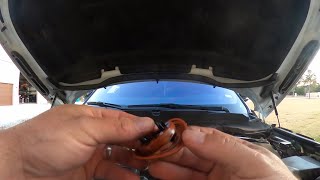
The Jaguar-derived V8 engines used in this generation of Range Rover are known for having plastic and rubber components in the intake and crankcase ventilation (PCV) systems that become brittle over time due to engine heat. This leads to a high likelihood of vacuum leaks, particularly from the PCV valve diaphragms integrated into the valve covers. While many cars can have vacuum leaks, the failure of this specific PCV component is a very common pattern on these Land Rover models, often triggering both P2189 and P2187 codes. 🎬 Watch: Diagnosing and repairing lean bank codes on a Range Rover. TSB SSM74374 explicitly identifies a split diaphragm in the pressure control valve as the cause for these codes.
Diagnostic Flowchart
Tap your situation to follow the diagnostic path that matches what you're seeing on this vehicle.
Generation note: This range covers the Land Rover Range Rover (L322) from 2006 until its final year in 2012, and the first model year of the L405 generation in 2013. The L322 used 4.4L and 4.2L supercharged Jaguar AJ-V8s (2006-2009) and updated 5.0L naturally aspirated and supercharged V8s (2010-2012). The causes are similar across these engines, as they share design principles, particularly regarding the PCV system. The 5.0L V8 and 3.0L V6 Supercharged engines used in later models and platform mates are particularly prone to this PCV diaphragm failure.
Symptoms You May Notice
- Check Engine Light is on
- Rough, unstable, or high idle.
- Hesitation or stumbling during acceleration.
- Reduced fuel economy.
- Hissing or whistling sound from the engine bay at idle, especially near the passenger-side valve cover.
- Excessive vacuum when trying to remove the oil filler cap while the engine is running.
- Replacing oxygen sensors before checking for vacuum leaks. A vacuum leak is the root cause far more often, and the O2 sensor is just accurately reporting the resulting lean condition.
- Replacing the entire valve cover assembly when only the PCV diaphragm kit is needed. This was a common dealer practice before the diaphragm became widely available as a separate part.
Most Likely Causes
- Failed PCV Valve Diaphragm 🔴 High Probability The rubber diaphragm inside the round PCV valve, located on the valve cover, is known to tear or degrade, creating a significant vacuum leak. This is the most widely reported cause for P2189 (and P2187) on these engines. TSB SSM74374 confirms this failure mode.
How to confirm: Perform a smoke test, feeding smoke into the intake system. Smoke will be seen escaping from the failed PCV valve. A quick preliminary test is to check for strong suction at the oil filler cap at idle; excessive vacuum indicates the PCV system is pulling unmetered air. A hissing noise can often be heard directly from the valve.
Typical fix: Replace the PCV valve diaphragm, spring, and cap. This is available as a kit. In the past, dealers would replace the entire valve cover, but the diaphragm kit is a common and accepted repair. 🎬 Watch: Detailed DIY guide for replacing the PCV diaphragm.
Est. part cost: $20-$60 for a diaphragm kit, $250-$400 for a full valve cover. - Leaking Intake Manifold Gaskets 🟡 Medium Probability Gaskets can become brittle and fail with age and heat cycles, allowing unmetered air to enter the intake runners.
How to confirm: A smoke test is the most reliable method. Smoke will seep out from the base of the intake manifold where it meets the cylinder head. Sometimes spraying carburetor cleaner near the gasket surface will cause a change in engine idle speed, indicating a leak.
Typical fix: Replace the intake manifold gaskets.
Est. part cost: $50-$150 - Cracked or Loose Intake Air Ducting ⚪ Low Probability The plastic and rubber components of the air intake tube between the mass airflow sensor and the throttle body can crack or become loose, especially at the clamps or flexible bellows.
How to confirm: Visually inspect all intake ducting for cracks, especially in the flexible, ribbed sections. Ensure all clamps are tight. A smoke test will also reveal these leaks.
Typical fix: Replace the cracked intake duct or tighten the clamps.
Est. part cost: $100-$250 - Leaking Purge Control Valve ⚪ Low Probability The EVAP purge valve can stick open or leak, creating a vacuum leak. TSB SSM74374 specifically mentions the purge control valve as a possible cause for P2189.
How to confirm: During a smoke test, check for smoke exiting the purge valve. With the engine running, a technician can command the valve closed with a scan tool and watch fuel trims to see if they normalize.
Typical fix: Replace the EVAP purge control valve.
Est. part cost: $40-$100 - Loose Oil Filler Cap or Gas Cap ⚪ Low Probability An improperly sealed oil filler cap or gas cap can introduce unmetered air into the crankcase or EVAP system, which can manifest as a lean code. While a common first check, it is less frequently the root cause than a PCV failure.
How to confirm: Ensure the oil cap and gas cap are tightened until they click. Check the cap seals for cracks or damage.
Typical fix: Tighten or replace the faulty cap.
Est. part cost: $15-$50
Rare But Worth Checking
- Faulty Upstream Oxygen (O2) Sensor: An O2 sensor can fail and incorrectly report a lean condition. However, this is far less common than a vacuum leak and should be considered only after leaks have been definitively ruled out with a smoke test. It is unusual for sensors on both banks to fail simultaneously.
- Low Fuel Pressure: A weak fuel pump or clogged filter can cause lean conditions, but this would typically affect both engine banks and trigger code P2187 as well. This should be investigated after vacuum leaks are ruled out.
- Faulty Mass Airflow (MAF) Sensor: A dirty or failing MAF sensor can under-report the amount of air entering the engine, causing the computer to deliver too little fuel. This usually affects both banks and may be accompanied by a specific MAF sensor code.
- Exhaust Leak: A leak in the exhaust manifold or downpipe before the upstream O2 sensor can draw in fresh air, causing the sensor to read a false lean condition.
Diagnosis Steps
- Read the fault codes with an OBD-II scanner to confirm P2189 and check for any other related codes like P2187, P0171, P0174, or P0507.
- Visually inspect the engine bay. Check that the oil filler cap and gas cap are tight. Look for any obvious cracks or disconnections in the vacuum hoses and intake air ducting.
- Perform a quick functional check: With the engine idling, listen for a distinct hissing sound near the passenger-side valve cover, which points to a PCV leak. Carefully try to remove the oil filler cap; if there is very strong suction holding it down, the PCV diaphragm has likely failed.
- Perform a smoke test. This is the most effective step. Introduce smoke into the intake system via a vacuum line and watch for where it escapes. 🎬 See how to perform a smoke test to find leaks. Common leak points are the round PCV valves on the valve covers, intake manifold gaskets, and the intake duct itself.
- If no vacuum leaks are found, use a scan tool to monitor short-term (STFT) and long-term (LTFT) fuel trims at idle. High positive numbers (e.g., >15-20%) confirm the lean condition the computer is trying to correct.
- If leaks are ruled out, proceed to test the Bank 2 upstream oxygen sensor, check fuel pressure, and inspect the MAF sensor for contamination.
Parts You'll Likely Need
- PCV Valve Diaphragm Repair Kit
(OEM #LR133579 (supersedes LR041443, LR010780))— This is the most frequent failure point causing P2189. The diaphragm inside the valve tears, creating a vacuum leak. The 5.0L V8 engines have two of these diaphragms and require two kits.
Trusted brands: Genuine Land Rover, RKX, URO Parts, Febi Bilstein
OEM price range: $40-$60
Aftermarket price range: $15-$40 - Valve Cover
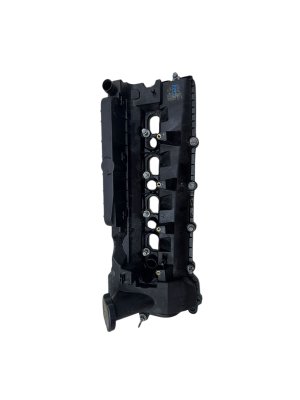
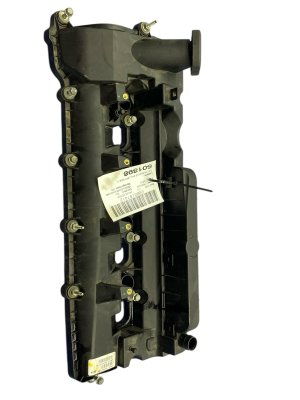
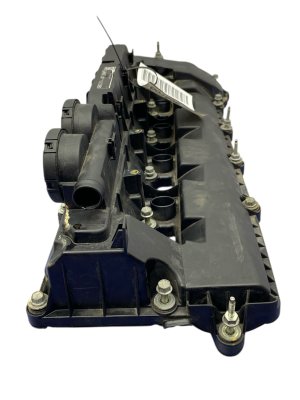
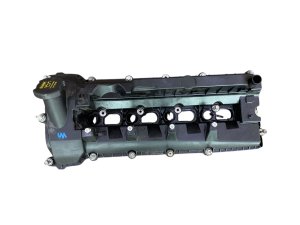
(OEM #LR109354 (Bank 2, Right Side for 5.0L))— In some cases, the entire valve cover may need replacement if the housing for the PCV diaphragm is damaged or if other unserviceable leaks develop. This was a more common repair before diaphragm kits became widely available.
Related Codes That Often Appear With This One
- P2187 — This is the identical code for Bank 1 ('System Too Lean at Idle'). When both are present, it strongly suggests a vacuum leak that affects the entire engine, such as the primary PCV diaphragm leak.
- P0171 — A generic code for 'System Too Lean (Bank 1)'. It often appears alongside P2187/P2189 as another indicator of the same underlying vacuum leak or fuel delivery problem.
- P0174 — A generic code for 'System Too Lean (Bank 2)'. It is the generic equivalent of the more specific P2189 code and points to the same set of potential causes.
- P0507 — Idle Air Control System RPM Higher Than Expected. A significant vacuum leak from the PCV system can cause the idle speed to be uncontrollably high, triggering this code alongside the lean codes.
Technical Service Bulletins (TSBs) & Recalls
- SSM74374 - Confirms split PCV diaphragm as the primary cause for P2187/P2189 and advises replacing the diaphragm instead of the whole valve cover.
- SFCC-14MAR19-Sli - Connects P2189 with fuel trims at their limit during idle.
Platform-Specific Known Issues
- Technical Service Bulletin SSM74374: Explicitly states that codes P2187 and P2189 can be caused by an air leak from the right-hand camshaft cover due to a split diaphragm within the pressure control valve. It notes that the previous repair was to replace the whole cover, but a diaphragm kit is now the correct action.
- Technical Service Bulletin SFCC-14MAR19-Sli: Connects P2189-00 with fuel trims being near their limit at idle, confirming the nature of the 'at idle' fault.
- Owner Experience: Many owners report successfully fixing P2187 and P2189 codes themselves in under an hour using an aftermarket PCV diaphragm kit. The most difficult part is often prying off the old plastic cap without breaking the retaining tabs.
Mechanic-Grade Diagnostic Values
- Mass Airflow (MAF) Sensor Reading at warm idle — expected: Approximately 5.0 grams/second (g/s) for a 5.0L engine. The g/s value should roughly match the engine displacement in liters.. Failure: A significantly lower reading (e.g., < 3.5 g/s) suggests the sensor is under-reporting air, while a higher reading (e.g., > 6.5 g/s) could indicate a wiring issue or other fault.
- Low-Pressure Fuel Line Pressure (pre-2010 4.4L V8) — expected: Approximately 3.5 bar (about 50 PSI) at the fuel rail test port with ignition on.. Failure: Pressure significantly below 3.5 bar indicates a weak in-tank fuel pump or a leak.
- High-Pressure Fuel Rail Pressure (Diesel, for comparison) — expected: Around 350 bar (approx. 5076 PSI) at idle.. Failure: Readings significantly lower than 325 bar (approx. 4713 PSI) at idle suggest an issue, possibly with injectors or the pressure regulator.
- Mass Airflow (MAF) Sensor Voltage at idle — expected: 0.5V to 1.5V.. Failure: Voltage outside this range at idle can indicate a faulty sensor.
Scan Tool Commands That Help
- Land Rover SDD or equivalent advanced scanner: Reset Fuel Trim Adaptations — After replacing a component that caused a lean condition (like a PCV valve or O2 sensor), resetting the fuel adaptations forces the ECU to relearn the new baseline, preventing it from continuing to compensate for a leak that no longer exists.
- Land Rover SDD or equivalent advanced scanner: EVAP Purge Valve Control — To diagnose a suspected leaking purge valve, a technician can command the valve to close and monitor fuel trims. If the trims normalize (decrease), it confirms the valve was stuck open and causing a vacuum leak.
Wiring & Ground Locations
- Bank 2 (Driver's Side) Upstream O2 Sensor Connector — On 2006-2009 models, it is attached to a snap clip on the side of the transmission bell housing. It can be popped off the clip to be more accessible.. If an O2 sensor is suspected after vacuum leaks are ruled out, knowing the connector location is critical for testing or replacement.
- Bank 1 (Passenger's Side) Upstream O2 Sensor Connector — On 2006-2009 models, it is located towards the top, about halfway up the bell housing, and can also be popped out of its clip.. Useful for comparison testing against the Bank 2 sensor or if codes for both banks are present.
- Downstream O2 Sensor Connectors — On 2006-2009 models, the connectors are located up and over the transfer case (driver's side) and on a bracket on the crossmember (passenger's side).. While less likely to cause a P2189 code, knowing their location is important for a full exhaust system diagnosis.
Real Owner Repair Stories
- Reddit user in r/RangeRover (2014 Range Rover HSE V6 with 110k miles) — Codes P2187 and P2189, high RPM (3k) on startup then settles, will not pass smog.
❌ Tried (didn't work) Smoke test (no leak found), New PCV valve, New auxiliary battery, Replaced 'car control modules', Replaced throttle body, Replaced MAF sensor
✅ What actually fixed it The user's neighbor, a mechanic, tried multiple fixes without success. Another commenter strongly suggested the issue was a torn diaphragm on the RH camshaft cover breather (PCV valve), part number LR133579, even if a new valve was already installed, implying the initial replacement may have been faulty or incomplete. The thread ends without final confirmation from the original poster, but highlights the persistence of the PCV diaphragm as the root cause even when other parts are replaced. - YouTube channel 'WILLIAM PETION ASE CERTIFIED TECHNICIAN DIY' (2016 Range Rover Sport HSE (3.0L V6 Supercharged)) — Check engine light with lean codes P2187 and P2189.
❌ Tried (didn't work) The owner was told by another diagnostician they needed new valve covers, a $3000+ repair.
✅ What actually fixed it The technician identified the cause as a torn PCV diaphragm. He blocked off the crankcase ventilation valves and saw fuel trims immediately improve. He replaced only the PCV diaphragm kit (Part #LR133579), which fixed the issue completely and avoided the unnecessary, expensive valve cover replacement. He also recommended an oil change after the repair due to potential fuel contamination of the oil from the engine running rich to compensate for the leak.
"I Checked Everything" — The Actual Cause
- In a documented case on a 2016 Land Rover, the vehicle presented with codes P0507, P2187, and P2189. A smoke test revealed no leaks, yet the issue persisted intermittently. The mechanic decided to replace the PCV diaphragm rebuild kit as a next step based on forum research. Upon removal, the old diaphragm was found to be broken internally. This suggests that the tear may only open under specific vacuum conditions at idle, which are not always replicated by a static smoke test, allowing the leak to go undetected.
OEM Part Supersession History
LR010780 (Full Valve Cover Assembly)→LR032082 -> LR038166 -> LR041443 -> LR113201 (Full Valve Cover Assembly).— Standard part evolution and design updates by the manufacturer.LR041443 (PCV Diaphragm Kit)→LR133579.— This is the most current part number for the widely used PCV diaphragm service kit.
Heads up: LR133579 is the correct service kit for the 5.0L V8 and 3.0L V6 engines from approximately 2010 onwards. Using an incorrect or older part may lead to premature failure.
Model Year Variations Within This Range
- 2006-2009: These models primarily used the 4.4L naturally aspirated or 4.2L supercharged Jaguar AJ-V8. While they also suffer from vacuum leaks, the specific design of the PCV system and valve covers can differ from the later 5.0L engines.
- 2010-2013: These models use the updated 5.0L V8 (naturally aspirated and supercharged), which is widely known for the specific PCV diaphragm failure addressed by kit LR133579. The 5.0L V8 engines require two PCV diaphragm kits, one for each bank.
Helpful Videos
We Have This Part in Stock



The information in this article is provided for general reference and educational purposes only. Vehicle specifications, procedures, and part compatibility can vary by production date, trim level, and region. Always consult your vehicle's factory service manual and verify part numbers before purchasing or performing repairs. Safety-critical components such as airbags, seat belts, and braking systems should be installed by a qualified professional.
- Land Rover RANGE ROVER:
- 🎬 Helpful Videos
- 🛍️ Shop This Part
- What's Unique About the 2006-2013 Land Rover RANGE ROVER
- Diagnostic Flowchart
- Symptoms You May Notice
- Most Likely Causes
- Rare But Worth Checking
- Diagnosis Steps
- Parts You'll Likely Need
- Related Codes That Often Appear With This One
- Technical Service Bulletins (TSBs) & Recalls
- Platform-Specific Known Issues
- Mechanic-Grade Diagnostic Values
- Scan Tool Commands That Help
- Wiring & Ground Locations
- Real Owner Repair Stories
- "I Checked Everything" — The Actual Cause
- OEM Part Supersession History
- Model Year Variations Within This Range
- 🎟️ Get 5% Off