

P2187 on 2014-2019 Land Rover Range Rover: Lean at Idle Causes and Fixes
On 2014-2019 Range Rovers with the 3.0L or 5.0L engine, code P2187 is almost always caused by a torn PCV diaphragm on the passenger-side valve cover, creating a vacuum leak. A DIY repair kit costs around $30-$70, while a shop repair may range from $200-$400. A smoke test is the definitive diagnostic method.
- P2187 on a 2014-2019 Range Rover almost always points to a vacuum leak, not a bad sensor.
- The most likely culprit is a torn PCV valve diaphragm on the passenger-side valve cover, a well-documented issue.
- A simple DIY test is to check for strong suction at the oil filler cap while the engine is running.
- The official fix is an inexpensive repair kit (Part #LR133579), which avoids the need to replace the entire valve cover.
- Always perform a smoke test to confirm the leak's location before replacing any parts.
What's Unique About the 2014-2019 Land Rover RANGE ROVER

The 3.0L V6 (AJ126) and 5.0L V8 (AJ133) gasoline engines used in this generation of Range Rover are well-known for a specific failure in the Positive Crankcase Ventilation (PCV) system. The orange or black rubber diaphragm inside the PCV valve assembly, which is integrated into the passenger-side valve cover, becomes brittle from heat and age and eventually tears. This creates a significant unmetered vacuum leak that the engine's computer cannot compensate for at idle, making it the most common cause for P2187 on this platform by a wide margin.
Diagnostic Flowchart

Tap your situation to follow the diagnostic path that matches what you're seeing on this vehicle.
Symptoms You May Notice

- Check Engine Light is on
- Rough or unstable idle
- Engine RPM surges to 3000 RPM or higher on cold startup, then settles.
- Hissing, whistling, or sucking noise from the engine bay, especially near the passenger-side valve cover by the firewall.
- Engine may stall when coming to a stop.
- Excessive, hard-to-remove vacuum on the oil filler cap when the engine is running.
- Replacing the oxygen (O2) sensors. O2 sensors are often replaced mistakenly when they are simply reporting the lean condition accurately. A lean code is rarely caused by a faulty O2 sensor itself; always rule out vacuum leaks first.
- Replacing the Mass Airflow (MAF) sensor. While a possible cause, it is far less common than the PCV diaphragm failure on this specific platform.
- Replacing the entire valve cover. Before TSB SSM74374, this was the standard procedure. Now, it's an unnecessarily expensive repair unless the cover itself is cracked, as the diaphragm can be replaced separately.
Most Likely Causes
- Torn PCV Valve Diaphragm 🔴 High Probability The rubber diaphragm in the PCV system is a known weak point on the 3.0L V6 and 5.0L V8 engines. It becomes brittle and tears, creating a large vacuum leak. Land Rover issued TSB #SSM74374 specifically addressing this failure and introduced a repair kit as the official fix.
How to confirm: With the engine idling, try to remove the oil filler cap. If it is held down by very strong suction and is difficult to remove, the PCV diaphragm is almost certainly torn. A smoke test is the definitive method; smoke will billow from the round PCV valve cap on the passenger-side valve cover. Upon removal, the orange or black diaphragm will have a visible tear.
Typical fix: Replace the PCV diaphragm, spring, and cap using a repair kit. Land Rover previously required replacing the entire valve cover, but now offers a specific repair kit (LR133579) per TSB SSM74374. Be aware that the plastic tabs on the original cap are extremely brittle and will likely break during removal. 🎬 See this detailed DIY guide for replacing the PCV diaphragm.
Est. part cost: $30-$70 - Other Vacuum Leaks 🟡 Medium Probability Beyond the PCV system, hoses and gaskets can degrade over time. Potential failure points include the air intake ducts, throttle body gasket, and intake manifold gaskets. The plastic inlet manifold suppressor behind the supercharger is another potential point of failure that can crack.
How to confirm: Perform a smoke test. Introduce smoke into the intake system after the MAF sensor and look for smoke escaping from any hoses, gaskets (intake manifold, throttle body), or seals.
Typical fix: Replace the cracked hose, failed gasket, or broken component.
Est. part cost: $20-$250 - Dirty or Faulty Mass Airflow (MAF) Sensor ⚪ Low Probability
How to confirm: If no vacuum leaks are found, inspect the MAF sensor for contamination. Cleaning it with a dedicated MAF sensor cleaner may resolve the issue. If cleaning doesn't work, monitor its readings with a scan tool to see if they are out of specification. This is an unlikely cause compared to vacuum leaks.
Typical fix: Clean the MAF sensor with a specialized cleaner. If the problem persists, replace the sensor.
Est. part cost: $10-$20 (cleaner), $150-$300 (sensor)
Rare But Worth Checking
- Leaking Fuel Injector: An injector that is stuck closed or clogged can cause a lean condition in one cylinder, but it's less likely to trigger a bank-wide idle code without also causing specific misfire codes.
- Weak Fuel Pump: Low fuel pressure would typically affect the engine under all conditions and would likely trigger other codes, not just a lean at idle code.
- Exhaust Leak Before Oxygen Sensor: A leak in the exhaust manifold or downpipe before the primary O2 sensor can allow outside air to be pulled in, making the sensor read a false lean condition. This is less common than an intake-side vacuum leak.
Diagnosis Steps
- Read codes with an OBD-II scanner to confirm P2187 and check for other codes like P2189 or P0507. 🎬 Watch: A professional diagnosis and repair of these lean codes.
- With the engine running, listen for a distinct hissing or whistling sound from the passenger side of the engine, near the firewall.
- Perform the 'oil filler cap test': With the engine idling, carefully try to remove the oil filler cap. If strong vacuum holds it in place, a torn PCV diaphragm is the highly probable cause.
- For definitive proof, perform a smoke test. This is the most crucial step. Introduce smoke into the intake system and watch for it to escape from the round PCV valve cap on the passenger-side valve cover. If no leak is found there, check all other intake hoses and gaskets.
- If no vacuum leaks are found, use a scan tool to monitor long-term fuel trims (LTFT). Values above +20% confirm a significant lean condition.
- As a last resort, inspect and clean the MAF sensor and check fuel pressure to rule out fuel delivery issues. Do not replace O2 sensors unless they fail specific diagnostic tests.
Parts You'll Likely Need
- PCV Valve Diaphragm Repair Kit
(OEM #LR133579)— This is the most common failure part for code P2187 on the 3.0L and 5.0L engines, as documented in Land Rover TSB #SSM74374. The original diaphragm tears, creating a vacuum leak. This kit is the official, lower-cost repair.
Trusted brands: Land Rover (Genuine), URO Parts, RKX, Atlantic British
OEM price range: $40-$70
Aftermarket price range: $25-$50 - Valve Cover (Bank 1 / Passenger Side)
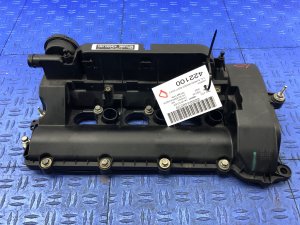
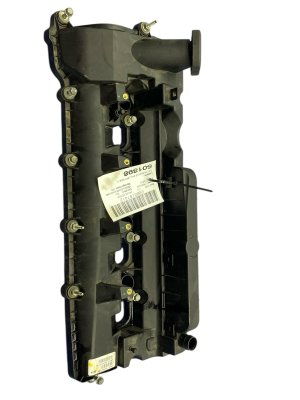
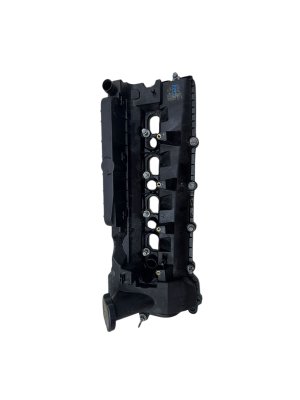
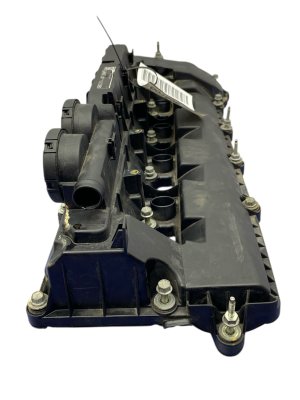
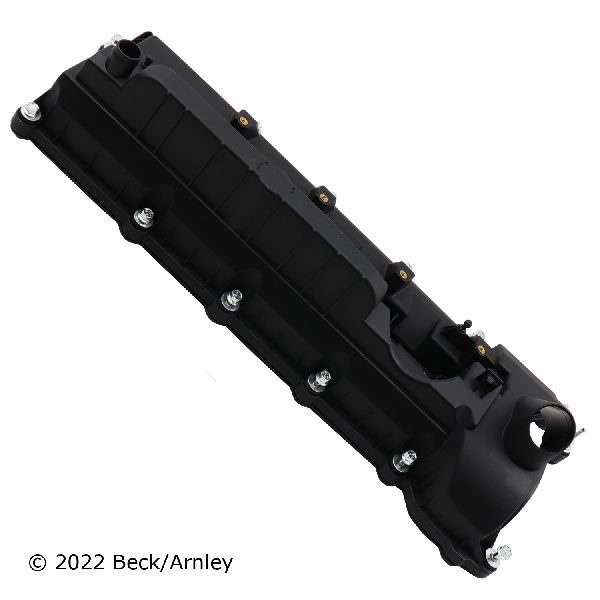
(OEM #LR109354 (for 3.0L/5.0L SC))— This was the original, expensive repair procedure before the diaphragm kit was offered. It may be necessary if the plastic valve cover itself is cracked or if the tabs for the PCV cap break in a way that prevents the new cap from seating. A shop incorrectly quoted this for over $3,000, highlighting it as a common misdiagnosis.
Trusted brands: Land Rover (Genuine)
OEM price range: $300-$450
Aftermarket price range: $200-$350
Related Codes That Often Appear With This One
- P2189 — This is the code for "System Too Lean at Idle, Bank 2." The most common cause, a torn PCV diaphragm, is a central vacuum leak that affects both engine banks, so it's extremely common to see P2187 and P2189 together. 🎬 Watch: A quick overview of what fixed these lean codes.
- P0507 — Stands for "Idle Air Control System RPM Higher Than Expected." A large vacuum leak allows unmetered air into the engine, causing the idle speed to be higher than the target RPM, triggering this code alongside the lean codes. TSB SSM74374 lists this as a related code.
Technical Service Bulletins (TSBs) & Recalls
- SSM74374: V6 3.0L + V8 5.0L Petrol Right Hand Camshaft Cover Lower Level Repair. Addresses air leaks from a split PCV diaphragm causing P2187. Officially introduces part LR133579 as the preferred repair over camshaft cover replacement.
- SFCC-14MAR19-Sli: Mentions P2187-00 in conjunction with a rough running condition and fuel trims near their limit at idle.
Platform-Specific Known Issues
- TSB #SSM74374: Land Rover acknowledged that a split diaphragm in the pressure control valve on the right-hand camshaft cover is a common cause for codes P2187, P2189, P0505, and P0507. The bulletin introduced a repair kit (LR133579) as an alternative to replacing the entire camshaft cover, providing a much more economical official repair.
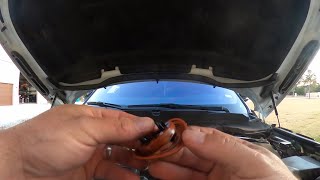
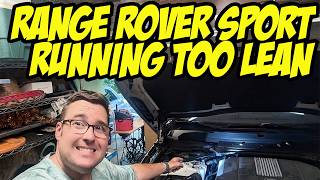
- Real-World Repair Story: A technician on YouTube documented a 2016 Range Rover Sport with P2187/P2189 that another shop had quoted over $3,000 to fix by replacing both valve covers. The technician correctly diagnosed the torn PCV diaphragm, showed the visible tear on camera, and fixed it with the inexpensive kit, resolving the issue.
- Intermittent Failure: In some cases, the diaphragm tear may only open under specific vacuum conditions at idle, which can cause a smoke test to show no leak. If symptoms strongly point to the PCV valve but a smoke test is negative, replacing the diaphragm kit is a reasonable next step due to its high failure rate and low cost.
Mechanic-Grade Diagnostic Values
- Long Term Fuel Trim (LTFT) at Idle — expected: Close to 0%, ideally within +/- 5%. Failure: Sustained positive values greater than +20% to +25% indicate the PCM is compensating for a large vacuum leak.
- Mass Air Flow (MAF) Sensor Reading at Idle (5.0L V8) — expected: Approximately 5-7 g/s at a stable, warm idle (approx. 650 RPM).. Failure: A reading significantly higher than expected suggests unmetered air (vacuum leak) is entering after the sensor. A significantly lower reading could indicate a faulty MAF sensor.
- High-Pressure Fuel System at Idle (5.0L V8) — expected: 500-580 PSI. Failure: Significantly lower pressure could indicate an issue with the high-pressure fuel pumps (HPFP).
- High-Pressure Fuel System Under Load (5.0L V8) — expected: Should rise to 1900-2200 PSI.. Failure: Failure for the pressure to rise under load indicates a failing HPFP or sensor issue.
Hidden / Shadow Codes Worth Checking
- Freeze Frame / Snapshot Data: While not a hidden code, dealer-level scanners like JLR SDD provide a 'snapshot' of all sensor values at the exact moment the DTC was triggered. This data is invaluable for seeing the full context (RPM, engine temp, fuel trims, etc.) and is far more detailed than standard OBD-II freeze frame. (see via JLR SDD or equivalent advanced diagnostic tool.)
Scan Tool Commands That Help
- JLR SDD, Autologic, iLAND: Reset Fuel Trim Adaptations / Clear Adaptations — This function must be performed after replacing a component that caused a vacuum leak (like the PCV diaphragm). It forces the Engine Control Module (ECM) to immediately relearn the base fuel map. Failing to do this may cause the vehicle to run poorly or even re-trigger lean/rich codes temporarily after the physical repair is complete.
Wiring & Ground Locations
- Main Engine/Chassis Ground Strap — Commonly located under the front right (passenger side) wheel arch, behind the plastic liner. Another critical earth lead is located near the bulkhead.. Corrosion or breakage of this primary ground path is a known issue that can cause a wide range of difficult-to-diagnose electrical problems, including erratic sensor readings that could mislead the PCM and contribute to fuel trim issues.
Real Owner Repair Stories
- YouTube user 'Motor City Mechanic' (Maic Salazar Diagnostics) (2016 Range Rover HSE Sport (3.0L V6 Supercharged), 57k miles) — Check Engine Light with codes P2187, P2189, and P0507 (Idle RPM higher than expected).
❌ Tried (didn't work) A different shop misdiagnosed the issue and quoted the owner over $3,000 to replace both valve covers.
✅ What actually fixed it The technician used a scan tool to observe high positive fuel trims. He then manually blocked the crankcase ventilation ports and saw the fuel trims immediately correct themselves, proving the leak was in the PCV system. Replacing the PCV diaphragm kit (cap, spring, diaphragm) resolved all codes. - YouTube user 'jamzDOTnet' (2016 Land Rover Range Rover Sport (3.0L V6 Supercharged), 67k miles) — Check Engine Light with P2187 and P2189.
❌ Tried (didn't work) Owner initially suspected an O2 sensor issue.
✅ What actually fixed it An independent shop performed a smoke test which confirmed a leak at the PCV valve. The PCV diaphragm replacement kit was installed (part cost ~$44 plus one hour of labor), which fixed the problem. - YouTube user 'Rocky Rohde' (2016 Range Rover Sport HSE (3.0L Supercharged), ~70k miles) — Check Engine Light with lean codes on both banks (P2187, P2189).
✅ What actually fixed it The video shows the replacement of the PCV diaphragm using kit LR133579. The old diaphragm is shown on camera with visible cracks, confirming it as the source of the vacuum leak. Clearing the codes after replacement solved the issue.
"I Checked Everything" — The Actual Cause
- In a case reported on a forum for a 2014 V6, a mechanic performed a smoke test and could not find a leak, despite having P2187 and having already replaced the PCV valve. A consulting technician suggested that if a post-repair smoke test is truly negative, the next step is to analyze live data from the upstream oxygen sensors, as it is possible (though uncommon) for the sensors themselves to fail in a way that falsely reports a lean condition.
OEM Part Supersession History
LR109354 (Full Valve Cover Assembly)→LR133579 (Diaphragm Repair Kit)— TSB SSM74374 introduced the diaphragm kit as a much more economical and targeted repair for the common diaphragm failure, avoiding the need to replace the entire valve cover assembly.
Heads up: This is a change in repair strategy rather than a direct part supersession. The kit works on the original covers.
Model Year Variations Within This Range
- 2017+: For the 2017 model year, Land Rover began introducing the updated InControl Touch Pro infotainment system. A more significant facelift with the dual-screen 'Touch Pro Duo' system, plus revised headlights and grille, appeared on 2018+ models. The underlying AJ126/AJ133 engine and PCV system design related to code P2187 remained consistent across the 2014-2019 range.
Helpful Videos
Used OEM Parts in Stock

New Aftermarket Parts Available





The information in this article is provided for general reference and educational purposes only. Vehicle specifications, procedures, and part compatibility can vary by production date, trim level, and region. Always consult your vehicle's factory service manual and verify part numbers before purchasing or performing repairs. Safety-critical components such as airbags, seat belts, and braking systems should be installed by a qualified professional.
- Land Rover RANGE ROVER:
- 🎬 Helpful Videos
- 🛍️ Shop This Part
- What's Unique About the 2014-2019 Land Rover RANGE ROVER
- Diagnostic Flowchart
- Symptoms You May Notice
- Most Likely Causes
- Rare But Worth Checking
- Diagnosis Steps
- Parts You'll Likely Need
- Related Codes That Often Appear With This One
- Technical Service Bulletins (TSBs) & Recalls
- Platform-Specific Known Issues
- Mechanic-Grade Diagnostic Values
- Hidden / Shadow Codes Worth Checking
- Scan Tool Commands That Help
- Wiring & Ground Locations
- Real Owner Repair Stories
- "I Checked Everything" — The Actual Cause
- OEM Part Supersession History
- Model Year Variations Within This Range
- 🎟️ Get 5% Off