

P2183 on 2014-2017 Mazda3: Engine Coolant Temp Sensor 2 Causes and Fixes
On a 2014-2017 Mazda3, code P2183 almost always points to a failed Engine Coolant Temperature (ECT) Sensor #2, located at the bottom of the radiator. Mazda issued a TSB for this exact problem, where water intrusion causes the sensor to fail. Replacing the sensor with the updated OEM part is the common and straightforward fix.
- P2183 on a 2014-2017 Mazda3 is a well-documented issue covered by a manufacturer TSB.
- The most likely cause by far is a failed Engine Coolant Temperature Sensor #2, located at the bottom of the radiator.
- The failure is typically due to water getting inside the original sensor, causing corrosion and high internal resistance.
- The fix is to replace the sensor with an updated OEM part (PE18-18-840) or a quality aftermarket equivalent.
- This is a manageable DIY repair for those with basic tools, mainly involving removing an under-shield, quickly swapping the sensor to minimize coolant loss, and topping off the system.
What's Unique About the 2014-2017 Mazda MAZDA3

The 2014-2017 Mazda3 is known for this specific issue, to the point that Mazda released Technical Service Bulletin (TSB) #01-011-17-3364a. The TSB states that the original ECT Sensor #2 was not sufficiently water-resistant, leading to internal corrosion and failure when it gets wet. The TSB specifically applies to 2014-2016 models and 2017 models with a VIN lower than JM1BN**166010 (produced before July 17, 2017). The official fix is to replace the faulty sensor with an updated part designed with better water resistance. This makes the diagnosis for P2183 on these vehicles 🎬 Watch: A real-world diagnosis of P2183 on a 2016 Mazda3 more straightforward than on other cars. The repair may also be covered under the Federal Emission Warranty.
Diagnostic Flowchart

Tap your situation to follow the diagnostic path that matches what you're seeing on this vehicle.
Symptoms You May Notice
- Check Engine Light is on.
- Cooling fans running continuously or not at all.
- Poor fuel economy.
- Rough or unstable idle.
- Black smoke from the exhaust in some cases.
- Engine may run hot or overheat.
- Erratic temperature gauge behavior.
- Replacing the main ECT Sensor (#1) on the engine block. This code specifically refers to ECT Sensor #2, which is on the radiator.
- Replacing the thermostat. While a faulty thermostat can cause cooling issues, the TSB for this model strongly indicates the sensor itself is the culprit for P2183.
Most Likely Causes

- Failed Engine Coolant Temperature (ECT) Sensor #2 🔴 High Probability A known design flaw acknowledged by Mazda in TSB #01-011-17-3364a states the original sensor had insufficient water resistance. Water enters the sensor, causing internal corrosion. This corrosion increases the sensor's internal resistance, causing it to send a signal indicating a much colder temperature than reality.
How to confirm: Scan the vehicle; P2183 will be the primary code, often accompanied by P011A. A diagnostic tool can compare live data from ECT Sensor #1 and ECT Sensor #2. With the engine at operating temperature, a faulty #2 sensor will show an erratically low reading (e.g., near ambient temperature) while Sensor #1 reads correctly (e.g., 190-210°F). Visual inspection may show green or white corrosion on the sensor pins or inside the connector, but the TSB notes that corrosion may be internal and not visible.
Typical fix: Replace the ECT Sensor #2 located at the bottom of the radiator with the updated part (OEM #PE18-18-840).
Est. part cost: $25-$75 - Wiring or Connector Issue ⚪ Low Probability The sensor's location at the bottom of the radiator exposes the wiring to road debris and moisture, which can cause damage or corrosion over time, especially if the sensor's seal has failed and allowed coolant to leak into the connector.
How to confirm: Visually inspect the wiring harness and connector leading to ECT Sensor #2 for any signs of damage, fraying, or green/white corrosion. Use a multimeter to check for proper continuity and voltage at the connector. Check for a solid ground connection at ground point G01, located near the left headlight.
Typical fix: Repair the damaged section of the wiring harness or clean/replace the connector.
Est. part cost: $5-$50 for a new pigtail connector or repair materials. - Low Engine Coolant or Air in System ⚪ Low Probability
How to confirm: Check the coolant level in the reservoir and radiator (when the engine is cold). If the level is low, or if there's an air pocket in the system (often caused by recent cooling system service), the sensor may give an incorrect reading.
Typical fix: Top off the engine coolant to the correct level and bleed the cooling system to remove any trapped air.
Est. part cost: $15-$30 for coolant
Rare But Worth Checking
- Stuck Thermostat: While less common for this specific code, a thermostat that is stuck open can cause the engine to warm up too slowly, creating a discrepancy between the two ECT sensors that could potentially trigger a fault. One owner reported that replacing both a faulty ECT #2 sensor and a stuck-open thermostat was necessary to restore proper fuel economy.
- Powertrain Control Module (PCM) Fault: In very rare cases, the PCM itself may be unable to correctly interpret the sensor's signal. This should only be considered after all other possibilities (sensor, wiring, coolant) have been definitively ruled out.
Diagnosis Steps
- Verify the code with an OBD-II scanner. Confirm that P2183 is present, and check for P011A as well.
- Check for the Mazda TSB #01-011-17-3364a. If your vehicle is a 2014-2016 model, or a 2017 model with a VIN below JM1BN**166010, the cause is almost certainly the ECT Sensor #2.
- Check the engine coolant level when the engine is cool. Ensure it is at the proper level.
- Locate ECT Sensor #2. It is at the bottom of the radiator on the driver's side, accessible after removing the front portion of the underbody shield. 🎬 See this step-by-step walkthrough for replacing the radiator-mounted sensor
- Inspect the sensor's electrical connector and nearby wiring for any signs of corrosion, moisture, or damage. Look for green residue.
- Use a scan tool to monitor live data from both ECT Sensor #1 and ECT Sensor #2. Start the car cold; both sensors should read close to ambient temperature. As the engine warms up, ECT #1 will rise to operating temperature (190-210°F). A faulty ECT #2 will lag significantly, stay at a low temperature, or give an erratic reading.
- If the wiring is intact and coolant level is correct, replace the ECT Sensor #2.
Parts You'll Likely Need
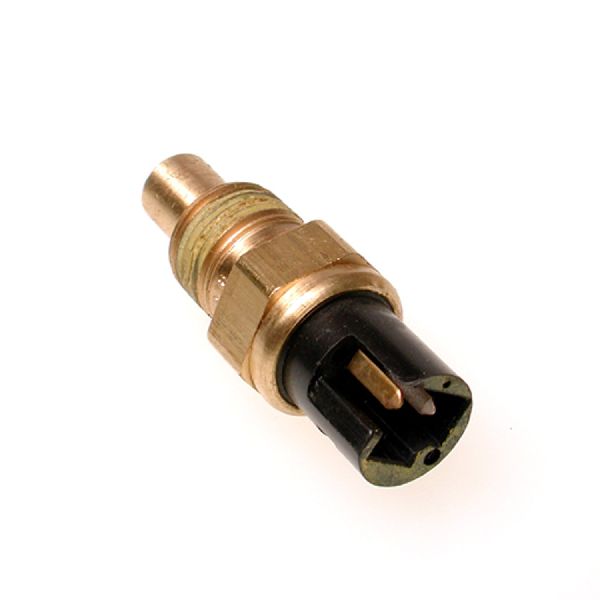
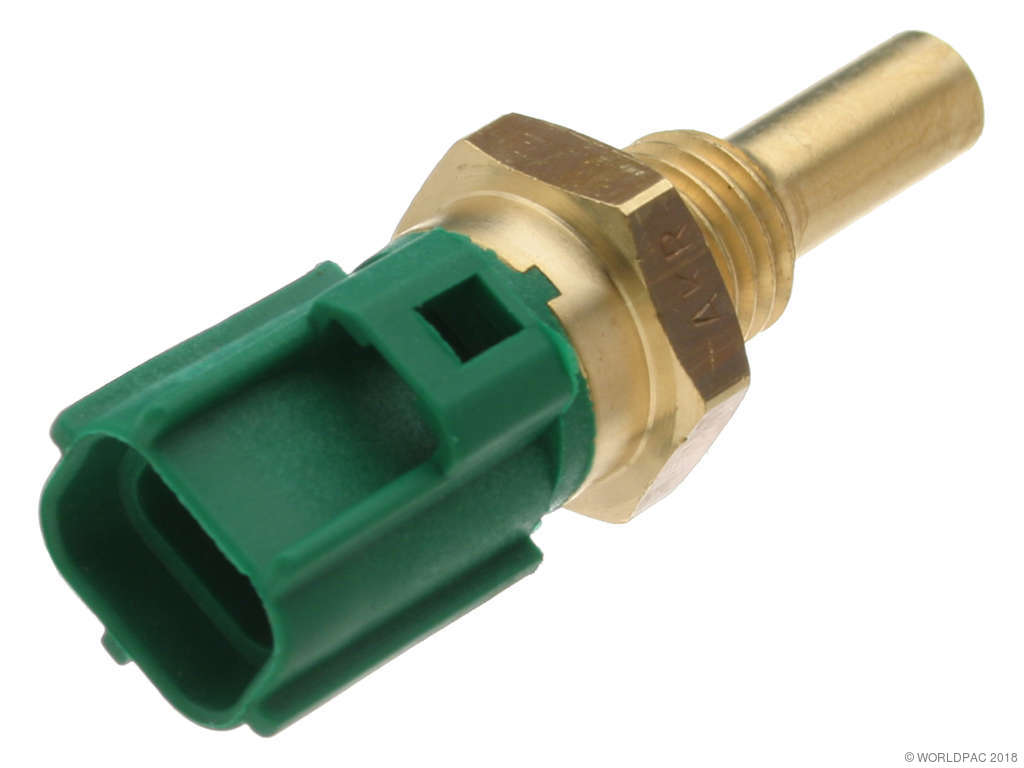
- Engine Coolant Temperature Sensor #2
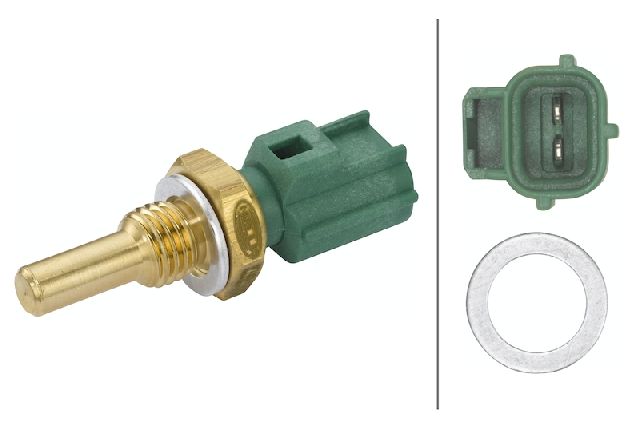
(OEM #PE18-18-840)— This is the part identified in Mazda's TSB as the cause of the problem. The TSB specifies replacement with a 'modified' or 'improved' part to prevent future water intrusion; ordering this part number from Mazda today will provide the updated version.
Trusted brands: Mazda (OEM), Denso, NTK, Standard Motor Products
OEM price range: $50-$75
Aftermarket price range: $25-$50
Related Codes That Often Appear With This One
- P011A — This code indicates a correlation problem between ECT Sensor #1 and ECT Sensor #2. It often appears alongside P2183 because the PCM is seeing a direct conflict in their temperature readings, which is the specific failure mode (one sensor reading hot, the other reading cold).
Technical Service Bulletins (TSBs) & Recalls
- 01-011-17-3364a: CHECK ENGINE LIGHT ON WITH DTC P2183:00. This TSB confirms the cause is a faulty ECT sensor No. 2 near the bottom of the radiator due to insufficient water resistance. It provides a specific VIN range for affected 2017 models and states the repair may be covered under warranty.
Platform-Specific Known Issues
- Mazda TSB for P2183: Mazda TSB #01-011-17-3364a was issued for 2014-2016 Mazda3 models and 2017 models with VINs lower than JM1BN**166010. It identifies the cause as water intrusion into the ECT Sensor #2 and recommends replacement with an improved part. The repair is noted as being covered under the Federal Emission Warranty.
Mechanic-Grade Diagnostic Values

- ECT Sensor #2 Voltage at PCM — expected: 3.04 - 3.14 Volts at 20°C (68°F). Failure: A voltage significantly outside this range indicates a sensor or wiring issue. The TSB notes that corrosion causes higher resistance, which would result in a lower voltage reading than expected for a given temperature.
- ECT Sensor #2 Voltage at PCM — expected: 1.29 - 1.39 Volts at 60°C (140°F). Failure: A voltage significantly outside this range indicates a sensor or wiring issue.
- ECT Sensor #2 Resistance — expected: Approximately 2,000 - 3,000 Ohms at 20°C (68°F). Failure: A reading far outside this range, or an open circuit (infinite resistance), indicates a failed sensor. The TSB notes internal corrosion causes resistance to become much higher.
Scan Tool Commands That Help
- Mazda Modular Diagnostic System (M-MDS): Data Logger PID Monitoring — The official TSB procedure calls for using the M-MDS to monitor and compare the PIDs 'ECT' (Engine Coolant Temperature Sensor #1) and 'ECT2_V' (ECT Sensor #2 Voltage) to confirm the discrepancy. A large difference between the two sensor readings when the engine is at operating temperature confirms the fault.
Wiring & Ground Locations

- ECT Sensor #2 Connector — At the bottom of the radiator on the driver's side.. This is the primary point of failure due to water intrusion and corrosion, as noted in the TSB. Visual inspection for damage or corrosion is a key step.
- G01 — A ground point located near the left (driver's side) headlight.. A poor ground connection at this point can introduce resistance into the ECT sensor circuit, causing incorrect readings and potentially triggering P2183.
- PCM (Powertrain Control Module) — Located in the engine compartment at the left rear.. This is where the sensor signal is interpreted. Knowing its location allows for advanced testing, such as checking for voltage directly at the PCM pins to rule out wiring issues between the sensor and the module.
Real Owner Repair Stories
- Reddit user on r/MechanicAdvice and r/mazda3 (2017 Mazda 3 Touring, 47k miles) — Check Engine Light appeared. Initially scanned as P011A (ECT Sensor 1/2 Correlation).
❌ Tried (didn't work) Cleared the initial P011A code to see if it was a one-time fluke.
✅ What actually fixed it The code returned, but this time as P2183. The user correctly concluded that ECT Sensor #2 was the likely culprit based on the code progression and began seeking the part's location for replacement. This story serves as a real-world confirmation of the P011A -> P2183 failure pattern.
OEM Part Supersession History
Unknown→PE18-18-840— The original sensor had insufficient water resistance. The superseding part, PE18-18-840, is an improved design to correct this issue.
Heads up: Ensure you are purchasing part number PE18-18-840. Other Mazda ECT sensors, such as B593-18-840A or 8574-18-840, may physically fit but are not the correct, updated part for this specific application and will not resolve the issue.
Model Year Variations Within This Range
- 2017: The TSB for this issue applies to all 2014-2016 models, but only 2017 models with a VIN lower than JM1BN**166010 (produced before July 17, 2017). Vehicles produced after this date should have the improved sensor from the factory.
Helpful Videos
![How to Fix P2183 Engine Code in 4 Minutes [3 DIY Methods / Only $7.38]](https://img.youtube.com/vi/q-ErQPuWngI/mqdefault.jpg)
Used OEM Parts in Stock

New Aftermarket Parts Available


The information in this article is provided for general reference and educational purposes only. Vehicle specifications, procedures, and part compatibility can vary by production date, trim level, and region. Always consult your vehicle's factory service manual and verify part numbers before purchasing or performing repairs. Safety-critical components such as airbags, seat belts, and braking systems should be installed by a qualified professional.
- Mazda MAZDA3:
- 🎬 Helpful Videos
- 🛍️ Shop This Part
- What's Unique About the 2014-2017 Mazda MAZDA3
- Diagnostic Flowchart
- Symptoms You May Notice
- Most Likely Causes
- Rare But Worth Checking
- Diagnosis Steps
- Parts You'll Likely Need
- Related Codes That Often Appear With This One
- Technical Service Bulletins (TSBs) & Recalls
- Platform-Specific Known Issues
- Mechanic-Grade Diagnostic Values
- Scan Tool Commands That Help
- Wiring & Ground Locations
- Real Owner Repair Stories
- OEM Part Supersession History
- Model Year Variations Within This Range
- 🎟️ Get 5% Off