

P2181 on 2013-2016 Volkswagen CC 2.0T: Cooling System Performance Causes and Fixes
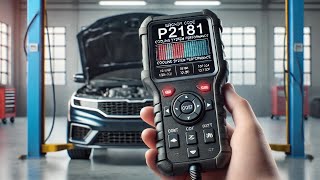
On a 2013-2016 VW CC with the 2.0T engine, code P2181 almost always means the thermostat has failed in the open position. The engine isn't warming up fast enough, triggering the code. The fix is to replace the entire water pump and thermostat assembly, a labor-intensive job costing between $800 and $1,400 at a shop. Many owners upgrade to a version with a metal housing for better durability.
- P2181 on a 2013-2016 VW CC 2.0T almost always points to a failed thermostat that is stuck open.
- The thermostat and water pump are a single, integrated assembly on this engine; they must be replaced as one unit.
- The repair is labor-intensive (DIY difficulty 4/5) as it requires removing the intake manifold.
- When replacing the part, consider an upgraded version with an aluminum housing for better longevity over the failure-prone OEM plastic.
- Always use the correct VW-specific G13 (or compatible) coolant when refilling the system.
What's Unique About the 2013-2016 Volkswagen CC

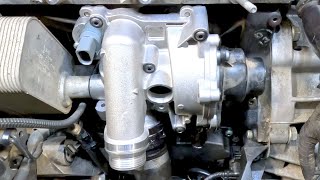
On the VW 2.0T TSI engine (CCTA/CBFA) used in the CC, the P2181 code is exceptionally common and points to a well-known design flaw. The thermostat is not a simple, separate component. Instead, it is integrated into a large, complex plastic assembly that also houses the water pump. These plastic housings are notorious for failing, either by the thermostat sticking open or the housing itself cracking and leaking coolant. Degradation is often accelerated by engine oil leaks (e.g., from a vacuum pump or cam cover) dripping onto the plastic housing. As a result, the standard repair is to replace the entire water pump and thermostat unit, not just the thermostat itself.
Diagnostic Flowchart
Tap your situation to follow the diagnostic path that matches what you're seeing on this vehicle.
Symptoms You May Notice
- Check Engine Light is on
- Engine temperature gauge on the dashboard takes a very long time to reach the middle (90°C) or never gets there, especially in cooler weather or at highway speeds.
- Temperature gauge drops below the halfway mark when cruising at highway speeds or coasting downhill.
- Poor or no heat from the cabin vents, especially when the engine is not under load.
- Noticeably reduced fuel economy.
- In some cases, visible coolant leaks (pink or purple fluid) under the front-passenger side of the engine, often dripping from the water pump area.
- Replacing only the coolant temperature sensor when the thermostat is actually the problem. Many owners report replacing the sensor first, only for the P2181 code to return, confirming the issue was the thermostat all along. 🎬 Watch: Real-world diagnosis and fix for the P2181 code
Most Likely Causes

- Failed Thermostat (Stuck Open) 🔴 High Probability The thermostat is integrated into a plastic housing that is a known failure point on 2.0T TSI engines. It commonly fails by sticking open, which continuously circulates coolant through the radiator, preventing the engine from warming up properly, 🎬 See how these 2.0t thermostats fail and cause codes especially in cold weather.
How to confirm: Monitor the live coolant temperature data using an OBD-II scanner with graphing capabilities (like VCDS). Compare the Engine Outlet Temp Sensor (G62) and the Radiator Outlet Temp Sensor (G83). If G83's temperature rises along with G62's from a cold start (before G62 reaches ~85-90°C), the thermostat is stuck open. A common owner experience is that replacing the thermostat assembly resolves the code after a coolant temperature sensor replacement did not.
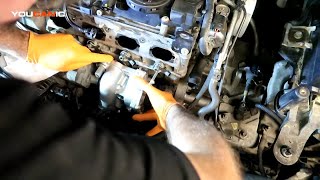
Typical fix: Replace the entire water pump and thermostat assembly. Due to the integrated design and high labor involved, it is recommended to replace the whole unit. Many owners opt for an aftermarket kit with a cast aluminum housing for improved longevity.
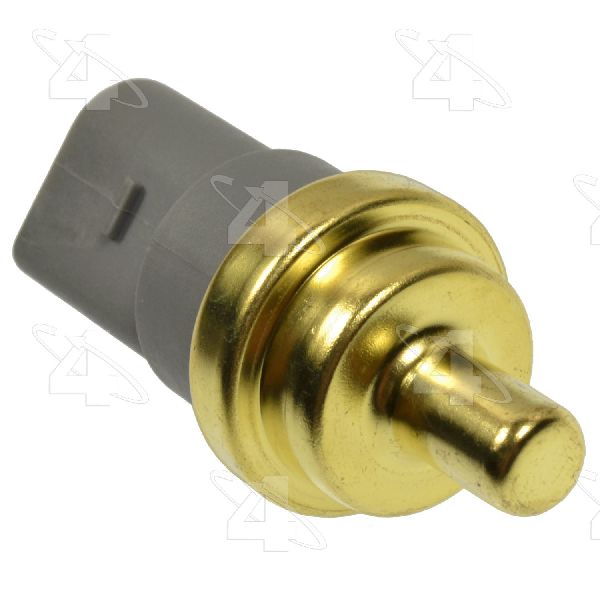
Est. part cost: $150-$400 - Faulty Engine Coolant Temperature (ECT) Sensor 🟡 Medium Probability VW/Audi ECT sensors are known to fail over time, sending inaccurate readings to the ECM. The 2.0T engine has at least two temperature sensors (G62 at the engine outlet/water pump and G83 at the radiator outlet), which can complicate diagnosis.
How to confirm: Use an OBD-II scanner to compare the readings from the different coolant temperature sensors (e.g., G62 and G83). If one sensor's reading is illogical compared to the others or does not change as the engine warms up, it is likely faulty. Resistance can be tested with a multimeter; at 68°F (20°C), it should be between 2,000-3,000 ohms.
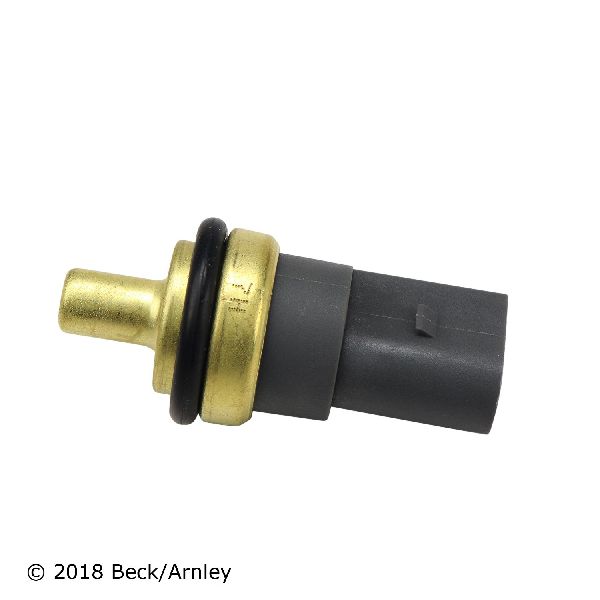
Typical fix: Replace the faulty sensor. The main ECT sensor (G62) is often replaced preventatively during a water pump job. It is typically held in by a plastic clip and sealed with an O-ring, which should also be replaced.
Est. part cost: $15-$50 - Leaking Water Pump / Thermostat Housing 🟡 Medium Probability The original equipment plastic water pump housings are prone to developing cracks or warping from heat cycles, leading to coolant leaks. An oil leak from components above (like the vacuum pump or cam cover) can drip onto the plastic, accelerating its degradation and causing the sealing gaskets to swell and fail.
How to confirm: Visually inspect the area around the water pump (under the intake manifold on the passenger side of the engine) for signs of pink/purple dried coolant crust or active dripping. A cooling system pressure test will confirm the leak's location. A low coolant level from a leak can trigger P2181.
Typical fix: Replace the complete water pump and thermostat assembly. Many owners opt for an upgraded assembly with an aluminum housing for improved durability. This is often seen as a permanent solution to the plastic housing's weakness.
Est. part cost: $150-$400
Rare But Worth Checking
- Faulty Radiator Cooling Fan: If a cooling fan is stuck on and runs continuously, even when the engine is cold, it can over-cool the radiator and contribute to the engine not reaching temperature. This is less common than a thermostat failure but can be a cause.
- Wiring Harness Damage: Damage to the wires leading to the ECT sensor can cause an incorrect signal to be sent to the ECM, mimicking a sensor failure. Check for frayed or corroded wiring if a new sensor doesn't resolve the issue.
Diagnosis Steps

- Check for other DTCs: Use an OBD-II scanner to see if any other codes are present that might point to a specific component, like an ECT sensor circuit fault.
- Inspect Coolant Level: Ensure the coolant reservoir is filled to the proper level when the engine is cold. If it's low, top it off with the correct G12++/G13 coolant and check for visible leaks. A low level is a common cause.
- Monitor Live Data: With a scanner like VCDS, graph Measuring Block Group 130, showing both G62 (engine outlet) and G83 (radiator outlet) temps. Start the car from cold. G62 should rise steadily. G83 should remain near ambient temp until G62 reaches ~90°C (194°F). If G83 rises with G62, the thermostat is stuck open.
- Perform a Physical Check: After a short drive, carefully feel the upper and lower radiator hoses. If the engine is not up to temp but both hoses are warm, the thermostat is stuck open, allowing coolant to circulate when it shouldn't.
- Pressure Test the System: If you suspect a leak, use a cooling system pressure tester to pressurize the system and identify the source. Pay close attention to the water pump housing and its various seams and connections.
- Test the ECT Sensor: If the thermostat appears to be working, you can test the ECT sensor by comparing its reading to another temperature sensor on the vehicle or by checking its resistance with a multimeter against a temperature/resistance chart.
Parts You'll Likely Need

- Water Pump & Thermostat Housing Assembly
(OEM #06H121026DD (and newer revisions like 06H121026ED))— This is the most common failure. The thermostat sticks open, and since it's integrated into the water pump housing, the entire assembly must be replaced. The OEM part number has been superseded many times; 06H121026DD is a common replacement, but always verify with VIN.
Trusted brands: INA (OEM supplier), Continental, Graf (metal housing), Bremmen Parts (metal housing), Rein (metal housing)
OEM price range: $250-$400
Aftermarket price range: $150-$350 - Engine Coolant Temperature Sensor
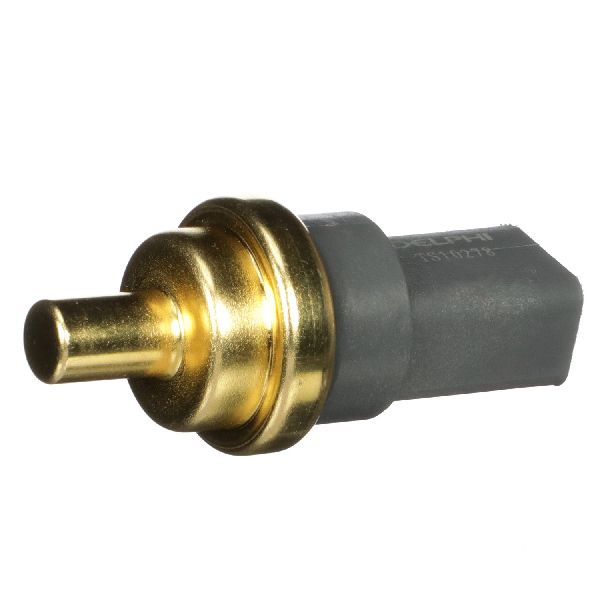
(OEM #06A919501A)— This sensor (G62) provides the primary temperature reading to the ECM. It can fail and send incorrect data, triggering the P2181 code. It's often replaced preventatively during a water pump job as it is inexpensive and accessible during the repair.
Trusted brands: Bosch, Delphi, Hella, Febi
OEM price range: $30-$50
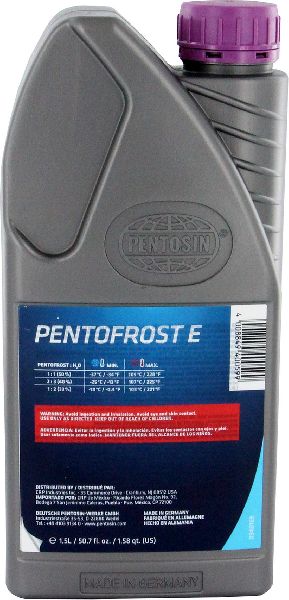
Aftermarket price range: $15-$30 - G13 Engine Coolant (Antifreeze)
(OEM #G013A8J1G)— The cooling system must be drained to replace the water pump or sensor, requiring a refill with VW-specific coolant. Using the wrong type can cause damage.
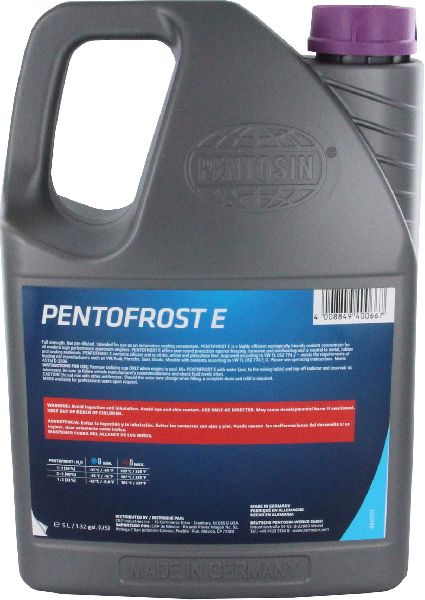
Trusted brands: Volkswagen OE, Pentosin Pentofrost E
OEM price range: $25-$35 per gallon
Aftermarket price range: $20-$30 per gallon - Water Pump Belt
(OEM #06H121605E)— The water pump is driven by a small toothed belt off a balance shaft. This belt should always be replaced when the water pump is replaced.
Trusted brands: Continental, INA
OEM price range: $20-$30
Aftermarket price range: $10-$20
Technical Service Bulletins (TSBs) & Recalls
- The NHTSA TSBs VIN-4-A-PIN APRI for 2015 and 2016 models list P2181 as a possible fault code but do not provide specific diagnostic or repair procedures for it, grouping it with many other unrelated codes.
Platform-Specific Known Issues
- The job requires removing the intake manifold to access the water pump assembly, making it significantly more difficult than on many other vehicles.
- There are two main versions of the 2.0T engine (CCTA for 49-state emissions and CBFA for California emissions) used in the CC, which may have different water pump designs or related plumbing. Always verify the correct part number using your vehicle's VIN. Aftermarket aluminum pumps are often only available for the more common CCTA engine.
Mechanic-Grade Diagnostic Values
- Engine Coolant Temperature (ECT) Sensor Resistance — expected: 2000-3000 Ω at 20°C (68°F); 200-300 Ω at 90°C (194°F). Failure: Readings significantly outside this range, or an open/short circuit.
- Engine Coolant Temperature (ECT) Sensor Voltage — expected: 2.0V - 3.0V on a cold engine, dropping to ~0.5V on a fully warmed engine.. Failure: Voltage that is stuck high or low, or does not change as the engine warms up.
- VCDS Live Data - MVB Group 130 (G62 vs G83) — expected: From a cold start, G62 (engine outlet) temperature rises steadily. G83 (radiator outlet) temperature remains low and constant until G62 reaches ~85-90°C, then G83 begins to rise as the thermostat opens.. Failure: G83 temperature rises at the same time and rate as G62 from a cold start. This proves coolant is flowing through the radiator prematurely, indicating a stuck-open thermostat.
Scan Tool Commands That Help
- VCDS or OBDeleven: Output Test: Coolant Fan 1 — To verify if the cooling fan is functional and not seized. This helps rule out a fan that is stuck 'on' and over-cooling the system, or a fan that is inoperative, which would be relevant for overheating issues.
- VCDS: Basic Settings: Bleeding Cooling System — This is a critical procedure to run after replacing the water pump/thermostat assembly to properly purge air from the complex cooling circuits, ensuring correct system operation and preventing air pockets that can cause cooling issues.
Wiring & Ground Locations
- Engine Coolant Temperature Sensor (G62) — Located on the integrated water pump and thermostat housing, which is under the intake manifold on the passenger side of the engine.. This is the primary sensor the ECM uses to measure engine temperature. A fault in its wiring can mimic a failed sensor or thermostat, causing P2181.
- Radiator Outlet Coolant Temperature Sensor (G83) — Located on the lower radiator hose or radiator outlet.. This sensor's reading is compared against the G62 sensor to determine if the thermostat is functioning correctly. Its wiring is also critical for accurate diagnosis.
Real Owner Repair Stories
- Ross-Tech Forums user (2007 MKV GTI (shares 2.0T engine architecture)) — P2181 code, poor fuel efficiency, freeze frame temp of 73°C.
❌ Tried (didn't work) Initial visual inspection.
✅ What actually fixed it The user diagnosed a stuck-open thermostat by graphing VCDS measuring block 130 and seeing the radiator outlet temp (G83) rise when the engine temp (G62) was only at 66°C. The final fix was replacing the thermostat assembly, both temperature sensors (G62 and G83), and a coolant flange. This restored normal operation, with G83 only warming up after G62 reached ~90°C. - Ross-Tech Forums user (2008 Jetta 2.5 (different engine, but demonstrates diagnostic principle)) — Recurring P2181, fluctuating temperature gauge that would not reach 190°F, sometimes dropping to 130°F.
❌ Tried (didn't work) Replaced thermostat, Replaced G62 and G83 sensors (twice), Repeatedly bled the cooling system
✅ What actually fixed it The final cause was identified as a wiring harness problem. After fixing the wiring, the temperature regulation issues were resolved. - GOLFMKV.com forum user (2006 MKV GTI (BPY engine)) — P2181 code, temperature gauge reading slightly lower than normal and dropping to the 1/4 mark when getting off the freeway.
❌ Tried (didn't work) Replaced the Engine Coolant Temperature (ECT) sensor. The code returned after two days.
✅ What actually fixed it The user concluded, with forum consensus, that the thermostat assembly was the true cause. The story highlights the common misdiagnosis of replacing the sensor first when the symptoms strongly point to a stuck-open thermostat.
When the Usual Fixes Don't Work
- While the vast majority of P2181 codes on this platform are fixed by replacing the water pump/thermostat assembly, there are documented cases where this did not solve the problem. In one instance, a persistent P2181 with fluctuating temperature readings was only resolved after a fault in the engine wiring harness was found and repaired. This occurred after the owner had already replaced the thermostat and both coolant sensors twice, demonstrating that in rare cases, the issue can be electrical rather than mechanical.
OEM Part Supersession History
06H121026B, 06H121026AB, 06H121026AF, 06H121026BE, etc.→06H121026CQ, 06H121026DD, 06H121026ED, etc.— Numerous revisions were made by VW to address the high failure rate of the plastic thermostat housing and integrated water pump. Later versions aim for improved durability.
Heads up: While most revisions for the CCTA/CBFA engine are physically interchangeable, there can be subtle differences in sensor ports or hose connections. Always verify the correct, most current part number for your specific vehicle's VIN before ordering.
Helpful Videos

Used OEM Parts in Stock


New Aftermarket Parts Available


The information in this article is provided for general reference and educational purposes only. Vehicle specifications, procedures, and part compatibility can vary by production date, trim level, and region. Always consult your vehicle's factory service manual and verify part numbers before purchasing or performing repairs. Safety-critical components such as airbags, seat belts, and braking systems should be installed by a qualified professional.
- Volkswagen CC:
- 🎬 Helpful Videos
- 🛍️ Shop This Part
- What's Unique About the 2013-2016 Volkswagen CC
- Diagnostic Flowchart
- Symptoms You May Notice
- Most Likely Causes
- Rare But Worth Checking
- Diagnosis Steps
- Parts You'll Likely Need
- Technical Service Bulletins (TSBs) & Recalls
- Platform-Specific Known Issues
- Mechanic-Grade Diagnostic Values
- Scan Tool Commands That Help
- Wiring & Ground Locations
- Real Owner Repair Stories
- When the Usual Fixes Don't Work
- OEM Part Supersession History
- 🎟️ Get 5% Off