

P2181 on 2015-2016 Volkswagen Beetle Convertible: Cooling System Performance Causes and Fixes
On a 2015-2016 VW Beetle, code P2181 almost always means the thermostat is stuck open, preventing the engine from warming up. The thermostat is typically part of a larger, failure-prone plastic water pump and thermal management module assembly. A faulty coolant temperature sensor is the next most likely, and much cheaper, cause.
- P2181 on your Beetle means the engine isn't reaching operating temperature correctly, usually because it's running too cool.
- The most likely cause is a thermostat that is stuck open. On this car, it's often part of a larger water pump assembly.
- A faulty Engine Coolant Temperature (ECT) sensor is the second most likely cause and is a much cheaper and easier part to replace.
- Always start your diagnosis by checking the coolant level and using the correct VW-specific G12 or G13 coolant.
- While you can drive with this code, ignoring it leads to poor fuel mileage and can mask a more serious issue that could lead to engine damage.
What's Unique About the 2015-2016 Volkswagen BEETLE CONVERTIBLE
For modern VW and Audi EA888 Gen 3 engines like those in the 2015-2016 Beetle (1.8T or 2.0T TSI), the P2181 code is extremely common and points overwhelmingly to a failed thermostat that is stuck in the open position. Unlike older cars with simple, separate thermostats, these engines use a complex, integrated water pump and thermostat housing assembly, sometimes called a thermal management module. This entire unit is made of plastic prone to cracking and leaking, and the thermostat mechanism within it is a known high-failure item. This makes the repair more involved and costly than a simple thermostat swap. Another known issue is the coolant temperature sensor, which VW has updated over the years, suggesting a history of failures.
Diagnostic Flowchart
Tap your situation to follow the diagnostic path that matches what you're seeing on this vehicle.
Symptoms You May Notice
- Check Engine Light is on
- Engine temperature gauge takes a very long time to reach the middle, or never does. Note: The gauge is often 'damped' and may show 190°F even if the true temperature is lower, so monitoring live data is more reliable.
- Poor or no heat from the cabin heater, especially on cold days.
- Reduced fuel economy due to the engine running rich in a prolonged 'warm-up' state.
- In rarer cases, the engine may overheat, causing the temperature gauge to go into the red.
- Cooling fans running constantly at high speed, even when the engine is not hot, as a default fail-safe mode.
- Replacing only the coolant temperature sensor when the thermostat is actually the problem. Because the sensor is cheaper and easier to access, it's often replaced first. However, a stuck-open thermostat is the more frequent root cause for P2181 on this platform.
- Ignoring the code because the temperature gauge on the dashboard reads normal. The gauge is buffered to stay at 190°F across a wide range of actual temperatures. Only live data from a scan tool can show the engine is truly failing to reach operating temperature.
Most Likely Causes
- Thermostat Stuck Open (within the Water Pump Assembly) 🔴 High Probability The integrated thermostat in the EA888 Gen 3 engine's water pump/thermostat housing is the most common failure point for P2181. They are designed to fail open to prevent overheating, which directly causes the 'engine not warming up' condition. The plastic housing itself can also crack and leak coolant.
How to confirm: Monitor live coolant temperature data with an OBD-II scan tool like VCDS. If it struggles to get above 170-180°F (77-82°C) during normal driving, or if it warms up at a stoplight and then cools down significantly once driving at speed, the thermostat is stuck open. You can also feel the radiator hoses; if both get warm at roughly the same rate from a cold start, coolant is circulating prematurely.
Typical fix: Replace the entire water pump and thermostat housing assembly. It is sold as a single unit and includes a new water pump, thermostat, and temperature sensor. It is also recommended to replace the small belt that drives the water pump at the same time.
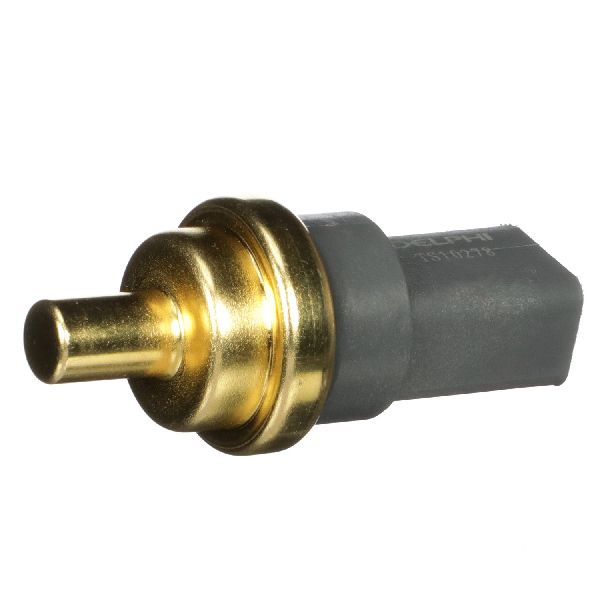
Est. part cost: $200-$500 - Faulty Engine Coolant Temperature (ECT) Sensor 🟡 Medium Probability The ECT sensor is a known failure point on many VW models. The original black-colored sensors were often superseded by an improved green-colored sensor, indicating a known issue. A faulty sensor can send incorrect low-temperature readings to the ECM, triggering P2181 even if the thermostat is working correctly.
How to confirm: Observe the temperature gauge for erratic behavior (e.g., jumping from cold to hot instantly, or being completely dead). Use a scan tool to compare the ECT reading to a cold engine; it should match the ambient air temperature. If the reading is nonsensical (e.g., -40°F or 300°F on a cold engine), the sensor is bad.
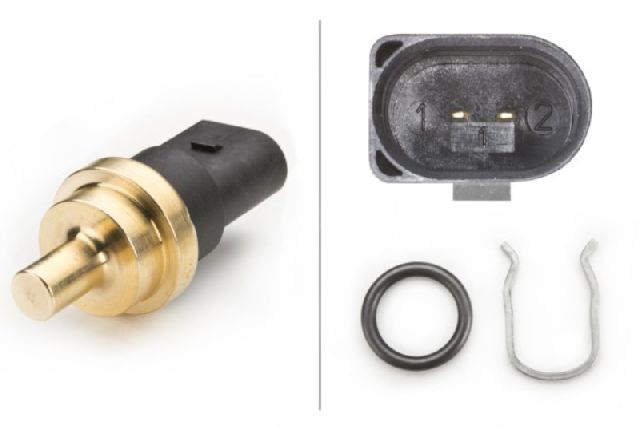
Typical fix: Replace the engine coolant temperature sensor (G62) and its O-ring. On many EA888 engines, there are two sensors; one on the thermostat housing (G62) and one on the lower radiator hose (G83). The G62 sensor is typically the primary one for the ECM.
Est. part cost: $15-$50 - Low Engine Coolant Level 🟡 Medium Probability These vehicles can develop coolant leaks from the water pump housing itself, the thermostat housing, radiator, or various plastic hose fittings, which are all common weak points over time. A low coolant level can cause air pockets and lead to inaccurate sensor readings.
How to confirm: Visually inspect the coolant reservoir. If the level is below the 'MIN' line when the engine is cold, you have a leak. A cooling system pressure test is the most effective way to locate the source of a slow leak.
Typical fix: Top off the system with the correct VW-specific coolant (G13, or its replacement G12evo) and find and repair the leak. The water pump assembly is a very common source of these leaks.
Est. part cost: $25-$40 for coolant, plus the cost of the leaking part.
Rare But Worth Checking
- Faulty Water Pump: While the thermostat is part of the assembly, the pump itself can fail (e.g., broken impeller or a failed internal drive belt on some engine variants), which usually causes an overheat condition rather than a slow warm-up.
- Failing Cooling Fan or Control Module: If the fans are stuck on and run constantly, it can over-cool the radiator and contribute to a slow warm-up, triggering P2181. This is less common for this code which is usually about the thermostat failing open.
- Air Trapped in Cooling System: If the cooling system was recently serviced (e.g., a water pump replacement) and not bled properly, air pockets can cause erratic temperature readings and trigger this code.
- Wiring Harness Issue: In rare cases, coolant can wick up into the wiring harness from a leaking sensor, causing corrosion and incorrect signals at the ECM. This can be a very difficult problem to diagnose.
Diagnosis Steps
- Check the engine coolant level in the expansion tank when the engine is cold. If it's low, top it off with VW-approved G13 or G12evo coolant and check for visible leaks, paying close attention to the water pump area.
- Use an OBD-II scanner to read live data from the Engine Coolant Temperature (ECT) sensor.
- Start the cold engine and monitor the temperature reading. It should rise steadily to ~195-220°F (90-104°C) and stabilize.
- If the temperature struggles to exceed 170-180°F (77-82°C) or drops significantly while driving at highway speeds, the thermostat is almost certainly stuck open.
- If the temperature gauge on the dash or the scanner reading is erratic, jumps around, shows an illogical value (like -40°F), or is completely dead, suspect the ECT sensor or its wiring.
- If the engine overheats, check if the cooling fans turn on as the temperature exceeds the halfway mark. If they don't, investigate the fan, fan control module, and associated fuses/relays.
- If a slow coolant leak is suspected but not visible, perform a cooling system pressure test to identify any hard-to-see leaks from the water pump housing, radiator, or hoses.
Parts You'll Likely Need
- Thermostat & Water Pump Assembly
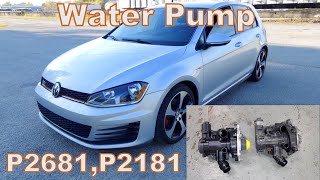
(OEM #06L121111H / 06L121111J / 06L121111K / 06L121111P)— This is the most common cause of P2181 on this platform. The thermostat fails in the open position, and it is integrated with the water pump in a single housing. Part numbers have been superseded several times; H, J, K, L, M, and P are all variations.
Trusted brands: Genuine Volkswagen, INA, Mahle, Vemo
OEM price range: $350-$500
Aftermarket price range: $180-$350 - Engine Coolant Temperature Sensor
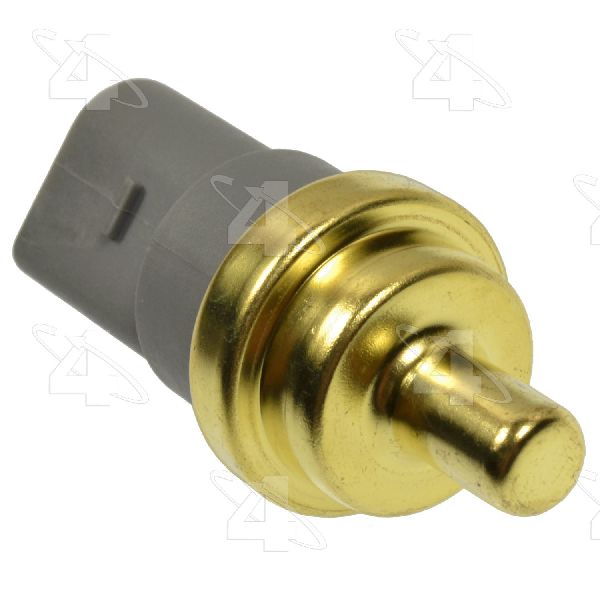
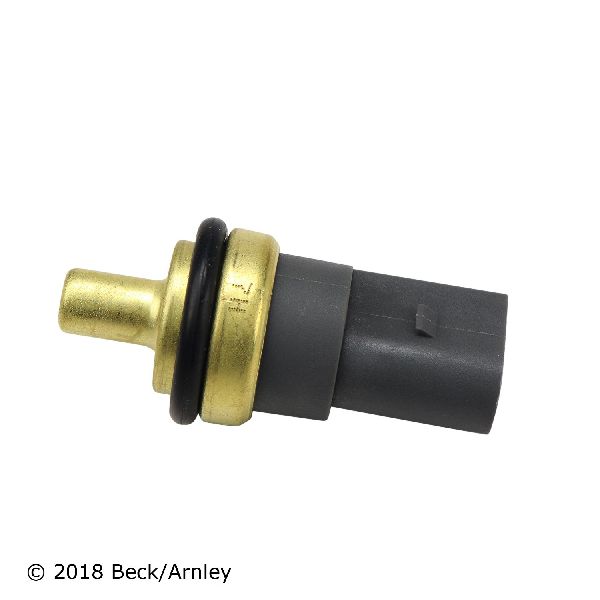
(OEM #06A919501A)— A frequent and inexpensive failure point that can send incorrect readings to the ECM, triggering the code. It's a common first part to replace in diagnosis, though often not the root cause for P2181.
Trusted brands: Hella, Vemo, Bosch, Genuine Volkswagen
OEM price range: $30-$60
Aftermarket price range: $15-$40
Related Codes That Often Appear With This One
- P0128 — This code, 'Coolant Thermostat (Coolant Temperature Below Thermostat Regulating Temperature),' is very similar and often used interchangeably with P2181 on many vehicles, pointing directly to a thermostat or sensor issue.
- P0117 / P0118 — These codes indicate a circuit low or high input for the ECT sensor, pointing directly to a faulty sensor or its wiring, not necessarily a mechanical cooling system problem.
- P1889 — On some VW/Audi models, this code for a 'Coolant Shut-Off Valve Short Circuit' can appear alongside P2181, pointing to an electrical issue within the complex thermal management system.
Technical Service Bulletins (TSBs) & Recalls
- VIN-4-A-PIN APRI (2016 ENGINE, dated 2016-04-13): Mentions P2181 as a possible fault code in a list of several others, but provides no specific diagnostic information for this code.
- VIN-4-A-PIN APRI (2015 STEERING, dated 2016-04-21): Similar to the above, lists P2181 among other potential codes without offering specific details on the cooling system issue.
Platform-Specific Known Issues
- The water pump/thermostat housing on the EA888 Gen 3 1.8T and 2.0T engines is made of plastic and is notoriously prone to cracking and leaking over time, in addition to the thermostat failing internally.
- Some early versions of the coolant temperature sensor were known to be unreliable, leading VW to release an updated part (often changing from a black to a green housing).
- The temperature gauge on the instrument cluster is heavily buffered and not a reliable indicator of the true coolant temperature. It will point straight up at 190°F for a wide range of actual temperatures (e.g., 175°F to 225°F). A scan tool showing live data is required for accurate diagnosis.
Mechanic-Grade Diagnostic Values
- Engine Coolant Temperature (ECT) Sensor G62 Resistance — expected: 1500-2000 Ω at 30°C (86°F); 275-375 Ω at 80°C (176°F).. Failure: Readings outside of the expected range for a given temperature indicate a faulty sensor. Infinite resistance (open circuit) or zero resistance (short circuit) also indicate failure.
- VCDS Live Data - Measuring Value Block (MVB) 130 — expected: When cold, the G62 (engine outlet) temperature should rise first. The G83 (radiator outlet) temperature should only begin to rise after the G62 reaches operating temperature (approx. 80°C) and the thermostat opens.. Failure: If both G62 and G83 temperatures rise at nearly the same rate from a cold start, it confirms the thermostat is stuck open, allowing coolant to circulate through the radiator prematurely.
- Freeze Frame Data for P2181 — expected: Data should show the conditions when the fault was set.. Failure: Freeze frame data showing a coolant temperature in the 68°C - 80°C (154°F - 176°F) range suggests the system was close to, but not within, the normal operating range, pointing towards a stuck-open thermostat. A reading of -40°C or +140°C points to an electrical fault with the sensor or wiring.
- Water Pump & Thermostat Housing Bolt Torque — expected: Thermostat Housing to Block: 9 Nm. Water Pump to Thermostat Housing: 9 Nm. Water Pump Drive Pulley Bolt (Reverse Thread): 10 Nm + 90 degrees.. Failure: Improper torque can lead to coolant leaks or damaged components.
Scan Tool Commands That Help
- VCDS (VAG-COM): Graphing Measuring Value Blocks (MVB) 001 or 130 — This is the primary diagnostic step to confirm a stuck-open thermostat. By graphing the engine outlet (G62) and radiator outlet (G83) temperatures from a cold start, you can visually confirm if the thermostat is allowing premature coolant circulation.
- VCDS (VAG-COM): Engine (01) -> Output Tests -> Cooling Fan 1 Control Circuit — To test the functionality of the cooling fans and their control module. The test will command the fans to ramp up from 0% to 100% and back down. This is useful for ruling out a fan issue if the car is overheating or if you suspect the fans are stuck on, contributing to over-cooling.
Wiring & Ground Locations
- Engine/Transmission Ground Connection — Typically a braided strap connecting the engine block or transmission case directly to the vehicle's chassis/frame rail.. A poor main engine ground can cause a variety of sensor reading errors and control module problems. While not a primary cause of P2181, verifying this ground is clean and tight is a fundamental step in diagnosing any electronic engine issue.
- Ground Connection on Cylinder Head — A ground wire (typically brown) bolted directly to the cylinder head.. The ECT sensor (G62) often relies on a clean ground path through the engine block to the main ground points. A corroded or loose ground on the cylinder head can cause erratic sensor readings.
- Ground Points near Fender Wells / Fuse Box — Inside the engine bay, there are typically ground studs on the inner fender structures, often near the fuse box or battery tray.. These are primary chassis ground locations for many vehicle systems, including the Engine Control Module. A fault here can cause widespread electrical issues.
Real Owner Repair Stories
- Reddit user in r/Volkswagen (2009 VW Passat Wagon 2.0T (similar EA888 engine family)) — P2181 code present. User was trying to determine the cause.
❌ Tried (didn't work) User considered replacing the ECT sensor first as it was cheaper and easier.
✅ What actually fixed it Multiple commenters, including one identified as a professional, stated that the thermostat is the most likely cause, statistically 9 out of 10 times for this code on this engine platform. The consensus was to replace the thermostat assembly.
OEM Part Supersession History
06L121111F, 06L121111G→06L121111H, 06L121111J, 06L121111K, 06L121111L, 06L121111M, 06L121111P— The original plastic thermostat housings were prone to cracking and leaking due to heat and vibration, and the internal thermostat mechanisms were a high-failure item. Subsequent revisions aimed to improve the material and design for better durability.
Heads up: While later revisions are generally backward-compatible, it is critical to use the complete assembly (water pump + thermostat housing) of the same revision. Mixing and matching components from different revisions is not recommended. Always verify fitment with the vehicle's VIN.
Helpful Videos
Used OEM Parts in Stock

New Aftermarket Parts Available


The information in this article is provided for general reference and educational purposes only. Vehicle specifications, procedures, and part compatibility can vary by production date, trim level, and region. Always consult your vehicle's factory service manual and verify part numbers before purchasing or performing repairs. Safety-critical components such as airbags, seat belts, and braking systems should be installed by a qualified professional.
- Volkswagen BEETLE CONVERTIBLE:
- 🎬 Helpful Videos
- 🛍️ Shop This Part
- What's Unique About the 2015-2016 Volkswagen BEETLE CONVERTIBLE
- Diagnostic Flowchart
- Symptoms You May Notice
- Most Likely Causes
- Rare But Worth Checking
- Diagnosis Steps
- Parts You'll Likely Need
- Related Codes That Often Appear With This One
- Technical Service Bulletins (TSBs) & Recalls
- Platform-Specific Known Issues
- Mechanic-Grade Diagnostic Values
- Scan Tool Commands That Help
- Wiring & Ground Locations
- Real Owner Repair Stories
- OEM Part Supersession History
- 🎟️ Get 5% Off