

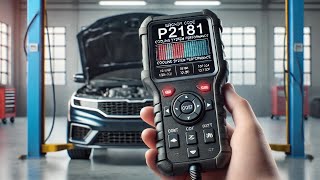
P2181 on 2016 Volkswagen Beetle: Cooling System Performance Causes and Fixes
On a 2016 VW Beetle with the 1.8T or 2.0T EA888 Gen 3 engine, code P2181 almost always indicates a faulty thermostat that is stuck open, preventing the engine from warming up properly. The most common and correct repair is to replace the entire integrated water pump and thermostat assembly with an updated part (e.g., part number ending in H, K, M, or P). Expect to pay $200-$500 for a quality aftermarket or OEM part and $800-$1600+ at a shop due to significant labor to access the component.
- P2181 means your engine isn't warming up quickly enough, most likely due to a thermostat stuck in the open position.
- On the 2016 Beetle, the thermostat is part of the water pump assembly; you must replace the entire unit.
- Before buying parts, confirm the diagnosis by monitoring coolant temperature with a scan tool during a drive. A temperature drop at highway speeds strongly points to the thermostat.
- This repair is labor-intensive due to the location of the water pump assembly under the intake manifold. While DIY is possible for experienced mechanics, it is a challenging job.
- Always use the correct VW-spec G13 (or compatible) coolant when refilling the system to prevent damage.
What's Unique About the 2016-2016 Volkswagen BEETLE
On the Gen 3 EA888 engines used in the 2016 Beetle (both 1.8T and 2.0T), the water pump and a complex, electronically controlled thermostat are housed in a single plastic assembly. This design is prone to two main failures that cause a P2181 code: the thermostat failing internally and getting stuck open, or the plastic housing itself developing a hairline crack and leaking coolant. Because these components are integrated, a failure of the thermostat requires replacing the entire assembly, making the repair more labor-intensive and costly than on older vehicles with separate components. The thermostat itself is not a simple wax unit; it uses a rotary slide valve system managed by the ECU to precisely control engine temperature, adding to the unit's complexity and failure potential.
Diagnostic Flowchart
Tap your situation to follow the diagnostic path that matches what you're seeing on this vehicle.
Symptoms You May Notice
- Check Engine Light is on
- Engine temperature gauge takes a long time to reach the middle or never gets there
- Temperature gauge drops from the middle (~190°F/90°C) when driving at highway speeds, then may rise back up when idling
- Noticeably reduced fuel economy
- Heater blows lukewarm or cool air, especially on cold days
- Cooling fans may run continuously or at high speed as a fail-safe
- Replacing only the coolant temperature sensor without first verifying the thermostat's operation. The symptoms of a stuck-open thermostat (temp dropping at speed) are very specific and often misdiagnosed as a bad sensor.
- Replacing the thermostat/water pump assembly but failing to replace the small union/connector pipe to the oil cooler, which can also leak.
- Not properly bleeding the cooling system after the repair, leading to air pockets and a repeat P2181 code.
Most Likely Causes
- Failed Thermostat (Stuck Open) 🔴 High Probability The thermostat is integrated into a large plastic housing assembly that is a known failure point on this engine platform. The electronically-controlled rotary valve mechanism can fail, locking it in the open position and causing the engine to be over-cooled.
How to confirm: Use an OBD-II scanner (like VCDS or OBDeleven) to monitor live coolant temperature data. If the engine takes an excessively long time (e.g., more than 15-20 minutes of driving) to reach ~90°C (195°F), or if the temperature drops significantly while driving at highway speeds, the thermostat is almost certainly stuck open. Graphing the G62 and G83 sensors simultaneously from a cold start will show them rising together if the thermostat is stuck open.
Typical fix: Replace the entire water pump and thermostat housing assembly. Since the unit must be removed to service the thermostat, it is standard practice to replace the whole assembly with an updated part. Also replace the small toothed belt that drives the water pump.
Est. part cost: $200 - $500 - Low Engine Coolant Level 🟡 Medium Probability The plastic water pump/thermostat housing is notorious for developing hairline cracks, leading to slow coolant leaks that may not be immediately obvious. Leaks can also occur from the union connector between the housing and the oil cooler.
How to confirm: Visually inspect the coolant reservoir to see if the level is below the 'MIN' line. Look for signs of pink/purple dried coolant crust or active drips on the passenger side of the engine, underneath the intake manifold. A cooling system pressure test will definitively identify a leak.
Typical fix: Find and repair the leak. If the leak is from the water pump housing, the entire assembly must be replaced. If it's a hose or other component, replace that specific part and refill the coolant with VW-approved G13 or G12evo coolant.
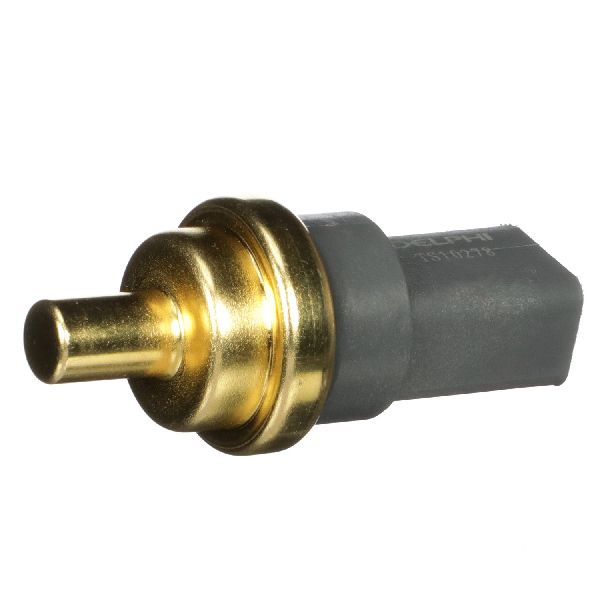
Est. part cost: $10 - $500 (depending on the source of the leak) - Faulty Engine Coolant Temperature (ECT) Sensor ⚪ Low Probability While less common than thermostat failure, sensors can fail, providing inaccurate readings to the ECM. The EA888 engine has at least two primary sensors (G62 at the engine, G83 at the radiator outlet) that the ECU compares.
How to confirm: Use a scan tool to compare the readings from the main ECT sensor (G62) and the radiator outlet sensor (G83) on a cold engine. They should be nearly identical and close to the ambient air temperature. If one is reading erratically (e.g., -40°C) or is significantly different, it is likely faulty. Wiggling the sensor connector while observing live data can reveal a poor connection if the temperature fluctuates.
Typical fix: Replace the faulty sensor. There are multiple temperature sensors; proper diagnosis is key to replacing the correct one. The G62 sensor is located on the thermostat housing.
Est. part cost: $20 - $60
Rare But Worth Checking
- Air in the Cooling System: If the cooling system was recently serviced (e.g., after a water pump replacement), trapped air can cause erratic temperature readings and trigger a P2181 code. The system may need to be properly bled using a vacuum tool to ensure all air is removed. 🎬 Watch: A real-world diagnosis and fix for the P2181 code.
- Faulty Water Pump Impeller: Though usually part of the main assembly replacement, a failing water pump with a slipping or damaged impeller can cause poor coolant circulation. While this more often leads to overheating, it can disrupt the temperature balance enough to trigger a P2181 code under certain conditions.
Diagnosis Steps
- Check for other DTCs: Use an OBD-II scanner to see if any other codes are present that could point to a specific component, like a sensor circuit fault (e.g., P0115, P0116).
- Visually inspect the cooling system: Check the coolant level in the expansion tank. Look for any visible signs of pink/purple dried coolant leaks, especially around the water pump/thermostat housing under the intake manifold.
- Monitor live data (Cold Start): With the engine cold, use a scan tool to graph the Engine Coolant Temperature (G62) and Radiator Outlet Temperature (G83). They should start at the same temperature. Start the engine. If both temperatures rise together almost immediately, the thermostat is stuck open.
- Perform a road test: Drive the vehicle at highway speeds. If the coolant temperature was normal at idle but drops significantly (e.g., below 80°C), it's a classic sign of a thermostat stuck open, as airflow through the radiator is over-cooling the engine.
- Pressure test the system: If a leak is suspected but not visible, use a cooling system pressure tester to pressurize the system to the specified PSI (check the cap) and identify the source of the leak.
- Test the sensors: If the thermostat appears to be working correctly but temperature readings are illogical (e.g., stuck at -40°C), test the resistance of the ECT sensor(s) with a multimeter to confirm failure before replacing.
Parts You'll Likely Need
- Water Pump and Thermostat Housing Assembly
(OEM #06L121111H (or superseded by 06L121111J, 06L121111K, 06L121111M, 06L121111P))— This is the most common cause of P2181. The thermostat fails internally or the plastic housing cracks, requiring replacement of the entire integrated unit. It is critical to use the latest revised part number available.
Trusted brands: Volkswagen (Genuine), INA, Pierburg, Febi Bilstein, VEMO
OEM price range: $350-$550
Aftermarket price range: $200-$400 - Water Pump Drive Belt
(OEM #06K121605)— This small toothed belt drives the water pump from a balance shaft. It is inexpensive and should always be replaced when replacing the water pump assembly.
Trusted brands: Continental, Gates, Volkswagen (Genuine)
OEM price range: $25-$40
Aftermarket price range: $15-$25 - Engine Coolant / Antifreeze (G13 / G12evo)
(OEM #G12E0501GRTU)— The system will need to be drained and refilled during the replacement of the water pump or thermostat. VW requires specific G13 or the newer compatible G12evo coolant. Using incorrect coolant can damage the system.
Trusted brands: Volkswagen (Genuine), Pentofrost, Febi
OEM price range: $25-$35 per gallon
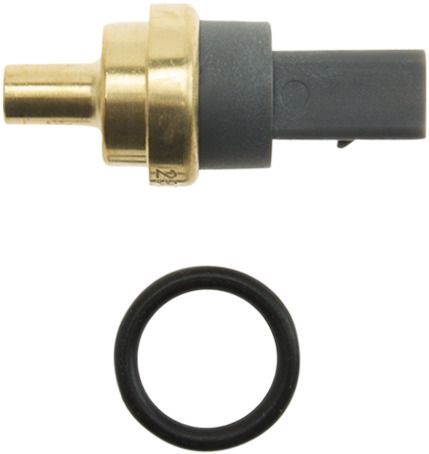
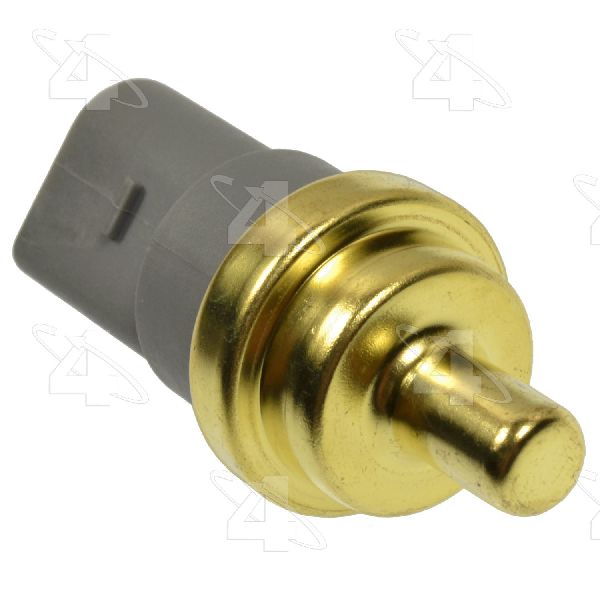
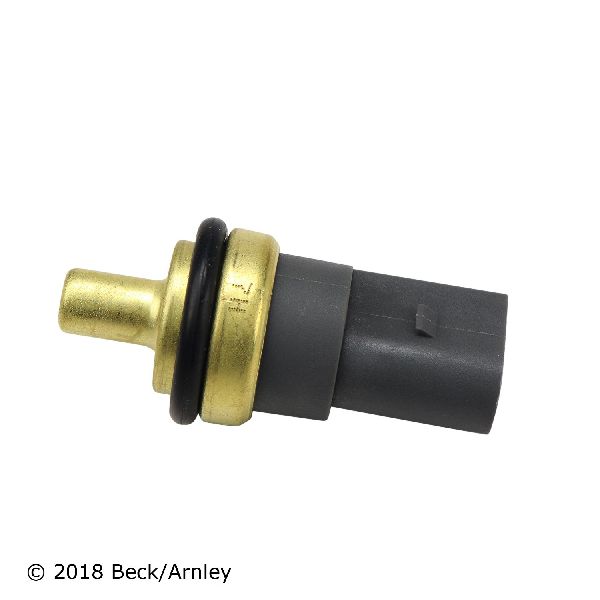
Aftermarket price range: $20-$30 per gallon - Engine Coolant Temperature Sensor (ECT)
(OEM #06A919501A)— A less common but possible cause. This sensor (often the G62 sensor) provides the primary temperature reading to the ECM.
Trusted brands: Bosch, Elth, Volkswagen (Genuine)
OEM price range: $40-$60
Aftermarket price range: $15-$30
Technical Service Bulletins (TSBs) & Recalls
- VIN-4-A-PIN APRI (2016 EQUIPMENT, dated 2016-04-21): Mentions MIL ON, FAULT P2181 IN THE ECM.
- VIN-4-A-PIN APRI (2016 ENGINE, dated 2016-04-13): Also lists MIL ON, FAULT P2181 IN THE ECM as a potential fault.
- While not specific to the Beetle, VW TSB 2044485/9 (for other EA888 models) details the diagnostic procedure for P2181, confirming the 'stuck open thermostat' as the primary cause and replacement of the assembly as the fix.
Platform-Specific Known Issues
- The 2016 Volkswagen Beetle is mentioned in Technical Service Bulletin (TSB) #VIN-4-A-PIN APRI, which lists "MIL ON, FAULT P2181 IN THE ECM" as a known customer complaint, confirming this is a recognized issue by the manufacturer.
- Owner forums for VWs with the EA888 Gen 3 engine are filled with reports of P2181, almost all of which are resolved by replacing the water pump/thermostat assembly. It is considered a common failure item with a life expectancy that can be as low as 60,000 miles.
Mechanic-Grade Diagnostic Values
- Engine Coolant Temperature (ECT) Sensor G62 Resistance — expected: 275 to 375 Ω at 80°C (176°F). Approximately 2,000 to 3,000 Ω at 20°C (68°F).. Failure: Readings significantly outside the expected range for a given temperature indicate a faulty sensor.
- Scan Tool Live Data for ECT Sensor (G62) — expected: Should display a temperature close to ambient when the engine is cold and rise steadily to an operating temperature of 80°C - 110°C.. Failure: A reading of approximately -40°C indicates an open circuit or short to positive. A reading of approximately 140°C indicates a short to ground.
- Freeze Frame Data Temperature — expected: Should be within the normal operating range if the fault occurred after warm-up.. Failure: Data stored at -40°C or +140°C strongly suggests a faulty ECT sensor or wiring. Data stored between 68°C and 80°C points towards a mechanical cooling system issue, like the thermostat.
Hidden / Shadow Codes Worth Checking
- 18613: This is the VAG-specific fault code that corresponds to the generic OBD-II code P2181, meaning "Performance Malfunction in Cooling System." (see via VAG-specific diagnostic tools like VCDS (Vag-Com) or OBDeleven will display this code.)
Scan Tool Commands That Help
- VCDS (Vag-Com): Graphing Measuring Value Block (MVB) group 130 — This is the definitive test for a stuck-open thermostat. From a cold start, graph the G62 (engine outlet) and G83 (radiator outlet) temperatures. If both sensors show a temperature rise at the same time, it confirms coolant is flowing through the radiator immediately, meaning the thermostat is stuck open. Normally, G83 should only start to rise after G62 reaches ~80-90°C and the thermostat opens.
Wiring & Ground Locations
- Knock Sensor Wiring Harness — The harness has a connector on the engine block near the water pump/thermostat assembly.. During a water pump replacement, this harness can be easily misrouted. It must be routed through a specific gap in the new assembly before the assembly is bolted down. If routed incorrectly (e.g., underneath), the wire may not reach its connection point, causing a separate fault code and requiring significant rework to correct.
- ECT Sensor (G62) Connector — Plugged into the G62 coolant temperature sensor, which is located on the main thermostat housing assembly.. The G62 sensor itself can leak coolant through its body, contaminating the electrical connector. This corrosion can cause intermittent signal glitches, triggering a P2181 code even if the thermostat is working correctly. Wiggling the connector while monitoring live data can expose this issue.
Real Owner Repair Stories
- YouTube channel "Auto Repair Tips" (Vehicle with P2181 (specific model not stated, but diagnosis is applicable)) — Check Engine Light with code P2181.
❌ Tried (didn't work) Initial assumption was a failed thermostat, which is the most common cause.
✅ What actually fixed it The technician used an oscilloscope and found a voltage 'glitch' from the coolant temperature sensor. Upon inspection, the sensor connector had corrosion inside. Replacing the faulty ECT sensor and cleaning the connector resolved the P2181 code without replacing the entire thermostat assembly. - VW Jetta Hybrid owner (similar EA888 platform principles) (VW Jetta Hybrid) — P2181 code, temperature gauge slow to warm up.
❌ Tried (didn't work) Initially replacing just one component at a time.
✅ What actually fixed it The owner ultimately replaced the thermostat, both the G62 and G83 coolant temperature sensors, and a related coolant flange. The fix was confirmed by using VCDS to monitor the measuring blocks, which showed the new thermostat was now operating correctly (radiator outlet sensor stayed cool until the engine warmed up).
When the Usual Fixes Don't Work
- While the overwhelming majority of P2181 codes on this engine are caused by a failed thermostat assembly, it is not the only cause. In one documented case, a technician diagnosed the code by connecting an oscilloscope to the Engine Coolant Temperature (ECT) sensor. They discovered an intermittent voltage spike, or 'glitch,' that was triggering the code. The root cause was not the thermostat, but a faulty ECT sensor with corrosion in its electrical connector. Replacing only the sensor fixed the problem. This highlights the importance of performing electrical diagnostics on the sensor circuit before committing to the expensive and labor-intensive water pump and thermostat replacement.
OEM Part Supersession History
06L121111F, 06L121111G→06L121111H, then 06L121111J, 06L121111K, 06L121111L, 06L121111M, 06L121111P— The water pump and thermostat assembly for the EA888 Gen 3 engine is a known failure point due to the plastic housing cracking from heat cycles. Successive part numbers represent revisions with improved materials and design to increase durability.
Helpful Videos

Used OEM Parts in Stock

New Aftermarket Parts Available


The information in this article is provided for general reference and educational purposes only. Vehicle specifications, procedures, and part compatibility can vary by production date, trim level, and region. Always consult your vehicle's factory service manual and verify part numbers before purchasing or performing repairs. Safety-critical components such as airbags, seat belts, and braking systems should be installed by a qualified professional.
- Volkswagen BEETLE:
- 🎬 Helpful Videos
- 🛍️ Shop This Part
- What's Unique About the 2016-2016 Volkswagen BEETLE
- Diagnostic Flowchart
- Symptoms You May Notice
- Most Likely Causes
- Rare But Worth Checking
- Diagnosis Steps
- Parts You'll Likely Need
- Technical Service Bulletins (TSBs) & Recalls
- Platform-Specific Known Issues
- Mechanic-Grade Diagnostic Values
- Hidden / Shadow Codes Worth Checking
- Scan Tool Commands That Help
- Wiring & Ground Locations
- Real Owner Repair Stories
- When the Usual Fixes Don't Work
- OEM Part Supersession History
- 🎟️ Get 5% Off