

P2181 on 2009-2010 Dodge Dakota: Cooling System Performance Causes and Fixes
For a 2009-2010 Dodge Dakota with either the 3.7L V6 or 4.7L V8, code P2181 almost always points to a thermostat that is stuck open, preventing the engine from warming up correctly. A new Mopar thermostat (part #68174083AA) is a low-cost part, typically under $50, and is a straightforward DIY replacement for many owners.
- P2181 on a 2009-2010 Dakota means the engine is running too cool, not too hot.
- The most probable cause, by a large margin, is a thermostat that has failed and is stuck open.
- Symptoms to watch for are a low temperature gauge reading and a heater that doesn't get very warm.
- The fix is typically a new 195°F thermostat (Mopar P/N 68174083AA) and a coolant top-off, a job many owners can do themselves.
What's Unique About the 2009-2010 Dodge DAKOTA
For the third-generation Dodge Dakota (2005-2011) and its platform mates sharing the 3.7L/4.7L PowerTech engines, the P2181 code is a very common and well-documented issue. While the code is generic, on this specific platform it is overwhelmingly caused by a simple mechanical failure: the thermostat sticking in the open position. Owners often report the temperature gauge staying low and poor heater performance as the first signs. The NHTSA has also documented this code in Technical Service Bulletins for similar Dodge/Chrysler products of the same era, indicating a known pattern, though the TSBs are often for general software updates. [Bulletin #18-093-15]
Diagnostic Flowchart
Tap your situation to follow the diagnostic path that matches what you're seeing on this vehicle.
Symptoms You May Notice
- Check Engine Light is on
- Engine temperature gauge reads lower than normal, often staying in the bottom quarter of the range.
- Heater blows lukewarm or cool air, especially in cold weather.
- Noticeable decrease in fuel economy over time.
- Engine takes an unusually long time to warm up.
- Replacing the radiator cap. While a faulty cap can cause cooling system problems, it's rarely the cause of a P2181 code, which is about running too cool, not overheating or losing pressure.
- Immediately assuming a bad water pump. A failing water pump usually causes overheating or coolant leaks, not the over-cooling condition indicated by P2181. 🎬 Watch this breakdown of P2181 causes and common fixes.
Most Likely Causes
- Thermostat stuck open 🔴 High Probability Thermostats are wear items, and the design used in this era of Dodge trucks is known to fail in the open position, which is the direct cause for the slow warm-up time that triggers P2181. This is a common failure on both the 3.7L and 4.7L PowerTech engines.
How to confirm: Monitor the temperature gauge or live data on a scan tool. If the engine warms up very slowly during a drive cycle and the temperature drops significantly at highway speeds, the thermostat is almost certainly stuck open.
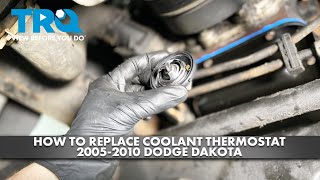
Typical fix: Replace the engine thermostat and gasket. 🎬 Watch: Step-by-step guide to replacing your Dakota's thermostat. It's also a good time to inspect and top off the engine coolant. When installing the new thermostat, ensure the small jiggle valve or bleed pin is oriented at the 12 o'clock (top) position to allow trapped air to escape the system.
Est. part cost: $20-$50 - Faulty Engine Coolant Temperature (ECT) Sensor 🟡 Medium Probability Sensors can fail over time, sending inaccurate (usually cold) readings to the computer, tricking it into thinking the engine isn't warming up.
How to confirm: With a cold engine, use a scan tool to compare the ECT reading to the Intake Air Temperature (IAT) sensor reading. They should be within a few degrees of each other. A more definitive test is to use a multimeter on the disconnected sensor; at an ambient temperature of 68°F (20°C), the resistance should be between 2,000 and 3,000 ohms. If the reading is out of this range or shows an open circuit, the sensor is bad.
Typical fix: Replace the ECT sensor. Ensure the new sensor's threads are sealed properly to prevent leaks.
Est. part cost: $15-$40 - Low Engine Coolant Level ⚪ Low Probability
How to confirm: Visually inspect the coolant reservoir and the radiator (when the engine is cool). If the level is low, there is a leak that must be found and repaired.
Typical fix: Pressure test the cooling system to find the source of the leak (e.g., hoses, radiator, water pump) and repair it. Then, refill and bleed the system.
Est. part cost: $10-$500+, depending on the source of the leak.
Rare But Worth Checking
- Cooling fan running continuously: If the cooling fan clutch (on mechanical fans) or the electric fan relay fails, the fan might run all the time, preventing the engine from warming up properly, especially in cold weather. This is less common than a thermostat failure.
- Poor electrical connection at the PCM: In rare cases, after replacing both the thermostat and ECT sensor, the code may persist. A poor connection at one of the Powertrain Control Module's main connectors can cause erroneous readings. Disconnecting, inspecting, and reseating the PCM connectors has been documented to resolve the issue.
Diagnosis Steps
- Check the engine coolant level in the reservoir and radiator (only open the radiator cap when the engine is completely cool). Top off if necessary with the correct Mopar OAT coolant.
- Use an OBD-II scanner to confirm P2181 is present. Check for any other codes, such as P0128 (Coolant Thermostat Rationality), which often appears with P2181 and reinforces the diagnosis of a bad thermostat.
- Monitor the temperature gauge during a test drive. Does it stay very low or take a very long time to move towards the middle?
- For a more precise test, use a scanner to view live data from the Engine Coolant Temperature (ECT) sensor. Start the engine cold and watch the temperature rise.
- The temperature should climb steadily to around 195-210°F and then stabilize. If it warms up extremely slowly, or if the temperature drops significantly when driving at highway speeds, the thermostat is stuck open.
- If the temperature reading on the scanner seems erratic or is illogical (e.g., reads -40°F), the ECT sensor or its wiring is the likely problem. Confirm with a resistance test.
- If the coolant level was low, perform a cooling system pressure test to identify and repair any leaks.
- If all parts test good but the code persists, inspect the wiring and connectors between the ECT sensor and the PCM. As a final step, consider reseating the main PCM connectors.
Parts You'll Likely Need
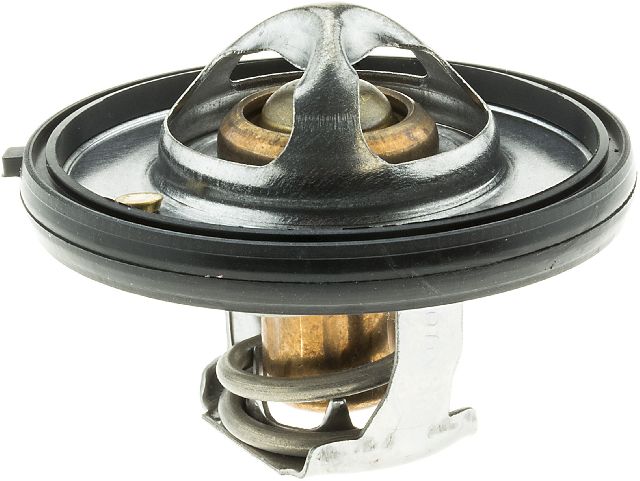
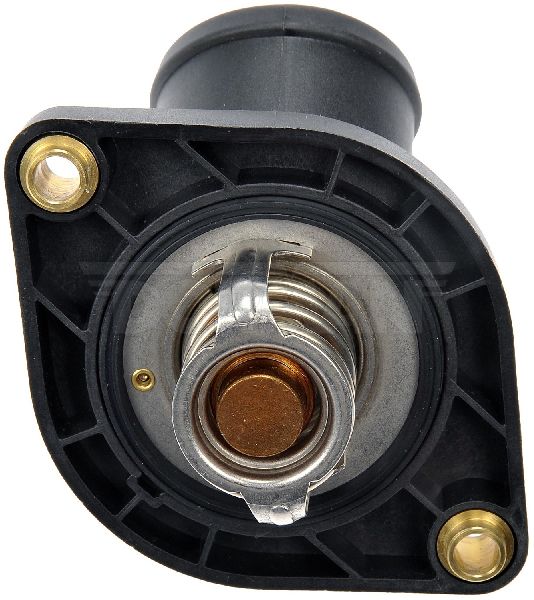
- Engine Thermostat
(OEM #68174083AA (supersedes 52079476AB, 52079476AC, 52079476AD))— This is the most frequent cause of P2181 on this vehicle. The original 195°F thermostat fails in the open position, causing the engine to run too cool.
Trusted brands: Mopar, Motorad, Stant
OEM price range: $30-$50
Aftermarket price range: $15-$30 - Engine Coolant Temperature (ECT) Sensor — If the thermostat replacement does not fix the issue, a faulty ECT sensor providing incorrect readings to the computer is the next most likely culprit.
Trusted brands: NTK, Bosch, Standard Motor Products
OEM price range: $25-$45
Aftermarket price range: $15-$30 - Engine Coolant / Antifreeze — You will lose some coolant when replacing the thermostat or ECT sensor, and it will need to be replaced with the correct type, which for this vehicle is Mopar 5-year/100,000 Mile OAT (Organic Additive Technology) coolant or an equivalent HOAT/OAT compatible antifreeze.
OEM price range: $20-$30 per gallon
Aftermarket price range: $15-$25 per gallon
Technical Service Bulletins (TSBs) & Recalls
- 18-093-15: A general PCM software update bulletin that involves flashing the module with new software. It lists P2181 as one of many codes the update may resolve, but does not provide a specific diagnosis or repair for the cooling system issue itself.
Platform-Specific Known Issues
- A Technical Service Bulletin (TSB #18-093-15) issued by Chrysler for the 2009 model year involves a PCM software update. The bulletin lists P2181 as one of several DTCs that the flash addresses, but it is not a specific diagnostic or repair procedure for the code itself. This indicates the manufacturer acknowledges the code but primarily addresses it via broad software revisions rather than a dedicated campaign.
Mechanic-Grade Diagnostic Values
- Engine Coolant Temperature (ECT) Sensor Resistance — expected: Approximately 2000-3000 Ω at 68°F (20°C), decreasing to 200-300 Ω at 194°F (90°C).. Failure: Readings significantly outside this range, or an open/short circuit, indicate a faulty sensor.
- ECT Sensor Signal Voltage at PCM — expected: Approximately 2.0V - 3.0V with a cold engine, dropping to around 0.5V when the engine is at full operating temperature.. Failure: Voltage that is stuck high (e.g., near 5V) or low, or does not change smoothly as the engine warms up, points to a wiring or sensor issue.
- ECT vs IAT Sensor Comparison (Cold Soak) — expected: On a cold-soaked engine (left overnight), the ECT and Intake Air Temperature (IAT) sensor readings on a scan tool should be within a few degrees of each other.. Failure: A significant difference between the two readings points to a faulty ECT sensor.
Wiring & Ground Locations
- ECT Sensor Signal at PCM — Pin 20 (TN/BK wire) of the C2 connector (Black/Orange 38-way) on the Powertrain Control Module (PCM).. This is the specific pin where the PCM receives the temperature reading. Technicians can back-probe this pin to verify the voltage signal from the sensor is reaching the computer correctly, helping to isolate a wiring problem from a sensor or PCM problem.
- Sensor Ground at PCM — Pin 27 (BK/LB wire) of the C2 connector (Black/Orange 38-way) on the Powertrain Control Module (PCM).. This is the ground reference for the ECT sensor circuit. A poor connection at this pin or a break in the wire can cause erratic or incorrect sensor readings, leading to a P2181 code.
- G107 — Right side of the engine compartment.. This is a primary ground point in the engine bay. While not exclusive to the ECT, poor contact at this ground can introduce electrical noise and issues into various sensor circuits, including the one for engine coolant temperature.
Real Owner Repair Stories
- Rennlist Forum User (Porsche Cayenne (demonstrates a universal diagnostic principle for P2181)) — P2181 code returns immediately after being cleared, even on a cold engine start.
❌ Tried (didn't work) Initially suspected the thermostat, but the instant return of the code suggested an electrical issue.
✅ What actually fixed it The user correctly deduced that a mechanical issue like a stuck thermostat would require a drive cycle for the PCM to detect a slow warm-up. An instant code-return points directly to an electrical fault (bad sensor, open/short in wiring) that the PCM can detect immediately upon key-on self-test. This logic helps prioritize electrical checks over mechanical part replacement in such cases.
OEM Part Supersession History
52079476AB, 52079476AC, 52079476AD, 52079476AE→68174083AA— Standard part evolution for improved reliability or manufacturing process changes.
Heads up: The newer part number 68174083AA is the correct 195°F thermostat and is fully compatible with and replaces all previous versions for the 3.7L and 4.7L engines in this vehicle.
Model Year Variations Within This Range
- 2009-2010: There are no significant documented changes to the cooling system, engine, or relevant sensors for the P2181 code between the 2009 and 2010 Dodge Dakota models with either the 3.7L V6 or 4.7L V8 engines.
Helpful Videos

We Have This Part in Stock


The information in this article is provided for general reference and educational purposes only. Vehicle specifications, procedures, and part compatibility can vary by production date, trim level, and region. Always consult your vehicle's factory service manual and verify part numbers before purchasing or performing repairs. Safety-critical components such as airbags, seat belts, and braking systems should be installed by a qualified professional.
- Dodge DAKOTA:
- 🎬 Helpful Videos
- 🛍️ Shop This Part
- What's Unique About the 2009-2010 Dodge DAKOTA
- Diagnostic Flowchart
- Symptoms You May Notice
- Most Likely Causes
- Rare But Worth Checking
- Diagnosis Steps
- Parts You'll Likely Need
- Technical Service Bulletins (TSBs) & Recalls
- Platform-Specific Known Issues
- Mechanic-Grade Diagnostic Values
- Wiring & Ground Locations
- Real Owner Repair Stories
- OEM Part Supersession History
- Model Year Variations Within This Range
- 🎟️ Get 5% Off