

OBD-II Code P2179: System Too Lean Off Idle, Bank 2
The Ultimate 2026 Guide to Meaning, Causes, and Pro-Level Fixes
- Code P2179 indicates the Powertrain Control Module (PCM) detects a lean air-fuel mixture (too much air, not enough fuel) on engine Bank 2 while driving above 1,000 RPM.
- Perform a smoke test immediately, as unmetered air from vacuum leaks or a cracked PCV hose causes over 60% of P2179 codes.
- Do not blindly replace the Bank 2 oxygen sensor; it is usually functioning correctly and simply reporting a lean condition caused by a dirty MAF sensor or failing fuel pump.
- Fix this code within 2 weeks to prevent exhaust temperatures from spiking, which melts the catalytic converter and results in a $1,500+ repair bill.
What Does P2179 Mean?

The Powertrain Control Module (PCM) detects too much air and not enough fuel in the Bank 2 air-fuel mixture. This lean condition occurs 'off-idle'—during acceleration or cruising, not while stationary. Bank 2 is the engine side opposite cylinder #1.
Technical definition: System Too Lean Off Idle, Bank 2. The PCM sets this code when the Bank 2 air-fuel ratio sensor indicates a continuous lean condition while the engine operates above idle speed. The PCM targets a 14.7:1 air-fuel ratio and triggers P2179 when the ratio exceeds 15.1:1, confirming excess air or insufficient fuel in the exhaust.
Can I Drive With P2179?
Yes, But With Caution. Short-term, low-speed driving is possible but not recommended. Ignoring the code causes severe engine misfires, rough running, and poor fuel economy. A persistent lean condition increases combustion temperatures, burning exhaust valves and damaging pistons over time. Furthermore, misfires send unburned fuel into the exhaust, melting the catalytic converter and adding an $800-$2500 replacement to your final repair bill.
Common Causes

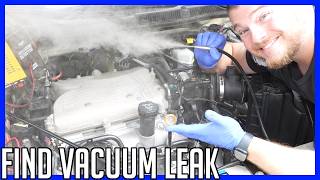
- Vacuum Leaks & PCV System Failures (Very Common) — Cracked vacuum hoses, a leaking intake manifold gasket, a stuck-open PCV valve, or a collapsed PCV hose allow unmetered air to enter the engine. This is the most frequent cause, especially on Mazda, BMW, and GM vehicles. 🎬 Watch: How to find a vacuum leak using this easy method.
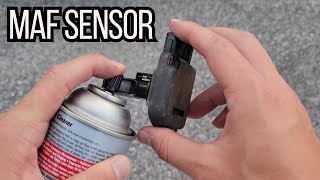
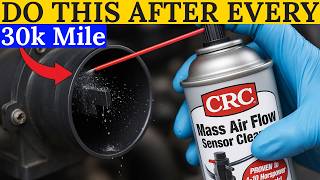
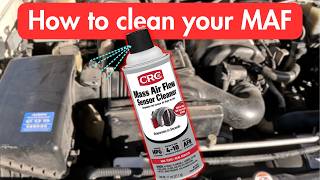
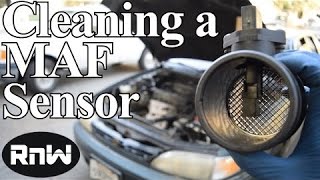
- Contaminated or Failing Mass Airflow (MAF) Sensor (Common) — A dirty or failing MAF sensor inaccurately measures incoming air, causing the PCM to inject insufficient fuel. An improperly fitting air filter also triggers this. 🎬 See how to clean and diagnose a dirty MAF sensor.
- Fuel Delivery Issues (Common) — A weak fuel pump, clogged fuel filter, or dirty fuel injectors prevent sufficient fuel from reaching the engine under acceleration.
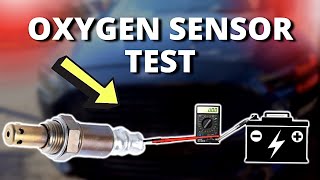
- Faulty Oxygen Sensor (O2 Sensor) (Common) — A failing or contaminated Bank 2 oxygen sensor sends incorrect readings to the PCM, falsely indicating a lean condition. However, the sensor often correctly reports a problem caused by a vacuum leak. 🎬 Watch: Easy DIY guide for testing your oxygen sensor.
- Exhaust Leaks (Less Common) — An exhaust leak upstream of the Bank 2 oxygen sensor draws in outside air, causing the sensor to report a false lean condition.
- Clogged Catalytic Converter (Less Common) — A partially clogged Bank 2 catalytic converter creates backpressure, trapping exhaust gases and skewing O2 sensor readings.
- Internal Engine Issues (Rare) — Low compression on Bank 2 cylinders causes an inefficient burn, interpreted by the PCM as a lean condition.
- Powertrain Control Module (PCM) or Software Issue (Rare) — The PCM requires a software update to correct fuel trim calculations or has a failing injector driver circuit. Consider this only after exhausting all other options.
Symptoms

- Check Engine Light On — The Malfunction Indicator Lamp (MIL) illuminates on your dashboard.
- Reduced Engine Power and Acceleration — The vehicle feels sluggish, hesitates, or stumbles during acceleration or under load.
- Rough Engine Operation or Misfires — The engine runs rough, shakes, or misfires, feeling like a rhythmic stumble.
- Poor Fuel Economy — The PCM compensates for the lean condition by dumping excess fuel, noticeably decreasing gas mileage.
- High or Unstable Idle — Underlying vacuum leaks cause engine RPMs to surge or fluctuate at idle.
- Hard Starting — The vehicle requires extended cranking times before the engine turns over.
- Positive Fuel Trims (scan-tool only — no driver-felt sign) — Scan tool data shows Short-Term and Long-Term Fuel Trims for Bank 2 significantly positive (>+10%).
- Low O2 Sensor Voltage (scan-tool only — no driver-felt sign) — Live data for the Bank 2 upstream O2 sensor shows a steady low voltage (<0.2V), indicating a persistent lean reading.
Diagnostic Flowchart
Tap your situation to follow the diagnostic path that matches what you're seeing on this code.
Common Fixes & Costs
- Repairing a Vacuum Leak (e.g., PCV hose, intake gasket)
— Parts: $10 - $150, Labor: $150 - $400, ~1.5 hr book time
(DIY)
: OEM L3K9-13-895, LF62-13-895 (Alt: Dorman, Gates)
: OEM BR3Z-9439-A (5.0L V8) (Alt: Fel-Pro, Mahle)
: OEM 12610140 (3.6L intake gasket) (Alt: ACDelco, Fel-Pro) - Cleaning or Replacing the Mass Airflow (MAF) Sensor
— Parts: $10 - $250, Labor: $50 - $150, ~0.5 hr book time
(DIY)
: OEM L3K9-13-215 (CX-7) (Alt: Denso, Hitachi)
: OEM 7L3Z-12B579-A (Alt: Motorcraft, Bosch, Hitachi)
: OEM 13505433 (Alt: ACDelco, Delphi) - Replacing the Bank 2 Oxygen Sensor
— Parts: $50 - $200, Labor: $100 - $250, ~1.2 hr book time
(Intermediate)
: OEM L3K2-18-861A (Alt: Denso, NTK, Bosch)
: OEM DY1165 (5.0L V8) (Alt: Motorcraft, Bosch)
: OEM 12637234 (Alt: ACDelco, Denso, NTK) - Replacing the Fuel Pump or Fuel Filter
— Parts: $200 - $600, Labor: $300 - $600, ~2.5 hr book time
(Professional)
: OEM LFB6-13-35X (Alt: Denso, Carter)
: OEM PFS1003 (Alt: Motorcraft, Delphi)
: OEM 13583163 (Alt: ACDelco, Delphi, Carter) - Replacing a Clogged Catalytic Converter
— Parts: $500 - $1500, Labor: $150 - $400, ~2 hr book time
(Professional)
: OEM L3M9-20-50X (Alt: Walker, MagnaFlow, AP Exhaust)
: OEM 12632455 (Alt: Walker, AP Exhaust, MagnaFlow) - PCM Software Update or Replacement — Parts: $0 - $1000, Labor: $150 - $300, ~1.5 hr book time (Professional)
Used vs. New Parts: Buying Guide
When a used part is worth it: Used OEM parts are viable for expensive electronic components like MAF sensors if sourced from reputable salvage yards. Avoid used catalytic converters unless pulled from a very low-mileage donor.
Donor-vehicle mileage cap: roughly under 80000 miles for the part to have meaningful remaining life.
Donor quality checklist:
- Verify the donor vehicle was not scrapped due to engine or emissions failures.
- Ensure the electronic part number matches exactly.
- Avoid exhaust components from rust-belt regions.
Decision logic:
- If The part is a wear item like a PCV hose or gasket → Always buy new; cost savings are minimal and failure risk is high.
- If The part is an expensive electronic sensor (e.g., MAF) → A used OEM part is a reasonable choice if it includes a warranty.
- If The part is a catalytic converter → Favor new aftermarket or OEM parts due to the high risk of used parts being clogged.
Warranty tradeoff: Used parts typically include a 30 to 90-day part-only warranty. New aftermarket parts offer 1-year to lifetime warranties.
Worst-case if a used part fails: 500-1500
What Happens If You Wait — Timeline
- 0-2 weeks: Check Engine Light illuminates. Freeze frame data shows high positive fuel trim on Bank 2 (>+10%). No driveability symptoms are present. (MPG impact: 0-5%% · Added cost: $0)
- 2 weeks - 3 months: Hesitation during acceleration begins. The lean condition increases combustion temperatures. (MPG impact: 5-10%% · Added cost: $50-150 in wasted fuel)
- 3 - 8 months: Sustained high exhaust temperatures degrade the catalytic converter's precious metals. Misfires become frequent under load. (MPG impact: 10-15%% · Added cost: $800-2500 (catalytic converter replacement))
- 8+ months: Extreme heat burns exhaust valves and melts piston crowns, leading to catastrophic engine failure. (MPG impact: 15-25%% · Added cost: $3000-7000+ (engine rebuild))
Cost of Not Fixing It

- 0-1 Month: Noticeable drop in fuel economy (5-15%), hesitation during acceleration, and failed emissions tests. (Added cost: 50-150)
- 1-6 Months: High exhaust temperatures degrade the catalytic converter's internal structure, leading to complete failure. (Added cost: 1000-2500)
- 6+ Months: Severe engine damage occurs, including burned exhaust valves, damaged pistons, and scored cylinder walls. (Added cost: 3000-7000)
Diagnosis Steps
- Scan for Codes and Analyze Live Data
Read all codes and view Freeze Frame data. Monitor Short-Term (STFT) and Long-Term Fuel Trims (LTFT) for Bank 2. Consistently positive numbers (>+10%) confirm the lean condition. Monitor Bank 2 O2 Sensor 1 voltage (should fluctuate 0.1-0.9V) and MAF sensor readings.
Tools: Advanced OBD-II Scanner (Intermediate) - Perform a Smoke Test
Pressurize the intake system with a smoke machine to locate hidden vacuum leaks in gaskets, hoses, or the intake manifold. Introduce smoke into the exhaust (pre-catalytic converter) to find upstream leaks affecting the O2 sensor.
Tools: Smoke Machine (Intermediate) - Thorough Visual Inspection
Inspect the engine bay for cracked, disconnected, or brittle vacuum hoses, specifically the PCV hose and air intake boot. Check for loose clamps on the air intake system.
Tools: Flashlight (Beginner) - Inspect and Clean the Mass Airflow Sensor
Remove the MAF sensor and inspect its elements for dirt or oil. Clean it ONLY with dedicated MAF sensor cleaner. A dirty MAF under-reports airflow, causing the PCM to command insufficient fuel.
Tools: Screwdriver/Ratchet Set, MAF Sensor Cleaner (Intermediate) - Check Fuel Pressure
Connect a fuel pressure gauge to the fuel rail's service port. Pressure must fall within the manufacturer's specified range (typically 50-60 PSI). Low pressure confirms a weak pump, clogged filter, or bad regulator.
Tools: Fuel Pressure Gauge (Advanced) - Test the Oxygen Sensor with Propane Enrichment
Graph Bank 2, Sensor 1 voltage on your scanner. Introduce unlit propane near the air intake. A healthy O2 sensor detects the rich mixture and immediately jumps to >0.8V. If it stays low or reacts slowly, the sensor is faulty.
Tools: Advanced OBD-II Scanner, Propane Torch (unlit) (Advanced) - Check for a Clogged Catalytic Converter
Measure the temperature of the pipe entering and exiting the catalytic converter after a drive. The outlet must be at least 100°F hotter than the inlet. If it is cooler, the converter is clogged.
Tools: Infrared Thermometer (Intermediate) - Test Injector Circuit with a Noid Light
Disconnect the electrical connector from a Bank 2 fuel injector and plug in a noid light. Start the engine; the light must flash rapidly and consistently. A dim or erratic light indicates a wiring or PCM driver failure.
Tools: Noid Light Set (Advanced) - Analyze MAF Sensor Data (g/s)
Monitor the MAF sensor PID at a stable, warmed-up idle. The reading in grams per second (g/s) must roughly equal the engine's displacement in liters (e.g., 3.6L = 3.6 g/s). Low readings confirm a faulty sensor or downstream air leak.
Tools: Advanced OBD-II Scanner (Advanced) - Test ECT Sensor Resistance
Disconnect the Engine Coolant Temperature (ECT) sensor and measure its resistance with a multimeter. Compare it to the manufacturer's temperature vs. resistance chart. Out-of-spec readings confirm a bad sensor.
Tools: Multimeter, Thermometer (Advanced)
When This Code Triggers (Freeze-Frame Conditions)
- Engine Coolant Temp: 180-210°F (Fully warmed up)
- RPM: 1500-3000 (Cruise / steady throttle / light acceleration)
- Engine Load: 25-60% (Vehicle is under moderate power demand)
- Vehicle Speed: 30-60 mph (City or highway cruising speed)
Related Codes
- P0171 — System Too Lean (Bank 1). The companion code to P2179. If both are present, the problem affects the entire engine (e.g., MAF sensor, fuel pump). If only P2179 is present, the issue is isolated to Bank 2.
- P0174 — System Too Lean (Bank 2). A general lean code for Bank 2. P2179 specifically indicates the lean condition happens 'off idle.' Diagnostically, they point to the exact same Bank 2 causes.
- P2189 — System Too Lean at Idle (Bank 2). The direct opposite of P2179. P2189 points to vacuum leaks, while P2179 points toward issues manifesting under load, like fuel delivery or MAF sensor failures.
- P0101 — MAF Sensor Circuit Range/Performance. Often appears alongside P2179. A faulty MAF directly causes P2179 by providing incorrect airflow data to the PCM.
Climate & Environmental Factors
- High Altitude: Thinner air at high altitudes pushes borderline issues (like a weak fuel pump or slightly dirty MAF sensor) past the PCM's compensation threshold, triggering a lean code.
- Cold Weather: Freezing temperatures contract plastic and rubber components, worsening vacuum leaks. On GM 3.6L engines, cold weather freezes oil deposits in the PCV orifice, causing lean codes (TSB PI0746C).
- High Humidity: High humidity displaces oxygen, making the air charge less dense. This exacerbates existing fuel or air metering system failures.
How to Talk to a Mechanic About This Code
Say this: "I have a P2179 code for 'System Too Lean Off Idle on Bank 2'. Please check the long-term fuel trims for both banks and perform a smoke test to check for vacuum leaks before recommending part replacements."
This directs the technician to perform a proper diagnosis rather than blindly replacing the O2 sensor.
Avoid saying:
- 'My check engine light is on, can you look at it?'
- 'Just fix whatever's wrong.'
- 'My friend said it's probably the oxygen sensor.'
Questions to ask before authorizing the repair:
- What were the long-term fuel trim values for Bank 1 and Bank 2 at idle and at 2500 RPM?
- Did the smoke test reveal any vacuum or exhaust leaks?
- If you recommend a sensor replacement, how was it tested and confirmed faulty?
- Can I have a written estimate breaking down parts and labor?
- What is the warranty on this specific repair?
Where to Take It: Dealer vs Independent vs Chain
- Dealer:
Best for: Vehicles under powertrain or emissions warranty., Known manufacturer-specific TSBs (e.g., VW PCV valves, GM 3.6L orifice issues)., Complex PCM software updates.
Downsides: Labor rates are 1.5-2x higher than independent shops., Dealers prefer replacing entire assemblies over repairing smaller components. (Typical cost: +50% vs. baseline) - Independent Shop:
Best fit. A reputable independent shop with a smoke machine easily diagnoses vacuum leaks and faulty sensors at a lower cost than a dealer.
Best for: Out-of-warranty vehicles., Common diagnostic codes like P2179.
Downsides: Quality varies; vet shops based on reviews and ASE certifications. (Typical cost: +0% vs. baseline) - Chain Shop:
Avoid for initial diagnosis. They lack the tools for proper root cause analysis of lean codes.
Best for: Simple, high-volume jobs like oil changes and brake pads.
Downsides: Technicians lack advanced diagnostic equipment like smoke machines., Business models pressure technicians to replace parts unnecessarily. (Typical cost: -10% vs. baseline)
When to Walk Away From the Repair
If the estimated repair cost exceeds 50% of the car's private-party value, consider selling or trading it in.
- Car worth $4000, fix is $2500: Walk away. The repair cost is over 60% of the car's value.
- Car worth $12000, fix is $1800: Fix it. The repair cost is only 15% of the vehicle's value.
- Car worth $2500, fix is $1500: Walk away. The repair cost is 60% of the car's value.
What Scan Tool You Need for This Code
Minimum: A scanner that graphs live data streams for O2 sensors and Short/Long-Term Fuel Trims (STFT/LTFT).
A basic $20 code reader only provides the 'P2179' code. Live data is required to distinguish a vacuum leak from a bad sensor, preventing unnecessary part replacements.
Budget: BlueDriver Pro or OBDLink MX+ (~$100) — Connects to a smartphone app, providing excellent live data graphing for fuel trims and O2 sensor voltage.
Mid-range: Foxwell NT510 Elite or Innova 5610 (~$180) — Offers manufacturer-specific data and bidirectional control to command components for testing.
Professional: Autel MaxiCOM MK808S or XTOOL D8S (~$450-700) — Provides full bidirectional control, access to all vehicle modules, and advanced service functions.
How to Clear the Code After You Fix It
- Use an OBD-II scan tool to clear the P2179 code from the PCM's memory.
- Perform a complete drive cycle to allow the vehicle's readiness monitors to run.
Drive cycle (~20 minutes): Start the engine cold. Idle for 3 minutes. Drive in mixed conditions, cruising between 40-60 mph for 10 minutes. Perform several moderate accelerations and decelerations. Idle for 3 minutes before shutting off.
Readiness monitors affected: Catalyst (CAT) Monitor, Oxygen (O2) Sensor Monitor, Evaporative (EVAP) System Monitor
Before emissions retest: drive at least 50 miles to fully set monitors.
Watch out for:
- Disconnecting the battery clears the code but resets all readiness monitors, causing an automatic emissions test failure.
- The code returns immediately if the underlying lean condition remains unfixed.
Will This Fail Emissions / State Inspection?
Yes — this code typically fails an OBD-II emissions inspection.
- California: An illuminated Check Engine Light results in an automatic smog check failure. A complete drive cycle must set all readiness monitors before retesting.
- New York: An active P2179 code automatically fails the OBD-II emissions inspection. Readiness monitors must be reset after clearing the code.
- Texas: In the 17 counties requiring emissions testing, an active Check Engine Light causes an automatic inspection failure.
Most Commonly Affected Vehicles

- Mazda All V6 models (CX-7, CX-9, Mazda6) (2007-2014) — TSB #01-007/14 identifies a deteriorated PCV valve hose that collapses under the intake manifold as the primary cause.
- Ford F-150, Explorer, Mustang (2005-2015) — Frequently caused by vacuum leaks from intake manifold gaskets or PCV hoses.
- Chevrolet / GMC Traverse, Acadia, Enclave (3.6L V6) (2009-2017) — TSB PI0746C points to a clogged PCV orifice or ice/oil deposits in the air inlet duct during cold weather.
- BMW 3-series, 5-series, 745i (2002-2010) — Linked to failing PCV diaphragms integrated into the valve covers, creating massive vacuum leaks.
- Hyundai / Kia Santa Fe, Sonata, Sorento (V6) (2007-2016) — Diagnosis starts with checking for intake leaks and verifying fuel pressure.
- Volkswagen / Audi Tiguan, GTI, A4 (2.0T Engine) (2012-2018) — A failed diaphragm in the PCV oil separator causes a massive vacuum leak and is a highly common failure point.
- Honda Civic 1.8L, Accord V6 (2011-2017) — Commonly due to vacuum leaks or faulty O2 sensors.
- Nissan / Infiniti Altima, Maxima, G35 (VQ V6) (2005-2015) — Susceptible to vacuum leaks from intake manifold gaskets and PCV hoses.
Manufacturer-Specific Notes
- Mazda: The primary cause for P2179 is a cracked PCV valve hose located under the intake manifold (TSB #01-007/14).
- General Motors (Chevrolet/GMC): On 3.6L V6 engines, check for a clogged PCV orifice in the camshaft cover and ice in the intake tube (TSB PI0746C).
- BMW: The PCV system uses rubber diaphragms that tear over time. The entire valve cover must often be replaced to fix the resulting vacuum leak.
- Volkswagen/Audi: The 2.0T engine's PCV valve diaphragm tears, causing a loud hissing sound and triggering lean codes. The entire oil separator assembly requires replacement.
Real Owner Stories
2011 Mazda 6 V6 with P2179 & P2177
Check Engine Light appeared intermittently, then became constant. Fuel trims were high (~+20).
What they tried:
- Replaced an aftermarket Cold Air Intake with the stock airbox.
- Cleaned the MAF sensor.
- Monitored fuel trims and MAF airflow readings with a scan tool.
Outcome: The owner concluded the aftermarket-remanufactured MAF sensor was faulty, providing incorrect airflow data. Replacing it with an OEM sensor resolved the codes.
Lesson: Lean codes on both banks (P2177 & P2179) indicate a component affecting the entire engine, like the MAF sensor. Avoid aftermarket electronic sensors.
2014 Honda CR-V with ~90,000 miles
Check Engine Light illuminated with no noticeable symptoms during a highway trip.
What they tried:
- Replaced the downstream O2 sensor.
- Replaced the upstream O2 sensor.
Outcome: A shop used a 5-gas analyzer and determined the catalytic converter failed. Replacing the catalytic converter permanently resolved the code.
Lesson: Do not automatically replace oxygen sensors for a lean code. Diagnose the catalytic converter's efficiency before wasting money on sensors.
2011 Chevy Traverse 3.6L in cold climate
P2179 appeared during winter with a rough idle and hesitation.
What they tried:
- Checked for vacuum leaks using carb cleaner.
- Cleaned the MAF sensor.
Outcome: Following TSB PI0746C, the owner found the PCV orifice clogged with frozen oil deposits. Clearing the orifice resolved the code.
Lesson: Always check manufacturer TSBs. Cold weather causes unique failures, such as frozen PCV systems, that are not obvious in warmer conditions.
How to Prevent This Code From Triggering
- Use Top Tier certified gasoline. (Every fill-up) — Top Tier fuels contain detergents that prevent carbon deposits on fuel injectors, ensuring proper fuel flow and preventing lean mixtures.
- Clean the Mass Airflow (MAF) sensor. (Every 20,000-30,000 miles.) — Removes dust and oil vapor that cause the MAF sensor to under-report airflow.
- Replace engine air filter. (Every 15,000-30,000 miles.) — Ensures the MAF sensor receives accurate airflow readings and prevents contaminants from dirtying the sensor.
- Use a fuel system cleaner with PEA. (Every 5,000-10,000 miles.) — Cleans minor deposits on injectors, maintaining a proper spray pattern and fuel volume.
- Proactively replace upstream O2 sensors. (Every 80,000-100,000 miles.) — Prevents 'lazy' O2 sensors from causing poor fuel economy and long-term catalytic converter damage.
Frequently Asked Questions
What is a common misdiagnosis for P2179?
A very common mistake is immediately replacing the Bank 2 oxygen sensor without performing a full diagnosis. Often, the O2 sensor correctly reports a lean condition caused by a hidden vacuum leak, an exhaust leak, or a fuel delivery problem. Always perform a smoke test before replacing parts.
Why did the code return after I cleaned the MAF sensor?
Cleaning the MAF sensor only works if it is dirty, not if it has failed electronically. Furthermore, the root cause is often a vacuum leak rather than the MAF sensor itself. Re-evaluate the system for unmetered air leaks.
How do I check for a vacuum leak without a smoke machine?
With the engine running, carefully spray short bursts of carburetor cleaner around suspected leak areas like gasket seams and hose connections. If the engine RPM surges or dips, you have located the leak. Alternatively, spray soapy water on suspected areas and look for bubbles.
What does 'Bank 2' mean?
Bank 2 refers to the side of the engine that does not contain the number 1 cylinder. This applies to engines with a 'V' or flat configuration where cylinders are arranged in two separate banks. Inline engines typically only have a Bank 1.
What is the difference between 'at idle' and 'off idle'?
'At idle' means the engine is running, the vehicle is stationary, and your foot is off the accelerator. 'Off idle' refers to any time the engine RPM is higher than idle, such as during acceleration or steady cruising.
Can a bad gas cap cause a P2179 code?
No, a loose or faulty gas cap triggers codes related to the evaporative emission (EVAP) system, such as P0455 or P0457. It does not cause an air-fuel mixture code like P2179.
Can a bad battery or alternator cause a P2179 code?
It is highly unlikely. While a failing alternator produces low system voltage and causes erratic sensor behavior, it triggers electrical fault codes like P0562. It rarely causes an isolated P2179 lean code without other severe electrical symptoms.
Key Takeaways
- Code P2179 indicates the Powertrain Control Module (PCM) detects a lean air-fuel mixture (too much air, not enough fuel) on engine Bank 2 while driving above 1,000 RPM.
- Perform a smoke test immediately, as unmetered air from vacuum leaks or a cracked PCV hose causes over 60% of P2179 codes.
- Do not blindly replace the Bank 2 oxygen sensor; it is usually functioning correctly and simply reporting a lean condition caused by a dirty MAF sensor or failing fuel pump.
- Fix this code within 2 weeks to prevent exhaust temperatures from spiking, which melts the catalytic converter and results in a $1,500+ repair bill.
Helpful Videos


The information in this article is provided for general reference and educational purposes only. Vehicle specifications, procedures, and part compatibility can vary by production date, trim level, and region. Always consult your vehicle's factory service manual and verify part numbers before purchasing or performing repairs. Safety-critical components such as airbags, seat belts, and braking systems should be installed by a qualified professional.
- 🎬 Helpful Videos
- What Does P2179 Mean?
- Can I Drive With P2179?
- Common Causes
- Symptoms
- Diagnostic Flowchart
- Common Fixes & Costs
- Used vs. New Parts: Buying Guide
- What Happens If You Wait — Timeline
- Cost of Not Fixing It
- Diagnosis Steps
- When This Code Triggers (Freeze-Frame Conditions)
- Related Codes
- Climate & Environmental Factors
- How to Talk to a Mechanic About This Code
- Where to Take It: Dealer vs Independent vs Chain
- When to Walk Away From the Repair
- What Scan Tool You Need for This Code
- How to Clear the Code After You Fix It
- Will This Fail Emissions / State Inspection?
- Most Commonly Affected Vehicles
- Manufacturer-Specific Notes
- Real Owner Stories
- 2011 Mazda 6 V6 with P2179 & P2177
- 2014 Honda CR-V with ~90,000 miles
- 2011 Chevy Traverse 3.6L in cold climate
- How to Prevent This Code From Triggering
- Frequently Asked Questions
- What is a common misdiagnosis for P2179?
- Why did the code return after I cleaned the MAF sensor?
- How do I check for a vacuum leak without a smoke machine?
- What does 'Bank 2' mean?
- What is the difference between 'at idle' and 'off idle'?
- Can a bad gas cap cause a P2179 code?
- Can a bad battery or alternator cause a P2179 code?
- Key Takeaways
- 🎟️ Get 5% Off