

P2178 on 2018 Land Rover Range Rover Velar: Rich Off-Idle Causes & Fixes
On a 2018 Range Rover Velar, code P2178 indicates the engine is running too rich. It is almost always seen with code P0191 and is caused by either a faulty fuel rail pressure sensor or the need for a PCM software update, as documented in Land Rover TSBs.
- P2178 on a 2018 Velar is almost always accompanied by code P0191.
- The first diagnostic step should be to check with a dealer if the vehicle needs a PCM software update per TSB LTB01245NAS3.
- If the software is current, the most likely cause is a faulty fuel rail pressure sensor.
- Do not replace oxygen sensors first; they are typically reporting the problem, not causing it.
What's Unique About the 2018-2018 Land Rover RANGE ROVER VELAR
For the 2018 Velar with the 2.0L Ingenium petrol engine, P2178 is rarely an isolated issue. It is almost always a secondary code that appears alongside P0191 (Fuel Rail Pressure Sensor Circuit Range/Performance). Land Rover has issued Technical Service Bulletins (TSBs) confirming this link, stating the root cause is often an incorrect PCM software calibration or a faulty fuel rail pressure sensor, not the typical vacuum leaks or oxygen sensor failures seen on other vehicles. This exact issue is common across other JLR models using the same engine, such as the Jaguar F-Pace and Land Rover Discovery Sport.
Diagnostic Flowchart
Tap your situation to follow the diagnostic path that matches what you're seeing on this vehicle.
Symptoms You May Notice
- Reduced engine performance or 'limp mode'. [SSM74093, SSM73959.2]
- Check Engine Light illuminated.
- Engine hesitation or stuttering, especially during acceleration.
- Poor fuel economy.
- Noticeable smell of gasoline.
- Rough or unstable idle, potentially stalling.
- Replacing the oxygen (O2) sensors. The O2 sensors are usually correctly reporting the rich condition, not causing it. On this vehicle, the problem is almost always upstream in the fuel delivery system or a software issue.
Most Likely Causes
- Incorrect Powertrain Control Module (PCM) Software Calibration 🔴 High Probability This is a known issue documented by Land Rover in TSBs LTB01245NAS3, SSM74093, and SSM73959.2 for 2018 models with the 2.0L Ingenium engine. The software can incorrectly flag a fuel pressure fault (P0191-85), leading to the consequential P2178 code.
How to confirm: A Land Rover dealer or specialist with access to JLR's diagnostic software (PATHFINDER) can verify if the vehicle's software is outdated by checking against the campaign numbers.
Typical fix: Update the PCM software to the latest version. This is a labor-only claim that requires no parts. If the vehicle is under warranty, this service is typically provided at no cost.
Est. part cost: $0 - Faulty Fuel Rail Pressure Sensor 🔴 High Probability This sensor operates in a high-pressure, high-heat environment and is a common failure point. When it fails, it sends incorrect data to the PCM, causing fuel mixture errors. It's the most likely hardware failure when P2178 is paired with P0191, a pattern seen across the JLR lineup.
How to confirm: After confirming the PCM software is up-to-date, monitor the 'Fuel Rail Pressure' live data with a scan tool. If the readings are erratic, do not match specified values, or are illogical (e.g., showing high pressure when the engine is off), the sensor is likely faulty.
Typical fix: Replace the fuel rail pressure sensor. This requires depressurizing the fuel system first.
Est. part cost: $50-$120 - Dirty or Faulty Mass Air Flow (MAF) Sensor ⚪ Low Probability While less common on this platform for this specific code, a contaminated MAF sensor can misreport the amount of air entering the engine, leading to an incorrect fuel mixture calculation by the PCM.
How to confirm: Inspect the MAF sensor element for dirt or debris. Use a scan tool to monitor MAF readings; they should increase smoothly with engine RPM.
Typical fix: Clean the sensor with a dedicated MAF sensor cleaner. If cleaning doesn't resolve the issue, replace the sensor.
Est. part cost: $100-$250
Rare But Worth Checking
- Leaking Fuel Injector: A fuel injector stuck partially open can dump excess fuel into a cylinder, causing a rich condition. This is less common than the sensor or software issue but has been noted as a failure point on Ingenium engines.
- Split Charge Air / Intercooler Hose: A significant air leak after the MAF sensor but before the engine (a post-turbo leak) can cause the engine to run rich because the measured air doesn't all make it to the cylinders. A YouTube video on a 2015 Jaguar XF with a similar 2.0L engine showed codes P2187 and P2178 were fixed by finding and replacing a split intercooler hose.
Diagnosis Steps
- Connect a JLR-compatible OBD-II scanner and confirm the presence of P2178. Check for other codes, paying close attention to P0191-85.
- CRITICAL FIRST STEP: Contact a Land Rover dealer or specialist shop with the VIN to determine if the PCM software update mentioned in TSB LTB01245NAS3 has been performed. If not, this is the most likely fix.
- If the software is up to date, use the scanner to monitor live data for 'Fuel Rail Pressure'. Compare the readings at idle and under load to the manufacturer's specifications. Illogical readings (e.g., high pressure with engine off) point to a bad sensor.
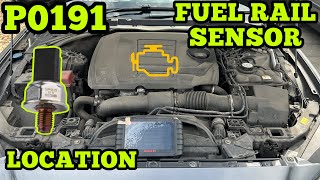
- Inspect the wiring and electrical connector for the fuel rail pressure sensor for any signs of damage, corrosion, or loose connections. The connector is on the end of the high-pressure fuel rail, accessible after removing the engine cover. 🎬 See this walkthrough for locating and replacing the sensor.
- If the sensor readings are illogical and the wiring is intact, the fuel rail pressure sensor is the primary suspect and should be replaced.
- As a less likely step, perform a smoke test on the intake system to check for air leaks, particularly in the hoses between the turbocharger and the intercooler, and the intercooler and the throttle body.
- As another less likely step, inspect the air intake tube for leaks and inspect/clean the Mass Air Flow (MAF) sensor.
Parts You'll Likely Need
- Fuel Rail Pressure Sensor
(OEM #LR095373, C2Z21970, 8W839F972AA)— This is the most common hardware failure for the P2178/P0191 code combination on this vehicle after a software update has been ruled out.
Trusted brands: Genuine Land Rover, Bosch (Part #0261545074)
OEM price range: $80-$150
Aftermarket price range: $50-$120
Related Codes That Often Appear With This One
- P0191-85 — This code for 'Fuel Rail Pressure Sensor Circuit Range/Performance' is directly linked to P2178 in Land Rover TSBs. P2178 is often a symptom of the problem causing P0191. 🎬 Watch: Understanding the P0191 fuel rail pressure sensor code. [SSM74093, SSM73959.2, 4, 19]
- P168F-00 — This manufacturer-specific code is also mentioned in TSBs alongside P0191 and P2178 and can relate to a discrepancy in the fuel control system. [SSM74093, SSM73959.2, 4]
- P144C-00 — Listed as another potential accompanying code in TSBs related to reduced performance and fuel pressure issues. [SSM74093, SSM73959.2, 4]
Technical Service Bulletins (TSBs) & Recalls
- SSM74093: Links reduced performance with DTC P0191-85 and notes that P2178-00 may also be stored.
- SSM73959.2: Repeats the information from SSM74093, confirming the link between reduced performance, P0191-85, and P2178-00.
- LTB01245NAS3: Specifically for P0191-85, it identifies an incorrect PCM calibration as a cause, which is the root of the P2178 code in many cases for the 2018 2.0L Ingenium engine.
Platform-Specific Known Issues
- A known software bug in the Powertrain Control Module (PCM) can cause P0191-85 and, consequently, P2178 to be stored incorrectly. This is documented in TSB LTB01245NAS3.
- TSBs SSM74093 and SSM73959.2 directly link customer complaints of 'reduced performance' with codes P0191-85 and P2178-00, confirming they are related issues that often require a software update or sensor replacement. [SSM74093, SSM73959.2, 10]
Mechanic-Grade Diagnostic Values
- Fuel Rail Pressure Sensor Signal Voltage (Key On, Engine Off) — expected: ~0.5V. Failure: Voltage is 0V, 5V, or significantly different, indicating a sensor or wiring fault.
- Fuel Rail Pressure Sensor 5V Reference from PCM — expected: 4.8V - 5.2V. Failure: Voltage is 0V or significantly below 4.8V, indicating an open or short in the reference circuit.
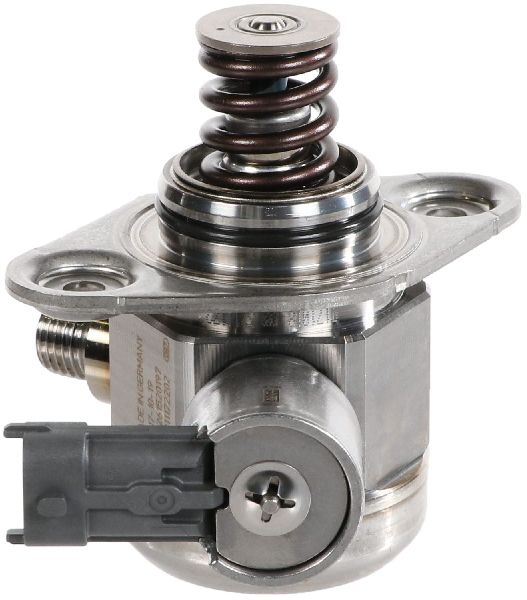
- High Pressure Fuel System at Idle — expected: ~40 bar (~580 PSI). Failure: Pressure is significantly lower or excessively high, pointing to a pump or sensor issue.
- Total Fuel Trim (Short Term + Long Term) — expected: Within +/- 10%. Failure: Consistently exceeds -25%, indicating the PCM is commanding a major reduction in fuel to combat a rich condition.
Hidden / Shadow Codes Worth Checking
- P2178-00: System Too Rich Off Idle Bank 1 - No sub type information. This indicates it is often a secondary, more general code triggered as a result of a primary fault like P0191-85. (see via JLR SDD or Pathfinder diagnostic system.)
Scan Tool Commands That Help
- JLR Pathfinder/SDD: Configure existing module - Powertrain Control Module — This is the specific function used to perform the software update required by TSBs to fix the root cause of the P0191/P2178 fault.
- JLR Pathfinder/SDD: Reset Learned Values / Clear Adaptations — After replacing a fuel system component like the fuel rail pressure sensor, this function should be used to erase the old long-term fuel trim values, forcing the PCM to relearn with the new part.
- JLR Pathfinder: Datalogger - Fuel Rail Pressure — To graphically monitor fuel rail pressure in real-time during idle, acceleration, and steady RPMs to spot dropouts or instability that confirm a sensor or pump issue.
Wiring & Ground Locations
- Fuel Rail Pressure Sensor Connector — On the end of the high-pressure fuel rail, visible after removing the main plastic engine cover.. This connector and its wiring are a primary point of failure. Inspecting for corrosion, damage, or loose pins is a critical step before replacing the sensor itself.
- Main Drivetrain to Chassis Ground Strap — Connects from the right front body frame (near the lower control arm) to the engine/transmission mounting area.. Corrosion on this main ground can cause high resistance and lead to a variety of unpredictable electrical faults and sensor reading errors, including those that could trigger fuel system codes.
Real Owner Repair Stories
- Reddit user in r/RangeRover (2019 Range Rover Velar 2.0L Petrol) — Code P2187 (Too Lean at Bank 1), LTFT at +25%, very poor fuel economy (12-13 MPG city).
❌ Tried (didn't work) Checking O2, MAP, and MAF sensor readings, which all appeared normal.
✅ What actually fixed it The user found a vacuum leak at the PCV breather box. Replacing the PCV assembly and performing a PCM reset resolved the issue, bringing long-term fuel trims back near zero and smoothing the idle. - iCarsoft User Example via Go-Parts (Jaguar XF with 2.0L Petrol (same engine family)) — Limp mode, hesitation, and code P0191.
❌ Tried (didn't work) N/A, went straight to targeted diagnosis.
✅ What actually fixed it After inspecting the wiring and finding no damage, the owner replaced the fuel rail pressure sensor with an OEM part and cleared the codes, which resolved all symptoms immediately.
OEM Part Supersession History
aj813066, aj813639→AJ813994— Standard part revision and consolidation by the manufacturer for a related fuel rail pressure sensor used on similar JLR models.
Helpful Videos
We Have This Part in Stock




The information in this article is provided for general reference and educational purposes only. Vehicle specifications, procedures, and part compatibility can vary by production date, trim level, and region. Always consult your vehicle's factory service manual and verify part numbers before purchasing or performing repairs. Safety-critical components such as airbags, seat belts, and braking systems should be installed by a qualified professional.
- Land Rover RANGE ROVER VELAR:
- 🎬 Helpful Videos
- 🛍️ Shop This Part
- What's Unique About the 2018-2018 Land Rover RANGE ROVER VELAR
- Diagnostic Flowchart
- Symptoms You May Notice
- Most Likely Causes
- Rare But Worth Checking
- Diagnosis Steps
- Parts You'll Likely Need
- Related Codes That Often Appear With This One
- Technical Service Bulletins (TSBs) & Recalls
- Platform-Specific Known Issues
- Mechanic-Grade Diagnostic Values
- Hidden / Shadow Codes Worth Checking
- Scan Tool Commands That Help
- Wiring & Ground Locations
- Real Owner Repair Stories
- OEM Part Supersession History
- 🎟️ Get 5% Off