

P2178 on 2017-2019 Jaguar XE: System Too Rich Off Idle Causes and Fixes
On a 2017-2019 Jaguar XE with the 2.0L gas engine, code P2178 is most often caused by a faulty fuel rail pressure sensor, especially if it appears with code P0191. This is a known issue documented in Jaguar Technical Service Bulletins (TSBs). Replacing the sensor (Part No. AJ813994 or C2Z22844) is the common fix, with the part costing between $50 and $150.
- P2178 means the engine is running with too much fuel on Bank 1 when you are accelerating lightly.
- For the 2017-2019 Jaguar XE, this code is very often accompanied by code P0191.
- If you have both P2178 and P0191, the most probable cause is a faulty fuel rail pressure sensor.
- Other potential causes include a bad upstream oxygen sensor or a dirty MAF sensor.
- Ignoring this code can lead to poor performance, bad fuel mileage, and eventual damage to the catalytic converter.
What's Unique About the 2017-2019 Jaguar XE

For the 2017-2019 Jaguar XE, particularly with the 2.0L Ingenium gas engine, P2178 is frequently not an isolated code. Manufacturer technical service bulletins (TSBs) like SSM74092 show it often appears alongside P0191, which points directly to a problem with the fuel rail pressure sensor. This strong correlation suggests that the fuel pressure monitoring system is a common point of failure leading to this rich condition, distinguishing it from other vehicles where the primary cause might be an oxygen sensor or MAF sensor. This issue is also seen in platform mates like the Jaguar F-Pace and Land Rover Discovery Sport which share the same engine.
Diagnostic Flowchart
Tap your situation to follow the diagnostic path that matches what you're seeing on this vehicle.
Symptoms You May Notice
- Reduced engine performance or 'limp mode'
- Check Engine Light is on
- Engine hesitation, chugging, or stuttering during acceleration. 🎬 Watch: Fixing sluggish acceleration and the P2178 rich condition code.
- Rough running or misfiring
- Decreased fuel economy
- Smell of gasoline or black smoke from the exhaust
- Engine may stall, especially after starting.
- Replacing the oxygen sensor when the actual fault is the fuel rail pressure sensor. The oxygen sensor correctly reports a rich condition, but it is not the cause of it. This is especially common when P0191 is also present.
- Replacing the fuel rail pressure sensor when the root cause is a failing fuel pump or clogged filter that is causing erratic pressure.
Most Likely Causes

- Faulty Fuel Rail Pressure Sensor 🔴 High Probability Jaguar has issued multiple Technical Service Bulletins (e.g., SSM74092, SSM73960.2) that directly link P2178 with fuel rail pressure sensor code P0191, indicating a known issue. The sensor provides erratic or incorrect readings, causing the ECU to command an incorrect fuel mixture.
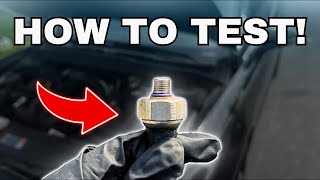
How to confirm: Scan for other codes. If P0191 is present, this is the most likely cause. Use a scan tool to monitor live fuel rail pressure data; if the readings are erratic, do not respond to RPM changes, or don't match specifications, the sensor is likely bad. 🎬 See this guide on how to test a fuel pressure sensor. Visually inspect the sensor's wiring and connector for damage or corrosion first.
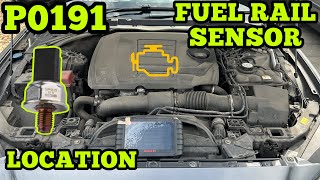
Typical fix: Replace the fuel rail pressure sensor. It is located on the fuel rail at the top of the engine and is typically secured by a single bolt. 🎬 Watch: How to locate and replace the fuel rail pressure sensor. After replacement, clear the fault codes.
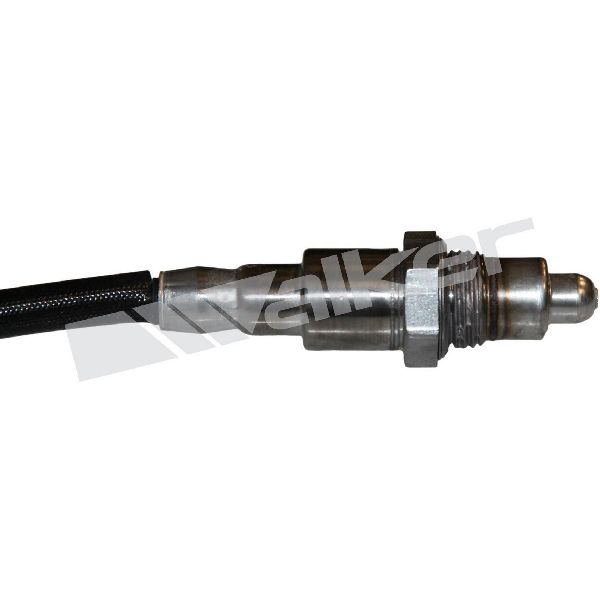
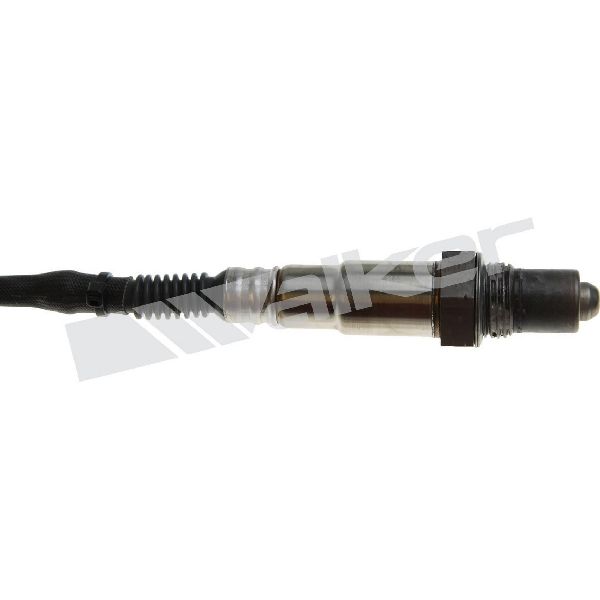
Est. part cost: $50 - $150 - Faulty Upstream Oxygen Sensor (Bank 1) 🟡 Medium Probability Oxygen sensors are wear-and-tear items that can fail and send incorrect readings, tricking the ECM into adding too much fuel. It may get 'stuck' in a high voltage state, falsely reporting a rich condition.
How to confirm: Use a scan tool to observe the live data for the Bank 1 Sensor 1 oxygen sensor. A healthy sensor's voltage should switch rapidly between approximately 0.1V and 0.9V. If it is stuck high (e.g., above 0.8V) or is slow to respond, it needs replacement. On the 2.0L Ingenium engine, Bank 1 is the only bank, and Sensor 1 is the upstream sensor before the catalytic converter.
Typical fix: Replace the Bank 1 upstream oxygen sensor. On the 2.0L engine, this is the sensor located on the exhaust manifold before the catalytic converter.
Est. part cost: $80 - $200 - Dirty or Faulty Mass Airflow (MAF) Sensor 🟡 Medium Probability The MAF sensor measures the amount of air entering the engine. If it's dirty with oil or debris, it can under-report airflow, causing the ECM to calculate an overly rich fuel mixture.
How to confirm: Inspect the MAF sensor element for dirt or contamination. You can try cleaning it with a dedicated MAF sensor cleaner. If the problem persists, monitor the MAF reading (g/s) with a scan tool to see if it increases smoothly with RPMs and matches specifications.
Typical fix: Clean the MAF sensor with a specialized cleaner. Do not touch the delicate sensor wires. If cleaning doesn't resolve the issue, replace the MAF sensor unit.
Est. part cost: $150 - $400 - Leaking Fuel Injector(s) ⚪ Low Probability A fuel injector can get stuck partially open or leak, allowing excess fuel to enter a cylinder and creating a rich condition on that bank.
How to confirm: This is more difficult to diagnose. A professional may perform a fuel pressure leak-down test or remove the fuel rail and injectors to visually check for leaks while the system is pressurized. Another sign can be a fuel-fouled spark plug on one cylinder.
Typical fix: Replace the leaking fuel injector(s). It is often recommended to replace them as a set or at least replace the seals on all injectors on that rail.
Est. part cost: $150 - $450 per injector
Rare But Worth Checking
- Leaking EVAP Purge Valve:
- Leaking Turbocharger Intake Hose:
Diagnosis Steps

- Connect an OBD-II scanner and check for any other stored codes. Pay close attention to P0191, as this is a major clue.
- Review the freeze frame data to see the engine conditions (RPM, load, temperature) when the code was set.
- Using the scanner's live data function, monitor the short-term and long-term fuel trims for Bank 1. For a rich code, you should see significant negative values (e.g., -10% or more, approaching -25%) as the ECM tries to remove fuel.
- Monitor the live data for the Fuel Rail Pressure sensor. Compare the readings to the manufacturer's specifications at idle and under load. Erratic or out-of-spec readings point to a bad sensor.
- Inspect the Bank 1, Sensor 1 (upstream) oxygen sensor's live data. Verify it is switching correctly (0.1V-0.9V) and not stuck in a rich reading (stuck high >0.8V).
- Visually inspect the air intake system from the air filter to the throttle body for any blockages or cracks. Check the air filter itself.
- Perform a visual inspection of the MAF sensor for contamination. If accessible, clean it with MAF sensor cleaner and re-evaluate.
- If the above steps do not reveal the cause, perform a smoke test on the intake manifold and vacuum lines to check for hidden leaks.
- If other causes are ruled out, investigate potential leaking fuel injectors or issues with the fuel pressure regulator, which may require a fuel pressure leak-down test.
Parts You'll Likely Need
- Fuel Rail Pressure Sensor
(OEM #AJ813994, C2Z22844)— This is the most likely cause based on Jaguar's own technical service bulletins that link P2178 with P0191.
Trusted brands: Bosch, Jaguar (OEM), Duralast
OEM price range: $100-$200
Aftermarket price range: $50-$150 - Upstream Oxygen Sensor (Bank 1)
(OEM #T2H3281)— A faulty oxygen sensor is a common cause for any fuel trim code. It may fail and incorrectly report a rich condition, or fail to report a lean condition correctly.
Trusted brands: Bosch, Denso, NTK
OEM price range: $150-$250
Aftermarket price range: $80-$200 - Mass Airflow Sensor
(OEM #T2R26101, T2H7707)— A contaminated or failed MAF sensor can under-report airflow, causing the ECU to command an overly rich fuel mixture.
Trusted brands: Bosch, Valeo, Delphi
OEM price range: $200-$300
Aftermarket price range: $150-$250
Related Codes That Often Appear With This One
- P0191 — This code for 'Fuel Rail Pressure Sensor Circuit Range/Performance' is frequently cited in Jaguar TSBs alongside P2178, pointing to the sensor as the root cause.
- P0299 — A TSB mentions this 'Turbocharger/Supercharger Underboost' code can appear with P2178, suggesting an issue in the forced induction system (like a boost leak) could be affecting the air-fuel ratio.
- P168F — Mentioned in TSBs with P2178, though its specific meaning is manufacturer-defined. TSB SSM74092 links it with the P0191 fault, suggesting it's part of the same fault cascade.
- P2187 — System Too Lean at Idle. Seeing both a rich code (P2178) and a lean code (P2187) can point towards a confusing issue like a vacuum leak or faulty sensor giving contradictory readings under different engine loads.
Technical Service Bulletins (TSBs) & Recalls

- SSM74092: Notes P2178 can be stored with P0191-85 due to reduced performance. Also mentions codes P168F-00 and P144C-00 may be present.
- SSM73671: Defines P2178-00 as 'System Too Rich Off Idle Bank 1' and lists other potential accompanying codes like P0299 (Underboost).
- SSM73960.2: Repeats the information from SSM74092, linking P2178 with P0191, reinforcing this as a known pattern.
Platform-Specific Known Issues
- TSB #SSM74092 and #SSM73960.2 note that customers may report reduced performance, and code P2178-00 may be stored along with P0191-85 (Fuel Rail Pressure Sensor). This strongly indicates the sensor is the intended first part to check.
- TSB #SSM73671 also lists P2178-00 as 'System Too Rich Off Idle Bank 1' and shows it can be accompanied by other codes like P0299 (Underboost), pointing to potential turbo intake leaks.
- Owner experiences on forums frequently describe a 'chugging' or hesitation that is temporarily resolved by restarting the car, which is a classic symptom of a sensor providing faulty data that gets reset on an ignition cycle.
Mechanic-Grade Diagnostic Values
- High-Pressure Fuel Rail at Idle (GDI) — expected: ~40 bar (~580 PSI). Failure: Pressure is significantly lower (e.g., 4.5 bar) or does not hold steady, indicating a high-pressure system fault.
- Fuel Rail Pressure Sensor Supply Voltage — expected: 5V. Failure: No voltage or significantly lower voltage indicates a wiring or PCM issue.
- Fuel Rail Pressure Sensor Signal Voltage (Connector Unplugged, KOEO) — expected: Should be low, near 0V.. Failure: Reading 5V on the signal wire suggests a short to power in the harness.
- Engine Ground Voltage Drop (During Cranking) — expected: Well under 0.5V (500mV). Failure: A reading higher than 0.5V indicates a poor ground connection, which can cause erratic sensor behavior.
- Low-Side Fuel Pump Commanded Shutdown — expected: N/A. Failure: The PCM will send a 75% PWM duty cycle signal to the Fuel Pump Driver Module to command a shutdown, for instance in an over-pressure event.
Hidden / Shadow Codes Worth Checking
- P2178-00: The '-00' is a symptom byte indicating 'No sub type information' or a general failure. This means the fault is not specific to a circuit being high, low, or intermittent, but rather that the overall condition was met. (see via Visible on most professional scan tools, including JLR SDD/Pathfinder. It is referenced in official TSBs.)
Scan Tool Commands That Help

- JLR SDD/Pathfinder, iCarsoft, iLand, Autologic: Engine and Transmission Adaptation Reset (or 'Clear Adaptations') — This function should be used after replacing fuel system components like the fuel rail pressure sensor, MAF sensor, or O2 sensors. It erases the long-term fuel trim values and other learned adjustments, forcing the ECU to create a new baseline with the new parts, which can resolve persistent running issues.
- JLR SDD/Pathfinder, iCarsoft, iLand, Autologic: Live Data > Transmission Oil Temperature — While not directly for P2178, if fuel pressure issues are suspected to be part of a larger drivability problem, ensuring correct transmission fluid level is key. The level can only be accurately checked at a specific fluid temperature (e.g., 40-50°C), which must be monitored with a scan tool.
Wiring & Ground Locations
- Main Engine Ground Strap — A braided steel strap located on the right (passenger) side of the vehicle, underneath. It connects the transmission bell housing area to the chassis frame rail, often near the starter motor.. A poor engine ground can cause erratic voltage and faulty readings from critical engine sensors, including the fuel rail pressure sensor, leading to incorrect fuel calculations and codes like P2178. Technicians emphasize thoroughly cleaning the mounting surfaces.
- Fuel Rail Pressure Sensor Connector — On top of the engine on the high-pressure fuel rail, easily visible after removing the plastic engine cover.. This is the primary connection point for testing the sensor and its wiring. It is a 3-pin connector, typically with a 5V supply, a signal wire, and a ground.
Real Owner Repair Stories
- JaguarForums user (Jaguar (model not specified, but symptoms match)) — Car getting progressively worse, starting but then dying after 20-30 seconds with code P0191.
❌ Tried (didn't work) Replaced fuel filter, Replaced fuel pressure sensor, Replaced fuel pump
✅ What actually fixed it The final fix was repairing the earth (ground) supply wire going to the fuel pressure sensor. The fix was not immediate but the car began running correctly after a few drive cycles. - iCarsoft User Example (Jaguar XF 2.0L Petrol) — Limp mode, engine warning light, hesitation with code P0191.
❌ Tried (didn't work) Visual inspection of wiring (found no damage)
✅ What actually fixed it Replaced the fuel rail pressure sensor with an OEM part and cleared the codes using an iCarsoft scanner. The car returned to normal immediately. - YouTube user 'Jaguar Audi Land Rover rough idle Code P2178 P2187 (FIXED)' (2015 Jaguar XF 2.0L Turbo) — Rough idle, stalling, setting both P2178 (System Too Rich) and P2187 (System Too Lean) simultaneously.
❌ Tried (didn't work) Initial checks of hoses, wires, MAF sensor, and purge valve.
✅ What actually fixed it Found a large tear in the turbocharger intercooler hose. Replacing the damaged hose resolved all symptoms and codes.
"I Checked Everything" — The Actual Cause
- In cases where a smoke test for vacuum leaks comes back clean, the root cause can be purely electrical. A faulty ground connection to the fuel rail pressure sensor can cause it to send incorrect data, leading to a rich condition, but this will not be found with a smoke test.
When the Usual Fixes Don't Work
- While the fuel rail pressure sensor is the most common cause, especially with code P0191, it is not the only cause. In one documented case involving a 2.0L Turbo engine, the vehicle presented with both rich (P2178) and lean (P2187) codes. After checking common fuel system components, the actual cause was found to be a large tear in a turbocharger intercooler hose, which is an unmetered air leak. This highlights the need to perform a full diagnostic check, including a smoke test of the intake system, even when the primary code points towards a fuel system fault.
OEM Part Supersession History
aj813066, aj813639→AJ813994— Standard part revision and consolidation by the manufacturer.
Helpful Videos
Used OEM Parts in Stock


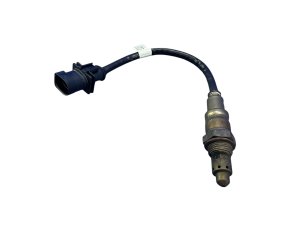
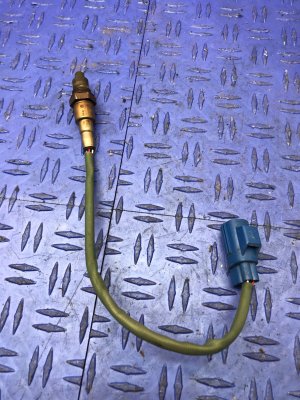

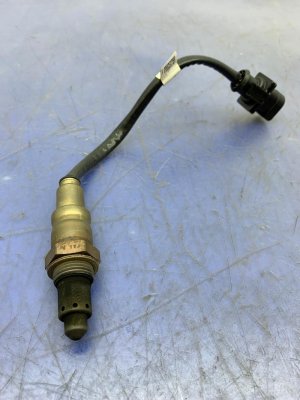
New Aftermarket Parts Available
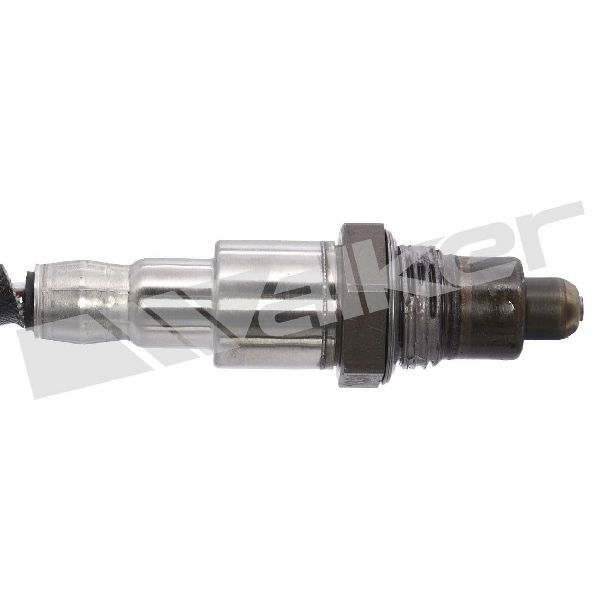

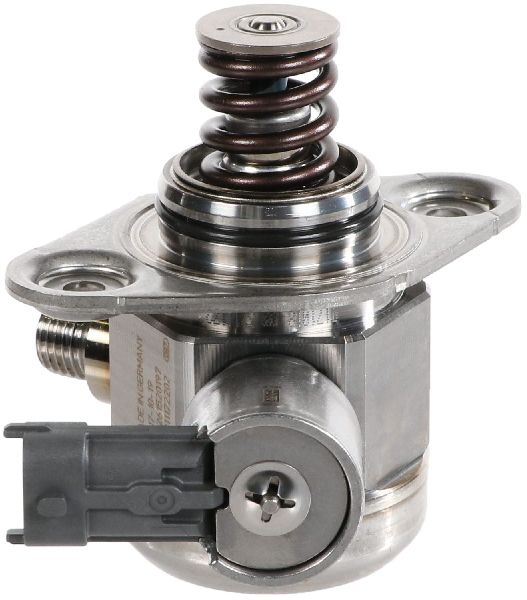


The information in this article is provided for general reference and educational purposes only. Vehicle specifications, procedures, and part compatibility can vary by production date, trim level, and region. Always consult your vehicle's factory service manual and verify part numbers before purchasing or performing repairs. Safety-critical components such as airbags, seat belts, and braking systems should be installed by a qualified professional.
- Jaguar XE:
- 🎬 Helpful Videos
- 🛍️ Shop This Part
- What's Unique About the 2017-2019 Jaguar XE
- Diagnostic Flowchart
- Symptoms You May Notice
- Most Likely Causes
- Rare But Worth Checking
- Diagnosis Steps
- Parts You'll Likely Need
- Related Codes That Often Appear With This One
- Technical Service Bulletins (TSBs) & Recalls
- Platform-Specific Known Issues
- Mechanic-Grade Diagnostic Values
- Hidden / Shadow Codes Worth Checking
- Scan Tool Commands That Help
- Wiring & Ground Locations
- Real Owner Repair Stories
- "I Checked Everything" — The Actual Cause
- When the Usual Fixes Don't Work
- OEM Part Supersession History
- 🎟️ Get 5% Off