

P2178 on 2017-2019 Jaguar F-PACE: Causes and Fixes for Rich Fuel Mixture
On a 2017-2019 Jaguar F-PACE, particularly those with the 2.0L Ingenium gas engine, code P2178 is most often caused by a faulty fuel rail pressure sensor. This issue is highly probable if the code appears alongside P0191. This specific failure pattern is well-documented in Jaguar Technical Service Bulletins (TSBs). The standard repair involves replacing the sensor, with the part typically costing between $50 and $150.
- P2178 means the engine is running too rich (too much fuel) on Bank 1 when accelerating lightly.
- For the 2017-2019 F-PACE, the most likely cause is a faulty fuel rail pressure sensor, especially if code P0191 is also present. This is a known issue confirmed by Jaguar TSBs.
- Before replacing any parts, use a scanner to check for all codes. The presence of P0191 should make the fuel pressure sensor your primary suspect.
- Other less likely causes include a dirty MAF sensor, a bad oxygen sensor, or a leaking fuel injector.
- Ignoring this code will lead to poor performance and fuel economy, and can cause expensive damage to the catalytic converter over time.
What's Unique About the 2017-2019 Jaguar F-PACE

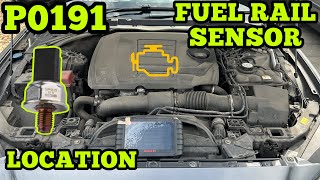
For the 2017-2019 Jaguar F-PACE, especially models with the 2.0L Ingenium and 3.0L V6 engines, P2178 is frequently not an isolated code. Manufacturer technical service bulletins (TSBs) show it often appears alongside P0191, which points directly to a problem with the fuel rail pressure sensor. 🎬 Watch: How to locate and replace the fuel pressure sensor. This strong correlation, documented in TSBs like SSM74092 and SSM73960.2, suggests that the fuel pressure monitoring system is a common point of failure leading to this rich condition. This distinguishes it from other vehicles where the primary cause might be an oxygen or MAF sensor. This issue is also common in platform mates like the Jaguar XE, XF, and Land Rover Range Rover Evoque that share the same engines and fuel systems. Furthermore, TSBs for related platforms indicate that after an air leak is repaired, a persistent P2178 code may be caused by an engine management software error, requiring an ECM update and adaptation reset.
Diagnostic Flowchart

Tap your situation to follow the diagnostic path that matches what you're seeing on this vehicle.
Symptoms You May Notice
- Check Engine Light (MIL) is on
- Reduced engine performance or 'limp mode'
- Poor fuel economy
- Hesitation, chugging, or jerking during acceleration
- Rough or unstable idle
- Smell of gasoline from the exhaust
- Black smoke from the exhaust
- Engine may stall, especially after starting
- Replacing the oxygen sensor first without checking for other codes like P0191. On this platform, the O2 sensor is often just reporting the problem, not causing it.
- Replacing parts without performing a smoke test to check for hidden air leaks in the intake or turbocharger system.
- Replacing hardware for an air leak and not performing an ECM software update and adaptation reset, which may be required to clear the code permanently.
Most Likely Causes

- Faulty Fuel Rail Pressure Sensor 🔴 High Probability Jaguar has issued multiple TSBs (SSM74092, SSM73960.2) that directly link P2178 with fuel rail pressure sensor code P0191, indicating a known weakness. The sensor provides incorrect readings to the ECU, causing it to command an improper, overly rich fuel mixture. This is the most common point of failure for this code on this platform.
How to confirm: Scan for other codes. If P0191 is present with P2178, this is the most likely cause. Use a scan tool to monitor live fuel rail pressure data; if readings are erratic, stuck at a default value (e.g., 55 psi), or don't respond correctly to RPM changes, the sensor is bad. Visually inspect the sensor's wiring and 3-pin connector for damage or corrosion first.
Typical fix: Replace the fuel rail pressure sensor. It is located on the high-pressure fuel rail on top of the engine. After replacement, clear the fault codes. It is highly recommended to also clear the ECM adaptation values using a capable scan tool.
Est. part cost: $50-$150 - Dirty or Faulty Mass Air Flow (MAF) Sensor 🟡 Medium Probability The MAF sensor measures the air entering the engine. If it's dirty from oil (from aftermarket filters) or other contaminants, it can under-report airflow. This causes the ECU to calculate a fuel mixture that is too rich for the actual amount of air entering the cylinders.
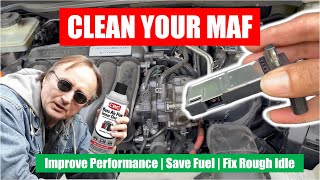
How to confirm: Inspect the MAF sensor element for contamination. Clean it with a dedicated MAF sensor cleaner, spraying the delicate wires without touching them. Monitor MAF readings on a scan tool; they should increase smoothly and proportionally with RPM.
Typical fix: Clean the MAF sensor. If cleaning doesn't resolve the issue or the live data is still incorrect, replace the sensor.
Est. part cost: $100-$250 - Leaking Fuel Injector(s) 🟡 Medium Probability A fuel injector can get stuck partially open or develop a leak, allowing unmetered fuel to drip into a cylinder and create a rich condition. On some Jaguar V6 engines, water ingress from hood vents can corrode injectors, leading to failure.
How to confirm: This is more difficult to confirm without professional tools. A mechanic can perform a fuel pressure leak-down test or an injector balance test. A tell-tale sign can be a single spark plug on Bank 1 that is significantly blacker and more sooty than the others.
Typical fix: Replace the faulty fuel injector(s). It is highly recommended to replace all injectors on the affected bank at the same time, along with their seals.
Est. part cost: $100-$300 per injector - Faulty Upstream Oxygen (O2) Sensor ⚪ Low Probability The O2 sensor (also called an air-fuel ratio sensor) provides the primary feedback for fuel trim. A slow, biased, or failing sensor can incorrectly report a lean condition, causing the ECU to add too much fuel, which ironically leads to a rich condition code. While a common cause on many cars, on this platform it's more often just reporting the rich condition caused by something else.
How to confirm: Use a scan tool to graph the voltage of the Bank 1, Sensor 1 O2 sensor. A healthy sensor's voltage should fluctuate rapidly between approximately 0.1 and 0.9 volts. If it is stuck, biased, or very slow to respond, it is likely faulty.
Typical fix: Replace the Bank 1 upstream oxygen sensor. A special slotted socket is often required.
Est. part cost: $80-$200
Rare But Worth Checking
- Cracked Air Intake Duct / Boost Leak: A significant, unmetered air leak in the intake system *after* the MAF sensor (e.g., a cracked intercooler hose) can cause turbulent airflow that confuses the sensors, leading to incorrect fuel calculations. In one documented case on a JLR 2.0L Turbo, a large tear in a turbocharger intercooler hose was the root cause of both rich and lean codes. A smoke test is the best way to find such leaks.
- Stuck Open EVAP Purge Valve: If the canister purge valve sticks open, it can allow unmetered fuel vapors from the charcoal canister to enter the intake manifold at the wrong time, creating a rich condition that the ECU struggles to compensate for.
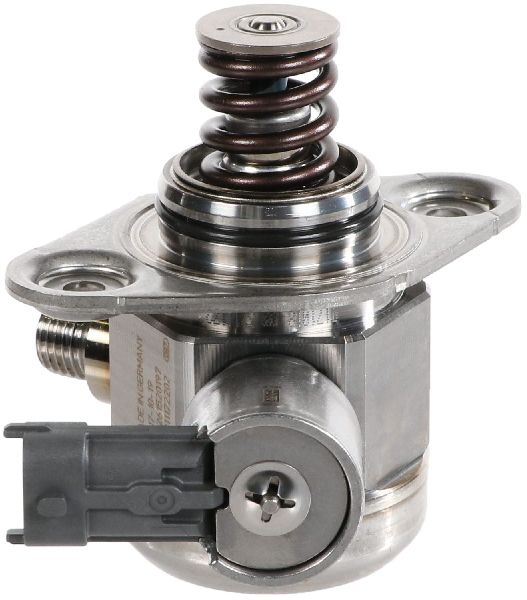
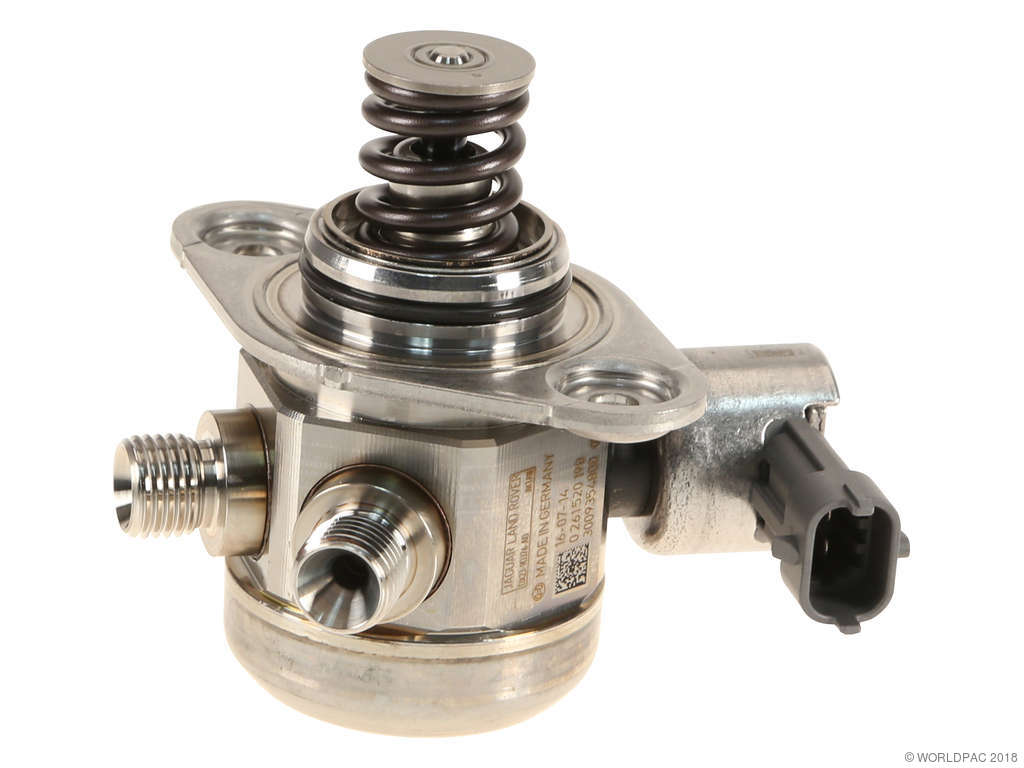
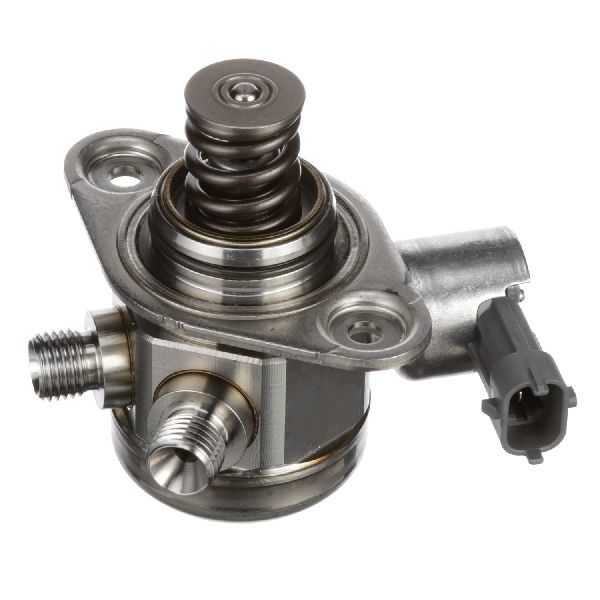
- High-Pressure Fuel Pump (HPFP) Failure: While the sensor is more common, a failing HPFP can also cause this issue, especially on platform mates like the Range Rover Evoque. A major failure can lead to fuel contaminating the engine oil, which can cause catastrophic engine damage. This is a less common but very severe potential cause.
- Engine Control Module (ECM) Software Error: Jaguar has issued TSBs for related models indicating that after an intake air leak is repaired, a persistent P2178 code can be caused by a software error. The fix is to update the ECM software and clear adaptations using a dealer-level tool like SDD.
Diagnosis Steps

- Read all fault codes with an OBD-II scanner. The presence of P0191 alongside P2178 is a critical clue pointing to the fuel rail pressure sensor.
- Analyze freeze frame data to see the exact engine conditions (RPM, load, temperature) when the code was set.
- Using the scanner's live data, monitor Short Term Fuel Trim (STFT) and Long Term Fuel Trim (LTFT) for Bank 1. For P2178, you will see highly negative values (e.g., -15% or more) as the ECU tries to remove fuel.
- If P0191 is present, focus on the fuel rail pressure sensor. Monitor its readings via live data; check for erratic values or a reading stuck at a default pressure. Compare actual pressure to desired pressure; they should track closely.
- If no other codes are present, perform a smoke test on the entire air intake system, from the airbox to the throttle body, including all turbocharger/supercharger hoses, to check for unmetered air leaks.
- Inspect and clean the Mass Air Flow (MAF) sensor using a dedicated cleaner. Do not touch the sensor wires.
- Monitor the Bank 1 upstream O2 sensor's voltage. It should fluctuate rapidly between approximately 0.1 and 0.9 volts. If it's stuck or slow, it may be faulty, but confirm other causes are ruled out first.
- If other causes are ruled out, investigate for a leaking fuel injector (via injector balance test or spark plug inspection) or a stuck EVAP purge valve.
- If any hardware (like an intake hose) was repaired, and the code persists, check with a dealer for a potential Engine Control Module (ECM) software update, as specified in TSBs for similar platforms.
Parts You'll Likely Need
- Fuel Rail Pressure Sensor
(OEM #AJ813994, C2Z22844)— This is the most common cause for P2178 on this specific vehicle, especially when paired with P0191, as documented by Jaguar TSBs. This part number also supersedes previous versions AJ813066 and AJ813639.
Trusted brands: Bosch, Jaguar (OEM), Standard Motor Products
Related Codes That Often Appear With This One
- P0191 — This code for 'Fuel Rail Pressure Sensor Circuit Range/Performance' is the most significant related code. Jaguar TSBs SSM74092 and SSM73960.2 directly link it to P2178, making the fuel pressure sensor the primary suspect when they appear together.
- P168F — A manufacturer-defined code mentioned in TSBs alongside P2178 and P0191. TSB SSM74092 links it with the P0191 fault, suggesting it's part of the same fault cascade related to fuel pressure monitoring.
- P144C — Also mentioned in TSBs, this code can be related to the fuel system or air intake issues that contribute to the rich condition. TSBs for other Jaguar models state this code can be caused by an EMS software error.
- P0299 — This 'Turbocharger/Supercharger Underboost' code was listed with P2178 in TSB SSM73671. A significant air leak causing an underboost condition could also affect air/fuel ratio calculations, leading to a rich code.
Technical Service Bulletins (TSBs) & Recalls
- SSM74092
- SSM73960.2
- SSM73671
- SSM73959.2 (for Evoque)
- SSM74093 (for Evoque)
Platform-Specific Known Issues
- Technical Service Bulletin #SSM74092 and #SSM73960.2 state that customers may report reduced performance with code P0191-85 stored, and that P2178-00 may be stored as a related code. This directly instructs technicians to investigate the fuel pressure system.
- A user on JaguarForums.com with a P0191 code noted that after replacing the fuel pump and sensor, the code persisted on restart, causing a stumble before recovering, highlighting potential wiring or ECU communication issues even after parts are replaced.
- On the related 3.0L V6 engine, a known issue is a plastic Y-shaped coolant pipe under the supercharger that can crack and leak. While not a direct cause of P2178, it shows a pattern of plastic components in the engine bay becoming brittle and failing, which could apply to intake ducting as well.
Mechanic-Grade Diagnostic Values
- High-Pressure Fuel System (Direct Injection) — expected: Approximately 500-600 PSI at idle, rising to over 2,100 PSI at startup and up to 2,900 PSI under load (values from similar 3.0L SC engine).. Failure: Pressure that is significantly lower than commanded pressure under load, is erratic, or does not respond to engine RPM changes.
- Long-Term Fuel Trim (LTFT) - Bank 1 — expected: Close to 0% (+/- 10%) at idle and under light load.. Failure: Consistently negative values, such as -15% to -25%, as the ECU attempts to remove excess fuel.
- Fuel Rail Pressure Sensor Voltage (at connector) — expected: 5V reference from the ECU on one pin.. Failure: Incorrect voltage or no voltage may indicate a wiring or ECU issue rather than a sensor failure.
Scan Tool Commands That Help

- Jaguar SDD (Symptom Driven Diagnostics) / Pathfinder: Configure existing module - Powertrain control module — This is used to apply a software update to the ECM. TSBs for similar JLR models indicate this may be required to fix a persistent P2178 code, especially after an air intake leak has been repaired.
- Jaguar SDD / Pathfinder / Capable Aftermarket Scanners: Clear Adaptations / Reset Fuel Trim Adaptations — After replacing a major fuel or air system component (e.g., fuel rail pressure sensor, MAF sensor, fuel injectors), this function erases the long-term learned values, forcing the ECM to create a new fuel map with the new part, which can resolve persistent rich/lean issues.
- Manual Procedure (No Scan Tool): Gearbox / Transmission Adaptation Reset — While not directly for this engine code, this resets the transmission's learned shift patterns from a previous driver. The procedure is: Ignition ON (engine off), press accelerator to floor for 15 seconds, ignition OFF, release accelerator, wait 2 minutes, then start and drive. This can improve overall drivability after purchase.
Wiring & Ground Locations
- Fuel Rail Pressure Sensor Connector — On the high-pressure fuel rail, top of the engine.. A damaged connector or incorrect wiring on a replacement pigtail will cause code P0191 and subsequently P2178. According to a user forum, the correct wire order for a replacement pigtail is Blue/Black, Black/Blue, Yellow. A separate wiring link harness is also available under part number JDE41378.
Real Owner Repair Stories
- Jaguar Forums user (2015 Jaguar XF 2.0L Turbo (shared Ingenium engine family)) — Rough idle, stalling, codes P2178 (System Too Rich) and P2187 (System Too Lean) appearing at the same time.
❌ Tried (didn't work) Initial checks of hoses, MAF sensor, and purge valve.
✅ What actually fixed it A large tear was found in the intercooler hose running from the turbo to the intercooler. This unmetered air leak after the turbo was the root cause of the conflicting fuel trim codes. - Jaguar Forums user (Jaguar XFR (5.0L SC engine, similar direct injection system)) — Engine sputtering at high RPM (5800-6200), intermittent P0087 (Fuel Rail Pressure Too Low).
❌ Tried (didn't work) Replacing the in-tank low-pressure fuel pump and external fuel filter did not resolve the high-RPM issue.
✅ What actually fixed it The user logged fuel rail pressure with a scan tool and saw it was only 525-550 PSI at wide-open throttle, far below the target. The final resolution was replacing the high-pressure fuel pump(s). This highlights the importance of logging fuel pressure data under the specific conditions where the fault occurs.
"I Checked Everything" — The Actual Cause
- On a similar JLR 2.0L turbo engine, a smoke test of the vacuum system might come back clean, but the actual cause for conflicting rich/lean codes (including P2178) was a large tear in a pressurized intercooler hose. These leaks on the boost side of the system may not be found with a low-pressure smoke test and are better found by visual inspection or a pressurized test.
When the Usual Fixes Don't Work
- While the TSBs strongly point to the fuel rail pressure sensor when P2178 is paired with P0191, do not rule out a physical air leak. A real-world repair on a JLR 2.0L engine showed that a torn intercooler hose was the ultimate cause of fuel trim codes. This confirms that a thorough physical inspection of the entire intake path, including pressurized hoses, is critical before replacing sensors.
OEM Part Supersession History
AJ813066, AJ813639→AJ813994— Part revision/update by the manufacturer for the Fuel Rail Pressure Sensor.
Helpful Videos

We Have This Part in Stock



The information in this article is provided for general reference and educational purposes only. Vehicle specifications, procedures, and part compatibility can vary by production date, trim level, and region. Always consult your vehicle's factory service manual and verify part numbers before purchasing or performing repairs. Safety-critical components such as airbags, seat belts, and braking systems should be installed by a qualified professional.
- Jaguar F-PACE:
- 🎬 Helpful Videos
- 🛍️ Shop This Part
- What's Unique About the 2017-2019 Jaguar F-PACE
- Diagnostic Flowchart
- Symptoms You May Notice
- Most Likely Causes
- Rare But Worth Checking
- Diagnosis Steps
- Parts You'll Likely Need
- Related Codes That Often Appear With This One
- Technical Service Bulletins (TSBs) & Recalls
- Platform-Specific Known Issues
- Mechanic-Grade Diagnostic Values
- Scan Tool Commands That Help
- Wiring & Ground Locations
- Real Owner Repair Stories
- "I Checked Everything" — The Actual Cause
- When the Usual Fixes Don't Work
- OEM Part Supersession History
- 🎟️ Get 5% Off