

P2176 on 2011-2015 Chevrolet Express: Causes and Fixes for Idle Position Not Learned
On a 2011-2015 Chevy Express, code P2176 almost always points to a dirty or failing electronic throttle body. The most common fix is to thoroughly clean the throttle body bore and plate of carbon buildup and then perform a specific idle relearn procedure. If cleaning and relearning don't resolve the code, the entire throttle body assembly likely needs to be replaced due to internal electronic failure.
- P2176 on a Chevy Express almost always means there is an issue with the electronic throttle body.
- The first and most important diagnostic step is to inspect and thoroughly clean the throttle body of all carbon buildup.
- After cleaning or replacing the throttle body, you MUST perform an idle relearn procedure for the fix to be successful.
- This code will put your van into 'Reduced Engine Power' mode, so it should be addressed immediately for safe operation.
- The issue is so common that GM has issued a Technical Service Bulletin (PIP4578B) related to it.
What's Unique About the 2011-2015 Chevrolet EXPRESS
On these high-mileage GM vans and trucks, P2176 is a very common issue, as acknowledged by GM's own Technical Service Bulletin (TSB) #PIP4578B. The problem is frequently caused by significant carbon buildup inside the throttle body, which physically prevents the throttle plate from closing to its proper minimum position. Over time, the PCM learns to compensate for this buildup; however, after a power loss (like a battery change) or if the buildup becomes too great, the PCM can no longer find the true minimum position, leading it to fail the idle learning process and set the code.
Diagnostic Flowchart
Tap your situation to follow the diagnostic path that matches what you're seeing on this vehicle.
Symptoms You May Notice
- "Reduced Engine Power" message on the dashboard.
- Check Engine Light is on.
- Vehicle may stall, especially when coming to a stop or at a traffic light.
- Rough, surging, or unstable idle, with RPMs wandering between 600-1200 RPM.
- Poor or delayed acceleration.
- Vehicle may not start, or may crank but not fire.
- "Service ESC / Service Traction" message may appear simultaneously.
- Replacing the accelerator pedal position (APP) sensor. While related to the throttle system, the P2176 code specifically points to the throttle body's idle position learning, not the pedal sensor's input.
Most Likely Causes
- Dirty Throttle Body 🔴 High Probability As noted in TSB PIP4578B, carbon buildup from the PCV system is a frequent issue on GM V8 engines of this era, physically blocking the throttle plate from fully closing. The PCM adapts to this over thousands of miles, but a sudden change (like cleaning or battery disconnect) or excessive buildup will trigger the code.
How to confirm: Remove the air intake duct from the throttle body and visually inspect the throttle plate and bore for a thick, black layer of carbon, especially around the edges where the plate seats.
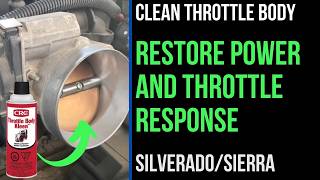
Typical fix: Remove the throttle body from the intake manifold, clean it thoroughly on both sides with a dedicated throttle body cleaner and a soft brush or rag, reinstall it 🎬 Watch: A simple walkthrough for cleaning your GM throttle body. with a new gasket, and perform an idle relearn procedure.
Est. part cost: $5-$20 for cleaner and a gasket. - Failed Throttle Body Assembly 🟡 Medium Probability The internal electronic motor, position sensors (TPS), or plastic gears can fail over time, a known issue on high-mileage vehicles. Extreme cold can also cause the internal grease to stiffen, preventing proper movement and triggering the code. TSB #PIP4578B for high-mileage vehicles points to this component group as a common failure point after cleaning proves ineffective.
How to confirm: If a thorough cleaning and multiple relearn attempts do not fix the code, the throttle body assembly itself is the next likely culprit. A scan tool can monitor desired vs. actual throttle position; a large discrepancy or a reading above 9-10% at idle after cleaning points to a faulty unit.
Typical fix: Replace the entire throttle body assembly with a new unit and perform the idle relearn procedure.
Est. part cost: $150-$350 - Failed Idle Relearn Procedure ⚪ Low Probability This occurs after the battery has been disconnected, replaced, or after the throttle body has been cleaned or replaced, if the proper relearn steps are not followed. The PCM loses its learned values and needs to be recalibrated.
How to confirm: The code appears immediately after servicing the battery or throttle body. The engine may idle very high or stall.
Typical fix: Perform the specific GM idle relearn procedure. While several variations exist, the most common is: Start the engine and let it idle in Park for 3 minutes. Turn the engine off for 60 seconds. Start the engine and let it idle again for 3 minutes. The idle should stabilize. Driving the vehicle above 44 MPH may be required if this fails.
Est. part cost: $0
Rare But Worth Checking
- Vacuum Leak: A significant leak in a vacuum hose or the intake manifold gasket can introduce unmetered air, making it impossible for the PCM to maintain a stable idle and learn the correct throttle position.
- Wiring or Connector Issue: Damage, corrosion, or chafing to the wiring harness or connector at the throttle body can interrupt the signal between it and the PCM. Wiggling the harness near the throttle body connector while the engine is running may trigger the fault, confirming a wiring issue.
- PCM (Powertrain Control Module) Failure: This is very rare, but a faulty PCM can fail to process the signals from the throttle body correctly. This should only be considered after all other possibilities, including wiring, have been exhausted.
Diagnosis Steps
- Scan for all diagnostic trouble codes. Note any other codes that appear with P2176, as they are often related (e.g., P1516, P2101).
- Using a scan tool, observe the live data for Throttle Position (TP) percentage at idle. A reading significantly higher than 3-5% on a warm engine at idle suggests heavy carbon buildup or a mechanical issue. A reading over 9% is a strong failure indicator.
- Disconnect the negative battery terminal.
- Remove the air intake tube from the throttle body.
- Inspect the throttle body bore and plate for heavy carbon buildup. The plate should be almost completely closed at rest.
- If dirty, remove the four 10mm bolts holding the throttle body, disconnect the electrical connector, and take it off the engine.
- Clean the throttle body thoroughly on both sides of the plate using throttle body cleaner and a soft brush or rag. Do not use abrasive materials or aggressively force the butterfly valve.
- Reinstall the throttle body with a new gasket to prevent vacuum leaks.
- Reconnect the battery and perform the GM Idle Relearn Procedure. The most cited method is: Start engine, idle in Park for 3 minutes. Shut engine off for 60 seconds. Restart engine, idle in Park for another 3 minutes.
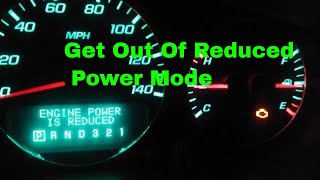
- Clear the codes with a scan tool. Some owners report needing to clear the code while the engine is running to exit limp mode. 🎬 See how to clear codes and exit reduced engine power mode.
- Test drive the vehicle. If the code returns, inspect the wiring harness and connector at the throttle body for any chafing, loose pins, or corrosion.
- If wiring is okay and the code persists after cleaning and relearning, the throttle body assembly is likely faulty and needs replacement.
Parts You'll Likely Need
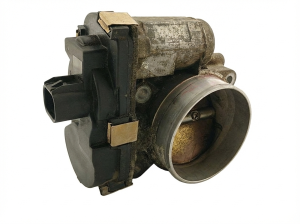
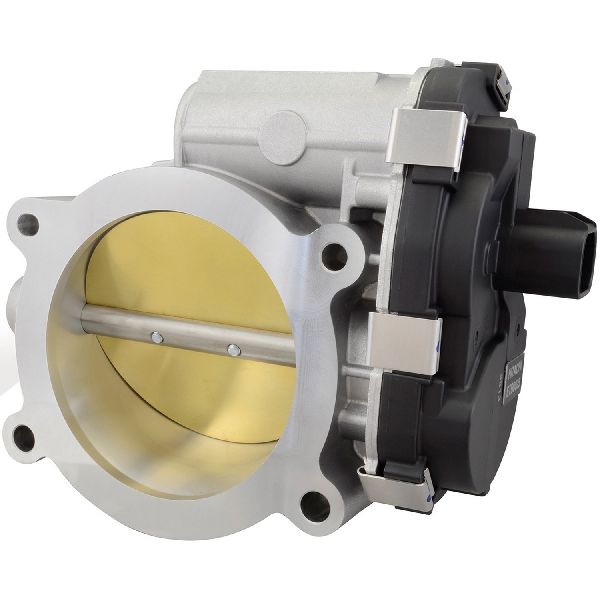
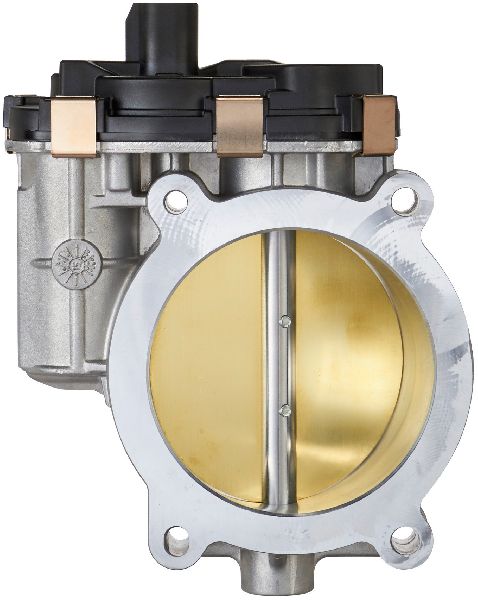
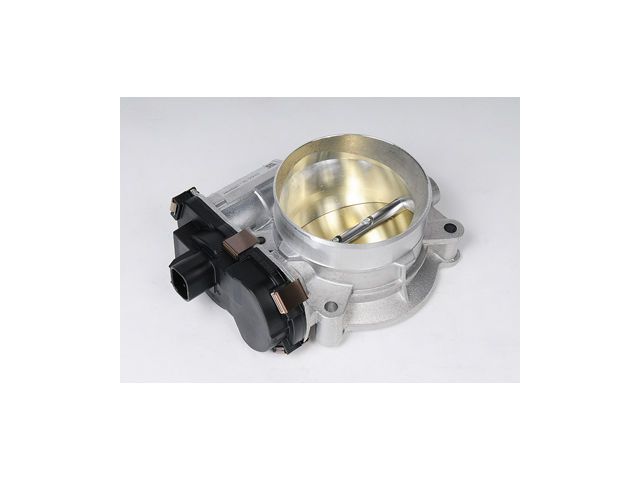
- Throttle Body Assembly
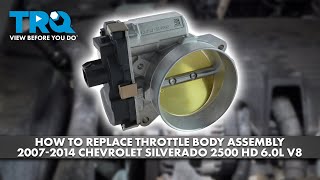
(OEM #ACDelco 217-3428 (Supersedes older numbers, check VIN for exact fitment 🎬 Watch: Step-by-step guide to replacing the entire throttle body assembly.))— This is the most common part to fail if cleaning does not resolve the issue. The internal motor or sensors wear out.
Trusted brands: ACDelco (GM Genuine), Bosch, Hitachi, Dorman
OEM price range: $250-$400
Aftermarket price range: $150-$250 - Throttle Body Gasket
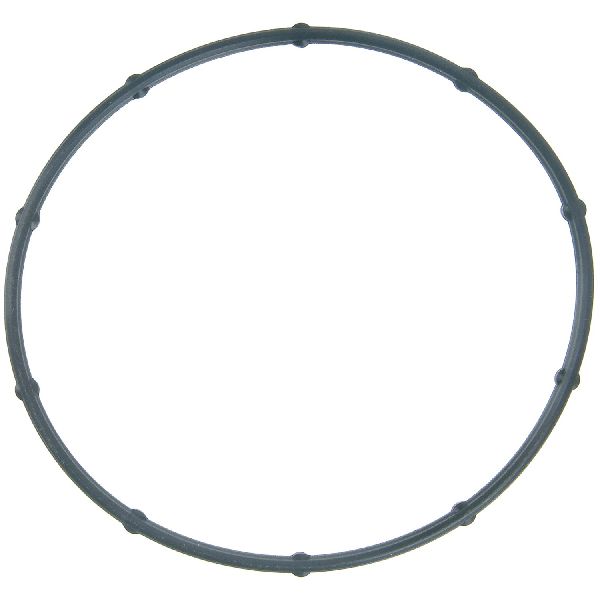
(OEM #Included with some new throttle bodies, but sold separately. Ex: Fel-Pro 61423)— Must be replaced anytime the throttle body is removed to prevent vacuum leaks.
Trusted brands: ACDelco, Fel-Pro, Mahle
OEM price range: $10-$20
Aftermarket price range: $5-$15 - Throttle Body Cleaner — Required for the most common and first-step fix: cleaning the throttle bore and plate.
Trusted brands: CRC, Berryman B-12 Chemtool
Aftermarket price range: $5-$10
Related Codes That Often Appear With This One
- P1516 — Relates to Throttle Actuator Control (TAC) Module Throttle Actuator Position Performance. Often set together when the PCM is confused about the throttle plate's actual vs. commanded position.
- P2101 — Relates to Throttle Actuator Control Motor Circuit Range/Performance, indicating a problem with the motor inside the throttle body.
- P2119 — Relates to Throttle Actuator Control Throttle Body Range/Performance, another code pointing directly at the throttle body's inability to operate within its expected parameters.
- P0068 — Indicates a MAP/MAF - Throttle Position Correlation error, which can be triggered when the PCM sees airflow that doesn't match what it expects for the given throttle angle.
- P0506 / P0507 — Idle Air Control System RPM Lower/Higher Than Expected. These can appear after cleaning a throttle body if an idle relearn is not performed, as the PCM is still using old compensation values.
Technical Service Bulletins (TSBs) & Recalls
- PIP4578B: Mentions idle surge, reduced engine power mode, and DTC P2176 on high mileage vehicles, pointing towards throttle body issues. It explicitly states that as carbon builds, the PCM compensates, and cleaning without an idle learn reset can cause other codes like P0506/P0507.
Platform-Specific Known Issues
- A Technical Service Bulletin (TSB #PIP4578B) was issued for these vehicles concerning idle surge, reduced engine power, and a group of DTCs including P2176, particularly on high-mileage vehicles. This officially acknowledges that carbon buildup is the primary cause, and that an 'idle learn reset' with a scan tool is the recommended procedure after cleaning.
Mechanic-Grade Diagnostic Values
- Throttle Position Sensor 1 (TP1) Voltage at rest — expected: 4.12 - 4.55 V. Failure: Voltage outside this range after a learn procedure indicates a fault.
- Throttle Position Sensor 2 (TP2) Voltage at rest — expected: 0.34 - 0.99 V. Failure: Voltage outside this range after a learn procedure indicates a fault.
- Throttle Position (TP) Percentage at idle (Scan Tool) — expected: Under 9%. Failure: A reading of 16% or higher at idle strongly suggests the throttle plate is not closing due to carbon buildup.
- Throttle Body Idle Airflow Compensation (Scan Tool) — expected: Less than 90%. Failure: A value of 90% or greater indicates a throttle body issue, likely requiring cleaning.
- Battery/System Voltage — expected: ~12.6 V at rest, >13.5 V with engine running. Failure: Low voltage during startup can cause the idle learn procedure to fail and set P2176.
Scan Tool Commands That Help
- GDS2 / Tech 2 / Professional Scan Tool (e.g., Snap-on, Autel): Idle Learn Reset — This function must be used after cleaning or replacing the throttle body to erase the old learned idle values and force the ECM to learn the new correct minimum throttle position. On some tools like Autel, this is found under Service -> Throttle -> GM -> Hot Function -> Engine Control Module -> Idle Learn Reset.
- GDS2 / Tech 2 / Professional Scan Tool: Throttle Sweep Test — This bidirectional test commands the throttle plate through its full range of motion while the scan tool monitors sensor feedback. It is used to confirm if the throttle body motor and sensors are responding correctly to ECM commands.
Wiring & Ground Locations
- Throttle Body Connector (8-pin) — The electrical connector on the electronic throttle body assembly.. Provides power, ground, and signal lines for the throttle actuator motor and the two throttle position sensors. Pin E (LT BLU/BLK) and Pin H (GRY) are 5V reference. Pin B (BLK/WHT) and Pin D (BLK) are low reference (ground). Pin G (DK GRN) is TP Sensor 1 Signal, and Pin F (PPL) is TP Sensor 2 Signal. Pins A (YEL) and C (BRN) control the throttle actuator motor. Damage or corrosion here is a direct cause of failure.
- G103 — Typically located on the left front of the engine block, as part of the main negative battery cable harness.. This is a primary engine ground, and the ECM relies on it for a stable reference. A poor connection at G103 can cause a host of seemingly unrelated electronic issues, including erratic sensor readings and module communication errors that can lead to throttle control faults.
- G102 — Located at the left rear of the engine.. In some case studies, a bad ground at this location has been found to cause multiple throttle body codes.
Real Owner Repair Stories
- YouTube user 'Lehew' (2009 Chevrolet Express 4.3L (similar system)) — Reduced Engine Power message, multiple throttle body codes including P2176.
❌ Tried (didn't work) Clearing the P2176 code with the engine off; it would return immediately upon starting.
✅ What actually fixed it The temporary fix to exit limp mode was clearing the code with the engine *running*. The final, permanent repair was replacing the entire electronic throttle body assembly. The narrator states that while you can try cleaning, in his experience with this combination of codes, replacement is inevitable. - Reddit user 'wenningtj' on r/cruze (2015 Chevy Cruze (different vehicle, same GM code logic)) — Engine Power Reduced, Check Engine Light, P2176, vehicle would only move at ~5mph.
❌ Tried (didn't work) Initially, a battery disconnect provided a temporary fix.
✅ What actually fixed it The root cause was a failing original battery. After the battery was replaced, the P2176 code did not return. The low voltage from the dying battery was likely causing the idle learn procedure to fail upon startup. - YouTube user 'TheMechanicOC' (2011 Buick Enclave (similar GM system)) — P2176 code that would set immediately after being cleared.
❌ Tried (didn't work) Repeatedly clearing the code.
✅ What actually fixed it The mechanic observed a throttle position of 16% at idle on the scan tool. He identified heavy carbon and oil buildup from the PCV system was preventing the throttle plate from closing fully. A thorough cleaning of the throttle body and plate, followed by an idle relearn procedure, resolved the issue.
"I Checked Everything" — The Actual Cause
- While not a smoke test issue, a common diagnostic miss is blaming the throttle body when the root cause is a weak or failing battery. The idle learn procedure often runs at startup, and if system voltage is too low, the process can fail and set P2176 even if the throttle body is perfectly clean and functional. Technicians may replace the throttle body only to have the code return, when the actual fix was a new battery.
When the Usual Fixes Don't Work
- While cleaning the throttle body is the most common fix, many professional mechanics note that for high-mileage vehicles that present with P2176 along with other TAC codes like P1516 and P2101, cleaning is often a temporary solution at best. The appearance of these codes together frequently indicates an internal electronic failure of the throttle body assembly. In these cases, the problem may reappear within days or weeks, and the ultimate repair is a full replacement of the throttle body assembly.
OEM Part Supersession History
GM 12631186 (Corresponds to ACDelco 217-3428)→GM 12694871— Standard part revision and update by the manufacturer.
Heads up: The new part number (12694871) is the direct replacement for the old one (12631186) and should be fully compatible.
Helpful Videos
Used OEM Parts in Stock

New Aftermarket Parts Available


The information in this article is provided for general reference and educational purposes only. Vehicle specifications, procedures, and part compatibility can vary by production date, trim level, and region. Always consult your vehicle's factory service manual and verify part numbers before purchasing or performing repairs. Safety-critical components such as airbags, seat belts, and braking systems should be installed by a qualified professional.
- Chevrolet EXPRESS:
- 🎬 Helpful Videos
- 🛍️ Shop This Part
- What's Unique About the 2011-2015 Chevrolet EXPRESS
- Diagnostic Flowchart
- Symptoms You May Notice
- Most Likely Causes
- Rare But Worth Checking
- Diagnosis Steps
- Parts You'll Likely Need
- Related Codes That Often Appear With This One
- Technical Service Bulletins (TSBs) & Recalls
- Platform-Specific Known Issues
- Mechanic-Grade Diagnostic Values
- Scan Tool Commands That Help
- Wiring & Ground Locations
- Real Owner Repair Stories
- "I Checked Everything" — The Actual Cause
- When the Usual Fixes Don't Work
- OEM Part Supersession History
- 🎟️ Get 5% Off