

P2176 on 2014-2018 Chevrolet Corvette: Causes and Fixes for Idle Position Not Learned
On a 2014-2018 C7 Corvette, code P2176 almost always points to a dirty or failing throttle body. The most common fix is cleaning the throttle body bore and plate, then performing an idle relearn procedure. If that fails, the throttle body assembly likely needs replacement. This issue is common across GM's LT engine family.
- P2176 means the computer can't figure out the engine's idle position, usually due to a problem with the throttle body.
- Before buying any parts, your first step should be to thoroughly clean the throttle body of any carbon buildup.
- After cleaning or replacing the throttle body, you MUST perform an idle relearn procedure for the computer to adapt.
- This code will likely put your Corvette into 'Reduced Engine Power' mode, so address it promptly for safety and drivability.
- If cleaning doesn't work, the entire throttle body assembly is the next most likely part to replace.
What's Unique About the 2014-2018 Chevrolet CORVETTE
The C7 Corvette, especially at higher mileage, is specifically mentioned in GM technical service bulletins for experiencing throttle-related issues. TSB #PIP4578B groups P2176 with a cluster of other throttle actuator codes (P0068, P1516, P2101, etc.) that lead to an idle surge or the 'Reduced Engine Power' message. This indicates a known pattern on this platform where the electronic throttle body assembly can become dirty or wear out. Forum discussions also reveal a potential for heat-soak to trigger the code on hot restarts in modified cars, suggesting the electronics can become sensitive.
Diagnostic Flowchart
Tap your situation to follow the diagnostic path that matches what you're seeing on this vehicle.
Symptoms You May Notice
- Reduced Engine Power message on the dashboard 🎬 See how to fix the Reduced Power Limp Mode on your Corvette.
- Check Engine Light is on
- Unstable, surging, or excessively high idle speed
- Engine may stall when coming to a stop or during hot restarts
- Poor or hesitant acceleration
- Harsh engagement when shifting an automatic transmission into Drive or Reverse
- Engine is completely unresponsive to the accelerator pedal
- Vehicle may crank but not start
- Replacing the Accelerator Pedal Position (APP) sensor. While pedal sensor codes (like P2138) can sometimes appear with throttle codes, P2176 specifically points to a problem at the throttle body itself—the ECM cannot learn its idle position.
Most Likely Causes
- Dirty Throttle Body 🔴 High Probability All direct-injection engines, including the LT series in the Corvette, use a PCV (Positive Crankcase Ventilation) system that can recirculate oil vapors and crankcase gases into the intake. This leads to a sticky layer of carbon and oil buildup on the throttle plate and bore, preventing it from closing completely.
How to confirm: Visually inspect the throttle body inlet and the edges of the throttle plate for a black, sticky layer of carbon buildup. This buildup can physically prevent the plate from returning to its true idle position. A scan tool may show a throttle position percentage at idle higher than 9%, with some mechanics noting readings as high as 16% on dirty units.
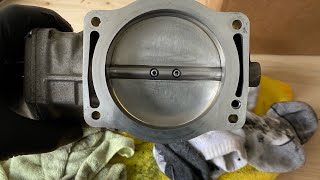
Typical fix: Remove the intake tube from the throttle body. To open the electronic throttle plate safely, turn the ignition to 'ON' (engine off) and have a helper press the gas pedal. DO NOT manually force the plate open, as this can damage the internal gears. Spray a dedicated throttle body cleaner on a clean, lint-free rag (not directly into the throttle body) and wipe the bore and both sides of the plate until clean. 🎬 Watch: A step-by-step guide to cleaning your Corvette throttle body. Ensure no debris falls into the intake manifold.
Est. part cost: $5-$15 - Idle Relearn Procedure Not Performed or Failed 🟡 Medium Probability This is a required step after cleaning/replacing the throttle body or disconnecting the vehicle's battery. The ECM's learned values are reset, and it must recalibrate the new clean/closed idle position. If the procedure is not performed, the ECM may continue to operate based on old data, leading to the P2176 code.
How to confirm: The code P2176 appears immediately after service was performed on the throttle body, the battery was disconnected, or the ECM was cleared with a scan tool.
Typical fix: Perform the idle relearn procedure. While a scan tool is the most reliable method, a manual procedure can often work: 1. Turn ignition ON (engine OFF) for 3 minutes. 2. Turn ignition OFF for 60 seconds. 3. Start the engine and let it idle in Park for 3 minutes. The idle may be high and then settle. 4. Turn ignition OFF for 60 seconds. 5. Start the engine again and let it idle for another 3 minutes. The idle should now be normal. If not, a drive cycle with speeds above 44 MPH including decelerations may be needed.
Est. part cost: $0 - Failed Throttle Body Assembly 🟡 Medium Probability As noted in TSB #PIP4578B, high-mileage vehicles can experience failures of the throttle actuator. The internal electric motor or the integrated position sensors can wear out, causing a discrepancy between the commanded and actual throttle position that the ECM flags as a fault.
How to confirm: If cleaning the throttle body and performing a relearn procedure does not resolve the code, the assembly itself is suspect. A diagnostic scan tool can monitor the commanded vs. actual throttle position; a discrepancy or a reported position of over 9% at idle (with a clean throttle body) points to a faulty unit. Likewise, a closed-throttle voltage outside the typical 0.4V-0.9V range can indicate a failure.
Typical fix: Replace the entire throttle body assembly. This is a bolt-on part that includes the new motor and sensors. A new gasket should be used.
Est. part cost: $150-$400
Rare But Worth Checking
- Wiring or Connector Issue: The harness connecting to the throttle body can become damaged from engine heat and vibration. Check for frayed wires, loose pins, or corrosion in the connector before replacing parts. In some cases, a poor connection at the MAF sensor has been reported to cause throttle-related codes.
- Engine Control Module (ECM) Failure: This is extremely rare. The ECM is the last item to suspect after all other possibilities, including the throttle body and its wiring, have been thoroughly checked and ruled out.
- Aftermarket Modifications or Tune: On modified vehicles, particularly those with ported throttle bodies or aggressive tunes, the P2176 code can sometimes appear. A CorvetteForum user with a supercharged C6 noted that high boost pressure can sometimes force the throttle blade open slightly, causing a position mismatch and triggering the code. Another user with an LS3 swap noted the issue only occurred during hot restarts, suggesting a heat-soak issue with either the wiring or the throttle body electronics.
Diagnosis Steps
- Read the trouble codes with an OBD-II scanner and confirm P2176 is present. Note any other codes, especially P2135 or P1516.
- Visually inspect the throttle body connector and wiring for any signs of damage, corrosion, or looseness. Tug gently on the wires to check for breaks inside the insulation.
- Remove the air intake duct. Inspect the throttle bore and plate for carbon buildup.
- Thoroughly clean the throttle body using a dedicated cleaner and a soft cloth. Have a helper hold the gas pedal down with the ignition on (engine off) to open the throttle plate for cleaning.
- Reconnect the intake duct and perform the idle relearn procedure. This can be done via a scan tool's 'Idle Learn Reset' function or the manual procedure.
- Clear the codes and test drive the vehicle. If the code returns, monitor the commanded vs. actual throttle position with a scan tool. A significant difference or a high idle percentage (above 9%) suggests a faulty throttle body.
- If the issue only occurs on hot restarts, investigate potential heat-soak on the throttle body or wiring harness.
- If the code persists after cleaning and a successful relearn, and the wiring is confirmed to be good, replace the throttle body assembly with a new gasket.
- If all else fails, the issue may be with the ECM, which requires professional diagnosis.
Parts You'll Likely Need
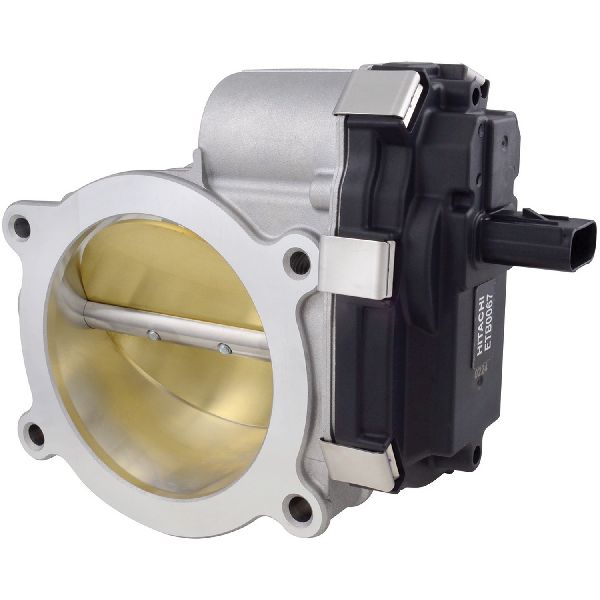
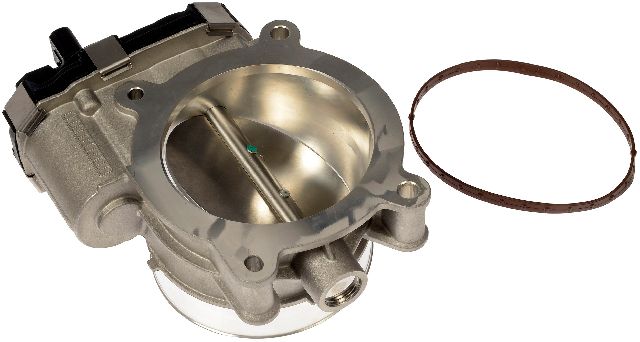
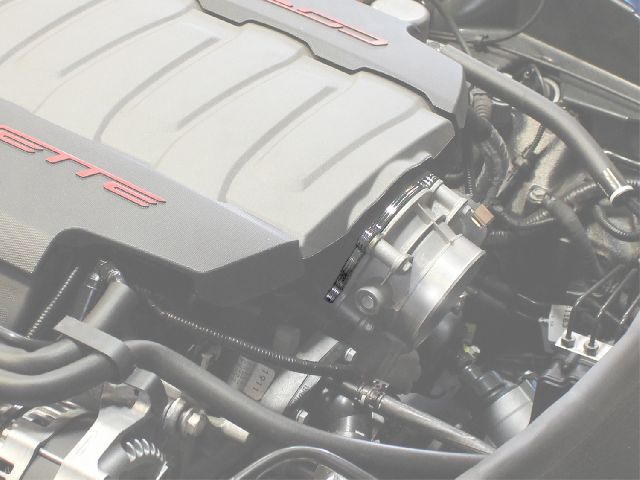
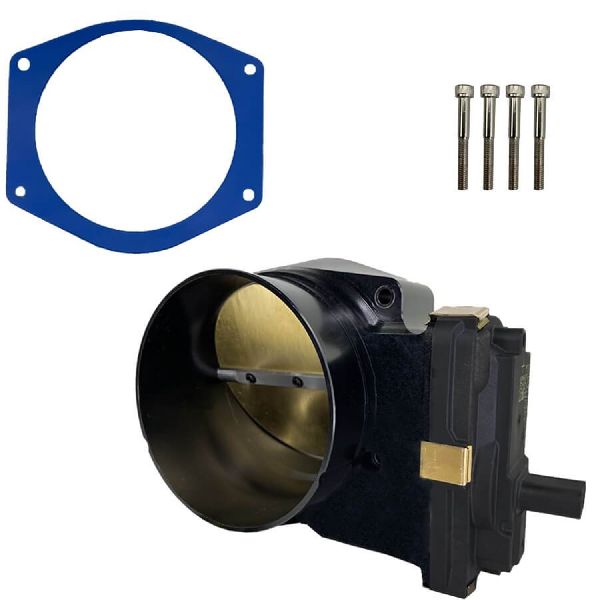
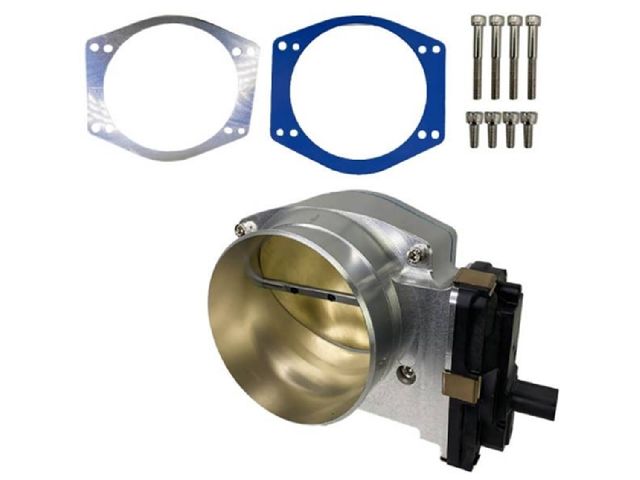
- Throttle Body Assembly
(OEM #12678223 (LT1), 12670839 (LT4/LT5))— This is the most common part to fail when cleaning and relearning do not resolve the issue. The assembly contains the throttle plate, actuator motor, and position sensors which can wear out.
Trusted brands: ACDelco (OEM), Bosch, BBK (Performance Upgrade)
OEM price range: $200-$400
Aftermarket price range: $150-$250 - Throttle Body Cleaner — Required for the first and most common diagnostic and repair step: cleaning carbon buildup from the throttle plate and bore.
Trusted brands: CRC, Berryman, B-12 Chemtool
Aftermarket price range: $5-$15 - Throttle Body Gasket/Seal
(OEM #12620323)— It is best practice to replace the O-ring style gasket whenever the throttle body is removed to prevent vacuum leaks.
Trusted brands: ACDelco, Fel-Pro
OEM price range: $10-$20
Aftermarket price range: $5-$15
Related Codes That Often Appear With This One
- P0068 — Indicates a conflict between the MAP sensor, MAF sensor, and throttle position, often triggered by the same root cause like a vacuum leak or dirty throttle body.
- P1516 — A GM-specific code indicating the ECM has detected an error with the Throttle Actuator Control (TAC) module, often leading to reduced power.
- P2101 — This code directly relates to a performance problem with the throttle actuator control motor circuit, pointing to a failing throttle body.
- P2119 — Indicates an issue with the throttle closed position performance, directly related to the P2176 learning failure.
- P2135 — Throttle/Pedal Position Sensor/Switch 'A'/'B' Voltage Correlation. This code indicates a mismatch between the two position sensors within the throttle body, often meaning the unit is failing. It is frequently seen with P2176.
Technical Service Bulletins (TSBs) & Recalls
- PIP4578B: Addresses idle surge, reduced engine power, and a group of DTCs including P2176 on high mileage vehicles, pointing towards throttle body issues. The bulletin advises checking for a dirty or faulty throttle body.
Platform-Specific Known Issues
- A Technical Service Bulletin (TSB #PIP4578B) was issued for 2014-2018 models, acknowledging that P2176 (along with other codes like P0068, P1516, P2101) can occur on high-mileage vehicles, causing idle surge and reduced engine power.
- Forum discussions among C7 owners frequently point to cleaning the throttle body as the first and most successful step. One thread on CorvetteForum details a user successfully fixing the code by cleaning the throttle body after a dealer quoted a full replacement.
- In modified cars, especially those with forced induction or custom tunes, P2176 can be a recurring issue related to airflow characteristics that differ from stock, sometimes requiring tune adjustments.
Mechanic-Grade Diagnostic Values
- Throttle Position Percentage at Idle (Scan Tool) — expected: Under 9%, ideally 3-5% on a clean throttle body.. Failure: A reading of 10% or higher, with some mechanics reporting as high as 16% on dirty units, indicates the throttle plate is not closing properly.
- Throttle Position Sensor (TPS) Voltage at Closed Throttle — expected: Approximately 0.4V to 0.9V DC.. Failure: A voltage significantly outside this range indicates a sensor or wiring fault.
- Throttle Position Sensor (TPS) Voltage at Wide-Open Throttle (WOT) — expected: Approximately 4.5V to 4.9V DC.. Failure: A voltage that does not reach near this level, or does not increase smoothly from the idle voltage, points to a failing sensor.
- TB Idle Airflow Compensation (Scan Tool Parameter) — expected: 0 percent after a successful Idle Learn Reset.. Failure: If the value does not reset to 0, the relearn procedure has failed or there is an underlying fault.
- Conditions to Run Idle Learn Procedure (Scan Tool) — expected: Ignition 1 Voltage > 10V, Engine Speed 450-4,000 RPM, MAP > 5 kPa, MAF > 2 g/s, and no other major throttle-related DTCs present.. Failure: If these conditions are not met, the ECM will not attempt the learn procedure.
Scan Tool Commands That Help
- GDS2 / Tech 2 (or equivalent professional scanner): Idle Learn Reset — This function, typically found under 'Module Setup' or 'Special Functions', is used to command the ECM to erase its stored (and now incorrect) idle airflow values after cleaning or replacing the throttle body. This forces the ECM to begin a new learning process.
- GDS2 / Tech 2 (or equivalent professional scanner): Throttle Sweep Test / Actuator Test — This bidirectional command allows the technician to command the throttle plate to open and close through its full range of motion while observing sensor data. It is used to confirm the motor is not binding and that the position sensors are reporting smoothly, without dropouts or glitches.
Wiring & Ground Locations
- G303 — On the frame rail in the engine bay, this is the main stud where the negative battery cable connects to the chassis.. This is the primary grounding point for the entire vehicle's electrical system, including the ECM. A poor connection here can cause a host of unpredictable electronic issues, including ECM communication and sensor reference problems.
- Engine Block Grounds — There are multiple ground points on the engine block itself, with one key location being near the starter on the passenger side.. The ECM and its related sensors rely on a solid engine ground. A corroded or loose ground strap between the engine block and the frame (G303) can create a voltage differential, leading to incorrect sensor readings and faults like P2176.
- Throttle Body Connector — The 6-pin electrical connector directly on the throttle body assembly.. This is the single point of connection for the throttle motor and the dual throttle position sensors. Heat and vibration can cause wires to break internally or pins to lose tension, directly causing P2176 and related codes.
Real Owner Repair Stories
- CorvetteForum user (2007 C6 Z51) — Intermittent P2176 and Reduced Engine Power mode.
❌ Tried (didn't work) Re-soldering and using Posi-Taps on recently tapped ECM wires., Performing an 'Idle position relearn' with HP Tuners software provided only a temporary fix.
✅ What actually fixed it The root cause was a software mismatch. A previous tune had been performed using an incorrect Operating System (OS) version for the PCM. The owner re-flashed the correct factory OS, then copied only the specific tuning calibration changes over to the corrected file. This permanently resolved the P2176 code.
OEM Part Supersession History
12678223 (LT1)→12740727— Standard part revision and replacement.12627217, 12669073→12670839 (LT4/LT5)— Standard part revision and replacement.
Helpful Videos
Used OEM Parts in Stock

New Aftermarket Parts Available


The information in this article is provided for general reference and educational purposes only. Vehicle specifications, procedures, and part compatibility can vary by production date, trim level, and region. Always consult your vehicle's factory service manual and verify part numbers before purchasing or performing repairs. Safety-critical components such as airbags, seat belts, and braking systems should be installed by a qualified professional.
- Chevrolet CORVETTE:
- 🎬 Helpful Videos
- 🛍️ Shop This Part
- What's Unique About the 2014-2018 Chevrolet CORVETTE
- Diagnostic Flowchart
- Symptoms You May Notice
- Most Likely Causes
- Rare But Worth Checking
- Diagnosis Steps
- Parts You'll Likely Need
- Related Codes That Often Appear With This One
- Technical Service Bulletins (TSBs) & Recalls
- Platform-Specific Known Issues
- Mechanic-Grade Diagnostic Values
- Scan Tool Commands That Help
- Wiring & Ground Locations
- Real Owner Repair Stories
- OEM Part Supersession History
- 🎟️ Get 5% Off