

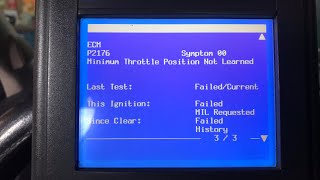
P2176 on 2007-2014 Cadillac CTS: Causes and Fixes for Idle Position Not Learned
On a 2007-2014 Cadillac CTS, P2176 is almost always caused by carbon buildup inside the throttle body, a known issue for GM's direct-injected engines of this era. The fix is to thoroughly clean the throttle body plate and bore, then perform a specific throttle idle relearn procedure. If the code returns immediately, the entire throttle body assembly, which contains non-serviceable sensors, likely needs replacement.
- P2176 on a Cadillac CTS is most often a simple fix, not a catastrophic failure.
- Start with the cheapest and most likely solution: a thorough cleaning of the throttle body.
- An idle relearn procedure is NOT optional. It must be performed after cleaning, replacing the throttle body, or disconnecting the battery.
- If cleaning doesn't work, the entire throttle body assembly is the next logical part to replace.
- Do not ignore this code, as it can lead to stalling in dangerous situations.
What's Unique About the 2007-2014 Cadillac CTS

The Cadillac CTS, particularly with the 3.6L (LLT) and 3.0L (LF1) direct-injected V6 engines, is known for accumulating carbon in the throttle body. This is largely due to the Positive Crankcase Ventilation (PCV) system routing oil vapors directly into the intake, where they bake onto the hot throttle plate. This buildup physically prevents the throttle plate from closing completely. The engine's computer tries to adapt to this blockage, but eventually, it can no longer compensate, or the learned values are lost (e.g., after a battery disconnect or clearing codes), leading to this code. GM acknowledged this tendency in Technical Service Bulletin #PIP4578B, which applies to many of its vehicles from this era, including the CTS.
Diagnostic Flowchart
Tap your situation to follow the diagnostic path that matches what you're seeing on this vehicle.
Generation note: This range covers the end of the first generation (2007) and the full second generation (2008-2014) of the Cadillac CTS. The primary cause, related to the electronic throttle body on engines like the 3.6L V6 (LY7, LLT, LFX) and 3.0L V6 (LF1), is consistent across both generations. The direct-injected LLT (2008-2011) and LFX (2012-2014) engines are particularly prone to the carbon buildup that causes this code.
Symptoms You May Notice
- "Reduced Engine Power" message displayed
- Check Engine Light is on
- Unstable, surging, or high idle
- Engine stalling, especially when coming to a stop
- Poor or delayed throttle response
- Vehicle may not accelerate properly or at all
- "Service Stabilitrak" or "Service Traction Control" message may appear simultaneously.
- Replacing the accelerator pedal position (APP) sensor. While part of the throttle system, P2176 specifically points to a problem at the throttle body itself (learning its idle position), not the pedal.
- Replacing the ECM. This is very rarely the cause and should only be considered after all other possibilities, especially the throttle body and its wiring, have been exhaustively checked.
Most Likely Causes

- Dirty or Carbon-Clogged Throttle Body 🔴 High Probability As noted in TSB #PIP4578B, carbon buildup from the PCV system is a very common issue on high-mileage GM direct-injected engines, physically blocking the throttle plate's movement and preventing it from learning its closed position.
How to confirm: Remove the air intake duct leading to the throttle body. Visually inspect the throttle plate and the inside of the throttle body bore for a thick, black, sticky layer of carbon. A scan tool may show a high throttle position percentage at idle (e.g., 16% when it should be 3-5%).
Typical fix: Thoroughly clean the throttle body bore and both sides of the plate with a dedicated throttle body cleaner and a soft, lint-free cloth. Do not use abrasive brushes. A throttle idle relearn procedure must be performed immediately after cleaning.
Est. part cost: $10-$20 - Failed Throttle Body Assembly 🟡 Medium Probability The internal electric motor or the non-serviceable, integrated throttle position sensors (TPS) can fail over time. This was common enough that GM issued a special warranty extension (14582A) for the throttle body on many 2008-2011 models.
How to confirm: If code P2176 returns immediately after a thorough cleaning and a correctly performed relearn procedure, the throttle body itself is the likely culprit. Other codes like P2101 or P1516 may also be present, strongly indicating an internal electronic failure.
Typical fix: Replace the entire throttle body assembly. This is a bolt-on part that must be followed by a throttle idle relearn procedure.
Est. part cost: $150-$350 - Throttle Idle Relearn Not Performed ⚪ Low Probability This code will set if the battery was disconnected, the ECM was reprogrammed, or if the throttle body was cleaned/replaced without resetting the ECM's learned idle values. The computer is expecting a blocked throttle and overcompensates when the blockage is gone.
How to confirm: If the code appeared immediately after servicing the vehicle, replacing the battery, or clearing codes with a scan tool, this is the most likely cause.
Typical fix: Perform the specific GM throttle idle relearn procedure. This can be done manually or with a scan tool like a Tech 2.
Est. part cost: $0
Rare But Worth Checking
- Vacuum Leak: An unmetered air leak from a source like a cracked PCV hose or loose intake manifold can disrupt the air-fuel mixture and confuse the ECM's ability to control idle, potentially triggering P2176.
- Wiring or Connector Issue: Damaged wires or a corroded connector at the throttle body can cause intermittent signals. Wiggling the harness while the engine is running might reveal a fault. In rare cases, rodents have been known to build nests in the airbox and chew on wiring or even get debris stuck in the throttle plate.
Diagnosis Steps

- Scan for all DTCs. Note any other throttle-related codes like P1516, P2101, or P2119, as they strongly point to a throttle body issue.
- Inspect the air intake tube and air filter housing for any obstructions, debris, or even signs of rodent nests that could enter the throttle body.
- Remove the air intake tube from the throttle body. Inspect the throttle bore and plate for heavy carbon buildup. The plate should be a clean, metallic color, not black and sticky.
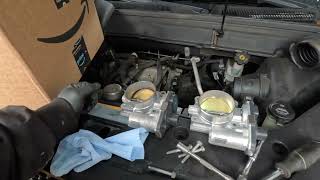
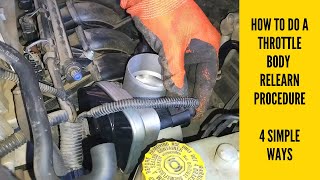
- If carbon is present, remove the throttle body (usually four 10mm bolts) 🎬 Watch: Step-by-step throttle body cleaning for 2008-2014 CTS models. for easier cleaning. Clean it thoroughly using a dedicated throttle body cleaner and a soft cloth. Do NOT use a wire brush or force the throttle plate open aggressively, as this can damage the internal gears and electronics.
- Once clean and reassembled, perform the Throttle Idle Relearn procedure. A scan tool is the best method, but a manual procedure can work. The most cited manual procedure is: 1. Start and idle the engine in PARK for 3 minutes. 2. Turn the ignition OFF for 60 seconds. 3. Start and idle the engine in PARK for another 3 minutes. After this, the idle should be normal. A short drive cycle may be needed if the idle is still not correct.
- If the code returns immediately after cleaning and relearning, inspect the wiring and connector at the throttle body for any signs of damage, corrosion, or loose pins.
- If the wiring is good and the code persists, the throttle body assembly is the most likely failed component and should be replaced.
Parts You'll Likely Need

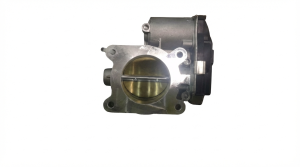
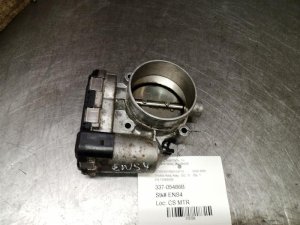
- Throttle Body Assembly
(OEM #12631186 (for 3.6L LLT), 12632172 (for 3.6L LFX, superseded by 12670981))— This is the primary cause of the fault when cleaning does not resolve the issue. The internal motor or non-serviceable position sensor fails. Part number varies by year and engine (3.0L LF1 vs. 3.6L LLT/LFX).
Trusted brands: ACDelco, Bosch, Hitachi
OEM price range: $250-$400
Aftermarket price range: $150-$250 - Throttle Body Cleaner
(OEM #GM P/N 1052626 (or equivalent))— Required for the most common and first-step fix: cleaning the carbon buildup that causes the throttle plate to stick.
Trusted brands: CRC, Berryman, Gumout
OEM price range: $15-$25
Aftermarket price range: $10-$20
Related Codes That Often Appear With This One
- P1516 — A GM-specific code indicating a mismatch between the predicted and actual throttle position. 🎬 Watch: Diagnosing common Cadillac CTS throttle codes like P2176. It's often set alongside P2176 because a sticking throttle plate causes this exact mismatch.
- P2101 — This code points to a performance issue with the throttle actuator's motor circuit, often triggered by the motor struggling against heavy carbon buildup or an internal electronic fault.
- P2119 — Relates to the throttle body's range/performance, specifically its ability to close properly, which is directly affected by carbon buildup.
- P0507 — Means 'Idle Air Control System RPM Higher Than Expected'. This commonly occurs *after* cleaning the throttle body if an idle relearn is not performed, as the computer is still commanding the throttle open to compensate for the now-removed carbon.
Technical Service Bulletins (TSBs) & Recalls
- PIP4578B: Addresses 'SES Light, Idle Surge, and/or Reduced Engine Power Mode' with DTCs including P2176, recommending cleaning the throttle body and performing an idle learn reset. This TSB confirms the carbon buildup is the primary cause.
Platform-Specific Known Issues
- GM Technical Service Bulletin #PIP4578B directly addresses P2176 on high-mileage vehicles. It identifies carbon buildup in the throttle body as the root cause for idle surge, reduced power, and a host of related throttle codes, confirming this is a well-documented issue.
- Owner Experience on CadillacForums.com: A user with a 2008 CTS 3.6L reported P2176 and 'Reduced Engine Power'. After cleaning the throttle body did not work, replacing the entire throttle body assembly and performing the relearn procedure permanently fixed the issue.
- Mechanic Insight on YouTube: A mechanic working on a 2011 Buick Enclave (a platform mate) with P2176 noted the scan tool read 16% throttle opening at idle due to carbon buildup. Cleaning the throttle body allowed the plate to close properly, and after a relearn, the code was resolved.
Mechanic-Grade Diagnostic Values
- Throttle Position (TP) Sensor 1 Voltage during learn procedure — expected: 0.2V - 0.9V. Failure: Voltage is outside this range.
- Throttle Position (TP) Sensor 2 Voltage during learn procedure — expected: 4.2V - 4.8V. Failure: Voltage is outside this range.
- Live Data: Throttle Position Percentage at Idle — expected: 3-5%. Failure: A significantly higher reading, such as 16%, indicates the throttle plate is being held open by carbon buildup.
- 5-Volt Reference at Throttle Body Connector (Key-On, Engine-Off) — expected: 4.8V to 5.2V. Failure: Voltage is absent or significantly outside this range, indicating a wiring or ECM issue.
- Low Reference (Ground) at Throttle Body Connector — expected: Less than 0.1V or < 100 ohms resistance to ground. Failure: High resistance or voltage on the ground circuit points to a poor ground connection.
- Scan Tool: Throttle Body Idle Airflow Compensation — expected: Less than 90%. Failure: A value of 90% or more suggests a fault that requires further diagnosis.
Scan Tool Commands That Help
- GM Tech 2 / GDS2 / Professional Scan Tool: Idle Learn Reset / Reset Idle Learn — This function is used to erase the learned throttle angle from the ECM's memory. It is required after cleaning or replacing the throttle body to force the system to relearn the new closed-throttle position. It is typically found in the ECM menu under 'Module Set Up' or 'Special Functions/TAC System'.
Wiring & Ground Locations
- G102 / G105 — For 2007-2011 models, these critical engine grounds are typically located on the engine block or on the right side of the engine compartment. For a 2006 model, G102 is on the right side of the engine block above the starter.. The ECM and its sensors rely on clean ground connections. A high-resistance ground can cause erratic sensor readings and prevent the ECM from correctly learning throttle position.
- G132 — For 2008 models, this ground is located on the top right of the engine.. This is a key ground point for the engine control system. A poor connection here can lead to various sensor and module communication issues, including those related to the throttle body.
- Throttle Body Connector (X87) — The 6-pin electrical connector located directly on the throttle body assembly.. This is the single point of connection for the throttle motor and both throttle position sensors. Testing for voltage, ground, and signal at these pins is a key diagnostic step. The pinout is typically: Pin B (Ground), Pin C (5V Reference), Pin E (TPS 1 Signal), Pin D (TPS 2 Signal), Pins A & F (Motor Control).
Real Owner Repair Stories
- GMTNation forum user (GM vehicle with codes P2101, P2176, P1516) — Reduced Engine Power mode, vehicle would not restart or run correctly.
❌ Tried (didn't work) Restarting the vehicle (worked temporarily at first, then stopped working), Clearing codes
✅ What actually fixed it Replacing the entire throttle body with a salvaged unit instantly resolved the P2176 code. The user suspected the internal throttle position sensor had completely failed, which prevented the ECM from learning the idle position on startup.
OEM Part Supersession History
12632172→12670981— Standard part revision and update by the manufacturer.
Heads up: 12670981 is the current replacement for 12632172 for applicable vehicles (typically 2012+ with the LFX engine).
Model Year Variations Within This Range
- 2008-2011: These years primarily use the 3.6L LLT V6 engine, which is paired with a Bosch ECM. The throttle body part number is specific to this engine family (e.g., 12631186).
- 2012-2014: These years use the updated 3.6L LFX V6 engine, which features a lighter composite intake manifold and uses a Delphi ECM. The throttle body is a different part (e.g., 12632172) and is not interchangeable with the earlier LLT engine.
Helpful Videos

Used OEM Parts in Stock




New Aftermarket Parts Available




The information in this article is provided for general reference and educational purposes only. Vehicle specifications, procedures, and part compatibility can vary by production date, trim level, and region. Always consult your vehicle's factory service manual and verify part numbers before purchasing or performing repairs. Safety-critical components such as airbags, seat belts, and braking systems should be installed by a qualified professional.
- Cadillac CTS:
- 🎬 Helpful Videos
- 🛍️ Shop This Part
- What's Unique About the 2007-2014 Cadillac CTS
- Diagnostic Flowchart
- Symptoms You May Notice
- Most Likely Causes
- Rare But Worth Checking
- Diagnosis Steps
- Parts You'll Likely Need
- Related Codes That Often Appear With This One
- Technical Service Bulletins (TSBs) & Recalls
- Platform-Specific Known Issues
- Mechanic-Grade Diagnostic Values
- Scan Tool Commands That Help
- Wiring & Ground Locations
- Real Owner Repair Stories
- OEM Part Supersession History
- Model Year Variations Within This Range
- 🎟️ Get 5% Off