

P2173 on 2019-2021 Ram 1500: High Airflow/Vacuum Leak Causes and Fixes
This code indicates a vacuum leak. On the 2019-2021 Ram 1500 with the 5.7L Hemi, this is most often caused by a cracked intake manifold or failed intake manifold gaskets. A thorough smoke test to check for leaks is the essential first step before replacing any parts.
- P2173 on a 2019-2021 Ram 1500 almost always means there is a vacuum leak.
- The most likely culprits are the intake manifold gaskets or a crack in the plastic intake manifold itself.
- Do not replace expensive parts like the throttle body or MAP sensor until you have performed a smoke test to rule out a physical leak.
- Symptoms can be severe, including the truck entering a low-power 'limp mode', but the root cause is often a simple leak.
- Check for related TSBs, as Ram has acknowledged this code and its connection to other air/fuel system issues.
What's Unique About the 2019-2021 Ram 1500

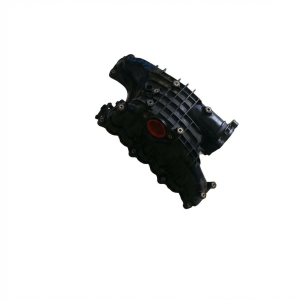
For the 5th generation Ram 1500 (2019+), the plastic intake manifold on the 5.7L Hemi engine can be a point of failure, developing cracks or gasket leaks that directly cause this code. While vacuum leaks are a universal problem, forum discussions and mechanic insights point towards the intake manifold and its gaskets as a primary suspect on this specific truck, more so than random vacuum hoses. Owners often report this code appearing intermittently, sometimes only after coming to a stop after a drive, before it becomes a persistent issue.
Diagnostic Flowchart

Tap your situation to follow the diagnostic path that matches what you're seeing on this vehicle.
Symptoms You May Notice
- Check Engine Light is on
- Engine enters 'limp mode,' drastically reducing power and speed.
- Rough or unstable idle, sometimes with RPMs fluctuating up and down.
- Hesitation or stumbling during acceleration.
- Poor fuel economy.
- A hissing or whistling sound from the engine bay.
- Transmission may not shift properly as the PCM tries to protect the drivetrain.
- Replacing the throttle body without confirming a fault. While related to airflow, a vacuum leak is far more common for this code.
- Replacing oxygen (O2) sensors. O2 sensors will report the lean condition caused by the vacuum leak, but they are not the cause of the problem.
Most Likely Causes

- Cracked Intake Manifold or Bad Gaskets 🔴 High Probability The plastic intake manifold used on the 5.7L Hemi engines can develop cracks from heat cycles, and the gaskets can compress, harden, and degrade over time, allowing unmetered air to enter the intake ports.
How to confirm: Perform a smoke test on the intake system. Smoke will emerge from the crack or leaking gasket, often where the manifold meets the cylinder heads. A visual inspection may also reveal cracks or oil residue around the manifold seams.
Typical fix: Replace the intake manifold and/or the intake manifold gaskets. It is highly recommended to replace the gaskets anytime the manifold is removed.
Est. part cost: $50-$150 for gaskets, $400-$700 for a new OEM intake manifold. - Leaking PCV Valve or Hose 🟡 Medium Probability The PCV (Positive Crankcase Ventilation) system is connected directly to the intake. Hoses can become brittle and crack, or the valve itself can fail or get stuck open, creating a constant vacuum leak.
How to confirm: Visually inspect the PCV hoses for cracks or loose connections. Test the PCV valve for proper operation; it should rattle when shaken and allow airflow in only one direction. A smoke test will also reveal leaks in this system.
Typical fix: Replace the faulty PCV valve or hose. 🎬 Watch: This easy tutorial shows you how to swap the PCV valve.
Est. part cost: $15-$50 - Other Vacuum Leaks (Hoses, Brake Booster) ⚪ Low Probability
How to confirm: Visually inspect all vacuum lines connected to the intake manifold for cracks, brittleness, or disconnection. Listen for hissing sounds. Check the brake booster vacuum line specifically, as a leak in the booster diaphragm can also cause this code.
Typical fix: Replace the cracked or disconnected vacuum hose or faulty brake booster.
Est. part cost: $5-$30 for hoses, $150-$300 for a brake booster.
Rare But Worth Checking
- Faulty MAP Sensor: A defective Manifold Absolute Pressure (MAP) sensor can send incorrect data to the PCM, making it think there's a leak when there isn't. TSB #S1808000282 mentions MAP sensor codes in conjunction with P2173. This should be considered only after all potential leaks are ruled out with a smoke test.
- Faulty Fuel Injector(s): In one documented case on a Ram 1500 forum, replacing four faulty fuel injectors resolved the P2173 code after multiple other attempted fixes failed. This is an uncommon cause.
- Damaged Camshaft Alignment Pin: TSB #S2118000013 suggests that if no vacuum leaks are found, the issue could be a damaged camshaft alignment pin between the camshaft and gear. This is a more involved mechanical issue that can affect engine timing and confuse the PCM's airflow calculations. One owner on 5thGenRams reported a dealer diagnosed this as the root cause after two years of intermittent issues.
Diagnosis Steps
- Read the codes with an OBD-II scanner and note all active and pending codes, paying special attention to any accompanying codes like P2172, P219A/B, or C121C.
- Perform a thorough visual inspection of the engine bay. Look and listen for obvious signs of a vacuum leak, such as cracked hoses, loose connections, or a hissing sound.
- Pay close attention to the intake manifold, PCV hoses, and brake booster line.
- The most effective diagnostic step is to perform a smoke test. Introduce smoke into the intake system (after the MAF sensor, if equipped) and watch for where it escapes. This will pinpoint 🎬 See how to perform a quick and easy smoke test. the exact location of the leak.
- While the smoke test is running, check the intake manifold gaskets, the manifold body itself (especially around seams), the PCV system, and all connected vacuum lines.
- If no leaks are found after a thorough smoke test, investigate the possibility of a damaged camshaft alignment pin as described in TSB S2118000013. This may require a more in-depth mechanical inspection.
- If no leaks or mechanical issues are found, investigate the MAP sensor for correct readings using a scan tool's live data. Only replace it if data is clearly incorrect and no leaks are present.
Parts You'll Likely Need

- Intake Manifold Gaskets
(OEM #68545089AA (Kit for 5.7L Hemi))— The original gaskets can compress, harden, and fail over time, causing a common vacuum leak at the cylinder heads.
Trusted brands: Mopar, Fel-Pro, Mahle
OEM price range: $80-$150
Aftermarket price range: $50-$100 - Intake Manifold
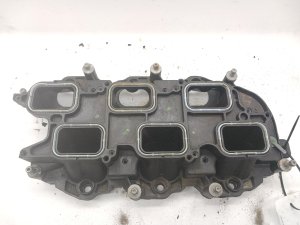
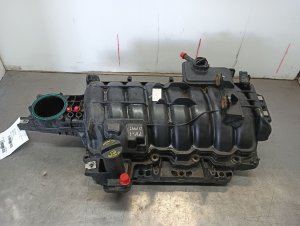
(OEM #68384268AE (Supersedes previous numbers))— The plastic manifold itself can crack, especially on the 5.7L Hemi, creating a vacuum leak that requires full replacement of the manifold.
Trusted brands: Mopar, Dorman
OEM price range: $400-$700
Aftermarket price range: $250-$450 - PCV Valve
(OEM #53032940AB)— A stuck or leaking PCV valve is a simple and inexpensive component that can create a significant vacuum leak.
Trusted brands: Mopar, Standard Motor Products, Gates
OEM price range: $25-$50
Aftermarket price range: $15-$30
Related Codes That Often Appear With This One
- P2172 — This is the code for 'High Airflow/Vacuum Leak Detected (Instantaneous Accumulation)'. Seeing it with P2173 points strongly to a significant or intermittent vacuum leak.
- P219A / P219B — These codes indicate an air-fuel ratio imbalance on Bank 1 and Bank 2, respectively. A vacuum leak causes this imbalance. TSB #S2118000013 directly links these codes with P2173.
- P0171 / P0174 — These are generic codes for 'System Too Lean' on Bank 1 and Bank 2. A vacuum leak is a classic cause for lean codes.
- C121C — Torque Request Signal Denied. This ABS code often appears with P2173 because the PCM detects a major engine fault and denies torque requests from other modules like the ABS/stability control system as a safety measure.
Technical Service Bulletins (TSBs) & Recalls

- S2118000013: Links P2173 with air-fuel ratio imbalance codes and suggests checking the camshaft alignment pin as a potential cause.
- S1808000282: Associates P2173 with potential MAP sensor circuit issues.
Platform-Specific Known Issues
- Ram has issued Technical Service Bulletin (TSB) #S2118000013, which acknowledges that P2173 may appear alongside air-fuel imbalance codes (P219A, P219B) and rich condition codes (P0172, P0175). It also suggests checking for a damaged camshaft alignment pin if a vacuum leak is not the cause.
- TSB #S1808000282 also lists P2173 in conjunction with potential MAP sensor circuit fault codes (P0107, P0108), indicating a possible, though less common, electrical cause.
Mechanic-Grade Diagnostic Values
- MAP Sensor Signal Voltage (Key On, Engine Off) — expected: ~4.5 Volts at sea level.. Failure: Voltage significantly lower than 4.5V can indicate a circuit or sensor issue.
- MAP Sensor Signal Voltage (Engine at warm idle) — expected: ~1.0 - 2.0 Volts.. Failure: Voltage remaining high (near 4.5V) at idle strongly suggests a large vacuum leak or a faulty sensor.
- MAP Sensor 5V Reference Wire Voltage — expected: Steady ~5.0 Volts with key on.. Failure: Voltage below 4.8V or above 5.2V indicates a problem with the PCM or wiring, not the sensor itself.
- MAP Sensor Ground Wire Voltage — expected: Less than 0.03V (30mV).. Failure: Any significant voltage reading points to a bad ground connection, which will skew the sensor's signal.
- Long-Term Fuel Trim (LTFT) — expected: Close to 0%, typically within +/- 5%.. Failure: Sustained high positive numbers (e.g., > +10% up to +30%) confirm the PCM is adding large amounts of fuel to compensate for unmetered air from a vacuum leak.
Scan Tool Commands That Help
- wiTECH: PCM Reprogram — While not directly for P2173 on this model, a TSB for a 2013 Dart with P2173 involved a PCM software update to correct the condition. This establishes a precedent that software logic can be a cause, and checking for available updates with the dealer tool is a valid diagnostic step if no physical leak is found.
Wiring & Ground Locations
- MAP Sensor — On the 5.7L HEMI, the MAP sensor is located on the top rear of the intake manifold, near the firewall, and is often held by a simple twist-lock mechanism rather than bolts.. This is the primary sensor used to infer airflow on this engine. Incorrect readings due to a bad sensor or poor connection are a potential, though less common, cause for P2173 after vacuum leaks are ruled out.
- MAP Sensor Connector — A 3-wire connector plugging into the MAP sensor at the rear of the intake manifold. The pins are typically for a 5-volt reference, a ground, and the signal wire back to the PCM.. A damaged connector, corroded pins, or compromised wiring at this location can cause erratic MAP sensor readings, mimicking the symptoms of a vacuum leak or a faulty sensor.
Real Owner Repair Stories
- RAM TRX Forum (Ram 1500 TRX (Supercharged 6.2L, but same code logic)) — Check engine light, limp mode, and a backfire under the hood after heavy throttle.
❌ Tried (didn't work) Multiple smoke tests of the intake system showed no leaks.
✅ What actually fixed it The issue was determined to be a glitch in an aftermarket engine tune. The owner planned to work with the tuner to resolve it via data logging and a software adjustment, confirming it was not a physical vacuum leak.
"I Checked Everything" — The Actual Cause
- In a documented case on a RAM TRX forum, a user repeatedly performed smoke tests which came back clean, with no vacuum leaks found. The actual cause was determined to be a glitch in an aftermarket engine tune that was incorrectly interpreting airflow data under certain conditions, triggering the P2173 code.
- TSB #S2118000013 for the 2019-2021 Ram 1500 explicitly directs technicians that if a smoke test reveals no vacuum leaks, the next step should be to inspect for a damaged camshaft alignment pin, which can affect timing and cause the PCM to miscalculate airflow.
OEM Part Supersession History
Multiple previous numbers→68384268AE— This is the current OEM part number for the 5.7L Hemi intake manifold assembly for the 2019-2024 model years, superseding prior revisions.
Model Year Variations Within This Range
- 2019-2021: Within this model year range, the 5.7L Hemi was available with or without the eTorque mild-hybrid system. The core engine and intake manifold are the same, so the causes of P2173 are identical. The eTorque system replaces the alternator with a motor-generator and is primarily used for a smoother start-stop function and minor torque fill during shifts; it does not fundamentally change the engine's air intake system.
Helpful Videos

Used OEM Parts in Stock



New Aftermarket Parts Available


The information in this article is provided for general reference and educational purposes only. Vehicle specifications, procedures, and part compatibility can vary by production date, trim level, and region. Always consult your vehicle's factory service manual and verify part numbers before purchasing or performing repairs. Safety-critical components such as airbags, seat belts, and braking systems should be installed by a qualified professional.
- Ram 1500:
- 🎬 Helpful Videos
- 🛍️ Shop This Part
- What's Unique About the 2019-2021 Ram 1500
- Diagnostic Flowchart
- Symptoms You May Notice
- Most Likely Causes
- Rare But Worth Checking
- Diagnosis Steps
- Parts You'll Likely Need
- Related Codes That Often Appear With This One
- Technical Service Bulletins (TSBs) & Recalls
- Platform-Specific Known Issues
- Mechanic-Grade Diagnostic Values
- Scan Tool Commands That Help
- Wiring & Ground Locations
- Real Owner Repair Stories
- "I Checked Everything" — The Actual Cause
- OEM Part Supersession History
- Model Year Variations Within This Range
- 🎟️ Get 5% Off