

P2173 on 2011-2012 Chrysler 200: High Airflow/Vacuum Leak Causes and Fixes
This code indicates a vacuum leak. On the 2011-2012 Chrysler 200, the most common causes are a cracked PCV hose, leaking intake manifold gaskets, or a faulty electronic throttle body. A software update (TSB 18-080-16) may also be required, primarily for the 2012 model year with the 2.4L engine.
- P2173 means your engine has a vacuum leak; it's getting air that it can't account for.
- Before replacing any parts, have a dealer or qualified shop check if your vehicle's computer software is up to date per TSB #18-080-16.
- The most likely physical causes are a cracked vacuum hose (especially the PCV hose) or leaking intake manifold gaskets.
- A smoke test is the most reliable way to diagnose the location of the leak.
- Driving with this code can be unsafe due to potential stalling and entering a low-power 'limp mode'.
What's Unique About the 2011-2012 Chrysler 200

For the 2011-2012 Chrysler 200, this code is notable because Chrysler issued a Technical Service Bulletin (TSB 18-080-16) indicating a software update could resolve the issue, suggesting the fault logic was initially too sensitive, particularly for the 2012 2.4L model. Beyond the software, both the 2.4L World Engine and 3.6L Pentastar V6 in this platform are known for specific vacuum leak points. The plastic intake manifolds and associated rubber gaskets can become brittle and leak, and PCV hoses are a frequent failure item. The 3.6L Pentastar also has a complex PCV system integrated into the valve cover that can be a hidden source of vacuum leaks.
Diagnostic Flowchart

Tap your situation to follow the diagnostic path that matches what you're seeing on this vehicle.
Symptoms You May Notice
- Check Engine Light is on
- Electronic Throttle Control (ETC) 'red lightning bolt' light is on or flashing
- Engine enters 'limp mode' with reduced power and poor acceleration
- Rough, surging, or unstable idle, sometimes idling high (e.g., 1500 RPM) at a stop
- Hesitation or stumbling during acceleration
- Engine may stall, especially when coming to a stop or at idle
- Audible hissing or whistling sound from the engine bay
- Replacing the MAP sensor without confirming a vacuum leak. The MAP sensor is often doing its job correctly by reporting the effects of the leak.
- Replacing O2 sensors. While a vacuum leak will cause abnormal O2 sensor readings (lean condition), the sensors themselves are usually not the root cause.
Most Likely Causes

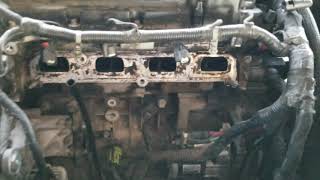
- Leaking Intake Manifold Gaskets 🔴 High Probability The gaskets, made of rubber and plastic, can become brittle and crack over time from heat cycles, allowing un-metered air to enter the intake ports. This is a well-documented failure on both the 2.4L and 3.6L engines.
How to confirm: Perform a smoke test. Introduce smoke into the intake system and watch for smoke leaking from the area where the intake manifold meets the cylinder head. A DIY method is to carefully spray water or brake cleaner around the gasket area with the engine running; a change in engine idle indicates a leak.
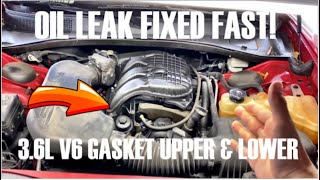
Typical fix: Replace the upper and lower intake manifold gaskets. 🎬 Watch: Step-by-step guide to replacing 3.6L intake manifold gaskets. It is recommended to replace the full set.
Est. part cost: $40-$100 - Cracked or Disconnected Vacuum Hoses (especially PCV) 🔴 High Probability Rubber hoses, especially the PCV hose that connects the valve cover to the intake manifold, are prone to cracking from heat and oil exposure. This creates a direct, un-metered air path into the intake.
How to confirm: Visually inspect all vacuum lines for cracks, swelling, or loose connections. Pay close attention to the PCV hose and the brake booster hose. A smoke test will also reveal leaking hoses.
Typical fix: Replace the damaged hose.
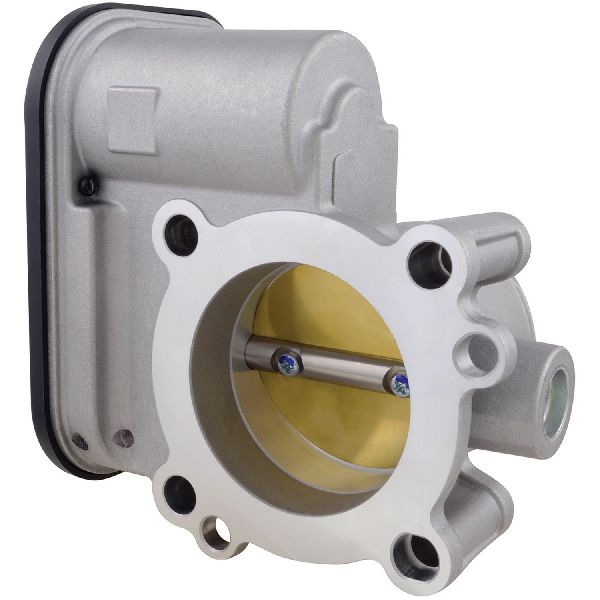
Est. part cost: $15-$50 - Faulty Electronic Throttle Body (ETB) 🟡 Medium Probability The throttle body can fail electronically or become stuck partially open due to carbon buildup, causing a mismatch between the expected and actual airflow. This can also prevent the idle relearn procedure from completing successfully.
How to confirm: With the engine off, remove the air intake tube and inspect the throttle plate for carbon buildup. Check for stored codes related to the throttle position sensor. A scan tool can monitor the commanded vs. actual throttle position.
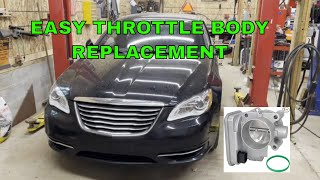
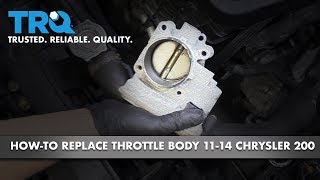
Typical fix: First, try cleaning the throttle body and plate with a dedicated cleaner. After cleaning or replacement, a throttle relearn procedure is often necessary. If the problem persists, the entire electronic throttle body assembly needs to be replaced. 🎬 See this walkthrough on how to replace the throttle body.
Est. part cost: $150-$300 - Outdated Powertrain Control Module (PCM) Software 🟡 Medium Probability
How to confirm: A Chrysler dealership or a repair shop with a factory-compatible scan tool (like wiTECH) can check the current software calibration and see if the update from TSB #18-080-16 has been applied.
Typical fix: Update the PCM software to the latest version. This is a dealer or professional-level repair that requires a battery charger to maintain stable voltage during the flash process.
Est. part cost: $0-$200
Rare But Worth Checking
- Leaking Brake Booster: The brake booster uses engine vacuum to provide power assist. A leak in its internal diaphragm can create a large vacuum leak. Check for a hissing sound when pressing the brake pedal or a hard brake pedal.
- Stuck-Open EGR Valve: If the Exhaust Gas Recirculation (EGR) valve sticks open, it creates a vacuum leak that can trigger P2173, although it often comes with other EGR-specific codes. On some Chrysler engines, the seal for the EGR tube where it enters the intake manifold can fail, causing a similar leak.
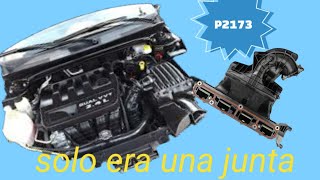
- Leaking Oil Filler Cap: A loose or faulty oil filler cap can create a vacuum leak through the PCV system. In one documented case on a 2013 Chrysler 200, a smoke test revealed the oil cap was the source of the leak 🎬 Watch: Diagnosing a P2173 code on a Chrysler 200. causing a P2173 code.
Diagnosis Steps
- Check if TSB #18-080-16 (PCM software update) has been performed, especially on a 2012 model. This should be a primary step for a professional.
- Perform a thorough visual inspection of the entire air intake system, from the air filter to the intake manifold. Look for obvious cracks in hoses or disconnected lines.
- Pay special attention to the PCV hose that runs from the valve cover to the intake manifold, as it is a very common failure point. Wiggle the hose to see if it's brittle or cracked.
- If no obvious leaks are found, perform a smoke test. This is the most effective method to find small cracks in gaskets or hoses that are not visible to the naked eye. Be sure to check around the intake manifold, throttle body gasket, brake booster hose, and oil filler cap.
- As a DIY alternative to a smoke test, you can carefully spray a small amount of water from a spray bottle onto suspected leak points (like the intake manifold gasket seam) with the engine idling. If the engine stumbles or the idle changes, you've found a leak.
- Remove the air intake duct and inspect the electronic throttle body for heavy carbon buildup that could prevent the throttle plate from closing properly.
- If the throttle body is cleaned or replaced, perform a throttle relearn procedure. This can sometimes be done without a scan tool by turning the ignition on (engine off), slowly pressing the accelerator to the floor, slowly releasing it, then turning the ignition off before starting the engine. A professional scan tool can also initiate the 'ETC Learn' function.
- If no vacuum leaks are found and the software is up to date, further diagnosis of the MAP sensor and throttle body electrical circuits may be needed.
Parts You'll Likely Need
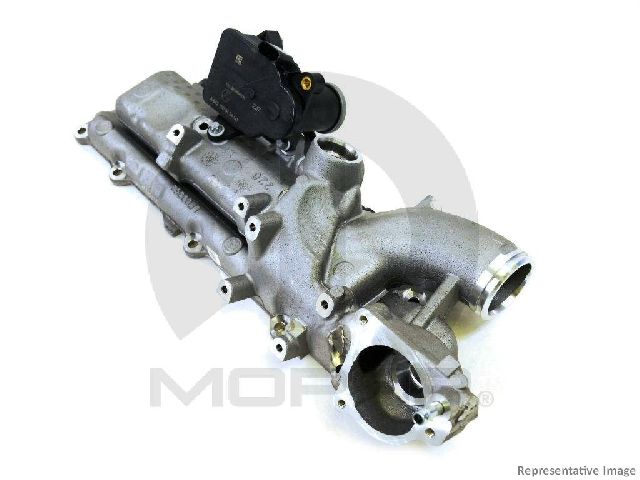
- Intake Manifold Gasket Set
(OEM #3.6L V6: Mopar 5184562AC (Upper), 5184331AC (Lower) or Kit 68535427AA. 2.4L I4: Mopar 04884550AB (Manifold to Head).)— These gaskets are a primary suspect for causing a hidden vacuum leak on both the 2.4L and 3.6L engines.
Trusted brands: Mopar, Fel-Pro (e.g., MS 97204 for 3.6L), Mahle
OEM price range: $60-$120
Aftermarket price range: $40-$80 - PCV Hose
(OEM #2.4L I4: Mopar 5047655AB (replaces 5047655AA). 3.6L V6: Mopar 5184631AE. Part numbers can vary, confirm with VIN.)— This specific hose is exposed to heat and oil vapors, causing it to become brittle and crack, creating a significant vacuum leak.
Trusted brands: Mopar, Dorman
OEM price range: $30-$60
Aftermarket price range: $15-$40 - Electronic Throttle Body
(OEM #2.4L I4: Mopar 04891735AC. 3.6L V6: Mopar 04861661AA. (Verify with VIN))— If cleaning does not resolve the issue, or if the internal electronics have failed, the entire assembly must be replaced.
Trusted brands: Mopar, Bosch, Hitachi
OEM price range: $250-$400
Aftermarket price range: $150-$300
Related Codes That Often Appear With This One
- C121C — This ABS code for 'Torque Request Signal Denied' is often triggered as a secondary fault because the engine computer cannot guarantee stable engine torque due to the vacuum leak, so it denies requests from the traction/stability control system.
Technical Service Bulletins (TSBs) & Recalls

- 18-080-16: Addresses P2173 - High Airflow/Vacuum Leak Detected (Slow Accumulation) via a PCM software update. It applies to 2011-2012 models but is noted as a specific fix for the 2012 MY 2.4L.
Platform-Specific Known Issues
- A software update for the Powertrain Control Module (PCM) was issued by Chrysler under TSB #18-080-16 to address this code, among others. The bulletin applies to 2011-2012 models but specifically lists P2173 as a fix for the 2012 MY with the 2.4L engine.
- The plastic intake manifold on the 2.4L engine is noted in service information as being a key reason for the P2173 fault logic, to detect large vacuum leaks that can occur if the manifold itself cracks.
Mechanic-Grade Diagnostic Values
- Long/Short Term Fuel Trims (STFT/LTFT) — expected: At idle, STFT and LTFT should be close to 0% (ideally +/- 5%). When RPMs are raised to ~2500, trims should remain relatively stable.. Failure: High positive fuel trims at idle (e.g., +15% or higher) that decrease and move toward 0% as engine RPMs are increased strongly suggest a vacuum leak.
- MAP Sensor Voltage — expected: With the engine running at idle, voltage should be below 2.0 volts. During a wide-open throttle (WOT) snap, voltage should rise above 3.5 volts.. Failure: Voltage that is unexpectedly high at idle or does not respond correctly to throttle changes can indicate a sensor fault or a massive vacuum leak.
- Throttle Position (TP) Sensor Voltages (Dual Sensors) — expected: Using a scan tool's 'Throttle Follower Test', TP Sensor 1 should sweep smoothly from ~0.7V to ~4.3V, while TP Sensor 2 sweeps inversely from ~4.3V to ~0.7V.. Failure: Any glitches, flat spots, or jumps in the voltage sweep indicate a failing throttle position sensor, requiring throttle body replacement.
- 5-Volt Reference Circuit at Throttle Body — expected: Between 4.5 and 5.2 volts with the key on, engine off (KOEO).. Failure: Voltage significantly lower than 4.5V points to a short in the shared 5V reference circuit or a PCM fault.
- Chassis Ground Strap Resistance — expected: Less than 0.5 Ω between the ground point and the negative battery terminal.. Failure: Resistance greater than 0.5 Ω indicates a poor ground connection that can cause erratic sensor readings.
Scan Tool Commands That Help
- wiTECH or equivalent professional scanner: Throttle Follower Test — This guided test is used to verify the full range of motion and electrical integrity of the dual throttle position sensors. It's a primary step to rule out a faulty throttle body before chasing vacuum leaks.
- wiTECH or equivalent professional scanner: ETC Learn (Electronic Throttle Control Learn) — This function must be performed after cleaning or replacing the throttle body. It forces the PCM to relearn the closed and idle positions of the throttle plate, which is critical for resolving the P2173 code if it was caused by a dirty or new throttle body.
Wiring & Ground Locations
- Primary Engine/PCM Grounds — Key ground points for the 2012 Chrysler 200 include G105 (right side of engine compartment), G308 (right rear of engine), and G321 (left side of engine compartment).. A poor engine ground can cause incorrect readings from the MAP, TP, and other sensors that share a ground reference with the PCM, leading to a false P2173 code. Verifying these grounds are clean and tight is a critical electrical check.
- Supplemental Ground (Common DIY Fix) — A common owner fix for various electrical issues on this platform is to add a 4-gauge ground wire from the negative battery terminal directly to a solid chassis point, such as a 16mm bolt on the transmission mount.. If the factory ground paths are compromised by corrosion, adding a redundant, heavy-duty ground can stabilize sensor voltages and may resolve intermittent electrical faults that trigger codes like P2173.
- 3.6L Throttle Body Connector — The 6-pin connector on the electronic throttle body.. Pinout for testing (Pentastar): Pin 4 is the 5V Reference (Pink/Yellow), Pin 5 is Sensor Ground (Brown/Orange), Pin 6 is TPS1 Signal (Brown/Dark Blue), Pin 3 is TPS2 Signal (Brown/Dark Green). Pins 1 and 2 are for the throttle motor itself. This allows for precise testing of the circuits between the PCM and the throttle body.
Real Owner Repair Stories
- YouTube channel 'Lakes Automotive Diagnostics' (2013 Chrysler 200 (engine not specified, but behavior is universal)) — P2173 - High airflow/vacuum leak detected.
❌ Tried (didn't work) Initial visual inspection did not reveal the leak source.
✅ What actually fixed it A smoke test revealed a significant leak from a faulty oil filler cap seal. Replacing the oil cap and cleaning the throttle body resolved the code. - YouTube channel '3.6 Pentastar PCV replacement with updated parts' (2011 Dodge Journey 3.6L Pentastar V6) — Oil found inside the intake manifold during other service, a potential cause for unmetered air and oil consumption.
✅ What actually fixed it The original PCV valve was replaced with an updated Mopar part and a required updated hose, as the port location had changed on the new valve design. This is intended to fix the internal vacuum leak and oil blow-by.
"I Checked Everything" — The Actual Cause
- A faulty canister purge solenoid (part of the EVAP system) can stick open, creating a vacuum leak by constantly drawing fuel tank vapors into the intake manifold. This leak may not be immediately apparent during a smoke test focused on the intake tract itself, as the system is designed to pull vapor. If fuel trims are high but a smoke test of the intake manifold is clean, testing the purge solenoid for proper operation (it should be closed with the engine off) is a key next step.
OEM Part Supersession History
5281824AA, 05281824AA→5184331AC— Part redesign or manufacturer change for the 3.6L lower intake manifold gaskets.
Model Year Variations Within This Range
- 2011 (3.6L V6): The original PCV valve on some early 3.6L Pentastar engines was updated. When replacing a failed original valve on a 2011 model, an updated breather hose is also required to accommodate the different port location on the new PCV valve design.
Helpful Videos
Used OEM Parts in Stock


New Aftermarket Parts Available


The information in this article is provided for general reference and educational purposes only. Vehicle specifications, procedures, and part compatibility can vary by production date, trim level, and region. Always consult your vehicle's factory service manual and verify part numbers before purchasing or performing repairs. Safety-critical components such as airbags, seat belts, and braking systems should be installed by a qualified professional.
- Chrysler 200:
- 🎬 Helpful Videos
- 🛍️ Shop This Part
- What's Unique About the 2011-2012 Chrysler 200
- Diagnostic Flowchart
- Symptoms You May Notice
- Most Likely Causes
- Rare But Worth Checking
- Diagnosis Steps
- Parts You'll Likely Need
- Related Codes That Often Appear With This One
- Technical Service Bulletins (TSBs) & Recalls
- Platform-Specific Known Issues
- Mechanic-Grade Diagnostic Values
- Scan Tool Commands That Help
- Wiring & Ground Locations
- Real Owner Repair Stories
- "I Checked Everything" — The Actual Cause
- OEM Part Supersession History
- Model Year Variations Within This Range
- 🎟️ Get 5% Off