

P2172 on 2014-2023 Jeep Cherokee 2.4L: Sudden High Airflow & Stalling Fixes
On the 2.4L Jeep Cherokee, P2172 is most often caused by a faulty electronic throttle body or a simple vacuum leak. Stalling is a common and dangerous symptom. Before replacing parts, check for software updates, as multiple Technical Service Bulletins (TSBs) exist for this issue, especially on 2014-2015 models.
- Do not drive your vehicle if it has code P2172 due to a serious risk of stalling.
- Always check for software updates with a dealer first, as this is a known issue addressed by multiple TSBs and can save you from buying unnecessary parts.
- The most common physical causes are a faulty electronic throttle body or a vacuum leak from a hose or gasket.
- A smoke test is the most efficient way to find a vacuum leak that isn't visually obvious.
- This code is often accompanied by P219A (Air-Fuel Ratio Imbalance), which is a symptom of the P2172 fault.
What's Unique About the 2014-2023 Jeep Cherokee
This isn't just a generic vacuum leak code on the 2.4L Cherokee. Jeep has released multiple Technical Service Bulletins (TSBs) specifically to address P2172, often related to software glitches that misinterpret sensor data. In many cases, especially on 2014-2015 models, a PCM software update at the dealership is the required first step, sometimes even without any part replacement. Ignoring the software aspect can lead to unnecessary and expensive part replacements, a scenario mentioned by owners of platform mates like the Chrysler 200 who had the same issue resolved with a PCM flash.
Symptoms You May Notice
- Check Engine Light is on
- Engine stalling, sometimes without warning, especially when braking or at low RPM.
- Rough or unstable idle, sometimes a very high idle.
- Hesitation or lack of power during acceleration
- Reduced power or "limp mode" activation
- Electronic Throttle Control (ETC) warning light illuminated on the dash.
- Replacing oxygen sensors. While an air/fuel imbalance code like P219A might also be present, the root cause is typically the unmetered air from the P2172 fault, not the O2 sensor itself.
Most Likely Causes
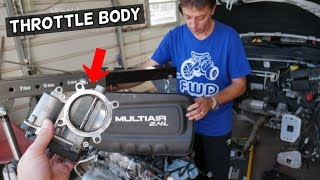
- Faulty Electronic Throttle Body 🔴 High Probability Wear and tear on the internal electronics or carbon buildup can cause the throttle plate to stick or respond incorrectly, a problem noted by owners and mechanics. The internal motor or position sensor can fail, leading to a mismatch between expected and actual airflow.
How to confirm: Inspect the throttle body for heavy carbon buildup around the throttle plate. A mechanic can use a scan tool to monitor the desired vs. actual throttle position to see if it's responding correctly. A sticking plate is a common culprit.
Typical fix: Thoroughly cleaning the throttle body and plate with a dedicated cleaner may provide a temporary fix. However, if the internal electronics are failing, replacement is the only permanent solution. After replacement or significant cleaning, an Electronic Throttle Control (ETC) relearn procedure is required.
Est. part cost: $150-$300 - Vacuum Leak 🔴 High Probability Hoses and gaskets become brittle over time with heat and age, leading to cracks and leaks. Common failure points include the intake manifold gasket, PCV hoses, and hoses connected to the throttle body or brake booster.
How to confirm: The most reliable method is a smoke test, which forces smoke into the intake system to visually pinpoint the source of any leaks. A visual inspection for cracked or disconnected hoses is a good first step. Sometimes a loud hissing sound can be heard near the leak's location.
Typical fix: Replace the cracked hose or failed gasket. Ensure all hose clamps are secure.
Est. part cost: $20-$150 - Outdated Powertrain Control Module (PCM) Software 🟡 Medium Probability Jeep issued several TSBs for early model year Cherokees (and platform mates like the Chrysler 200 and Dodge Dart) to correct software that was too sensitive and could falsely trigger P2172. This is particularly well-documented for 2014-2015 models.
How to confirm: A Jeep dealership or a qualified shop with a wiTECH scan tool can check the current software calibration ID against the latest available version referenced in the TSBs.
Typical fix: Reprogramming (flashing) the PCM with the updated software. This is a dealer-only or specialist repair.
Est. part cost: $150-$300 (dealer labor for flashing). - Faulty Manifold Absolute Pressure (MAP) Sensor ⚪ Low Probability The MAP sensor measures pressure in the intake manifold. If it provides incorrect readings to the PCM, the computer may miscalculate airflow and falsely trigger P2172.
How to confirm: A technician can monitor the MAP sensor's voltage or pressure readings with a scan tool to see if they are rational and change with engine load. With the key on and engine off, the sensor should read close to atmospheric pressure (around 4.5-5.0 volts). At idle, the voltage should drop to 1-2 volts. One owner of a platform-mate vehicle replaced the MAP sensor after checking for vacuum leaks, which resolved the code.
Typical fix: Replace the MAP sensor. It is typically located on the intake manifold.
Est. part cost: $30-$80
Diagnosis Steps
- Check with a Jeep dealer if your VIN has any open recalls or TSBs, especially related to PCM software updates for P2172 (e.g., TSB #18-005-15, #1800416REVA).
- Scan for any other DTCs that may be present to get a more complete picture of the fault. Codes like P219A are a strong clue.
- Perform a thorough visual inspection of the engine bay. Look for any cracked, disconnected, or brittle vacuum hoses, especially around the air intake tube, PCV system, and intake manifold.
- If no visual faults are found, perform a smoke test to definitively locate any vacuum leaks. This is the most effective way to find hairline cracks in gaskets or hoses.
- Inspect the electronic throttle body. Remove the intake boot and check for heavy carbon buildup around the throttle plate that could cause it to stick. Manually move the plate (with the ignition off) to feel for any binding.
- With a capable scan tool, monitor live data for the MAP sensor and throttle position sensor (both desired and actual). Ensure their readings are logical and respond correctly to changes in engine RPM and load.
- If all physical components and wiring test good, the final step is to have the PCM software updated by a dealer or qualified shop, as this is a known fix per multiple TSBs.
Parts You'll Likely Need
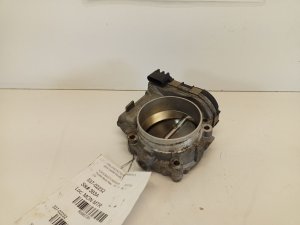
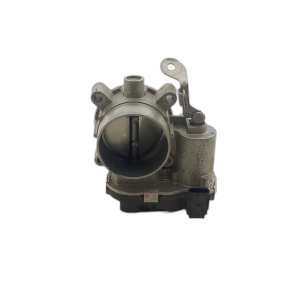
- Electronic Throttle Body
(OEM #04891970AB)— This is a primary cause of P2172 when the issue is not a vacuum leak or software. The internal motor or position sensor fails, leading to incorrect airflow.
Trusted brands: Mopar, Hitachi, Bosch
OEM price range: $200-$300
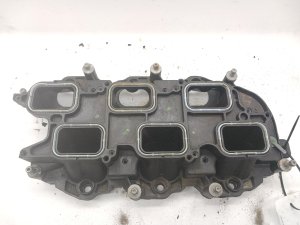
Aftermarket price range: $80-$220 - Intake Manifold Gasket — A common source for a vacuum leak that triggers P2172. The gasket can become hard and brittle, failing to seal the intake manifold to the cylinder head.
Trusted brands: Mopar, Fel-Pro, Mahle
OEM price range: $40-$60
Aftermarket price range: $20-$40 - Manifold Absolute Pressure (MAP) Sensor — If this sensor fails and reports incorrect pressure readings, it can cause the PCM to trigger P2172, even without a physical leak.
Trusted brands: Mopar, Bosch, NTK
OEM price range: $50-$80
Aftermarket price range: $30-$60
Related Codes That Often Appear With This One
- P219A — This code indicates an air-fuel ratio imbalance on Bank 1. It's frequently seen with P2172 because the unmetered air from the vacuum leak causes that bank of cylinders to run lean. This is mentioned in TSBs #18-005-15 and #1800416REVA.
- U1428 — An owner complaint (ODI #11424210) reported this code alongside P2172. It often relates to implausible data from the throttle body or other modules, pointing towards an electronic issue.
- P050D — Cold Start Rough Idle. The extra, unmanaged air from a vacuum leak can make it difficult for the engine to maintain a stable idle, especially when cold. This is cited in TSB #18-005-15 REV. F.
- P1D73 — AGS (Active Grille Shutter) Performance. This code is listed alongside P2172 in TSBs for platform mates like the Dodge Dart and Chrysler 200, suggesting a related software update addresses both.
Technical Service Bulletins (TSBs) & Recalls
- 18-090-21: Confirms P2172 definition and links it with other DTCs.
- 1800416REVA: Notes P2172 and recommends a PCM reflash for 2014-2015 models.
- 18-005-15 REV. B: Mentions improved software to address P2172 on 2015 models.
- 18-005-15 REV. F: Lists P2172 as a code addressed by software enhancements.
- 18-023-16 REV. C: A TSB for the 2015 Chrysler 200 and 2013-2015 Dodge Dart with the same 2.4L engine, explicitly listing a PCM reflash to fix P2172.
Platform-Specific Known Issues
- Multiple TSBs exist for this code. Bulletin #18-090-21 confirms the definition as 'High Airflow/Vacuum Leak Detected'.
- TSB #18-005-15 REV. B and #1800416REVA specifically call out a software update to address P2172 on 2014 and 2015 models.
- An owner of a 2018 model reported the car turning off on its own with code P2172, suspecting a throttle body issue that was not covered by an existing recall for their VIN (NHTSA ODI #11424210).
- Owners of platform mates with the 2.4L engine, like the Dodge Dart and Chrysler 200, report identical stalling symptoms with code P2172, often fixed by a PCM software update or addressing a vacuum leak.
Mechanic-Grade Diagnostic Values
- MAP Sensor Signal Voltage (Key On, Engine Off) — expected: ~4.5 Volts. Failure: Voltage significantly different from atmospheric pressure reading.
- MAP Sensor Signal Voltage (Engine Idling) — expected: 1.0 - 2.0 Volts. Failure: Voltage does not drop significantly from the KOEO reading, or does not fluctuate with throttle application, indicating it is not correctly reading engine vacuum.
- MAP Sensor Reference Voltage — expected: 5.0 Volts. Failure: Voltage is not a steady 5V, indicating a problem with the PCM or wiring, not necessarily the sensor itself.
Scan Tool Commands That Help
- wiTECH or equivalent professional scan tool: Electronic Throttle Control (ETC) Relearn — This procedure is required after cleaning or replacing the electronic throttle body to reset its learned values. The process involves following on-screen prompts, which typically include pressing and releasing the accelerator pedal to allow the PCM to learn the new throttle plate's range of motion.
Wiring & Ground Locations
- G100 — Main engine ground, located on a stud on the engine block behind the engine oil dipstick on the 4.7L V8 (similar location on other engines).. A poor main engine ground can cause erratic behavior from sensors like the TPS and MAP sensor, leading to incorrect readings and codes like P2172.
- G101 — Main battery ground, located on the passenger side fender near the front of the vehicle.. This is the primary ground for the entire electrical system. Corrosion or a loose connection here can cause widespread, intermittent electrical problems.
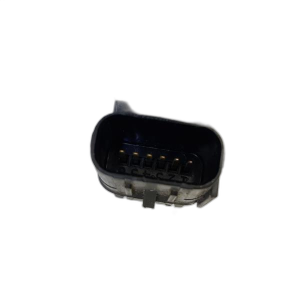
- Throttle Body Connector — The 6-pin electrical connector on the electronic throttle body.. Corroded or damaged pins in this connector can interrupt signals between the PCM and the throttle body motor/position sensor, directly causing throttle control faults.
Real Owner Repair Stories
- Reddit user on r/JeepGrandCherokee (2013 Jeep Grand Cherokee 5.7L V8) — Check Engine Light on, code pointed to throttle body.
❌ Tried (didn't work) Replaced the throttle body with a Duralast part (TB1181D), but the electrical connector did not fit., Returned the Duralast part and installed a Hitachi throttle body (ETB0097).
✅ What actually fixed it The actual cause was a faulty oil pressure switch, not the throttle body. The throttle body replacement did not fix the issue.
When the Usual Fixes Don't Work
- In one documented case for a similar Jeep platform, a user replaced the throttle body twice to fix a related code, only to discover the root cause was a faulty oil pressure switch. This highlights that while P2172 points to the air intake system, other seemingly unrelated sensor failures can sometimes cause the PCM to set misleading codes.
OEM Part Supersession History
04891970AB→4891970AC— Part revision or update by the manufacturer.
Heads up: A Reddit user reported that an aftermarket Duralast throttle body (TB1181D) did not have the correct electrical connector for their 2013 Grand Cherokee, highlighting the importance of verifying fitment even when a part is listed as compatible.
Model Year Variations Within This Range
- 2014-2015: These early model years are specifically called out in multiple TSBs (e.g., #18-005-15, #1800416REVA) as potentially having overly sensitive PCM software that can falsely trigger P2172. A software reflash is the prescribed fix.
Diagnostic Flowchart
Other Known Issues on This Vehicle
Issues unrelated to this code that are worth knowing about as an owner of this generation:
- Excessive Oil Consumption 🔴 High — Widespread across multiple model years, leading to a class-action lawsuit (Wood, et al. v. FCA US, LLC) and warranty extensions. Can manifest at any mileage. (Ref: TSB 09-003-23 (later 09-003-23 Rev A) and XB1 Warranty Extension address this, potentially leading to a free engine replacement if an oil consumption test is failed.)
- ZF 9-Speed Transmission Problems 🟠 Medium — Most common on early models (2014-2016). Symptoms include hard shifts, hesitation, and unexpectedly shifting to neutral. Many issues were addressed by software updates. (Ref: Multiple recalls (e.g., NHTSA 16V-529 / Chrysler S55) and TSBs (e.g., 21-013-16, 18-018-17) were issued to reprogram the Transmission Control Module (TCM).)
- Power Transfer Unit (PTU) Failure 🟠 Medium — A known failure point on 4x4 models. Can cause a 'Service 4WD' light. The issue is often the actuator motor failing due to internal oil leaks or sensor contamination, not the gears themselves.
- Driveshaft Hanger Bearing Failure 🟡 Low — A weak spot on 4x4 models where the hanger bearing fails, often requiring replacement of the entire driveshaft as the bearing is not serviced separately by the OEM. A growling noise is the primary symptom.
- Random Stalling (MultiAir System) 🔴 High — Separate from P2172-related stalling, this issue is tied to the MultiAir system itself. Low oil pressure, incorrect oil viscosity, or dirty oil can cause valve timing to go out of sync, stalling the engine at low speeds or stops. (Ref: A software update was released to improve low-speed transitions and reduce stalling incidents.)
Used vs. New Parts: Buying Guide for This Vehicle
When a used part is the smart pick: For this repair, a used OEM (Mopar) throttle body from a low-mileage, late-model donor vehicle can be a cost-effective alternative to a new OEM part. Given that the issue can be electronic, it is a moderate risk. Used sensors like the MAP sensor are generally not recommended due to their low cost when new and the difficulty in assessing their remaining lifespan.
Donor-vehicle mileage cap: roughly under 60000 miles for the part to have meaningful remaining life.
What to inspect on the donor part:
- Verify the OEM part number on the used throttle body matches your original part or its supersession.
- Inspect the electrical connector pins for any signs of corrosion, bending, or damage.
- Check the throttle plate for heavy carbon buildup or scoring, which might indicate excessive wear.
- Ask for the VIN of the donor vehicle to check for any accident history or flood damage.
OEM-only on this vehicle (don't cheap out):
- Powertrain Control Module (PCM): Due to VIN-specific programming and security protocols, a PCM must be either new from the dealer or from a specialist who can reprogram a used unit for your vehicle.
Aftermarket brands forum-validated for this vehicle:
- Hitachi: Often an OEM supplier, their parts are generally considered reliable.
- Bosch: A well-regarded OEM supplier for many electronic components.
- NTK: Known for quality sensors.
- Fel-Pro: A trusted brand for gaskets like the intake manifold gasket.
Brands owners have reported issues with on this vehicle:
- Unbranded/white-box parts from online marketplaces should be avoided, as their quality and fitment are inconsistent. A user reported a Duralast throttle body did not fit their vehicle despite being listed as compatible, indicating potential issues with some store brands.
Real Owner Stories
Aggregated from forums and TSBs cited above. Mileages and costs reflect what owners reported in those sources.
2015 Dodge Dart 2.4L MultiAir
Symptoms: The vehicle shuts down completely when slightly braking or operating at low RPMs.
What fixed it: A PCM software update (reflash) as specified in TSB #18-023-16 REV. C.
Source hint: Reddit r/dodgedart - "2015 Dodge Dart shutsdown when slightly brakin"
2018 Jeep Cherokee 2.4L MultiAir
Symptoms: The car turned off on its own and triggered code P2172; the owner suspected a throttle body issue.
What fixed it: The context notes the owner reported this to NHTSA, but a specific final repair was not confirmed beyond the suspected throttle body fault.
Source hint: NHTSA ODI #11424210
2022 Dodge Dart 2.4L MultiAir
Symptoms: Stalling at low RPMs accompanied by the P2172 code.
What fixed it: The owner investigated the throttle body and potential vacuum leaks as primary causes.
Source hint: Reddit r/dodgedart - "P2172 code" (2022)
Related OBD-II Codes
Frequently Asked Questions
My 2014 Jeep Cherokee is stalling at low RPMs; is there a specific software update for this?
Can a dirty throttle body cause the P2172 code on my 2.4L MultiAir engine?
I have a 2018 Cherokee with P2172 that shuts off while driving. Is this covered by a recall?
How can I confirm if a vacuum leak is causing P2172 on my Jeep?
What should the MAP sensor readings look like on a healthy 2.4L Tigershark engine?
Helpful Videos
Used OEM Parts in Stock

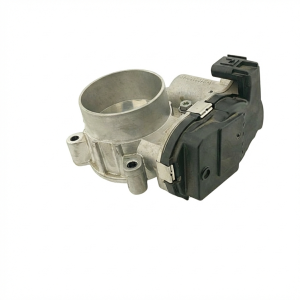
New Aftermarket Parts Available


The information in this article is provided for general reference and educational purposes only. Vehicle specifications, procedures, and part compatibility can vary by production date, trim level, and region. Always consult your vehicle's factory service manual and verify part numbers before purchasing or performing repairs. Safety-critical components such as airbags, seat belts, and braking systems should be installed by a qualified professional.
- Jeep Cherokee:
- 🎬 Helpful Videos
- 🛍️ Shop This Part
- What's Unique About the 2014-2023 Jeep Cherokee
- Symptoms You May Notice
- Most Likely Causes
- Diagnosis Steps
- Parts You'll Likely Need
- Related Codes That Often Appear With This One
- Technical Service Bulletins (TSBs) & Recalls
- Platform-Specific Known Issues
- Mechanic-Grade Diagnostic Values
- Scan Tool Commands That Help
- Wiring & Ground Locations
- Real Owner Repair Stories
- When the Usual Fixes Don't Work
- OEM Part Supersession History
- Model Year Variations Within This Range
- Diagnostic Flowchart
- Other Known Issues on This Vehicle
- Used vs. New Parts: Buying Guide for This Vehicle
- Real Owner Stories
- 2015 Dodge Dart 2.4L MultiAir
- 2018 Jeep Cherokee 2.4L MultiAir
- 2022 Dodge Dart 2.4L MultiAir
- Related OBD-II Codes
- Frequently Asked Questions
- 🎟️ Get 5% Off