

P2172 on 2014-2020 Jeep Cherokee: High Airflow/Vacuum Leak Causes & Fixes
This code indicates a vacuum leak or a faulty throttle body. On 2014-2015 models with the 2.4L engine, a simple software update at the dealership might be the fix. Otherwise, expect to diagnose a vacuum leak (around $100-$200 for a smoke test) or replace the throttle body (around $150-$450 for the part).
- For 2014-2015 models, check for PCM software updates first, as this is a known issue with a specific fix from Jeep.
- The most common physical cause is a vacuum leak from a cracked hose or bad intake gasket. A smoke test is the best way to find it.
- Symptoms like stalling and rough idle are serious safety concerns that should be addressed promptly.
- A dirty or failing throttle body is another likely culprit if no vacuum leaks are found.
- Don't immediately replace oxygen sensors; they are usually reacting to the problem, not causing it.
What's Unique About the 2014-2020 Jeep CHEROKEE

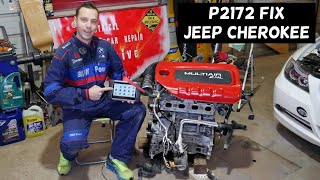
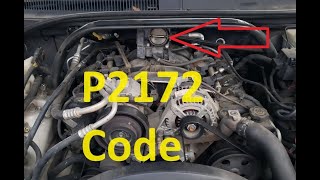
For the Jeep Cherokee (KL generation), especially early 2014-2015 models with the 2.4L engine, this code is frequently linked to software glitches in the PCM. Multiple Technical Service Bulletins (TSBs) were issued by FCA (now Stellantis) to address this specific issue, with TSB 18-005-15 Rev. B applying to vehicles built on or before October 21, 2014, and later revisions extending to vehicles built on or before March 30, 2015. This means a trip to the dealer for a software reflash could be the first and only fix required 🎬 Watch: A quick overview of fixing the P2172 code, a scenario less common on other vehicles where the cause is almost always a physical component failure like a vacuum leak or bad throttle body.
Diagnostic Flowchart

Tap your situation to follow the diagnostic path that matches what you're seeing on this vehicle.
Symptoms You May Notice
- Check Engine Light is on
- Engine stalling, especially at idle or when coming to a stop.
- Rough or unstable idle.
- Hesitation or lack of power during acceleration.
- Vehicle enters 'limp mode' with reduced power, often with a throttle control warning light.
- In some cases, a no-start or difficult start condition.
- Hissing noise from the engine bay due to a vacuum leak.
- Engine stumbles or briefly stalls during sudden throttle inputs.
- Replacing oxygen (O2) sensors. O2 sensors will often report a lean condition (which can trigger other codes) as a result of the vacuum leak, but they are not the root cause of P2172.
Most Likely Causes

- Outdated Powertrain Control Module (PCM) Software 🔴 High Probability Specifically cited in TSBs like #18-005-15 REV. B and #18-004-16 REV. A for 2014-2015 models with the 2.4L engine. The original software was too sensitive and could falsely trigger the code, often with P219A. TSB 18-005-15 Rev. C applies to 2.4L vehicles built on or before March 30, 2015.
How to confirm: A Jeep dealership or a qualified shop with a wiTECH scan tool can check the current software calibration ID against the latest versions mentioned in the TSBs. Provide your VIN to the dealer to check for open Rapid Response Transmittals (RRTs) like 15-013.
Typical fix: Reprogram (flash) the PCM with the updated software. This is a dealer or specialty shop procedure.
Est. part cost: $0 - $200 (Labor for flashing) - Vacuum Leak 🔴 High Probability Vacuum hoses can become brittle and crack over time. The intake manifold gaskets are a known failure point, causing unmetered air to enter the cylinders. A leaking PCV valve or hose is also a common culprit.
How to confirm: Perform a smoke test. This involves feeding pressurized smoke into the intake system and watching for where it escapes. Common leak points are the intake manifold gaskets, the throttle body gasket, and any vacuum hoses connected to the intake manifold, such as the PCV hose or brake booster line.
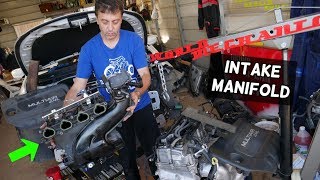
Typical fix: Replace the cracked hose or failed gasket. Intake manifold gasket replacement is a more involved job. 🎬 Watch: Step-by-step intake manifold and gasket replacement guide
Est. part cost: $10 - $100 - Faulty Electronic Throttle Body 🟡 Medium Probability The owner complaint ODI #11424210 mentions a suspected throttle body failure causing the car to shut off. Carbon buildup can cause the throttle plate to stick, or the internal electronics can fail, leading to stalling and erratic idle. Forum users frequently report replacing the throttle body as the ultimate fix after ruling out software and vacuum leaks.
How to confirm: Inspect the throttle body for heavy carbon buildup. Test the throttle position sensor data with a scan tool to see if it's reporting correctly. A mechanic can also command the throttle body to open and close to check for sticking or delayed response.
Typical fix: Clean the throttle body thoroughly with a dedicated cleaner. If cleaning doesn't work or if the electronics have failed, the entire throttle body assembly must be replaced.
Est. part cost: $150 - $450 - Faulty Manifold Absolute Pressure (MAP) Sensor ⚪ Low Probability
How to confirm: Check the MAP sensor's readings at idle and under load with a scan tool to see if they are within the expected range. Compare its reading to the barometric pressure with the key on, engine off. A faulty sensor can misreport airflow, triggering the code.
Typical fix: Replace the MAP sensor.
Est. part cost: $40 - $100
Rare But Worth Checking
- Cracked Air Intake Tube: A crack in the flexible intake tube between the air filter box and the throttle body can allow unmetered air to enter, causing this code. Check for loose clamps as well.
- Leaking PCV Valve or Hose: The Positive Crankcase Ventilation (PCV) system is part of the vacuum system. A stuck-open PCV valve or a cracked hose can create a significant vacuum leak.
- Leaking Brake Booster or Hose: The brake booster operates on engine vacuum. A leak in the booster diaphragm or the hose connecting it to the intake manifold can be a significant, often overlooked, vacuum leak source.
Diagnosis Steps
- Check for Software Updates: If you have a 2014-2015 model with the 2.4L engine, your first step should be to contact a Jeep dealer with your VIN. Ask them to check for open recalls or applicable TSBs like #18-005-15 and #18-004-16 related to PCM updates for P2172.
- Visual Inspection: Thoroughly inspect the engine bay for any obvious disconnected, cracked, or brittle vacuum hoses, especially around the intake manifold, PCV system, and the air intake tube between the air filter and throttle body.
- Perform a Smoke Test: This is the most effective way to find a vacuum leak. A mechanic will introduce smoke into the intake system and look for where it escapes. Pay close attention to the intake manifold gaskets and the throttle body mounting point.
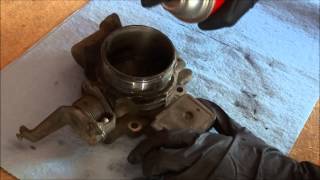
- Inspect and Clean Throttle Body: Remove the air intake hose and inspect the throttle body plate for heavy carbon buildup. Clean it with a dedicated throttle body cleaner and a soft cloth, moving the plate by hand 🎬 See this walkthrough on how to clean your throttle body to clean all surfaces.
- Test the MAP Sensor: Use a scan tool to monitor the MAP sensor voltage. With the key on and engine off, it should read close to the barometric pressure. The reading should drop significantly when the engine is started.
- Test Throttle Body Actuator: With a bidirectional scan tool, command the throttle plate to open and close to ensure it moves smoothly without sticking or making unusual noises.
Parts You'll Likely Need

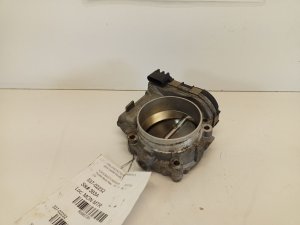
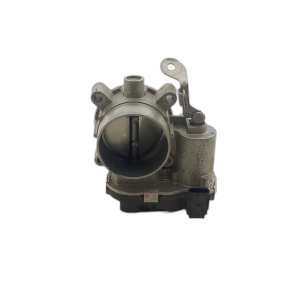
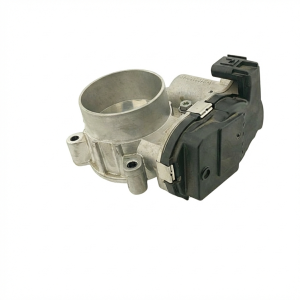
- Electronic Throttle Body
(OEM #68263954AA (2.4L), 68185626AD (3.2L) - Note: Verify with VIN)— Often the cause if cleaning doesn't resolve the issue or if the internal electronics fail, leading to stalling and high idle. [ODI #11424210, 9]
Trusted brands: Mopar, Hitachi, Bosch
OEM price range: $250-$450
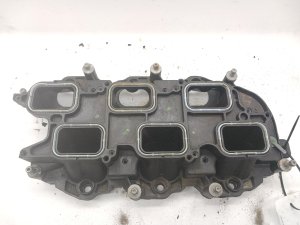
Aftermarket price range: $150-$250 - Intake Manifold Gasket — A common source of vacuum leaks that will trigger P2172. The gasket can become hard and brittle over time, failing to seal properly.
Trusted brands: Fel-Pro, Mahle, Mopar
OEM price range: $30-$60
Aftermarket price range: $15-$40 - Vacuum Hose — Rubber hoses crack with age and heat exposure, creating vacuum leaks. This is a simple and inexpensive but very common fix.
Trusted brands: Mopar, Continental
OEM price range: $10-$50
Aftermarket price range: $5-$25
Related Codes That Often Appear With This One
- P219A — This code for 'Air-Fuel Ratio Cylinder Imbalance Bank 1' is frequently cited alongside P2172 in manufacturer TSBs, as a large vacuum leak affects the air-fuel mixture. [Bulletin #18-005-15 REV. B]
- P050D — 'Cold Start Rough Idle' is a direct symptom of the unmetered air causing an unstable air-fuel mixture when the engine is cold. [Bulletin #18-005-15 REV F]
- U1428 — An owner complaint reported this code for 'Implausible Ignition Key Off Time Received' along with P2172, suggesting a potential electrical or module communication issue related to the stalling. [ODI #11424210]
- P0300-P0306 — Misfire codes (e.g., P0305) can occur because the lean condition caused by the vacuum leak prevents proper combustion in one or more cylinders.
Technical Service Bulletins (TSBs) & Recalls

- 18-090-21: Mentions P2172 - High Airflow/Vacuum Leak Detected (Instantaneous Accumulation) as one of several DTCs that may illuminate the MIL.
- 1800416REVA: Lists P2172 as a code that can be addressed by a software update for 2014-2015 models.
- 18-005-15 REV. B: Notes that P2172 can be set on 2015 models with the 2.4L engine built on or before October 21, 2014, and is addressed by a software update.
- 18-005-15 REV. F: Includes P2172 in a list of codes that can be resolved with a PCM software update on 2014-2015 models.
- 18-005-15 REVC: Specifies a PCM software update for P2172 on 2015 KL models with the 2.4L engine built on or before March 30, 2015.
Platform-Specific Known Issues
- A series of TSBs (#18-005-15 REV. B, #18-005-15 REV. F, #18-004-16 REV. A) were released for 2014 and 2015 Jeep Cherokees, primarily with the 2.4L engine, to update the PCM software. This update corrected logic that could incorrectly set code P2172, often along with P219A.
- An owner of a 2018 model reported the car turning off on its own with code P2172, suspecting a throttle body failure. [ODI #11424210]
- A Reddit user with a 2015 Cherokee described the electronic throttle control light (lightning bolt) appearing, the car going into limp mode, and then stalling completely, which was diagnosed by another user as a 99.9% chance of being a faulty throttle body.
Mechanic-Grade Diagnostic Values
- MAP Sensor Voltage (Key On, Engine Off) — expected: ~4.5 Volts (reflecting atmospheric pressure). Failure: Voltage significantly different from atmospheric pressure reading indicates a faulty sensor.
- MAP Sensor Voltage (Engine Idling) — expected: ~1.0 - 1.5 Volts (reflecting high manifold vacuum). Failure: Voltage that is too high at idle (e.g., over 2.0V) suggests a vacuum leak or a faulty sensor that isn't correctly reading the vacuum.
- MAP Sensor Ground Wire Voltage — expected: Close to 0 Volts (typically less than 0.03V or 30mV). Failure: Any voltage higher than this indicates a poor ground connection, which can skew the sensor's signal.
- MAP Sensor 5V Reference Wire Voltage — expected: Steady ~5.0 Volts (Key On, Engine Off or Running). Failure: Voltage that is low, high, or fluctuating indicates a problem with the PCM or wiring, not necessarily the sensor itself.
Scan Tool Commands That Help
- wiTECH (Dealer Tool): Reprogram PCM — This is the required procedure to apply the software updates specified in TSBs for 2014-2015 models to fix false P2172 codes.
- Manual Procedure: Throttle Body Relearn/Adaptation Reset — After cleaning or replacing the throttle body to allow the ECU to learn the new closed and open positions. The procedure is typically: 1. Turn ignition to 'On' (engine off). 2. Slowly press the accelerator pedal to the floor and release it completely. Repeat several times. 3. Start the engine and let it idle for about 10 minutes without touching the throttle.
- Advanced Scan Tool (e.g., Autel): Throttle Actuator Test — To command the throttle plate to open and close while observing its movement and sensor readings. This helps verify if the throttle body is sticking, has a dead spot, or is responding slowly.
Wiring & Ground Locations
- Engine Block to Chassis/Firewall Ground — Typically a braided strap from the rear of the cylinder head to the firewall on the driver's side, or a large cable from the block to the chassis.. A poor main engine ground can cause erratic behavior in all engine sensors, including the throttle position and MAP sensors, leading to false codes. This is a critical check for many unexplainable electronic issues on Jeeps.
- Dipstick Tube Stud Ground — A ground wire attached to the same stud that holds the engine oil dipstick tube to the block.. On older Jeeps, this was a notoriously important ground point for various sensors. While not confirmed for the KL Cherokee specifically, it's a known trouble spot in the brand's history and is worth inspecting for tightness and corrosion.
Real Owner Repair Stories
- Reddit user tjenkins0819 (2016 Jeep Cherokee 2.4L) — Rough idle, vehicle dies when slowing to a stop, goes into limp mode. Codes P2172, P0123, P0222.
❌ Tried (didn't work) Cleaning the throttle body and performing a relearn procedure.
✅ What actually fixed it The issue was only resolved for 10 minutes after cleaning. The presence of throttle position sensor (TPS) codes P0123 and P0222 alongside P2172 strongly indicated the internal electronics of the throttle body had failed, requiring a full replacement of the throttle body assembly. - YouTube channel 'FIX Your Car' (Jeep Cherokee (year not specified, but KL body style)) — High airflow / vacuum leak codes P2172 and P2173.
❌ Tried (didn't work) Initial diagnosis was confusing because the throttle body had just been replaced.
✅ What actually fixed it The mechanic discovered the replacement throttle body was a multi-application part and had an extra, uncapped vacuum nipple on the back that was not present on the OEM part for that specific vehicle. This was creating a massive vacuum leak. The fix was to plug the unused vacuum port.
"I Checked Everything" — The Actual Cause
- A leaking brake booster diaphragm can cause a large vacuum leak, triggering P2172. This may be missed by a smoke test because the leak often only occurs when the brake pedal is pressed, and the check valve in the booster hose can prevent smoke from entering the booster itself. Symptoms include a hissing sound when braking and a change in engine RPM when the pedal is applied.
- An incorrect aftermarket throttle body was installed that had an open, unused vacuum port. This acted as a huge vacuum leak directly on the throttle body itself, which could be missed if a smoke test is performed by connecting the machine to the intake boot further upstream.
When the Usual Fixes Don't Work
- While cleaning a carbon-fouled throttle body can sometimes resolve idle and stalling issues, it may only be a temporary fix. In a documented case with a 2016 Cherokee, cleaning the throttle body resolved the P2172 code and symptoms for only about 10 minutes before they returned. The underlying issue was a failure of the internal throttle position sensors, necessitating a complete throttle body replacement.
Model Year Variations Within This Range
- 2014-2015: These model years, particularly with the 2.4L engine, are subject to multiple TSBs for a PCM software update. For these vehicles, checking for a software update should be the first diagnostic step. [Bulletin #18-005-15 REV. B, Bulletin #1800416REVA]
- 2016-2020: For these later models, the software-related issues were largely resolved from the factory. A P2172 code is much more likely to be caused by a physical fault, such as a vacuum leak or a failed throttle body, making physical inspection and testing more critical than checking for software updates.
Helpful Videos
Used OEM Parts in Stock

New Aftermarket Parts Available


The information in this article is provided for general reference and educational purposes only. Vehicle specifications, procedures, and part compatibility can vary by production date, trim level, and region. Always consult your vehicle's factory service manual and verify part numbers before purchasing or performing repairs. Safety-critical components such as airbags, seat belts, and braking systems should be installed by a qualified professional.
- Jeep CHEROKEE:
- 🎬 Helpful Videos
- 🛍️ Shop This Part
- What's Unique About the 2014-2020 Jeep CHEROKEE
- Diagnostic Flowchart
- Symptoms You May Notice
- Most Likely Causes
- Rare But Worth Checking
- Diagnosis Steps
- Parts You'll Likely Need
- Related Codes That Often Appear With This One
- Technical Service Bulletins (TSBs) & Recalls
- Platform-Specific Known Issues
- Mechanic-Grade Diagnostic Values
- Scan Tool Commands That Help
- Wiring & Ground Locations
- Real Owner Repair Stories
- "I Checked Everything" — The Actual Cause
- When the Usual Fixes Don't Work
- Model Year Variations Within This Range
- 🎟️ Get 5% Off