

P2155 on 2009-2014 GMC Acadia: Fuel Injector Group 'D' Circuit Causes and Fixes
On a 2009-2014 GMC Acadia, code P2155 is most often caused by a chafed fuel injector wiring harness, a known issue documented in GM Technical Service Bulletin #PIP4924D. The chafe is commonly found where the harness rubs against the intake plenum or valve cover bolts. The fix is typically a low-cost wire repair rather than replacing expensive components.
- P2155 on a 2009-2014 Acadia almost always points to a problem with the fuel injector wiring harness.
- Before buying any parts, perform a detailed visual inspection of the harness for signs of rubbing or damage.
- The most likely fix is a simple wire repair, which can save hundreds of dollars compared to replacing injectors or the ECM.
- This is a known pattern failure acknowledged by GM in a Technical Service Bulletin (TSB).
- Driving with this code can lead to catalytic converter damage, so it should be addressed promptly.
What's Unique About the 2009-2014 Gmc ACADIA
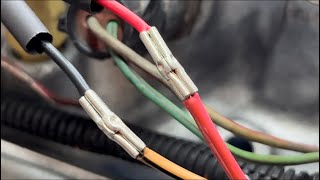
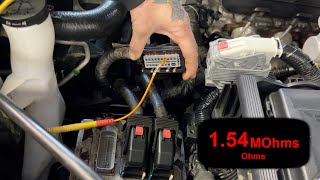
The first-generation GMC Acadia and its platform mates (Buick Enclave, Chevrolet Traverse, Saturn Outlook) with the 3.6L V6 engine are known for a specific wiring vulnerability. GM issued Technical Service Bulletin #PIP4924D 🎬 Watch: A mechanic explains this common GM injector fault code. which directly addresses code P2155 and points to the fuel injector wiring harness rubbing through or developing an internal open circuit. Common chafe points are against the intake plenum, at valve cover bolts, against the fuel line, and on the side of the cylinder head under the plenum. This is not a random failure but a well-documented pattern issue related to the harness's routing and contact with other engine components.
Diagnostic Flowchart
Tap your situation to follow the diagnostic path that matches what you're seeing on this vehicle.
Symptoms You May Notice
- Check Engine Light is on
- Engine runs rough or has a noticeable misfire
- Hesitation or stumbling during acceleration
- Reduced engine power (may enter 'limp mode')
- Rough or unstable idle
- Hard starting
- Engine may stall
- Replacing a fuel injector without first thoroughly inspecting the wiring harness. The symptoms of a bad wire and a bad injector are nearly identical, but the wiring is the much more common failure point for this code on this vehicle.
Most Likely Causes
- Chafed or Damaged Fuel Injector Wiring Harness 🔴 High Probability As documented in TSB #PIP4924D, the harness routing causes it to rub against engine components. Specific chafe points mentioned by GM and owners are: against the intake plenum, at valve cover bolts, against the fuel line, and on the side of the cylinder head under the plenum. Engine movement during normal operation accelerates this wear, leading to broken wires.
How to confirm: Remove the plastic engine cover. Perform a careful visual and tactile inspection of the entire fuel injector harness where it runs over the valve covers and connects to the fuel rail. Pay extremely close attention to the loom where it passes near sharp metal edges of brackets or bolts. The damage is often a small rub-through that is difficult to see without moving the harness.
Typical fix: Repair the damaged section of wire using butt connectors and heat shrink tubing, or by soldering and sealing with heat shrink. Wrap the repaired area and any other potential rub spots with high-quality automotive fabric tape 🎬 See this guide on how to repair engine harness wiring. (e.g., Tesa tape) for added protection. Reroute the harness slightly if possible to increase clearance from the chafe point. If damage is extensive, the entire harness may need replacement.
Est. part cost: $5 - $250 - Failed Fuel Injector ⚪ Low Probability
How to confirm: After confirming the wiring is intact, you can test the injector. Use a multimeter to check the resistance across the injector's two pins (it should be within the manufacturer's specified range, not an open circuit). You can also use a 'noid light' to verify the ECM is sending a pulse signal to the injector connector.
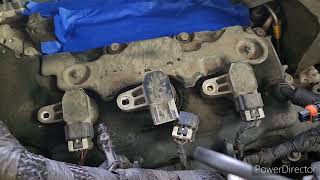
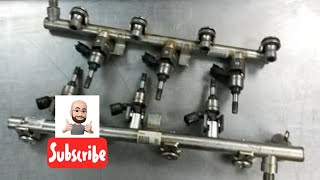
Typical fix: Replace the faulty fuel injector. It is often recommended to replace the full set, or at least the bank of three, if they are original and high-mileage, as mixing old and new injectors 🎬 Watch: Step-by-step walkthrough for fuel injector and spark plug replacement. can sometimes cause performance imbalances.
Est. part cost: $80 - $160 per injector - Failed Engine Control Module (ECM) ⚪ Low Probability
How to confirm: This is a diagnosis of exclusion. If the wiring harness (including continuity checks from the ECM connector to the injector connector) and the fuel injectors have been tested and are known to be good, the fault may lie with the injector driver circuit inside the ECM. A technician on the MHH Auto forum with P2152 and P2155 confirmed continuity but still had no voltage, pointing towards the ECM as the final step.
Typical fix: Replace and reprogram the Engine Control Module. This typically requires a professional shop or a specialized service that provides pre-programmed modules.
Est. part cost: $400 - $800
Rare But Worth Checking
- Corroded or Loose Connector Pins: Check the pins at both the fuel injector connector and the main ECM connector. Moisture or oil intrusion can cause corrosion that interrupts the signal, mimicking an open circuit. The plastic locking tab on the injector connector can also become brittle and break, leading to a loose connection.
- Blown Fuse: The injector circuits are protected by fuses (often labeled ECM/INJ or similar in the fuse box). A short in the harness can blow the fuse, creating an open circuit for the entire group of injectors. A technician on iATN reported a 2011 Traverse blowing the ECM1 fuse along with setting P2155.
Diagnosis Steps
- Read the trouble codes with an OBD-II scanner and note any other codes present, especially misfire (P030x) or other injector group (P21xx) codes.
- Perform a thorough visual inspection of the fuel injector wiring harness. Remove the engine cover. Pay close attention to areas identified in TSB PIP4924D: where the harness bends, is secured by clips, passes near valve cover bolts, or touches the intake plenum or fuel lines.
- If a damaged section is found, repair the wires securely. Clear the codes and test drive to see if the fault returns.
- If no visual damage is found, disconnect the connector for the suspect injector(s) (cylinders 3 and 6). Use a noid light to check for a pulse signal from the ECM while cranking the engine.
- If there is no pulse, check for voltage on the power supply wire at the injector connector using a multimeter.
- If power is missing, check the related fuses (e.g., ECM1, INJ). If the fuse is good, check for continuity of the power and signal wires between the injector connector and the ECM connector. Wiggle the harness during the continuity test to expose intermittent breaks.
- If all wiring tests pass and the injector is receiving power but not firing correctly (confirmed with a noid light or by listening for a click), the fuel injector itself is likely faulty.
- If all wiring, fuses, and injectors are confirmed to be good, the ECM is the most likely remaining point of failure.
Parts You'll Likely Need
- Fuel Injector Wiring Harness
(OEM #12621095)— This is the complete engine wiring harness which includes the injector connectors. It is the most comprehensive but also most expensive fix if the original harness is too damaged to repair.
Trusted brands: Genuine GM
OEM price range: $200-$350 - Fuel Injector Connector Pigtail
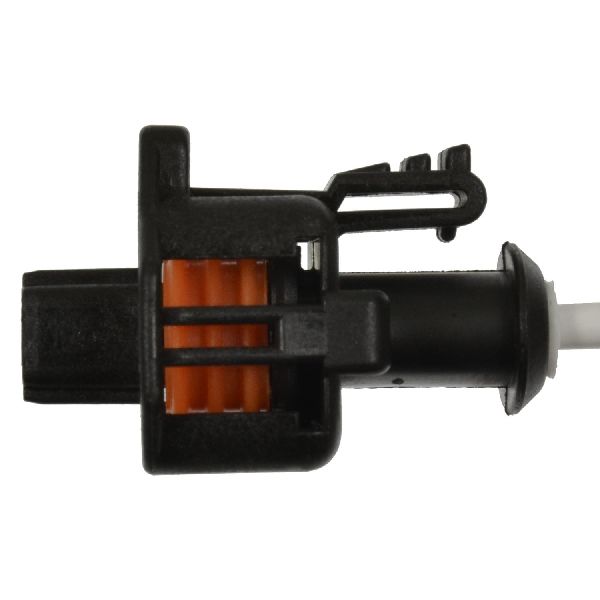
(OEM #ACDelco PT2183 / GM 88988963)— If only the connector at the injector is damaged, a pigtail can be spliced in, which is much cheaper and easier than replacing the whole harness.
Trusted brands: ACDelco, Standard Motor Products (S-824)
OEM price range: $25-$40
Aftermarket price range: $10-$25 - Fuel Injector
(OEM #12638530 (2009-2011), superseded by 12669384 (fits 2009-2014+))— If the injector itself has failed internally, it will need to be replaced. Part number 12638530 was used on early models and has been superseded by 12669384. It is critical to use the correct injector for the direct-injection 3.6L LLT engine.
Trusted brands: ACDelco, Bosch
OEM price range: $110-$160
Aftermarket price range: $50-$90
Related Codes That Often Appear With This One
- P0300 — A random misfire code is common because the injector fault prevents proper combustion in one or more cylinders.
- P0303, P0306 — Cylinder-specific misfire codes for cylinders 3 and/or 6 may be stored, as these injectors are typically in Group 'D' for this engine.
- P2146 — Fuel Injector Group 'A' Supply Voltage Circuit/Open. If multiple sections of the harness are chafed, codes for other injector groups may appear simultaneously.
- P2149 — Fuel Injector Group 'B' Supply Voltage Circuit/Open. Similar to P2146, this indicates widespread harness damage.
- P2152 — Fuel Injector Group 'C' Supply Voltage Circuit/Open. A forum user with a 2009 Acadia reported having P2152 and P2155 together, indicating a fault affecting multiple injector circuits, which ultimately pointed to a wiring issue.
Technical Service Bulletins (TSBs) & Recalls
- PIP4924D: Instructs technicians to inspect the fuel injector wiring harness for rubbing through or internal wire opens when encountering a range of fuel injector codes, including P2155. It lists common chafe spots as 'against the intake plenum, at valve cover bolts, against the fuel line and on the side of the head under the plenum'.
Platform-Specific Known Issues
- A known issue, documented by GM in TSB #PIP4924D, involves the fuel injector wiring harness chafing against engine components, causing an open or short circuit that triggers codes P2155, P2152, and others.
- Owners on AcadiaForum.net frequently report this issue. In one thread titled '2011 with P2155 Fuel Injector Group D Supply Voltage', the owner found a broken wire in the harness near the front valve cover, confirming the TSB's accuracy. The repair involved splicing the wire and
Mechanic-Grade Diagnostic Values
- Fuel Injector Coil Resistance (2009-2011 3.6L LLT Engine) — expected: 10 - 15 Ohms. Failure: A reading of infinity (Open Loop), near-zero (short), or significantly outside the expected range.
- Fuel Injector Coil Resistance (2012-2014 3.6L LFX Engine) — expected: 1.2 - 1.8 Ohms. Failure: A reading outside this very narrow range indicates an internal injector fault. Note the significant difference from the earlier LLT engine.
- Injector Supply Voltage (at connector, Key On Engine Off) — expected: 11.5 - 12.5 Volts (Battery Voltage). Failure: Voltage below 10V indicates excessive resistance, a short in the harness, or a problem upstream.
- Wiring Harness Continuity — expected: < 0.2 Ohms. Failure: Resistance greater than 0.2 Ohms on a circuit indicates a compromised wire or poor connection.
- Injector Pulse Width (Scan Tool, at idle) — expected: 2 - 4 milliseconds (ms). Failure: A value of 0 ms on the affected cylinders while others show a pulse indicates the ECM is not commanding the injector or the signal is lost.
Scan Tool Commands That Help
- GDS2 (GM Dealer Software): Fuel Injector Balance Test — After confirming wiring is intact, this test can identify a mechanically or electrically failed injector without removing it. The tool commands each injector to fire and measures the corresponding drop in fuel rail pressure, comparing the results across all cylinders to find a weak or non-contributing one.
- Professional Scan Tool (e.g., GDS2, Snap-On Solus): View 'Injector Circuit Status' Parameter — During diagnosis with the key on, this data PID shows how the ECM sees the circuit. For this code, it will likely display 'Open' for the affected injector group, confirming the ECM's diagnosis.
Wiring & Ground Locations
- X160 / X161 — Multi-pin harness connectors located at the rear of the intake manifold.. These are the main junction connectors between the engine harness and the injector sub-harness. They are a key point for disconnecting to test continuity and isolate faults between the ECM and the injectors without major disassembly.
- G110 — Right front of the engine, mounted to the cylinder head.. This is a primary engine ground. A loose or corroded connection here can cause unstable voltage references for the ECM and its sensor inputs, potentially leading to a variety of electrical fault codes.
- G112 — Rear of the engine, mounted to the rear of the cylinder head (on 2011 models).. This is another critical engine ground point. A fault here can interrupt the ground path for various components, and while not directly on the injector circuit, poor grounding can cause unpredictable behavior in the ECM's driver circuits.
- ECM Connector (X1) — At the Engine Control Module.. When testing from the ECM, it's useful to know that the injector control (low side driver) wires are solid colors, while the high voltage supply (high side driver) wires have a white tracer. This helps identify the correct pins for continuity and voltage tests.
Real Owner Repair Stories
- traverseforum.com user report (Chevrolet Traverse) (2009-2014 GM Lambda platform vehicle (shared with Acadia)) — Check Engine Light with codes P0273 (Cylinder 5 Injector Circuit Low) and P0305 (Cylinder 5 Misfire).
❌ Tried (didn't work) Initial diagnosis was inconclusive.
✅ What actually fixed it A single wire in the fuel injector harness located on the back of the engine had rubbed through on a metal bracket. Repairing the damaged wire by splicing it resolved both fault codes. This aligns perfectly with TSB #PIP4924D.
When the Usual Fixes Don't Work
- While the primary cause of P2155 is overwhelmingly the chafed wiring harness, a significant counterpoint to a simple diagnosis is the mid-generation switch from the LLT to the LFX engine in 2012. A technician who is unaware of this change may use the wrong electrical specifications when testing the fuel injectors. For example, testing a healthy 1.5 Ohm injector from a 2013 LFX engine against the 12 Ohm specification for the older LLT engine would incorrectly lead them to believe the injector is shorted, resulting in a misdiagnosis and unnecessary parts replacement.
OEM Part Supersession History
12611545, 12632255, 12638530→12669384— Standard part evolution for improved reliability and manufacturing updates.
Heads up: CRITICAL: These part numbers are for the high-impedance injectors used in the 2009-2011 (LLT) engine ONLY. They are NOT compatible with the 2012-2014 (LFX) engine, which requires different, low-impedance injectors. Using the wrong type will cause immediate running issues and fault codes.
Model Year Variations Within This Range
- 2009-2011: These model years use the 3.6L LLT V6 engine. Key features for this diagnosis are high-impedance fuel injectors (~12 Ohms), a Bosch ECM, and an aluminum intake manifold.
- 2012-2014: These model years use the updated 3.6L LFX V6 engine. Key differences are low-impedance fuel injectors (~1.5 Ohms), a Delphi ECM, and a composite intake manifold with integrated exhaust manifolds. Using the injector resistance specification from the earlier LLT engine will lead to a misdiagnosis.
Helpful Videos
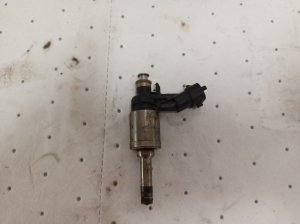
Used OEM Parts in Stock
New Aftermarket Parts Available



The information in this article is provided for general reference and educational purposes only. Vehicle specifications, procedures, and part compatibility can vary by production date, trim level, and region. Always consult your vehicle's factory service manual and verify part numbers before purchasing or performing repairs. Safety-critical components such as airbags, seat belts, and braking systems should be installed by a qualified professional.
- Gmc ACADIA:
- 🎬 Helpful Videos
- 🛍️ Shop This Part
- What's Unique About the 2009-2014 Gmc ACADIA
- Diagnostic Flowchart
- Symptoms You May Notice
- Most Likely Causes
- Rare But Worth Checking
- Diagnosis Steps
- Parts You'll Likely Need
- Related Codes That Often Appear With This One
- Technical Service Bulletins (TSBs) & Recalls
- Platform-Specific Known Issues
- Mechanic-Grade Diagnostic Values
- Scan Tool Commands That Help
- Wiring & Ground Locations
- Real Owner Repair Stories
- When the Usual Fixes Don't Work
- OEM Part Supersession History
- Model Year Variations Within This Range
- 🎟️ Get 5% Off