

P2152 on 2010-2014 Cadillac SRX: Injector Group 'C' Circuit Fault Causes & Fixes
On a 2010-2014 Cadillac SRX with the 3.0L or 3.6L V6, code P2152 almost always indicates a damaged fuel injector wiring harness, as documented in GM Technical Service Bulletin #PIP4924D. The fix involves carefully inspecting the harness for chafing or breaks, particularly where it passes over the intake plenum and near valve cover bolts, and repairing or replacing it.
- P2152 on a 2010-2014 SRX is a critical code that should be addressed immediately.
- The cause is almost certainly a damaged fuel injector wiring harness, as confirmed by GM TSB #PIP4924D.
- Do not replace the fuel injectors; the problem lies in the wiring that supplies power to them.
- A thorough visual inspection of the harness for chafing, especially where it contacts the engine, is the most important diagnostic step.
- The fix is either repairing the damaged wires or replacing the affected section of the harness.
What's Unique About the 2010-2014 Cadillac SRX
The 2010-2014 Cadillac SRX, along with many other GM vehicles from this era using the 3.0L and 3.6L V6 engines, is known for this specific issue. General Motors released a Technical Service Bulletin (TSB #PIP4924D) that points directly to the fuel injector wiring harness as the culprit. The harness routing makes it prone to rubbing against engine components like the intake plenum, valve cover bolts, or fuel lines, eventually causing wires to break or short out. This is a well-documented pattern failure across this GM engine family.
Diagnostic Flowchart
Tap your situation to follow the diagnostic path that matches what you're seeing on this vehicle.
Symptoms You May Notice
- Severe engine misfiring and shaking
- Drastic loss of engine power
- Flashing Check Engine Light
- Rough, unstable idle
- Engine may stall or fail to start
- Reduced Power message on the driver information center
- Replacing one or more fuel injectors. This code points to a voltage supply problem for an entire *group* of injectors, making a single injector failure an unlikely cause. The issue is with the circuit that powers them, not the injectors themselves.
Most Likely Causes
- Chafed or Damaged Fuel Injector Wiring Harness 🔴 High Probability As explicitly stated in GM Technical Service Bulletin #PIP4924D, the injector harness is known to rub through against the intake plenum, valve cover bolts, or fuel lines, causing an open or short circuit. The TSB specifically calls out these common chafe points for inspection.
How to confirm: Perform a careful visual and physical inspection of the entire fuel injector wiring harness where it runs over and around the engine. Pay close attention to where it touches the intake plenum, the side of the cylinder head under the plenum, and near valve cover bolts. You may need to remove the engine cover to get a clear view. Gently wiggle the harness while the engine is (safely) running to see if the misfire changes.
Typical fix: Repair the broken or chafed wires using solder and heat-shrink tubing. Reroute the harness slightly or add protective conduit (split loom) to prevent future rubbing. If the damage is extensive, the entire harness section should be replaced.
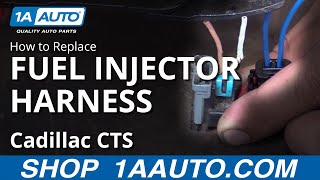
Est. part cost: $5-$20 for repair materials, $110-$175 for a new harness section. 🎬 See this walkthrough on how to replace the injector harness.
- Blown Fuse or Faulty Relay ⚪ Low Probability
How to confirm: Locate the fuse for the fuel injectors in the vehicle's fuse box (check the owner's manual for location). Check if it is blown. The relay can be tested by swapping it with an identical known-good relay.
Typical fix: Replace the blown fuse or faulty relay.
Est. part cost: $1-$25
Rare But Worth Checking
- Faulty Engine Control Module (ECM): This is a rare cause. The ECM's internal driver circuit for the injector group can fail, but all wiring and fuses must be thoroughly tested and confirmed to be good before considering ECM replacement. A wiring short is a much more common cause for this code than a failed ECM.
Diagnosis Steps
- Scan the ECM for all stored trouble codes. Note P2152 and any other injector-related codes (e.g., P0201-P0206, P2149).
- Remove the plastic engine cover for better access.
- Carefully and thoroughly inspect the fuel injector wiring harness as it routes across the top of the engine. Per TSB PIP4924D, focus on common chafe points: against the intake plenum, at valve cover bolts, against the fuel line, and on the side of the head under the plenum.
- If damage is found, disconnect the battery. Gently move the harness to expose the damaged wires and confirm if they are broken or shorted.
- If no visible damage is found, use a digital multimeter to check for battery voltage at the power supply wire for the affected injectors (refer to a vehicle-specific wiring diagram).
- Check for continuity on the control circuit wires from the injector connector back to the ECM connector. A video for a similar Cadillac shows this process of ohming out the wires from the main harness connector to the injector plugs. 🎬 Watch: This video shows how to ohm out the harness.
- If all wiring tests normal, the fault may lie within the ECM, but this is the least likely cause.
Parts You'll Likely Need
- Fuel Injector Wiring Harness
(OEM #12689346)— This is the most common failure point for this code on the SRX, as identified by GM's own service bulletin. This part number also replaces a previous version, 12627091.
Trusted brands: ACDelco (GM Genuine)
OEM price range: $110-$175
Aftermarket price range: $80-$130 - Wire Repair Supplies — If the harness damage is localized to one or two wires, a simple repair with solder, heat shrink, and quality electrical tape or split-loom conduit is often sufficient and more cost-effective than replacing the entire harness.
Trusted brands: 3M, Dorman
OEM price range: $5-$20
Aftermarket price range: $5-$20
Related Codes That Often Appear With This One
- P0201-P0206 — These codes indicate circuit malfunctions for individual injectors. A harness issue can trigger faults for all injectors in the affected group.
- P2146, P2149, P2155 — These are similar codes for other injector groups ('A', 'B', 'D'). Their presence alongside P2152 strongly suggests a widespread wiring harness problem, as noted in TSB PIP4924D.
Technical Service Bulletins (TSBs) & Recalls
- PIP4924D: Addresses SES light and misfires with a long list of injector codes, including P2152. It identifies the cause as a chafed or open fuel injector wiring harness and points out common problem areas for inspection: 'against the intake plenum, at valve cover bolts, against the fuel line and on the side of the head under the plenum'.
Platform-Specific Known Issues
- A General Motors Technical Service Bulletin, #PIP4924D, was issued for a wide range of vehicles including the 2010-2014 SRX. It directly links P2152 and other injector codes to a fuel injector wiring harness that rubs through or develops internal opens. The bulletin advises technicians to inspect common chafe points against the intake, valve covers, and fuel lines.
Mechanic-Grade Diagnostic Values
- Fuel Injector Internal Resistance — expected: 1.2 - 1.8 Ohms. Failure: A reading significantly outside this range (open circuit or short) indicates a failed injector. However, this code points to a circuit issue, not a single injector.
- Injector Circuit Voltage Drop — expected: Less than 0.5 Volts. Failure: A voltage difference greater than 0.5V between the ECM supply terminal and the injector connector while cranking indicates excessive resistance in the wiring.
- Injector Power Supply Voltage (Key On) — expected: Battery Voltage (approx. 12.6V). Failure: Low or no voltage on the power supply wire at the injector connector points to an open circuit in the harness or a blown fuse/relay.
Scan Tool Commands That Help
- GDS2 (GM) or equivalent professional scan tool: Automated Injector Balance Test — This test is used to functionally check the injectors when wiring is suspected to be good. The tool disables one injector at a time and measures the corresponding drop in fuel pressure or engine RPM. GM specifies that the pressure drop should not vary more than 20% between cylinders. While P2152 points to a group circuit failure, this test can help confirm if an entire bank is non-responsive.
Wiring & Ground Locations
- ECM Connectors X1, X2, X3 — On the Engine Control Module (ECM). For the 3.6L LFX, X1 is typically Blue, X2 is Black, and X3 is Gray.. Identifying the correct connector is the first step to performing continuity or voltage tests on the injector circuits directly at the ECM pins.
- ECM Ground (G101/G102) — Typically bolted to the engine block or cylinder head. On similar GM platforms, G101/G102 are located on the engine block itself. G103 is often on the passenger side cylinder head.. A poor ECM ground can cause a host of erratic electrical issues, including incorrect voltage readings and false codes. This should be inspected for corrosion and tightness.
- Injector Group 'C' Control Wire — In a generic GM pinout, this corresponds to pin J2-71, a Light Blue/Brown wire. This requires a vehicle-specific diagram for absolute confirmation.. This is the specific wire that must be tested for continuity between the ECM connector and the injector harness connector to rule out a break.
OEM Part Supersession History
12627091→12689346— GM often updates parts to improve durability or resolve known failure modes, such as improving the protective sheathing or rerouting wires to prevent chafing.
Model Year Variations Within This Range
- 2010-2011 vs 2012-2014: The standard engine changed. 2010-2011 models primarily used the 3.0L LF1 V6. In 2012, the 3.6L LFX V6 became the standard and eventually only engine option. TSB PIP4924D applies to both engines, indicating the injector harness chafing issue is present on both variants within the SRX chassis.
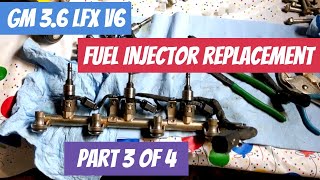
Helpful Videos
Used OEM Parts in Stock
New Aftermarket Parts Available



The information in this article is provided for general reference and educational purposes only. Vehicle specifications, procedures, and part compatibility can vary by production date, trim level, and region. Always consult your vehicle's factory service manual and verify part numbers before purchasing or performing repairs. Safety-critical components such as airbags, seat belts, and braking systems should be installed by a qualified professional.
- Cadillac SRX:
- 🎬 Helpful Videos
- 🛍️ Shop This Part
- What's Unique About the 2010-2014 Cadillac SRX
- Diagnostic Flowchart
- Symptoms You May Notice
- Most Likely Causes
- Rare But Worth Checking
- Diagnosis Steps
- Parts You'll Likely Need
- Related Codes That Often Appear With This One
- Technical Service Bulletins (TSBs) & Recalls
- Platform-Specific Known Issues
- Mechanic-Grade Diagnostic Values
- Scan Tool Commands That Help
- Wiring & Ground Locations
- OEM Part Supersession History
- Model Year Variations Within This Range
- 🎟️ Get 5% Off